Strategic Mining: Embracing Energy Volatility as the Competitive Advantage
Speakers/Moderators

John Paul Baric
John Paul Baric
A recognized expert in large power loads and grid strategy, John Paul consults for major enterprises and has served as an expert witness on the siting of large data center loads. He has deep experience in the MISO and SPP power markets, including bilateral settlement agreements for electricity, and has helped utilities design market-based rates and Demand Response programs that align data centers with grid reliability and economics.
An entrepreneur since age 15, when he launched a robotics camp, John Paul has gone on to build three businesses, including Aurum, originally founded in 2016 as MiningStore. He has been involved in Bitcoin mining since the asset traded near $70 per coin and now advises Fortune 1000 companies entering the mining and digital infrastructure space. Combining energy-market fluency with hands-on development experience, John Paul is helping define the next generation of modular, energy-efficient data centers in the United States.

Scooter Womack
Scooter Womack
Behind the scenes, Scooter has been instrumental in launching multiple market participants and driving innovation across the ERCOT landscape. His work has enabled organizations to optimize energy usage, reduce costs, and implement sustainable solutions that align with evolving market dynamics.
With a proven track record of success, Scooter combines deep industry knowledge with strategic foresight to deliver measurable results for clients. His leadership continues to influence the future of energy flexibility and resilience in Texas.

David Chernis
David Chernis
Session
Overview
This panel focused on how Bitcoin miners can turn energy volatility into a competitive advantage through flexible operations, demand response, and active participation in power markets. John Paul Baric moderated a discussion with Scooter Womack of Vega Energy Advisors, Nick Hansen of Luxor Technology, and David Chernis of CPower on how real-time and day-ahead market pricing can create revenue opportunities for miners that can quickly curtail or ramp up load.
The speakers explained why Bitcoin mining is uniquely suited for grid flexibility. ASICs can shut down quickly when power prices spike or when the grid needs relief, then ramp back up when prices fall or turn negative. They discussed market differences across ERCOT, PJM, MISO, and NYISO, including how curtailment and ancillary services can materially reduce or even invert power costs during high-price events.
A major theme was the shift from Bitcoin mining to AI and high-performance computing. The panel contrasted flexible ASIC mining with GPU workloads that are generally less able to turn off, especially during AI training. Hybrid sites that combine mining and AI compute were presented as a potential way to preserve grid flexibility while using powered land and infrastructure for new workloads.
The discussion closed with the view that U.S. energy volatility is likely to remain important as new load growth, changing generation mixes, and grid constraints continue to shape power markets. For miners that understand energy procurement, forecasting, hedging, and demand response, volatility can become a core operating advantage rather than only a risk.
Good morning and welcome to the Energy Stage. Today we're going to be talking about embracing energy volatility as the competitive advantage of Bitcoin mining. I'm John Paul Baric, founder and CEO of MiningStore, and I'll be moderating this discussion.
David Chernis, director of flexible compute platforms. I've been living very close to the mining sector since 2018, working with CPower and doing demand response. We quickly realized that miners are the best flexible assets the grid has. They're basically digital batteries that can come offline in minutes to seconds, really pioneering the way for what we're about to see with AI factory design as well.
My name is Nick Hansen, CEO of Luxor. We build all sorts of software-enabled services for miners, one of those being something we call Intelligent Miner, which activates this volatility and grabs volatility from the grid.
I don't think it's the lights. I think your star keeps getting brighter every time you step out here, Nick Hansen. Scooter Womack, CEO and founder of Vega Energy Advisors. We are primarily focused in Texas and have been in the space for eight or nine years now, seeing the evolution of compute happening in energy-only markets and capacity markets. We've got a lot of great stuff to talk about here, so let's embrace some volatility.
Our goal with this first question is to understand the energy markets and break it down for someone who's just a consumer buying power at their house. For most people who don't know, energy prices change and are traded every hour. As a Bitcoin miner or as a flexible load, we're able to trade that energy and participate in those markets. What does energy volatility actually mean? When we say the price of power changes by the hour, by location, and by market condition, what is really happening and what is driving those changes?
Energy is supply and demand in real time. The more constrained the supply becomes, either at the transmission node, which is very locational, or at a wider ISO scale, the more price moves. Supply and demand is based on usage, and then you have constraints based on extreme weather, infrastructure, local transmission constraints, and peak usage. Air conditioning globally is the largest load that creates constraint. Below that you have electrification loads, data centers, mining, and AI loads. Certainly in the U.S., data center loads, mining loads, and AI loads are going to be the big ones.
Price, whether it's energy or really anything else, is a reflection of risk. It is basically a manifestation of what we call net demand: the ability for generation to be online, the ability for transmission networks to work, all the way down to zonal or nodal distribution levels. It is a combination of many things happening in real time. Any trader will tell you that without volatility, you don't make any money. It is constantly traded back and forth. It is a manifestation of buyer and seller demand and generation. Pretty much every market has evolved that way, whether it's an energy-only market like ERCOT in Texas, or a capacity market like SPP, PJM, or other ISOs and system operators around the country.
Energy volatility is actually quite intuitive. At four or five in the afternoon, everybody gets home, turns on the air conditioner, starts charging their Tesla, and all of those things drive up demand. Of course prices go up. Most people don't know that over the last several months, in the early morning hours, power has been negative in parts of Texas. You are actually getting paid to use energy. At Luxor, we monitor that with Intelligent Miner. We tell our customers, hey, you're getting paid for every megawatt hour you use right now, so you should crank up your machines as high as they'll safely go, because you're getting paid to use energy.
That happens because in the early morning hours, wind is going, gas generation is on, but there is really nobody using energy at a consumer level. People have not woken up yet and turned on the lights and all the things that start using energy. That produces a lot of volatility. You can go from multiple hundreds of dollars per megawatt hour in the afternoon to negative pricing in the early morning hours. Miners that are really dynamic are able to capture a lot of value from that by turning off during high energy price hours and ramping up during negative hours.
There are day-ahead markets and real-time markets. Some miners are bidding into both and are trading those markets with their power. The nice thing about mining loads is that they are running and adding baseload demand to the grid, and when the grid needs it, we shut off completely. We reduce our load by 95% to 99%, and then that power goes back to the grid when consumers need it. We're not contributing to peak power, which is the most expensive energy hour of the day or in that market, and peak power is usually going to be the least green power. That's when you're turning on natural gas peaker plants.
Because of miners, Berkshire Hathaway did not need to build over $18 billion of peaker plants because we had two gigawatts of mining load come in and act as an alternative method of reducing load. That's one of the amazing benefits of miners. Why are miners uniquely set up to respond to this versus a consumer at their house, an electric vehicle, or a factory that makes aluminum? Why were miners the perfect ingredients to make the power markets work better and keep prices lower for consumers?
At a high level, ASICs don't have feelings. We may not want to have our house at 80 or 85 degrees just because somebody else needs power. The ASICs don't get to talk back.
I'm not very price sensitive when it's 90 degrees inside, or when it's 10 degrees outside and my house is 40 degrees. I'm going to pay whatever it costs. Bitcoin miners are purely price sensitive. If it becomes unprofitable marginally to mine at a particular point in time, you just turn off. They don't care. Bitcoin miners do not have feelings.
With AI, maybe those machines might have feelings and maybe they don't want to get turned off. That's a whole other story. But a Bitcoin miner does not.
Something really interesting happened in a new program we have in my home ISO, which is New York. New York has some very low power pricing around Buffalo and Niagara. We have this new model designed for battery storage called the DER participation model. You have to be very fast acting, and miners are fully automated through partners like Foreman, Jeremy, Hiveon, and others. We're able to dispatch in seconds. We can even follow a six-second NYISO basepoint signal, so we could do regulation with ASICs there if we wanted to.
What happened in January is that our miners who were not yet in this program, which offers access to ancillary, day-ahead, and real-time markets for highly automated flexible loads much like a battery, shut down in January and February because power costs were too high. Our miners in this program not only made a lot of money getting offline 35% of the month of January, their net blended cost of power plus DER revenues went negative overall, negative $55 per megawatt hour, to run 65% of January in the most expensive month of the year. It literally inverted the economics of mining because of access to day-ahead, real-time, and ancillary markets.
Let's jump into the January freeze. We had a very cold weather event in the Midwest in January. It affected markets in MISO, PJM, and others. During that time period at MiningStore, we were curtailed for 13 days. That curtailment event let us enjoy a negatively priced power bill the following month because of the amount of revenue we generated by turning off. When these curtailment events happen, we are being paid like a generator for reducing our load on a day-ahead basis. How were some of your clients able to capture additional revenue, and in this low hash price environment, why is it so important for miners to be flexible and be in these programs to compete and have lower energy prices?
It's different by market. That's a really important distinction. In MISO or PJM, or in a capacity market, loads get paid or act as a generator effectively. If you're not participating as a load and you're not creating demand, then you're directly giving that generation back. It's one-to-one, and you're getting paid the proceeds of that.
In ERCOT or an energy-only market, you have to go out and take either a physical or financial position in the day-ahead market, or as a term trader or term position. That's how you get paid back there. In ERCOT, what we experienced was not selling back the physical power, but arbitraging the day-ahead and selling forward because it was so overdone.
It gets trickier. It does not get easier as markets and technology evolve. There is more of a disconnect between legacy forecasting systems and everything else. ERCOT, as the grid reliability operator, missed the forecast on one of those days by 10 gigawatts of peak load. That is insane. That's an 18% miss. As a reliability operator, it highlighted the disconnect we have with this advanced disruptive technology versus the legacy systems we have. The opportunity for us was to advise clients to sell into that market, still be able to run, and collect the spread. That is how it manifested itself in Texas. We did not have the extended outages that you had.
For context, the entire Bitcoin network, every miner in the world, is probably about 20 gigawatts. So a miss of 10 gigawatts is like half of the entire Bitcoin network. I'll speak about how that actually affected the network as opposed to how it affected miners in the power markets. We saw really big difficulty decreases during that time. People were wondering what was going on and whether miners were turning off because they were unprofitable. It actually had to do with power prices and forced curtailments, which is one of the first times I think we've seen that before. We've seen negative difficulty adjustments in the past, typically because of poor economics, like right now or the summer of 2020. Those were really low hash price environments. But in this case, it was specifically power prices in the U.S. driving Bitcoin network difficulty, which is pretty unprecedented.
We saw block times at 11 to 12 minutes and difficulty dropped by around 14%. It was a huge difficulty drop, one of the largest we've ever seen, and to Nick's point, completely driven by weather at the end of the day.
You actually have to monitor weather to participate in these things. It's pretty crazy how much data you have to process to be really dynamic. You have to take in all the power prices and all the grid metrics, but then you also have to take in weather data. It is a really complex market. Going back to how volatility is a competitive advantage, if everything were the same all the time, there's really no way to make money. You're not improving your models or getting better faster. Here we are in a very volatile market, and miners are really well positioned to take advantage of that.
With new cloud capabilities, these third parties are bringing astonishing forecasting clarity and future-forward visibility into energy markets and predictive weather beyond what grid operators have. We're at a pretty amazing time from a tech perspective.
How does the AI pivot change the energy strategy for miners? Most of the public mining companies are now retiring their fleets and building out AI data centers. During that transition, how can AI compute still play in the energy markets?
I love hybrid computing. Mining and AI loads are really sympathetic to each other. Miners are years ahead of the real estate investment trusts, colocation developers, and hyperscaler hosts of the world because miners understand energy in a really granular way. It is their business model. Continuing to mine while you build out some GPU hosting is something we're seeing now. I advocate holding on to your infrastructure. If you need to add some AI load to it, great.
In my opinion, miners are going to be the innovators on the AI side of the house with direct liquid cooling, immersion, understanding energy in a complex way. The mining community is bringing all of this to the center of AI factory design, while the traditional CPU air-conditioned colocation model is also moving toward these innovations. For miners adding AI infrastructure to their powered land, which puts them three to five years ahead of anyone looking for powered land now, you're already connected. Let us help you design flexibility on the AI side through energy storage. We've already demonstrated that we can flex GPU clusters without pausing the workload and while maintaining the SLAs, with friends at Emerald AI, Mercury, Neural, and our partnership with Bentos and Super Micro at the hardware level. We want to work with you to design flexibility on the AI side of your house as well.
ASICs don't have feelings. GPUs actually kind of do. They have a strong opinion about staying on. The reason is training workloads. You can't really preempt those very easily. Maybe there is new technology that allows you to preempt a big training run, but if you're running training that takes a month, it doesn't really matter what the power price is during that time. The output of that work is so much more valuable than the energy.
We were having a discussion backstage about what the breakeven price for turning off a GPU would be right now. It's something like $5,000 or $6,000 per megawatt hour. For context, the power price in Texas right now is probably around $50 or $60 per megawatt hour. You're talking about roughly a 100x margin on those GPUs, so you're pretty much always going to keep them on. That's not going to stay that way forever. As we build out more supply on the AI side, it becomes more dynamic. Then the HPC guys need to start learning from the miners how to do curtailments and how to turn down or underclock GPUs effectively.
For context, we're used to talking about megawatts, megawatt hours, and gigawatts. On the mining side, it's also kilowatts and cents per kilowatt hour. When Nick talks about $50 or $60 a megawatt hour, that's about five or six cents per kilowatt hour, versus the breakeven for these training models where large HPC and AI guys are talking about $5 or $6 per kilowatt hour, which is astounding.
There are opportunities and challenges in there. On a financial level and a messaging level, yes, GPUs have feelings and don't want to turn off. But what do you have to do to be a good steward of the grid and the market you are in in a different way? Maybe if you can't give energy back to the grid, you're constrained in that way. The opportunity, as we bridge through margin compression with these workloads and buildouts, is that we need more hedging and more forward term commitments from these folks. They're going to be running these models, so at that point you are incentivizing grid-level generation and capital investment for the ratepayer and for the people in our homes. You're not becoming a burden for all of those costs. It doesn't matter what the real-time price of power is if you've already taken a forward position in power. That could be $50 or $60 a megawatt hour for years, and you just run. You don't have to worry about the economics or stewardship of giving back power. You express your stewardship of the grid in a different way. That is a message that needs to be picked up with these workloads, especially as we face new boogeyman conversations around AI and data centers in communities across the country.
No compute will ever be harmed in the flexing of this AI factory inference load. It is always going to run and maintain the SLAs. We would never stop a training or inference workload. These are small incremental curtailments, just a little bit, like a hash rate optimization example. That's the perfect way to frame it. In the hybrid model, all the flexibility is on the mining side of the house.
As public miners and private miners move their Bitcoin miners to AI, how do you see Bitcoin mining and AI loads working together, understanding that there are commitments miners have made to the grid, and there is a transition period and different infrastructure upgrades needed? Even when they are running AI loads, utilization of inference loads is not always 100%, but sometimes the power contracts require closer to 100%. How do you view this transition and utilization specifically of energy?
Taking it from a trading and risk perspective, you're going to need a hybrid strategy. You can't just go binary, where you're all this way or all that way. It doesn't take too much sophistication, but you have to truly understand the use case, then plan accordingly, model accordingly, and contract accordingly. From the volatility opportunity we see, it is in term trading for these loads. We advise and give access to all of our industrial clients about where forward marks are in different ISOs, where you can hedge power, buy power, and sell power. It's really dynamic. You can buy power for multiple years, sell months, sell a week, sell specific days, and get in and out of positions. I think these loads are going to become active forward-term traders.
Miners, this is kind of unironically true, I believe right now might be one of the best times to buy mining in the last few years. Every AI machine being plugged in, B100, B200, B300, is most likely taking a Bitcoin miner off a rack in a lot of places. Companies doing the AI transition are pulling machines off to plug in AI machines. That means there is less competition for Bitcoin blocks than there has been, relatively, based on how much demand there is for power for other types of workloads. They're scrambling to plug in every AI machine anywhere they possibly can, and those are pulling mining machines offline. It does feel like we've reached a bottom point. Any machines that have been taken off are already taken off. Right now may be a really good time to be a miner, even though it really hurts right now. But that's the best time to buy.
When you're in mining and you're running your returns, and Bitcoin was $120,000, the model looks amazing on paper. Today the returns look horrible, but that's assuming the output stays the same, difficulty doesn't keep going down, and the Bitcoin price doesn't go up. As a miner, you have a long perspective on Bitcoin. You're hoping hash price goes up and recovers. The previous three years resulted in hash price crashing because many public players were incentivized to simply grow megawatts at no cost. Now those players are going to be removing themselves from the market effectively.
One quick point: all of the big miners you see, CleanSpark, Marathon, Iris, were formed during the summer of 2020, which was one of the worst times to be a miner in memory. Now look at them. It could be the time. Maybe I'm talking my own book here.
I think it's a great time to start mining. I'm thinking about starting mining. If you understand energy right now, with the depressed cost of ASICs, it's a great time. I'll take another angle from a regulatory perspective. We have Senate Bill 6 in Texas, which mandates that large loads over 75 megawatts have to be flexible. We're starting to see other regulation in other areas. If you're a miner, you already have a great relationship with the grid operator at the ISO level and likely at the utility level. If you're running hybrid load, both mining and AI, they are more likely to give you a capacity increase because you've got all that flexibility on the ASIC side. That's really valuable to the utility and to the ISO. It's a great bargaining chip and a great way to partner with the grid operator and the utility. We love to see hybrid mining and a good part of mining load stay there as some AI infrastructure comes in.
Last question: is energy volatility in the United States going to increase or decrease over the next three years?
I'm bullish on volatility long term. It is a requirement of where we are with all of the loads coming on and with the types of generation we have available. Acute volatility will show its head again. Sustained long-term volatility for multiple hours, maybe not outside of winter and extreme events. But I'm bullish on volatility across the country.
Everybody is trying to lower volatility, but they're also adding tons and tons of generation and load. I don't actually know. It's a great question to think about.
I think more and more volatility. What we're trying to do with demand response as the near-term solution is get from today to 2030, when more generation comes online. We're still losing generation in the U.S., nuclear and fossil, and we don't have a bridge to get to 2030 right now. Small modular nuclear and micro are way off. I think there will be more volatility and more need for flexible resources, and with that, greater and greater value for highly nimble, fast-acting demand response resources like mining and AI compute.
Thanks again for listening in, and remember to mine on.
Thank you.
Similar
Sessions
The Post-Subsidy World: Should We Be Concerned About The Security Budget?

Colin Harper
Colin Harper

Mike Casey
Mike Casey
Volunteer Lifeguard, MaraPool
Product Owner, Slipstream
Author: Speculative Bitcoin Adoption/Price Theory (https://medium.com/@mcasey0827/speculative-bitcoin-adoption-price-theory-2eed48ecf7da) as referenced in "The Bullish Case for Bitcoin" by Vijay Boyapati.
Bitcoin Class of 2012
Paul Sztorc
Paul Sztorc
The Post-Subsidy World: Should We Be Concerned About The Security Budget?
Speakers/Moderators
Colin Harper
Colin Harper
Mike Casey
Mike Casey
Volunteer Lifeguard, MaraPool
Product Owner, Slipstream
Author: Speculative Bitcoin Adoption/Price Theory (https://medium.com/@mcasey0827/speculative-bitcoin-adoption-price-theory-2eed48ecf7da) as referenced in "The Bullish Case for Bitcoin" by Vijay Boyapati.
Bitcoin Class of 2012
Paul Sztorc
Paul Sztorc
Strategic Mining: Embracing Energy Volatility as the Competitive Advantage
John Paul Baric
John Paul Baric
A recognized expert in large power loads and grid strategy, John Paul consults for major enterprises and has served as an expert witness on the siting of large data center loads. He has deep experience in the MISO and SPP power markets, including bilateral settlement agreements for electricity, and has helped utilities design market-based rates and Demand Response programs that align data centers with grid reliability and economics.
An entrepreneur since age 15, when he launched a robotics camp, John Paul has gone on to build three businesses, including Aurum, originally founded in 2016 as MiningStore. He has been involved in Bitcoin mining since the asset traded near $70 per coin and now advises Fortune 1000 companies entering the mining and digital infrastructure space. Combining energy-market fluency with hands-on development experience, John Paul is helping define the next generation of modular, energy-efficient data centers in the United States.
Scooter Womack
Scooter Womack
Behind the scenes, Scooter has been instrumental in launching multiple market participants and driving innovation across the ERCOT landscape. His work has enabled organizations to optimize energy usage, reduce costs, and implement sustainable solutions that align with evolving market dynamics.
With a proven track record of success, Scooter combines deep industry knowledge with strategic foresight to deliver measurable results for clients. His leadership continues to influence the future of energy flexibility and resilience in Texas.
David Chernis
David Chernis
Strategic Mining: Embracing Energy Volatility as the Competitive Advantage
Speakers/Moderators
John Paul Baric
John Paul Baric
A recognized expert in large power loads and grid strategy, John Paul consults for major enterprises and has served as an expert witness on the siting of large data center loads. He has deep experience in the MISO and SPP power markets, including bilateral settlement agreements for electricity, and has helped utilities design market-based rates and Demand Response programs that align data centers with grid reliability and economics.
An entrepreneur since age 15, when he launched a robotics camp, John Paul has gone on to build three businesses, including Aurum, originally founded in 2016 as MiningStore. He has been involved in Bitcoin mining since the asset traded near $70 per coin and now advises Fortune 1000 companies entering the mining and digital infrastructure space. Combining energy-market fluency with hands-on development experience, John Paul is helping define the next generation of modular, energy-efficient data centers in the United States.
Scooter Womack
Scooter Womack
Behind the scenes, Scooter has been instrumental in launching multiple market participants and driving innovation across the ERCOT landscape. His work has enabled organizations to optimize energy usage, reduce costs, and implement sustainable solutions that align with evolving market dynamics.
With a proven track record of success, Scooter combines deep industry knowledge with strategic foresight to deliver measurable results for clients. His leadership continues to influence the future of energy flexibility and resilience in Texas.
David Chernis
David Chernis
From Hashrate to Hill: Why Miners Should Engage in Public Policy
Kyle Schneps
Kyle Schneps
The majority of Kyle’s career was spent as a U.S. Intelligence Officer. He also served in a diplomatic post at the U.S. Department of State advising the Special Envoy for Guantanamo Bay and in the New York State Governor’s Office overseeing state operations. He is a former White House Fellow focused on national security and federal budgeting.
Kyle is co-author and editor of National Security in the Digital Age. He holds two master’s degrees from Columbia University.

Filip Primec
Filip Primec
John Paul Baric
John Paul Baric
A recognized expert in large power loads and grid strategy, John Paul consults for major enterprises and has served as an expert witness on the siting of large data center loads. He has deep experience in the MISO and SPP power markets, including bilateral settlement agreements for electricity, and has helped utilities design market-based rates and Demand Response programs that align data centers with grid reliability and economics.
An entrepreneur since age 15, when he launched a robotics camp, John Paul has gone on to build three businesses, including Aurum, originally founded in 2016 as MiningStore. He has been involved in Bitcoin mining since the asset traded near $70 per coin and now advises Fortune 1000 companies entering the mining and digital infrastructure space. Combining energy-market fluency with hands-on development experience, John Paul is helping define the next generation of modular, energy-efficient data centers in the United States.
From Hashrate to Hill: Why Miners Should Engage in Public Policy
Speakers/Moderators
Kyle Schneps
Kyle Schneps
The majority of Kyle’s career was spent as a U.S. Intelligence Officer. He also served in a diplomatic post at the U.S. Department of State advising the Special Envoy for Guantanamo Bay and in the New York State Governor’s Office overseeing state operations. He is a former White House Fellow focused on national security and federal budgeting.
Kyle is co-author and editor of National Security in the Digital Age. He holds two master’s degrees from Columbia University.
Filip Primec
Filip Primec
John Paul Baric
John Paul Baric
A recognized expert in large power loads and grid strategy, John Paul consults for major enterprises and has served as an expert witness on the siting of large data center loads. He has deep experience in the MISO and SPP power markets, including bilateral settlement agreements for electricity, and has helped utilities design market-based rates and Demand Response programs that align data centers with grid reliability and economics.
An entrepreneur since age 15, when he launched a robotics camp, John Paul has gone on to build three businesses, including Aurum, originally founded in 2016 as MiningStore. He has been involved in Bitcoin mining since the asset traded near $70 per coin and now advises Fortune 1000 companies entering the mining and digital infrastructure space. Combining energy-market fluency with hands-on development experience, John Paul is helping define the next generation of modular, energy-efficient data centers in the United States.
Energy Symbiosis: Powering Compute for AI & Bitcoin Simultaneously

Jesse
Jesse
David Chernis
David Chernis

Rick Margerison
Rick Margerison
Rick’s focus is on the “energy symbiosis” between Bitcoin mining and AI. By architecting modular, liquid-cooled infrastructure, he enables high-density clusters to operate as flexible loads for the grid while solving the complex electrical handoffs required for parallel compute. A prolific inventor and contributor to the Open Compute Project (OCP) since 2017, Rick has also served as a lead for the ITE and Immersion Requirements communities. He brings a hardware-first perspective to the stage, demonstrating how specialized power distribution and shared infrastructure can turn the competition for energy into a collaborative, efficient model for global compute
Energy Symbiosis: Powering Compute for AI & Bitcoin Simultaneously
Speakers/Moderators
Jesse
Jesse
David Chernis
David Chernis
Rick Margerison
Rick Margerison
Rick’s focus is on the “energy symbiosis” between Bitcoin mining and AI. By architecting modular, liquid-cooled infrastructure, he enables high-density clusters to operate as flexible loads for the grid while solving the complex electrical handoffs required for parallel compute. A prolific inventor and contributor to the Open Compute Project (OCP) since 2017, Rick has also served as a lead for the ITE and Immersion Requirements communities. He brings a hardware-first perspective to the stage, demonstrating how specialized power distribution and shared infrastructure can turn the competition for energy into a collaborative, efficient model for global compute
Other
Speakers
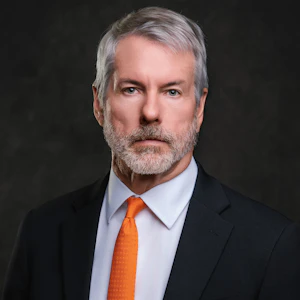
Michael Saylor
Michael Saylor
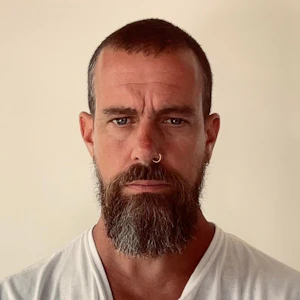
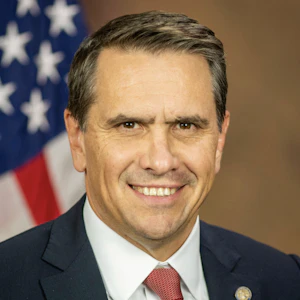
Todd Blanche
Todd Blanche
Biography of Deputy Attorney General Todd Blanche
The Honorable Todd Blanche is the 40th Deputy Attorney General of the United States, overseeing the work of the 115,000 dedicated employees who fulfill the Department of Justice’s mission at Main Justice, the FBI, DEA, U.S. Marshals, ATF, and 93 U.S. Attorney’s Offices.
Todd began his career at the Department where he served for over fifteen years in a variety of capacities, including as a contractor, a paralegal in the Criminal Division, and at the United States Attorney’s office for the Southern District of New York where he eventually became an AUSA and later a supervisor.
After leaving the Department, Todd worked as a criminal defense attorney that included representing President Donald Trump in three of the criminal cases brought against him in 2023 and 2024.
Following President Trump’s historic return to the White House, the President appointed Todd to work alongside Attorney General Pam Bondi to make America safe again. At the DOJ, Todd is working tirelessly to implement President Trump’s priorities that include confronting illegal protecting American businesses from fraud.
Todd has been married to his wonderful wife Kristine for nearly thirty years, is a father and grandfather.

Paul Atkins
Paul Atkins
Prior to returning to the SEC, Chairman Atkins was most recently chief executive of Patomak Global Partners, a company he founded in 2009. Chairman Atkins helped lead efforts to develop best practices for the digital asset sector. He served as an independent director and non-executive chairman of the board of BATS Global Markets, Inc. from 2012 to 2015.
Chairman Atkins was appointed by President George W. Bush to serve as a Commissioner of the SEC from 2002 to 2008. During his tenure, he advocated for transparency, consistency, and the use of cost-benefit analysis at the agency. Chairman Atkins also represented the SEC at meetings of the President’s Working Group on Financial Markets and the U.S.-EU Transatlantic Economic Council. From 2009 to 2010, he was appointed a member of the Congressional Oversight Panel for the Troubled Asset Relief Program.
Before serving as an SEC Commissioner, Chairman Atkins was a consultant on securities and investment management industry matters, especially regarding issues of strategy, regulatory compliance, risk management, new product development, and organizational control.
From 1990 to 1994, Chairman Atkins served on the staff of two chairmen of the SEC, Richard C. Breeden and Arthur Levitt, ultimately as chief of staff and counselor, respectively. He received the SEC’s 1992 Law and Policy Award for work regarding corporate governance matters.
Chairman Atkins began his career as a lawyer in New York, focusing on a wide range of corporate transactions for U.S. and foreign clients, including public and private securities offerings and mergers and acquisitions. He was resident for 2½ years in his firm's Paris office and admitted as conseil juridique in France.
A member of the New York and Florida bars, Chairman Atkins received his J.D. from Vanderbilt University School of Law in 1983 and was Senior Student Writing Editor of the Vanderbilt Law Review. He received his A.B., Phi Beta Kappa, from Wofford College in 1980.
Originally from Lillington, North Carolina, Chairman Atkins grew up in Tampa, Florida. He and his wife Sarah have three sons.

Mike Selig
Mike Selig
Chairman Selig brings to the role deep public and private sector experience working with a wide range of stakeholders across agriculture, energy, financial, and digital asset industries, which rely upon and operate in CFTC-regulated markets.
Prior to his leadership at the CFTC, Chairman Selig most recently served as chief counsel of the Securities and Exchange Commission’s Crypto Task Force and senior advisor to SEC Chairman Paul S. Atkins. In this role, Chairman Selig helped to develop a clear regulatory framework for digital asset securities markets, harmonize the SEC and CFTC regulatory regimes, modernize the agency’s rules to reflect new and emerging technologies, and put an end to regulation by enforcement. He also participated in the President’s Working Group on Digital Asset Markets and contributed to its report on “Strengthening American Leadership in Digital Financial Technology.”
Prior to government service, Chairman Selig was a partner at an international law firm, focusing on derivatives and securities regulatory matters. During his years in private practice, he represented a broad range of clients subject to regulation by the CFTC, including commercial end users, futures commission merchants, commodity trading advisors, swap dealers, designated contract markets, derivatives clearing organizations, and digital asset firms. Chairman Selig advised clients on compliance with the Commodity Exchange Act and the CFTC’s rules and regulations thereunder, including in connection with registration applications and obligations, enforcement matters, and complex transactions.
Chairman Selig earned his law degree from The George Washington University Law School and was articles editor of The George Washington Law Review. He received his undergraduate degree from Florida State University.

David Bailey
David Bailey

Eric Trump
Eric Trump
Mr. Trump also serves as Executive Vice President of The Trump Organization, where he oversees the global management and operations of the Trump family’s extensive real estate portfolio. This includes Trump Hotels, Trump Golf, commercial and residential real estate, Trump Estates, and Trump Winery. Known for his hands-on leadership and strong market instincts, he has played a key role in expanding the company’s presence across major U.S. and international markets.
A globally recognized business leader and public figure, Mr. Trump is a prominent advocate for Bitcoin and decentralized finance. He is a co-founder of World Liberty Financial, a decentralized finance (DeFi) platform, and serves on the Board of Advisors of Metaplanet, Japan’s largest corporate holder of Bitcoin.
Beyond his business activities, Mr. Trump has helped raise more than $50 million for St. Jude Children’s Research Hospital in the fight against pediatric cancer, a philanthropic mission he began at age 21.
Mr. Trump earned a degree in Finance and Management from Georgetown University. He currently resides in Florida with his wife, Lara, and their two children. He is also the author of Under Siege, his memoir published in October 2025.

Jack Mallers
Jack Mallers
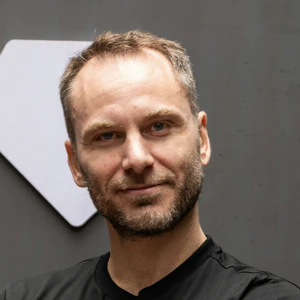
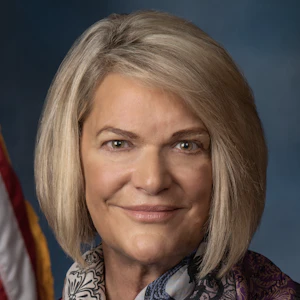
Cynthia Lummis
Cynthia Lummis
As the first-ever Chair of the Senate Banking Subcommittee on Digital Assets, Senator Lummis is the architect of the legislative framework shaping America's digital asset future. She introduced the landmark Lummis-Gillibrand Responsible Financial Innovation Act, the first comprehensive bipartisan crypto regulatory framework in Senate history. She co-authored the GENIUS Act — the first federal stablecoin law ever enacted — and introduced the BITCOIN Act, which would establish a U.S. strategic Bitcoin reserve of up to one million BTC. She is leading the Clarity Act, which will bring long-overdue regulatory certainty to the digital asset industry. She has also championed digital asset tax reform, including a de minimis exemption for small transactions and equal tax treatment for miners and stakers.
Known as Congress' "Crypto Queen," Senator Lummis represents Wyoming — a state she has helped build into one of the most digital asset-friendly regulatory environments in the nation. Before serving in the Senate, she served 14 years in the Wyoming Legislature, eight years as Wyoming State Treasurer, and eight years in the U.S. House. She is a three-time graduate of the University of Wyoming.
Her work represents a crucial bridge between traditional financial systems and the emerging digital economy, ensuring America leads the world in financial innovation while protecting the individual freedoms that define it.

Adam Back
Adam Back
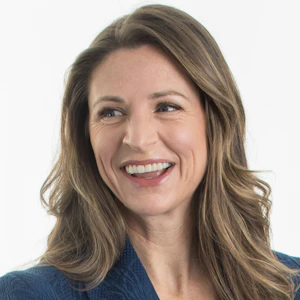
Amy Oldenburg
Amy Oldenburg
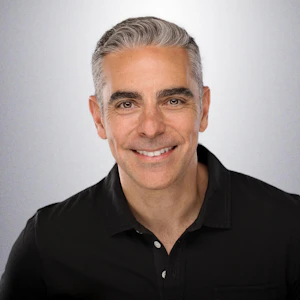
David Marcus
David Marcus

Matt Schultz
Matt Schultz
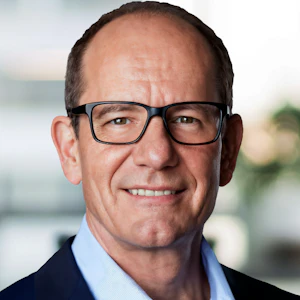
Fred Thiel
Fred Thiel
Throughout his career, Mr. Thiel has consistently driven rapid growth and created substantial shareholder value. Prior to MARA, Mr. Thiel served as the CEO of two other public companies, Local Corporation (NASDAQ: LOCM) and Lantronix, Inc (NASDAQ: LTRX). He has successfully raised billions in equity and debt through private and public offerings, led companies through IPOs, executed high-value exits to strategic and financial acquirers, and implemented effective M&A and roll-up strategies.
Mr. Thiel attended the Stockholm School of Economics and executive classes at Harvard Business School, and is fluent in English, Spanish, Swedish, and French. Mr. Thiel is the Chairman of the Board for Oden Technology, Inc. and is active in Young Presidents’ Organization where he has led initiatives in both the FinTech and Technology Networks.
A recognized voice in the industry, Fred frequently shares his insights on energy and technology with major media outlets like Bloomberg TV, CNBC, and FOX Business, contributing to vital discussions about the future of these sectors.
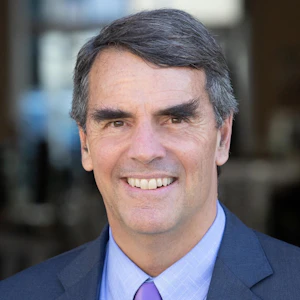
Tim Draper
Tim Draper
He is a supporter and global thought leader for entrepreneurs everywhere, and is a leading spokesperson for Bitcoin and decentralization, having won the Bitcoin US Marshall’s auction in 2014, invested in over 50 crypto companies, and led investments in Coinbase, Ledger, Tezos, and Bancor, among others.

Afroman
Afroman