Interactive Strategies to Improve as a Bitcoin Educator + Q&A
Speakers/Moderators

Arsh Molu
Arsh Molu

Satsie
Satsie
Prior to working in open source she was the lead backend engineer at Casa where she built software to make multisig safe and easy. When she's not busy chasing her two tiny bitcoiners, she is a co-organizer of Boston BitDevs and writes zines about bitcoin tech. She is passionate about empowering people to achieve higher levels of self sovereignty, and the communities needed to support that work.
You can find more of her work at https://satsie.dev


niftynei
niftynei
Session
Overview
This conversation focused on practical ways to improve Bitcoin education across different audiences, from students and grassroots communities to software developers and educators working internationally. Arsh Molu moderated a discussion with niftynei, John Dennehy, and Satsie, highlighting projects such as Base58 School of Engineering, My First Bitcoin, Bitcoin Dev Project, Bitcoin++, and the Bitcoin Students Network.
The panelists discussed common scaling challenges, especially funding, mentorship capacity, localization, and maintaining educational quality. They emphasized that Bitcoin education often depends on trusted local educators, hands-on learning, open source materials, and community networks rather than one-size-fits-all content.
A major theme was the role of AI and LLMs in Bitcoin education. The panel explored how AI can help localize curricula and lower barriers to technical learning, while also warning about AI-generated low-quality material, misinformation, and the need for human review and real-world community connection.
The Q&A covered how to introduce Bitcoin in financial literacy settings, whether to begin with sound money principles before Bitcoin, and how short modules, hands-on workshops, and tools like Saving Satoshi or the My First Bitcoin introductory materials can support teachers looking for unbiased educational resources.
All right, we'll let the crowd settle down for a second. We'll do some intros in the meantime. In this session we're going to talk about how to be a better Bitcoin educator. We're constantly on this mission of trying to get Bitcoin out there to our different communities. I'm joined by three amazing panelists and friends who I've known for several years now.
I'll start with my introduction. I'm Arsh. I run operations and our education program at the Human Rights Foundation, and I'm also the co-founder of the Bitcoin Students Network. I'll let niftynei, John, and Satsie introduce themselves as well.
Thanks, Arsh. Hey everyone, I am Lisa, also known as niftynei. Professionally I run a couple of projects, including Bitcoin++, which is a developer conference series. On the education side, I have a nonprofit focused on technical education for bitcoiners, particularly developers, but also STEM education workshops for classrooms and corporates. That's called the Base58 School of Engineering.
My name is John Dennehy, and I'm the founder of My First Bitcoin. We're a Bitcoin education nonprofit. We started in El Salvador in 2021, and now we've transitioned to an international footing. We support and help educators and education projects in 40 countries around the world with open source materials, frameworks, and templates.
Hi everyone. I lead the Bitcoin Dev Project. We are a developer outreach initiative creating tools and education for existing Bitcoin developers, but also for anyone who wants to get more involved in the space.
We'll have some questions here for the first half, but you'll also have a chance to ask the panelists questions in the back half.
First question, I think we can go in the same order. Like I mentioned earlier, we've known each other a few years now. I've seen the projects succeed and the amazing work that you do. What's been one key challenge in scaling your education initiatives?
For me, it's definitely figuring out how to get funding. Creating the curriculum is the fun part. Coming up with what to teach is really fun. Getting people involved as volunteers has been great. We've got some really amazing volunteers helping out, particularly on our workshop education side. But it would be really amazing to figure out how to get to the next level, whether that's finding the right grants or a tuition program for what we're doing, so that we can scale and bring people on more full time and get more people learning about how Bitcoin works.
Similar. It's probably a common problem in the space. I mentioned that we're a nonprofit. Funding is an issue. We've been around coming up on five years now, and for the first couple of years we only accepted donations and were volunteer based, which was amazing. It means that you have people who are really dedicated and their hearts are in it, but they have other priorities too. In order to really scale and be more professional, you have to pay people a decent salary. You have to pay the rent in order to scale up. That takes a lot of time. It took us five years to get to the point we're at now. If money were easier, maybe we could have done it a little bit faster.
Funding is particularly important because you want to be careful about the funding that you accept. There is more money out there, and there is money that is more accessible, but it comes with strings. I think for Bitcoin education, we have to be uncompromising that it is independent and impartial, and we're not speaking to improve the bottom line of company A or company B, or government A, or whatever it is. Keeping that in mind is also another limiting factor. Funding is super important.
For us, scaling becomes really difficult when it comes time to level up developers. We know that one-on-one mentorship works. That is a tried and true model. But with the type of volume that we have, we're still a small team and we don't have enough developers to go around to do that mentoring. I participate in organizing the BOSS challenge, and this year we had over 2,000 applicants. There comes a point where you can do all this studying and all these courses, and you just need someone to tell you that you need to rebase the PR, or that this person's feedback is really important. That one-on-one attention is extremely difficult to scale.
It's ironic because we're trying to teach people things, but then the bottleneck to teaching more people becomes the small group of people who have the initial understanding. We have this group of people who know a lot about this particular subject matter or section of Bitcoin, or whatever technical aspect, and the barrier to the next level is that we need twice as many people who have depth of understanding, who then can reach the next hundred people. But just doubling the number of people who have deep understanding takes time.
I don't want to take too much, but I'm really curious right now. We kind of live in the beginning of the AI and LLM era. I'm really curious to see how that impacts education and learning going forward.
We're going to come back to AI for sure. It's an obligatory question. Just as a follow-up on what you were saying, Satsie, given the work you're doing with the Bitcoin Dev Project, I think technical education is different from general education, and it has different audiences. How are you keeping your education fun and interactive while keeping it technically accurate? How are you dealing with that?
That's a challenge, and it's a really fun challenge. I'm personally very interested in producing educational content that uses many different mediums. As part of the Bitcoin Dev Project, we have traditional courses. We have one that can teach you Rust. We have guides and material. We also have interactive cohorts that people across the world have run for their own groups. We have a game called Saving Satoshi. It's a little bit of an interactive coding adventure. All this is fun, and I also like to write little zines. But to your point, getting it concise is really hard because you want to communicate things correctly, but you also don't want to overwhelm people. The tension there is a challenge, but it's fun.
That's a really good point, because it's different communities, as I mentioned, and people in different regions. John, My First Bitcoin has scaled to dozens of different countries and dozens of different languages. How have you been able to approach different places? Especially with our work at HRF, we're thinking about education and how it's different in different regimes versus in the West. How have you been looking at that?
Great question. I was actually thinking of this myself, so thanks for prompting this. Another challenge for us specifically, as we move from one location to trying to support education everywhere around the world, is how do we scale to make it global and still treat these cohorts or individuals as smaller groups with totally different contexts?
We're still figuring that out, but our answer thus far came out just a few days ago. We had three existing programs, and we just released three additional programs. The Bitcoin Diploma is our flagship, but we have five additional ones now. We did a lot of work on the backend with the file format and infrastructure. Now they are all designed to be able to put into an AI program to modify them.
There is this base. Let's take the Bitcoin Diploma. You could just use that, and maybe that serves you really well. But if you want to change the language, or change the context based on profession, gender, age, interest, or whatever, you can put that into AI and it can modify the program. That works for an individual student who is going to do it self-paced and learn on their own, or for a teacher.
The idea is, for example, I'm a teacher in Kenya and I'm teaching a group of ten people who are all electricians under 40. You put it into AI and it could change the language, or it could change the graphics, or it might change the examples. Rather than referencing dollars, it could reference shillings, or otherwise change the context to appeal to a much smaller audience. We built frameworks for the world, but we try to make an adapter for much smaller audiences.
We talked about students earlier. Lisa, you have been a part of the recent launch of the Bitcoin Scholars Fund, and we've also been working together on the Bitcoin Students Network and similar initiatives for the past few years. How are you feeling right now about educating students?
Honestly, I think there's a lot still to be done. When you say students, I think there are a lot of different groups. There are college students, primary school students, and secondary school students. The Bitcoin Scholars Fund project that we just launched is a new 501(c)(3). We just got word today that we're officially a 501(c)(3), which is very exciting and means we are officially accepting donations.
That project is aimed at creating a big carrot to get primary and secondary schools, and people who are already in the education system, incentivized to come and learn about how Bitcoin works through a scholarship fund. Their schools can get scholarships for the students if the educators at those schools prove some sort of mastery or understanding of Bitcoin. I think that's a fun way to start angling toward the educator level of the students.
Reaching students is difficult. When we're talking about education, I think of education as a perpetually grassroots problem. A lot of people learn things online, and a lot of information and new concepts are consumed through TikTok or Reels on Instagram. You can reach a lot of people through online media, but traditional education isn't going away. I think it's going to be grassroots, and that means person to person. You kind of have to know someone.
Satsie was talking about having mentors. John was talking about making sure that the educational information and curriculum they're putting out matches the specific groups that are using it. Students are another kind of grassroots organization. How do you reach them? At the college level, I think it's a lot of work. The Bitcoin Students Network goes through clubs that the students themselves are organizing. Then it becomes, how do you get in touch with them? How do you incentivize students to pay attention to this? How do you get their attention? How do you make this something they're interested in paying attention to? What's the hook?
At the primary and secondary school level, with something like the Bitcoin Scholars Fund, we are taking the approach that educators already have the audience of the students, for better or worse. Homeschooling is a separate thing, but a lot of students at those levels are locked into existing infrastructure and institutions. So how do you get those institutions interested and knowledgeable about Bitcoin so that they can do some of the grassroots education?
As promised, we're going to come back to AI. At the Human Rights Foundation, we're seeing how AI can completely transform organizations and help them scale. But increasingly we're also in a world of AI slop. As educators, when you're trying to make content, you want it to really tell a story. You want it to be accurate because you're building tools that haven't existed in the past. What's been your experience, maybe on the good side and the bad side of what you see?
AI is a wonderful tool that can be useful correctly and incorrectly, and we've seen both ends of the spectrum. First and foremost, the Bitcoin Dev Project does put out educational content. Sometimes we use AI to create visuals, explainers, and videos. I think the human editing part is very important there.
Also, as part of the BOSS challenge, we tried to use these code challenges as ways to sort through signal over noise. This past year, because the LLMs have gotten so good, it's been really difficult to see the signal over the noise. People have to get more creative. At a certain point, you can use AI for whatever you want, so nothing matters. But by that same reasoning, everything matters. You can do whatever you want now, and it becomes more meaningful if you choose to write a piece of software, not necessarily by hand, which is kind of a crazy thought given that we were all doing that two years ago, but not just throwing it into Claude and taking whatever comes out.
John, quality is a big issue. I've read through the diplomas. It's very intentional. If people can just plug this into AI, is that good? How are you looking at that?
It's a mixed bag. It's nuanced. As I mentioned before, AI is integral to our strategy to think global but act local. We want to serve educators all over the world, but AI is what enables us, or enables them, to make materials more relevant for their local context. Without AI, I don't know how we would approach that, so that's super helpful.
But there are multiple challenges. There is the challenge of poor quality. We're super particular. We put in a lot of work to make sure the materials and everything we create are of the best quality. We're going to have to compete with someone who puts five minutes of work in to make 50 different books. They could flood the market with that. They could spam the market with that. The quality won't be as good, but it is effectively spam. I think we're going to see that, and that is one major challenge.
Another challenge is the danger of leaning too heavily into AI and too heavily into the digital. Our solution to that is to pair it with a social layer that exists in the real world. As I mentioned, we work with projects in more than 40 countries around the world. One of the things we do is try to build community both digitally and in person. Digitally, we have a community and a monthly meeting where we get together and share best practices. Maybe you can find people and have a mentor-mentee relationship with different projects.
Also, this year we're doing educator unconferences roughly quarterly. We had one earlier this month in Kenya. The next one will be in June in Prague, and then later in the year in Indonesia and Colombia. We try to bring together people we work with, but it's also open to the public, to anyone interested in Bitcoin education. They can come together, share best practices, and actually meet people. Then they can form a connection and build this community. Otherwise, it can seem like we're in silos. We need to be connected, and not just in the digital realm, but in the physical realm. I think there's a danger that we lean too heavily into AI, whether it's AI slop and quality, or whether we think it's just going to do everything and we don't actually have to interact in the real world with each other.
Nifty, I know you have opinions about AI.
I get really excited about a future where people's ability to access information has only gotten better in some ways. I run a conference business, which is all about getting people together to talk about technical concepts. One of the challenges is that a lot of people won't come to Bitcoin conferences because they don't feel like they understand enough to show up. John is talking about the importance of getting people together. If people won't show up for your thing because they think it's outside of their depth, or too complicated, or they won't understand things, that really limits it.
Not to be too product-focused, but my market is small. For Bitcoin, in a development sense, it would be really great if more people felt like it was accessible. I get really excited about AI and LLMs in terms of the potential to increase the number of people who feel like this is something they can participate in. The barrier to entry for something technical, or something where in the past it would be hard to find good information, I like to believe has gone down. We'll see if I'm right about that.
I get less excited about the misinformation. A lot of the time I'll talk to an LLM about something, or ask questions about something I'm an expert in, and the answers are usually quite divergent from what I would say is actually the truth. I don't know how to combat that. I'm not really sure what the answer is. I do think it is convincing people to come and talk to other experts who do know things.
My worry is that people take what the LLM has to say as being an expert, rather than listening to the people who actually know what the truth is. You end up with people who have misunderstandings that are difficult to correct because they got it from a trusted expert source, which is the LLM, and they don't necessarily understand that LLMs are not to be trusted all the time. When they're good, they're great, but when they're wrong, they're very wrong. If you're consuming it as someone who doesn't know a lot about the topic, which is probably the majority of people asking questions, you don't know what you don't know. The LLM may be really helpful, but it could be harmful. Tread carefully.
Before we move to the interactive portion, really quick, I want to know what's next for your work. Also, if there are people who are newer to the education space and want to plug into what you're doing, how can they get involved?
Depending on what you're up to, if you're a grassroots organizer, you're an educator yourself, or you're looking to level up your own understanding of how Bitcoin works technically, wherever you are in your journey in Bitcoin, I would highly recommend you check out the project we're doing at Base58 called the Bitcoin workshop. We're doing a happy hour tomorrow night, I think 5 to 7, at Beer House. Try to hang out and check it out. It's a two-hour workshop that we've put together that works for a group or classroom, and it teaches you and the other people who are participating a lot about how Bitcoin works technically. You can check out more about that project at base58.school.
A good reference for My First Bitcoin is the website. That's where you can find existing materials and find out how to plug in and join the network that I mentioned. A brief preview of where we're heading: the release that I mentioned from this week, where we redeveloped things to make them more compatible with AI, is the direction we're heading in. There was a lot of backend work to make that happen for this release, and I'm sure there are going to be kinks, so we're going to learn a lot in the next few months.
Our new release schedule is a major release every two years and three point releases in between, so a point release every six months. The next one will be in October, and I'm sure we'll do a much better job from this release to October. In addition to that, probably late this year or maybe early next year, we're building a lot of other things. We're building an application. One thing on the application that I'm excited about is the idea of making a Duolingo for Bitcoin education, but also creating a peer-to-peer marketplace to make it easy for anyone who wants to learn about Bitcoin to connect with educators. Maybe in your local area you don't know where to start. Or if you're doing it online, maybe the time zone doesn't work for you. We want to create a peer-to-peer marketplace to connect people. That's what we're building toward.
As far as the Bitcoin Dev Project goes, we're continuing our search for talented individuals who want to participate in Bitcoin open source software. We believe it's a very viable and fulfilling career path. Tomorrow, I will be giving a talk at 2 p.m. in the open source workshop area on this. You can find us at Bitcoin Devs, and we'll continue to push out content and reach out to developers who are interested in working on Bitcoin full time.
On our side, we have a Bitcoin Development Fund where we grant educators all around the world who are doing work to produce conferences and do translation and localization. We're also running education for activists and nonprofit groups. If you want to learn more, you can reach out through the Human Rights Foundation. On the Bitcoin Students Network side, if you're curious about running your own club at school and want to plug into the resources we have, you can go to the Bitcoin Students Network.
Now moving into the interactive portion, I don't know if we have a mic roaming around, but feel free, if anyone has any questions, to come up here and I'll pass you my mic.
My name is Doug. I'm from Australia. I teach financial literacy back home in Australia as well. I'm a massive Bitcoin proponent. That's where my bread and butter is. But I've always noticed that in teaching students, if I focus solely on that element, some of them are skeptical. They have questions and the normal doubts because of everything they've seen, which I think is reasonable critique along the way.
My question is, when it comes down to the teaching of Bitcoin in particular, do you think the approach is better suited to teaching Bitcoin specifically, or teaching sound money principles and Austrian economics first? I found that if I teach it that way, then they naturally come to that conclusion. I'd like to know your thoughts on that.
My First Bitcoin is focused on introductory education. We are focused on the demographic you're talking about, people who really don't know anything about Bitcoin, and bringing them into the space. Our approach is similar to what you're saying. Almost all of our materials are in two parts. Roughly the first half is financial literacy: what is money, why is money, and how did we arrive at this moment? Most people don't know that, and that's the foundation. Then the second half is, okay, what is Bitcoin? Then we move on to Bitcoin. We've found that to be effective.
My question is really tactical. Pennsylvania just passed a law that personal finance needs to be taught in high schools. My wife is going to be teaching that. She brought the textbook home, and cryptocurrency is not in there anywhere. Bitcoin and cryptocurrency are not in there at all. Keeping in mind that the investing section and saving section build on the economics of balancing a checkbook and all that sort of stuff, you get about two weeks for the entire investing section, and it's not in a textbook. What do you have material-wise to bring in cryptocurrency in an unbiased fashion and make it look like it wasn't an add-on, so that it actually looks like it's part of the curriculum and is viable, not speculative and not all the things it was said to be four years ago?
That's a great question. A lot of the stuff that I work on is more on the STEM side than the personal finance side. But I really love the workshop that we do that teaches people how Bitcoin works. Again, it may be a little more STEM, but it's only two hours. You can go from not really understanding what an independent global ledger is to having touched a Bitcoin transaction and seen them move around in person. It's all hands on. There are no computers. It's getting people together with pen and paper.
I'm going to be doing a short demo of one section of what that workshop looks like tomorrow at the Freedom Hall stage, I think at 2:00 or sometime in the afternoon. It's a hands-on transaction thing. I'd love for you to come and participate and get an idea of what we're talking about with the transaction workshop. We're also doing a happy hour tomorrow to see the whole box and everything.
Unfortunately, it isn't really about savings and learning about money. It's more from first principles: what is this Bitcoin thing? What does it mean to transact on a distributed ledger? It's more nuts and bolts. What is it? What does transacting with money digitally even mean these days?
To add to that, Saving Satoshi is an educational coding game. The first three chapters cover some real basics. In the first chapter, you learn how to find and decode the hidden message in the Genesis block. The next two chapters are simulations that you walk through that teach you how mining works. This will be my second summer working with a professor at the USC Marshall School of Business and his economics class. They have one session every summer where they use that to teach Bitcoin in an unbiased way, where it's just, here is some technology, take it or leave it.
What could be relevant to your question is that we have a variety of different programs, but we also have an intro program that is designed to last one hour. It's the same format: roughly 30 minutes financial literacy and roughly 30 minutes Bitcoin education. That could potentially be something that you just plug in, because it's so short. It's only an hour. You can find all of that through My First Bitcoin.
My question is about the evolution or future of My First Bitcoin. My understanding is that it's a course, a series of lectures that a teacher can give. Do you see a future where that is an online course where you don't need to have the human leading the room, and you can just get to it somehow?
Yes. In fact, one of the new programs that we have is a self-paced Bitcoin Diploma. Because the Bitcoin Diploma is our flagship, we often add features to that first, and then maybe we might add self-paced versions for the other courses if that proves popular. But that already exists: a self-paced version where you can do it totally on your own.
In addition to that, some of the educators we work with are in person and some are already teaching online. That's part of the motivation for us to develop this peer marketplace. If you want to do it online with a teacher, not self-paced, where you're in a classroom but it's a digital classroom, often it might be a time zone thing. It doesn't have to be a teacher in the same city. It could be a teacher halfway around the world.
Longer term, I think it will break up as the system grows. It won't just be about finding the right time. Educators will be able to create more specific programs. For example, maybe I'm a social worker. Is there Bitcoin education geared toward social workers? You could look in the marketplace, and if you want to get really specific like that, it's probably not in this city. It's probably not something you can walk to. It might exist, but it might be in a faraway place. That's where online becomes really useful, to bring people together who may be quite far apart physically.
Awesome. We're right out of time. Thank you guys for joining us.
Similar
Sessions
Interactive Strategies to Improve as a Bitcoin Educator + Q&A
Arsh Molu
Arsh Molu
Satsie
Satsie
Prior to working in open source she was the lead backend engineer at Casa where she built software to make multisig safe and easy. When she's not busy chasing her two tiny bitcoiners, she is a co-organizer of Boston BitDevs and writes zines about bitcoin tech. She is passionate about empowering people to achieve higher levels of self sovereignty, and the communities needed to support that work.
You can find more of her work at https://satsie.dev
niftynei
niftynei
Interactive Strategies to Improve as a Bitcoin Educator + Q&A
Speakers/Moderators
Arsh Molu
Arsh Molu
Satsie
Satsie
Prior to working in open source she was the lead backend engineer at Casa where she built software to make multisig safe and easy. When she's not busy chasing her two tiny bitcoiners, she is a co-organizer of Boston BitDevs and writes zines about bitcoin tech. She is passionate about empowering people to achieve higher levels of self sovereignty, and the communities needed to support that work.
You can find more of her work at https://satsie.dev
niftynei
niftynei
The Bitcoin Developer Ecosystem
niftynei
niftynei
The Bitcoin Developer Ecosystem
Speakers/Moderators
niftynei
niftynei
Finding Your Home in Bitcoin Open-Source 🏡 🧡
Satsie
Satsie
Prior to working in open source she was the lead backend engineer at Casa where she built software to make multisig safe and easy. When she's not busy chasing her two tiny bitcoiners, she is a co-organizer of Boston BitDevs and writes zines about bitcoin tech. She is passionate about empowering people to achieve higher levels of self sovereignty, and the communities needed to support that work.
You can find more of her work at https://satsie.dev
Finding Your Home in Bitcoin Open-Source 🏡 🧡
You don't know what you don't know so in this session we'll demystify what it means to be a bitcoin open-source software (BOSS) developer including how it looks in practice, things that make this ecosystem especially unique (yes, even within in the larger world of open-source!), and ways to maximize your chances of success.
Speakers/Moderators
Satsie
Satsie
Prior to working in open source she was the lead backend engineer at Casa where she built software to make multisig safe and easy. When she's not busy chasing her two tiny bitcoiners, she is a co-organizer of Boston BitDevs and writes zines about bitcoin tech. She is passionate about empowering people to achieve higher levels of self sovereignty, and the communities needed to support that work.
You can find more of her work at https://satsie.dev
Other
Speakers

Michael Saylor
Michael Saylor
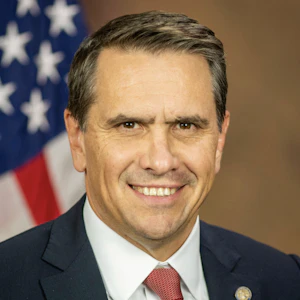
Todd Blanche
Todd Blanche
Biography of Deputy Attorney General Todd Blanche
The Honorable Todd Blanche is the 40th Deputy Attorney General of the United States, overseeing the work of the 115,000 dedicated employees who fulfill the Department of Justice’s mission at Main Justice, the FBI, DEA, U.S. Marshals, ATF, and 93 U.S. Attorney’s Offices.
Todd began his career at the Department where he served for over fifteen years in a variety of capacities, including as a contractor, a paralegal in the Criminal Division, and at the United States Attorney’s office for the Southern District of New York where he eventually became an AUSA and later a supervisor.
After leaving the Department, Todd worked as a criminal defense attorney that included representing President Donald Trump in three of the criminal cases brought against him in 2023 and 2024.
Following President Trump’s historic return to the White House, the President appointed Todd to work alongside Attorney General Pam Bondi to make America safe again. At the DOJ, Todd is working tirelessly to implement President Trump’s priorities that include confronting illegal protecting American businesses from fraud.
Todd has been married to his wonderful wife Kristine for nearly thirty years, is a father and grandfather.

Paul Atkins
Paul Atkins
Prior to returning to the SEC, Chairman Atkins was most recently chief executive of Patomak Global Partners, a company he founded in 2009. Chairman Atkins helped lead efforts to develop best practices for the digital asset sector. He served as an independent director and non-executive chairman of the board of BATS Global Markets, Inc. from 2012 to 2015.
Chairman Atkins was appointed by President George W. Bush to serve as a Commissioner of the SEC from 2002 to 2008. During his tenure, he advocated for transparency, consistency, and the use of cost-benefit analysis at the agency. Chairman Atkins also represented the SEC at meetings of the President’s Working Group on Financial Markets and the U.S.-EU Transatlantic Economic Council. From 2009 to 2010, he was appointed a member of the Congressional Oversight Panel for the Troubled Asset Relief Program.
Before serving as an SEC Commissioner, Chairman Atkins was a consultant on securities and investment management industry matters, especially regarding issues of strategy, regulatory compliance, risk management, new product development, and organizational control.
From 1990 to 1994, Chairman Atkins served on the staff of two chairmen of the SEC, Richard C. Breeden and Arthur Levitt, ultimately as chief of staff and counselor, respectively. He received the SEC’s 1992 Law and Policy Award for work regarding corporate governance matters.
Chairman Atkins began his career as a lawyer in New York, focusing on a wide range of corporate transactions for U.S. and foreign clients, including public and private securities offerings and mergers and acquisitions. He was resident for 2½ years in his firm's Paris office and admitted as conseil juridique in France.
A member of the New York and Florida bars, Chairman Atkins received his J.D. from Vanderbilt University School of Law in 1983 and was Senior Student Writing Editor of the Vanderbilt Law Review. He received his A.B., Phi Beta Kappa, from Wofford College in 1980.
Originally from Lillington, North Carolina, Chairman Atkins grew up in Tampa, Florida. He and his wife Sarah have three sons.

Mike Selig
Mike Selig
Chairman Selig brings to the role deep public and private sector experience working with a wide range of stakeholders across agriculture, energy, financial, and digital asset industries, which rely upon and operate in CFTC-regulated markets.
Prior to his leadership at the CFTC, Chairman Selig most recently served as chief counsel of the Securities and Exchange Commission’s Crypto Task Force and senior advisor to SEC Chairman Paul S. Atkins. In this role, Chairman Selig helped to develop a clear regulatory framework for digital asset securities markets, harmonize the SEC and CFTC regulatory regimes, modernize the agency’s rules to reflect new and emerging technologies, and put an end to regulation by enforcement. He also participated in the President’s Working Group on Digital Asset Markets and contributed to its report on “Strengthening American Leadership in Digital Financial Technology.”
Prior to government service, Chairman Selig was a partner at an international law firm, focusing on derivatives and securities regulatory matters. During his years in private practice, he represented a broad range of clients subject to regulation by the CFTC, including commercial end users, futures commission merchants, commodity trading advisors, swap dealers, designated contract markets, derivatives clearing organizations, and digital asset firms. Chairman Selig advised clients on compliance with the Commodity Exchange Act and the CFTC’s rules and regulations thereunder, including in connection with registration applications and obligations, enforcement matters, and complex transactions.
Chairman Selig earned his law degree from The George Washington University Law School and was articles editor of The George Washington Law Review. He received his undergraduate degree from Florida State University.

David Bailey
David Bailey

Eric Trump
Eric Trump
Mr. Trump also serves as Executive Vice President of The Trump Organization, where he oversees the global management and operations of the Trump family’s extensive real estate portfolio. This includes Trump Hotels, Trump Golf, commercial and residential real estate, Trump Estates, and Trump Winery. Known for his hands-on leadership and strong market instincts, he has played a key role in expanding the company’s presence across major U.S. and international markets.
A globally recognized business leader and public figure, Mr. Trump is a prominent advocate for Bitcoin and decentralized finance. He is a co-founder of World Liberty Financial, a decentralized finance (DeFi) platform, and serves on the Board of Advisors of Metaplanet, Japan’s largest corporate holder of Bitcoin.
Beyond his business activities, Mr. Trump has helped raise more than $50 million for St. Jude Children’s Research Hospital in the fight against pediatric cancer, a philanthropic mission he began at age 21.
Mr. Trump earned a degree in Finance and Management from Georgetown University. He currently resides in Florida with his wife, Lara, and their two children. He is also the author of Under Siege, his memoir published in October 2025.
Jack Mallers
Jack Mallers
Cynthia Lummis
Cynthia Lummis
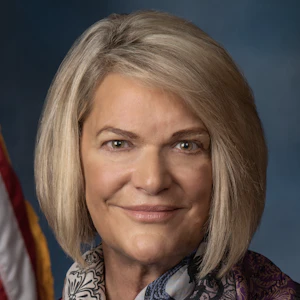
As the first-ever Chair of the Senate Banking Subcommittee on Digital Assets, Senator Lummis is the architect of the legislative framework shaping America's digital asset future. She introduced the landmark Lummis-Gillibrand Responsible Financial Innovation Act, the first comprehensive bipartisan crypto regulatory framework in Senate history. She co-authored the GENIUS Act — the first federal stablecoin law ever enacted — and introduced the BITCOIN Act, which would establish a U.S. strategic Bitcoin reserve of up to one million BTC. She is leading the Clarity Act, which will bring long-overdue regulatory certainty to the digital asset industry. She has also championed digital asset tax reform, including a de minimis exemption for small transactions and equal tax treatment for miners and stakers.
Known as Congress' "Crypto Queen," Senator Lummis represents Wyoming — a state she has helped build into one of the most digital asset-friendly regulatory environments in the nation. Before serving in the Senate, she served 14 years in the Wyoming Legislature, eight years as Wyoming State Treasurer, and eight years in the U.S. House. She is a three-time graduate of the University of Wyoming.
Her work represents a crucial bridge between traditional financial systems and the emerging digital economy, ensuring America leads the world in financial innovation while protecting the individual freedoms that define it.

Adam Back
Adam Back
Amy Oldenburg
Amy Oldenburg
David Marcus
David Marcus

Matt Schultz
Matt Schultz
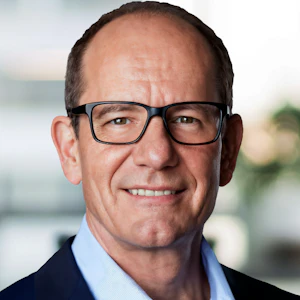
Fred Thiel
Fred Thiel
Throughout his career, Mr. Thiel has consistently driven rapid growth and created substantial shareholder value. Prior to MARA, Mr. Thiel served as the CEO of two other public companies, Local Corporation (NASDAQ: LOCM) and Lantronix, Inc (NASDAQ: LTRX). He has successfully raised billions in equity and debt through private and public offerings, led companies through IPOs, executed high-value exits to strategic and financial acquirers, and implemented effective M&A and roll-up strategies.
Mr. Thiel attended the Stockholm School of Economics and executive classes at Harvard Business School, and is fluent in English, Spanish, Swedish, and French. Mr. Thiel is the Chairman of the Board for Oden Technology, Inc. and is active in Young Presidents’ Organization where he has led initiatives in both the FinTech and Technology Networks.
A recognized voice in the industry, Fred frequently shares his insights on energy and technology with major media outlets like Bloomberg TV, CNBC, and FOX Business, contributing to vital discussions about the future of these sectors.
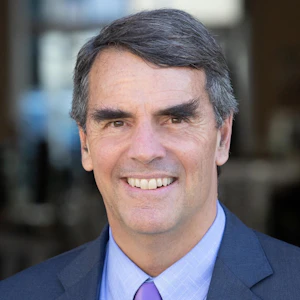
Tim Draper
Tim Draper
He is a supporter and global thought leader for entrepreneurs everywhere, and is a leading spokesperson for Bitcoin and decentralization, having won the Bitcoin US Marshall’s auction in 2014, invested in over 50 crypto companies, and led investments in Coinbase, Ledger, Tezos, and Bancor, among others.

Afroman
Afroman