Is Technology Making Democracy Obsolete?
In this Lincoln-Douglas-style debate, Mike Brock and Curtis Yarvin tackle this foundational question about the future of western civilazation.
Speakers/Moderators

David Zell
David Zell
Curtis Yarvin
Curtis Yarvin

Session
Overview
Mike Brock and Curtis Yarvin debate whether liberal democracy is an obsolete political operating system and whether it should be replaced by a sovereign corporation. Moderated by David Zell, the discussion uses a Lincoln-Douglas-style format focused on political legitimacy, institutional failure, monarchy, oligarchy, populism, and liberal rights.
Yarvin argues that the word democracy has become imprecise, split between progressivism and populism, and that modern governments should be judged by how well they govern rather than by democratic labels. He presents monarchy and corporate governance as models for aligning leadership incentives with long-term stewardship, including a brief reference to blockchain-based governance structures.
Brock defends liberal democracy as limited democracy constrained by rights, constitutionalism, and institutions. He challenges Yarvin’s use of Aristotle, argues for the American experiment in self-government, and acknowledges institutional capture while framing it as a problem to reform rather than a reason to abandon democracy.
The debate matters because it connects long-running questions in political philosophy with today’s concerns about technological power, elite institutions, state capacity, and the future of governance in a digitally coordinated world.
Well, I'm very excited and honored to moderate today's debate. I'm going to quickly give you all a roadmap of what you're going to see, and then sit back and let these two get at it.
Today, Mike Brock and Curtis Yarvin are debating the following resolution: liberal democracy is an obsolete operating system that should be replaced by a sovereign corporation.
Taking the affirmative in today's debate is writer, computer scientist, and founder of Urbit, Curtis Yarvin. Taking the negative is Mike Brock, former tech executive and writer.
What you're going to see today is a structured clash of ideas. Curtis will speak first. Mike will cross-examine him. Mike will speak. Curtis will cross-examine him. The affirmative will give a rebuttal, the negative will give a rebuttal, and the affirmative will give closing thoughts.
I hope you find this engaging and educational. So with that, we'll turn it over to you, Curtis.
Thank you so much, and hello, Vegas.
I'm going to try to give a six-minute lecture in political theory and political science, which is something you probably think you already know about, but unfortunately, you have the misfortune of living in the 21st century, where we understand these things very poorly.
I'd like to start with a quote from the great English poet Alexander Pope, who, roughly 250 years ago, came up with a lovely little couplet. He said: For forms of government, let fools contest; whatever governs best is best.
Now, the audience is a little big to do a show of hands, and the lights are a little bright, but I don't know how many people here think they genuinely live in a well-governed country. That would certainly not be me, and probably not most of the people here.
But probably most of the people in this room believe in this word democracy, which is a beautiful word and an abstraction that actually has many different meanings. I'm going to argue that we should not be using this word, because it has two different meanings. In the 20th century, thanks to certain wars that we have had, democracy becomes essentially a word just meaning your government is legitimate.
For example, North Korea, the DPRK, the Democratic People's Republic of Korea, that's three synonyms for democracy and one place name. And it's a monarchy, and not a great one at that. These words can be very tricky and very specious.
Before we talk about this subject, I don't know if my interlocutor will agree with me, but there are essentially two things that we call democracy in the world today, which, to use words that are non-pejorative and are understood by the people behind these programs, I would call progressivism and populism.
Progressivism is essentially the belief, very specific and very current to the 20th century, that the state should be governed by prestigious institutions, that experts should run everything, which seems almost too obvious to deny. We have all of these beautiful, prestigious institutions. We have Ivy League universities, great foundations, great institutions of journalism. All of these orbit around an intellectual elite class that staffs these institutions and tries very hard to get into them. That, for me, is progressivism, which I think is a word that its supporters would be very comfortable with.
On the other side, you have populism. Populism is the belief that the way a government should work is that the people should elect politicians, and the politicians should be in charge of the government. If you believe this in 2026, you're a populist.
We observe that what we call populism sounds a lot like the literal meaning of democracy, rule by the people. I think there are very good arguments against both populism and progressivism, but I'm not sure which one my interlocutor is going to defend, because he's defending this word democracy.
Does he actually believe that elected politicians should be in charge of the government, that Donald Trump should be in charge of the Department of Justice? I don't know that he actually believes that. I would sort of doubt that he believes that. From everything I know, he seems to be a progressive.
Let me close, in a way, with Aristotle, who lived 2,500 years ago and had a very simple way of defining forms of government. He said there are three forms of government: government by the one, the few, and the many. The one being monarchy, the few being oligarchy, and the many being democracy in the literal sense of the word.
When we compare progressivism to populism, what we see is that both, like anyone struggling for legitimacy, claim this word democracy. But progressivism seems like an absolutely dead match for whatever Aristotle would call oligarchy. That doesn't make it bad. That's just a word. All of these forms have positive and negative forms. They can be good or bad.
And of course, populism, the idea that elected politicians, whether it's Donald Trump or Tammany Hall or someone sort of corrupt, would control the government, we're like, oh my God, having politicians in charge of the government, that's not democracy.
When we sum both of these things up, I think there are errors or misunderstandings in the way both sides regard each other. But when I look at the contest for the word democracy between populism and progressivism, it sort of seems like a bad marriage. We all know people who have bad marriages. We look at this bad marriage and we're like, the problem is, he's right about her, but she's also right about him.
That's kind of the way I see the relationship between populism and progressivism, or Aristotelian democracy and Aristotelian oligarchy. When you're in a hole, stop digging. What's the other form? It's the form that almost all of human history has used. Let's see if we maybe can't get it right in the 21st century. Thank you.
Well, let's talk about Aristotle, because I think Mr. Yarvin has greatly misunderstood the metaphysics of Aristotle's political forms. He says Aristotle identified three forms of government. That's not true. He identified six, as it turns out.
I will name them in order: monarchy, tyranny, aristocracy, oligarchy, polity, and democracy. Democracy, he meant as the corrupted form of polity, which was this idea that, as he was extracting from his lessons from Plato and on the two types of knowledge, the techne and the phronesis, the highest virtue would be a society, a polity, collectively in pursuit of truth, of phronesis, the understanding of how to debate and argue with others in order to share a space.
This idea goes back to Socrates, right? In his final decision to drink the hemlock rather than flee the city, as his followers, Plato among them, had agreed to ship him out of the city.
This was a completely elementary error as it pertains to the political philosophy of Aristotle. I want to come back to that idea of polity, Aristotle's idea. It was much on the mind of the founders of this country, of course, when they thought about this idea of democracy. He's correct that Aristotle saw democracy as a problem, as he defined it, because of the issue of the tyranny of the majority, the idea that the majority, a mob...
Oh, okay, so you have a question for Curtis?
Yeah, this is my thing. My question here is, I don't want to come up with a question off of this fundamental error. We have come so far as a society to overcome the worst impulses of human nature, greatly on display.
He mentions Trump as the example of the failure of democracy. I don't agree. I think the success of democracy will be demonstrated when the man is removed from office.
So my question to Yarvin is, I mean, I'm trying to respect the format, but I don't know why I should trust anything you have to say after such a fundamental error of philosophy.
Okay. It is now your speech, Mike. Technically, Curtis, given the break in format, I want to give you a two- or three-minute chance to respond.
Should I use the podium?
Sure, yeah.
All right.
But after this, let's try to get back onto the agreed-upon structure.
All right. Aristotle does, of course, define six forms of government, but he's simply taking the three neutral forms of by the many, by the few, and by the one, and basically saying either of these can be good or bad, and we'll give different names to the good and bad ones.
He calls monarchy good and tyranny bad. I simplified that because I think separating the is and the ought are really important. It's funny because actually the Greek word tyrant is originally a neutral word. It simply means government by the one.
The thing that I didn't get from Mike is a clear understanding of how he can believe in democracy and be opposed to populism. Let me sharpen that a little bit more by not talking about Trump, someone who I have very mixed feelings about, like probably many in this room.
Let's talk about the leader of El Salvador, Bukele. Bukele has a popularity rating of something like 90%. He's, I think, actually the most popular world leader in the world today. He also was democratically elected. And yet many people would call him a dictator or a king. In fact, I think he actually once put both of those descriptions on his own Twitter bio.
So the question is, is El Salvador a democracy or is it not a democracy? And why is it not a democracy? Because it's certainly not a place in which progressivism is in charge.
My suspicion with Mike is that basically what he means by democracy simply comes down to people like him are in charge, which, for me, is progressivism. I'd like to know if there's any subtlety there, or if he believes that a power opposed to him can be legitimate at all.
Okay, Mike, we're going to make your next speech four minutes instead of seven, but it's on you.
Well, I must insist that he's wrong in his reconstruction of Aristotle. He invokes Hume's is-ought distinction, also known as Hume's guillotine. I'm quite an expert on this subject, as a matter of fact. It's also related, if you're in the social sciences and are familiar with the fact-value distinction.
That's this idea that from the plain facts and observations of the world, of the relational truths that we can extract observing our reality, you cannot construct an ought. You can't compel action. You can't give me a reason by simply observing. You can't say, by the simple act of understanding how a rocket works, that you should go to the moon. That's the is-ought distinction. That's what that means. It has nothing to do with the forms of government that Aristotle was describing in the six forms.
I must, for the sake of epistemic responsibility for the people watching this debate, ask you to not accept this false version of Aristotle's politics, of his political theory.
As for the point about Mr. Bukele and his popularity, if you want me to admit that a dictator can be popular, there are examples of this. But let's talk about Aristotle's version of monarchy, this virtuous monarchy.
I think the tradition of English liberty is the thing that we should look toward, which tries to embody the Aristotelian virtue of the monarchy. You have institutional separation of powers. The church is responsible for the coronation. You have parliamentary supremacy as an institutional check on the monarchy.
A serious monarchist thinks about this. Another big problem in monarchist theory is the problem of succession. It's one of the reasons why, at least in the case of the British royal family, and this is me making the positive case for monarchy, which Curtis does so poorly, with the British royal family, which dates back to William of Orange, who was the beginning of English monarchy, the Glorious Revolution, the Dutch Republic basically conspired to overthrow the king, and that's how this all started.
There is a serious intellectual tradition about monarchy, as you can well see, I understand well. If Aristotle were here, and if we were to walk him into the room, I don't see how he wouldn't understand what Curtis is saying to be advocating for what he would have described as oligarchy, probably going on tyranny. The CEO dictator, the techne leader, was definitely the kind of person that Aristotle thought should not be leader. So did Plato, too, if you read Plato's Republic very carefully.
By the way, I do not advocate for pure democracy. I support limited democracy. Liberal democracy is limited democracy, limited by liberal rights that prevent the majority from trampling on the minority: free speech, property rights. These are all things that liberals like myself support. He calls me a progressive. I actually don't identify that way, and I don't think a lot of progressives that listen to me consider me one. Anyways, that's my response to what Mr. Yarvin said.
All right, thank you, Mr. Brock. Mr. Yarvin, you now have a three-minute direct examination of Mike, if you want to ask him questions.
All right, let me think for a minute and try to get some questions out of what we've heard from Mike.
What do you think our ancestors would think when they look at the world we live in today? If they were able to, say, walk down the Strip? Let's say the founders. Have you walked down the Strip here?
I was joking with a friend before I came in here, just to walk down the Las Vegas Strip is the best argument against democracy I've ever seen. Have you tried that?
No.
When you talk about limited democracy, let me try to rephrase what you're saying, and then we can see if you think it's a straw man or not. When we talk about limited democracy, we're like, all right, yes, the mob killed Socrates. We need some powers that are outside democracy, that are unaccountable in some sense.
You would agree that, for example, the Supreme Court is unaccountable. The New York Times is unaccountable. Would you say the New York Times is unaccountable?
No.
Who is it accountable to?
It is accountable to society at large. It is accountable to its readers, the people who pay, its subscribers. I might agree with you, Mr. Yarvin, that the accountability structures we have in society are broken, and they're unfair, and they protect the elite.
I want to be clear. I listen to what you say about the cathedral, and I recognize the same elite self-protection class that you do. I just simply look at that and see it as a failure of liberal democracy to protect its institutions from capture. You look at it and see it as proof that liberal democracy has failed.
I believe, like the great tradition has believed going back to the Enlightenment, that liberal democracy is a thing that must be continuously fought for. That is what was meant when it was famously said that it is our democracy, if we can keep it, on the steps of the Constitutional Convention.
Let me explain for a moment, and then you can agree with me or call me incorrect or whatever, about how the New York Times is actually held accountable. I don't know if you've ever tried to cancel your subscription to the New York Times. It's almost impossible.
Maybe we should pass a consumer protection law and make it work. How about that? I know you libertarians don't like those things, right?
Alas, the New York Times is quite above any law. I think they'd actually just ignore it. In fact, I think the things that they do when you try to cancel your subscription are that bad.
Let me explain, since I have four seconds, who the New York Times is accountable to. It's accountable to its shareholders. It has two classes of shareholders, Class A and Class B. The Class A shareholders are held entirely by the descendants of Adolph Ochs, who lived 150 years ago. The way the New York Times is governed is that it is a fifth-generation hereditary absolute monarchy.
Okay. Do you like that or do you not like that?
It's not a monarchy.
It sure is.
It's a corporation.
Curtis, you now have a four-minute rebuttal.
All right, since we're talking about corporations, it is a corporation. I have a lot of respect for the New York Times, even though I have a lot of disagreements with it, because it's a very powerful structure. If you were to select the most powerful structure in our world today, I would say the New York Times is quite a bit more powerful than Donald Trump could ever even imagine being.
Of course, as Mike says, it's a corporation. The corporation elects a CEO, and the CEO today is the young A.G. Sulzberger. What's interesting about the Times is that it's sort of the last newspaper where the publisher really controls the newspaper. Jeff Bezos was trying to control the Washington Post, which he bought for like $200 million. He tried to change one editorial and almost destroyed the paper. But the Sulzbergers are the last hereditary monarchy from the great days of the newspaper oligarchs left standing, and they actually can control the news desk.
I think it's actually a little bit inspiring, as a supporter of monarchy, the sense of responsibility that they feel, even when I think their choices are very misguided.
So let's talk a little bit about monarchy and how to do it well. What I see when I look around me is that we're in a very poorly governed country, and the incredibly low quality of government that we see is mitigated and disarmed by the incredible technology that we have.
The correct comparison, if you're comparing us to successful monarchy, like say Elizabeth I, is to imagine Elizabeth I if she had an iPhone. Don't imagine 2026 but there's no antibiotics. Imagine Elizabeth I with the internet.
If we look at the question that Mike brought up, the question of how you get a good monarch, because there's a lot of worrying about that, the first thing I'd like to say is that when you're in a hole, stop digging, and the perfect is the enemy of the good. There's absolutely no perfect government on Earth. There has never been one. There will never be one. It simply doesn't work like that.
The problem is, what we have is extremely bad and, in fact, laughably bad. There are many, many things wrong with the government of China. I'm not a big fan of the CCP overall, but they laugh at us, and they have reason to laugh at us.
When you run a private corporation, the important thing is essentially aligning the interests of the leadership with the interests of the corporation. What that translates to in a government, in a monarchy, is that the interests of the king and the interests of the regime are aligned with the interests of the country.
When you're a CEO, you don't see your corporation as a place to loot. That's a very defective CEO that loots the corporation. They basically see their stewardship of the entire thing as part of their job. If you have a hereditary royal family, it's like a family business, like the New York Times. A.G. Sulzberger wants to pass the New York Times on to his great-great-grandchildren.
The way that's typically done in the private sector is you have a board of directors. If you're not the New York Times, if you're a normal corporation, you have a board of directors who selects the CEO. The board of directors does not hold power itself because they would be corrupted by power. They basically ensure the accountability of the CEO.
Translating that to the sovereign level is a little tricky. The blockchain actually helps quite a bit with that, because the blockchain can be above sovereignty. What you essentially need is an anonymous board of directors who cannot be affected by political power. That's kind of my dream. You can go online and see I have a paper called OAO on my Substack, Gray Mirror. You can read that, but I'm out of time.
All right, Mike, you have a final six-minute rebuttal, and then Curtis, you'll bring us home with a final speech as well.
He makes the point about the hereditary incentive structure. To come back to the tradition of English liberty in the British Westminster arrangement, which dates back to the Magna Carta and really becomes institutionalized after William of Orange was put on the throne as part of the Glorious Revolution, I think it's the ideal case, and it's the case that you should be making if you're making the monarchist argument.
Traditionally, the next in line to the throne would serve in the military, to have a stake in the society. The royal family makes a lot of money, but they give it all to the state and then Westminster gives some of it back as part of that. There are all these checks and balances and all this interesting stuff that limits this.
The British system is not an absolute monarchy. It's a limited monarchy, in a sense. It's probably the best case that you can do. If there is a royal family that has modeled that virtue that he's talking about, it's the British royal family.
But it's certainly not Mr. Yarvin's friend Peter Thiel, who sits there and says that we should all want to be monopolists. We want to free ourselves of this nonsense belief that we should engage in charity. We need to get everybody out of the way. We have to enslave these proles and make them subjects, make them a customer class of our network states.
He defeats his own argument here, because on one hand, he exists in a clan of people who are literally the corrupt virtues that Aristotle describes in oligarchy and tyranny, completely embodied by this tech-right formation. It is the opposite.
If you're going to actually make the case for monarchy, you'd try to put something together like the British royal family. The idea of constitutional monarchy is that the royal family is subject to the law. So if the king murders someone, the king has to give up the throne and stand trial for murder. That's part of the agreement of the Magna Carta. That's not an absolute monarch.
That's probably been the closest example of an actual monarchy that tries to embody the Aristotelian virtues. Yarvin doesn't even make that case. That would actually be as close as you can get to a compelling case for monarchy, and I'm making it for him. I'm making the argument he should be making. It's the one I disagree with.
I'm on this side of the American Revolution. I think we should have cast that off. If you're looking at the Epstein scandal, which is currently making its way through Windsor Palace right now, you can sort of see the problem, right? The succession problem, the problem that serious monarchical theorists have dealt with for generations.
I think the American experiment, our experiment in trying to embody Aristotle's polity, is a beautiful idea. The idea that we can govern ourselves, that we can take responsibility for ourselves, and that we can build institutions in order to deal with our arguments, so that we can share this space, share this beautiful country, toward a more perfect union, right in the preamble of our Constitution.
I think that's a beautiful idea. I think it's an idea that I embody. It's why I'm up here. I'm defending that idea. I think this experiment should go on. My interlocutor here would like to end that experiment. How pathetic. How could we think so lowly of ourselves that we can't take on this endeavor, this idea of self-government?
I think it's a beautiful idea. People are sitting here determining we should give it up because the lines at the DMV are too long and the bureaucrats behind the counter are so incompetent. Look how easy it is for me to order my Tesla through the website. I get it. Government is hard. It's hard to work together, to distribute power, to maintain popular sovereignty.
If Mr. Yarvin wants me to admit that a bunch of special interests have captured a lot of our government and created an NGO industrial complex, I mean, I'm there with him. Let's burn all that down. Let's get back to a responsible, constitutional, self-governing republic. That's what we should do, in the tradition of limited democracy in this country, legitimated through elections in our Congress.
I think that's a great idea. I think we should continue it. I think we are being given an opportunity with this great failure to pursue that renewal. It's what I'm advocating for. I suggest you support my proposition in this debate, which is the counter to the question that was on the table with us this afternoon. I've lost track of time.
Thank you, Mike, for coming out here. It's not always easy being in front of a crowd that is not necessarily sympathetic to your perspective, so I think we owe Mike a lot for showing up and giving it his all today.
My response to Mike's closing statement is that it contained a lot of beautiful abstractions. I think it's very important, especially when you look at your reality and you're like, this reality is not working very well, to think in terms of concrete realities rather than windy, beautiful abstractions.
There's a really great book written in the mid-20th century that, from my perspective, is the best introduction to political science from the 20th century that exists. It's called The Machiavellians: Defenders of Freedom, and it's by James Burnham.
The point that Burnham makes is that every society in history sort of does this thing where they have these beautiful, windy abstractions. They use words like we a lot, we the people, et cetera, checks and balances. If you inquire into what these words mean, you're always finding things where you're just like, wait a second.
For example, we have this separation of powers idea, the legislative and the executive. Then you look at the way that Congress actually works and you see that, number one, Congress completely runs the executive branch. It dictates personnel, policy, and budget, most important of all.
Number two, Congress is completely democratic in theory and completely undemocratic in practice. The House of Representatives is gerrymandered to within an inch of its life. It has a 98% incumbency rate. It looks like the Supreme Soviet out there. By the way, the Soviets also had a very beautiful constitution, which contained many of the same abstractions.
If you're able to penetrate past these abstractions, that's great. The other thing that I would warn people about is that this is not a new idea. Propaganda is not a new invention. For example, Mike has mentioned Magna Carta a few times, or the settlement of the Glorious Revolution in 1688.
Well, Magna Carta was something that nobody talked about ever at all in the 16th century, the century of the great kings and queens of England, of Henry VIII and Elizabeth I. No one talked about it. It was a dead letter. It was essentially reinvented as part of a Puritan campaign of lawfare to dethrone Charles I in the early 17th century.
When you look at the past, you'll see that people are full of windy abstractions just like now. If you can penetrate to those ice-cold political realities, you'll never talk about Magna Carta ever again. We have to live in the real world because we have serious problems.
All right, let's give it up for both of our debaters today. Thank you both. Thank you, everyone.
Similar
Sessions
Is Technology Making Democracy Obsolete?
David Zell
David Zell
Curtis Yarvin
Curtis Yarvin
Is Technology Making Democracy Obsolete?
In this Lincoln-Douglas-style debate, Mike Brock and Curtis Yarvin tackle this foundational question about the future of western civilazation.
Speakers/Moderators
David Zell
David Zell
Curtis Yarvin
Curtis Yarvin
Other
Speakers

Michael Saylor
Michael Saylor
Todd Blanche
Todd Blanche
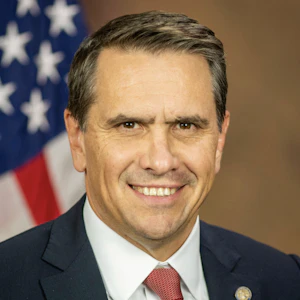
Biography of Deputy Attorney General Todd Blanche
The Honorable Todd Blanche is the 40th Deputy Attorney General of the United States, overseeing the work of the 115,000 dedicated employees who fulfill the Department of Justice’s mission at Main Justice, the FBI, DEA, U.S. Marshals, ATF, and 93 U.S. Attorney’s Offices.
Todd began his career at the Department where he served for over fifteen years in a variety of capacities, including as a contractor, a paralegal in the Criminal Division, and at the United States Attorney’s office for the Southern District of New York where he eventually became an AUSA and later a supervisor.
After leaving the Department, Todd worked as a criminal defense attorney that included representing President Donald Trump in three of the criminal cases brought against him in 2023 and 2024.
Following President Trump’s historic return to the White House, the President appointed Todd to work alongside Attorney General Pam Bondi to make America safe again. At the DOJ, Todd is working tirelessly to implement President Trump’s priorities that include confronting illegal protecting American businesses from fraud.
Todd has been married to his wonderful wife Kristine for nearly thirty years, is a father and grandfather.

Paul Atkins
Paul Atkins
Prior to returning to the SEC, Chairman Atkins was most recently chief executive of Patomak Global Partners, a company he founded in 2009. Chairman Atkins helped lead efforts to develop best practices for the digital asset sector. He served as an independent director and non-executive chairman of the board of BATS Global Markets, Inc. from 2012 to 2015.
Chairman Atkins was appointed by President George W. Bush to serve as a Commissioner of the SEC from 2002 to 2008. During his tenure, he advocated for transparency, consistency, and the use of cost-benefit analysis at the agency. Chairman Atkins also represented the SEC at meetings of the President’s Working Group on Financial Markets and the U.S.-EU Transatlantic Economic Council. From 2009 to 2010, he was appointed a member of the Congressional Oversight Panel for the Troubled Asset Relief Program.
Before serving as an SEC Commissioner, Chairman Atkins was a consultant on securities and investment management industry matters, especially regarding issues of strategy, regulatory compliance, risk management, new product development, and organizational control.
From 1990 to 1994, Chairman Atkins served on the staff of two chairmen of the SEC, Richard C. Breeden and Arthur Levitt, ultimately as chief of staff and counselor, respectively. He received the SEC’s 1992 Law and Policy Award for work regarding corporate governance matters.
Chairman Atkins began his career as a lawyer in New York, focusing on a wide range of corporate transactions for U.S. and foreign clients, including public and private securities offerings and mergers and acquisitions. He was resident for 2½ years in his firm's Paris office and admitted as conseil juridique in France.
A member of the New York and Florida bars, Chairman Atkins received his J.D. from Vanderbilt University School of Law in 1983 and was Senior Student Writing Editor of the Vanderbilt Law Review. He received his A.B., Phi Beta Kappa, from Wofford College in 1980.
Originally from Lillington, North Carolina, Chairman Atkins grew up in Tampa, Florida. He and his wife Sarah have three sons.

Mike Selig
Mike Selig
Chairman Selig brings to the role deep public and private sector experience working with a wide range of stakeholders across agriculture, energy, financial, and digital asset industries, which rely upon and operate in CFTC-regulated markets.
Prior to his leadership at the CFTC, Chairman Selig most recently served as chief counsel of the Securities and Exchange Commission’s Crypto Task Force and senior advisor to SEC Chairman Paul S. Atkins. In this role, Chairman Selig helped to develop a clear regulatory framework for digital asset securities markets, harmonize the SEC and CFTC regulatory regimes, modernize the agency’s rules to reflect new and emerging technologies, and put an end to regulation by enforcement. He also participated in the President’s Working Group on Digital Asset Markets and contributed to its report on “Strengthening American Leadership in Digital Financial Technology.”
Prior to government service, Chairman Selig was a partner at an international law firm, focusing on derivatives and securities regulatory matters. During his years in private practice, he represented a broad range of clients subject to regulation by the CFTC, including commercial end users, futures commission merchants, commodity trading advisors, swap dealers, designated contract markets, derivatives clearing organizations, and digital asset firms. Chairman Selig advised clients on compliance with the Commodity Exchange Act and the CFTC’s rules and regulations thereunder, including in connection with registration applications and obligations, enforcement matters, and complex transactions.
Chairman Selig earned his law degree from The George Washington University Law School and was articles editor of The George Washington Law Review. He received his undergraduate degree from Florida State University.

David Bailey
David Bailey

Eric Trump
Eric Trump
Mr. Trump also serves as Executive Vice President of The Trump Organization, where he oversees the global management and operations of the Trump family’s extensive real estate portfolio. This includes Trump Hotels, Trump Golf, commercial and residential real estate, Trump Estates, and Trump Winery. Known for his hands-on leadership and strong market instincts, he has played a key role in expanding the company’s presence across major U.S. and international markets.
A globally recognized business leader and public figure, Mr. Trump is a prominent advocate for Bitcoin and decentralized finance. He is a co-founder of World Liberty Financial, a decentralized finance (DeFi) platform, and serves on the Board of Advisors of Metaplanet, Japan’s largest corporate holder of Bitcoin.
Beyond his business activities, Mr. Trump has helped raise more than $50 million for St. Jude Children’s Research Hospital in the fight against pediatric cancer, a philanthropic mission he began at age 21.
Mr. Trump earned a degree in Finance and Management from Georgetown University. He currently resides in Florida with his wife, Lara, and their two children. He is also the author of Under Siege, his memoir published in October 2025.

Jack Mallers
Jack Mallers
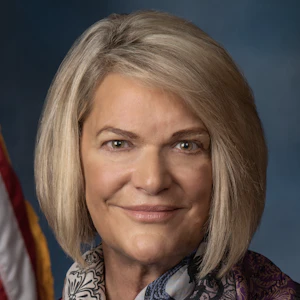
Cynthia Lummis
Cynthia Lummis
As the first-ever Chair of the Senate Banking Subcommittee on Digital Assets, Senator Lummis is the architect of the legislative framework shaping America's digital asset future. She introduced the landmark Lummis-Gillibrand Responsible Financial Innovation Act, the first comprehensive bipartisan crypto regulatory framework in Senate history. She co-authored the GENIUS Act — the first federal stablecoin law ever enacted — and introduced the BITCOIN Act, which would establish a U.S. strategic Bitcoin reserve of up to one million BTC. She is leading the Clarity Act, which will bring long-overdue regulatory certainty to the digital asset industry. She has also championed digital asset tax reform, including a de minimis exemption for small transactions and equal tax treatment for miners and stakers.
Known as Congress' "Crypto Queen," Senator Lummis represents Wyoming — a state she has helped build into one of the most digital asset-friendly regulatory environments in the nation. Before serving in the Senate, she served 14 years in the Wyoming Legislature, eight years as Wyoming State Treasurer, and eight years in the U.S. House. She is a three-time graduate of the University of Wyoming.
Her work represents a crucial bridge between traditional financial systems and the emerging digital economy, ensuring America leads the world in financial innovation while protecting the individual freedoms that define it.

Adam Back
Adam Back

Amy Oldenburg
Amy Oldenburg
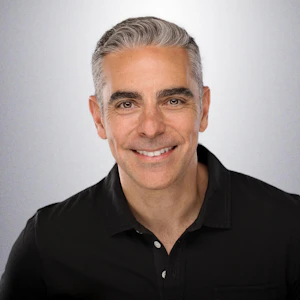
David Marcus
David Marcus

Matt Schultz
Matt Schultz
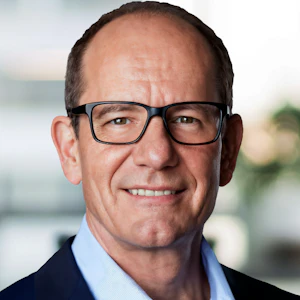
Fred Thiel
Fred Thiel
Throughout his career, Mr. Thiel has consistently driven rapid growth and created substantial shareholder value. Prior to MARA, Mr. Thiel served as the CEO of two other public companies, Local Corporation (NASDAQ: LOCM) and Lantronix, Inc (NASDAQ: LTRX). He has successfully raised billions in equity and debt through private and public offerings, led companies through IPOs, executed high-value exits to strategic and financial acquirers, and implemented effective M&A and roll-up strategies.
Mr. Thiel attended the Stockholm School of Economics and executive classes at Harvard Business School, and is fluent in English, Spanish, Swedish, and French. Mr. Thiel is the Chairman of the Board for Oden Technology, Inc. and is active in Young Presidents’ Organization where he has led initiatives in both the FinTech and Technology Networks.
A recognized voice in the industry, Fred frequently shares his insights on energy and technology with major media outlets like Bloomberg TV, CNBC, and FOX Business, contributing to vital discussions about the future of these sectors.
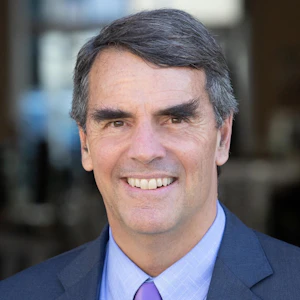
Tim Draper
Tim Draper
He is a supporter and global thought leader for entrepreneurs everywhere, and is a leading spokesperson for Bitcoin and decentralization, having won the Bitcoin US Marshall’s auction in 2014, invested in over 50 crypto companies, and led investments in Coinbase, Ledger, Tezos, and Bancor, among others.
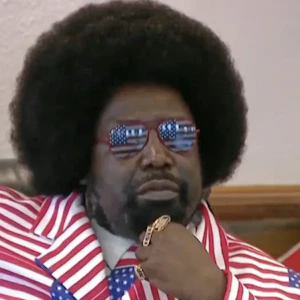
Afroman
Afroman