Is Bitcoin Still a Sovereign Tool?
Speakers/Moderators

BTC Sessions
BTC Sessions

Bruce Fenton
Bruce Fenton
Luke Rudkowski
Luke Rudkowski
Session
Overview
Matt Odell, Bruce Fenton, and Luke Rudkowski discussed whether Bitcoin still functions as a tool for individual sovereignty and financial independence. The conversation focused on the tension between mainstream adoption through ETFs, institutions, and regulated products, and Bitcoin's original use as permissionless money controlled by individuals.
Key themes included the decline of everyday Bitcoin spending, the chilling effect of regulation and taxes, and concerns over legal actions against open-source developers building self custody and privacy tools. Odell highlighted the growth of OpenSats and the importance of supporting open-source Bitcoin development, while Fenton emphasized education and resistance to institutional capture.
The panel also addressed broader threats to freedom, including digital ID, central bank digital currencies, surveillance, political dependency, and potential attempts to redefine or fork Bitcoin through compliant institutional channels. The speakers argued that Bitcoin's sovereignty depends not only on the protocol, but on people learning to use real Bitcoin, supporting developers, building communities, and remaining prepared to defend permissionless access.
It is good to see that the sovereign Bitcoiners stuck around. Packed house. This is not a panel on Strategy, I am sorry.
Bruce, Luke, Matt, pleasure to share the stage with you. My name is Ben, and we are tackling the question: is Bitcoin still a sovereign tool? Yes. I think that about sums it up. We can leave now. No, we need to address the elephant in the room.
Matt, how do you feel about the irony of having a panel labeled something along the lines of Bitcoin is free speech with people who are actively prosecuting developers?
Well, first of all, what is the rule of thumb? The rule of thumb is if a title is a question, the answer is no. So that is unfortunate.
But look, I think it is important to realize two things. The first thing to realize is that we have never had more people who care about Bitcoin as freedom money, who are working on it and using the tools. The absolute number of people using these things has never been higher. It is up and to the right. It is easy to lose focus on that because percentage-wise it is definitely declining. It is probably the lowest percentage-wise it has ever been. We see absolutely packed houses for Saylor, for example, and then much less attendance for using Bitcoin as freedom money. On the positive side, we have the absolute numbers, and that is very encouraging.
On the negative side, we have open-source developers who are actively getting criminally charged and put in jail. The Samourai devs are currently in jail. Roman and his partner, I guess Tornado Cash, are being tried in two different jurisdictions right now. There have been a lot of promises made, but then you look at what is actually happening under the surface, and it seems like in a lot of ways the walls are closing in. It seems like in a lot of ways the community is not stepping up in the way you would hope when you see open-source developers building self custody software getting jailed.
What I would implore people listening to do is, first of all, remember that every person matters. You can do things like talk to your representative, build grassroots support, build businesses, and build tools that empower individuals. Hopefully we can push the ball forward. There is a lot to be optimistic about. There is a lot to be negative about. If you are interested in supporting open-source developers, please go to Free Samourai and try to help where you can.
Bruce, I want to jump over to you. You spend a lot of time in libertarian circles, you are an active advocate, and I am curious: why are libertarians, en masse, not using Bitcoin? What have you come across? What are the hurdles? If this is still a sovereign tool, why are people not using it?
I ask myself that a lot because it is sad to see. As Matt mentioned, there are a lot of good metrics that we have. There are many things that have progressed further. Looking around this, you say, wow, this is a big success. If ten years ago we saw many aspects of this, we would have said, wow, what a victory.
But then there are other things where it is kind of surprising. Ten years ago, there were a lot more people paying for things with Bitcoin. The usage among even libertarian circles, the people who went to these early events, everything was paid for in Bitcoin. People would go out and have dinner and split the bill in Bitcoin. That makes me sad.
The reasons are, sadly, it sounds like such a statist answer, but the combination of regulation and taxes has really hammered people. A lot of people have been hurt. A lot of people do not want to risk going to jail. Particularly, the space is getting older now. People who were 20 when they started are now 36. People who were 35 are now 51. People change over time, and typically you end up with less appetite to want to go to jail or risk fighting the bear.
Almost everybody in the space has been beaten by the state in some way. Everybody has some fear. If you are reasonable, you have some fear of the state. Something as simple as paying a small bill for your steak, a lot of people say, I do not really want the hassle. That is sort of tragic.
It is tragic that our industry, and I am not pointing fingers at anybody because it is all of our fault and it is just kind of inevitable in some ways, but it is tragic that we, at least so far, have not been able to push back on that successfully enough to say, no, that is not the way it is supposed to be.
I do worry that we are like a frog in boiling water, where we move more toward centralization, more toward stablecoins, and captive third parties running the money, where Bitcoin is used less and less as a tool. Now you have millions and millions of users who have been onboarded through ETFs, and they have no concept that you cannot use an ETF to buy a steak. They have no concept of that. They have never used it as money.
It is sad. In the old days, when Roger used to go around and give everybody a dollar, it was exciting because they had never seen that. They would say, oh, cool. Now they do not even see it. If they did see it, they would say, yeah, I have Venmo. They are not getting it. Part of it is missing education. Part of it is people not seeing what this technology is really all about.
Luke, I want to jump down to you. Do you see this as mutually exclusive? We are saying, what if we shift more and more toward these being captured? Do we just end up with the people who want to be sovereign being sovereign? Or is there a point where it goes too far and you almost cannot really have that? Are we in danger of that?
You can never be too free. I love my freedom. I love my sovereignty. I love my liberty. Right now we have to realize it is not just Bitcoin, but the environment around Bitcoin that is affecting this movement, where we are going, and the future of this.
I think in unison there are multiple fronts of this fight. The biggest are digital ID, internet ID, central bank digital currencies, and biometric facial scanning. If we take on those issues and prioritize projects that allow people to be sovereign and free, those projects and issues are still out there. They do not have mainstream support, but they have little pockets and networks of support that are going to be absolutely crucial when, pardon my French, shit hits the fan.
I think shit is going to hit the fan very severely. I think we are moving toward a future where it is going to be a mix between living in The Matrix, Terminator, and Idiocracy. When that happens, there will still be underground networks of individuals being there for each other as communities. So when you are at these types of conferences, get to know people. Talk to people.
Last year, I ended my talk here at this Bitcoin conference telling people to be prepared, go say hi to your neighbor, and start growing a garden. If you listened, you are probably a lot more calm than a lot of other people dealing with the big problems that we are facing right now. So I am going to reiterate: be prepared, because things are going to go crazy.
When they do, it is not even about Bitcoin. It is about where we are going as humanity. There is a full-on war against humanity. Humanity, I think, will prevail. We have to believe in optimism and we have to fight for those little key battles. I think this is where the fight should be.
Matt, I am going to toss it back to you. We are seeing these types of overreach. We are seeing all of these tools that are helping. But where are we falling short? Given that you are helping with OpenSats and helping get these projects funded, what have you seen that has really encouraged you, and what is missing?
As far as the open-source ecosystem goes, it has never been more robust and stronger in Bitcoin. That is one of the single most bullish fundamentals of this space right now. Just to rattle off some stats for you: OpenSats is a 501(c)(3). We take zero cut of donations. We run on a full Bitcoin standard. We are sending out about $1 million worth of Bitcoin payments every month to open-source developers in 40-plus countries, to about 400 grant recipients at this point. A total of about $30 million has been sent. This is a four- or five-year project, and we are ramping it up. We are putting the foot on the gas pedal.
One of the cool parts about open source is it is viral in nature. It is not owned or controlled by a single individual. It outlives all of us. If the creator of an open-source project dies or gets bored or walks away, someone else can take the lead and take charge of it. As a result, open-source software is this nice foundational element that really empowers humans.
On its own, it goes and moves and evolves and improves. But to Luke's point, it is incredibly important that we accelerate everything. We have to be proactive. We need to accelerate. Time is of the essence. The easiest way to do that, the most actionable way that I see, is by providing open-source developers the support they need. That is not just financial support. That is emotional support. That is additional training. There are all different aspects, but we need to accelerate it.
With OpenSats specifically, what we are doing is giving them a salary that they can count on, basically to pay their rent, support their families, and work on this stuff full time so that we can really accelerate the movement.
I want to kind of ping-pong here. Luke, first, I want you to address what you think are some of the biggest attack vectors in trying to build these freedom tools and empower people. Where do you think we have the biggest blind spots? Then maybe Bruce, you can tag in afterward with how we encourage people to use them, and use them in a way where they do not become targets themselves.
I am going to give a non-conventional answer. I think it is black pilling. I think it is people losing hope, losing the fight, losing the love inside of their heart. A lot of people now, when they go on the internet, describe it like microdosing hell to get a perception of our reality. I think that is done by design, because if you are able to break people down, not give them any hope, tell them there are no solutions, and tell them to just accept the one-world dollar or whatever it may be, people will listen to that.
We need to fight back by showing that resistance is not futile. They want you to believe it is futile. They want to demoralize you. They want you to understand that you are not in control. But in reality, we are. We could steer the ship in a way where we could come out way better, especially during a time of crisis.
The dollar has lost, what was it, 97% of its value since 1913. We are printing more dollars. The fiat system, the war machine system, the money printing system, these are systems that are outdated. When they collapse, we have to understand that is when the action is going to be taken, and it needs to be taken proactively, where we are not defeated already. We have to keep that spirit of optimism alive.
I see it in my friend Joby Weeks. He is on house arrest for six years for having a Bitcoin mining company. He is the most positive, happiest person ever, and he believes he is going to be free. It is because you eventually do become free. But in the meantime, while he is still on house arrest, he is one of the freest people I have ever seen in my life. I think that temperament, that attitude, is going to make the difference between surviving and being obliterated.
That is great. I like both of these points. I think we have got to accelerate. This is why education is so important. There is a whole new generation. In the early days, it was 99% libertarians, ancaps, and anti-establishment people. Now it is like 60% compliance officers talking about AML or whatever, and how to kiss up to the banks and the politicians.
In the earlier days, nobody viewed politicians as a solution. In case this is news to anyone, politicians are not the solution. They are the enemy. They are not going to solve things for us. Kissing up to them is not going to help us win. Neither is kissing up to the banks, being co-opted, and selling ourselves out to the establishment.
Part of that goes with education because of the demographics I mentioned. There are fewer people, and a lot of the people are older and just not grinding and going out there as much. There are fewer people delivering this kind of message. So I think it is more important than ever to onboard the next generation of people: younger people, active people, people who are new in the space.
There are people who came into the space a couple years ago who have never really heard of these concepts of sovereignty. They think it is all about ETFs, and they are excited about BlackRock and some deputy undersecretary chief of staff to some statist bureaucracy. We need to address that by educating people and accelerating, just like you said, giving them hope and showing them that there is a way, that we do have power, and that we have created an incredible technology that actually does things and can solve many of these problems in the world. People are not aware of how it can do that.
I want to examine the current environment we are in. A lot of people got super excited about the current administration as it was being voted in. We had Operation Chokepoint 2.0, and the idea was that we were going to get a little room to breathe, a friendly administration, and all these things.
I will say Ross Ulbricht is free. Amazing. That was an incredible moment. But we also have the Samourai devs. We have Roman Storm. We have all of these instances of things that really need to be fixed.
There are two aspects to this. One is, if this is what a friendly administration looks like, what happens with the whiplash of the next election if it goes the other way? Do you think it is palatable to be truly anti-Bitcoin, or will there be a little letting up on that?
Two, with the existing administration and recent geopolitical moves, you see Iran saying, hey, we are going to charge a toll for the Strait of Hormuz. We are going to accept Bitcoin, not stablecoins. Why? Because unlike the $300 or $400 million that got frozen on Tether, with Bitcoin that is not really possible. Is there a possibility where even the existing administration does an about-face, realizing that people they do not like can also use Bitcoin?
Look, I think first and foremost, everyone can have their opinion about Trump. I think what the president did give us is some much-needed time, specifically from the Bitcoin perspective. It is easy to forget where we were two years ago. We were at a point where it looked like anyone building in the Bitcoin space could have the FBI roll up in a no-knock raid and throw you in jail. As someone who has a growing family, that is something that kept me up at night all the time.
We have gotten a gift of time after having an administration that was very against Bitcoin and very against anyone building businesses in this country. We need to cement any gains we can, and we have to keep our foot on the pedal. We have to be very proactive.
It is important for people to realize that most of what we have had during the Trump administration in terms of Bitcoin, at least tangible things, are executive orders and Truth Social posts. They are not things that are ironclad. So if we can get little wins that cement legal protections, will they be perfect? No. Will they help? Yes. We need to keep our heads on a swivel, because who the hell knows where we are going to be in two years?
I am certainly glad Ross is free. There were a lot of good things about Trump. But like I said, politicians are not the answer. He is a bit of a rug-pull artist. We have got to be honest. Trump coin is a grift. We would never tolerate that from anyone else in our space. Melania coin is a grift. He did not do the strategic Bitcoin reserve.
I do worry about a rug pull. It is interesting you mentioned Iran because that is exactly the kind of rug pull we could expect if they have a bunch of Bitcoin and then they say, oh, it is terrorist coin. He has gone back on his word many times, and a lot of people have a problem with that. They say, hey, he did not deliver on his promises. He did some, and he might have been better than the alternative. Some people say the worst thing about him is that he was unpredictable and did not deliver on these promises. He did not, and you have Roman in jail and there was no Bitcoin reserve.
I do not think that is the worst thing about him. I would say probably the support of a genocidal mass murderer, ethnostate pedophile, operating America-second policies, is probably worse.
But he is a grifter, and we have got to be honest. Politicians are not the answer. It would not really matter who the grifter in chief was. The system itself is broken, and it is a deeply broken system. We all knew this many, many years ago. It is broken because the money is broken. We have got to go back to those first principles and fix the money. If we can fix the money, we can fix the world.
We do have to constantly guard against exactly what you mentioned: rug pulls. I have predicted many times over the years that at some point there is going to be an attack, a false flag, a real attack, or something that is blamed on Bitcoin. The Elizabeth Warren type of crowd is going to use that as a rallying cry to say, see, it is terrorist coin.
BlackRock's ETF says that they have the right to pick what the chain is. I know there is going to be another fork war, and it is going to be a fork war of terrorist coin versus if-you-have-nothing-to-hide, we-need-the-adults-in-the-room coin. We have got to prepare for that fight, because I predict that is going to be maybe one of the final bosses in this. Hopefully it will be like other struggles that we have had, and we will come out on top and the code will prevail. But we should prepare for that fight because I think it will come.
I just want to follow up really quick. Given how global Bitcoin has become, do you think that BlackRock coin, compliance coin, whatever it ends up being, has an ice cube's chance in hell of taking hold when you have massive opposition in the form of the U.S., China, Russia, and different parts of the globe? Is Bitcoin too global now to have a single country say, no, this is our forked coin, and have the rest of the world say, well, you have been censoring us on SWIFT?
The best thing is the game theory. On one hand, you have these few powerful players, State Street, BlackRock, Cantor, a few exchanges, and others who control a lot. If they said, hey, this is the real coin, there would be a lot of fear that the thing we all call Bitcoin is going to drop to five grand. Well, we have been at five grand before.
But the game theory is hopefully what saves us, because it is a global world and other countries may not participate. That is what keeps me from losing more sleep about that. But we should prepare either way.
It is fun to believe in magic, Santa Claus, and a government that represents the people, but a lot of people are lost on that idea. A lot of people are very disillusioned now. Granted, Trump has not always been honest with what he is doing. We got the little victories. We have to celebrate them. We have to build on top of them.
I do believe that the scenario you are describing is going to happen. We have to prepare for that battle. We have to understand it is coming. It is not going to be an easy battle, but I think the battle is going to be won with ideas. These ideas of freedom, sovereignty, independence, and liberty are the ethos that we are going to have to stand behind.
If we stand behind centralization, convenience, and safety, we are going to lose all of that, and then we are going to be under a system like a digital dollar that is going to be like the social credit score system they have in China. That is what we are fighting against. People need to realize that. I think that fight is the most important fight right now. If you want to stop the war machine, you have to stop the money printing machine, which means we have to end the Fed. This is why the ethos has always been with Bitcoin: end the Fed.
We have a few minutes left here. I want to go down the line. For the individuals who choose to remain sovereign, what is a piece of advice each one of you would give to them? Odell, I am going to toss it to you first. What would you say to people that do not want BlackRock coin if this comes to fruition?
Personal responsibility takes responsibility. You have to learn how to use the tools. You have to learn how to use real Bitcoin, not that paper shit. Get comfortable with it. To Luke's point, prepare. If you are not comfortable now, when you need it you are going to have a lot more difficulty using it and being competent with it.
The second piece I would say on the BlackRock coin thing is that one of the things that is beautiful about Bitcoin, when I think about regulatory concerns in America, I think of that as an American citizen, as someone raising a family here, as someone building businesses here. That is why it matters to me. I do not want my own government throwing me in the gulag for trying to make this country better. That is insane.
But on the Bitcoin side, Bitcoin is incredibly robust. The fact that no change is the default matters. On the BlackRock piece, they have a fiduciary responsibility to their shareholders. That is a lot of risk if they come into a fork and try to dump hard into a fork. They are going to be a little bit risk averse. They have career risk there.
But sovereign holders can take significant risk. They will be a lot more aggressive. Individuals who actually care about this thing will be a lot more aggressive in the market dynamics in terms of which type of coin wins there. I do not think it is so far gone that that will not be the case. I think they would have a hard time doing it.
You do not need to be an economist or a computer scientist to know that there is something wrong in the world. It is weird and broken, and it is confusing and scary. A lot of that problem is broken money. The amazing thing is, we cannot forget that we have a new invention that can fix this. It is an incredible invention. It is incredibly robust. It has been through unbelievable trials and tests over its history, and it is a solution. It can make the world a better place. So learn about it and share what you learn with others, because it is our one chance and we have got to get this right.
Strange times are coming. Find your community. Build a garden. Get to know your neighbors. Life is going to get crazy, and I am all here for it. At the end of the day, we decide where we go, and I want to go toward more freedom and less government.
Amen. Take some action. Thank you very much, Luke, Bruce, Matt. Pleasure. Thank you.
Similar
Sessions
BTC Sessions and Friends
BTC Sessions
BTC Sessions
Nathan Fitzsimmons
Nathan Fitzsimmons
Nathan hosts the Mentor Sessions Podcast—which has gained 600,000 views on YouTube in the first year—on the BTC Sessions channel and also co-hosts the BTC Sessions Live Streams.
Jeff Booth
Jeff Booth
He is a Co-Founder of www.BuildDirect.com, and NocNoc, has been a Young Presidents Organization member since 2004 and contributes time as a Founding Fellow at the Creative Destruction Lab.
Jeff currently sits on the boards of Core Scientific, Fedi and Breez.
BTC Sessions and Friends
Speakers/Moderators
BTC Sessions
BTC Sessions
Nathan Fitzsimmons
Nathan Fitzsimmons
Nathan hosts the Mentor Sessions Podcast—which has gained 600,000 views on YouTube in the first year—on the BTC Sessions channel and also co-hosts the BTC Sessions Live Streams.
Jeff Booth
Jeff Booth
He is a Co-Founder of www.BuildDirect.com, and NocNoc, has been a Young Presidents Organization member since 2004 and contributes time as a Founding Fellow at the Creative Destruction Lab.
Jeff currently sits on the boards of Core Scientific, Fedi and Breez.
10 years of BTC Sessions
BTC Sessions
BTC Sessions
10 years of BTC Sessions
Speakers/Moderators
BTC Sessions
BTC Sessions
How to Choose the BEST Hardware Wallet for YOU
BTC Sessions
BTC Sessions
Nathan Fitzsimmons
Nathan Fitzsimmons
Nathan hosts the Mentor Sessions Podcast—which has gained 600,000 views on YouTube in the first year—on the BTC Sessions channel and also co-hosts the BTC Sessions Live Streams.
How to Choose the BEST Hardware Wallet for YOU
Speakers/Moderators
BTC Sessions
BTC Sessions
Nathan Fitzsimmons
Nathan Fitzsimmons
Nathan hosts the Mentor Sessions Podcast—which has gained 600,000 views on YouTube in the first year—on the BTC Sessions channel and also co-hosts the BTC Sessions Live Streams.
How to Protect Your Bitcoin During a HOME INVASION
BTC Sessions
BTC Sessions
How to Protect Your Bitcoin During a HOME INVASION
Speakers/Moderators
BTC Sessions
BTC Sessions
How to Accept Bitcoin as a Business (Two Options That Keep YOU in Control)!
Nathan Fitzsimmons
Nathan Fitzsimmons
Nathan hosts the Mentor Sessions Podcast—which has gained 600,000 views on YouTube in the first year—on the BTC Sessions channel and also co-hosts the BTC Sessions Live Streams.
BTC Sessions
BTC Sessions
How to Accept Bitcoin as a Business (Two Options That Keep YOU in Control)!
Speakers/Moderators
Nathan Fitzsimmons
Nathan Fitzsimmons
Nathan hosts the Mentor Sessions Podcast—which has gained 600,000 views on YouTube in the first year—on the BTC Sessions channel and also co-hosts the BTC Sessions Live Streams.
BTC Sessions
BTC Sessions
Bitcoin Privacy: How to Hide Your Bitcoin from Prying Eyes!
BTC Sessions
BTC Sessions
Nathan Fitzsimmons
Nathan Fitzsimmons
Nathan hosts the Mentor Sessions Podcast—which has gained 600,000 views on YouTube in the first year—on the BTC Sessions channel and also co-hosts the BTC Sessions Live Streams.
Bitcoin Privacy: How to Hide Your Bitcoin from Prying Eyes!
Speakers/Moderators
BTC Sessions
BTC Sessions
Nathan Fitzsimmons
Nathan Fitzsimmons
Nathan hosts the Mentor Sessions Podcast—which has gained 600,000 views on YouTube in the first year—on the BTC Sessions channel and also co-hosts the BTC Sessions Live Streams.
Bitcoin Security: Learn How to Use Multisig LIVE!
BTC Sessions
BTC Sessions
Nathan Fitzsimmons
Nathan Fitzsimmons
Nathan hosts the Mentor Sessions Podcast—which has gained 600,000 views on YouTube in the first year—on the BTC Sessions channel and also co-hosts the BTC Sessions Live Streams.
Bitcoin Security: Learn How to Use Multisig LIVE!
Speakers/Moderators
BTC Sessions
BTC Sessions
Nathan Fitzsimmons
Nathan Fitzsimmons
Nathan hosts the Mentor Sessions Podcast—which has gained 600,000 views on YouTube in the first year—on the BTC Sessions channel and also co-hosts the BTC Sessions Live Streams.
Matt Odell and Friends



Alex Gladstein
Alex Gladstein
Matt Odell and Friends
Speakers/Moderators
Alex Gladstein
Alex Gladstein
Is Bitcoin Still a Sovereign Tool?
BTC Sessions
BTC Sessions
Bruce Fenton
Bruce Fenton
Luke Rudkowski
Luke Rudkowski
Is Bitcoin Still a Sovereign Tool?
Speakers/Moderators
BTC Sessions
BTC Sessions
Bruce Fenton
Bruce Fenton
Luke Rudkowski
Luke Rudkowski
Other
Speakers
Michael Saylor
Michael Saylor
Todd Blanche
Todd Blanche
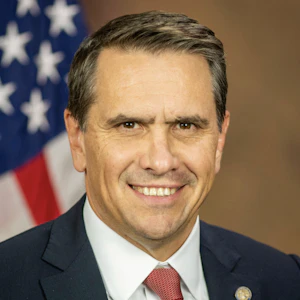
Biography of Deputy Attorney General Todd Blanche
The Honorable Todd Blanche is the 40th Deputy Attorney General of the United States, overseeing the work of the 115,000 dedicated employees who fulfill the Department of Justice’s mission at Main Justice, the FBI, DEA, U.S. Marshals, ATF, and 93 U.S. Attorney’s Offices.
Todd began his career at the Department where he served for over fifteen years in a variety of capacities, including as a contractor, a paralegal in the Criminal Division, and at the United States Attorney’s office for the Southern District of New York where he eventually became an AUSA and later a supervisor.
After leaving the Department, Todd worked as a criminal defense attorney that included representing President Donald Trump in three of the criminal cases brought against him in 2023 and 2024.
Following President Trump’s historic return to the White House, the President appointed Todd to work alongside Attorney General Pam Bondi to make America safe again. At the DOJ, Todd is working tirelessly to implement President Trump’s priorities that include confronting illegal protecting American businesses from fraud.
Todd has been married to his wonderful wife Kristine for nearly thirty years, is a father and grandfather.
Paul Atkins
Paul Atkins
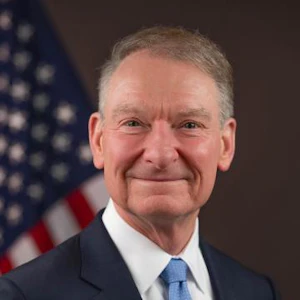
Prior to returning to the SEC, Chairman Atkins was most recently chief executive of Patomak Global Partners, a company he founded in 2009. Chairman Atkins helped lead efforts to develop best practices for the digital asset sector. He served as an independent director and non-executive chairman of the board of BATS Global Markets, Inc. from 2012 to 2015.
Chairman Atkins was appointed by President George W. Bush to serve as a Commissioner of the SEC from 2002 to 2008. During his tenure, he advocated for transparency, consistency, and the use of cost-benefit analysis at the agency. Chairman Atkins also represented the SEC at meetings of the President’s Working Group on Financial Markets and the U.S.-EU Transatlantic Economic Council. From 2009 to 2010, he was appointed a member of the Congressional Oversight Panel for the Troubled Asset Relief Program.
Before serving as an SEC Commissioner, Chairman Atkins was a consultant on securities and investment management industry matters, especially regarding issues of strategy, regulatory compliance, risk management, new product development, and organizational control.
From 1990 to 1994, Chairman Atkins served on the staff of two chairmen of the SEC, Richard C. Breeden and Arthur Levitt, ultimately as chief of staff and counselor, respectively. He received the SEC’s 1992 Law and Policy Award for work regarding corporate governance matters.
Chairman Atkins began his career as a lawyer in New York, focusing on a wide range of corporate transactions for U.S. and foreign clients, including public and private securities offerings and mergers and acquisitions. He was resident for 2½ years in his firm's Paris office and admitted as conseil juridique in France.
A member of the New York and Florida bars, Chairman Atkins received his J.D. from Vanderbilt University School of Law in 1983 and was Senior Student Writing Editor of the Vanderbilt Law Review. He received his A.B., Phi Beta Kappa, from Wofford College in 1980.
Originally from Lillington, North Carolina, Chairman Atkins grew up in Tampa, Florida. He and his wife Sarah have three sons.

Mike Selig
Mike Selig
Chairman Selig brings to the role deep public and private sector experience working with a wide range of stakeholders across agriculture, energy, financial, and digital asset industries, which rely upon and operate in CFTC-regulated markets.
Prior to his leadership at the CFTC, Chairman Selig most recently served as chief counsel of the Securities and Exchange Commission’s Crypto Task Force and senior advisor to SEC Chairman Paul S. Atkins. In this role, Chairman Selig helped to develop a clear regulatory framework for digital asset securities markets, harmonize the SEC and CFTC regulatory regimes, modernize the agency’s rules to reflect new and emerging technologies, and put an end to regulation by enforcement. He also participated in the President’s Working Group on Digital Asset Markets and contributed to its report on “Strengthening American Leadership in Digital Financial Technology.”
Prior to government service, Chairman Selig was a partner at an international law firm, focusing on derivatives and securities regulatory matters. During his years in private practice, he represented a broad range of clients subject to regulation by the CFTC, including commercial end users, futures commission merchants, commodity trading advisors, swap dealers, designated contract markets, derivatives clearing organizations, and digital asset firms. Chairman Selig advised clients on compliance with the Commodity Exchange Act and the CFTC’s rules and regulations thereunder, including in connection with registration applications and obligations, enforcement matters, and complex transactions.
Chairman Selig earned his law degree from The George Washington University Law School and was articles editor of The George Washington Law Review. He received his undergraduate degree from Florida State University.

David Bailey
David Bailey

Eric Trump
Eric Trump
Mr. Trump also serves as Executive Vice President of The Trump Organization, where he oversees the global management and operations of the Trump family’s extensive real estate portfolio. This includes Trump Hotels, Trump Golf, commercial and residential real estate, Trump Estates, and Trump Winery. Known for his hands-on leadership and strong market instincts, he has played a key role in expanding the company’s presence across major U.S. and international markets.
A globally recognized business leader and public figure, Mr. Trump is a prominent advocate for Bitcoin and decentralized finance. He is a co-founder of World Liberty Financial, a decentralized finance (DeFi) platform, and serves on the Board of Advisors of Metaplanet, Japan’s largest corporate holder of Bitcoin.
Beyond his business activities, Mr. Trump has helped raise more than $50 million for St. Jude Children’s Research Hospital in the fight against pediatric cancer, a philanthropic mission he began at age 21.
Mr. Trump earned a degree in Finance and Management from Georgetown University. He currently resides in Florida with his wife, Lara, and their two children. He is also the author of Under Siege, his memoir published in October 2025.

Jack Mallers
Jack Mallers
Cynthia Lummis
Cynthia Lummis
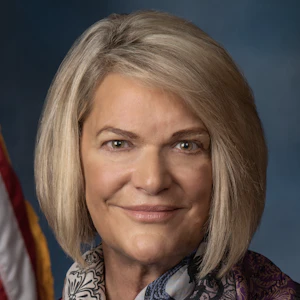
As the first-ever Chair of the Senate Banking Subcommittee on Digital Assets, Senator Lummis is the architect of the legislative framework shaping America's digital asset future. She introduced the landmark Lummis-Gillibrand Responsible Financial Innovation Act, the first comprehensive bipartisan crypto regulatory framework in Senate history. She co-authored the GENIUS Act — the first federal stablecoin law ever enacted — and introduced the BITCOIN Act, which would establish a U.S. strategic Bitcoin reserve of up to one million BTC. She is leading the Clarity Act, which will bring long-overdue regulatory certainty to the digital asset industry. She has also championed digital asset tax reform, including a de minimis exemption for small transactions and equal tax treatment for miners and stakers.
Known as Congress' "Crypto Queen," Senator Lummis represents Wyoming — a state she has helped build into one of the most digital asset-friendly regulatory environments in the nation. Before serving in the Senate, she served 14 years in the Wyoming Legislature, eight years as Wyoming State Treasurer, and eight years in the U.S. House. She is a three-time graduate of the University of Wyoming.
Her work represents a crucial bridge between traditional financial systems and the emerging digital economy, ensuring America leads the world in financial innovation while protecting the individual freedoms that define it.

Adam Back
Adam Back
Amy Oldenburg
Amy Oldenburg
David Marcus
David Marcus

Matt Schultz
Matt Schultz
Fred Thiel
Fred Thiel
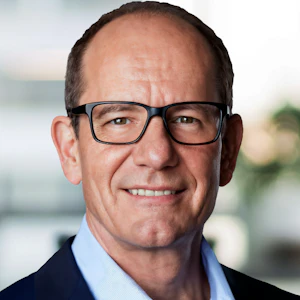
Throughout his career, Mr. Thiel has consistently driven rapid growth and created substantial shareholder value. Prior to MARA, Mr. Thiel served as the CEO of two other public companies, Local Corporation (NASDAQ: LOCM) and Lantronix, Inc (NASDAQ: LTRX). He has successfully raised billions in equity and debt through private and public offerings, led companies through IPOs, executed high-value exits to strategic and financial acquirers, and implemented effective M&A and roll-up strategies.
Mr. Thiel attended the Stockholm School of Economics and executive classes at Harvard Business School, and is fluent in English, Spanish, Swedish, and French. Mr. Thiel is the Chairman of the Board for Oden Technology, Inc. and is active in Young Presidents’ Organization where he has led initiatives in both the FinTech and Technology Networks.
A recognized voice in the industry, Fred frequently shares his insights on energy and technology with major media outlets like Bloomberg TV, CNBC, and FOX Business, contributing to vital discussions about the future of these sectors.
Tim Draper
Tim Draper
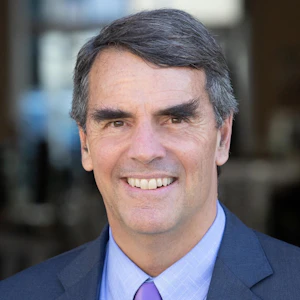
He is a supporter and global thought leader for entrepreneurs everywhere, and is a leading spokesperson for Bitcoin and decentralization, having won the Bitcoin US Marshall’s auction in 2014, invested in over 50 crypto companies, and led investments in Coinbase, Ledger, Tezos, and Bancor, among others.

Afroman
Afroman