Is More Bitcoin Per Share "True" Yield?
Speakers/Moderators

Matt Ballensweig
Matt Ballensweig

Alexander Blume
Alexander Blume

Richard Byworth
Richard Byworth
Analyze and speak about financial engineering capabilities of Bitcoin treasury companies and advise companies on how to optimize amount of bitcoin on balance sheet. Advisor at UK BTCTC XCE Connecting Excellence, and Chairman at Future (Swiss BTCTC).
For Jan3, act in an advisory capacity for a few sovereign nations, and on energy infrastructure financing structuring options in countries in LATAM and Middle Asia.
Board member at Relai, helping onboard HNWI and FOs to bitcoin.
Session
Overview
Matt Ballensweig of BitGo moderated a discussion with Richard Byworth of BYZ Partners and Alexander Blume of Two Prime on whether growth in Bitcoin per share should be considered true yield. The panel compared Bitcoin treasury strategies popularized by Strategy with more traditional Bitcoin return models such as lending, covered call selling, and basis trading.
The conversation focused on how companies use common equity issuance, convertible bonds, and preferred equity to accumulate more Bitcoin, and whether that mechanism creates yield or simply packages leverage and active management risk. Byworth argued that Bitcoin per share growth can reasonably be called BTC yield, while Blume warned that the term may mislead investors because these products carry market, management, liquidity, regulatory, and capital structure risks.
The panel also examined downside reflexivity, the lack of redemption mechanisms in some public Bitcoin vehicles, and lessons from prior products such as GBTC. Looking ahead, the speakers expected more competition among digital asset treasury companies, more structured products, and more attempts to put Bitcoin treasuries to work, while emphasizing that the terminology and risk disclosure around Bitcoin yield remain central issues for investors.
Hello, everybody, and good afternoon. It is day three in Vegas, so props to everybody for being here and grinding through. I appreciate the support. My name is Matt. I am managing director and head of trading at BitGo, one of the world's largest digital asset infrastructure providers. I am here with Richard Byworth of BYZ Partners and Alexander Blume from Two Prime.
The panel today is called Is More Bitcoin Per Share True Yield? What we are going to try to do is unpack how this mechanism is working today. You are going to hear a lot from these two guys, but we are going to talk about the emergence of different digital asset, and specifically Bitcoin, treasury companies that are unlocking value for shareholders in novel ways.
They are doing it through the financialization of their balance sheets, issuing securities in different forms, whether equity, debt, or preferreds, and ultimately buying more Bitcoin so that the value per share continues to rise for investors. Obviously, there is an argument about whether that is true yield, packaged leverage, or something else altogether.
Those are the topics we will dive into, while also weighing what that yield looks like from a risk-return perspective relative to true yield on spot Bitcoin, either by lending that Bitcoin for a fixed interest rate or selling call options on BTC to generate yield, and how those mechanisms differ. Before we jump in, Richard and Alexander, do you want to introduce yourselves, talk about your background, what your companies focus on, and your journey in the space?
Sure. I am Rich, managing partner at BYZ Partners. We are an alternative asset management firm. Our key product, which we built at our previous firm and are launching at the end of this year, is a Bitcoin-denominated fund of crypto hedge funds designed to make 3% to 8% a year in Bitcoin terms. My background is traditional finance. I was a convertible bond trader originally, then moved into distribution of derivatives across equity derivatives, futures and options, convertible bonds, and that whole piece.
Then I ran a crypto company as CEO for a while, which was a little bit difficult and a challenge as a Bitcoin maxi running a crypto company. That was one of my first value misalignment problems.
I am Alex Blume, founder and CEO of Two Prime. First, I am grateful to be here, and thanks for listening. Two Prime is a Bitcoin financial services business. We focus on generating Bitcoin-denominated returns primarily through derivatives trading. We are also one of the largest Bitcoin-backed dollar lenders in the world. I think we have originated about $3.5 billion of Bitcoin-backed loans over the last 24 months or so, with no bankruptcies.
Beyond that, we offer separately managed accounts. We work with institutional clients, including a number of public companies, and try to solve unique problems for each one. It varies from group to group.
Awesome. To get into the meat of it, I have been in this space since 2017. I came from a big macro hedge fund, Bridgewater Associates, took the leap of faith, and joined a very nascent market structure in crypto. I have really seen from the center of the ecosystem how yield on Bitcoin has evolved over time, what yield really is, and how it is expressed in the space.
It started with lenders just lending out their Bitcoin unsecured all the way through 2022. Those lenders would earn somewhere between 3% and 6% annualized on their Bitcoin, which seemed like a great deal at the time, until major credit events happened and caused massive contagion with the likes of Three Arrows, Alameda, and FTX. What looked like a great return at the time happened to be picking up pennies in front of a steamroller.
Yield has matured a lot since then. It has come a long way in the last four years. There is now yield through selling options on spot Bitcoin. There is still oversecured lending in the space. There is arbitrage between spot and futures markets to capture yield. More recently, there is this concept of yield through BTC accumulation, almost in the form of digital credit. That has obviously been popularized by Strategy, but now there are many other funds and firms seeing the benefit of it.
The first question I have, Richard, is how would you frame what this yield is mechanically? How does it work? How is the value being created? Operationally, from a balance sheet perspective, what is going on behind the scenes to create that yield for investors?
Essentially, what Strategy and many of these other companies are doing is arbitrage in the capital structure at different times to add more Bitcoin per share for common shareholders. There are three main products being used.
The first is sales of common equity at a premium to NAV. If your stock is trading at, say, a two times premium to NAV, and you have $200 million of Bitcoin and a $400 million market cap, then you do another $200 million capital raise. You double your Bitcoin base. You were trading at two times mNAV, and you have turned your company from a $400 million company into a $600 million company. If mNAV or pricing stays constant, you have doubled the amount of Bitcoin, and the premium is cheaper because you are now at only 1.5 times.
We have seen that. Obviously, now we are in a bit of a bear market for these companies, so it is difficult for them to raise money in a meaningful way when Strategy is trading around 1.05 to 1.2. I am from Europe, as you may be able to tell from my accent, and many of these companies are trading at a discount to NAV. They cannot use that mechanism right now.
The other mechanism is convertible bonds. Convertible bonds essentially have a strike price that is higher, so you can ratchet that synthetic mNAV higher by leveraging the volatility that Bitcoin gives you as a company into a higher strike in the stock. The problem is that if the stock does not go up, you end up with a debt burden in three or five years, based on either the put or the maturity of that product.
You can get some very interesting coupons on this debt because the volatility is so high, and hedge fund managers will pay you for that volatility and happily almost do zero-coupon bonds. But it comes with a debt burden.
That is where we get into the third tranche of these products, which Saylor again led through preferred equity. Preferred equity is very compelling for this type of strategy because there is no obligation to pay back the notional amount. You just have an obligation to pay the dividend on a biweekly, monthly, quarterly, or annual basis. That can be quite meaningful.
But if you are of the opinion, which I think most investors in these companies are, that Bitcoin is a long-term sustainable play to the upside, then this is a way for you personally to do a carry trade: to essentially borrow money for the very long term and take the upside of Bitcoin. You are sacrificing 10% to 15%, depending on the product, but you are getting the CAGR of Bitcoin. Historically, we have looked at 50%; even if you are conservative looking forward and say 25% to 30%, that still gives you a very nice bit of upside over the longer term.
Those are the three key products being used today by these companies. All those different functions increase the amount of Bitcoin per share that the common shareholder has. Part of this panel is to try and define what we should be calling that. My view is that the closest word is BTC yield. I think it is an accurate description, and that is where the discussion starts.
It is a valid argument, because it is almost philosophical in a sense. Is it true yield, as Richard says, or is it dressed as yield, but actually something else? Alex, I know you are more of the skeptic when it comes to this topic. In your perspective, is what Richard is describing yield for investors, or how do you think about the risk-return of this trade generally?
No.
When I think of the word yield in finance, I think of being compensated for the time value of money, for putting something into a Treasury, the most safe, predictable, highest-credit-rating kind of thing you could participate in. All of these things we are describing, unsecured lending, covered call selling, and capital markets operations through digital asset treasuries, have so many layers of risk in them that they almost could not be farther away from a risk-free return.
You have the risk of an active management company. You have the key man risk of Michael Saylor. You have regulatory risk. You have all sorts of different capital markets risks. Even how Strategy is accumulating Bitcoin over time has shifted. Their policy around how they create value has shifted.
I think it is a totally valid way to try to make money or make more money than just holding Bitcoin alone. I just think that by calling it yield, especially for a retail product that people are buying with maybe not so much financial experience, it deeply misrepresents what is going on. I do not think people understand what they are getting. They just think, it is Bitcoin plus something else good. It is really basically an actively managed hedge fund.
If I could add something to what Alex said, I completely see your angle. I find it a little weird that we are sitting at a Bitcoin conference talking about the risk-free rate being U.S. dollar Treasuries. With U.S. Treasuries, of course, they can print money to pay the coupon forever. But what you are missing is the risk of the denominator. It is hidden in the denominator. That is the debasement of money as a result of the printing of this oversized debt burden.
I would say that actually the risk-free rate is where the problem is. If you are talking about language and you are upset with BTC yield, where you are seeing an amplification of the amount of Bitcoin that a company owns, with Bitcoin per share growth being referred to as BTC yield, I have a way bigger problem with the risk-free rate. That is misleading people. That is fiat-designed language to make you believe in government debt so they can keep refinancing the Ponzi. If we are going to get focused on language here, let us talk about the fact that the risk-free rate is not, by any definition, a risk-free rate.
There is risk inherent in any yield-bearing asset. You are getting compensated a return by holding the asset because you are choosing to incur some sort of risk. Those risks can be inherent in different asset types in different ways. For Bitcoin, I am not going to say whether it should be called yield or not. You are earning a yield in some way, shape, or form. But to Alex's point, of course you are taking risk on the asset and on the counterparty. You are also doing that when you are lending out your Bitcoin, selling calls, or trading basis. There is always some inherent risk.
My next question is about this specific BTC accumulation. Obviously, we saw it work really well in a bull market. We have seen how it is managed more defensively in a bear market. It reminds me very much of a reflexive product, where the more people buy, the higher the price goes; the more securities are issued, the more BTC is bought, and the higher the price goes. Is there a danger to the reflexivity on the way down? Is this a house of cards situation? If it is not, how is it not? What is the risk mitigation if Bitcoin trades down to $25,000 or $30,000? How do these companies keep shareholders from getting stuck holding the bag?
If we see it trade down to $25,000 or $30,000, then the value of the Bitcoin is cut in half. Saylor at this point is about 4.2 times overcollateralized for the product. This is another reason a lot of people do not understand why he is running the ATM and the MSTR common. He is trying to keep that buffer on the baseline of the collateral to keep it sustainable.
What he is doing with these preferreds is creating a forward carry trade. This is the trade that all of us, as long-term believers in Bitcoin, want to be doing. Saylor is enabling us to do that by issuing these products. We cannot issue infinite product. We are not connected to the fiat Ponzi, where fixed income managers need to allocate based on various interest rates or equity portfolio managers need to allocate despite the Mag Seven looking completely mispriced in terms of risk. That is the real fiat Ponzi being unwound into Bitcoin by Saylor.
When you look at all of this and ask whether Bitcoin can be successful, if you do not think Bitcoin is going to be successful, you should not be invested in these companies. That is really the end of the conversation. If it drops to $20,000 or $25,000, Strategy is still absolutely fine with the collateral rate. Does that present different risks for lower-collateralized companies trying to do this? Yes, that is a different conversation. But I would definitely say that the way Saylor is running this, he is not taking a huge amount of risk if you believe in the long-term viability of Bitcoin.
How about the new product, STRC? This is preferred equity that pays roughly 11.5% annualized to holders of the asset. I think it is now being paid twice a month, denominated in dollars. If you are a general equity holder of MicroStrategy and there is continued issuance of stock around the cap table, how should you think about that as a common equity holder?
I do not think you should feel good. My concern is that even if Bitcoin does well, these stocks can do poorly. If you buy into something at a three times mNAV and Bitcoin goes up but your multiple contracts to two, you have fewer Bitcoin in dollar terms of the share price.
With the STRC product, how was it funded? It was funded through the sale of the equity. If you are holding the main equity because you think that is going to go forever, then funding the debt payments to STRC is against your interest. If you think Bitcoin is going up 30% or 50% a year, why would I trade it for an 11% upside? If it is so risk-free and so great, why does it have to pay 11.5% to get people to use it?
There is a lot there, and the whole thing is a brand new mechanism, with a track record of I think eight or nine months. There are a lot of unknowns, and I think the MSTR value and the STRC value are fundamentally at odds with each other.
Just to clarify a couple of things, MSTR does not finance the sales of STRK.
STRK does. They sold MSTR to get dollars instead of buying Bitcoin with the sale of MSTR, and that debt service is the STRK.
You are talking about the U.S. dollar reserve that he created.
They sold MSTR and kept it in billions of dollars instead of buying Bitcoin, like they were doing before, in order to service the debt on STRK. So you did not buy Bitcoin; you bought dollars instead.
What you need to understand is that if you are looking at STRK as a pure credit investor, you need to assess whether you can get your money back. That is literally how fixed income people look at the world. If I can get my money back, I am fine. So Saylor says, okay, I will raise $2.5 billion and pay my coupons for the next two years. I can definitely do that. He did that in one week with common ATM.
A lot of people are failing to understand that the mechanism he has built is extremely powerful and able to do this. Yes, he put $2.5 billion aside at a $65 billion or $70 billion market cap. It is not the end of the world that he is sitting on a portion of cash to make sure he has those coupons, so that these people feel comfortable that he can pay the STRK coupon or dividend for the next two years.
I think it is misleading to say that because he is sitting on cash, that is a problem and you are wasting the dilution effect on the MSTR common holders. The MSTR common holders want to be in this carry trade that they cannot engineer themselves personally: long-term borrowing of fiat, which is going to keep depreciating, while being exposed to Bitcoin without ever having to pay back that debt. No individual is able to do that. Saylor is able to do that on your behalf through the common equity. Today you are buying at about 1.05 or 1.1 times mNAV. If there is ever a time to be looking at MicroStrategy stock, it is probably now.
To me, the disconnect is that just because a company owns a bunch of Bitcoin and I own shares of that company, I cannot redeem my shares for Bitcoin. I cannot trade the STRC for Bitcoin. It is all tied to supply and demand for STRC or MicroStrategy. Whether or not Bitcoin goes up 10x, if people do not like the stock, the stock will go down, and I cannot force them to give me Bitcoin back.
We saw this before Grayscale converted to an ETF. The idea was that it was risk-free: you buy the shares and could sell them at a premium in six months. But people lost faith in the product, people had less demand for Bitcoin during a bear market, and it traded at a discount to NAV of 30% or 40%.
Strategy has more mechanisms to try to stay away from that outcome, but at the end of the day, these products are based on supply and demand for the stock. There could be money to service the debt, but if I have no faith in the management company, or other aspects, or people just get scared and there is a run on the bank, the product can go below par.
There is a way for Strategy to keep it from going above par, because they keep selling more of it. They do not have a clear mechanism to bring it back up other than ratcheting up this interest rate higher and higher, which they have already done, I think, seven times.
The danger of that too is that we have seen it play out in massive bear cycles and markets over the last ten years. The market can always go lower than you think. Psychology matters a lot, especially in some of these locked assets where there is no redemption mechanism. We saw it with GBTC, we have seen it with the ether trade, and we have seen it with other instruments where when folks want liquidity and there is no redemption mechanism, the price can really dislocate and trade much lower. I do think that is inherent risk. But to Richard's point, the number of ways and avenues to utilize the balance sheet to risk-mitigate that is really important.
MSTR has traded at a discount before. Part of that was because he had straight debt with Silvergate that people were concerned about. His liquidation level was about $3,000. When we hit $14,000 or $15,000 post-FTX, that is what we call squeaky bum time. You start to feel the risk and think, okay, I am getting a little bit close to this situation and I am not very happy about it.
Saylor was probably looking at that and saying, I am never living through that again. That is what has happened. He restructured that debt, and this is why he is not doing converts anymore. He does not want to ever have that situation where he has any level of debt obligation, which is why the preferreds are a completely different game changer in this situation.
He might eventually have to pay 15% in a bear market. But at the end of the day, if he is well collateralized in the Bitcoin and you believe in Bitcoin as an investor, you should feel a level of comfort with this product.
In the last five minutes, let us shift gears and look ahead. We have dissected what the value creation is today, what mechanism is functioning, and the risks and returns associated with it. How do you see this phenomenon playing out over the next two to three years? Are we going to see other incumbents start to take market share away from Strategy? How does the world look from a digital asset treasury perspective over the next two to three years? I do not want to go further than that because we all know how crypto works. You can only look so far.
I think there is a broad range of digital asset treasuries. I have no direct relationship with them, and they are not a client of ours currently, but STR describes itself as the Berkshire Hathaway of Bitcoin. They are going to try to take Bitcoin and trade it, maybe acquire companies, create insurance products, and turn this Bitcoin into a productive asset.
I would not go to Berkshire Hathaway for my yield on my dollars, and I would not go to STR for yield on my Bitcoin. But I would hire an actively managed company to do interesting things and have access to institutional products that most people probably cannot access by themselves.
I think you will see increasing competition to create interesting structured products, build operating businesses inside companies, manage Bitcoin like a pension fund would, and manage Bitcoin with a multi-manager diversified portfolio. There will be a few large winners and a lot of big losers.
Even if you did all that stuff right, I do not know Berkshire Hathaway's multiple, but there should be a multiple on repeatable income from creating a real business extrinsic of just being your own stock. I think that is the only sustainable path for a few of these companies. They are effectively publicly traded, actively managed hedge funds, and that is fine. I just would not call it yield. I would call it a publicly traded, actively managed hedge fund.
I think you are absolutely right. We are going to see treasuries being put to work. One reason we have the fund that we built at BYZ Partners, and at our previous firm that we are now moving over there, is because we see this need. Everyone who is a Bitcoin investor wants more Bitcoin, whether you are a Bitcoin treasury company, an individual, or even a sovereign. Once you understand what this asset is, you want more Bitcoin.
Putting Bitcoin to work and trying to create some level of yield around it in the lowest-risk possible way, giving it to professional managers to allocate and eke out these types of returns, is what we are trying to do. We are targeting a 3% to 8% return in Bitcoin depending on the vibrancy of the year, basis expansion, and these types of things.
One thing we have not talked about is a tool that is underutilized for Bitcoin treasury companies. If you have an active ATM, you are selling stock into the market constantly, and at the end of any week you are buying Bitcoin with the proceeds of those stock sales. One thing you can do, which we have sort of seen Metaplanet do a little bit, is pair the ATM with a put underwriting strategy.
At the beginning of the week, you sell one-week puts at the money and say, I am happy to buy Bitcoin at that level. You have a good estimate based on previous weeks and volumes of how much Bitcoin you are going to be able to buy at current prices. You sell that amount of puts, and you have cash coming in. As long as you are trading at about one times NAV, this is accretive.
I think this is a tool that has not been properly utilized by the market. As I said, Metaplanet does it to some degree with a very small portion of its stack.
Let us circle back to the subject of this discussion. I think the team at STR is absolutely doing the right thing by looking at different ways to leverage their Bitcoin, do different things, and create more value for investors. But the key point is that Bitcoin per share growth is growth. We will all agree that it grows the amount of Bitcoin you have as a shareholder.
When I first bought MicroStrategy, it was 2020. I had been in a Bitcoin ETF in my pension, paying a negative yield through a 2.5% annual fee. It was the only Bitcoin ETF I could get in my pension in the UK. Saylor came along in 2020 and bought Bitcoin on the balance sheet, and I switched out. If I had stayed in that ETF product, over the last six years I would have paid 15% in fees. Instead, Saylor's performance has outperformed Bitcoin by 100%.
So I call that yield. It is certainly not risk-free, but neither are U.S. Treasuries, by the way. What do we want to call this? Is it BTC carry? Is it BTC accretion? Frankly, I think the best way to describe it is BTC yield.
I think the one thing we have realized is that there are clear differences and different ways of viewing the same thing. It is all around how you think about that philosophically, practically, or based on your own mental model. Unfortunately, we are out of time. I appreciate you gentlemen getting up here. Thanks, everybody, for listening, and great job.
Similar
Sessions
Bitcoin: Did It Change You, or Did You Find It at the Right Time?

Carly Benson
Carly Benson
Carly became a Bitcoin-only Bitcoiner in 2017 after living in Las Vegas and interacting with the professional poker and sports betting community. She learned about Bitcoin by seeing use-cases for it as the whales of the gambling world have been betting, settling and transacting in BTC for many years.
Before getting in to the Bitcoin space, Carly ran her own successful marketing consultancy for 18 years and was known as an alcohol-free SME, Course Creator and Yoga Instructor.
She has given talks around the world and her work and courses have helped thousands change their relationship with alcohol. She’s been featured in Women’s Health, SELF magazine, Extra TV, Travel Zoo and other notable outlets.


Chef Pete Evans
Chef Pete Evans
Paleo Way" - a 16 x 30 minute tv cooking series focused on long term regenerative health. Pete hosted PBS A moveable Feast" for 8 seasons, and also hosted Australia's #1 tv series "My Kitchen Rules" for 11 years. Petes'
"Evolve Podcast" features over 500 episodes focusing on long term regenerative health and wealth (only bitcoin is discussed in regards to wealth). Australia's most controversial celebrity for challenging the mainstream agenda on health as well as questioning covid loudly (subsequently cancelled losing over 2 million followers and 15 business. Hit latest offering is The Primal Code, a book featuring over 100 nutritious recipes, which also takes a deep dive into bitcoin and shares the similarities between bitcoin and long term regenerative health.
Richard Byworth
Richard Byworth
Analyze and speak about financial engineering capabilities of Bitcoin treasury companies and advise companies on how to optimize amount of bitcoin on balance sheet. Advisor at UK BTCTC XCE Connecting Excellence, and Chairman at Future (Swiss BTCTC).
For Jan3, act in an advisory capacity for a few sovereign nations, and on energy infrastructure financing structuring options in countries in LATAM and Middle Asia.
Board member at Relai, helping onboard HNWI and FOs to bitcoin.
Bitcoin: Did It Change You, or Did You Find It at the Right Time?
Speakers/Moderators
Carly Benson
Carly Benson
Carly became a Bitcoin-only Bitcoiner in 2017 after living in Las Vegas and interacting with the professional poker and sports betting community. She learned about Bitcoin by seeing use-cases for it as the whales of the gambling world have been betting, settling and transacting in BTC for many years.
Before getting in to the Bitcoin space, Carly ran her own successful marketing consultancy for 18 years and was known as an alcohol-free SME, Course Creator and Yoga Instructor.
She has given talks around the world and her work and courses have helped thousands change their relationship with alcohol. She’s been featured in Women’s Health, SELF magazine, Extra TV, Travel Zoo and other notable outlets.
Chef Pete Evans
Chef Pete Evans
Paleo Way" - a 16 x 30 minute tv cooking series focused on long term regenerative health. Pete hosted PBS A moveable Feast" for 8 seasons, and also hosted Australia's #1 tv series "My Kitchen Rules" for 11 years. Petes'
"Evolve Podcast" features over 500 episodes focusing on long term regenerative health and wealth (only bitcoin is discussed in regards to wealth). Australia's most controversial celebrity for challenging the mainstream agenda on health as well as questioning covid loudly (subsequently cancelled losing over 2 million followers and 15 business. Hit latest offering is The Primal Code, a book featuring over 100 nutritious recipes, which also takes a deep dive into bitcoin and shares the similarities between bitcoin and long term regenerative health.
Richard Byworth
Richard Byworth
Analyze and speak about financial engineering capabilities of Bitcoin treasury companies and advise companies on how to optimize amount of bitcoin on balance sheet. Advisor at UK BTCTC XCE Connecting Excellence, and Chairman at Future (Swiss BTCTC).
For Jan3, act in an advisory capacity for a few sovereign nations, and on energy infrastructure financing structuring options in countries in LATAM and Middle Asia.
Board member at Relai, helping onboard HNWI and FOs to bitcoin.
Is More Bitcoin Per Share "True" Yield?
Matt Ballensweig
Matt Ballensweig
Alexander Blume
Alexander Blume
Richard Byworth
Richard Byworth
Analyze and speak about financial engineering capabilities of Bitcoin treasury companies and advise companies on how to optimize amount of bitcoin on balance sheet. Advisor at UK BTCTC XCE Connecting Excellence, and Chairman at Future (Swiss BTCTC).
For Jan3, act in an advisory capacity for a few sovereign nations, and on energy infrastructure financing structuring options in countries in LATAM and Middle Asia.
Board member at Relai, helping onboard HNWI and FOs to bitcoin.
Is More Bitcoin Per Share "True" Yield?
Speakers/Moderators
Matt Ballensweig
Matt Ballensweig
Alexander Blume
Alexander Blume
Richard Byworth
Richard Byworth
Analyze and speak about financial engineering capabilities of Bitcoin treasury companies and advise companies on how to optimize amount of bitcoin on balance sheet. Advisor at UK BTCTC XCE Connecting Excellence, and Chairman at Future (Swiss BTCTC).
For Jan3, act in an advisory capacity for a few sovereign nations, and on energy infrastructure financing structuring options in countries in LATAM and Middle Asia.
Board member at Relai, helping onboard HNWI and FOs to bitcoin.
Other
Speakers

Michael Saylor
Michael Saylor
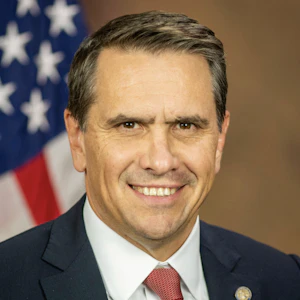
Todd Blanche
Todd Blanche
Biography of Deputy Attorney General Todd Blanche
The Honorable Todd Blanche is the 40th Deputy Attorney General of the United States, overseeing the work of the 115,000 dedicated employees who fulfill the Department of Justice’s mission at Main Justice, the FBI, DEA, U.S. Marshals, ATF, and 93 U.S. Attorney’s Offices.
Todd began his career at the Department where he served for over fifteen years in a variety of capacities, including as a contractor, a paralegal in the Criminal Division, and at the United States Attorney’s office for the Southern District of New York where he eventually became an AUSA and later a supervisor.
After leaving the Department, Todd worked as a criminal defense attorney that included representing President Donald Trump in three of the criminal cases brought against him in 2023 and 2024.
Following President Trump’s historic return to the White House, the President appointed Todd to work alongside Attorney General Pam Bondi to make America safe again. At the DOJ, Todd is working tirelessly to implement President Trump’s priorities that include confronting illegal protecting American businesses from fraud.
Todd has been married to his wonderful wife Kristine for nearly thirty years, is a father and grandfather.

Paul Atkins
Paul Atkins
Prior to returning to the SEC, Chairman Atkins was most recently chief executive of Patomak Global Partners, a company he founded in 2009. Chairman Atkins helped lead efforts to develop best practices for the digital asset sector. He served as an independent director and non-executive chairman of the board of BATS Global Markets, Inc. from 2012 to 2015.
Chairman Atkins was appointed by President George W. Bush to serve as a Commissioner of the SEC from 2002 to 2008. During his tenure, he advocated for transparency, consistency, and the use of cost-benefit analysis at the agency. Chairman Atkins also represented the SEC at meetings of the President’s Working Group on Financial Markets and the U.S.-EU Transatlantic Economic Council. From 2009 to 2010, he was appointed a member of the Congressional Oversight Panel for the Troubled Asset Relief Program.
Before serving as an SEC Commissioner, Chairman Atkins was a consultant on securities and investment management industry matters, especially regarding issues of strategy, regulatory compliance, risk management, new product development, and organizational control.
From 1990 to 1994, Chairman Atkins served on the staff of two chairmen of the SEC, Richard C. Breeden and Arthur Levitt, ultimately as chief of staff and counselor, respectively. He received the SEC’s 1992 Law and Policy Award for work regarding corporate governance matters.
Chairman Atkins began his career as a lawyer in New York, focusing on a wide range of corporate transactions for U.S. and foreign clients, including public and private securities offerings and mergers and acquisitions. He was resident for 2½ years in his firm's Paris office and admitted as conseil juridique in France.
A member of the New York and Florida bars, Chairman Atkins received his J.D. from Vanderbilt University School of Law in 1983 and was Senior Student Writing Editor of the Vanderbilt Law Review. He received his A.B., Phi Beta Kappa, from Wofford College in 1980.
Originally from Lillington, North Carolina, Chairman Atkins grew up in Tampa, Florida. He and his wife Sarah have three sons.

Mike Selig
Mike Selig
Chairman Selig brings to the role deep public and private sector experience working with a wide range of stakeholders across agriculture, energy, financial, and digital asset industries, which rely upon and operate in CFTC-regulated markets.
Prior to his leadership at the CFTC, Chairman Selig most recently served as chief counsel of the Securities and Exchange Commission’s Crypto Task Force and senior advisor to SEC Chairman Paul S. Atkins. In this role, Chairman Selig helped to develop a clear regulatory framework for digital asset securities markets, harmonize the SEC and CFTC regulatory regimes, modernize the agency’s rules to reflect new and emerging technologies, and put an end to regulation by enforcement. He also participated in the President’s Working Group on Digital Asset Markets and contributed to its report on “Strengthening American Leadership in Digital Financial Technology.”
Prior to government service, Chairman Selig was a partner at an international law firm, focusing on derivatives and securities regulatory matters. During his years in private practice, he represented a broad range of clients subject to regulation by the CFTC, including commercial end users, futures commission merchants, commodity trading advisors, swap dealers, designated contract markets, derivatives clearing organizations, and digital asset firms. Chairman Selig advised clients on compliance with the Commodity Exchange Act and the CFTC’s rules and regulations thereunder, including in connection with registration applications and obligations, enforcement matters, and complex transactions.
Chairman Selig earned his law degree from The George Washington University Law School and was articles editor of The George Washington Law Review. He received his undergraduate degree from Florida State University.

David Bailey
David Bailey

Eric Trump
Eric Trump
Mr. Trump also serves as Executive Vice President of The Trump Organization, where he oversees the global management and operations of the Trump family’s extensive real estate portfolio. This includes Trump Hotels, Trump Golf, commercial and residential real estate, Trump Estates, and Trump Winery. Known for his hands-on leadership and strong market instincts, he has played a key role in expanding the company’s presence across major U.S. and international markets.
A globally recognized business leader and public figure, Mr. Trump is a prominent advocate for Bitcoin and decentralized finance. He is a co-founder of World Liberty Financial, a decentralized finance (DeFi) platform, and serves on the Board of Advisors of Metaplanet, Japan’s largest corporate holder of Bitcoin.
Beyond his business activities, Mr. Trump has helped raise more than $50 million for St. Jude Children’s Research Hospital in the fight against pediatric cancer, a philanthropic mission he began at age 21.
Mr. Trump earned a degree in Finance and Management from Georgetown University. He currently resides in Florida with his wife, Lara, and their two children. He is also the author of Under Siege, his memoir published in October 2025.

Jack Mallers
Jack Mallers

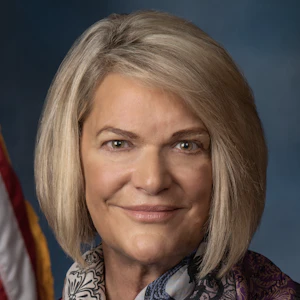
Cynthia Lummis
Cynthia Lummis
As the first-ever Chair of the Senate Banking Subcommittee on Digital Assets, Senator Lummis is the architect of the legislative framework shaping America's digital asset future. She introduced the landmark Lummis-Gillibrand Responsible Financial Innovation Act, the first comprehensive bipartisan crypto regulatory framework in Senate history. She co-authored the GENIUS Act — the first federal stablecoin law ever enacted — and introduced the BITCOIN Act, which would establish a U.S. strategic Bitcoin reserve of up to one million BTC. She is leading the Clarity Act, which will bring long-overdue regulatory certainty to the digital asset industry. She has also championed digital asset tax reform, including a de minimis exemption for small transactions and equal tax treatment for miners and stakers.
Known as Congress' "Crypto Queen," Senator Lummis represents Wyoming — a state she has helped build into one of the most digital asset-friendly regulatory environments in the nation. Before serving in the Senate, she served 14 years in the Wyoming Legislature, eight years as Wyoming State Treasurer, and eight years in the U.S. House. She is a three-time graduate of the University of Wyoming.
Her work represents a crucial bridge between traditional financial systems and the emerging digital economy, ensuring America leads the world in financial innovation while protecting the individual freedoms that define it.

Adam Back
Adam Back

Amy Oldenburg
Amy Oldenburg
David Marcus
David Marcus

Matt Schultz
Matt Schultz
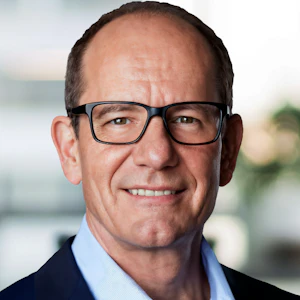
Fred Thiel
Fred Thiel
Throughout his career, Mr. Thiel has consistently driven rapid growth and created substantial shareholder value. Prior to MARA, Mr. Thiel served as the CEO of two other public companies, Local Corporation (NASDAQ: LOCM) and Lantronix, Inc (NASDAQ: LTRX). He has successfully raised billions in equity and debt through private and public offerings, led companies through IPOs, executed high-value exits to strategic and financial acquirers, and implemented effective M&A and roll-up strategies.
Mr. Thiel attended the Stockholm School of Economics and executive classes at Harvard Business School, and is fluent in English, Spanish, Swedish, and French. Mr. Thiel is the Chairman of the Board for Oden Technology, Inc. and is active in Young Presidents’ Organization where he has led initiatives in both the FinTech and Technology Networks.
A recognized voice in the industry, Fred frequently shares his insights on energy and technology with major media outlets like Bloomberg TV, CNBC, and FOX Business, contributing to vital discussions about the future of these sectors.
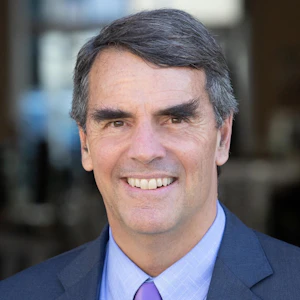
Tim Draper
Tim Draper
He is a supporter and global thought leader for entrepreneurs everywhere, and is a leading spokesperson for Bitcoin and decentralization, having won the Bitcoin US Marshall’s auction in 2014, invested in over 50 crypto companies, and led investments in Coinbase, Ledger, Tezos, and Bancor, among others.

Afroman
Afroman