Is This the Bitcoin Supercycle or Is the Four-Year Pattern Still Intact?
Speakers/Moderators

Michael Terpin
Michael Terpin

Matt Crosby
Matt Crosby


Session
Overview
Michael Terpin hosted a panel with Matt Crosby, Rational Root, and Shyan Hussain on whether Bitcoin’s historic four-year cycle remains useful or whether institutional demand and structural supply changes are pushing the market into a new phase.
The discussion contrasted the halving-driven cycle with newer market forces, including ETF flows, Bitcoin treasury companies, long-term holder behavior, macro liquidity, and the growing use of Bitcoin as collateral. Panelists differed on whether the bottom was already in, but broadly agreed that institutional and passive demand may reduce the severity of future drawdowns.
Speakers also debated price discovery beyond dollar-based charts, with attention to Bitcoin’s purchasing power against assets like gold, silver, and global wealth. The conversation centered on whether Bitcoin will continue following predictable boom-and-bust patterns or move toward a more gradual, institutionally influenced market structure.
Okay, welcome. This is the last panel of the last day of the show, so congratulations to everybody who made it out here. I am the only thing between you and whatever happy hour or party you are going to, so thank you.
We are going to talk today about the four-year cycle. Is it still a thing? Is it dead? Is it wounded? I have my orange jacket on and my Bitcoin supercycle logo inside.
My name is Michael Terpin. I have been in Bitcoin since 2012. I got really heavily involved in early 2013. I started BitAngels, which ended up doing early funding in a lot of the early altcoins, including Ethereum and Tether and a bunch of others. Then I started the first conference agenda for crypto investing, now called Tokenize. Most recently, I wrote the book Bitcoin Supercycle. I now have a fund by that name and am beginning to talk about a DAT as well, along the thesis that you make more money by selling Bitcoin at the top and buying it back at the bottom, and that the cycles are so far very predictable. They will only change when we get a supply shock starting a supercycle.
That is me. I live in Puerto Rico, and I have homes in Vegas and Miami. For the rest of the guests, tell me your thoughts on the supercycle or the cycle. Are they broken? And give a little background on you.
Hello, everyone. I am Shyan. I am CEO and founder of BlockBytes Capital. We are a private asset management firm based out of Virginia. We have been in the space since 2013, and we have been managing portfolios since 2023. I am definitely of the opinion that the four-year cycle is dead and we are in a supercycle. I am just joking.
I think it is difficult to say something is dead. It is difficult to speak in absolutes. I do think the four-year cycle, while it is not broken, has been diluted by larger, more persistent sources of demand and liquidity, as we have seen over the previous several years. This still respects the history of the four-year cycle, but it also opens the door to major structural change in the way that we use and invest in Bitcoin.
I am Rational Root. My thoughts on the four-year cycle are that it is still intact. Historically, the four-year cycle comes from the halving cycle. We had halving supply shocks that, in the beginning, were quite severe. Now they have a minor impact on the current markets, so I would not be surprised to shift away from the four-year cycle as halvings have less impact and other catalysts take their place. But we will always have cycles. The dynamics might change over time.
So far, the four-year cycle is still intact. If you look at the four-year cycle, we are exactly where we should be historically. There are some differences this cycle. Maybe we will get into some of the differences between this cycle and previous cycles, because there are a lot. We see a lot of institutional adoption. We had a lot of pressure from long-term holders this time around, and the $100,000 psychological level. There are definitely dynamics that are different.
Moving forward, for the time being, it will continue to look like we are moving in the four-year cycle in the near term. Over time, I am of the same opinion that we are going to move away from it, as Michael Terpin was saying in the beginning, with some sort of supply shock that will come at some point and take Bitcoin to the next level.
What we have seen is that this cycle was not as retail-driven. Each cycle, we saw diminishing returns, and we saw a new influx of retail moving in every cycle. This cycle was much more institutional, more structural inflows, and less retail. If you think of the adoption curve of a new technology like Bitcoin, you have the early investors, then the early majority and the late majority. Retail basically had a 15-year head start on institutions, because only this cycle did institutions really come into the space.
The people in retail who were open-minded enough to do the proof of work to understand the value proposition of Bitcoin are already in the space. The early majority, which is maybe not as willing to do the proof of work to understand the true value proposition, comes through institutions, financial advisors, and so forth. If you think of an average person who earns a salary, part of that salary goes into a pension fund. Now, because financial advisors understand the value proposition of Bitcoin, they will put some percentage into Bitcoin. A lot of passive flows are going to come from the early majority of people who would not really be willing to do the work. I think that is the transition phase we are currently in.
I am Matt from Bitcoin Magazine Pro. I really hate the phrase, this time is different. But if there ever were a time for this time to be different, it is probably this time. We are seeing Bitcoin in conditions in which everyone a few years ago would have expected considerable downside. There is geopolitical uncertainty. We are seeing underperformance on a macro basis relative to commodities like gold and silver, and equity indexes rising to all-time highs. But over the past couple of months, Bitcoin has been rallying faster in terms of relative purchasing power compared with these other assets.
If you measure the four-year cycle not just by Bitcoin versus the U.S. dollar or other fiat currencies, which are debasing at multiple percentage points a year, but as a percentage of global wealth or versus something like gold to see its relative purchasing power, then even throughout 2025 we made a new all-time high, but the cycle felt terrible because everything else was going up at a faster rate than Bitcoin. If we measure Bitcoin’s relative purchasing power, we actually peaked around December 2024 and have exceeded a one-year bear market.
To play into what other people have said here, we are also seeing a shift in the supply and demand economics of the network. Previously, Bitcoin was almost exclusively a retail-driven speculative asset. Now we are seeing institutions accumulating at a very rapid rate. Tie that in with the illiquidity of Bitcoin, with 95% that will ever exist already in circulation, and the fact that people are seemingly more and more willing to hold on to Bitcoin indefinitely. If we look at long-term holder supply, close to around 80% of Bitcoin is pretty much illiquid, not being easily and willingly sold by people with a long-term time horizon.
If we look at institutions through the ETFs, from the peak to the recent lows, I think many people were looking at the institutions and thinking, are they going to sell like retail did? But we saw less than a 13% outflow from these ETF holdings. These new participants clearly also have a very long-term time horizon.
As Bitcoin is getting more illiquid, and as it has started to show some relative strength versus these other assets over the past few weeks and months, I think Bitcoin potentially has already bottomed. We have seen some capitulation signals. If we can start breaking into new higher highs and lows from where we are today, then at least in my mind, that would solidify that the halving event, which primarily drove the four-year cycles previously, has probably passed us. Maybe we see Bitcoin trade more like the S&P 500, with passive flows coming in and a more gentle, slow grind to the upside with diminished volatility.
Thank you. Let’s look at a couple of definitions of terms and what has actually happened so far. The four-year cycle has been impressively predictive of future behavior, much more so than some stock market sayings like sell in May and go away, which I followed for many years. It saved me in the 2008 and 2009 crisis because I sold in May. I was all cash going into the great financial crisis. There are also things like the Santa Claus rally.
First of all, the four-year cycle has never been four years. It is 210,000 blocks. The closest one to being a four-year cycle, where every halving would be on January 3, was the first halving, which was in late November. It was almost 47 months. The very next one was the shortest cycle because it went all the way back to July, and a lot of that was because of the disruption in mining that happened when China cracked down on miners. We have been getting a little bit closer to 48 months. The last couple of cycles have been about 47 months, and we are now predicting about 47. The current estimate for when the 210,000th block of the cycle is going to hit is sometime in late March 2028.
What is interesting, as I say in my book, is that I believe it was not an accident. I think it was intentional that Satoshi put at least the first few halvings in presidential election years, because that is really where a lot of other economic cycles revolve around.
You end up having what I call the four seasons of Bitcoin. In my book, Bitcoin spring starts the day of the halving. Halving to halving, interestingly, Bitcoin always goes up so far. Satoshi had said that as long as the amount of new money coming into the ecosystem is greater than the percentage of new coins coming in, it has to go up. Sure enough, it is math. First halving, $12. Second halving, $670. Third halving, $8,700. Fourth halving, $63,900.
Everything that happens in between, all the wild swings, is fear and greed. I identified back in 2015, and so far it has been very consistent, four behaviors between each halving that are not based on math but are based on fear and greed. Bitcoin spring starts with the halving. Miners all of a sudden go from being slightly profitable to massively unprofitable. You would think the price would drop. It does not. It stays flat because for every miner selling, somebody else has said, it is going to be up by the next halving.
Bitcoin summer happens the day of the first new high after the halving, and that is parabolic growth. It is a great time to buy Bitcoin. If you are not going to HODL and you are going to try to trade, the first day of Bitcoin summer is when you make your money. Bitcoin fall starts the day of the bubble popping, and it ends with capitulation, the final drop that you do not come bouncing back from. Interestingly, the longest season is winter.
Spring has been about four to seven months so far, getting a little bit longer each time. Summer has been nine to eleven months, getting a little longer each time. Fall, interestingly enough, has been exactly around a year and has not varied much. It was a year and a couple of weeks in the 2012 to 2016 cycle. It was a year minus three days in the 2017 to 2018 bull market. Then it was one year to the date in 2021 to 2022. The bubble popped on November 10, and a year later there was FTX.
It has been interesting to me that all the bad news happens right at the time that it is supposed to, and it ends up shaking the market out. We have not really had that much bad news so far in this Bitcoin fall. If you believe the people who say we are in a new bull market, it would be the first time that we had one that was only four months and had a nice bounce back from it. But when we went down to 80 from the top, and when we went down to 60 in February, both times we had FTX levels of fear. Now we are back up to about neutral behavior.
I believe we are still going to go lower. I believe we are going to hit the bottom around October, and that we will have one more drop to massive fear and greed. It will get us down somewhere between 40 and 60. I think some of the factors that we have been talking about already, like institutions, which by the way is still retail with ETFs. The only thing that is really kind of institutionally driven is the DATs, because the ones that are saying they are going to keep Bitcoin forever, like Saylor, that is permanent capital.
I would like everyone’s opinion on two things. Number one, when do you see the bottom hitting for this cycle? Do you think it already hit? And what do you think are the main factors that are different this cycle that will change where this bottom is and where the next top is?
I definitely think we have hit the bottom for Bitcoin and the overall market in general. There are a lot of things that are different over the last two to three years that were not prevalent before. Bitcoin is being heavily financialized now. It is not just a spot purchase anymore. It is being wrapped, lent, collateralized, and refinanced to the point where it changes the dynamics of its supply and the velocity with which it moves up and down.
That has a few different implications. It allows for more liquidity, it allows for more leverage, and supply is no longer just based on coins that are mined. I also think people generally get the wrong impression with the word supercycle and relate that to price just going up constantly. I do not think that is the case. I think it means we do not have full wipeouts or multiyear winters anymore, but we do have sharp, faster, shallow corrections, and we will continue to go higher.
I am not as absolute. There is still a fair chance that the bottom is not in. The February crash we had was very similar, if you look at on-chain data, to the June bottom of the previous bear market in June 2022, which was the Celsius crash. Then later that year, in November, we had the FTX crash and another leg down.
What is different this cycle is that we have a lot of structural flows. We had them during the bull market, and now in the bear market as well. We see incredible demand for Bitcoin through Strategy. That has a dampening effect on the downside.
We are currently at around 77,000 to 79,000. The short-term holder cost basis, the average purchase price of short-term holders in the market, is around 79,000. Historically, we always rejected off that and continued to bear for another couple of months. Usually, we had another leg down.
This time, I am not as convinced that we will have another leg down. I think there is a high probability that we will again reject off the short-term holder cost basis and continue to have sideways, choppy price action. Potentially, if there is a catalyst, like escalation of the war and so forth, we could have another leg down. We could maybe touch $50,000.
Historically, Bitcoin always bottoms in the bear market below the realized price. The realized price is the average purchase price of all investors in Bitcoin. Currently, that price is at $54,000. Historically, if the four-year cycle continues, we would actually at least see a crash below that price. As I said, there is a lot of institutional demand, so this time there is a dampening effect. Maybe this time is different, but I am careful.
There are two ways. We could still touch slightly below $54,000 before we actually bottom, and that would happen within the next six months. I think that is the most conservative take you can have, and probably the most prudent way to think about how we move forward. If we are lucky, we do not get there. We bottom earlier, have less of this low consolidation phase left, and continue to move up from there.
I just want to update the price, though. It is $75,790.
All right, the conference dump is real.
Rather than working in a binary where yes, we have bottomed, or no, we have not, like a true analyst who likes to get a get-out-of-jail-free card, I like to think more probabilistically. In my mind, I think the chances that we have bottomed are greater than 50%. If we have not, and we are talking $54,000, no one looks at the previous cycle and says, look at this guy who bought at $20,000 and did not buy the exact bottom at $15,000. The asymmetric opportunity is accumulating in this bottoming range. You do not have to nail the exact bottom as long as you can strategically dollar-cost average with slightly more size around these levels. I think the risk-reward is very favorable.
In terms of whether I think we potentially bottom out at a different date based on the four-year cycle, as we have said before, I think previously that was more of a fundamentally driven event due to the halving. The structure of the market has changed significantly now, and it feels somewhat arbitrary to focus on the day of the year on which Bitcoin may or may not do something.
Previously, we have bottomed on a more predictable time horizon, but that also coincided with mass on-chain capitulation and extreme fear in derivatives markets. These are the types of signals we are seeing at these points. For me, I am not looking at what day of the year we are. I am looking at what people are actually doing, what is happening on-chain, who is buying, and who is selling.
There could be a catalyst that takes us to new lows. We all know one tweet from a certain someone in the White House can change things very drastically, very quickly. But ultimately, looking at these tools, I think there is at least a greater probability that we have bottomed than we have not.
I will say there are two types of capitulation. Everyone immediately focuses on price-based capitulation. How low did we go? What was the drawdown percentage? But there is also time-based capitulation. We do not just see a huge percentage drawdown. We see a long, drawn-out bottom-forming process, which just bores people. We see low volatility, we see choppy consolidation, and people generally get bored and leave the asset.
If that is at a fairly stable price, whether that is $60,000 to $70,000, it allows investor mindsets to adjust to this new baseline foundation price. It allows new capital to start flowing in, and people get used to the fact that Bitcoin may have had this drawdown, but at a 50% pullback, you get buy-one-get-one-free sats compared with a few months ago. I think institutional investors are more attuned to this opportunity. At these levels, I think it would be reckless to wait for a day on the calendar and not accumulate when we are seeing such opportunities in the market.
We are all pretty close to agreement on the price of this bottom, because if it already happened, then it was 60. I think it can go down to 40, but I would agree that some of the dampening effects you get from what Strategy alone is doing matter. I think it comes down to whether we go into the 40s if we have another FTX-like moment.
We still have a very tender environment for adapting to some kind of shock. If you are talking about what happened on 10/10, there are a number of explanations. It was not just a tweet. It was Binance starting to sell like crazy, auto-deleveraging, and market makers. When you had structured selling for five days, it went all the way down to 80. If it had lasted another week, it might have gone down to 60.
In February, the closest explanation I have heard is that a Hong Kong hedge fund was overleveraged. If something that small, that was not exactly FTX, can wipe out the remaining short-term holders, then we still have some danger ahead.
Now that we are sort of in the 50 to 60 range for where the bottom is, or was, or will be, we have about five minutes left. Let’s talk about where we think the high at the top of this next 2028 to 2032 cycle will be, and what it is going to be like four years after that. I am not even going out ten years, just three years and seven years.
My projection is that I believe we have a solid shot of having a sufficient supply shock next time. My worst case is that we go up to about 180. My best case is that, with a supercycle shock, we could go to about 450 to 480. I do not think we will hit 500. Four years after that, we have a solid shot at getting into the $800,000 to $900,000 range at the top, or we may still just be trying to get up to half a million. Thoughts from the rest of the panel?
I agree. At the very minimum, what I am looking for in terms of price action is 175, and over the next four to eight years, more toward $450,000. I think we have seen Bitcoin move through three narratives over time. We have seen it move through the narrative of being a speculative asset. We have seen it move through the narrative of being a store of value. Now we are seeing it used as collateral and moving more toward a narrative around macro liquidity. Supercycle, for me, just means a more aggressive transition toward that phase three.
You are already assuming a bet that the four-year cycle continues in a way with those predictions. I think it is very far out to talk about a prediction for seven years. I would rather say that by the next halving, I expect the bare minimum price to be at current all-time high levels, so around $126,000 by the next halving, which is in less than two years. I think a fair price for the next halving would be well above $200,000. Usually around the halving, we are more at fair price levels, not so much at deeply undervalued levels.
That is already a reasonable prediction far out enough, because the dynamics that are going on are quite different. As I said, we have incredible demand from Strategy, so some of these dynamics are changing. We are dealing with the last retail inflows, and we have more institutional flows. The dynamics of the cycle could change over time. I am not super sure what the next cycle top will be.
I am not so sure of a supply shock either. I think the market is big and liquid enough that we are more likely to move up more gradually and still face resistance at several levels. Most of the supply of Bitcoin has been mined and was in the hands of early holders and OGs. They bought at levels like $10, $100, $1,000, or $10,000. The $100,000 psychological level was a level where they were really willing to part with some of their Bitcoin. It is a level that we have basically been waiting for over two cycles. We had the laser eyes until $100,000 meme. The $100,000 level has been talked about for a long time, so I think there is still fair resistance to move through.
I also think the market is big enough, and we will continue with some sell pressure even at higher levels. It is true that we have seen incredible institutional adoption. If you think of 20 million Bitcoin currently in circulation, only the institutional adoption from Strategy and ETFs is nearly 2 million Bitcoin acquired over the last years. Obviously, there were a lot of coins in the hands of these OGs who have been selling heavily and were also willing to take profit at the $100,000 level.
I think the $100,000 top, or the $126,000 top, and the reason we got the February crash was also a bit of the realization that the actual top was in. Before, with the November 10 crash, we had the highest liquidations ever in crypto, which affected the crypto market much more than Bitcoin. That was a Bitcoin- or crypto-specific event. But this cycle, we have been dealing much more with global macro conflict rather than isolated events regarding Bitcoin. We are dealing with a very different time this time, so I am not willing to predict that far out.
We are out of time, so I will be very quick. If we are doing price predictions, you have to keep in mind that dollars tomorrow are worth less than dollars today. Measuring against something that is debasing does not really give us the best idea of relative purchasing power. Like I said previously, we made an all-time high in 2025, but it certainly did not feel like it.
I think we need to be targeting comparable assets. Approaching the market cap of silver, which should be somewhere around $3 trillion to $4 trillion, would be a 2x from the previous all-time high, about a quarter of a million dollars. But again, that quarter of a million dollars is not buying you as much as today’s quarter of a million dollars.
That is everything. Thank you. We will see you guys in Nashville next year, and we will be around for a couple of minutes for questions.
Similar
Sessions
Is This the Bitcoin Supercycle or Is the Four-Year Pattern Still Intact?
Michael Terpin
Michael Terpin
Matt Crosby
Matt Crosby
Is This the Bitcoin Supercycle or Is the Four-Year Pattern Still Intact?
Speakers/Moderators
Michael Terpin
Michael Terpin
Matt Crosby
Matt Crosby
Other
Speakers

Michael Saylor
Michael Saylor

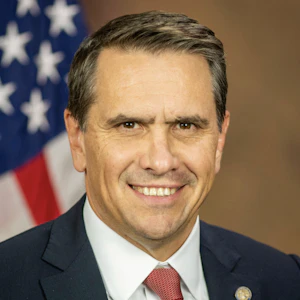
Todd Blanche
Todd Blanche
Biography of Deputy Attorney General Todd Blanche
The Honorable Todd Blanche is the 40th Deputy Attorney General of the United States, overseeing the work of the 115,000 dedicated employees who fulfill the Department of Justice’s mission at Main Justice, the FBI, DEA, U.S. Marshals, ATF, and 93 U.S. Attorney’s Offices.
Todd began his career at the Department where he served for over fifteen years in a variety of capacities, including as a contractor, a paralegal in the Criminal Division, and at the United States Attorney’s office for the Southern District of New York where he eventually became an AUSA and later a supervisor.
After leaving the Department, Todd worked as a criminal defense attorney that included representing President Donald Trump in three of the criminal cases brought against him in 2023 and 2024.
Following President Trump’s historic return to the White House, the President appointed Todd to work alongside Attorney General Pam Bondi to make America safe again. At the DOJ, Todd is working tirelessly to implement President Trump’s priorities that include confronting illegal protecting American businesses from fraud.
Todd has been married to his wonderful wife Kristine for nearly thirty years, is a father and grandfather.

Paul Atkins
Paul Atkins
Prior to returning to the SEC, Chairman Atkins was most recently chief executive of Patomak Global Partners, a company he founded in 2009. Chairman Atkins helped lead efforts to develop best practices for the digital asset sector. He served as an independent director and non-executive chairman of the board of BATS Global Markets, Inc. from 2012 to 2015.
Chairman Atkins was appointed by President George W. Bush to serve as a Commissioner of the SEC from 2002 to 2008. During his tenure, he advocated for transparency, consistency, and the use of cost-benefit analysis at the agency. Chairman Atkins also represented the SEC at meetings of the President’s Working Group on Financial Markets and the U.S.-EU Transatlantic Economic Council. From 2009 to 2010, he was appointed a member of the Congressional Oversight Panel for the Troubled Asset Relief Program.
Before serving as an SEC Commissioner, Chairman Atkins was a consultant on securities and investment management industry matters, especially regarding issues of strategy, regulatory compliance, risk management, new product development, and organizational control.
From 1990 to 1994, Chairman Atkins served on the staff of two chairmen of the SEC, Richard C. Breeden and Arthur Levitt, ultimately as chief of staff and counselor, respectively. He received the SEC’s 1992 Law and Policy Award for work regarding corporate governance matters.
Chairman Atkins began his career as a lawyer in New York, focusing on a wide range of corporate transactions for U.S. and foreign clients, including public and private securities offerings and mergers and acquisitions. He was resident for 2½ years in his firm's Paris office and admitted as conseil juridique in France.
A member of the New York and Florida bars, Chairman Atkins received his J.D. from Vanderbilt University School of Law in 1983 and was Senior Student Writing Editor of the Vanderbilt Law Review. He received his A.B., Phi Beta Kappa, from Wofford College in 1980.
Originally from Lillington, North Carolina, Chairman Atkins grew up in Tampa, Florida. He and his wife Sarah have three sons.

Mike Selig
Mike Selig
Chairman Selig brings to the role deep public and private sector experience working with a wide range of stakeholders across agriculture, energy, financial, and digital asset industries, which rely upon and operate in CFTC-regulated markets.
Prior to his leadership at the CFTC, Chairman Selig most recently served as chief counsel of the Securities and Exchange Commission’s Crypto Task Force and senior advisor to SEC Chairman Paul S. Atkins. In this role, Chairman Selig helped to develop a clear regulatory framework for digital asset securities markets, harmonize the SEC and CFTC regulatory regimes, modernize the agency’s rules to reflect new and emerging technologies, and put an end to regulation by enforcement. He also participated in the President’s Working Group on Digital Asset Markets and contributed to its report on “Strengthening American Leadership in Digital Financial Technology.”
Prior to government service, Chairman Selig was a partner at an international law firm, focusing on derivatives and securities regulatory matters. During his years in private practice, he represented a broad range of clients subject to regulation by the CFTC, including commercial end users, futures commission merchants, commodity trading advisors, swap dealers, designated contract markets, derivatives clearing organizations, and digital asset firms. Chairman Selig advised clients on compliance with the Commodity Exchange Act and the CFTC’s rules and regulations thereunder, including in connection with registration applications and obligations, enforcement matters, and complex transactions.
Chairman Selig earned his law degree from The George Washington University Law School and was articles editor of The George Washington Law Review. He received his undergraduate degree from Florida State University.

David Bailey
David Bailey

Eric Trump
Eric Trump
Mr. Trump also serves as Executive Vice President of The Trump Organization, where he oversees the global management and operations of the Trump family’s extensive real estate portfolio. This includes Trump Hotels, Trump Golf, commercial and residential real estate, Trump Estates, and Trump Winery. Known for his hands-on leadership and strong market instincts, he has played a key role in expanding the company’s presence across major U.S. and international markets.
A globally recognized business leader and public figure, Mr. Trump is a prominent advocate for Bitcoin and decentralized finance. He is a co-founder of World Liberty Financial, a decentralized finance (DeFi) platform, and serves on the Board of Advisors of Metaplanet, Japan’s largest corporate holder of Bitcoin.
Beyond his business activities, Mr. Trump has helped raise more than $50 million for St. Jude Children’s Research Hospital in the fight against pediatric cancer, a philanthropic mission he began at age 21.
Mr. Trump earned a degree in Finance and Management from Georgetown University. He currently resides in Florida with his wife, Lara, and their two children. He is also the author of Under Siege, his memoir published in October 2025.

Jack Mallers
Jack Mallers

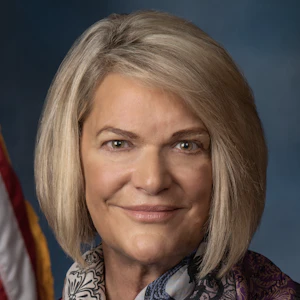
Cynthia Lummis
Cynthia Lummis
As the first-ever Chair of the Senate Banking Subcommittee on Digital Assets, Senator Lummis is the architect of the legislative framework shaping America's digital asset future. She introduced the landmark Lummis-Gillibrand Responsible Financial Innovation Act, the first comprehensive bipartisan crypto regulatory framework in Senate history. She co-authored the GENIUS Act — the first federal stablecoin law ever enacted — and introduced the BITCOIN Act, which would establish a U.S. strategic Bitcoin reserve of up to one million BTC. She is leading the Clarity Act, which will bring long-overdue regulatory certainty to the digital asset industry. She has also championed digital asset tax reform, including a de minimis exemption for small transactions and equal tax treatment for miners and stakers.
Known as Congress' "Crypto Queen," Senator Lummis represents Wyoming — a state she has helped build into one of the most digital asset-friendly regulatory environments in the nation. Before serving in the Senate, she served 14 years in the Wyoming Legislature, eight years as Wyoming State Treasurer, and eight years in the U.S. House. She is a three-time graduate of the University of Wyoming.
Her work represents a crucial bridge between traditional financial systems and the emerging digital economy, ensuring America leads the world in financial innovation while protecting the individual freedoms that define it.

Adam Back
Adam Back

Amy Oldenburg
Amy Oldenburg

David Marcus
David Marcus

Matt Schultz
Matt Schultz
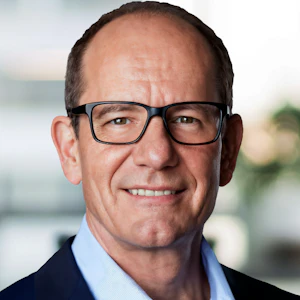
Fred Thiel
Fred Thiel
Throughout his career, Mr. Thiel has consistently driven rapid growth and created substantial shareholder value. Prior to MARA, Mr. Thiel served as the CEO of two other public companies, Local Corporation (NASDAQ: LOCM) and Lantronix, Inc (NASDAQ: LTRX). He has successfully raised billions in equity and debt through private and public offerings, led companies through IPOs, executed high-value exits to strategic and financial acquirers, and implemented effective M&A and roll-up strategies.
Mr. Thiel attended the Stockholm School of Economics and executive classes at Harvard Business School, and is fluent in English, Spanish, Swedish, and French. Mr. Thiel is the Chairman of the Board for Oden Technology, Inc. and is active in Young Presidents’ Organization where he has led initiatives in both the FinTech and Technology Networks.
A recognized voice in the industry, Fred frequently shares his insights on energy and technology with major media outlets like Bloomberg TV, CNBC, and FOX Business, contributing to vital discussions about the future of these sectors.
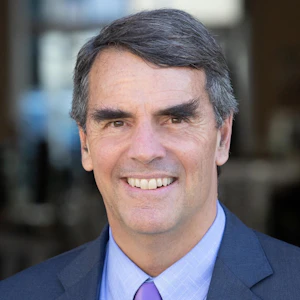
Tim Draper
Tim Draper
He is a supporter and global thought leader for entrepreneurs everywhere, and is a leading spokesperson for Bitcoin and decentralization, having won the Bitcoin US Marshall’s auction in 2014, invested in over 50 crypto companies, and led investments in Coinbase, Ledger, Tezos, and Bancor, among others.

Afroman
Afroman