Key Things to Look for in Mining Services
Speakers/Moderators
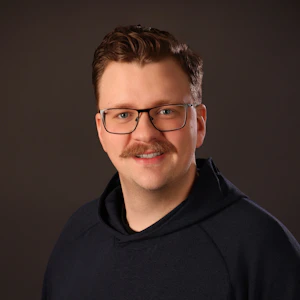
Tatum Turn Up
Tatum Turn Up
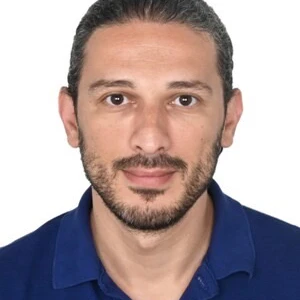
Rami Alsridi
Rami Alsridi

Session
Overview
This panel focused on how miners should evaluate hosting providers, mining services, and pools before committing capital. Speakers discussed why electricity price is only one part of the decision, emphasizing uptime, contract terms, hidden fees, geography, power agreements, repair processes, and operator track record.
The conversation also covered mining pool reliability, including latency, rejected shares, payout verification, and the use of open-source tools to help miners verify pool performance rather than relying only on trust. AtlasPool’s Matt Weinberg described how global infrastructure and anycast routing can improve availability and reduce wasted work.
A recurring theme was that Bitcoin mining remains a young industry without fully mature standards, making due diligence especially important. The panel encouraged newcomers to start small, understand the risks, avoid promises of quick returns, and view mining as a long-term way to gain experience with Bitcoin while contributing to network decentralization.
Thank you all for coming. Good afternoon. We are in the final home stretch of the conference. Could be a good thing, could be a bad thing, depending on how it's been for you. I've had a great time so far, and I'm excited to talk about mining services. Just to get things started, I'll go down the line and we'll do introductions.
I'm Tatum, with Compass Mining, and I'm going to be moderating this discussion. Tell me who you are and what you do.
Hi, guys. Dominik Wanzowitsch is the way to pronounce it. I'm with Hashlabs. We are a hosting provider in four countries and looking into the U.S. now, but we are normally in the north of Europe and in Africa. I'm the business development guy.
Hey, everybody. My name is Matt Weinberg. I built and operate a solo mining pool called AtlasPool. I'm relatively new into the space, but I've spent my career working on large-scale internet infrastructure, and what I wanted to do was apply my knowledge to building a pool. So that's what I did.
Rami Alsridi, founder and CEO of Mining Grid. We do a community mining ecosystem and offer cloud mining for retail clients.
We have a lot to cover here. Mining has historically gotten to a point where one person can't do it all themselves. Miners are hot, they're loud, and they require special power that most people don't have. So we look for services for hosting and things like that. We've seen the rise and fall of several hosting companies and mining services, from hosting for plebs to infrastructure build-outs. But there's a lot of nuance with all of those.
If someone were to come to you today and say, “I want to start mining,” or “I want to switch providers,” what's one thing they need to look for? What's the main thing that people might miss?
In my opinion, the main thing to look at, even more importantly than electricity rate, which everyone is mainly focused on, is uptime. You can get the cheapest rate in the world, but if your machines run 50% of the time, you normally don't have time to get the ROI on your investment. There might be countries that sound great and look great on paper, but when you actually look into it and see how long your miners run, it might not be as profitable as you think. Electricity rate, of course, everyone knows that. But uptime is next to the same level for me.
Yeah, that's a big thing. Everyone immediately asks, “What's the power rate?” And there's a lot more under that that you need to look for. We'll dive deeper into that a little bit. Matt, I'm curious about what you have to say because you run a pool, and he mentioned uptime. I didn't realize that uptime of solo mining pools was an issue. I didn't realize there was downtime, really. Could you explain a little bit about uptime and downtime, especially on the pool side? What does that mean for a miner?
If you're mining, you want your pool to be always available. Uptime matters. You also want low latency because the higher the latency, the more rejected shares your miners will have. Rejected shares are wasted work. When I first went down this journey, I bought my first solo miner. I saw the pools that were out there and said to myself, “I think I might be able to do something differently and better.” So I deployed the pool globally so that any miner, no matter where they are in the world, can reach the pool very quickly with low latency and 100% availability. That's really what matters. There's no point in mining if you can't reliably rely on your pool.
Do you have anything else to add as far as what to look for, or maybe red flags? I want to go down the line with red flags as well.
Definitely. When you're new to mining and want to start your journey, you need to look at different things from your operator. People don't look at the long term. As my colleague said, the electricity rate is really important, and uptime is important, but there are a lot of things behind it. Even if you fix that rate for one year and lock it in for a short-term contract, if it's unpredictable for the following years, you can lose your investment.
The track record of the mining operator is also really important. I advise everyone, before starting back in mining, to try your operator. You need to experience it and ask for historical records from the operator. The more they have been in the market, the more secure they are. You need to ask about many other risks. What are the exit clauses? If I want to stop mining, can I stop mining or not? What is the risk of changing prices? What is the uptime? What is the electricity connection like? Is there a redundant system or not? Is it a data center or not?
There are many things, and it's very hard for someone to come in and really understand the full cycle. If you are an accredited investor and want to do bulk deals, maybe you can get those details. But the reality in the market is that when people want to enter mining, they cannot always get all these details because mining farms are interested in bulk deals, not small retail clients.
My recommendation is to start small. Try to do your due diligence about the company and the history. Then select the best provider based on uptime, electricity costs, and the outcome. The pool also plays another part because you need to know which hardware you want to use, which operator you want to use, and which pool is better for you to connect to. Then you can reach the maximum outcome from that experience.
There's definitely a lot of factors that have to line up for you. It's a lot of trial and error. That's just kind of the nature of the industry. I want to go into some red flags. There is often something you see where it's like, “Wow, I can't believe they're offering this at one cent per kilowatt-hour,” or something like that. That was exaggerated. I hope no one is offering one cent per kilowatt-hour. What are some red flags that you've seen in other operators or mining services? What should people look for, and what's the reality of that?
A good example is the hosting rate. Whenever companies have a 6.5 cent rate, a 6 cent rate, a 6.5 cent rate, and then one has a 5.5 cent per kilowatt-hour rate, sometimes they have a three-month deposit, or they make you pay a year in advance for the electricity, or they have a $400 handling fee per unit. Some companies are really good at marketing and getting you in the door, but looking at these hidden fees is actually more important than most people think.
We try to have no hidden fees, so all you have is the machine price and maybe shipping costs if it's a new machine. Others look cheaper even though they might not be. Some people get in the door first because it looks cheaper, but looking at the deposit, prepayment structure, and those kinds of things is more important than most people think.
Would you say the same thing, that the hosting rate is a big one people are attracted to because that's your monthly cost? Are hidden fees common, or is that something people misunderstand upfront?
Yeah, I would echo that. If you look at the wider picture, not only in the U.S., when you fix rates, normally you fix them in local currencies in many countries. When you convert it to dollars, the exchange rate can also impact the hosting price. That's a major factor or risk when people select where they want to mine.
There is also another major risk: the security of these farms and the country's regulation changes. If you want to mine for one or two years, maybe that risk is low. But if you are capitalizing on your investment in mining devices and you want to run them for four to five years, then regulation changes, government changes, shutdowns of locations, or changes in the power plant supply ratio to these farms become major issues. Unfortunately, many clients face this risk because once they enter, they cannot get visibility on which country they need to host their devices in and which farm.
As we said, a higher price at the beginning for hosting is better than an unpredictable price. If the unpredictable price in year two is 20% higher, then it wipes out all the mining outcome you had in year one. I see it as one of the major risks: the rates of electricity, uptime, and contracts with power plants. These are major things people need to consider.
The geographic part of that is also really big because every country has different regulations and different relationships with Bitcoin miners and large infrastructure like that. It gets shaky whenever you may be getting a ridiculously cheap power rate, but what is going to happen in the geopolitical sphere over the course of two to three years? With deploying your pool globally and the redundancy you have set up, is that something you looked into?
Definitely. But I want to get back to your red flag question.
When I first built the pool, one of the things I wanted to prove out was that if someone mines to the pool I built, they're going to get paid the way I advertise it. So I built tooling to verify the block templates that any pool hands out, not just the pool I built. You can examine the block template and see what the payout structure is. That way I could prove that I was paying people the way I said I would.
When I tested some other pools, I discovered that they didn't necessarily do that. There were some pools out there that didn't pay out the way they had advertised. Even worse, there were a few solo mining pools that would literally take your hash rate, proxy it back to another pool for their own profit, and you would never have a chance of mining a block. Most people don't realize it until they examine the block templates.
With regard to red flags, I published some original work. It was a building trust moment because when I did this, people realized that not only could you trust the pool I built, but you could trust the tooling, and it opened people's eyes about things they should look for when they're looking at other pools as well.
In terms of availability, most pools out there, especially solo pools, usually deploy a server in one location in the world. Or maybe they deploy it at two or three locations in the world. You have to manually set up your miner to point to that particular server. If I'm in the United States, I'll point to the server in the U.S. If I'm in Europe, I'll point to the server in Europe. The problem is that if there's ever an outage, then you have to have at least a fallback set up in your miner to go to a secondary pool.
There are outages out there. And remember the story about latency: the lower the latency, the faster your miner gets to the pool, and the fewer rejected shares you have, which is wasted work. What I did is employ a technology called anycast. It's a networking protocol that allows anybody, no matter where they are in the world, to connect to the pool as fast as possible. Someone in South Africa will connect to an endpoint I have deployed in South Africa. If they're in Brazil, they'll go to Brazil, and so forth.
I don't have to manually set up my miner to go to just the U.S. server or the European server. You just point to one location, and no matter where you are, you always get routed to the right place. That's something I worked really hard on and am proud of with the pool.
That's really awesome. Latency brings up my next question. There's actually stuff on the infrastructure side that matters when you're hosting a miner: the rigidity of your containers and how everything is set up, the physicality of it. But as a person who's looking for a service and may not be on the front lines in the containers, how do you, as a company, convey the infrastructure information that matters when picking a service? How do you present that to a customer, or how should customers try to figure out the actual nitty-gritty details of the infrastructure?
To be honest, I don't think mining customers really care what container you use. They want the miner to run and they want their stats to be there. The topic is key things to look for in a mining service: electricity rate, yes; geography, yes. But it's a lot about trust. You will most likely never see your miners. You will not fly to Ethiopia. You will not fly to Finland and see the container. At the end of the day, you trust us.
If you meet us at the conference, that's fine. Most clients never meet the teams. You have a couple of Google meetings if you can. One thing our company does quite well is writing research papers and writing about the topics, trying to have extra information for people to read. That's one way to do it.
But at the end of the day, what the container and infrastructure are like, customers often don't really care. The only thing that we do quite well is that in Finland we have a heat reuse site. For us it's easier to explain why it's useful. We have water cooling the chip, the water gets hot, and we sell that to the government, and they heat cities. We have about 100,000 people in Finland who shower and cook with our heated water. That is easy to convey. But the infrastructure, the pipes, and all of that, I don't think that's as important.
The transformers that you're using — there's always that one guy. But that is a big thing: trust. And of course the ethos is don't trust, verify. There are levels to that in Bitcoin, especially with Bitcoin mining, because you're paying someone for a service of hosting a miner. How do you build that trust with your customers and establish it? Obviously track record goes a long way, but especially with a new company, because we're in a very young industry, how do you bring that trust up to a point where someone is ready to host with you because they know what you're doing?
I'll take it from our angle because we are an aggregator layer and we work with different mining farms and operators. We are not operators ourselves. What I've experienced from dealing with multiple operators across the U.S. and globally is that trust comes with the supplier from multiple aspects.
Definitely historical data matters. The way they monitor their hash rate, the way they charge for consumed electricity, and the overall efficiency. When you run the data for some time, if they give you historical data, it gives you an indication. If they say 95% or 98% uptime, then the efficiency comes in at 80%, you understand they cannot meet that efficiency later on.
We are not experts in designing the infrastructure, but we rely on the suppliers to do that structure for us. Another thing is repairs. Our industry is not really mature like data centers, which have been there for a while. Manufacturers have a release schedule and maybe 99% of the stock they ship to you is working, but in mining it's not the same. Shipping conditions also differ, and insurance of assets is different from a normal data center to mining.
A good operator always knows how to manage this. They know how to get replacement time if repairs are required, the time to submit the repair request, how to diagnose the repairs, whether they have technicians on site, and what their repair time and replacement time are. All of this is a major factor.
What I also saw in that domain is repair costs. The repair costs for the same item and the same fault might vary 40% or 50% from operator to operator. Repair time is sometimes days with some operators and weeks with others. From our aspect as a client, not as an operator, we really trust the majority of the big operators because they have flexibility to move between their fleets. They have bigger repair centers and more technicians on site.
The small ones are still good, but they are evolving and trying to be better. As we said, the industry is not very mature yet, so they don't have very high standards for monitoring or repair yet. It runs more like a server. If you are doing a normal data center or an AI data center, you might pay $70,000 to $100,000 for hardware. For a miner, you pay much less. So maybe repair is not part of the strategy. Maybe the mentality is just get it out, get another miner, and do it.
We see this mentality across a lot of mining farms, and you don't really have tracking with 100% visibility to the end user. So we are trying to tell the end user to try. There is very good software for monitoring and tracking. Whenever you want to mine directly, look for this aspect. It will help you understand the performance of your devices. Are they online or not? What are your after-sale costs to maintain this with the farm?
You heard him mention that the industry is not mature. That's something you always have to remember when you see something that's a little off. There is no industry standard. We're creating the industry standard as we speak. There's a lot of trial and error going on in this industry, and it's teaching us. Do you have more to add on building that trust with clients and making sure they feel secure with you?
What I always like to tell clients is that Bitcoin mining is not a get-rich-quick scheme. You're not going to triple your money, or in rare cases you might. But Bitcoin mining is a long-term thing where your goal is to have more sats in four years than you could buy today. This is only possible with a long-term project that will take time and run stably. If someone promises you that you will double your money within one or two years, run. Do not talk to them anymore.
I also think most companies are happy to give their opinions. If you know a miner and want to work with them, ask another company about them. Most people in our industry don't bad-mouth others, but we will definitely say something positive about the people we know if you ask us about them. Most people are honest. If you ask enough and do enough research, you should be able to find a reliable partner that at least will communicate problems with you if they have any.
I talked a little bit about building trust around the payout scheme. Another value proposition of the pool I built was really low latency. It's going to be faster than most pools out there, if not all. But don't trust me; verify it yourself. I ended up building tooling that anybody can run. It's open source, and they can run it from their own home network to test the latency of the pool I built against any other pool they want.
It doesn't have to be a solo pool. It can be any pool. You can see both the ping time and the Stratum connect time. You can also see how long it takes to negotiate a TLS connection if the pool supports TLS. Some pools don't. TLS is an encryption protocol. If you do IPv4 or IPv6 connectivity, you can do the testing that way as well. The whole point is that one way I've tried to build trust with people who use the pool is to provide tooling that allows them to verify that when I say it's really fast, they can see for themselves that it's really fast.
You can say don't trust, verify all day. But if you're not helping someone learn how to verify, then they just have to fall back on trust. We're getting close to time. I want to go down the line with a final thought. What would you say to someone who is interested in mining but hasn't taken that leap? They've been in the space maybe a couple years, and they see the machines getting more intense and more power hungry. What would you say to that person who has that itch but doesn't know where to start? What's the best advice for them?
I think mining has three main parts where it makes sense. Some people like one part more than the other, but it's KYC-free Bitcoin if you use the right pool, it's a leveraged bet on Bitcoin, and it's emotionless. I pay my mining bill and I mine every ten minutes without thinking, “Maybe the price will go up or down tomorrow,” because it doesn't matter. All my revenue is in Bitcoin.
I also always tell people, if you start mining, be sure to be able to pay the bill in fiat at prices like this. You don't want to pay your bill in Bitcoin because you will lose so much of the ROI. If you have one Bitcoin and you spend it all, and then you want to pay the bill in the Bitcoin you've mined, you will most likely not come out with more sats than if you had just bought.
If you have a business or a salary that can pay the bill in fiat, that's one way to do it. Otherwise, I don't think it makes sense to mine at all. At that point, just buy spot and you'll be good. If you are interested in it, it's also like having some skin in the game. It's nice to have a miner. I don't know if people here solo mine. Of course, it's a little bit of a gamble. We had one guy at our location find two blocks in two weeks, though he was in a mining pool. It's a gamble. It's cool, but it's not risk-free, so be careful and don't think that you'll get rich doing it.
It's definitely not a get-rich-quick scheme.
I would say if you haven't dabbled in mining, get yourself a small home solo miner. Bitaxe miners are here. You can buy one right now, or you can order them online. It's a great way to learn more about Bitcoin, the Bitcoin protocol, and how mining itself works. It's just a great way to learn about the protocol and how it all works, and you can contribute to it as well. Even by buying one little device, you're playing a very small role in helping the Bitcoin network work. Take a look, try it out, and if you do solo mining, consider the pool I built, AtlasPool.
Just be warned, it is a gateway drug. I got my first miner, an S7, just to see how it works, and now look at me. It's all gone downhill from there. No, I love it.
I would say first, it's very important to simplify it for people because the strength of the Bitcoin network is not the value of Bitcoin. It's not the exchanges. The value of Bitcoin comes from being decentralized, people sending it from person to person. So we embrace solo mining. We also embrace decentralization and avoiding concentration of mining across the same location, country, or operator. That's how Bitcoin is built.
Simplifying entry is important because mining, with the right partner and the right technology, can be simplified for people and can give accessibility without really having a bad experience. We highlighted the risks in this panel and what you need to avoid. But what you need is to start. If you believe that Bitcoin is the future of decentralization and peer-to-peer transactions, why do you need to rely on a business or mining farm just to process your transaction? It's best if you can own a small portion of power and start that journey.
From my point of view, I think Bitcoin mining is a must for every person in the world, and we are still below 1% of people who understand what mining is. The more we see solutions and companies try to simplify and bridge that gap without people needing to understand the infrastructure layer complexity or how to configure a pool, the better. They need all-in-one solutions to get that accessibility and unlock it.
There is a fairness index for Bitcoin mining. If you hold one Bitcoin and you have zero contribution to mining, then you are relying on others to process that transaction. That mentality should change. If we all believe in Bitcoin, we need to believe in Bitcoin miners. Bitcoin mining is not only an industrial product where everyone needs to know the dynamics of how it works. People need to know that if they mine through different ways, either through owning devices, renting them, or solo miners, they're contributing to the bigger picture of Bitcoin.
Very well said. Thank you so much for being here. Give it up for our panelists. Find any of them afterward. I promise you, if you find someone who's excited to talk about Bitcoin, it's very easy to talk about Bitcoin mining with them. Thank you all so much for coming.
Similar
Sessions
Key Things to Look for in Mining Services
Tatum Turn Up
Tatum Turn Up
Rami Alsridi
Rami Alsridi
Key Things to Look for in Mining Services
Speakers/Moderators
Tatum Turn Up
Tatum Turn Up
Rami Alsridi
Rami Alsridi
Other
Speakers
Michael Saylor
Michael Saylor
Todd Blanche
Todd Blanche
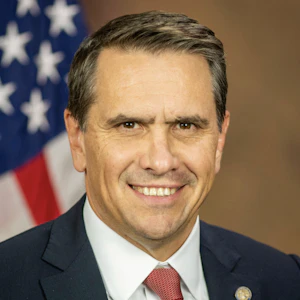
Biography of Deputy Attorney General Todd Blanche
The Honorable Todd Blanche is the 40th Deputy Attorney General of the United States, overseeing the work of the 115,000 dedicated employees who fulfill the Department of Justice’s mission at Main Justice, the FBI, DEA, U.S. Marshals, ATF, and 93 U.S. Attorney’s Offices.
Todd began his career at the Department where he served for over fifteen years in a variety of capacities, including as a contractor, a paralegal in the Criminal Division, and at the United States Attorney’s office for the Southern District of New York where he eventually became an AUSA and later a supervisor.
After leaving the Department, Todd worked as a criminal defense attorney that included representing President Donald Trump in three of the criminal cases brought against him in 2023 and 2024.
Following President Trump’s historic return to the White House, the President appointed Todd to work alongside Attorney General Pam Bondi to make America safe again. At the DOJ, Todd is working tirelessly to implement President Trump’s priorities that include confronting illegal protecting American businesses from fraud.
Todd has been married to his wonderful wife Kristine for nearly thirty years, is a father and grandfather.

Paul Atkins
Paul Atkins
Prior to returning to the SEC, Chairman Atkins was most recently chief executive of Patomak Global Partners, a company he founded in 2009. Chairman Atkins helped lead efforts to develop best practices for the digital asset sector. He served as an independent director and non-executive chairman of the board of BATS Global Markets, Inc. from 2012 to 2015.
Chairman Atkins was appointed by President George W. Bush to serve as a Commissioner of the SEC from 2002 to 2008. During his tenure, he advocated for transparency, consistency, and the use of cost-benefit analysis at the agency. Chairman Atkins also represented the SEC at meetings of the President’s Working Group on Financial Markets and the U.S.-EU Transatlantic Economic Council. From 2009 to 2010, he was appointed a member of the Congressional Oversight Panel for the Troubled Asset Relief Program.
Before serving as an SEC Commissioner, Chairman Atkins was a consultant on securities and investment management industry matters, especially regarding issues of strategy, regulatory compliance, risk management, new product development, and organizational control.
From 1990 to 1994, Chairman Atkins served on the staff of two chairmen of the SEC, Richard C. Breeden and Arthur Levitt, ultimately as chief of staff and counselor, respectively. He received the SEC’s 1992 Law and Policy Award for work regarding corporate governance matters.
Chairman Atkins began his career as a lawyer in New York, focusing on a wide range of corporate transactions for U.S. and foreign clients, including public and private securities offerings and mergers and acquisitions. He was resident for 2½ years in his firm's Paris office and admitted as conseil juridique in France.
A member of the New York and Florida bars, Chairman Atkins received his J.D. from Vanderbilt University School of Law in 1983 and was Senior Student Writing Editor of the Vanderbilt Law Review. He received his A.B., Phi Beta Kappa, from Wofford College in 1980.
Originally from Lillington, North Carolina, Chairman Atkins grew up in Tampa, Florida. He and his wife Sarah have three sons.

Mike Selig
Mike Selig
Chairman Selig brings to the role deep public and private sector experience working with a wide range of stakeholders across agriculture, energy, financial, and digital asset industries, which rely upon and operate in CFTC-regulated markets.
Prior to his leadership at the CFTC, Chairman Selig most recently served as chief counsel of the Securities and Exchange Commission’s Crypto Task Force and senior advisor to SEC Chairman Paul S. Atkins. In this role, Chairman Selig helped to develop a clear regulatory framework for digital asset securities markets, harmonize the SEC and CFTC regulatory regimes, modernize the agency’s rules to reflect new and emerging technologies, and put an end to regulation by enforcement. He also participated in the President’s Working Group on Digital Asset Markets and contributed to its report on “Strengthening American Leadership in Digital Financial Technology.”
Prior to government service, Chairman Selig was a partner at an international law firm, focusing on derivatives and securities regulatory matters. During his years in private practice, he represented a broad range of clients subject to regulation by the CFTC, including commercial end users, futures commission merchants, commodity trading advisors, swap dealers, designated contract markets, derivatives clearing organizations, and digital asset firms. Chairman Selig advised clients on compliance with the Commodity Exchange Act and the CFTC’s rules and regulations thereunder, including in connection with registration applications and obligations, enforcement matters, and complex transactions.
Chairman Selig earned his law degree from The George Washington University Law School and was articles editor of The George Washington Law Review. He received his undergraduate degree from Florida State University.
David Bailey
David Bailey

Eric Trump
Eric Trump
Mr. Trump also serves as Executive Vice President of The Trump Organization, where he oversees the global management and operations of the Trump family’s extensive real estate portfolio. This includes Trump Hotels, Trump Golf, commercial and residential real estate, Trump Estates, and Trump Winery. Known for his hands-on leadership and strong market instincts, he has played a key role in expanding the company’s presence across major U.S. and international markets.
A globally recognized business leader and public figure, Mr. Trump is a prominent advocate for Bitcoin and decentralized finance. He is a co-founder of World Liberty Financial, a decentralized finance (DeFi) platform, and serves on the Board of Advisors of Metaplanet, Japan’s largest corporate holder of Bitcoin.
Beyond his business activities, Mr. Trump has helped raise more than $50 million for St. Jude Children’s Research Hospital in the fight against pediatric cancer, a philanthropic mission he began at age 21.
Mr. Trump earned a degree in Finance and Management from Georgetown University. He currently resides in Florida with his wife, Lara, and their two children. He is also the author of Under Siege, his memoir published in October 2025.
Jack Mallers
Jack Mallers
Cynthia Lummis
Cynthia Lummis
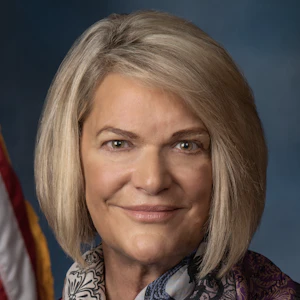
As the first-ever Chair of the Senate Banking Subcommittee on Digital Assets, Senator Lummis is the architect of the legislative framework shaping America's digital asset future. She introduced the landmark Lummis-Gillibrand Responsible Financial Innovation Act, the first comprehensive bipartisan crypto regulatory framework in Senate history. She co-authored the GENIUS Act — the first federal stablecoin law ever enacted — and introduced the BITCOIN Act, which would establish a U.S. strategic Bitcoin reserve of up to one million BTC. She is leading the Clarity Act, which will bring long-overdue regulatory certainty to the digital asset industry. She has also championed digital asset tax reform, including a de minimis exemption for small transactions and equal tax treatment for miners and stakers.
Known as Congress' "Crypto Queen," Senator Lummis represents Wyoming — a state she has helped build into one of the most digital asset-friendly regulatory environments in the nation. Before serving in the Senate, she served 14 years in the Wyoming Legislature, eight years as Wyoming State Treasurer, and eight years in the U.S. House. She is a three-time graduate of the University of Wyoming.
Her work represents a crucial bridge between traditional financial systems and the emerging digital economy, ensuring America leads the world in financial innovation while protecting the individual freedoms that define it.
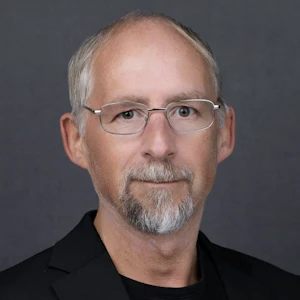
Adam Back
Adam Back
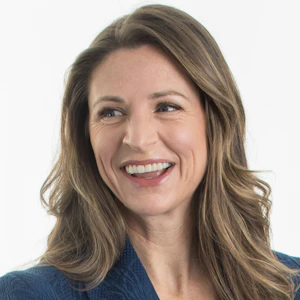
Amy Oldenburg
Amy Oldenburg
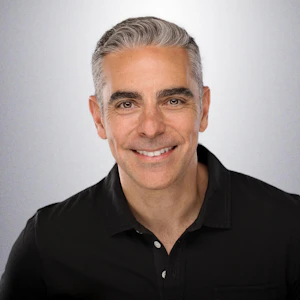
David Marcus
David Marcus

Matt Schultz
Matt Schultz
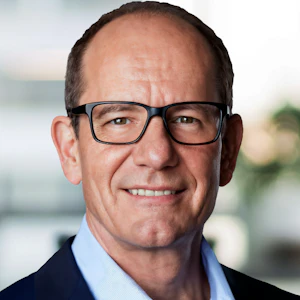
Fred Thiel
Fred Thiel
Throughout his career, Mr. Thiel has consistently driven rapid growth and created substantial shareholder value. Prior to MARA, Mr. Thiel served as the CEO of two other public companies, Local Corporation (NASDAQ: LOCM) and Lantronix, Inc (NASDAQ: LTRX). He has successfully raised billions in equity and debt through private and public offerings, led companies through IPOs, executed high-value exits to strategic and financial acquirers, and implemented effective M&A and roll-up strategies.
Mr. Thiel attended the Stockholm School of Economics and executive classes at Harvard Business School, and is fluent in English, Spanish, Swedish, and French. Mr. Thiel is the Chairman of the Board for Oden Technology, Inc. and is active in Young Presidents’ Organization where he has led initiatives in both the FinTech and Technology Networks.
A recognized voice in the industry, Fred frequently shares his insights on energy and technology with major media outlets like Bloomberg TV, CNBC, and FOX Business, contributing to vital discussions about the future of these sectors.
Tim Draper
Tim Draper
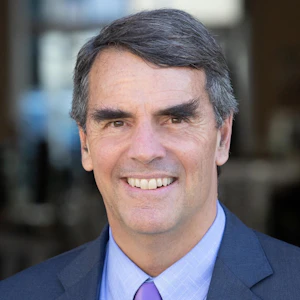
He is a supporter and global thought leader for entrepreneurs everywhere, and is a leading spokesperson for Bitcoin and decentralization, having won the Bitcoin US Marshall’s auction in 2014, invested in over 50 crypto companies, and led investments in Coinbase, Ledger, Tezos, and Bancor, among others.
Afroman
Afroman