Keynote: Apex Capital
Speakers/Moderators
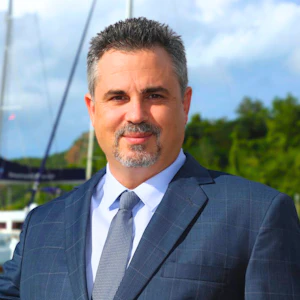
Nuri Katz
Nuri Katz
Session
Overview
Nuri Katz of Apex Capital Partners discussed the risks of assuming the United States will always function as a safe haven for capital, citizenship, and personal security. Drawing on his experience living in Moscow during the collapse of the Soviet Union, he argued that high debt levels, inflation risk, and geopolitical instability should prompt people to think more seriously about diversification.
The keynote connected Bitcoin to broader concerns about dollar-denominated wealth. Katz framed Bitcoin as a potential store of value, while cautioning that people often measure Bitcoin primarily against the US dollar and may overlook how currency depreciation affects purchasing power across other currencies.
The broader message focused on personal and geographic optionality. Katz encouraged attendees to consider not only financial diversification, but also the role of second citizenship, passport portfolios, and the ability to live or travel elsewhere if political or economic conditions change.
Hi, everybody. My name is Nuri Katz. I'm the president of Apex Capital Partners, and I want to talk very quickly about the illusion we have here in America of America being a safe haven, and how some diversification in our lives may be a good idea.
To start, my company has been around for 34 years. We've been in the business of advising high net worth individuals from all over the world to invest in various different countries. We also advise sovereign governments on how to attract foreign direct investment. We manage government agencies for a number of governments, helping them attract foreign direct investment.
We consider ourselves one of the global authorities in the second citizenship space, and we work with people on a lot of personal wealth management planning. What I want to point out right now is something that I think people in America don't take seriously enough.
I grew up in Canada, but in 1990, in my last year of college, I moved to the Soviet Union, and I ended up living in Moscow for 23 years. In 1990, the Soviet Union was falling apart. In 1991, it fell apart completely and broke up into 15 different countries. We all remember our history, and it happened quite suddenly. It was something nobody would have expected just a few months earlier. Nobody would have expected that the great Soviet Union, or the evil empire, or whatever you would want to call it, would just disappear and break up into 15 different sovereign countries.
The reason that happened was that it was overburdened by debt. Ronald Reagan outspent the Soviet Union and basically destroyed it. Today, America reminds me of the Soviet Union in 1990 and 1991. We are burdened by debt. I guess we're the poorest country in the world because we're the most indebted nation in the world, and we're not really talking about how one gets out of this situation.
The way they got out of the situation in the Soviet Union was that the country broke up into its different states. Also, what happened was hyperinflation. Most Americans have never really seen hyperinflation. Hyperinflation is a pretty scary thing. It's really weird to go into a supermarket and there's no food in the supermarket because industry and the economy just aren't working.
We're at that point, in a way, here in America, where we've got to figure out what to do with this debt. There are only really two ways to pull ourselves out of this. One is by printing a lot of money, which creates a lot of hyperinflation. That hyperinflation would look a lot worse than the little bit of inflation we've been crying about since Covid happened.
The other way, which might be even simpler, is simply defaulting on debt. If you default on the debt, in many ways, it's sort of the end of the country as you know it, because we've been brought up to believe in the strength of the US government. That would mean the US government doesn't really exist in the way we thought and can't manage itself. But something is going to have to happen.
Everybody here is thinking about the risks involved with holding dollar assets or the currency itself. That's what Bitcoin is here for, because it's a store of value. But it's a store of value versus the US dollar. Everybody here calculates their Bitcoin as, okay, I've got one Bitcoin, so I've got about $76,000. We don't really think about the fact that Bitcoin has gone down by, what, 35% in the last little while. Well, the dollar has gone down by 35% in the last little while as well.
It's funny, but I speak about Russia a lot. Last year, the dollar went down versus the Russian ruble by 30%. If you think about it, if Bitcoin has gone down by so much, it has actually gone down by a lot more versus all the other currencies. Your $76,000 today can buy you a lot less in Canadian dollars, Israeli shekels, or other currencies.
Bitcoin offers a certain store of value, but it's a store of value related to the dollar, not related so much to other currencies. Maybe Bitcoin prices are going to go way up, but there might be hyperinflation, and $200,000 or $1 million will buy you chewing gum. We don't know that. So if Bitcoin is worth a million, that's great, but still.
I think we are all here stuck in a geographic trap where our assets are US dollar based and our lives are US dollar based. I think it's time to think about diversifying not only our financial assets, but our personal assets. We need to be thinking more about the big world out there, how it works, and how we work within it.
Most Americans are trapped under this one government that we live with and believe in. But as we see with the way the world is working, we can't count on what governments are going to do, especially now with what this government is going to do and what the next government is going to do.
There is a lot of concern about the backlash against this government becoming a very radical leftist government that will come in and start nationalizing things. That's one of the reasons we're talking about Bitcoin as well. But it's also us personally. We're stuck in one country without the ability to really get out.
We've seen in a lot of other countries where borders can close or the value of your passport can suddenly drop. If you remember during Covid, the value of the US passport dropped down. You weren't allowed to travel anywhere with a US passport, and you weren't allowed to get out of here. It was quite an interesting thing. Nobody would have ever imagined that.
We talk a lot about how to diversify yourself personally and how to prepare for what may be coming. Maybe nothing is going to come, and I don't want to be a scaremonger and say the world is going to fall apart. But we do know that the United States is in a really tough situation.
Even if you think about the geopolitical issues that are going on now, we're dealing with Russia and Iran, and a few little boats are able to change the way the world economy works because of the Strait of Hormuz. Oil prices have skyrocketed and may still double or triple. We don't know where that's all going.
Being stuck in one country and not being able to go to others or live in others in case things really change is something for all of us to start thinking about. We need to think about how to diversify our currency, our assets, and our personal passport portfolio, as we call it, and think about having options in life if America isn't able to get out of this really tough situation going forward.
Thank you all. I appreciate it, and I'm done. Have a good one.
Similar
Sessions
Keynote: Apex Capital
Nuri Katz
Nuri Katz
Keynote: Apex Capital
Speakers/Moderators
Nuri Katz
Nuri Katz
Other
Speakers
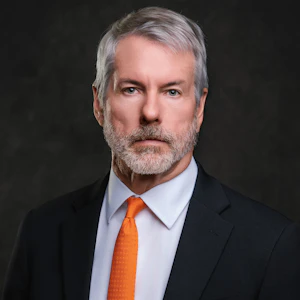
Michael Saylor
Michael Saylor
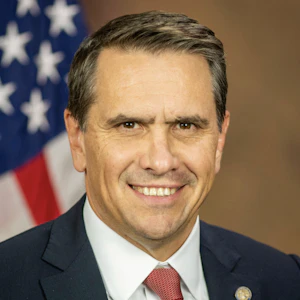
Todd Blanche
Todd Blanche
Biography of Deputy Attorney General Todd Blanche
The Honorable Todd Blanche is the 40th Deputy Attorney General of the United States, overseeing the work of the 115,000 dedicated employees who fulfill the Department of Justice’s mission at Main Justice, the FBI, DEA, U.S. Marshals, ATF, and 93 U.S. Attorney’s Offices.
Todd began his career at the Department where he served for over fifteen years in a variety of capacities, including as a contractor, a paralegal in the Criminal Division, and at the United States Attorney’s office for the Southern District of New York where he eventually became an AUSA and later a supervisor.
After leaving the Department, Todd worked as a criminal defense attorney that included representing President Donald Trump in three of the criminal cases brought against him in 2023 and 2024.
Following President Trump’s historic return to the White House, the President appointed Todd to work alongside Attorney General Pam Bondi to make America safe again. At the DOJ, Todd is working tirelessly to implement President Trump’s priorities that include confronting illegal protecting American businesses from fraud.
Todd has been married to his wonderful wife Kristine for nearly thirty years, is a father and grandfather.
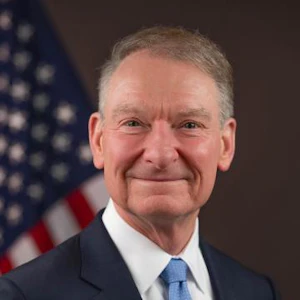
Paul Atkins
Paul Atkins
Prior to returning to the SEC, Chairman Atkins was most recently chief executive of Patomak Global Partners, a company he founded in 2009. Chairman Atkins helped lead efforts to develop best practices for the digital asset sector. He served as an independent director and non-executive chairman of the board of BATS Global Markets, Inc. from 2012 to 2015.
Chairman Atkins was appointed by President George W. Bush to serve as a Commissioner of the SEC from 2002 to 2008. During his tenure, he advocated for transparency, consistency, and the use of cost-benefit analysis at the agency. Chairman Atkins also represented the SEC at meetings of the President’s Working Group on Financial Markets and the U.S.-EU Transatlantic Economic Council. From 2009 to 2010, he was appointed a member of the Congressional Oversight Panel for the Troubled Asset Relief Program.
Before serving as an SEC Commissioner, Chairman Atkins was a consultant on securities and investment management industry matters, especially regarding issues of strategy, regulatory compliance, risk management, new product development, and organizational control.
From 1990 to 1994, Chairman Atkins served on the staff of two chairmen of the SEC, Richard C. Breeden and Arthur Levitt, ultimately as chief of staff and counselor, respectively. He received the SEC’s 1992 Law and Policy Award for work regarding corporate governance matters.
Chairman Atkins began his career as a lawyer in New York, focusing on a wide range of corporate transactions for U.S. and foreign clients, including public and private securities offerings and mergers and acquisitions. He was resident for 2½ years in his firm's Paris office and admitted as conseil juridique in France.
A member of the New York and Florida bars, Chairman Atkins received his J.D. from Vanderbilt University School of Law in 1983 and was Senior Student Writing Editor of the Vanderbilt Law Review. He received his A.B., Phi Beta Kappa, from Wofford College in 1980.
Originally from Lillington, North Carolina, Chairman Atkins grew up in Tampa, Florida. He and his wife Sarah have three sons.

Mike Selig
Mike Selig
Chairman Selig brings to the role deep public and private sector experience working with a wide range of stakeholders across agriculture, energy, financial, and digital asset industries, which rely upon and operate in CFTC-regulated markets.
Prior to his leadership at the CFTC, Chairman Selig most recently served as chief counsel of the Securities and Exchange Commission’s Crypto Task Force and senior advisor to SEC Chairman Paul S. Atkins. In this role, Chairman Selig helped to develop a clear regulatory framework for digital asset securities markets, harmonize the SEC and CFTC regulatory regimes, modernize the agency’s rules to reflect new and emerging technologies, and put an end to regulation by enforcement. He also participated in the President’s Working Group on Digital Asset Markets and contributed to its report on “Strengthening American Leadership in Digital Financial Technology.”
Prior to government service, Chairman Selig was a partner at an international law firm, focusing on derivatives and securities regulatory matters. During his years in private practice, he represented a broad range of clients subject to regulation by the CFTC, including commercial end users, futures commission merchants, commodity trading advisors, swap dealers, designated contract markets, derivatives clearing organizations, and digital asset firms. Chairman Selig advised clients on compliance with the Commodity Exchange Act and the CFTC’s rules and regulations thereunder, including in connection with registration applications and obligations, enforcement matters, and complex transactions.
Chairman Selig earned his law degree from The George Washington University Law School and was articles editor of The George Washington Law Review. He received his undergraduate degree from Florida State University.
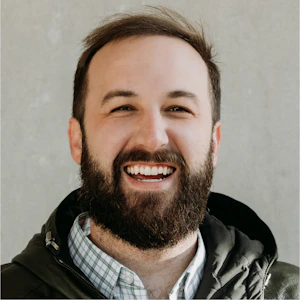
David Bailey
David Bailey

Eric Trump
Eric Trump
Mr. Trump also serves as Executive Vice President of The Trump Organization, where he oversees the global management and operations of the Trump family’s extensive real estate portfolio. This includes Trump Hotels, Trump Golf, commercial and residential real estate, Trump Estates, and Trump Winery. Known for his hands-on leadership and strong market instincts, he has played a key role in expanding the company’s presence across major U.S. and international markets.
A globally recognized business leader and public figure, Mr. Trump is a prominent advocate for Bitcoin and decentralized finance. He is a co-founder of World Liberty Financial, a decentralized finance (DeFi) platform, and serves on the Board of Advisors of Metaplanet, Japan’s largest corporate holder of Bitcoin.
Beyond his business activities, Mr. Trump has helped raise more than $50 million for St. Jude Children’s Research Hospital in the fight against pediatric cancer, a philanthropic mission he began at age 21.
Mr. Trump earned a degree in Finance and Management from Georgetown University. He currently resides in Florida with his wife, Lara, and their two children. He is also the author of Under Siege, his memoir published in October 2025.

Jack Mallers
Jack Mallers
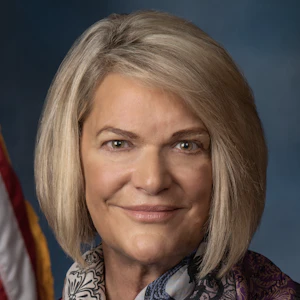
Cynthia Lummis
Cynthia Lummis
As the first-ever Chair of the Senate Banking Subcommittee on Digital Assets, Senator Lummis is the architect of the legislative framework shaping America's digital asset future. She introduced the landmark Lummis-Gillibrand Responsible Financial Innovation Act, the first comprehensive bipartisan crypto regulatory framework in Senate history. She co-authored the GENIUS Act — the first federal stablecoin law ever enacted — and introduced the BITCOIN Act, which would establish a U.S. strategic Bitcoin reserve of up to one million BTC. She is leading the Clarity Act, which will bring long-overdue regulatory certainty to the digital asset industry. She has also championed digital asset tax reform, including a de minimis exemption for small transactions and equal tax treatment for miners and stakers.
Known as Congress' "Crypto Queen," Senator Lummis represents Wyoming — a state she has helped build into one of the most digital asset-friendly regulatory environments in the nation. Before serving in the Senate, she served 14 years in the Wyoming Legislature, eight years as Wyoming State Treasurer, and eight years in the U.S. House. She is a three-time graduate of the University of Wyoming.
Her work represents a crucial bridge between traditional financial systems and the emerging digital economy, ensuring America leads the world in financial innovation while protecting the individual freedoms that define it.
Adam Back
Adam Back
Amy Oldenburg
Amy Oldenburg
David Marcus
David Marcus

Matt Schultz
Matt Schultz
Fred Thiel
Fred Thiel
Throughout his career, Mr. Thiel has consistently driven rapid growth and created substantial shareholder value. Prior to MARA, Mr. Thiel served as the CEO of two other public companies, Local Corporation (NASDAQ: LOCM) and Lantronix, Inc (NASDAQ: LTRX). He has successfully raised billions in equity and debt through private and public offerings, led companies through IPOs, executed high-value exits to strategic and financial acquirers, and implemented effective M&A and roll-up strategies.
Mr. Thiel attended the Stockholm School of Economics and executive classes at Harvard Business School, and is fluent in English, Spanish, Swedish, and French. Mr. Thiel is the Chairman of the Board for Oden Technology, Inc. and is active in Young Presidents’ Organization where he has led initiatives in both the FinTech and Technology Networks.
A recognized voice in the industry, Fred frequently shares his insights on energy and technology with major media outlets like Bloomberg TV, CNBC, and FOX Business, contributing to vital discussions about the future of these sectors.
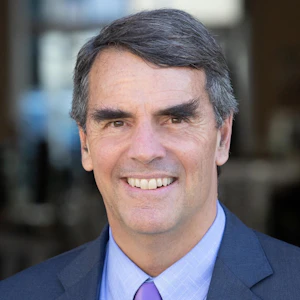
Tim Draper
Tim Draper
He is a supporter and global thought leader for entrepreneurs everywhere, and is a leading spokesperson for Bitcoin and decentralization, having won the Bitcoin US Marshall’s auction in 2014, invested in over 50 crypto companies, and led investments in Coinbase, Ledger, Tezos, and Bancor, among others.

Afroman
Afroman