Tether: A Psychohistory Implementation
Session
Overview
Paolo Ardoino of Tether frames Tether’s technology strategy through Isaac Asimov’s Foundation and the concept of psychohistory: using science and systems design to anticipate social instability and build infrastructure that can withstand it. He connects the metaphor of “darkness” to real-world issues such as inflation, war, lack of electricity, limited financial access, restricted communication, and the risk that AI widens existing inequality.
The talk presents Tether’s “resilience stack” as a set of open source tools intended to support peer-to-peer infrastructure. Ardoino discusses Holepunch for serverless communications, Keet for censorship-resistant messaging, WDK for self-custodial wallets and Bitcoin payments, and QVAC SDK for local, privacy-preserving AI.
A central theme is that Bitcoin, peer-to-peer networks, self custody, and open source software can help people remain economically and socially connected without relying on centralized institutions. The session positions Tether not only as a stablecoin issuer and Bitcoin holder, but as a builder of resilient infrastructure for people, machines, and AI agents.
In the year 10,231, humanity had conquered distance, bent matter to its will, and built a civilization across a thousand worlds. The Empire was not just powerful, it was permanent. Or at least that is what everyone believed. Everyone except one man.
Mathematician Hari Seldon had spent his life on psychohistory, predicting the fate of civilizations through math, and it told him something no one wanted to hear. He calculated the imminent collapse of the Empire. It never happens all at once. First the unrest, then the blame, then the violence. Three factions, each convinced they alone could save what was already breaking apart, and then silence. A world that once blazed with the light of a billion lives gone dark, not destroyed, just forgotten.
The Empire will fall. Not today. Not suddenly. He stood before the Empire and told them what was coming. Everything we built will collapse. Society will descend into darkness, 10,000 years of it, unless we act now.
They called it treason. But Hari had seen this too. Even in the deepest darkness, his equations showed a second term: small points of light, not empires or armies, just people refusing to let go. Knowledge becoming a bridge. A bridge becoming a network. A network becoming a foundation. So he proposed something radical: a foundation at the galaxy's edge, a seed planted in the dark, meant to grow into light.
Good to be here again this year.
Why this video? I wanted to explain in the best way possible how we think about Tether. Tether is very well known as a stablecoin company. It issues USDt, it is a buyer of Bitcoin. We have more than 130,000 or 140,000 bitcoin. We keep buying.
Just today we released a Bitcoin faucet. If you go on Twitter and use your Tether wallet email address, you will get ten cents in Bitcoin directly to your wallet for free.
So we do all these things, but I would like to explain why Tether goes much beyond that. The best way I could think of was taking inspiration from Isaac Asimov, my preferred author in history. If you have read the Foundation series by Isaac Asimov, there is this mathematician called Hari Seldon who created this theory called psychohistory.
Psychohistory is a combination of mathematics, statistics, physics, sociology, and politics all together. It is a complete science to understand how human society will shift, change shape, and change over the course of hundreds, thousands, and millions of years.
This is an excerpt from the books, and we use that to express what Asimov was expressing in the books: that you can use science to predict and analyze what is going on in the universe, and to predict the outcome. While you predict the outcome, you can try to think about how you can use the very same science to adjust it, to move things in a different direction, to change the course of the decay of society, or to change the course of potential darkness that could arrive among all of us.
In the books, Asimov describes Hari Seldon predicting that after 10,000 years of the strongest empire in the galaxy, something would happen, turmoil would happen, and 10,000 years of darkness would follow. He was also predicting that through the use of psychohistory, that darkness could be reduced to just hundreds of years.
So why am I telling you this? Am I crazy? Why say this at a Bitcoin conference? Why bring up this doom and gloom discussion? I think the way I think about Bitcoin is as the incipit of a technology and a new social construct that is creating a new spark that will survive and resist any darkness, because it is made to be peer to peer. It is made by people. It is made by people using it. It is made by people accepting it in every single part of the world.
If we believe that this is actually the case, and if Bitcoin is truly the first element of a potential fight against an upcoming darkness, what can we learn from that?
First, when I thought about what Asimov was trying to communicate with his psychohistory science, I thought, is it just science fiction? Is it just happening in the books? Then I thought, well, that darkness described in Asimov's books is simply something that could be boiled down and brought back to Earth. Darkness, as described in those books, is nothing more than chaos in society. It is instability in society.
You might have heard me last year explaining that Tether, for us who work in the company, is what we call the stable company. It is a company that aims to bring stability to society. While Hari Seldon in Asimov's books was trying to reduce darkness from 10,000 years to a few hundred years through the use of psychohistory, this science, we believe at Tether that the quote-unquote darkness we are seeing coming in society is out there.
We see wars, we see inflation, we see national currencies being destroyed. We see instability. We see all the possible signals that what we call darkness is coming. The world is not necessarily going toward a better place. There is more and more chaos. There is more and more instability.
I wanted to use this video to explain how, starting from the universe of sci-fi, we can actually boil this down to what is happening on Earth. Let me move on to the next part.
This is a story that does not just predict the future. It recognizes the present. Right now, 700 million people live with intermittent power. They are already in the dark. Families who have fed communities for generations are discarded overnight because the system decided they were no longer economically viable.
And in one of the oldest democracies on Earth, people are arrested not for violence, but for words, for a meme. The lesson from some governments has been clear: they do not need to silence us. They just need to make sure we cannot pay our rent.
And in the most powerful nations, corporations are building machines not to serve people, but to exploit them. The darkness does not arrive with an explosion. It arrives with a slow dimming.
Again, starting from the universe of sci-fi to the Earth. What was described as a period of dozens of years of darkness in the universe, boiled down to Earth, is simply society becoming more unstable and unpredictable.
You have hundreds of millions of people, and actually billions of people, who do not have access to basic financial services. They do not have access to electricity. They do not have access to stable telecommunications. More importantly, they do not have access to, and will not have access to, basic intelligence services.
Think about 4 billion people in the world who do not have access to basic financial services. They are left behind by the traditional financial system. How can we think that half of the population of the world being left out will bring more stability to society?
That is the analogy we are trying to make with the psychohistory revelation. If we do not do anything about it, if we do not do something, if we do not try to use science or technology and our abilities to build something different, something that outlasts darkness, that can reduce the darkness, creating stability, creating spots of light across countries, across cities, across people, something that will connect people independently from where they are and make them resilient to the change in the world, that is going to be our darkness on Earth.
But what does it mean? What does Tether pretend to do about that? Let's move on and see.
Hari Seldon understood something most people miss. You do not fight the darkness by winning a single battle. You fight it by building systems that outlast it. That is what we are doing: a foundation, real infrastructure, and we call it the resilience stack.
This is our answer. The resilience stack is an open source technological stack that, as in the psychohistory case, is a scientific approach that analyzes the different issues we see in all the countries we operate in.
Remember, Tether operates in hundreds of countries, in 160 different countries. We have boots on the ground. We talk to people. We have a network of around 473 million users of USDt, Tether Gold, and all of the other services we provide. It is growing. Our network is growing by 34 million new wallets per quarter.
This is unprecedented. This is a scale that proves that the technology we are building is growing. The pace of adoption shows that Tether is not anymore a fintech company, not just a stablecoin, but actually is becoming a movement. It is becoming a technology stack that is becoming part of the fabric of that world, the part of the world where fathers and mothers of families are left behind by the traditional financial system. They are left behind by the ability to communicate safely with their children. They might not even have electricity at home.
Think about a world where half of the population does not have access to basic financial services and will not participate in the 100x improvement in intelligence capabilities because of AI. If the gap between the two sides of society was already that big because of financial inclusion, imagine what happens when AI becomes truly part of everyone's life. The gap that is now splitting the two halves of the population of the world will become another 100 times wider because of AI.
The resilience stack is our response to that. What are the practical things? What is the practical technology that, as in the case of psychohistory, we could use and build and apply to reduce the period of darkness from hundreds of years or decades to just a few years, and create sparks of light across society so that whatever happens, whatever dystopian future, whatever catastrophe, whatever pandemic, we can still connect together. We can transact together with Bitcoin. We can use AI services that work for us and not for a few big corporations.
All this converges in a single story, in a single stack. You should look at Tether's GitHub open source repositories. We have crossed 1,000 open source projects on GitHub. That is very unique. That shows how deeply we care about building something that will outlast even us as a company, because software technology needs to be resilient even to its own creator.
That is also what I like about Bitcoin. It outlasts even its own creator, and will last forever. Of course, we are always going to remember Satoshi Nakamoto. We are all Satoshi. But that is the beauty of a technology. When a technology is well done, no matter who created it, everyone can use it. Everyone is actually the father of that technology.
Let's see the first part.
At the base, a peer-to-peer protocol that needs no servers, no center to hold.
Tether built Holepunch. It is a completely peer-to-peer telecommunications protocol that can scale to billions of users, billions of machines, and trillions of AI agents. For the more technical people here, it is the BitTorrent protocol that was built almost 30 years ago, rewritten from scratch, improved, with an added cryptographic layer, made extremely scalable and adaptable, not just for file sharing, but for any real-time data stream, for video calls, messaging, mapping, and you name it.
This is fully open source. Everyone should take a look at it, because for the first time, the Holepunch protocol allows any developer to build applications that can scale to billions of people and tens of millions of companies without a single central server.
On top of that, we have demonstrated that we ourselves are capable of offering services that truly scale to the entire humanity without any point of failure, and you can build any application on top of it. You can build a peer-to-peer Uber. You can build a peer-to-peer mapping system. You can build anything you want. It is out there. It is free. It is one of the most sophisticated, but at the same time easy to use, software and networking stacks that could empower anything you are building for your company, for yourself, your families, or your friends in an incredible way.
To me, this is what Bitcoin is to finance. Holepunch is to networking and telecommunications.
Above that, communication that cannot be silenced or switched off.
On top of the Holepunch protocol in the stack, we built Keet. I am not sure how many of you have used Keet. It is the first example of a messaging app that, in this moment, has more than 5 million users across desktop and mobile, and probably much more. It is hard to count because there are no central servers.
There are millions and millions of users and chat rooms with tens of thousands of users sharing tens of millions of messages with videos, photos, and everything without any central server.
Keet is the first messaging application that can scale to 8 billion people, and eventually to machines, that does not have any cost because it does not have any data center. It cannot be stopped. It works in any place, even where there is the hardest and strictest type of control of the internet.
We built this for the people. We built this for fathers who want to have a reliable and secure way to talk to their children, but also for people who work and live in areas where there might be a dystopian or authoritarian regime. This is the true first unstoppable communication app.
I want to say something. One of the main critiques of Keet as an application has always been, why is it not open source? I can guarantee you, you have my commitment to make it open source. We are working on all the documentation. We are working on the modules so that everyone can take it once it is open source and improve it, build on top of it, change it, and recreate it in just a simple step.
This is an enormous amount of work that Tether's team did and will be open sourced. Again, we do it with joy in our hearts because we believe if people cannot talk to each other, if people cannot message each other, and if we stop the ability to have peer-to-peer communication, then society suffers.
Society was born with peer-to-peer communications. We were meeting in the streets. We were meeting in the squares of the cities. We were talking to one another without any intermediaries. Intermediaries have taken over both the financial world and the communication world in the last 50 years. That is why society is having its darkest moment. We should have been using technology to create societies that were more open. Instead, we hijacked this technology to make society much more controlled by a few companies.
Keet, and the open source Keet, for us will be one of the biggest moments, one of the biggest testaments of our dedication to this mission.
Then financial tools powered by WDK for humans, machines, and the agents between them, to integrate unstoppable Bitcoin payments.
WDK is one of our most successful products. It is an open source library that allows any developer, any person, any computer, any AI agent, to have a self-custodial wallet. We believe in a future where billions of people, billions of machines, and trillions of AI agents will need a self-custodial wallet.
People need to be in charge of their own wealth. People need to be able to transact with whomever they want. We wanted to create something that everyone could use, that would support any asset, but most importantly would support Bitcoin.
Even from the pure physics point of view, technology is physics. From the pure technological physics point of view, we know that the best way to scale the future need of payments, when AI agents will be everywhere and there will be the need for trillions of payments per day, is not the current financial transport layers. They are not going to be able to cope with that.
Things like Lightning Network are the right way, because Lightning Network is a peer-to-peer transaction layer for Bitcoin. I am very happy to see WDK supporting that from the get-go. We want to make sure that your smart fridge, your smart car, your smartphone, will be able to transact in Bitcoin, while also protecting your Bitcoin and making sure that it will always remain yours.
And at the top, decentralized AI. Because if it is not your AI, it is not your intelligence.
The last part is that we just released QVAC SDK. It is an open source software development kit that allows any person to build AI tools that run locally on your smartphone or your device, that run on your laptop, so that your privacy is guaranteed.
It supports all the best open source large language models. It can scale from the tiniest GPU you have, to your laptop, to your smartphone, to mainframes. It has embedded the Holepunch protocol. It has embedded WDK. It has embedded everything we have seen before.
We took inspiration from not your keys, not your coins, which we all know about when it comes to Bitcoin. We replicated the same concept and understood that it is not your intelligence if it is not your AI.
We are all talking about AI these days, these weeks, and these years. We know that it is one of the most fundamentally changing technologies for the future of society and humanity. But again, if we do not build AI tools that cover the needs of the people belonging to that segment of the population, that half of humanity that does not have access to basic financial services, we leave them behind.
If we pretend that the same people who do not have access to basic financial services will be able to afford an OpenAI or Anthropic subscription, these people will be left behind. They need tools that can work on their small phones, that work in the smallest and farthest villages in Africa, Central and South America, or Southeast Asia.
We wanted at Tether to build a cohesive story that moves from telecommunications, to messaging, to wallets, to artificial intelligence, and create an entire unique stack, fully open source, that would empower people. Not companies, not corporations, but people.
At the end, going back to the sci-fi story, people will rebuild the universe. People are going to rebuild society, or are going to save society here on Earth. People are the ones who are going to make society more stable here on Earth, without looking light years outside of our solar system.
I suggest and recommend every one of you look at what we are building. Contribute. Again, it is fully open source on the website. We are going to publish grants soon for everyone to contribute to this technology, to build upon it. We are going to do hackathons. We are going to do everything we can to help people take ownership of what we built, take pride in contributing to it, and make sure that this technology will be resilient even to the wrath of God.
Thank you very much. I will conclude with this last part of the video.
How may entropy be reversed?
Thank you. Have a good conference.
Similar
Sessions
Tether: A Psychohistory Implementation
Other
Speakers
Michael Saylor
Michael Saylor
Todd Blanche
Todd Blanche
Biography of Deputy Attorney General Todd Blanche
The Honorable Todd Blanche is the 40th Deputy Attorney General of the United States, overseeing the work of the 115,000 dedicated employees who fulfill the Department of Justice’s mission at Main Justice, the FBI, DEA, U.S. Marshals, ATF, and 93 U.S. Attorney’s Offices.
Todd began his career at the Department where he served for over fifteen years in a variety of capacities, including as a contractor, a paralegal in the Criminal Division, and at the United States Attorney’s office for the Southern District of New York where he eventually became an AUSA and later a supervisor.
After leaving the Department, Todd worked as a criminal defense attorney that included representing President Donald Trump in three of the criminal cases brought against him in 2023 and 2024.
Following President Trump’s historic return to the White House, the President appointed Todd to work alongside Attorney General Pam Bondi to make America safe again. At the DOJ, Todd is working tirelessly to implement President Trump’s priorities that include confronting illegal protecting American businesses from fraud.
Todd has been married to his wonderful wife Kristine for nearly thirty years, is a father and grandfather.

Paul Atkins
Paul Atkins
Prior to returning to the SEC, Chairman Atkins was most recently chief executive of Patomak Global Partners, a company he founded in 2009. Chairman Atkins helped lead efforts to develop best practices for the digital asset sector. He served as an independent director and non-executive chairman of the board of BATS Global Markets, Inc. from 2012 to 2015.
Chairman Atkins was appointed by President George W. Bush to serve as a Commissioner of the SEC from 2002 to 2008. During his tenure, he advocated for transparency, consistency, and the use of cost-benefit analysis at the agency. Chairman Atkins also represented the SEC at meetings of the President’s Working Group on Financial Markets and the U.S.-EU Transatlantic Economic Council. From 2009 to 2010, he was appointed a member of the Congressional Oversight Panel for the Troubled Asset Relief Program.
Before serving as an SEC Commissioner, Chairman Atkins was a consultant on securities and investment management industry matters, especially regarding issues of strategy, regulatory compliance, risk management, new product development, and organizational control.
From 1990 to 1994, Chairman Atkins served on the staff of two chairmen of the SEC, Richard C. Breeden and Arthur Levitt, ultimately as chief of staff and counselor, respectively. He received the SEC’s 1992 Law and Policy Award for work regarding corporate governance matters.
Chairman Atkins began his career as a lawyer in New York, focusing on a wide range of corporate transactions for U.S. and foreign clients, including public and private securities offerings and mergers and acquisitions. He was resident for 2½ years in his firm's Paris office and admitted as conseil juridique in France.
A member of the New York and Florida bars, Chairman Atkins received his J.D. from Vanderbilt University School of Law in 1983 and was Senior Student Writing Editor of the Vanderbilt Law Review. He received his A.B., Phi Beta Kappa, from Wofford College in 1980.
Originally from Lillington, North Carolina, Chairman Atkins grew up in Tampa, Florida. He and his wife Sarah have three sons.

Mike Selig
Mike Selig
Chairman Selig brings to the role deep public and private sector experience working with a wide range of stakeholders across agriculture, energy, financial, and digital asset industries, which rely upon and operate in CFTC-regulated markets.
Prior to his leadership at the CFTC, Chairman Selig most recently served as chief counsel of the Securities and Exchange Commission’s Crypto Task Force and senior advisor to SEC Chairman Paul S. Atkins. In this role, Chairman Selig helped to develop a clear regulatory framework for digital asset securities markets, harmonize the SEC and CFTC regulatory regimes, modernize the agency’s rules to reflect new and emerging technologies, and put an end to regulation by enforcement. He also participated in the President’s Working Group on Digital Asset Markets and contributed to its report on “Strengthening American Leadership in Digital Financial Technology.”
Prior to government service, Chairman Selig was a partner at an international law firm, focusing on derivatives and securities regulatory matters. During his years in private practice, he represented a broad range of clients subject to regulation by the CFTC, including commercial end users, futures commission merchants, commodity trading advisors, swap dealers, designated contract markets, derivatives clearing organizations, and digital asset firms. Chairman Selig advised clients on compliance with the Commodity Exchange Act and the CFTC’s rules and regulations thereunder, including in connection with registration applications and obligations, enforcement matters, and complex transactions.
Chairman Selig earned his law degree from The George Washington University Law School and was articles editor of The George Washington Law Review. He received his undergraduate degree from Florida State University.

David Bailey
David Bailey

Eric Trump
Eric Trump
Mr. Trump also serves as Executive Vice President of The Trump Organization, where he oversees the global management and operations of the Trump family’s extensive real estate portfolio. This includes Trump Hotels, Trump Golf, commercial and residential real estate, Trump Estates, and Trump Winery. Known for his hands-on leadership and strong market instincts, he has played a key role in expanding the company’s presence across major U.S. and international markets.
A globally recognized business leader and public figure, Mr. Trump is a prominent advocate for Bitcoin and decentralized finance. He is a co-founder of World Liberty Financial, a decentralized finance (DeFi) platform, and serves on the Board of Advisors of Metaplanet, Japan’s largest corporate holder of Bitcoin.
Beyond his business activities, Mr. Trump has helped raise more than $50 million for St. Jude Children’s Research Hospital in the fight against pediatric cancer, a philanthropic mission he began at age 21.
Mr. Trump earned a degree in Finance and Management from Georgetown University. He currently resides in Florida with his wife, Lara, and their two children. He is also the author of Under Siege, his memoir published in October 2025.

Jack Mallers
Jack Mallers
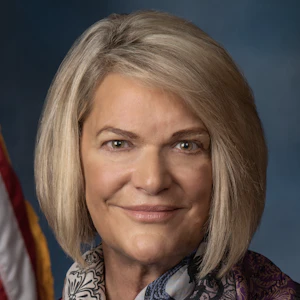
Cynthia Lummis
Cynthia Lummis
As the first-ever Chair of the Senate Banking Subcommittee on Digital Assets, Senator Lummis is the architect of the legislative framework shaping America's digital asset future. She introduced the landmark Lummis-Gillibrand Responsible Financial Innovation Act, the first comprehensive bipartisan crypto regulatory framework in Senate history. She co-authored the GENIUS Act — the first federal stablecoin law ever enacted — and introduced the BITCOIN Act, which would establish a U.S. strategic Bitcoin reserve of up to one million BTC. She is leading the Clarity Act, which will bring long-overdue regulatory certainty to the digital asset industry. She has also championed digital asset tax reform, including a de minimis exemption for small transactions and equal tax treatment for miners and stakers.
Known as Congress' "Crypto Queen," Senator Lummis represents Wyoming — a state she has helped build into one of the most digital asset-friendly regulatory environments in the nation. Before serving in the Senate, she served 14 years in the Wyoming Legislature, eight years as Wyoming State Treasurer, and eight years in the U.S. House. She is a three-time graduate of the University of Wyoming.
Her work represents a crucial bridge between traditional financial systems and the emerging digital economy, ensuring America leads the world in financial innovation while protecting the individual freedoms that define it.
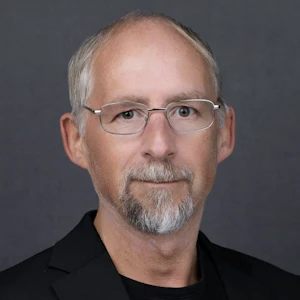
Adam Back
Adam Back
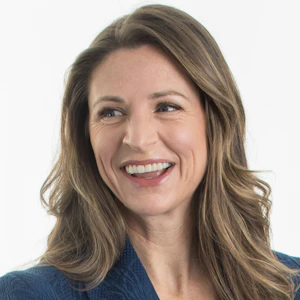
Amy Oldenburg
Amy Oldenburg
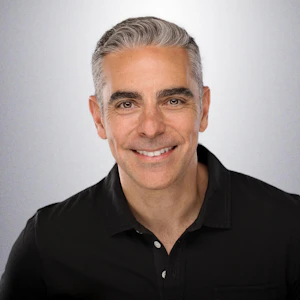
David Marcus
David Marcus

Matt Schultz
Matt Schultz
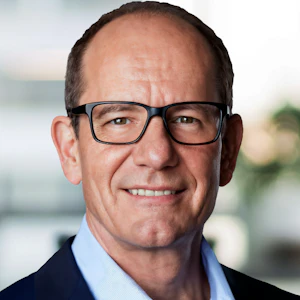
Fred Thiel
Fred Thiel
Throughout his career, Mr. Thiel has consistently driven rapid growth and created substantial shareholder value. Prior to MARA, Mr. Thiel served as the CEO of two other public companies, Local Corporation (NASDAQ: LOCM) and Lantronix, Inc (NASDAQ: LTRX). He has successfully raised billions in equity and debt through private and public offerings, led companies through IPOs, executed high-value exits to strategic and financial acquirers, and implemented effective M&A and roll-up strategies.
Mr. Thiel attended the Stockholm School of Economics and executive classes at Harvard Business School, and is fluent in English, Spanish, Swedish, and French. Mr. Thiel is the Chairman of the Board for Oden Technology, Inc. and is active in Young Presidents’ Organization where he has led initiatives in both the FinTech and Technology Networks.
A recognized voice in the industry, Fred frequently shares his insights on energy and technology with major media outlets like Bloomberg TV, CNBC, and FOX Business, contributing to vital discussions about the future of these sectors.
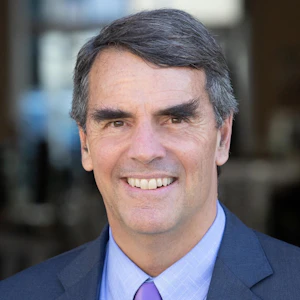
Tim Draper
Tim Draper
He is a supporter and global thought leader for entrepreneurs everywhere, and is a leading spokesperson for Bitcoin and decentralization, having won the Bitcoin US Marshall’s auction in 2014, invested in over 50 crypto companies, and led investments in Coinbase, Ledger, Tezos, and Bancor, among others.

Afroman
Afroman