Keynote: Tim Draper
Speakers/Moderators
Tim Draper
Tim Draper
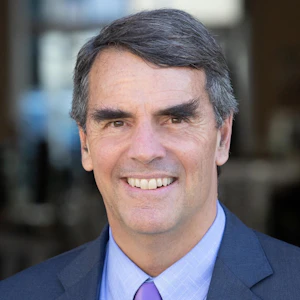
He is a supporter and global thought leader for entrepreneurs everywhere, and is a leading spokesperson for Bitcoin and decentralization, having won the Bitcoin US Marshall’s auction in 2014, invested in over 50 crypto companies, and led investments in Coinbase, Ledger, Tezos, and Bancor, among others.
Session
Overview
Tim Draper’s keynote focused on Bitcoin as a major shift in money, from government-controlled dollars to stablecoins and ultimately to Bitcoin. He framed Bitcoin as part of a broader digital currency evolution, tracing his early interest back to virtual goods in online games and his conviction after seeing Bitcoin used for remittances and financial access.
Draper argued that Bitcoin’s role has moved beyond speculation and into treasury protection for families, companies, and governments. He warned about banking risk, inflation, and the possibility of a rapid shift in merchant and consumer preference toward Bitcoin.
The talk emphasized Bitcoin adoption, self-preservation in a changing financial system, and the need for entrepreneurs, businesses, and governments to prepare for a potential transition away from fiat currency.
My people! This is awesome. It's so exciting to see these people, because you are going to be the survivors when we have this apocalypse that happens when everybody runs to the bank and says, "I don't want dollars. I want Bitcoin." So you're going to be left.
Anyway, it has been a really fun conference. I saw Daniel and Eric Tadros over there, who have created Liberty City, where they make Bitcoin homes. I saw a wide variety of startups doing all sorts of new kinds of BitcoinFi and that kind of thing. I've seen a wide variety of people creating this new economy that is going to actually take us in an anthropological leap forward.
This will be quite an extraordinary time. We've had ups and downs. Suddenly we're mainstream. Where did that come from? The banks all want their clients to own some Bitcoin. The government is creating a little bit of a red carpet for all of us. I think we're all starting to feel like it's starting to happen. That is so exciting.
And what is starting to happen? Well, I've always thought there was going to be digital currency, and that was starting in 2002 or something. A friend of mine from Korea said that everybody was playing this game called Lineage. He said, "It's so important that I paid a guy to be my avatar in the game while I was away at work." I thought, whoa, this is very important to him.
His son wanted a sword for his birthday. He said he bought him a sword, and I looked at him like, wait, what? Is this a non sequitur? And he said, "No. The sword is pixels on the screen." So I started to make these connections. You take fiat, you buy some sort of virtual product, and then you could eventually have virtual currency.
I was sort of obsessed with it for a long time. Then Bitcoin came out, and Satoshi figured this whole thing out. He eliminated the trusted third party. He made it so that you don't need a bank or a government to make a trade. He basically opened this whole thing up, and he made it so it kept perfect records forever, immutable records.
That's kind of what stuck with me. I bought a bunch of it, and then I lost it all in the Mt. Gox fiasco. A bunch of things happened to me, and I realized, well, I guess that's the end of Bitcoin. But Bitcoin only dropped about 10 or 15% on the news that Mt. Gox had taken all the money and all that.
I thought, God, who needs this? At first, I thought it was illegal drugs and guns and whatever. But then I started to dig deep, and people were using it for remittances. Companies were using it to pay people who were unbanked. Little communities inside Africa and Southeast Asia were becoming part of the world economy through Bitcoin. I thought, wow, this is more important than we could ever, ever imagine.
So I decided to start buying more. Then my friends were all telling me about this auction that the U.S. Marshals Office was doing. They were all talking about what a discount they were going to buy the Bitcoin for. I thought, yeah, if this works out the way I think it's going to work out, it doesn't matter what I pay for this. So I bid above market, and I ended up buying more Bitcoin than I ever imagined.
And then I just became such a believer. I'm just riding it up and down, through the forest and around the hills. Then it struck me, and this is something that's starting to spread through the zeitgeist, that we're going to start with dollars, we're going to move to stablecoins, and then we're going to move to Bitcoin.
We start with dollars. That's where the governments control it. The trusted third party is a bank. By the way, have you seen these banks? They have their glass-and-steel buildings with people dressed really well coming out of them. They're living very large, and they're providing not much in the way of service. So now you kind of go, okay, well, maybe there's an opportunity for another way to operate.
Now we've got stablecoins, and they're making it so that we can move money a lot faster through the system. But it's still tied to the government. It still inflates with government spending. It's out of our hands. It's not like you get to control it, or that it grows in value. It's an asset that decreases in value over time.
So I'm just hanging on to my Bitcoin as it goes. It keeps going up over time. It's cyclical. It goes with the halvings, but it's still going up. I started to think about what the future might look like, and something flashed into my mind.
My dad came to me and gave me a million-dollar bill. I was about 10 years old, and I went, "Wow, a million dollars! What am I going to do with a million dollars? What can I do with this? This is so awesome." And he said, "Nothing." I said, "What do you mean, nothing?" He said, "That's a million Confederate dollars. The Confederates lost the war to the Union. All the Confederate money became less and less valuable. Everybody wanted Union dollars. Confederate money inflated, and eventually it became completely worthless."
Fast forward to now. There is a pretty good possibility that the retailer starts saying, "I accept Bitcoin." Then they start making more money with Bitcoin, as we all do and we all know. Then the retailer will say, "I only accept Bitcoin." And then what happens? There's a run on the banks. Everybody runs and tries to get their money out of the banks and put it into Bitcoin. That can be a cataclysmic event.
So what I say to people, I mean, I used to say, "Hey, buy some Bitcoin. It's fun, it's interesting, it might be an interesting thing to hold on to." Now I say, "You better hold Bitcoin. If you want to protect your family, you want to protect your company, you want to protect your country, you better have some Bitcoin."
In fact, it's irresponsible now for a company to operate and have a big treasury and not have some portion of that, 5, 10, 15, in Bitcoin. When Silicon Valley Bank went out of business, we almost saw the domino effect. We almost lost all the banks right there. If that ever happens, you, as leaders of your businesses, are going to be responsible for payroll for at least two, maybe four weeks. If you're in Europe, you're responsible for payroll for years. So you better have some Bitcoin on your balance sheet so you can make those payrolls and keep your business afloat.
If you run a family, if you manage a family's money, you want to have about six months' worth of Bitcoin, because if the dollars that you own are suddenly worthless, what are you going to do?
And if you're a government, and if there is hyperinflation in your government, and the currency goes the way the old Argentinian peso or the Nigerian naira went, and you don't hold any Bitcoin, your government coffers are worthless.
So it's gone from telling people, "Hey, this is a really interesting opportunity," to telling people, "You should be scared if you don't own Bitcoin. You should be very, very worried."
The world doesn't stay the same. One thing that I've learned throughout my world as a venture capitalist, and also a talk show host at Meet the Drapers, and a leader of a university, is that the world changes very quickly. We all have to be prepared to adapt to that changing world.
We're about to go through a major anthropological change as big as when currency was invented. It's that big. It's going to make the world much, much wealthier, but those of us who have Bitcoin are going to be the ones who help steer the world after this cataclysmic event.
I don't have to tell you guys: go out there, buy Bitcoin, tell all your loved ones to buy Bitcoin, all the businesses you're related to, tell them to buy some Bitcoin, and tell governments to buy Bitcoin so that we don't have this cataclysmic event that really scares me. I don't get scared easily. I am almost fearless, but that event is a little scary.
So go out there. You're in the right place, right here. You look around, these people are seeing the future. You've got to proselytize now. It's time to tell the rest of the world.
If you're an entrepreneur, go out there and push it as hard as you can. If you run a family, make sure you have six months' worth of Bitcoin in your coffers. If you're a business, make sure you've got at least a month. And if you're a government, make sure you've got enough so that your government stays stable after a cataclysmic event.
With that, I wish you all the best. It's so fun to be here in Las Vegas. Such a dynamic city, with some amazing things happening here. Thank you.
Similar
Sessions
Keynote: Tim Draper
Tim Draper
Tim Draper
He is a supporter and global thought leader for entrepreneurs everywhere, and is a leading spokesperson for Bitcoin and decentralization, having won the Bitcoin US Marshall’s auction in 2014, invested in over 50 crypto companies, and led investments in Coinbase, Ledger, Tezos, and Bancor, among others.
Keynote: Tim Draper
Speakers/Moderators
Tim Draper
Tim Draper
He is a supporter and global thought leader for entrepreneurs everywhere, and is a leading spokesperson for Bitcoin and decentralization, having won the Bitcoin US Marshall’s auction in 2014, invested in over 50 crypto companies, and led investments in Coinbase, Ledger, Tezos, and Bancor, among others.
Other
Speakers
Michael Saylor
Michael Saylor
Todd Blanche
Todd Blanche
Biography of Deputy Attorney General Todd Blanche
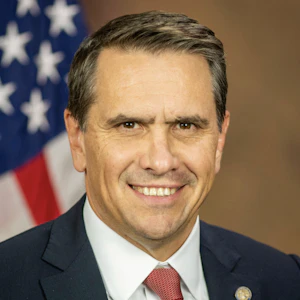
The Honorable Todd Blanche is the 40th Deputy Attorney General of the United States, overseeing the work of the 115,000 dedicated employees who fulfill the Department of Justice’s mission at Main Justice, the FBI, DEA, U.S. Marshals, ATF, and 93 U.S. Attorney’s Offices.
Todd began his career at the Department where he served for over fifteen years in a variety of capacities, including as a contractor, a paralegal in the Criminal Division, and at the United States Attorney’s office for the Southern District of New York where he eventually became an AUSA and later a supervisor.
After leaving the Department, Todd worked as a criminal defense attorney that included representing President Donald Trump in three of the criminal cases brought against him in 2023 and 2024.
Following President Trump’s historic return to the White House, the President appointed Todd to work alongside Attorney General Pam Bondi to make America safe again. At the DOJ, Todd is working tirelessly to implement President Trump’s priorities that include confronting illegal protecting American businesses from fraud.
Todd has been married to his wonderful wife Kristine for nearly thirty years, is a father and grandfather.
Paul Atkins
Paul Atkins
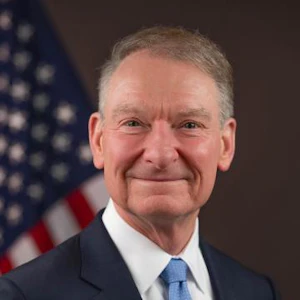
Prior to returning to the SEC, Chairman Atkins was most recently chief executive of Patomak Global Partners, a company he founded in 2009. Chairman Atkins helped lead efforts to develop best practices for the digital asset sector. He served as an independent director and non-executive chairman of the board of BATS Global Markets, Inc. from 2012 to 2015.
Chairman Atkins was appointed by President George W. Bush to serve as a Commissioner of the SEC from 2002 to 2008. During his tenure, he advocated for transparency, consistency, and the use of cost-benefit analysis at the agency. Chairman Atkins also represented the SEC at meetings of the President’s Working Group on Financial Markets and the U.S.-EU Transatlantic Economic Council. From 2009 to 2010, he was appointed a member of the Congressional Oversight Panel for the Troubled Asset Relief Program.
Before serving as an SEC Commissioner, Chairman Atkins was a consultant on securities and investment management industry matters, especially regarding issues of strategy, regulatory compliance, risk management, new product development, and organizational control.
From 1990 to 1994, Chairman Atkins served on the staff of two chairmen of the SEC, Richard C. Breeden and Arthur Levitt, ultimately as chief of staff and counselor, respectively. He received the SEC’s 1992 Law and Policy Award for work regarding corporate governance matters.
Chairman Atkins began his career as a lawyer in New York, focusing on a wide range of corporate transactions for U.S. and foreign clients, including public and private securities offerings and mergers and acquisitions. He was resident for 2½ years in his firm's Paris office and admitted as conseil juridique in France.
A member of the New York and Florida bars, Chairman Atkins received his J.D. from Vanderbilt University School of Law in 1983 and was Senior Student Writing Editor of the Vanderbilt Law Review. He received his A.B., Phi Beta Kappa, from Wofford College in 1980.
Originally from Lillington, North Carolina, Chairman Atkins grew up in Tampa, Florida. He and his wife Sarah have three sons.

Mike Selig
Mike Selig
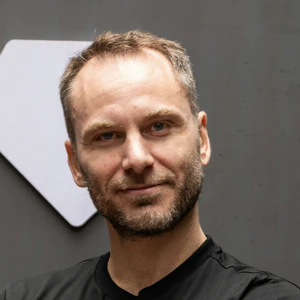
Chairman Selig brings to the role deep public and private sector experience working with a wide range of stakeholders across agriculture, energy, financial, and digital asset industries, which rely upon and operate in CFTC-regulated markets.
Prior to his leadership at the CFTC, Chairman Selig most recently served as chief counsel of the Securities and Exchange Commission’s Crypto Task Force and senior advisor to SEC Chairman Paul S. Atkins. In this role, Chairman Selig helped to develop a clear regulatory framework for digital asset securities markets, harmonize the SEC and CFTC regulatory regimes, modernize the agency’s rules to reflect new and emerging technologies, and put an end to regulation by enforcement. He also participated in the President’s Working Group on Digital Asset Markets and contributed to its report on “Strengthening American Leadership in Digital Financial Technology.”
Prior to government service, Chairman Selig was a partner at an international law firm, focusing on derivatives and securities regulatory matters. During his years in private practice, he represented a broad range of clients subject to regulation by the CFTC, including commercial end users, futures commission merchants, commodity trading advisors, swap dealers, designated contract markets, derivatives clearing organizations, and digital asset firms. Chairman Selig advised clients on compliance with the Commodity Exchange Act and the CFTC’s rules and regulations thereunder, including in connection with registration applications and obligations, enforcement matters, and complex transactions.
Chairman Selig earned his law degree from The George Washington University Law School and was articles editor of The George Washington Law Review. He received his undergraduate degree from Florida State University.

David Bailey
David Bailey

Eric Trump
Eric Trump
Mr. Trump also serves as Executive Vice President of The Trump Organization, where he oversees the global management and operations of the Trump family’s extensive real estate portfolio. This includes Trump Hotels, Trump Golf, commercial and residential real estate, Trump Estates, and Trump Winery. Known for his hands-on leadership and strong market instincts, he has played a key role in expanding the company’s presence across major U.S. and international markets.
A globally recognized business leader and public figure, Mr. Trump is a prominent advocate for Bitcoin and decentralized finance. He is a co-founder of World Liberty Financial, a decentralized finance (DeFi) platform, and serves on the Board of Advisors of Metaplanet, Japan’s largest corporate holder of Bitcoin.
Beyond his business activities, Mr. Trump has helped raise more than $50 million for St. Jude Children’s Research Hospital in the fight against pediatric cancer, a philanthropic mission he began at age 21.
Mr. Trump earned a degree in Finance and Management from Georgetown University. He currently resides in Florida with his wife, Lara, and their two children. He is also the author of Under Siege, his memoir published in October 2025.

Jack Mallers
Jack Mallers
Cynthia Lummis
Cynthia Lummis
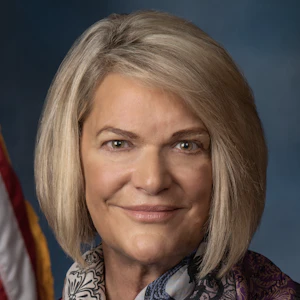
As the first-ever Chair of the Senate Banking Subcommittee on Digital Assets, Senator Lummis is the architect of the legislative framework shaping America's digital asset future. She introduced the landmark Lummis-Gillibrand Responsible Financial Innovation Act, the first comprehensive bipartisan crypto regulatory framework in Senate history. She co-authored the GENIUS Act — the first federal stablecoin law ever enacted — and introduced the BITCOIN Act, which would establish a U.S. strategic Bitcoin reserve of up to one million BTC. She is leading the Clarity Act, which will bring long-overdue regulatory certainty to the digital asset industry. She has also championed digital asset tax reform, including a de minimis exemption for small transactions and equal tax treatment for miners and stakers.
Known as Congress' "Crypto Queen," Senator Lummis represents Wyoming — a state she has helped build into one of the most digital asset-friendly regulatory environments in the nation. Before serving in the Senate, she served 14 years in the Wyoming Legislature, eight years as Wyoming State Treasurer, and eight years in the U.S. House. She is a three-time graduate of the University of Wyoming.
Her work represents a crucial bridge between traditional financial systems and the emerging digital economy, ensuring America leads the world in financial innovation while protecting the individual freedoms that define it.
Adam Back
Adam Back
Amy Oldenburg
Amy Oldenburg
David Marcus
David Marcus

Matt Schultz
Matt Schultz
Fred Thiel
Fred Thiel
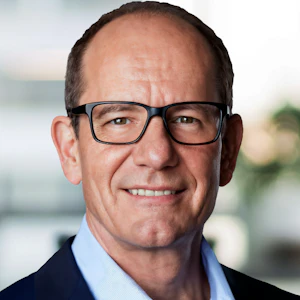
Throughout his career, Mr. Thiel has consistently driven rapid growth and created substantial shareholder value. Prior to MARA, Mr. Thiel served as the CEO of two other public companies, Local Corporation (NASDAQ: LOCM) and Lantronix, Inc (NASDAQ: LTRX). He has successfully raised billions in equity and debt through private and public offerings, led companies through IPOs, executed high-value exits to strategic and financial acquirers, and implemented effective M&A and roll-up strategies.
Mr. Thiel attended the Stockholm School of Economics and executive classes at Harvard Business School, and is fluent in English, Spanish, Swedish, and French. Mr. Thiel is the Chairman of the Board for Oden Technology, Inc. and is active in Young Presidents’ Organization where he has led initiatives in both the FinTech and Technology Networks.
A recognized voice in the industry, Fred frequently shares his insights on energy and technology with major media outlets like Bloomberg TV, CNBC, and FOX Business, contributing to vital discussions about the future of these sectors.
Tim Draper
Tim Draper
He is a supporter and global thought leader for entrepreneurs everywhere, and is a leading spokesperson for Bitcoin and decentralization, having won the Bitcoin US Marshall’s auction in 2014, invested in over 50 crypto companies, and led investments in Coinbase, Ledger, Tezos, and Bancor, among others.

Afroman
Afroman