Modular by Design: Building Everything on Bitcoin
Speakers/Moderators
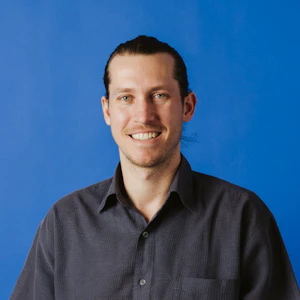
Charlie Spears
Charlie Spears

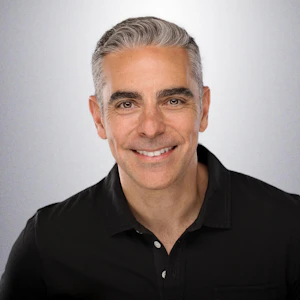
David Marcus
David Marcus

Matt Luongo
Matt Luongo
Session
Overview
This panel explored what it means to build “everything on Bitcoin,” with Dhruv Bansal of Unchained, David Marcus of Lightspark, and Matt Luongo of Thesis discussing Bitcoin as decentralized money, pristine collateral, programmable infrastructure, and a foundation for broader financial tools.
The conversation focused on the tradeoffs builders face between Bitcoin idealism and practical product design. Topics included collaborative custody, Layer 2 systems such as Lightning and Spark, counterparty trust, stablecoins, qualified custody, ETFs, borrowing against Bitcoin, and how users may gradually move from custodial exposure toward self custody.
A recurring theme was meeting users where they are while still preserving Bitcoin’s core values. The speakers debated whether stablecoins can support Bitcoin adoption, how wallets and payment systems can make Bitcoin more useful, and why minimizing trust remains important even when products require real-world compromises.
The discussion closed with a brief look at AI agents and Bitcoin, including the idea that autonomous software could use Bitcoin or Lightning as a neutral, low-friction form of money for machine-to-machine transactions.
All right, we already got intros out of the way, so we're going to skip those. The title of the panel is Modular by Design: Building Everything on Bitcoin, and that's meant a lot of different things to a lot of different people. Let's go down the line. Opening question, Dhruv first: what do you think building everything on Bitcoin means? Feel free to qualify it.
Okay. My attempt to answer that question is: what is Bitcoin? If it's anything, it's decentralized money. What does decentralized mean? At least to me, it means peer-to-peer markets. It means markets with buyers, sellers, demand, supply, asks, bids, order matching, and settlement, except the entire market operates in a peer-to-peer fashion. So to build things on Bitcoin, in my view, means to learn how to invent new peer-to-peer markets that also transact in Bitcoin, that help us decentralize other goods and services beyond just money and transactions.
To me, building on Bitcoin is really all about building on the most neutral, open, and decentralized money platform ever invented. It can take many different shapes and forms. I like to think of Bitcoin as TCP/IP for money and building around that.
Bitcoin is a currency and it's a network. It's also an ethos. So for me, building on Bitcoin is finding Bitcoiners, helping them use their Bitcoin, but it's also exporting those internet values and making sure that people can maintain control of their lives.
While each of you gave answers I agree with, if we drill down into these, we could come up with differences of opinion. I'm going to try to do that. I'll throw it back to Matt. Matt, you said programmable money. A lot of what's been on the stage has been about pristine collateral. Maybe it's both. Dive into this for me. When you say programmable money, what do you mean?
It's funny, because most of my work lately is about pristine collateral. I think there was a step function with the advent of Bitcoin, where you can take not just going after the Fed and not just fighting back and introducing real scarcity and lasting value. That's pristine collateral. But you can also take things that aren't just central banks. You can go after retail banking. You can do things like, I financed my home with Bitcoin.
What's great about that is I've tried to do that three times. The first time I was told that this lender loved Bitcoin. I showed up and they said, We love Bitcoin. Sell it. Come back in 30 days. We won't tell anyone.
Today, without asking anyone's permission, without doing any paperwork, without going to anyone's office, I can effectively create my own mortgage with Bitcoin. So for me, it's just extending the core promise. The programmable part is secondary, though, I think, to what Bitcoin really is, which is pristine collateral.
Third question to you, David. You just announced yesterday on this stage Grid, a very cool, pretty impressive product rollout. But Grid takes a different approach, I think, than using Bitcoin Script, Bitcoin programmable itself. It introduces a counterparty settlement system for a lot of things other than Bitcoin. Can you explain this and how your view of Bitcoin as a neutral layer impacts this?
Yeah. Let me break this into pieces, because I think it's important to understand how Bitcoin fits in everything that we've been building for the last four years. The first thing we did was actually connect domestic payment systems that became real time in the last four years but are not interoperable with one another, except with correspondent banking that takes three days to settle and doesn't work Friday after 5 p.m. or on weekends. We started with Lightning and connected payment systems with Lightning, so you can send money from one country to another in real time, 24/7, all interoperated with TCP/IP for money, Bitcoin on Lightning in this case. That was the starting point.
Then we were like, okay, this is great. But then I had my whole schizophrenic journey with stablecoins. I decided, after looking especially at what Block was doing when they started doing USDC on top of Solana, and thinking about stablecoins as just another fiat rail, and making it available to their users, that I was thinking about it in the wrong way. It's not one or the other. If you connect Bitcoin to all of the different payment systems and all of the different places where money is, then not only can more money actually flow through Bitcoin, but money can flow to Bitcoin more easily.
When you get a Grid global account that has a dollar balance, a Bitcoin balance, a debit card, payment compatibility with 65 countries' payment systems and chains and all of these things, you get a Bitcoin wallet. You're giving people a dollar account that is a Bitcoin wallet that runs on Spark. I think if we want more people to have access to Bitcoin and to use it, connecting it to all the things actually makes it more possible. That's been our approach since we've had that little aha moment and realization.
Dhruv, Unchained is one of the older, more tenured companies in Bitcoin, pioneers of Bitcoin collateral lending. But you guys won't have a stablecoin integration, as far as I'm aware. This might be an interesting wedge issue. How do you view Bitcoin? We have two more platform builders. How do you think about Unchained's role in the Bitcoin economy and Bitcoin's modular ecosystem?
I think Unchained operates at a fairly low layer in the ecosystem. Our clients directly hold Bitcoin on the blockchain through collaborative multi-sig wallets that we help provide through our platform. Our platform aids them, but it doesn't control them. They're able to unilaterally exit at any time without our permission and without our help, should they choose to do so.
Given that they're operating at such a low level in Bitcoin, their needs are correspondingly low level. They care about security. They care about being able to trade in and out of Bitcoin and dollars. They care about liquidity, being able to borrow against their Bitcoin, and even financial advice around how to pursue this stuff and security advice around how to do it safely.
I think there are many things that are higher up in the stack of what has already been built and what will be built in the future. I love thinking about those things, and I love writing about those things and talking about those things. But when it comes to my professional obligations at Unchained, I tend to go way back to the bottom and say, okay, what do I really need to do to make collaborative custody safe? That's where we spend almost all of our time.
Things like stablecoins are interesting. I concede how useful they are and what problems they can solve for many people, but our clients tend to get more utility out of regular old dollars. That's really what they're looking for, and that's typically where our products and our platforms tend to connect.
Bitcoiners tend to be very idealistic. Over the years, I've seen many of my idealistic friends try to start companies and fail because they didn't have enough pragmatism. I think this might be an interesting topic to dive into. Especially if you look at Matt, your portfolio of companies, David, Lightspark and the Spark implementation, and Dhruv, Unchained, a lower-level business model, you see a spectrum of companies and people building on a spectrum of idealism and pragmatism. Here's an open question. How do you navigate the reality that a lot of the folks in the audience are very idealistic, but you also have to run a business and build Bitcoin products?
I'll take that one. Bitcoin has an immune system, and that idealism is what powers that immune system. When people say Bitcoin versus crypto, this is one of a number of reasons there can be only one. That's vital, but we also want to build the future.
I've found in the past that it's hard as a builder because the immune system will react. I've been shipping products in this space for 12 years now, and still, I'll do something new and the first thing is, scammer. So I guess to entrepreneurs, if you're building in Bitcoin and you haven't been called a scammer, you need to try harder.
Genuinely, I think it's great. The other piece that helps me and makes me feel good is two things. One is that I care about people who use the service. If you're hassling me on Twitter and you're a user, you get to hassle me on Twitter. You're a customer of mine. Go nuts.
The other part is that every once in a while, and this isn't the same as being wildly successful in business, I get to say, I told you so. Every once in a while. BlockFi, you know? We have these moments where everyone trying to be so conservative actually led to a huge traditional financial failure that a lot of people in this room probably lost some money on. So I think it takes a balanced approach. I also think that you need to look at people's track record. But anyway, yeah, I embrace it.
Yeah, I like the immune system analogy, but sometimes you have autoimmune diseases, and I think sometimes we've been the victim of that with Bitcoin. At the end of the day, we got a lot of that building Spark and trying to build a new Bitcoin L2 that can satisfy real-time Bitcoin settlements across wallets. Now Spark is behind the Tether wallet, WDK, Cake Wallet, Wallet of Satoshi, Xverse. All of the most popular Bitcoin wallets are running on Spark, and there's a reason for that. The reason is we made it really easy for you to actually move Bitcoin, have a connection on a self-custodial wallet that can receive offline from Lightning and L1, and one integration, et cetera.
But we got so much pushback. It was like, Wait a minute, what is the trust assumption that you're making? This is not like owning a UTXO on L1. All of these debates, which I think are good and healthy, make us better. But at the same time, you need to find the right balance between what compromise you're willing to make to build a product that can be used by hundreds of millions of people every day, which is what we all want. We want Bitcoin to be in the hands of billions of people, and for that, you need to make the product actually usable.
That requires making tradeoffs that not everyone is going to be happy with, and that's okay, because there's always an opportunity for people who feel really strongly that you need the purity of owning your own UTXO to actually do that. They're free to do it. But I think sometimes the autoimmune reaction sets us back quite a bit.
I'm thinking about it, and I think pragmatism and idealism are compatible in Bitcoin. I'd like to believe that I'm both at the same time, but there's also tension. Where I see the tension is that oftentimes idealism manifests as things we want to build that we can't possibly get to today. Bitcoin isn't mature enough. The technology may not exist. It's programmable, but it's not as programmable as we'd like it to be, at least not quite yet.
But you can still be idealistic. Unchained has the same issue, where we're trying to be a regulated financial institution. That means we have to do things like KYC/AML and all sorts of security and compliance issues. These aren't my favorite things to spend time on, but I understand how necessary they are in order to actually operate my business.
In return, I think my business has saved hundreds or thousands of Bitcoin over its lifetime because of the collaborative nature of our custodial model. That's something I'm incredibly proud of, the people that we've saved from scams and attacks because of the nature of the model. I wouldn't have that if I were slightly more idealistic.
Conversely, if I lean too hard into my idealism and I go pursue at work all the cool, fun, magical things that I like thinking about, that I discuss often with people here in the hallways at this conference, I think I'm losing the plot. I'm not focusing sufficiently hard on the thing that actually matters right in front of me, and I'm maybe ahead of where I need to be.
But I think there's space for people to make that tradeoff differently than I'm doing it, differently than Unchained is doing it. People who want to be working at Layer 2 already today, on Lightning or Ark or other systems, which may not be ready in the sense that there may not be as much demand for those things today as there will be in the future, it's okay that people are working on them. They're just making that pragmatism-idealism tradeoff slightly differently. There are people working on Layer 3 projects today, which are completely not going to work, but I salute them, and I'm proud that they're doing it because someone has got to be forging that territory ahead of the rest of us.
David, you mentioned there are various trust models. If we look at the story of Bitcoin and broader crypto, it's a story of counterparty trust and the failure of counterparty trust. This even gets into the genesis of why we have Bitcoin in the first place. I'm going to hit you guys back with a similar question, because we have different levels of counterparty trust. We don't have to get into the technical details because it's not a technical panel. Do you think we should, as builders in the Bitcoin ecosystem, seek to minimize counterparty trust as much as possible?
Yes.
One hundred percent.
Yeah.
Awesome. That was so much faster. Let's switch gears. Stablecoins.
If you want me to say something...
Say something, Matt. Be a little bit more...
I want to meet Bitcoiners where they are. Today's Bitcoiners definitely aren't managing an Electrum multisig. They're definitely not playing with Sparrow. Some of us are, but I won't comment on Sparrow.
Where I'm going is, we have Bitcoiners today in boardrooms, and they want qualified custody. For years as an engineer, I didn't understand that, and I thought that they were missing something. It's taken me a long time to realize our job is to meet people where they are. Most growth over the past few years in our space has been ETFs. How do we serve those people while still helping them find, eventually, self custody?
Yeah, I like that attitude. I think I've gone through a similar journey. Unchained, of course, is very low level, layer one, keys in the direct hands of our clients. But I recognize that means there's only a tiny fraction of people who are excited about Bitcoin that I can even reach as a customer.
It's leading our business to try to reach forward a little bit, to go meet those people where they are today, which often means not starting with keys, but starting with Bitcoin ownership through some sort of proxy structure, whether it's an ETF or a custodial relationship. I think the progressive journey from not being interested in Bitcoin at all to being really interested in Bitcoin and having your own keys passes through that stage. It certainly did for me. I purchased my Bitcoin originally on Coinbase. I didn't have a hardware wallet when I first got into it, and if I didn't have that option, I probably never would have gotten to self custody.
So I think it's powerful when an organization can say, We'll help you along that entire journey, because it means you're getting to people earlier and, truthfully, you're preventing some of them from falling into bad traps such as BlockFi and other systems, which I think were actively a little bit dangerous.
Owning is the first step toward caring about Bitcoin. However you get access to your first fragment of Bitcoin, we should support that, because people will go on a journey. Even if you own a little bit of Bitcoin, you'll start caring about it.
Yeah, there's probably no bad way to start owning Bitcoin. I think there are probably some bad ways to hold on to Bitcoin as it grows in value over the years and never, ever think about it. That's probably not productive. But almost any way you get started is better than not getting started.
Stablecoins are interesting because your opinion on stablecoins can place you along that pragmatic-to-idealistic spectrum. Every app launched here has a stablecoin, but not every company here in the room has incorporated stablecoins. I invite you guys to talk about the current state of stablecoins, where they fit into a product or the financialization of broader crypto and Bitcoin. Do you think that stablecoins, at some level, are fundamentally opposed to the success of Bitcoin?
I'm happy to jump onto that one. For me, the key moment of realization with stablecoins was when we figured out a way to make Spark, a Bitcoin L2, what I think is the most efficient way to move stablecoins around the world. When we figured that out, there was this aha moment where you have a single wallet address that can hold dollars or any type of stablecoin and Bitcoin with the same address.
That, to me, is not a small thing, because if you give people and businesses a really powerful dollar account or a fiat account that's represented by stablecoins, and those wallets and accounts are actually Bitcoin wallets at the same time, then you can get hundreds and hundreds of millions of people onboarded onto Bitcoin. They'll need the fiat equivalent of their home currency to spend and use every day.
Is it a better alternative to actually have that balance represented in a Bitcoin wallet or in your bank? My answer is definitely in a Bitcoin wallet, because that gives more people Bitcoin wallets and addresses that can actually have both things in one place. So I think if done right, and this is going to sound super self-serving, and it is, but I think what we did with Grid global accounts is exactly that. If done right, it's just going to drive massive Bitcoin adoption.
For me, it's not an area I think about too much, just to be honest. I don't get as much demand from my client base, which tends to be wealthier, a smaller number of clients, larger transaction sizes. I think stablecoins may be useful in that context, but they are certainly more useful in the large-scale or retail context where lots of people are onboarding.
Truthfully, Unchained already struggles with trying to build quality, robust, secure, usable interfaces that are connecting Bitcoin and dollars. That's already a big task, and we're still in the middle of that years into our business. Adding stablecoins, adding other cryptocurrencies, these are things that feel outside of the remit of where we need to be spending our time. So I just don't have much to say about it, unfortunately. I feel like Charlie's trying to court controversy and I'm trying to sidestep.
Trying to drive a wedge. You guys are too polite, though.
Go for it.
You have five minutes, by the way.
Okay, I'll take it. I don't know your clients, obviously, but what I see is that people want yield and they want to borrow. If you look on chain, and I won't call out any chains in particular, but Bitcoin here, you can see rates that are three and a half to five and a half percent. Bitcoin is pristine collateral. It deserves pristine rates.
I remember last year when I was at this conference and heard all these new lending things getting announced. There was a little asterisk, and you see the rates, and you're like, I don't think I want to pay that interest on my BTC if it's the best collateral. So what we've been working on, particularly for public Bitcoin holders, is giving them rates that the rest of the ecosystem can provide.
My favorite actually is that you can build stablecoins backed by Bitcoin, and you can offer people below Treasuries. Even with USDC and USDT, you can get below Treasuries because you have the whole rest of the world that doesn't have access to Treasuries, and they want yield and they want USD exposure.
I don't think that stablecoins are a great step toward self-sovereignty. Maybe a Bitcoin-backed stablecoin could be, but I think they're a great step toward finding our customers, proving Bitcoin, and giving them what they want, which is borrowing, yielding, and security.
We've got three minutes left. I'm going to switch gears. Let's talk a little bit about AI. What's the future of AI? Does it have anything to do with Bitcoin? Do agents use Bitcoin? Do agents live on chain? Dhruv, what do you think?
It's such a huge topic that I can't possibly begin to get into it. I'll just leave a few ideas that I'm playing with a lot right now and enjoying. I don't think it should be called artificial intelligence. I think it should be called artificial life.
I think eventually people will build agentic or automating AI tools that aren't in anybody's control, that are eating and living and breathing Bitcoin to pay for their very existence. I think Bitcoin is something like the energetic currency of their digital ecology's metabolism. These words don't go together very often, but I'm trying to make them fit. I wish I had more time to talk about it.
I think Bitcoin should be the default currency for agents transacting with one another, because it's the only unit of account that can't be messed up by humans. If I was an AI agent, I would prefer that.
It's the only money you could trust.
Yeah, totally. The interesting thing, by the way, is we've built this agent delegation stuff for the Grid global accounts, and then we connected two agents and asked them to send money to one another. They had seven different options. They can send dollars to a bank account. They can send dollars or Bitcoin to Cash App via Lightning. They can send BTC on L1. They can send USDC on Solana or USDT on Optimism, whatever.
Inevitably, the shortest path is always, if you have a Cash App account, via Lightning. It's kind of interesting. It's the lowest point of friction, lowest cost, real time. That should be the default currency for AI agents.
I say this as a reformed ML person. I kind of see these as two opposing forces in society. It is very difficult to provide AI today at scale without it being this collectivist force and this collection of capital that the rest of us are hoping stays up long enough.
What's interesting about it, though, is you have all of these things that are dematerializing. It's okay, I don't need that app. I can just create a new one in 10 seconds. You have fewer and fewer things you own. I think the stark difference between how we're feeling the economy change and Bitcoin and our ownership is really remarkable.
I'm waiting for that moment where I see agents discover Bitcoin and it's all peer-to-peer. It'll be Lightning, it'll be Spark, and it'll be all of our different systems. But I'm also excited to know that I jumped over the permanent underclass by being a Bitcoiner.
Maybe next year, that's all we'll talk about, AI. Thank you, Dhruv, David, Matt. Give it up for these guys.
Similar
Sessions
The Global Account
David Marcus
David Marcus
The Global Account
Speakers/Moderators
David Marcus
David Marcus
Modular by Design: Building Everything on Bitcoin
Charlie Spears
Charlie Spears
David Marcus
David Marcus
Matt Luongo
Matt Luongo
Modular by Design: Building Everything on Bitcoin
Speakers/Moderators
Charlie Spears
Charlie Spears
David Marcus
David Marcus
Matt Luongo
Matt Luongo
Other
Speakers
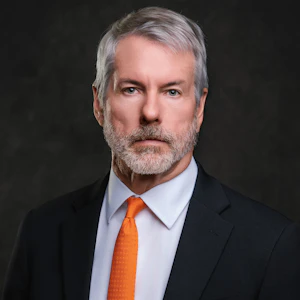
Michael Saylor
Michael Saylor
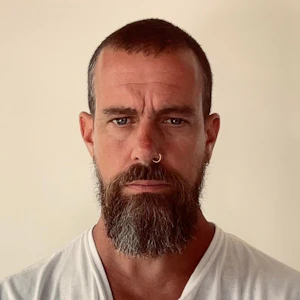
Todd Blanche
Todd Blanche
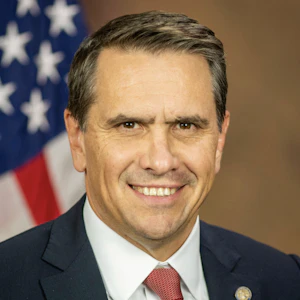
Biography of Deputy Attorney General Todd Blanche
The Honorable Todd Blanche is the 40th Deputy Attorney General of the United States, overseeing the work of the 115,000 dedicated employees who fulfill the Department of Justice’s mission at Main Justice, the FBI, DEA, U.S. Marshals, ATF, and 93 U.S. Attorney’s Offices.
Todd began his career at the Department where he served for over fifteen years in a variety of capacities, including as a contractor, a paralegal in the Criminal Division, and at the United States Attorney’s office for the Southern District of New York where he eventually became an AUSA and later a supervisor.
After leaving the Department, Todd worked as a criminal defense attorney that included representing President Donald Trump in three of the criminal cases brought against him in 2023 and 2024.
Following President Trump’s historic return to the White House, the President appointed Todd to work alongside Attorney General Pam Bondi to make America safe again. At the DOJ, Todd is working tirelessly to implement President Trump’s priorities that include confronting illegal protecting American businesses from fraud.
Todd has been married to his wonderful wife Kristine for nearly thirty years, is a father and grandfather.

Paul Atkins
Paul Atkins
Prior to returning to the SEC, Chairman Atkins was most recently chief executive of Patomak Global Partners, a company he founded in 2009. Chairman Atkins helped lead efforts to develop best practices for the digital asset sector. He served as an independent director and non-executive chairman of the board of BATS Global Markets, Inc. from 2012 to 2015.
Chairman Atkins was appointed by President George W. Bush to serve as a Commissioner of the SEC from 2002 to 2008. During his tenure, he advocated for transparency, consistency, and the use of cost-benefit analysis at the agency. Chairman Atkins also represented the SEC at meetings of the President’s Working Group on Financial Markets and the U.S.-EU Transatlantic Economic Council. From 2009 to 2010, he was appointed a member of the Congressional Oversight Panel for the Troubled Asset Relief Program.
Before serving as an SEC Commissioner, Chairman Atkins was a consultant on securities and investment management industry matters, especially regarding issues of strategy, regulatory compliance, risk management, new product development, and organizational control.
From 1990 to 1994, Chairman Atkins served on the staff of two chairmen of the SEC, Richard C. Breeden and Arthur Levitt, ultimately as chief of staff and counselor, respectively. He received the SEC’s 1992 Law and Policy Award for work regarding corporate governance matters.
Chairman Atkins began his career as a lawyer in New York, focusing on a wide range of corporate transactions for U.S. and foreign clients, including public and private securities offerings and mergers and acquisitions. He was resident for 2½ years in his firm's Paris office and admitted as conseil juridique in France.
A member of the New York and Florida bars, Chairman Atkins received his J.D. from Vanderbilt University School of Law in 1983 and was Senior Student Writing Editor of the Vanderbilt Law Review. He received his A.B., Phi Beta Kappa, from Wofford College in 1980.
Originally from Lillington, North Carolina, Chairman Atkins grew up in Tampa, Florida. He and his wife Sarah have three sons.

Mike Selig
Mike Selig
Chairman Selig brings to the role deep public and private sector experience working with a wide range of stakeholders across agriculture, energy, financial, and digital asset industries, which rely upon and operate in CFTC-regulated markets.
Prior to his leadership at the CFTC, Chairman Selig most recently served as chief counsel of the Securities and Exchange Commission’s Crypto Task Force and senior advisor to SEC Chairman Paul S. Atkins. In this role, Chairman Selig helped to develop a clear regulatory framework for digital asset securities markets, harmonize the SEC and CFTC regulatory regimes, modernize the agency’s rules to reflect new and emerging technologies, and put an end to regulation by enforcement. He also participated in the President’s Working Group on Digital Asset Markets and contributed to its report on “Strengthening American Leadership in Digital Financial Technology.”
Prior to government service, Chairman Selig was a partner at an international law firm, focusing on derivatives and securities regulatory matters. During his years in private practice, he represented a broad range of clients subject to regulation by the CFTC, including commercial end users, futures commission merchants, commodity trading advisors, swap dealers, designated contract markets, derivatives clearing organizations, and digital asset firms. Chairman Selig advised clients on compliance with the Commodity Exchange Act and the CFTC’s rules and regulations thereunder, including in connection with registration applications and obligations, enforcement matters, and complex transactions.
Chairman Selig earned his law degree from The George Washington University Law School and was articles editor of The George Washington Law Review. He received his undergraduate degree from Florida State University.

David Bailey
David Bailey

Eric Trump
Eric Trump
Mr. Trump also serves as Executive Vice President of The Trump Organization, where he oversees the global management and operations of the Trump family’s extensive real estate portfolio. This includes Trump Hotels, Trump Golf, commercial and residential real estate, Trump Estates, and Trump Winery. Known for his hands-on leadership and strong market instincts, he has played a key role in expanding the company’s presence across major U.S. and international markets.
A globally recognized business leader and public figure, Mr. Trump is a prominent advocate for Bitcoin and decentralized finance. He is a co-founder of World Liberty Financial, a decentralized finance (DeFi) platform, and serves on the Board of Advisors of Metaplanet, Japan’s largest corporate holder of Bitcoin.
Beyond his business activities, Mr. Trump has helped raise more than $50 million for St. Jude Children’s Research Hospital in the fight against pediatric cancer, a philanthropic mission he began at age 21.
Mr. Trump earned a degree in Finance and Management from Georgetown University. He currently resides in Florida with his wife, Lara, and their two children. He is also the author of Under Siege, his memoir published in October 2025.

Jack Mallers
Jack Mallers
Cynthia Lummis
Cynthia Lummis
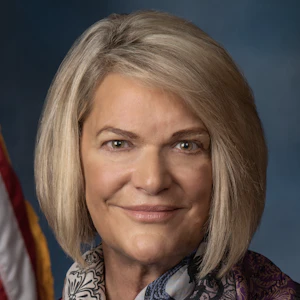
As the first-ever Chair of the Senate Banking Subcommittee on Digital Assets, Senator Lummis is the architect of the legislative framework shaping America's digital asset future. She introduced the landmark Lummis-Gillibrand Responsible Financial Innovation Act, the first comprehensive bipartisan crypto regulatory framework in Senate history. She co-authored the GENIUS Act — the first federal stablecoin law ever enacted — and introduced the BITCOIN Act, which would establish a U.S. strategic Bitcoin reserve of up to one million BTC. She is leading the Clarity Act, which will bring long-overdue regulatory certainty to the digital asset industry. She has also championed digital asset tax reform, including a de minimis exemption for small transactions and equal tax treatment for miners and stakers.
Known as Congress' "Crypto Queen," Senator Lummis represents Wyoming — a state she has helped build into one of the most digital asset-friendly regulatory environments in the nation. Before serving in the Senate, she served 14 years in the Wyoming Legislature, eight years as Wyoming State Treasurer, and eight years in the U.S. House. She is a three-time graduate of the University of Wyoming.
Her work represents a crucial bridge between traditional financial systems and the emerging digital economy, ensuring America leads the world in financial innovation while protecting the individual freedoms that define it.
Adam Back
Adam Back
Amy Oldenburg
Amy Oldenburg
David Marcus
David Marcus

Matt Schultz
Matt Schultz
Fred Thiel
Fred Thiel
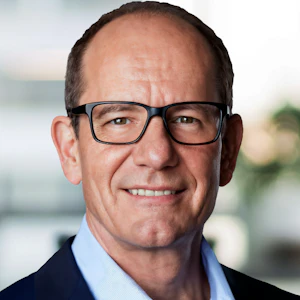
Throughout his career, Mr. Thiel has consistently driven rapid growth and created substantial shareholder value. Prior to MARA, Mr. Thiel served as the CEO of two other public companies, Local Corporation (NASDAQ: LOCM) and Lantronix, Inc (NASDAQ: LTRX). He has successfully raised billions in equity and debt through private and public offerings, led companies through IPOs, executed high-value exits to strategic and financial acquirers, and implemented effective M&A and roll-up strategies.
Mr. Thiel attended the Stockholm School of Economics and executive classes at Harvard Business School, and is fluent in English, Spanish, Swedish, and French. Mr. Thiel is the Chairman of the Board for Oden Technology, Inc. and is active in Young Presidents’ Organization where he has led initiatives in both the FinTech and Technology Networks.
A recognized voice in the industry, Fred frequently shares his insights on energy and technology with major media outlets like Bloomberg TV, CNBC, and FOX Business, contributing to vital discussions about the future of these sectors.
Tim Draper
Tim Draper
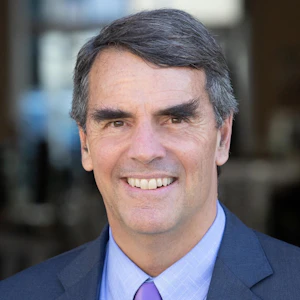
He is a supporter and global thought leader for entrepreneurs everywhere, and is a leading spokesperson for Bitcoin and decentralization, having won the Bitcoin US Marshall’s auction in 2014, invested in over 50 crypto companies, and led investments in Coinbase, Ledger, Tezos, and Bancor, among others.

Afroman
Afroman