The Trillion-Dollar Bridge: How Bond Markets Will Fuel the Bitcoin Credit Revolution
Speakers/Moderators
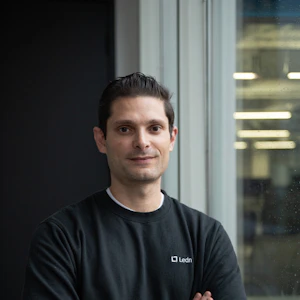
Mauricio Di Bartolomeo
Mauricio Di Bartolomeo
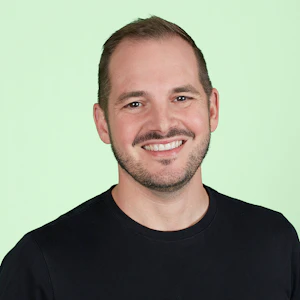
Adam Reeds
Adam Reeds
Session
Overview
Ledn co-founders Mauricio Di Bartolomeo and Adam Reeds explain how Bitcoin-backed lending developed from an unmet need among Bitcoin holders into a multibillion-dollar market. Di Bartolomeo connects the idea to his family’s experience with hyperinflation in Venezuela, Bitcoin mining, and the desire to avoid selling Bitcoin for fiat expenses.
The talk covers how Bitcoin-backed loans are used for investments, business growth, expenses, and debt repayment, with examples including a Bitcoin-based transportation business in El Salvador. The speakers argue that responsible borrowing against Bitcoin can help holders retain long-term upside while accessing liquidity.
Reeds focuses on the capital markets side, describing how asset-backed securitization and bond markets could scale Bitcoin credit. He discusses Ledn’s Bitcoin-backed ABS structure, S&P Global’s rating process, investor demand, regulatory requirements, transparency, and the company’s $200 million investment-grade rated Bitcoin-backed bond.
Hi, everybody. Great to be here. My name is Mauricio Di Bartolomeo. I am here with my best friend, Adam Reeds, and we are the co-founders of Ledn. We are a Bitcoin-backed lending company, and we've been doing this since 2018.
Today, the Bitcoin-backed loan market is a multibillion-dollar market, and we believe this market is going to grow to become a trillion-dollar market in the next five to ten years. Our presentation today will walk you through how we got from zero into the billions today, how we're going to grow this market into a trillion dollars, and what it takes to do so.
A bit of background. Our story, like many Bitcoin stories, begins with broken money. I was born and raised in Venezuela, and as the country was falling apart under Hugo Chávez, my family sent me to Canada to be the family's plan B. Adam and I met in university in Canada.
My family, however, did not leave. They stayed back trying to save my dad's business, hoping things would get better, but they didn't. They got much, much worse after Maduro stole the 2013 election. That triggered the wave of migration and hyperinflation that by now is pretty familiar to all of you, with the highest inflation in the continental Americas and 9 million people displaced.
However, my family was reluctant to leave, and they were looking for a solution desperately. Against all odds, my youngest brother found Bitcoin and pitched my family on the idea of starting to mine it. We got together as a family, evaluated the opportunity, and because there was really nothing else working in the country, we decided to start mining Bitcoin.
Immediately, my family realized that in mining Bitcoin, they had found their lifeline. When I saw what it was doing for them and for other people in Venezuela, I was immediately sold. I went all in. I wanted to do everything I could to help.
But as I mentioned, I was spending most of my time in Canada trying to build a life as a plan B for my family. I didn't have the cheap energy they had in Venezuela, so I decided to do the next best thing, which was to start mining in Canada. For that, I needed cheap energy, and I knew just who to ask, because Adam had been financing renewable energy projects for the last 10 years.
So I told him I needed cheap energy. He asked me why. I said, Bitcoin. He asked me, what is that? I told him what Bitcoin was and what it was doing for my family, and he was in. Our mining journey in Canada started in 2016.
Adam and I had radically different experiences with money when we were growing up. I grew up in Venezuela in hyperinflation. In Venezuela, debt and dollars were how you got ahead. You borrowed worthless bolívares, turned around, bought dollars, waited for inflation to pump your bags, sold some dollars to repay the loan, and repeated.
The thing is, only very wealthy people in Venezuela had access to debt and dollars. Everyone else was trapped, functionally, in a fiat death spiral. In Canada, on the other hand, credit worked, and access to credit was much more fair and abundant. If you followed the rules and worked hard, you got approved for a loan. Loans build generations of wealth for Americans and Canadians by letting you short the dollar to go long a hard asset or property, also known as a mortgage.
Adam and I had very different backgrounds, but we agreed on a lot of things. There was one thing we agreed on more fervently than anything else: we hated selling our Bitcoin to pay for fiat expenses. We had a deep conviction that if Bitcoiners had a safe option to use Bitcoin as collateral and borrow, as opposed to selling it, very few of them would actually choose to sell it, because they understand the value and see the long-term potential.
So we knew what we wanted. We knew what we needed. We needed a Bitcoin-backed loan. We went looking for one. We approached Canadian banks at the time, and that went just about how you would expect. We got laughed out of the room, we got rejected, and our bank accounts got shut down. Thank you, TD.
We still have all the letters that banks sent us back in the day to close our bank accounts. It is funny how things turn around. But in those rejections, we saw a massive opportunity because banks were asleep at the wheel. We thought there was a great opportunity for us to build the solution we needed, the Bitcoin way.
We set out to try to do so. We raised private capital from investors, and we issued Canada's first Bitcoin-backed loan on November 2, 2018, to our good friend Francis Pouliot. Shout out to Bull Bitcoin.
From then on, we've continued lending to Bitcoiners across the globe and letting them hold their Bitcoin. We've grown quite a bit since then. Last year, we originated $1.4 billion in loans, and we estimate that out of the $3 billion Bitcoin-backed loan market today, Ledn holds a 30% market share, meaning one in three Bitcoin-backed loans done globally are done at Ledn. This gives us a very good vantage point on the trends and how people are using these products.
As you can see from our data that we're sharing with you here today, about 27% of people using these loans are using them to buy traditional investments. This could be houses, investing in businesses, vehicles, etc. A similar amount is using them to buy more digital assets. This could be more Bitcoin, more Bitcoin equities, MSTR, ETFs, you name it. About a quarter of them are using them to pay for expenses, and about 20% of them are using them to pay down other debt.
But to me, the most exciting part about this business is not the numbers. It's what the product does for people. One of my favorite stories of the people who have come our way and the people we've helped over the years is Napoleon and Bitcoin Driver, who many of you probably already know and have taken a ride with somewhere in El Salvador.
He is a Bitcoin business. He charges Bitcoin to drive people around El Salvador, and over time he had been having to sell his Bitcoin to grow his business. He was very frustrated at having had to do so, because the Bitcoin, if he would have kept it, would have grown just as fast, if not more, than the business itself.
He had learned about the loans and heard about them. He came to me and asked me how the product worked. I explained to him that he could keep the Bitcoin as collateral, take the funds he needed, and pay it back anytime to get the Bitcoin back. He got it instantly.
He was able to take the loan that he needed to buy the car he needed, to get the contract that he needed for the conference in time. By buying this car, he invested into the El Salvador economy. He created one more job. He grew his business, and his family can get to keep the upside of his Bitcoin. He was incredibly happy about that.
These loans are becoming very, very popular. A lot of people are using them. In fact, many of you probably sitting here in this room have one. Some people might ask, why are these products so popular? The reason is, in short, because they work. They help our clients be better off than by not using them. That's the reason people keep coming back to Ledn and we keep growing. If people weren't finding value in the products, they wouldn't be coming to us.
What I have on the screen here is a model of a person who took a $100,000 Bitcoin-backed loan on January 1, 2020. We picked this date because January 1, 2020 saw COVID, Alameda, FTX, BlockFi, Celsius, Terra Luna. Every single thing you can throw at this market, this loan lived through.
The person started with $100,000 on January 1, 2020. He needed initial collateral of 27.3 Bitcoin. As you can see from the chart, the yellow line is the Bitcoin balance on the loan, the green line is the net worth, and the red line is the total debt accumulated for the loan.
That little bump you see at the start of the loan, the yellow line going up, is a top-up that the client had to do when the COVID crash hit. That day, that person had to send 13.5 extra Bitcoin. From then on, you see that the Bitcoin balance just continues to drop, because at Ledn, as the Bitcoin collateral appreciates, you can redeem the excess from your loan. As you can see, the Bitcoin balance peaked in March 2020, and from then on, it just continued to drop.
The interesting thing about this model is that this person, by taking a loan on January 1, 2020 instead of selling their Bitcoin, and managing that loan responsibly until today, would have seen their net worth become $1.7 million. If that person had instead not taken a loan and sold half of his Bitcoin to get the $100,000, his net worth would just be $1 million. This person is 67% better off financially today because they took the loan.
This, in a nutshell, is why these products are so powerful when used responsibly. As Adam is about to mention, we believe this thing is about to get much, much bigger.
When Mauricio and I started Ledn eight years ago, we knew that every loan has two customers: the borrower, which Mauricio, as an early Bitcoiner, was able to represent, and the lender. You have to have the balance of terms and conditions done appropriately. As someone who spent 10 years in structured finance prior to starting Ledn, I played the role of the lender.
Spending most of my time thinking about the role of the lender, my concern became, do we have enough capital to continue to grow this business? I love analogies, and one of the analogies I often make to our business is a gas station. The retail side of the gas station distributes the loans, but in the back, you have to have access to gas. Think about loans if we didn't have dollars. There's no product. There's no gas.
So we think a lot about how big this market can get. I'll jump right to the analogy on the far right, because I love the real estate analogy. Here in the U.S., 60% of homes have a mortgage on them. Today, as we said earlier, we think the consumer side of Bitcoin-backed loans is only $3 billion, and Ledn is a third of that. So what happens if this market goes 300x from $3 billion to $900 billion? It's a very big demand for capital.
We thought a lot about what market can support the amount of capital we need to grow Bitcoin-backed lending. There's only one market that exists today, which is, of course, the asset-backed securitization market.
We also thought a lot about what other asset classes take advantage of this market. The interesting thing about it is that the better the collateral, the higher the securitization rate. Sixty-five to 70% of residential mortgages are packaged up into asset-backed securities. We all know that Bitcoin is far more pristine collateral than autos, residential houses, or credit cards.
We made a lot of these analogies when we went to market our bonds. We thought a lot about the differences between how ABS is done today and how we are doing Bitcoin-backed loans. When you're trying to do something new, only change one variable at one time. That's what we did with our Bitcoin-backed ABS. The variable we changed was Bitcoin. Everything else, we tried our best to put in a traditional structure so people didn't have to think so much to say yes.
We also thought a lot about what type of grade we needed. First, we wanted to make sure that we had the hardest judge, so there was no additional scrutiny on the product. We engaged S&P Global, one of the top rating agencies that exists globally, to help us work through this and rate our product. We opened ourselves up and gave our own company an X-ray.
We also learned along the way that it's not like a regular report card. You can't get A to D and still move ahead to the next grade. This is very much a pass or fail. If you don't get investment grade, you don't make the cut, and 95% of investors don't pick up the phone. It's investment grade or nothing else.
As we went through the roadshow, Jefferies, the structuring agent and underwriting bank that we worked with, said that it was the highest reception they'd ever received for bringing a product to market. We booked over 50 meetings, and they couldn't believe it. Believe me, this team had some gray hair, so they'd seen a lot.
However, we put this bond to market in a very difficult time. We were sitting in meetings in February just as the markets were crashing. Of course, media picked up and looked at us and said it wasn't going to work. But the reality was this was one of the best times to bring the product to market because we were able to show investors that the product works.
Although we hate to liquidate clients, we want people to keep their Bitcoin. That feature allows us to access capital and, again, keeps the balance between borrower and lender. If you make the terms too good for the borrower, there's no capital. There's no gas.
So keeping on this road, we got it done. After a year in the making, we were able to achieve the first ever investment-grade rated bond for Bitcoin. We issued a $200 million bond and got investment-grade status on the senior tranche of the bond. We did this, and we hope this is something everybody in the room can use and build on.
How did we get this done? Ledn has been laser focused on Bitcoin-backed lending for eight years. This means we have an insane amount of data and we're able to show that. We have good examples and bad examples of market conditions to work through and show that we've never lost a Satoshi, and we've never lost a dollar in this type of structure.
We also had scale. To do $200 million of ABS, you can't just have $200 million worth of loans. The rating agency wants to see that you can continue to pay debt servicing on that $200 million, so you have to have additional loans to be able to vend in. We had a billion dollars of loans outstanding when we brought this to market, so we were able to show continuity.
Importantly, we also had to have a strong regulatory posture. These are very traditional financial institutions and have strong AML, risk framework, and other compliance committees, and they will not deal with companies that are not compliant and fit into their traditional buckets.
Finally, we had to make sure we stayed transparent. We opened up. We showed our technology. We showed our processes, our compliance framework, everything. It was under the microscope for over a year with S&P to get them comfortable with our process. This new blueprint is public, and it can be used by everybody.
The thing I love about this, starting the business as Mauricio, a Venezuelan, and myself, a Canadian, is that we've always had a global approach to our business. The best thing about this ABS financing is it treats everybody equally. Most ABS says, you're American or you're not American. If you're American, you're higher rated, and if you're not, you're down here. This took borrowers from 30 different countries and put them all in the same rated structure.
Bitcoin is equal to everybody, and so should financing. We're so proud that we achieved all of that access for everybody. When you have Bitcoin, you now have exactly the same terms, no matter where you are in the world. We love that, and we'll always be a global company.
What's the benefit for you, Bitcoiners? Third-party validation. Again, we put ourselves openly under the microscope and said, we have nothing to hide. This is how we work. Look at everything you need to, and get comfortable with our business. Everything is transparent. If you take a loan with Ledn, you can see how we're accessing that capital. All the documentation is public. These bonds trade on the secondary market.
And of course, real savings. We're doing this so that we can open up access to capital and lower interest rates. Already, these bonds are trading in market, and they've reduced about 5% on the interest costs that they're trading at. People are waking up. Eventually, it's our belief that these will trade at better interest rates than auto loans and residential loans. Bitcoin should be the lowest cost of capital because it is the most pristine collateral.
We're so excited to create a better Bitcoin ecosystem for all of you, and we hope all of you join in and take advantage of this financing that we helped create. Thank you so much.
Similar
Sessions
The Trillion-Dollar Bridge: How Bond Markets Will Fuel the Bitcoin Credit Revolution
Mauricio Di Bartolomeo
Mauricio Di Bartolomeo
Adam Reeds
Adam Reeds
The Trillion-Dollar Bridge: How Bond Markets Will Fuel the Bitcoin Credit Revolution
Speakers/Moderators
Mauricio Di Bartolomeo
Mauricio Di Bartolomeo
Adam Reeds
Adam Reeds
Other
Speakers
Michael Saylor
Michael Saylor
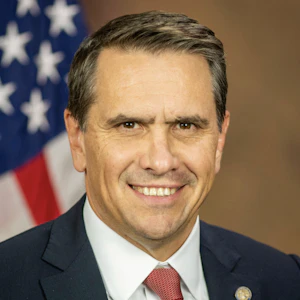
Todd Blanche
Todd Blanche
Biography of Deputy Attorney General Todd Blanche
The Honorable Todd Blanche is the 40th Deputy Attorney General of the United States, overseeing the work of the 115,000 dedicated employees who fulfill the Department of Justice’s mission at Main Justice, the FBI, DEA, U.S. Marshals, ATF, and 93 U.S. Attorney’s Offices.
Todd began his career at the Department where he served for over fifteen years in a variety of capacities, including as a contractor, a paralegal in the Criminal Division, and at the United States Attorney’s office for the Southern District of New York where he eventually became an AUSA and later a supervisor.
After leaving the Department, Todd worked as a criminal defense attorney that included representing President Donald Trump in three of the criminal cases brought against him in 2023 and 2024.
Following President Trump’s historic return to the White House, the President appointed Todd to work alongside Attorney General Pam Bondi to make America safe again. At the DOJ, Todd is working tirelessly to implement President Trump’s priorities that include confronting illegal protecting American businesses from fraud.
Todd has been married to his wonderful wife Kristine for nearly thirty years, is a father and grandfather.
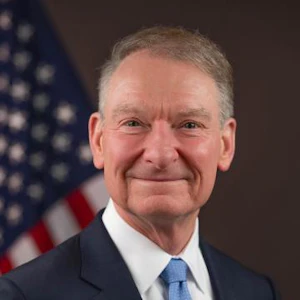
Paul Atkins
Paul Atkins
Prior to returning to the SEC, Chairman Atkins was most recently chief executive of Patomak Global Partners, a company he founded in 2009. Chairman Atkins helped lead efforts to develop best practices for the digital asset sector. He served as an independent director and non-executive chairman of the board of BATS Global Markets, Inc. from 2012 to 2015.
Chairman Atkins was appointed by President George W. Bush to serve as a Commissioner of the SEC from 2002 to 2008. During his tenure, he advocated for transparency, consistency, and the use of cost-benefit analysis at the agency. Chairman Atkins also represented the SEC at meetings of the President’s Working Group on Financial Markets and the U.S.-EU Transatlantic Economic Council. From 2009 to 2010, he was appointed a member of the Congressional Oversight Panel for the Troubled Asset Relief Program.
Before serving as an SEC Commissioner, Chairman Atkins was a consultant on securities and investment management industry matters, especially regarding issues of strategy, regulatory compliance, risk management, new product development, and organizational control.
From 1990 to 1994, Chairman Atkins served on the staff of two chairmen of the SEC, Richard C. Breeden and Arthur Levitt, ultimately as chief of staff and counselor, respectively. He received the SEC’s 1992 Law and Policy Award for work regarding corporate governance matters.
Chairman Atkins began his career as a lawyer in New York, focusing on a wide range of corporate transactions for U.S. and foreign clients, including public and private securities offerings and mergers and acquisitions. He was resident for 2½ years in his firm's Paris office and admitted as conseil juridique in France.
A member of the New York and Florida bars, Chairman Atkins received his J.D. from Vanderbilt University School of Law in 1983 and was Senior Student Writing Editor of the Vanderbilt Law Review. He received his A.B., Phi Beta Kappa, from Wofford College in 1980.
Originally from Lillington, North Carolina, Chairman Atkins grew up in Tampa, Florida. He and his wife Sarah have three sons.

Mike Selig
Mike Selig
Chairman Selig brings to the role deep public and private sector experience working with a wide range of stakeholders across agriculture, energy, financial, and digital asset industries, which rely upon and operate in CFTC-regulated markets.
Prior to his leadership at the CFTC, Chairman Selig most recently served as chief counsel of the Securities and Exchange Commission’s Crypto Task Force and senior advisor to SEC Chairman Paul S. Atkins. In this role, Chairman Selig helped to develop a clear regulatory framework for digital asset securities markets, harmonize the SEC and CFTC regulatory regimes, modernize the agency’s rules to reflect new and emerging technologies, and put an end to regulation by enforcement. He also participated in the President’s Working Group on Digital Asset Markets and contributed to its report on “Strengthening American Leadership in Digital Financial Technology.”
Prior to government service, Chairman Selig was a partner at an international law firm, focusing on derivatives and securities regulatory matters. During his years in private practice, he represented a broad range of clients subject to regulation by the CFTC, including commercial end users, futures commission merchants, commodity trading advisors, swap dealers, designated contract markets, derivatives clearing organizations, and digital asset firms. Chairman Selig advised clients on compliance with the Commodity Exchange Act and the CFTC’s rules and regulations thereunder, including in connection with registration applications and obligations, enforcement matters, and complex transactions.
Chairman Selig earned his law degree from The George Washington University Law School and was articles editor of The George Washington Law Review. He received his undergraduate degree from Florida State University.

David Bailey
David Bailey

Eric Trump
Eric Trump
Mr. Trump also serves as Executive Vice President of The Trump Organization, where he oversees the global management and operations of the Trump family’s extensive real estate portfolio. This includes Trump Hotels, Trump Golf, commercial and residential real estate, Trump Estates, and Trump Winery. Known for his hands-on leadership and strong market instincts, he has played a key role in expanding the company’s presence across major U.S. and international markets.
A globally recognized business leader and public figure, Mr. Trump is a prominent advocate for Bitcoin and decentralized finance. He is a co-founder of World Liberty Financial, a decentralized finance (DeFi) platform, and serves on the Board of Advisors of Metaplanet, Japan’s largest corporate holder of Bitcoin.
Beyond his business activities, Mr. Trump has helped raise more than $50 million for St. Jude Children’s Research Hospital in the fight against pediatric cancer, a philanthropic mission he began at age 21.
Mr. Trump earned a degree in Finance and Management from Georgetown University. He currently resides in Florida with his wife, Lara, and their two children. He is also the author of Under Siege, his memoir published in October 2025.

Jack Mallers
Jack Mallers
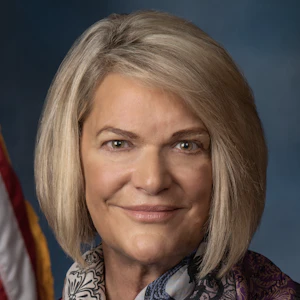
Cynthia Lummis
Cynthia Lummis
As the first-ever Chair of the Senate Banking Subcommittee on Digital Assets, Senator Lummis is the architect of the legislative framework shaping America's digital asset future. She introduced the landmark Lummis-Gillibrand Responsible Financial Innovation Act, the first comprehensive bipartisan crypto regulatory framework in Senate history. She co-authored the GENIUS Act — the first federal stablecoin law ever enacted — and introduced the BITCOIN Act, which would establish a U.S. strategic Bitcoin reserve of up to one million BTC. She is leading the Clarity Act, which will bring long-overdue regulatory certainty to the digital asset industry. She has also championed digital asset tax reform, including a de minimis exemption for small transactions and equal tax treatment for miners and stakers.
Known as Congress' "Crypto Queen," Senator Lummis represents Wyoming — a state she has helped build into one of the most digital asset-friendly regulatory environments in the nation. Before serving in the Senate, she served 14 years in the Wyoming Legislature, eight years as Wyoming State Treasurer, and eight years in the U.S. House. She is a three-time graduate of the University of Wyoming.
Her work represents a crucial bridge between traditional financial systems and the emerging digital economy, ensuring America leads the world in financial innovation while protecting the individual freedoms that define it.
Adam Back
Adam Back
Amy Oldenburg
Amy Oldenburg
David Marcus
David Marcus

Matt Schultz
Matt Schultz
Fred Thiel
Fred Thiel
Throughout his career, Mr. Thiel has consistently driven rapid growth and created substantial shareholder value. Prior to MARA, Mr. Thiel served as the CEO of two other public companies, Local Corporation (NASDAQ: LOCM) and Lantronix, Inc (NASDAQ: LTRX). He has successfully raised billions in equity and debt through private and public offerings, led companies through IPOs, executed high-value exits to strategic and financial acquirers, and implemented effective M&A and roll-up strategies.
Mr. Thiel attended the Stockholm School of Economics and executive classes at Harvard Business School, and is fluent in English, Spanish, Swedish, and French. Mr. Thiel is the Chairman of the Board for Oden Technology, Inc. and is active in Young Presidents’ Organization where he has led initiatives in both the FinTech and Technology Networks.
A recognized voice in the industry, Fred frequently shares his insights on energy and technology with major media outlets like Bloomberg TV, CNBC, and FOX Business, contributing to vital discussions about the future of these sectors.
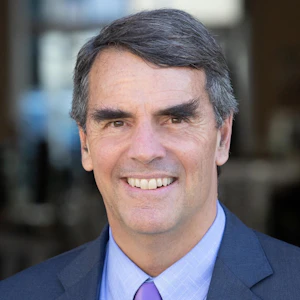
Tim Draper
Tim Draper
He is a supporter and global thought leader for entrepreneurs everywhere, and is a leading spokesperson for Bitcoin and decentralization, having won the Bitcoin US Marshall’s auction in 2014, invested in over 50 crypto companies, and led investments in Coinbase, Ledger, Tezos, and Bancor, among others.

Afroman
Afroman