Lightning + Ecash: An Atomic Match Made in Heaven?
Speakers/Moderators

Shinobi
Shinobi


Evan Kaloudis
Evan Kaloudis
With a background in cybersecurity and infrastructure engineering, Evan has spent the past several years focused on advancing self-sovereign finance. He is a vocal advocate for privacy-preserving, self-custodial technology and has been a prominent voice in defending open-source Bitcoin tools amid growing regulatory pressure.
Through ZEUS, Evan is pushing Bitcoin payments forward — making them more accessible while equipping users with tools that preserve their financial sovereignty.

Alex Lewin
Alex Lewin
Session
Overview
Shinobi moderated a discussion with Alex Lewin of Fedi, Evan Kaloudis of ZEUS, and Erik Cativo of Cashu on how Lightning and eCash can work together for Bitcoin payments. The panel focused on Lightning’s onboarding challenges, including channel setup, liquidity management, fees, and the difficulty of giving new users a smooth first payment experience.
The speakers described eCash as a practical last-mile layer for Bitcoin payments, especially for low-value transactions and first-time users. They compared Cashu’s lightweight single-mint model with Fedimint’s federated guardian model, highlighting trade-offs around custody, resilience, coordination costs, privacy, and ease of deployment.
A major theme was privacy. The panelists argued that eCash can make custodial Bitcoin services significantly more private, while still preserving a path toward self custody through Lightning or on-chain Bitcoin. They also discussed competing approaches such as Spark and Ark, questioning whether improved trust models are worth the added UX complexity and privacy compromises.
The conversation closed with practical examples from Fedi and ZEUS, including eCash-enabled wallets, Cashu onboarding, and Lightning payments funded through eCash. The speakers framed Lightning and eCash as complementary tools for expanding everyday Bitcoin use while maintaining a focus on privacy and user choice.
Well, hello, everybody. Go ahead and get the laughs out of your system. Yes, I limped up here. I'm Shinobi from Bitcoin Magazine, dealing with a world of memes. This is assault. Help me. Somebody call security.
So I am joined today. We said we had to get the fighting out right away. We had to start with the silliness. And honestly, let's be real, guys. A lot of people have wanted to shoot Shinobi, and I finally had the opportunity and I took it.
All right, all right, all right. I'm joined here today by Alex Lewin of Fedi, Evan Kaloudis, founder of ZEUS, and Erik Cativo from Cashu. We are here to talk about the latest and greatest Bitcoin fork that's coming at the end of the year. Have you guys heard of eCash yet? eCash.com, yeah.
But in all seriousness, we are here to talk about the synergy between eCash and Lightning. Lightning, up until the last few years, had kind of held a monopoly on the mind space of Bitcoin layer twos and how we are going to solve payments at scale for people. Over the years since it's been created, we've found more and more cracks, shortcomings, and limitations.
Along came eCash, in addition to some other solutions, and they have been playing very well together. Do we want to go down the line here and get some short thoughts on why these two protocols and projects have meshed so tightly together in the last few years? Alex, start with you.
Yeah, sure. Lightning is amazing. Everybody loves Lightning. Lightning is the best thing since sliced bread. But when you first receive a payment on Lightning in a noncustodial manner, it is a pretty terrible user experience. You have to wait for the channel to open. If it's a zero-conf channel, there are more trust assumptions, and you have to pay a pretty hefty fee out of the first payment that you receive.
Also, if we get the whole world on Lightning, then it would not scale because you just could not open channels fast enough. eCash comes along and fixes this last mile problem. We can still use Lightning to settle payments between users across the network and across the world. But as the last hop to get to different pools of users, we can use eCash to get there, and you can have virtually a perfect user experience for using Lightning.
Evan, do you have an interesting way to say the same thing?
Absolutely. Hey, guys, my name is Evan Kaloudis. I'm the founder of ZEUS. We're a free and open source Lightning wallet. We started as a remote controller only, then we built a node in the phone, one click to get started on Lightning, and we added an LSP. Recently, we just launched our graduated wallet.
You can start with Cashu optionally. It is eCash. It is custodial, but the wallet guides you to self custody as your balance grows. It says, hey, you have a lot of money in Cashu, it's custodial, sort of like a bank, albeit with much, much better privacy. Within the UI, you can learn about self custody. With one button press, you can upgrade to self-custodial Lightning, which is now powered by LDK in the new ZEUS. Or you can do a swap on chain and send it to a hardware wallet or any on-chain address you own.
Alex's points are all true about the pains of onboarding with Lightning. You have to get these channels set up. There are these new concepts of inbound and outbound liquidity that a user has to learn about, and there is a real cost to getting those channels set up. We're pretty proud of the cost that we've got it down to for ZEUS users. It could be like five, six, or seven thousand sats to get a channel. But let's be honest, no one really wants to pay that just to test out a wallet.
So what we've done is printed 6,000 of these notes here with seven different designs that we were handing out across the length of the conference. It's such a great onboarding experience. You could scan it with your phone's camera. It takes you to an onboarding portal, guides you to download ZEUS, and then you can import the token either into ZEUS or into any other Cashu-compatible wallet.
We've already had a lot of awesome experiences just giving newcomers their first sats, having them install the wallet, receive it with one press of a button, and really just seeing their eyes light up. It's magical.
Erik, you specifically work on user experience for different things. What's your thought on what they just said, phrased differently?
Yeah. I work as a product designer, so Alex pretty much covered all of the UX aspect, so I'm not going to repeat that. Instead, what I'll say is there is this kind of social idea that I've noticed among Bitcoiners. We're all at a Bitcoin conference, so that means that you are inherently an enthusiast. You are an outlier, and we believe certain things.
We believe that self custody and sovereignty of your money is a virtue. That is a good thing that you should be doing, and we think that is good. However, there are other people who don't think like us, and they just don't see that as a virtue. They see that as a liability. You explain to them the responsibility of having your own keys and what that entails, and they're turned off by that. We're turned on by that, right? They're like, I don't want that responsibility. I want an experience that is like forgot my password, send it to me so I can log in again.
I think we as Bitcoiners sometimes have this idea that because we think self custody and self-sovereignty are virtuous, we want to present that as a default to someone who is not at a Bitcoin conference or is not a Bitcoiner. That can be very dangerous. This could be like putting someone who has never driven in their life in a 1976 Volkswagen GTI on the German Autobahn. They're going to get hurt. They're going to get wrecked, and it's a stick shift, and they don't know how to drive stick. You're setting someone up to get hurt because they are not a car enthusiast.
So I think the UX experiences and the UX trade-offs that Alex mentioned, there is a role for that. What I also want to emphasize is that Cashu right now, and eCash in general, has some of the best privacy properties on Bitcoin. The huge impact we can have is making custodial services a lot more private than what exists now. That is a massive win for Bitcoin.
If we can make custodial services more private, that's something I'm very excited about, because I want people to be able to transact with Bitcoin easily, privately, and very importantly, always have the option to go to self-custodial self-sovereignty with Lightning and then on chain. You always need to have that option.
Something I wanted to touch on, because I like starting fights: Alex, you work for Fedi, and Evan and Erik, you both work with Cashu. These two different eCash systems have taken very different trade-offs in terms of user security or trust model. Fedi has the guardian system, where you have multiple signers or operators actually operating the mints. Whereas Cashu is a single key, a single operator.
To try to have some of the risk mitigation that Fedimint does with their structure, Cashu has been doing a lot of research and development on spreading your eCash balance across multiple mints rather than having it all in one, and sourcing that liquidity when necessary to make payments over Lightning. Erik, do you want to talk a little bit about the trade-off Cashu has decided to take there, and the thinking and progress toward that?
Yeah. There are two things. I don't want to speak too much about Fedimint because it's not a project that I'm as intimately familiar with as I am with Cashu. But I will say every single developer I've talked to who has looked at Fedimint has said it is absolutely a marvel. It is an incredibly well engineered, very serious piece of engineering software. The team there is cracked. They know what they're doing.
Tell me what you really feel.
Cashu has taken a different approach. That's not to say Cashu isn't software engineering to that caliber, but there is an ease of launching a Cashu mint that is a lot easier than launching a federation. It's a couple lines of code. It's very easy to deploy these mints very quickly.
When we think about decentralization and risk mitigation, I come from the world of private trackers in torrents. One thing I was always inspired by was this idea that trackers in torrents are very easy to spin up. Even though there is that risk where your torrent tracker might go down, there's going to be another one that spins up right away. That's kind of the resiliency: these mints can just spin up and operate right away.
Another thing that you alluded to was multi-mint payments. Instead of having your Cashu eCash on one mint, you can spread it across multiple mints. Usually that would be a UX nightmare, because now you have $20 here, $20 here, $10 here, and you want to make a $40 payment. That's going to be very annoying.
But with multi-mint payments, what that will do is automatically on the back end, totally abstracted from the user. You'll just scan an invoice or want to send a payment, and it will automatically pull the balances it needs from the necessary mints, where you've already spread out your risk, and then perform the payment. That is a way to build a little bit more resiliency that doesn't rely on the security model I mentioned earlier of relying on these mints spinning up and going in and out of existence rapidly.
I think the Fedimint and guardian approach is great. I think that's an incredible way to go about it. It could make sense when you have a larger group or a community with guardians where people know each other and they want something that is maybe a little bit more robust and resilient.
Alex, do you want to jump in and talk a little bit about Fedimint's trade-off decisions there?
Yeah. Cashu is a super cool project. Cashu and Fedimint are very close friends.
Come on, fight. I was trying to start fighting.
So Cashu's strength is that it's agile. They build features super fast because the protocol is relatively simple. You can do a lot of cool things and push the boundaries of what's possible with eCash.
Fedimint has a bit of a different set of priorities, like you mentioned. Fedimint is really two things stapled together. First and foremost, it's a custody solution. It's a federated custody solution where you can have a three-of-four set of guardians, and any single server can go down, but the mint has zero downtime. So it is first a custody solution, and second an eCash mint.
It is Fedimint's opinion that in order to really use eCash at scale and trust it without people losing their money, it needs to be fault tolerant. Fedimint does the hard work of finding a way to do the custody solution plus the eCash mint so we can actually do something at scale that we can trust and believe in.
Evan, do you have anything you want to add here, given you've made a choice?
There is a real coordination cost to setting up a federation. As a result, we've seen a little bit of a richer ecosystem of mints to pick from. I think Fedimint probably thrives a little bit more in a local setting, I would argue, at least at the current moment.
A lot of it is also contingent on the legal gray area of spinning up these mints. How great would it be if we could have a Fedimint that was hosted by ZEUS and two other Lightning wallets, and we could spread out the risk there? But if I did that, I'd probably get hauled to jail here in the United States, despite all the claims that we've made all this great progress. It's still very much this cypherpunk thing to set up a mint.
If that changes, then I think Fedimint clearly leapfrogs Cashu, but that's not the environment we're living in today. Because of those reasons, we went with Cashu, at least for now. I hope Fedimint can continue to be used and it becomes easier to coordinate, both from a technical and legal perspective.
Right now, we're just spreading out the risk among different mints. When you get set up with the new onboarding process in ZEUS, you're recommended mints with our algorithm that uses Nostr's web of trust to figure out which mints to connect to. We pick five mints for you to have. You have the ability to rotate between those mints when you're receiving.
Calle wanted to figure this out at the protocol level, which is not possible, so we figured the application level would be great for that. In our following minor release, 13.1, we're going to have multi-mint sending too. It's still a little rough around the edges. It's still very much an experimental feature. Not all mints support it, but when it works, it's amazing.
In the last 10 minutes, I want to throw an open question or something to ponder to all of you. The core idea here for eCash, when Cashu and Fedimint began, is that while Lightning is great, it has these last mile problems. There are costs, frictions in UX, or technical complexity to initially onboard a user or try to use the system for lower-value payments. The entire idea of eCash is to deal with that last mile problem.
In the current environment, over the last year or so, we've seen Spark, a state chain implementation. We've seen Ark Labs drop Arcade. I believe Second's implementation is coming shortly. What are your thoughts on where eCash fits into this ecosystem, given that we have these newer last mile solutions that do have more of a self-custodial trade-off and can come down and handle some lower-value payments?
Do they really, though?
Yeah, like, yes.
Ish.
Trust you with an asterisk.
Okay, we'll use the made-up word trustodial. But in that environment of Spark and Ark, where do you see eCash fitting in when you have that competition and that pressure now for these last mile roles?
To start, eCash immediately makes the concession that it's a custodial system. Given the one trust assumption, that you trust the custodian, you can have a phenomenal UX, phenomenal privacy properties, and it's the ideal payment UX, period. It doesn't get any better. But there's the one trade-off that it's custodial. So there is trust.
These other systems are attempting to innovate on that trust assumption, but each and every one of these side systems is running into a brick wall with the UX. Most of them are making modifications to their protocol that tiptoe around the idea of becoming a multisig again, introducing trust. So they're coming around. The best you can do in current Bitcoin, without covenants, is effectively multisig with eCash. You can't do anything else with the trust assumptions, and I think the community is slowly learning this and waking up to this fact.
You're lucky I'm a moderator. Evan, Erik?
It's all a game of trade-offs. Every single person I've talked to who has looked at these, and by person I mean developers who are sophisticated and can read code bases, finds different things. When I talk to different people, I get different assessments.
I've talked to a lot of people who have looked at Spark and they tell me blatantly that this is a privacy nightmare, and that is a massive trade-off. Spark will say, oh, we have this option to make it more private. Then I see other developers say, no, I just pulled up your Spark address and I see everything. So that's the reality.
With Ark, I work with other designers who build on Ark. Specifically, there is a Second implementation of it that's currently on Signet. This entire VTXO refresh balance UX is very challenging. It's a very complex thing to explain. It's not simple. When I talk to my designer friends, they tell me right now it can't be automated, so the user has to, at least right now, go in and manually trigger a VTXO refresh. That's a lot to explain to someone. Why? What does this mean? My balance changes? So that's a design issue that needs to be solved.
I think this goes to Alex's point that these systems introduce new things at the receiving UX.
Both protocols, or both Ark implementations, have made the decision to modify their protocols to introduce some trust because the refresh UX doesn't work.
Yeah. They need covenants. That's it. Until we have that, why do all this hand-wringing, shrugging things aside? They all have these different trust assumptions. Why not use the thing that provides really good UX and really good privacy? Cashu beats everything else right now.
But are you sure it's so black and white, given that yes, there are big privacy trade-offs involved, but the trust model of things like Ark or Spark is a little more nuanced than that? Ark can be temporarily trusting the coordinator not to double spend something, but the user can roll something over into ironclad self custody.
Spark is a little trickier. You do just have to trust that the operator is properly deleting keys, and there is no way you can ever verify that. But there is massive legal pressure for them to do that properly, because that is why they can say they're operating a noncustodial service and not be subject to those regulations.
Yeah, it's legal gymnastics.
Spark is interesting for that reason. It's this legal innovation that aligns incentives. In order for the operator to be compliant, they actually must delete the keys. So either they're not compliant and stealing from you, or they are compliant and doing what they say they're going to do.
But then again, do we care about privacy as far as a liberty aspect of money? I think privacy is pretty important, and you get none of that with Spark. You get none of that with Ark. Also, Ark is becoming more trusted. So is it really worth having incrementally better trust assumptions in order to compromise privacy completely? In my opinion, no.
It's just marginal. It's just the time window at which the rugging can happen, basically, at this point. Quite frankly, these legal gymnastics saying, oh, I have this legal opinion, blah blah blah, whatever, I don't care. The state, if they want to deem it custodial tomorrow, they could change their opinion at the drop of a hat. What provides the best user experience for users today? That's what I care about.
All right, so I think the consensus up here is that the lack of privacy is pretty much the big deal killer here for you guys.
Yeah. Also, privacy has this practical benefit that improves the trust assumptions for the user. If you don't have a private system, one of the things you're really worried about as a user is being selectively censored or being selectively targeted as an individual, because the payment provider can see all of your payments and they can censor just you. This is super annoying because you can individually get locked out of your bank.
If you have a private payment system, then that becomes impossible. You're now sharing in the anonymity set of all of the users of the system, so it becomes all or nothing. If you want uptime in your system for anybody, you have to allow it for everybody. It has these practical benefits. Even though it's still a trusted system, it's practically much better.
In the last couple minutes, let's go down the line from Alex to Evan to Erik and give your short spiel on what fun stuff people can go do with eCash, and what they can spend it on right now.
In the Fedimint world, you can download Fedi today. We also have our own quirky eCash bucks, and we're actually much more generous than ZEUS, so our bucks are worth quite a bit more.
Hold up, I have the bribe pile somewhere.
They are bigger denominations. We don't make them rain, but they are valuable. If you want to build on Fedimint, you can check out our docs at fedimint.org. If you want to build a wallet, check out the Fedimint SDK. Come talk to us.
Guys, remember, it's Lightning and eCash, a match made in heaven. Anywhere you can make a payment with Lightning, you can use eCash, melt it down, and make those Lightning payments. Come check us out. ZEUS.com. We have a brand new wallet, version 13, the graduated wallet. You can start with Cashu. We'll give you your first few sats to get started with the wallet. Just come see us. We've got a ton of these bills. And I just want to thank you all for the support.
I'll close it out. The most exciting thing you can do is transact privately and exercise your human freedom. I just want to say I think it's a joke that the FBI director, Kash Patel, and acting AG were invited to speak at this conference yesterday on the subject of code as free speech, while Kei and Bill are sitting in jail right now. Pardon and release them, and stop the prosecution of open source privacy developers.
All right, I'm going to take the extra time because it's going to be a minute for me to get off stage. Thank you, everybody, for listening.
Similar
Sessions
Sovereign E-Commerce Payments & Platforms

Bob Scully
Bob Scully
Evan Kaloudis
Evan Kaloudis
With a background in cybersecurity and infrastructure engineering, Evan has spent the past several years focused on advancing self-sovereign finance. He is a vocal advocate for privacy-preserving, self-custodial technology and has been a prominent voice in defending open-source Bitcoin tools amid growing regulatory pressure.
Through ZEUS, Evan is pushing Bitcoin payments forward — making them more accessible while equipping users with tools that preserve their financial sovereignty.

Keith Gardner
Keith Gardner
Branta enables sending Bitcoin with absolute certainty; confirming counterparty addresses without revealing sensitive data. Branta’s triangulated security model adds an independent verification layer that eliminates the threat of address-swap and man-in-the-middle attacks.
Branta supports ecommerce, remittances, OTC, and wallet infrastructure.
Prior to founding Branta, Keith was a software engineer at Bloomberg. Keith loves coffee, cigars, surfing and boxing.

Sovereign E-Commerce Payments & Platforms
Speakers/Moderators
Bob Scully
Bob Scully
Evan Kaloudis
Evan Kaloudis
With a background in cybersecurity and infrastructure engineering, Evan has spent the past several years focused on advancing self-sovereign finance. He is a vocal advocate for privacy-preserving, self-custodial technology and has been a prominent voice in defending open-source Bitcoin tools amid growing regulatory pressure.
Through ZEUS, Evan is pushing Bitcoin payments forward — making them more accessible while equipping users with tools that preserve their financial sovereignty.
Keith Gardner
Keith Gardner
Branta enables sending Bitcoin with absolute certainty; confirming counterparty addresses without revealing sensitive data. Branta’s triangulated security model adds an independent verification layer that eliminates the threat of address-swap and man-in-the-middle attacks.
Branta supports ecommerce, remittances, OTC, and wallet infrastructure.
Prior to founding Branta, Keith was a software engineer at Bloomberg. Keith loves coffee, cigars, surfing and boxing.
Why AI Agents Want Bitcoin

Eric Hadley
Eric Hadley


Roland Bewick
Roland Bewick
Why AI Agents Want Bitcoin
Speakers/Moderators
Eric Hadley
Eric Hadley
Roland Bewick
Roland Bewick
Lightning + Ecash: An Atomic Match Made in Heaven?
Shinobi
Shinobi
Evan Kaloudis
Evan Kaloudis
With a background in cybersecurity and infrastructure engineering, Evan has spent the past several years focused on advancing self-sovereign finance. He is a vocal advocate for privacy-preserving, self-custodial technology and has been a prominent voice in defending open-source Bitcoin tools amid growing regulatory pressure.
Through ZEUS, Evan is pushing Bitcoin payments forward — making them more accessible while equipping users with tools that preserve their financial sovereignty.
Alex Lewin
Alex Lewin
Lightning + Ecash: An Atomic Match Made in Heaven?
Speakers/Moderators
Shinobi
Shinobi
Evan Kaloudis
Evan Kaloudis
With a background in cybersecurity and infrastructure engineering, Evan has spent the past several years focused on advancing self-sovereign finance. He is a vocal advocate for privacy-preserving, self-custodial technology and has been a prominent voice in defending open-source Bitcoin tools amid growing regulatory pressure.
Through ZEUS, Evan is pushing Bitcoin payments forward — making them more accessible while equipping users with tools that preserve their financial sovereignty.
Alex Lewin
Alex Lewin
ZEUS Wallet Onboarding Workshop
Evan Kaloudis
Evan Kaloudis
With a background in cybersecurity and infrastructure engineering, Evan has spent the past several years focused on advancing self-sovereign finance. He is a vocal advocate for privacy-preserving, self-custodial technology and has been a prominent voice in defending open-source Bitcoin tools amid growing regulatory pressure.
Through ZEUS, Evan is pushing Bitcoin payments forward — making them more accessible while equipping users with tools that preserve their financial sovereignty.
ZEUS Wallet Onboarding Workshop
Speakers/Moderators
Evan Kaloudis
Evan Kaloudis
With a background in cybersecurity and infrastructure engineering, Evan has spent the past several years focused on advancing self-sovereign finance. He is a vocal advocate for privacy-preserving, self-custodial technology and has been a prominent voice in defending open-source Bitcoin tools amid growing regulatory pressure.
Through ZEUS, Evan is pushing Bitcoin payments forward — making them more accessible while equipping users with tools that preserve their financial sovereignty.
Other
Speakers
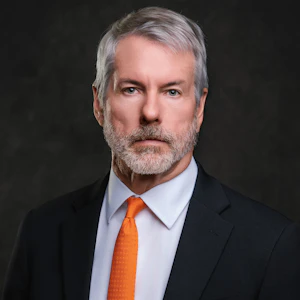
Michael Saylor
Michael Saylor
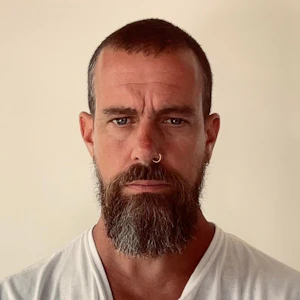
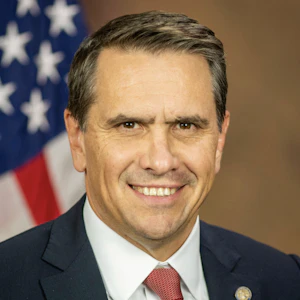
Todd Blanche
Todd Blanche
Biography of Deputy Attorney General Todd Blanche
The Honorable Todd Blanche is the 40th Deputy Attorney General of the United States, overseeing the work of the 115,000 dedicated employees who fulfill the Department of Justice’s mission at Main Justice, the FBI, DEA, U.S. Marshals, ATF, and 93 U.S. Attorney’s Offices.
Todd began his career at the Department where he served for over fifteen years in a variety of capacities, including as a contractor, a paralegal in the Criminal Division, and at the United States Attorney’s office for the Southern District of New York where he eventually became an AUSA and later a supervisor.
After leaving the Department, Todd worked as a criminal defense attorney that included representing President Donald Trump in three of the criminal cases brought against him in 2023 and 2024.
Following President Trump’s historic return to the White House, the President appointed Todd to work alongside Attorney General Pam Bondi to make America safe again. At the DOJ, Todd is working tirelessly to implement President Trump’s priorities that include confronting illegal protecting American businesses from fraud.
Todd has been married to his wonderful wife Kristine for nearly thirty years, is a father and grandfather.

Paul Atkins
Paul Atkins
Prior to returning to the SEC, Chairman Atkins was most recently chief executive of Patomak Global Partners, a company he founded in 2009. Chairman Atkins helped lead efforts to develop best practices for the digital asset sector. He served as an independent director and non-executive chairman of the board of BATS Global Markets, Inc. from 2012 to 2015.
Chairman Atkins was appointed by President George W. Bush to serve as a Commissioner of the SEC from 2002 to 2008. During his tenure, he advocated for transparency, consistency, and the use of cost-benefit analysis at the agency. Chairman Atkins also represented the SEC at meetings of the President’s Working Group on Financial Markets and the U.S.-EU Transatlantic Economic Council. From 2009 to 2010, he was appointed a member of the Congressional Oversight Panel for the Troubled Asset Relief Program.
Before serving as an SEC Commissioner, Chairman Atkins was a consultant on securities and investment management industry matters, especially regarding issues of strategy, regulatory compliance, risk management, new product development, and organizational control.
From 1990 to 1994, Chairman Atkins served on the staff of two chairmen of the SEC, Richard C. Breeden and Arthur Levitt, ultimately as chief of staff and counselor, respectively. He received the SEC’s 1992 Law and Policy Award for work regarding corporate governance matters.
Chairman Atkins began his career as a lawyer in New York, focusing on a wide range of corporate transactions for U.S. and foreign clients, including public and private securities offerings and mergers and acquisitions. He was resident for 2½ years in his firm's Paris office and admitted as conseil juridique in France.
A member of the New York and Florida bars, Chairman Atkins received his J.D. from Vanderbilt University School of Law in 1983 and was Senior Student Writing Editor of the Vanderbilt Law Review. He received his A.B., Phi Beta Kappa, from Wofford College in 1980.
Originally from Lillington, North Carolina, Chairman Atkins grew up in Tampa, Florida. He and his wife Sarah have three sons.

Mike Selig
Mike Selig
Chairman Selig brings to the role deep public and private sector experience working with a wide range of stakeholders across agriculture, energy, financial, and digital asset industries, which rely upon and operate in CFTC-regulated markets.
Prior to his leadership at the CFTC, Chairman Selig most recently served as chief counsel of the Securities and Exchange Commission’s Crypto Task Force and senior advisor to SEC Chairman Paul S. Atkins. In this role, Chairman Selig helped to develop a clear regulatory framework for digital asset securities markets, harmonize the SEC and CFTC regulatory regimes, modernize the agency’s rules to reflect new and emerging technologies, and put an end to regulation by enforcement. He also participated in the President’s Working Group on Digital Asset Markets and contributed to its report on “Strengthening American Leadership in Digital Financial Technology.”
Prior to government service, Chairman Selig was a partner at an international law firm, focusing on derivatives and securities regulatory matters. During his years in private practice, he represented a broad range of clients subject to regulation by the CFTC, including commercial end users, futures commission merchants, commodity trading advisors, swap dealers, designated contract markets, derivatives clearing organizations, and digital asset firms. Chairman Selig advised clients on compliance with the Commodity Exchange Act and the CFTC’s rules and regulations thereunder, including in connection with registration applications and obligations, enforcement matters, and complex transactions.
Chairman Selig earned his law degree from The George Washington University Law School and was articles editor of The George Washington Law Review. He received his undergraduate degree from Florida State University.

David Bailey
David Bailey

Eric Trump
Eric Trump
Mr. Trump also serves as Executive Vice President of The Trump Organization, where he oversees the global management and operations of the Trump family’s extensive real estate portfolio. This includes Trump Hotels, Trump Golf, commercial and residential real estate, Trump Estates, and Trump Winery. Known for his hands-on leadership and strong market instincts, he has played a key role in expanding the company’s presence across major U.S. and international markets.
A globally recognized business leader and public figure, Mr. Trump is a prominent advocate for Bitcoin and decentralized finance. He is a co-founder of World Liberty Financial, a decentralized finance (DeFi) platform, and serves on the Board of Advisors of Metaplanet, Japan’s largest corporate holder of Bitcoin.
Beyond his business activities, Mr. Trump has helped raise more than $50 million for St. Jude Children’s Research Hospital in the fight against pediatric cancer, a philanthropic mission he began at age 21.
Mr. Trump earned a degree in Finance and Management from Georgetown University. He currently resides in Florida with his wife, Lara, and their two children. He is also the author of Under Siege, his memoir published in October 2025.

Jack Mallers
Jack Mallers

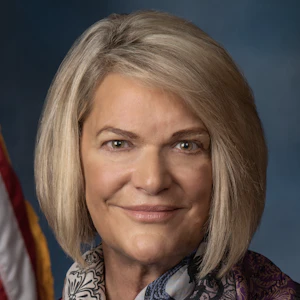
Cynthia Lummis
Cynthia Lummis
As the first-ever Chair of the Senate Banking Subcommittee on Digital Assets, Senator Lummis is the architect of the legislative framework shaping America's digital asset future. She introduced the landmark Lummis-Gillibrand Responsible Financial Innovation Act, the first comprehensive bipartisan crypto regulatory framework in Senate history. She co-authored the GENIUS Act — the first federal stablecoin law ever enacted — and introduced the BITCOIN Act, which would establish a U.S. strategic Bitcoin reserve of up to one million BTC. She is leading the Clarity Act, which will bring long-overdue regulatory certainty to the digital asset industry. She has also championed digital asset tax reform, including a de minimis exemption for small transactions and equal tax treatment for miners and stakers.
Known as Congress' "Crypto Queen," Senator Lummis represents Wyoming — a state she has helped build into one of the most digital asset-friendly regulatory environments in the nation. Before serving in the Senate, she served 14 years in the Wyoming Legislature, eight years as Wyoming State Treasurer, and eight years in the U.S. House. She is a three-time graduate of the University of Wyoming.
Her work represents a crucial bridge between traditional financial systems and the emerging digital economy, ensuring America leads the world in financial innovation while protecting the individual freedoms that define it.

Adam Back
Adam Back

Amy Oldenburg
Amy Oldenburg
David Marcus
David Marcus

Matt Schultz
Matt Schultz
Fred Thiel
Fred Thiel
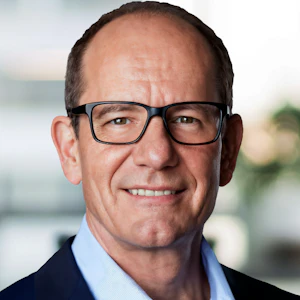
Throughout his career, Mr. Thiel has consistently driven rapid growth and created substantial shareholder value. Prior to MARA, Mr. Thiel served as the CEO of two other public companies, Local Corporation (NASDAQ: LOCM) and Lantronix, Inc (NASDAQ: LTRX). He has successfully raised billions in equity and debt through private and public offerings, led companies through IPOs, executed high-value exits to strategic and financial acquirers, and implemented effective M&A and roll-up strategies.
Mr. Thiel attended the Stockholm School of Economics and executive classes at Harvard Business School, and is fluent in English, Spanish, Swedish, and French. Mr. Thiel is the Chairman of the Board for Oden Technology, Inc. and is active in Young Presidents’ Organization where he has led initiatives in both the FinTech and Technology Networks.
A recognized voice in the industry, Fred frequently shares his insights on energy and technology with major media outlets like Bloomberg TV, CNBC, and FOX Business, contributing to vital discussions about the future of these sectors.
Tim Draper
Tim Draper
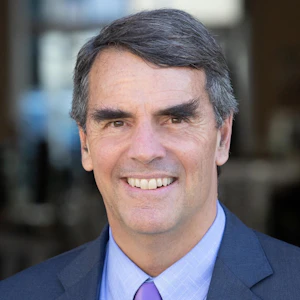
He is a supporter and global thought leader for entrepreneurs everywhere, and is a leading spokesperson for Bitcoin and decentralization, having won the Bitcoin US Marshall’s auction in 2014, invested in over 50 crypto companies, and led investments in Coinbase, Ledger, Tezos, and Bancor, among others.

Afroman
Afroman