Looking at Bitcoin Art Through a Protest Lens
Speakers/Moderators
Dennis Koch
Dennis Koch

Alex Schaefer
Alex Schaefer
Kolin Burges
Kolin Burges

MEAR ONE
MEAR ONE
Session
Overview
This Genesis Stage discussion brought together Alex Schaefer, Kolin Burges, and MEAR ONE with host Dennis Koch of the Bitcoin Museum and Art Gallery to examine Bitcoin art through the lens of protest. The conversation centered on works featured in the Relics of a Revolution exhibition and explored how visual art can respond to financial crisis, institutional distrust, and movements for sovereignty.
Kolin Burges discussed his Mt. Gox protest signs from Tokyo, describing how a practical protest tool became part of Bitcoin history after media coverage and online meme culture spread the images. Alex Schaefer reflected on his Burning Banks paintings and how the 2008 bailouts, plein air painting, and public reaction shaped his work. MEAR ONE connected graffiti, street art, Occupy LA, and large-scale mural making to a longer tradition of public dissent.
The session emphasized that Bitcoin culture is not only technical or financial, but also creative and historical. Art, protest, and Bitcoin intersect here as ways to challenge fiat systems, preserve memory, and communicate ideas about resistance in public space.
Hi, thank you for being here. My name is Dennis Koch. I'm the director of BMAG, the Bitcoin Museum and Art Gallery. We handle the art exhibition every year at the conference, as well as a physical space in Nashville. Our main focus is supporting Bitcoin artists in the space. These are people who are choosing to price their artwork in Bitcoin. Ultimately, we think that benefits individuals as a means of getting correct value for their artwork in an industry that, much like music, can sometimes be extremely challenging.
This particular panel is focused on art and protest. We have three different people here: Alex Schaefer, Kolin Burges, and MEAR ONE. All three have had long art careers or existed in this protest environment, whether they were planning to or not, and have responded at the razor's edge of these times that have put creative people into interesting positions.
To get started, I wanted to throw this out to you three. All three of your works are in the art gallery as part of the exhibition called Relics of a Revolution. This includes Kolin's Mt. Gox signs from his protest in Tokyo. He'll get into this in a little bit, but he flew to Tokyo in response to his Bitcoin being lost in the Mt. Gox exchange. How would you describe that?
A crisis story.
A catastrophe.
Yeah. Alex Schaefer is a Los Angeles artist known for his Burning Banks series. This has put him in the spotlight a number of times, whether he intended it or not. MEAR ONE has lived 20 years of street art and has responded in real time to the first Gulf War, as well as Occupy Wall Street and a number of precursors to Bitcoin that now lead us to current times. There is almost a cyclical element here that we can get into as well.
Did you envision this? Did you ever have a realization as these things were unfolding? Did you think this was monumental in the moment, or were you just responding? How did you contextualize some of your early responses to what was going on?
For me, I got this feeling inside like I needed to rob a bank, because of everything that was going on with the bailouts. I am like the mind-controlled child of Max Keiser. I started watching Max Keiser. I was doing a lot of plein air at the time, and I just had this feeling like I had to do something. I did it, and I had no idea what the outcome was going to be, but it was the energy of the time that had to come out.
For me, it was fairly similar. I knew that I had to go to Tokyo to try and do something, but I had no idea that the context was going to turn around and become really big. When it started, it was just standing around in the snow, and I was actually really shocked that so many of the media were interested in it. But it did feel like something special was happening. It was hard to explain, but yeah, it felt like that.
I've always felt akin to protest work. Being a graffiti writer, we were breaking the rules and the laws, climbing on freeways and buildings, tagging everywhere, and breaking the law anyway. So post-9/11, when all of this stuff transformed, it seemed like the perfect subject matter to dive into as an artist, if your goal was to create change.
Kolin, I want to bring this back to you as we start to look at a few images that ground this history in real-life moments for you. What is it like for you to think about this? What do you think of when you dial back to that time when you hopped a plane and went to Tokyo? It was an immediate physical response to it.
Basically, Mt. Gox had stopped withdrawals in February of 2014, and they were giving excuses that weren't very believable. They were doing this for a couple of weeks. Somebody from Australia went to protest for three days, and then I realized that he left again. So I decided that I should go there and try and get our money as well.
In this picture, this was day one of the protests. I had been to the Mt. Gox office and tried to speak to somebody there, but the women turned me away. So I realized that I had to confront someone in the street. That was why I ended up writing out that protest sign and basically waiting for the CEO as he came out to work. I had CoinDesk and The Wall Street Journal with me as well to record it.
When the confrontation happened, I asked about my Bitcoin, just excuses, and he wouldn't say whether they had actually lost the bitcoins or not. So the video went viral that day, and the story just kind of blew up immediately. By the end of the day, we had major media companies coming to cover the protest.
As a reference to everybody, this show, Relics of a Revolution, is part of a four-part series that was also written as interviews on Bitcoin Magazine. In the corner of this is an actual link to the article if you'd like to hear more directly from what Kolin has said about this in the past.
Kolin, I'm going to switch it here to the next image. We've gone through a couple of different cycles now where people have conceived Bitcoin through different lenses. We've perhaps had more political or banking attempts at capture. What was your view of Bitcoin at that time? Has it changed much? How has your thought process about Bitcoin evolved from those early years?
You mean how has my feeling about Bitcoin changed over time?
Yeah. We're seeing these images where you're much younger. Can you take us back to how you viewed Bitcoin in those moments?
In those days, to be honest, my view of Bitcoin hasn't really changed. I always saw it as something that was revolutionary and worth holding on to. At that stage, I just wanted to hold as many bitcoins as possible. That hasn't changed. Bitcoin itself has changed, and the industry has changed over that time, but Bitcoin hasn't changed, and I haven't changed.
I believe that about you, actually. I put up this second image that shows you and another individual protesting. Also, say a little bit about the signs that have been on view in the gallery. Who else did you meet up with? Walk us into this image for a second.
This is the second day of the protest. I had met my fellow protester Aaron two days before at a Bitcoin meetup, and he said he was coming to join the protest. For the first two days, we stood around holding these signs. After this day, somebody had seats, so we ended up sitting on the road in the freezing cold, both with laptops. We spent most of our time on laptops contacting the media and talking to other bitcoiners, informing them on the situation. We were only actually standing up when more media came. They would come and photographers would do interviews and signs. But most of our time, we were sitting there working.
It was an extremely different era in social media. How did local media approach this, or how did you court them? You were emailing, I suppose?
The Bitcoin community was mostly using Reddit at that time. In terms of the Bitcoin people, Reddit was the thing we were talking on. We also used Twitter to talk to journalists directly. It was just a combination of things. I would ask people, and people would give me help as to how to contact people and all that kind of thing. It was a lot of guesswork and research. But to be honest, most of the media were coming anyway. They heard the story themselves, and they were going to cover it. Most of the people who came said this was their top story. It was quite amazing that they were treating it as such an important thing.
I think this image really tells an incredible story, given how many people are around you in it. As we wind this down in terms of your part, there has almost been a roller coaster over time. There was an immediate response. It was quite viral for its time period. The local media had a great deal of response. But then ultimately these signs maybe lasted for another year, time passed, and you even said that at one point these were in a suitcase for a period of time. What is it like to see these back out in space and see others respond to them and connect to this history?
It's pretty amazing seeing your own work up in a gallery somewhere.
Did you ever think of it as art? How did you conceive it?
No. When I created it, it was simply a tool for the protest. But since then, a lot of things changed. As soon as the media started photographing it, people started memeing it, and it went on the internet.
Bitcoin has run parallel to meme culture, so I can see how these things would propel forward. But ultimately, 10 years, time flies.
Yeah. For those 10 years, I never really thought about it. I thought one day this might be worth something or might be worth bringing out or whatever, but I was not expecting that one day I would ever put it up in a gallery.
Thanks so much. Next up, I've added some early protest images. MEAR, this probably takes you back a little bit. Can you dive in and explain the context of this? Again, you were right there in the middle of some interesting times.
I feel like I had my banana clip to my artistic machine gun already filled up and loaded. I was just waiting for something to happen where I could unleash all these ideas. Occupy LA started up, and before Occupy started up in LA, I was up on a freeway protesting for what was going on on Wall Street in New York, because it was speaking to me.
When it came to LA, I went down there and tried to apply myself in all these different ways. Right here, I think I turned a flashlight on and off, and I was writing in abstract space while my friend kept his camera open on low light, so it received whatever I was mimicking in the air. We were experimenting with it.
I was there the last night too, when the cops came in and tore everything down and hauled all these people off to prison. My role in all this was constantly to physically draw on the sidewalk with spray paint, or like this here, doing something very abstract and esoteric.
This took various forms, correct? I think this was on additional wheatpaste pieces. I love this slogan.
Yeah. George Carlin said a very similar thing earlier, but this just kind of scrolled off my mouth as what seemed obvious to me. It was kind of a letdown growing up and coming of age to realize that there may not be a future in the form that I was anticipating.
As you transition to adulthood, that American dream, or even the idea that government may be the caretaker, starts to erode. As someone who lived in LA for a long time, it's a city that really teaches that. First of all, it has very segregated portions, but also it's clear that it's not in control. It's a little bit out of control on some levels, or the perception of control is.
Actually, if you could take a second to speak to that, what is it about LA that leads toward these sorts of moments? Alex can speak to that as well.
I always looked at it like LA was the furthest point for the westward movement of American society. This was the old Wild West, and there is still some of that Wild West there. You can see it in graffiti and the gangs, in the police department, in everything. People fight over parking spaces. You find that in Brooklyn too, but in LA there is also a beauty and a tragedy that share the same place, and you're immersed in it.
Now we're looking at a series of three images. One includes your False Profit series that has been part of our gallery numerous times, and the top one is also on view in the gallery currently. Were these times to you? What do you think about when you see some of these images again?
This was the best time right here, because COVID really destroyed the arts scene in Los Angeles as well as the world. A lot of things have changed. Back in these moments, all my friends I grew up with, we were all vandals, and we were all adults now. We had different forms of doing our vandalism and art form, and we came together.
We would go out in bands of like 20 deep all night long, postering up the city, tagging up the walls, writing messages, hoping to wake people up to how corrupt we all recognize it is now. It took a long time for everybody to catch up to this moment right now, but there were a lot of us who saw it back then.
Also to remind people, MEAR is currently making a live painting that he started work on at the beginning of the conference. Please take a moment to go over there and look at it. It's indicative of some of what you're seeing right here.
MEAR, I'm going to move to the next image. This is a piece that has taken various forms. Obviously, this is a large mural. First of all, speak to the history of mural making in Los Angeles or other areas. You've been part of several really large traveling museum exhibitions documenting some of these powerful street art images. Again, this has taken many forms. Walk us through this a little bit.
Los Angeles has always been a big mural city. We've got some really famous Chicano artists and different pedigrees of artists that have painted the city for a very long time, from the early 1930s with Diego Rivera. Incredible works were painted back then and since that day.
Los Angeles is very famous for big buildings and giant parking lots, so these walls needed art. That's what got me into wanting to spread my work everywhere. I was on the way to London, and I wanted to take some of that LA energy out there. I had a live art gig out there, and I figured I'd paint a mural while I'm there.
I was trying to come up with what I could do to create the most controversy and really tick some people off halfway around the world. So I thought of this piece of these bankers playing Monopoly on the backs of the working class. The industry that these bankers created was just nuclear, coal, nefarious consumerism, chemtrails in the sky, a very apocalyptic vision being offered up. Then, of course, the human race finds itself in this position of subjugation by the system, and it's all stemming from that original dollar-money ideology, fiat. I wanted to point that out to the downtown London financial district, and it got me in a lot of trouble.
I didn't know that was a London story. That's amazing. Speaking of causing a little bit of controversy, we are going to talk about Alex Schaefer's work as well.
I'm more of an impressionist painter, and MEAR is kind of like a brawler, if you're going to describe our temperaments. There is this whole concept of spreading a viral idea and creating spectacle. Even back in the day, Edward Bernays wrote in Propaganda about creating a spectacle and spreading it into the media.
I recently saw this video reposted on X that was a computer simulation in a circle of a ball bouncing, and then every time it hits one other ball, another ball forms. Then there's three balls. Then there was a certain point when it just went boom. It went viral, literally, and there were so many balls. It took a long time to get to that point.
I was also in LA when he was there, and that energy was coursing through the city or something. I did this, and then two months later Occupy broke out. This was right before that happened. As an artist, it was a great way for me to combine what I was already doing, setting up a different kind of street art. There's graffiti, and then there is setting up an easel and doing an impressionist plein air painting.
For those who don't know, plein air painting means you were literally painting right there, in front of these buildings.
Right across, yeah.
What did people on the sidewalks say to you as you depicted the banks on fire?
It's the same to this day. Most of them are just sort of like, I love it, man. Then they'll share a story about how someone got screwed out of a house by a shifty bank or whatever. We can all relate. I've always focused on the big ones, the primary dealers, the Federal Reserve System.
In Hollywood, there is already this feeling of being nervous when you're doing a plein air painting, because you're in the street and you're on the sidewalk. But I had gotten used to it by this point, and I was so worked up from 2008 and the bailouts. Again, getting educated, the protest spirit just came out in the art. Nowadays, it's going to be through education. There are ways that people are talking about protesting.
It's always reassuring for me to hear people talk about 2008, because having lived through that myself in Los Angeles, it really felt like we were on the edge of serious breakdown. I remember being very stressed out for my family at that stage. This seemed like a really incredible way to channel some of that.
I don't necessarily want to make this an art history conversation, but this does have a lot of similarity to Ed Ruscha's burning museum image.
I got that comparison. We are different types of painters. We were both in LA. We both painted fire, and there was an energy that he was feeling, like being left out by the modern institutions of culture. But then the irony was that the Federal Reserve System was created a couple of years later, and they just blew up the New York art world. Odd outcomes for that. The Cantillon effect flooded into the auction houses in New York.
Again, kind of an uncontained market.
But I love Bitcoin art collectors. There is this whole idea about Bitcoin art. Some of your friends are like, put a B in stuff, you know. But there are people with Bitcoin who appreciate art, and then there is also Bitcoin art where Bitcoin is the theme. At the same time, it's like the art collectors who were buying deep into the work in the teens and the 20s, and really holding on to some of these amazing pieces of art.
I really appreciate that there is a degree of support in the Bitcoin community for artists who value pricing their artwork in Bitcoin, or relating to interesting technical elements. I mean, on-chain is an interesting case. If you go to the gallery, there is a very unique affirmation about that from studying Bitcoin that led to a piece of artwork.
Alex, I'd love for you to dive in a little bit to the pixelated dollar bill pieces that you have in the gallery right now. That's a little different than your Burning Banks.
Again, between our painters' temperaments, on one side you have the Apollonian and on the other side you have the Dionysian. You have a da Vinci versus Rembrandt or something like that. I love throwing paint around, but at the same time, I like working with systems and things. I was a video game artist back in the 90s before I was making money with easel paintings.
The pixelated dollars are sort of a hats off to making art in 16-bit for a Sega Genesis game and things like that. I also like the concept that it is devalued. You have to squint at it because it's reduced to a bunch of squares. It's almost like the less you're seeing, the more you're seeing it. It's a series that I've done for a while, and I applied it toward the dollar bill. If you see me on X, my avatar is a pixelated painting of the Mona Lisa.
We're going to make everybody go to the gallery to see that anyway. As we conclude here, I really want to thank Alex, Kolin, and MEAR for being part of the Relics of a Revolution show. Kolin, the Mt. Gox signs anchor Bitcoin creative space in a really important part of history. Thank you very much.
As we take this out, where do you see the role of creatives in the Bitcoin space going forward? I don't think this is solely a space dictated by technical people. In fact, oftentimes creatives can have insight into things that materialize in advance of some sort of technical structure. You may want to speak to the Magician painting; I think that speaks to that tone a little bit. Any last thoughts about this?
I'm Paint with Alex everywhere. That's my Instagram and my X, and if you put .com after it, that's my website. I'm like an octopus. I try to put my fingers in all kinds of ways to stay afloat and thrive.
MEAR, where can we find you?
I have a website, and I'm on all social media. You can find me in LA, hanging off a billboard or something.
Kolin, besides this art exhibition, where is the easiest way for people to follow you? I know you also have a website.
I have a website, but that's just history and stuff. I don't actually do anything publicly on social media. I like to stay away from that, so there is nowhere to follow me, really.
Understood. Thank you everybody for being part of this. Thanks, everybody. Thank you.
Similar
Sessions
Looking at Bitcoin Art Through a Protest Lens
Dennis Koch
Dennis Koch
Alex Schaefer
Alex Schaefer
Kolin Burges
Kolin Burges
MEAR ONE
MEAR ONE
Looking at Bitcoin Art Through a Protest Lens
Speakers/Moderators
Dennis Koch
Dennis Koch
Alex Schaefer
Alex Schaefer
Kolin Burges
Kolin Burges
MEAR ONE
MEAR ONE
Other
Speakers
Michael Saylor
Michael Saylor
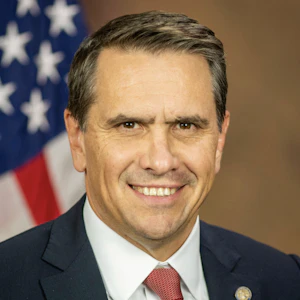
Todd Blanche
Todd Blanche
Biography of Deputy Attorney General Todd Blanche
The Honorable Todd Blanche is the 40th Deputy Attorney General of the United States, overseeing the work of the 115,000 dedicated employees who fulfill the Department of Justice’s mission at Main Justice, the FBI, DEA, U.S. Marshals, ATF, and 93 U.S. Attorney’s Offices.
Todd began his career at the Department where he served for over fifteen years in a variety of capacities, including as a contractor, a paralegal in the Criminal Division, and at the United States Attorney’s office for the Southern District of New York where he eventually became an AUSA and later a supervisor.
After leaving the Department, Todd worked as a criminal defense attorney that included representing President Donald Trump in three of the criminal cases brought against him in 2023 and 2024.
Following President Trump’s historic return to the White House, the President appointed Todd to work alongside Attorney General Pam Bondi to make America safe again. At the DOJ, Todd is working tirelessly to implement President Trump’s priorities that include confronting illegal protecting American businesses from fraud.
Todd has been married to his wonderful wife Kristine for nearly thirty years, is a father and grandfather.
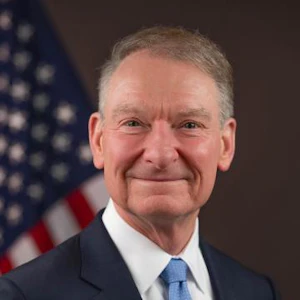
Paul Atkins
Paul Atkins
Prior to returning to the SEC, Chairman Atkins was most recently chief executive of Patomak Global Partners, a company he founded in 2009. Chairman Atkins helped lead efforts to develop best practices for the digital asset sector. He served as an independent director and non-executive chairman of the board of BATS Global Markets, Inc. from 2012 to 2015.
Chairman Atkins was appointed by President George W. Bush to serve as a Commissioner of the SEC from 2002 to 2008. During his tenure, he advocated for transparency, consistency, and the use of cost-benefit analysis at the agency. Chairman Atkins also represented the SEC at meetings of the President’s Working Group on Financial Markets and the U.S.-EU Transatlantic Economic Council. From 2009 to 2010, he was appointed a member of the Congressional Oversight Panel for the Troubled Asset Relief Program.
Before serving as an SEC Commissioner, Chairman Atkins was a consultant on securities and investment management industry matters, especially regarding issues of strategy, regulatory compliance, risk management, new product development, and organizational control.
From 1990 to 1994, Chairman Atkins served on the staff of two chairmen of the SEC, Richard C. Breeden and Arthur Levitt, ultimately as chief of staff and counselor, respectively. He received the SEC’s 1992 Law and Policy Award for work regarding corporate governance matters.
Chairman Atkins began his career as a lawyer in New York, focusing on a wide range of corporate transactions for U.S. and foreign clients, including public and private securities offerings and mergers and acquisitions. He was resident for 2½ years in his firm's Paris office and admitted as conseil juridique in France.
A member of the New York and Florida bars, Chairman Atkins received his J.D. from Vanderbilt University School of Law in 1983 and was Senior Student Writing Editor of the Vanderbilt Law Review. He received his A.B., Phi Beta Kappa, from Wofford College in 1980.
Originally from Lillington, North Carolina, Chairman Atkins grew up in Tampa, Florida. He and his wife Sarah have three sons.

Mike Selig
Mike Selig
Chairman Selig brings to the role deep public and private sector experience working with a wide range of stakeholders across agriculture, energy, financial, and digital asset industries, which rely upon and operate in CFTC-regulated markets.
Prior to his leadership at the CFTC, Chairman Selig most recently served as chief counsel of the Securities and Exchange Commission’s Crypto Task Force and senior advisor to SEC Chairman Paul S. Atkins. In this role, Chairman Selig helped to develop a clear regulatory framework for digital asset securities markets, harmonize the SEC and CFTC regulatory regimes, modernize the agency’s rules to reflect new and emerging technologies, and put an end to regulation by enforcement. He also participated in the President’s Working Group on Digital Asset Markets and contributed to its report on “Strengthening American Leadership in Digital Financial Technology.”
Prior to government service, Chairman Selig was a partner at an international law firm, focusing on derivatives and securities regulatory matters. During his years in private practice, he represented a broad range of clients subject to regulation by the CFTC, including commercial end users, futures commission merchants, commodity trading advisors, swap dealers, designated contract markets, derivatives clearing organizations, and digital asset firms. Chairman Selig advised clients on compliance with the Commodity Exchange Act and the CFTC’s rules and regulations thereunder, including in connection with registration applications and obligations, enforcement matters, and complex transactions.
Chairman Selig earned his law degree from The George Washington University Law School and was articles editor of The George Washington Law Review. He received his undergraduate degree from Florida State University.
David Bailey
David Bailey

Eric Trump
Eric Trump
Mr. Trump also serves as Executive Vice President of The Trump Organization, where he oversees the global management and operations of the Trump family’s extensive real estate portfolio. This includes Trump Hotels, Trump Golf, commercial and residential real estate, Trump Estates, and Trump Winery. Known for his hands-on leadership and strong market instincts, he has played a key role in expanding the company’s presence across major U.S. and international markets.
A globally recognized business leader and public figure, Mr. Trump is a prominent advocate for Bitcoin and decentralized finance. He is a co-founder of World Liberty Financial, a decentralized finance (DeFi) platform, and serves on the Board of Advisors of Metaplanet, Japan’s largest corporate holder of Bitcoin.
Beyond his business activities, Mr. Trump has helped raise more than $50 million for St. Jude Children’s Research Hospital in the fight against pediatric cancer, a philanthropic mission he began at age 21.
Mr. Trump earned a degree in Finance and Management from Georgetown University. He currently resides in Florida with his wife, Lara, and their two children. He is also the author of Under Siege, his memoir published in October 2025.
Jack Mallers
Jack Mallers
Cynthia Lummis
Cynthia Lummis
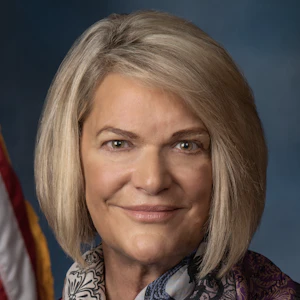
As the first-ever Chair of the Senate Banking Subcommittee on Digital Assets, Senator Lummis is the architect of the legislative framework shaping America's digital asset future. She introduced the landmark Lummis-Gillibrand Responsible Financial Innovation Act, the first comprehensive bipartisan crypto regulatory framework in Senate history. She co-authored the GENIUS Act — the first federal stablecoin law ever enacted — and introduced the BITCOIN Act, which would establish a U.S. strategic Bitcoin reserve of up to one million BTC. She is leading the Clarity Act, which will bring long-overdue regulatory certainty to the digital asset industry. She has also championed digital asset tax reform, including a de minimis exemption for small transactions and equal tax treatment for miners and stakers.
Known as Congress' "Crypto Queen," Senator Lummis represents Wyoming — a state she has helped build into one of the most digital asset-friendly regulatory environments in the nation. Before serving in the Senate, she served 14 years in the Wyoming Legislature, eight years as Wyoming State Treasurer, and eight years in the U.S. House. She is a three-time graduate of the University of Wyoming.
Her work represents a crucial bridge between traditional financial systems and the emerging digital economy, ensuring America leads the world in financial innovation while protecting the individual freedoms that define it.
Adam Back
Adam Back
Amy Oldenburg
Amy Oldenburg
David Marcus
David Marcus

Matt Schultz
Matt Schultz
Fred Thiel
Fred Thiel
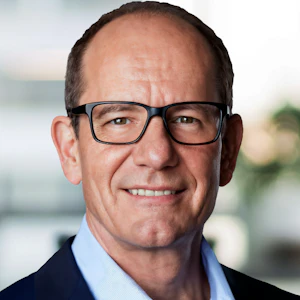
Throughout his career, Mr. Thiel has consistently driven rapid growth and created substantial shareholder value. Prior to MARA, Mr. Thiel served as the CEO of two other public companies, Local Corporation (NASDAQ: LOCM) and Lantronix, Inc (NASDAQ: LTRX). He has successfully raised billions in equity and debt through private and public offerings, led companies through IPOs, executed high-value exits to strategic and financial acquirers, and implemented effective M&A and roll-up strategies.
Mr. Thiel attended the Stockholm School of Economics and executive classes at Harvard Business School, and is fluent in English, Spanish, Swedish, and French. Mr. Thiel is the Chairman of the Board for Oden Technology, Inc. and is active in Young Presidents’ Organization where he has led initiatives in both the FinTech and Technology Networks.
A recognized voice in the industry, Fred frequently shares his insights on energy and technology with major media outlets like Bloomberg TV, CNBC, and FOX Business, contributing to vital discussions about the future of these sectors.
Tim Draper
Tim Draper
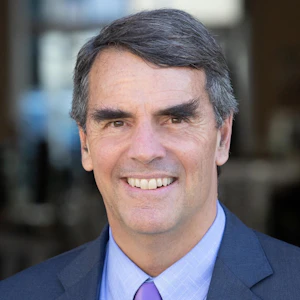
He is a supporter and global thought leader for entrepreneurs everywhere, and is a leading spokesperson for Bitcoin and decentralization, having won the Bitcoin US Marshall’s auction in 2014, invested in over 50 crypto companies, and led investments in Coinbase, Ledger, Tezos, and Bancor, among others.
Afroman
Afroman