Lord Of The Rigs: The Future of Mining Hardware
Speakers/Moderators

Mitchell Askew
Mitchell Askew

Max Guise
Max Guise

Wright Wang
Wright Wang

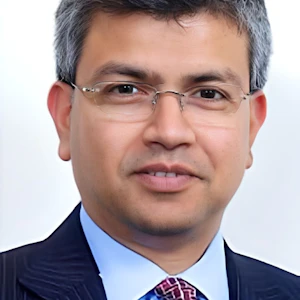
Rezwan Mirza
Rezwan Mirza
Rezwan brings over two decades of extensive experience in the finance and investment banking sectors, including a decade in investment banking and leadership positions at global financial institutions such as Barclays and UBS. Rezwan earned both a Bachelor’s in Economics and a Master of Accounting degree from Rice University and an MBA from the University of Chicago Booth School of Business. Rezwan started his professional career at Ernst & Young and is a Certified Public Accountant.
Session
Overview
Lord Of The Rigs: The Future of Mining Hardware brought together Mitchell Askew of Blockware with Max Guise of Block Inc., Wright Wang of MicroBT, Peng Li of Bitdeer, and Rezwan Mirza of BGIN Blockchain Ltd. The panel focused on the next phase of Bitcoin mining hardware as efficiency gains become harder, capital costs rise, and operators look beyond simple watts-per-terahash comparisons.
The discussion emphasized full-stack mining efficiency, including chip design, machine price, repairability, uptime, infrastructure, energy, cooling, and cost of capital. Panelists discussed modular mining rigs, hydro and immersion cooling, ASIC specialization, and the importance of durable hardware and better fleet management tools.
AI data centers were a major theme, with speakers noting both competition and overlap between AI infrastructure and Bitcoin mining. The panel explored flexible demand response, shared power infrastructure, modular data centers, and how open source mining management tools and AI-assisted software could help operators improve fleet economics.
The conversation also covered company-specific developments, including Proto Rig and Proto Fleet, Bitdeer’s 9.45 watts-per-terahash machine, MicroBT’s focus on air, immersion, and hydro models, BGIN’s Bitcoin chip tapeout, and MicroBT’s strategic investment in Blockware.
Thank you for the incredible introduction. My name is Mitchell Askew. I work for Blockware. We are a top hosting provider and ASIC broker in the United States. We help investors get tax-advantaged exposure to Bitcoin through Bitcoin mining and bonus depreciation.
It's a pleasure to talk with these guys today. They are really on the cutting edge of the physical infrastructure that defends sound money. I'm really excited to unpack Bitcoin mining. I love the title of the panel, Lord of the Rigs. I think the miners hold the power of the network, like the ring in Lord of the Rings.
I'll start with a question that I'd like to hear each of your perspectives on. One of the predominant trends in Bitcoin mining history has been massive improvements in energy efficiency with each generation of hardware. In terms of joules per terahash, or watts per terahash, gains were made by leaps and bounds throughout most of Bitcoin's history. But over the past few years, those gains have become smaller and smaller. Are we reaching a ceiling in terms of energy efficiency? Is this 10 watts per terahash range the ceiling of what may be physically possible? Rez, I'll start with you.
I think that's a good question in terms of energy levels. Frankly speaking, there are a lot of very smart people in this room and all over the planet who will almost certainly figure out ways to make chips more and more efficient. But from our perspective, the issue isn't just about the number.
Absolutely, we see a lot of efficiency gains that could potentially come, and they may decline over time. But the bigger question that has come up is, as everybody in this room knows, there are a lot of pressures on the industry. The real question now is, what are the efficiency levels that a Bitcoin miner can achieve on a full-stack basis?
By full stack, I mean chip design, the price of the machine itself, operating expenses, infrastructure, power costs. You've got to look at the entire picture in terms of what kind of efficiencies can be derived or what improvements you can get in that space. We personally believe that a fully integrated model is better suited for making sure that we realize and continue to create more efficiencies along those lines.
One interesting point that I don't hear about as much, but I think about because I'm a recovering banker, is the cost of capital. We also have to think about the fact that there are a lot of alternate uses for capital. When we think of power costs and infrastructure costs, AI and data centers are competing for it, and they're also competing for the capital. So as we look at efficiencies, we also have to look at the efficiency of capital as part of the full cost structure of efficiency.
That makes a lot of sense. Peng, I'd love to hear your thoughts.
Thank you. Bitdeer has been delivering power efficiency improvements for about two years, from A1 to A4. These days, we just released A4, which is 9.45 watts per terahash. The track record of execution really matters. The Bitcoin market is always competitive, and every dollar saved matters. That's our target.
I agree with what Rez mentioned: the system always matters. Bitdeer is fully integrated from the ground up, from chip design to infrastructure design, and we own the energy. That's our strategy. Thank you.
From the point of view of R&D, it's very hard to have deep optimizations and gain a huge improvement for the next generations, because all the advanced models currently use the most advanced technology nodes. For the future, deep optimizations come from semiconductors, and of course there is still some room for optimization for next generations. But we believe the margins for design optimization should be less and less.
We believe in the future, everyone can have machines with similar performance. I agree with Mitchell that currently not only power efficiency is important, but the whole system is also what you need to think about and spend effort on.
Max, your thoughts?
For a very long time, miners focused entirely on joules per terahash, maybe a little bit on dollars per terahash. When we went out and talked to miners, what we found is that over multiple cycles, their profits were being eaten away by machines breaking. Their profits were being eaten away by the operational costs that come with reacting to power costs and reacting to advancements in new miners. They were being eaten away by support costs. They were being eaten away by managing capital. We talked about cost of capital here.
I think what the industry needs to focus on, and certainly what we're focused on at Proto, is how we bring rigs that are durable and repairable. How do we bring customer support that meets miners where they are and keeps their uptime really high?
We found in the industry that when folks look at uptime, a lot of miners don't even have the tools they need to measure it. They're looking at how often miners were on, and not their actual full ROI. Miners are out to maximize profits, and what we're focused on is helping them across a ton of different dimensions that contribute to that. That's everything from customer support and durability all the way through payment terms, creative structures for deals, and providing hardware. I think that's the future of mining.
That makes a lot of sense, because mining is very much a dynamic situation. You've got the Bitcoin price to consider, mining difficulty, watts per terahash, dollars per terahash. There are a lot of variables that go into the calculus when you're making an informed decision.
Max, Proto has a very unique approach to designing machines with the modular approach, where you can replace parts of the machine and mitigate future upgrade costs. Can you speak a little bit about the benefits from an operator's perspective of the Proto Rig approach, and also some of the challenges you faced with this design style?
Proto Rig is a modular system. We're focused on making it easy to, for example, swap out hashboards across generations, and making it easy to do on-rack repairs, like changing fans and changing hashboards. Those are 90-second repairs. You leave the machine on the rack, which is very different than a lot of past approaches.
The way we got here is we saw a lot of single-use, disposable rig approaches to managing fleets in the mining space, and we saw what that was doing to miners' profits. We wanted to bring something that basically makes more of the miner infrastructure. You don't see people throwing their facility away every time there's an adjustment to power pricing. You don't see people throwing their PDUs away and lots of other parts of their infrastructure away.
Our observation is that there are lots of other parts of the machine that can last for multiple cycles when they're built, designed, and deployed correctly as well. We basically tried to bring more of the miner into what miners consider infrastructure, and that brings a ton of benefits for them.
Of course, it's not without challenges, but they're challenges that we know well. We're part of Block, which also makes Square and Cash App. Square is a massive payment terminal business in the United States, as well as a few other countries. One of the things that we have been through the wringer on is these are devices that are in restaurants where people are spilling drinks on them, where a busy server is knocking them off the counter in between shifts. These are boat captains that take our devices out to sea.
We've been through everything you can imagine in terms of reliability for hardware, and we have system design expertise from shipping tens of millions of devices at Block, and way more than that previously for a lot of our team at Apple. With those two things together, we're focused on building systems that last, and processes and customer support that help miners for the few times where things do fail.
I'd never thought of that with the Square terminals. If you can build a piece of technology that can sustain beer being spilled on it and apply that same framework to Bitcoin miners, that's probably going to be very beneficial for the operators.
Rez, I would love for you to opine on this trade-off between energy efficiency and the actual capital costs of the units. Right now, with Bitcoin being so low in price, relatively speaking, there could be an argument made that as the price rises, energy efficiency will be less important compared to costs of capital. What are you thinking about in terms of this trade-off?
I think there is a trade-off. The reality is, let's think about it. Why do investors invest money? They invest for a return. There are alternate uses of capital, and there are alternate users of energy.
Data centers are not going away. They're going to stick around. Populations are increasing. There's also basic domestic and commercial demand for electricity. So if you're not energy efficient, there will be political and commercial pressures to push you toward energy efficiency. If you do not answer that requirement, your cost of capital is going to go up, because why would investors back you when there are more energy-efficient alternatives that are generating a better return?
That's how you have to think about it. It's kind of a chicken-and-egg issue. If you're not a best-in-class player, why should the investor come to you? Just like there are competing uses for capital, there are competing users for energy, and frankly, for all infrastructure.
Since we're all in the mining space, look at cooling. With hydro right now, we're seeing a lot of political pressure coming in various municipalities because the local community is concerned about water utilization. You've got to be efficient across the board on your entire operating stack, because that's what investors will demand from you.
I'm glad you bring up the hydro cooling systems. This is something that MicroBT has really been pioneering, a shift away from air-cooled units toward hydro-cooled machines. Can you talk a little bit about that transition and everything around that?
Yes. I believe everyone knows that MicroBT is the only manufacturer that has three types of mining models, including air, immersion, and hydro. From the start, we thought that in the future, maybe the lifespan for mining machines would run over two years or even more.
For air cooling, because of the warranty period, you may need to spend a lot of time fixing problems, and you'll need to upgrade in the future. As we discussed, optimization room is not as large in the future, so you may expect to run your machines longer. This is the reason why we started to promote hydro instead of air.
For air, everyone knows that dust and other operating conditions can affect stable operations. But for hydro, due to the cold plate construction, it can help you run operations more stably. So it is quite simple. We want to introduce hydro to everyone right now, not before. Actually, this is a good time.
We can also introduce hydro in a cost-efficient way. Right now, you can see that hydro plus the system may be almost equal to air cooling. So it's easier for customers to convert and easy to choose which one they would like to have.
That makes sense. Peng, you mentioned earlier that you have a machine now whose efficiency is under 10 watts per terahash, 9.45 to be exact. What was the biggest engineering hurdle in reaching that level of energy efficiency?
It's a great question, but we're not able to disclose the R&D details, for sure. As I mentioned, execution for us is very important. The track record of execution is very important for us. We did what we published a few years ago.
R&D always needs people, money, and patience. We're seeing the wide margin of Bitcoin mining, and it just takes time. We don't see any limit on joules per terahash. Every time the market brings the floor, the floor moves. We believe there is room ahead of us. We can always move away, and we can always move forward.
One of the biggest stories in Bitcoin mining over the past two years has been this sort of secular transition from Bitcoin mining to artificial intelligence, specifically among the large data center operators. Are you keeping this in mind as you design Bitcoin mining machines in the future? Maybe the target demographic might not be these massive gigawatt-sized facilities. Instead, it might be smaller miners that are the only ones left when the dust settles. How do you think of this AI pivot when it comes to designing these miners?
Maybe I'll jump in with a little bit of an unusual viewpoint. I think AI is resulting in a lot more power buildouts, and so top of mind for us isn't really hardware. It's actually another project that we released, which is Proto Fleet.
When we announced Proto Rig and Proto Fleet last year, in addition to making hardware, we announced a free and open source project that's a mining management system. You might wonder, what's the relevance to AI? You might also know that Block is on the forefront of adopting AI tools for developing basically everything that we do.
One of the things I think is really interesting about a free and open source project in the mining space, where so many things are closed, is that in the age of AI, so many more people can modify it. In the past, once I said free and open source project, a lot of people's eyes might glaze over. If you're not a software developer, what are you going to do with that? If I give you a GitHub link, what are you going to do with that?
In the age of AI, you can go to Claude and say, this incredible open source project that I just started with, I want it to do one more thing. It turns out that in 2026, that one more thing is probably going to be done in five minutes.
We're really excited about where Proto Fleet is going to go, being free and open source, with miners able to adopt something that's easy configuration and management for their full fleet, but also helping them understand economics and infrastructure for a lot of the things that we were talking about on this panel.
That's very interesting. I'm going to have to experiment with vibe coding and Proto Fleet. Do you have any thoughts?
For AI and mining, I think the issue is how we can get stable power. If you have experience doing mining, you can accumulate experience on how to maintain your facilities and keep operations stable. This is something our customers start to do, and based on that experience, they also introduce that part to AI.
From the technology side, there is a lot of overlap. As our founder Dr. Yang mentioned, mining enriched the applications for AI. We accumulated this kind of knowledge, and maybe we can do better on the AI side. For training and all kinds of AI applications, we may do pilot projects and share experience with AI going forward. MicroBT may try to release AI applications coming soon.
Peng, do you have any thoughts?
One thing I want to emphasize is that ASICs are very highly specialized. We don't consider that there is a way to make one machine for AI and also for Bitcoin mining. That's very difficult. We're very specialized, and we don't think it's going to be possible.
But Bitdeer has been pivoting ourselves into AI for about three years. We're supporting not just cloud service providers, but we have also announced Norway and a few other sites in Ohio. We have been digging ourselves in for a long time. One thing we're thinking about is the feasibility of modular data centers. This is a flexible thing we can move forward with.
That's also why we're very heavy on the hydro cooling side. For servers, we believe the form factor is very similar compared to GPUs, and that will make sense.
I agree. ASIC chips for crypto mining, whether it's Bitcoin or other coins, their value is in the fact that they're very specialized. I don't think you can mix and match and say it can do both things, because that's not where the value proposition is.
Having said that, based on these answers and our personal opinion also, obviously AI is not going away. But our industry and the AI and data center industry are both evolving pretty rapidly. There will be different approaches. You can look at the diversity of answers that just came through here: different models and different ways of coexisting, not necessarily colocation, but coexisting. There will be ways of coexisting together that have to be tried out, and we'll see what evolves.
There are even thoughts of colocating both in the same site, basically what is called flexible demand response, where you use the excess capacity for mining. Again, there are multiple ways. AI is here to stay. Data centers are here to stay. Clearly, crypto mining and cryptocurrency are not going anywhere, so everybody will have to figure out a way to live together. Hopefully in a year's time, we'll have more clarity on how this is going to work.
We've already gotten a lot more clarity over the past couple of years on how these two industries are going to integrate. Like you mentioned, I believe demand response is going to be the hand-in-glove fit for these two things, where the Bitcoin miners can be that flexible load while the AI servers continue to hum 24/7.
I would love for you to discuss something that our two companies announced recently this week, which is that MicroBT has deployed a strategic investment into Blockware. Can you speak a little bit about why we did this partnership and what the benefits are for MicroBT to work with someone like Blockware?
Yes. Right now, as everyone knows, MicroBT still wants to be maximalist on Bitcoin. We will focus on the development of the miners, and we also want to help anyone do mining and make the whole industry healthy. We do not want to just introduce trading policies. Currently, our strategy is to make strong relationships with our partners.
This time we invested in Blockware to demonstrate our ambitions. We're trying to let everyone know MicroBT wants to do Bitcoin mining for the long term. Also, Blockware is very famous. They release online services and help end users get hash rate easily. With our support, Blockware can get the latest models and bring benefits for end users. That's one of MicroBT's solutions and part of our strategy this year.
I definitely agree. I think it's going to be a one-plus-one-equals-three type of partnership.
As we wrap up here, I would love to hear from each of you. What's one thing you're most excited about in this space of Bitcoin mining and AI? Rez, I'll start with you.
What we're most excited about as a company is that we've recently announced the tapeout results for our Bitcoin chip. It marked a massive evolution in our company. Historically, we've worked on altcoins, and the goal was always to go toward the bigger currency. We're very excited about the prospects and outlook for our Bitcoin chip. I think there are some social media photographs out there on our consumer-focused version of it. It's a prototype at this point, but that's what has us excited right now.
Peng, what's going on at Bitdeer that you're excited about?
We're focused on chip design and energy. Most of the things we have integrated. We have the parts of value and the technology here, but we want to grow together with this community.
One of the questions I got the most today is, why is Bitdeer climbing our hash rate? It's always because of the market, but no matter what, it's just the market. We want to survive with each other here. To grow together, we will never leave Bitcoin mining. Never.
I love to hear that, and I can confidently say the same thing for Blockware. We'll never leave Bitcoin mining. What are you excited about?
For Bitcoin mining, I think the most important thing is to get the lowest power efficiency. All kinds of improvement come from the chips. We introduced custom design methodology to change the mining industry. We want to bring this kind of methodology to AI and deliver low-power chips for AI inference chips in the future. We can share the fundamental knowledge for both AI and mining in the future.
Max, this is a tough one.
We have a lot going on. The first thing I'll highlight is that I'm really excited to see more and more people get value out of Proto Rig. As we've gotten to deploy that and work with customers, we're seeing some really exciting things, and I'm excited about the trajectory there.
The second thing I'll highlight, which I talked about briefly before, is Proto Fleet. What I'm excited about is where we're headed. Today, Proto Fleet is mostly focused on the core parts of managing a mining fleet. But where we're going is more proactive capabilities. This is something we talk about in other areas of Block.
Instead of error alerting and paging an on-call or contacting your operational team, we're building toward a system that gets in front of those things for you. Instead of, hey, this fan is broken, go change this one, it's: next month, I checked the weather, and you should probably order about 60 fan modules right now because this is the harshest time of the entire year. Based on your data from last year, you're going to need this. I've identified a source for that. Let's go ahead and purchase it.
Or things that are getting ahead of capital expenditure management. We're headed toward identifying those things, showing them to folks, and really serving as an advisor. Maybe a human still makes the final decision, but a ton of the work is done before that.
That's very interesting. Everybody, please give these gentlemen a huge round of applause. Thank you for watching.
Similar
Sessions
How Much Bitcoin Do You Really Need to Retire?

Brandon Keys
Brandon Keys
He's become a recognized voice in the Bitcoin community, serving as MC for major events including the Adopting Bitcoin Conference, Bitcoin Atlantis, and the Canadian Bitcoin Conference. Brandon has also moderated panels at Bitcoin Conference 2024 in Nashville and PlebLab's Start Up Day in Austin. Beyond media, he's advised Bitcoin mining startups on heat distribution solutions.
Mitchell Askew
Mitchell Askew

Trey Sellers
Trey Sellers

Shawn Owen
Shawn Owen
How Much Bitcoin Do You Really Need to Retire?
Speakers/Moderators
Brandon Keys
Brandon Keys
He's become a recognized voice in the Bitcoin community, serving as MC for major events including the Adopting Bitcoin Conference, Bitcoin Atlantis, and the Canadian Bitcoin Conference. Brandon has also moderated panels at Bitcoin Conference 2024 in Nashville and PlebLab's Start Up Day in Austin. Beyond media, he's advised Bitcoin mining startups on heat distribution solutions.
Mitchell Askew
Mitchell Askew
Trey Sellers
Trey Sellers
Shawn Owen
Shawn Owen
Lord Of The Rigs: The Future of Mining Hardware
Mitchell Askew
Mitchell Askew
Max Guise
Max Guise
Wright Wang
Wright Wang
Rezwan Mirza
Rezwan Mirza
Rezwan brings over two decades of extensive experience in the finance and investment banking sectors, including a decade in investment banking and leadership positions at global financial institutions such as Barclays and UBS. Rezwan earned both a Bachelor’s in Economics and a Master of Accounting degree from Rice University and an MBA from the University of Chicago Booth School of Business. Rezwan started his professional career at Ernst & Young and is a Certified Public Accountant.
Lord Of The Rigs: The Future of Mining Hardware
Speakers/Moderators
Mitchell Askew
Mitchell Askew
Max Guise
Max Guise
Wright Wang
Wright Wang
Rezwan Mirza
Rezwan Mirza
Rezwan brings over two decades of extensive experience in the finance and investment banking sectors, including a decade in investment banking and leadership positions at global financial institutions such as Barclays and UBS. Rezwan earned both a Bachelor’s in Economics and a Master of Accounting degree from Rice University and an MBA from the University of Chicago Booth School of Business. Rezwan started his professional career at Ernst & Young and is a Certified Public Accountant.
Other
Speakers
Michael Saylor
Michael Saylor
Todd Blanche
Todd Blanche
Biography of Deputy Attorney General Todd Blanche
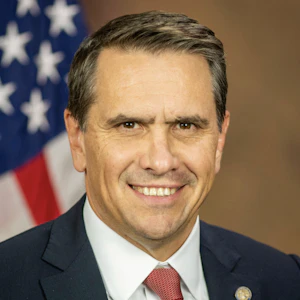
The Honorable Todd Blanche is the 40th Deputy Attorney General of the United States, overseeing the work of the 115,000 dedicated employees who fulfill the Department of Justice’s mission at Main Justice, the FBI, DEA, U.S. Marshals, ATF, and 93 U.S. Attorney’s Offices.
Todd began his career at the Department where he served for over fifteen years in a variety of capacities, including as a contractor, a paralegal in the Criminal Division, and at the United States Attorney’s office for the Southern District of New York where he eventually became an AUSA and later a supervisor.
After leaving the Department, Todd worked as a criminal defense attorney that included representing President Donald Trump in three of the criminal cases brought against him in 2023 and 2024.
Following President Trump’s historic return to the White House, the President appointed Todd to work alongside Attorney General Pam Bondi to make America safe again. At the DOJ, Todd is working tirelessly to implement President Trump’s priorities that include confronting illegal protecting American businesses from fraud.
Todd has been married to his wonderful wife Kristine for nearly thirty years, is a father and grandfather.

Paul Atkins
Paul Atkins
Prior to returning to the SEC, Chairman Atkins was most recently chief executive of Patomak Global Partners, a company he founded in 2009. Chairman Atkins helped lead efforts to develop best practices for the digital asset sector. He served as an independent director and non-executive chairman of the board of BATS Global Markets, Inc. from 2012 to 2015.
Chairman Atkins was appointed by President George W. Bush to serve as a Commissioner of the SEC from 2002 to 2008. During his tenure, he advocated for transparency, consistency, and the use of cost-benefit analysis at the agency. Chairman Atkins also represented the SEC at meetings of the President’s Working Group on Financial Markets and the U.S.-EU Transatlantic Economic Council. From 2009 to 2010, he was appointed a member of the Congressional Oversight Panel for the Troubled Asset Relief Program.
Before serving as an SEC Commissioner, Chairman Atkins was a consultant on securities and investment management industry matters, especially regarding issues of strategy, regulatory compliance, risk management, new product development, and organizational control.
From 1990 to 1994, Chairman Atkins served on the staff of two chairmen of the SEC, Richard C. Breeden and Arthur Levitt, ultimately as chief of staff and counselor, respectively. He received the SEC’s 1992 Law and Policy Award for work regarding corporate governance matters.
Chairman Atkins began his career as a lawyer in New York, focusing on a wide range of corporate transactions for U.S. and foreign clients, including public and private securities offerings and mergers and acquisitions. He was resident for 2½ years in his firm's Paris office and admitted as conseil juridique in France.
A member of the New York and Florida bars, Chairman Atkins received his J.D. from Vanderbilt University School of Law in 1983 and was Senior Student Writing Editor of the Vanderbilt Law Review. He received his A.B., Phi Beta Kappa, from Wofford College in 1980.
Originally from Lillington, North Carolina, Chairman Atkins grew up in Tampa, Florida. He and his wife Sarah have three sons.

Mike Selig
Mike Selig
Chairman Selig brings to the role deep public and private sector experience working with a wide range of stakeholders across agriculture, energy, financial, and digital asset industries, which rely upon and operate in CFTC-regulated markets.
Prior to his leadership at the CFTC, Chairman Selig most recently served as chief counsel of the Securities and Exchange Commission’s Crypto Task Force and senior advisor to SEC Chairman Paul S. Atkins. In this role, Chairman Selig helped to develop a clear regulatory framework for digital asset securities markets, harmonize the SEC and CFTC regulatory regimes, modernize the agency’s rules to reflect new and emerging technologies, and put an end to regulation by enforcement. He also participated in the President’s Working Group on Digital Asset Markets and contributed to its report on “Strengthening American Leadership in Digital Financial Technology.”
Prior to government service, Chairman Selig was a partner at an international law firm, focusing on derivatives and securities regulatory matters. During his years in private practice, he represented a broad range of clients subject to regulation by the CFTC, including commercial end users, futures commission merchants, commodity trading advisors, swap dealers, designated contract markets, derivatives clearing organizations, and digital asset firms. Chairman Selig advised clients on compliance with the Commodity Exchange Act and the CFTC’s rules and regulations thereunder, including in connection with registration applications and obligations, enforcement matters, and complex transactions.
Chairman Selig earned his law degree from The George Washington University Law School and was articles editor of The George Washington Law Review. He received his undergraduate degree from Florida State University.

David Bailey
David Bailey

Eric Trump
Eric Trump
Mr. Trump also serves as Executive Vice President of The Trump Organization, where he oversees the global management and operations of the Trump family’s extensive real estate portfolio. This includes Trump Hotels, Trump Golf, commercial and residential real estate, Trump Estates, and Trump Winery. Known for his hands-on leadership and strong market instincts, he has played a key role in expanding the company’s presence across major U.S. and international markets.
A globally recognized business leader and public figure, Mr. Trump is a prominent advocate for Bitcoin and decentralized finance. He is a co-founder of World Liberty Financial, a decentralized finance (DeFi) platform, and serves on the Board of Advisors of Metaplanet, Japan’s largest corporate holder of Bitcoin.
Beyond his business activities, Mr. Trump has helped raise more than $50 million for St. Jude Children’s Research Hospital in the fight against pediatric cancer, a philanthropic mission he began at age 21.
Mr. Trump earned a degree in Finance and Management from Georgetown University. He currently resides in Florida with his wife, Lara, and their two children. He is also the author of Under Siege, his memoir published in October 2025.
Jack Mallers
Jack Mallers
Cynthia Lummis
Cynthia Lummis
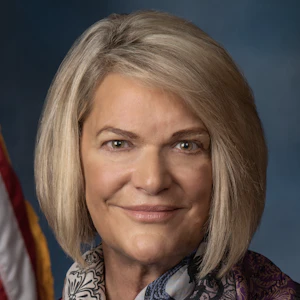
As the first-ever Chair of the Senate Banking Subcommittee on Digital Assets, Senator Lummis is the architect of the legislative framework shaping America's digital asset future. She introduced the landmark Lummis-Gillibrand Responsible Financial Innovation Act, the first comprehensive bipartisan crypto regulatory framework in Senate history. She co-authored the GENIUS Act — the first federal stablecoin law ever enacted — and introduced the BITCOIN Act, which would establish a U.S. strategic Bitcoin reserve of up to one million BTC. She is leading the Clarity Act, which will bring long-overdue regulatory certainty to the digital asset industry. She has also championed digital asset tax reform, including a de minimis exemption for small transactions and equal tax treatment for miners and stakers.
Known as Congress' "Crypto Queen," Senator Lummis represents Wyoming — a state she has helped build into one of the most digital asset-friendly regulatory environments in the nation. Before serving in the Senate, she served 14 years in the Wyoming Legislature, eight years as Wyoming State Treasurer, and eight years in the U.S. House. She is a three-time graduate of the University of Wyoming.
Her work represents a crucial bridge between traditional financial systems and the emerging digital economy, ensuring America leads the world in financial innovation while protecting the individual freedoms that define it.
Adam Back
Adam Back

Amy Oldenburg
Amy Oldenburg
David Marcus
David Marcus

Matt Schultz
Matt Schultz
Fred Thiel
Fred Thiel
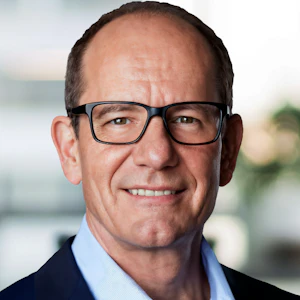
Throughout his career, Mr. Thiel has consistently driven rapid growth and created substantial shareholder value. Prior to MARA, Mr. Thiel served as the CEO of two other public companies, Local Corporation (NASDAQ: LOCM) and Lantronix, Inc (NASDAQ: LTRX). He has successfully raised billions in equity and debt through private and public offerings, led companies through IPOs, executed high-value exits to strategic and financial acquirers, and implemented effective M&A and roll-up strategies.
Mr. Thiel attended the Stockholm School of Economics and executive classes at Harvard Business School, and is fluent in English, Spanish, Swedish, and French. Mr. Thiel is the Chairman of the Board for Oden Technology, Inc. and is active in Young Presidents’ Organization where he has led initiatives in both the FinTech and Technology Networks.
A recognized voice in the industry, Fred frequently shares his insights on energy and technology with major media outlets like Bloomberg TV, CNBC, and FOX Business, contributing to vital discussions about the future of these sectors.
Tim Draper
Tim Draper
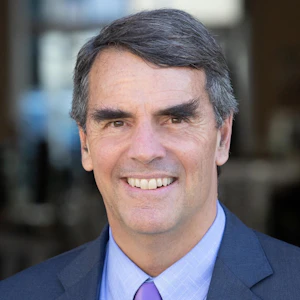
He is a supporter and global thought leader for entrepreneurs everywhere, and is a leading spokesperson for Bitcoin and decentralization, having won the Bitcoin US Marshall’s auction in 2014, invested in over 50 crypto companies, and led investments in Coinbase, Ledger, Tezos, and Bancor, among others.

Afroman
Afroman