Majoring in Bitcoin: Designing a Curriculum for Higher Education
Speakers/Moderators
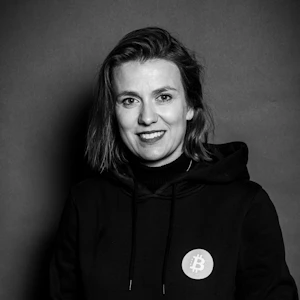
Kristyna Mazankova
Kristyna Mazankova
Before entering the Bitcoin industry in 2019, Kristýna built her career in technology and corporate communications, helping global and regional organizations communicate innovation and navigate change. She later led communications at SatoshiLabs, the creators of Trezor, and today serves as Head of PR at BTC Inc., the company behind Bitcoin Magazine and the world’s largest Bitcoin conferences.
At Hesperides University, Kristýna is shaping a new kind of higher education — one that treats Bitcoin not as a trend, but as a turning point in human organization, value, and trust. As she puts it, “Bitcoin deserves an academic space — serious, independent, and global.”
Her work connects communication, education, technology, and the growing movement for intellectual and financial independence.
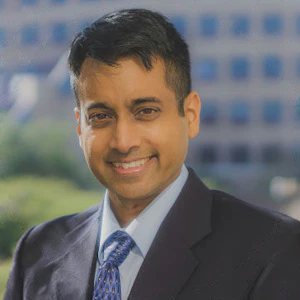
Korok Ray
Korok Ray
Korok teaches two classes on Bitcoin at Texas A&M. The Bitcoin Protocol is an engineering course that examines the technical codebase underneath Bitcoin, including cryptography, distributed computing, and computer networking. Bitcoin: Accounting for Digital Transactions, on the other hand, explores the business, economics, and policy of the Bitcoin industry, especially Bitcoin mining. These courses represent the first – and, so far, only – Bitcoin-only classes offered by a major US research university.
Korok writes a popular Bitcoin newsletter, Principles of Bitcoin. He speaks regularly on podcasts and conferences; notably, he delivered the keynote speech on Bitcoin and AI at MicroStrategy World 2024.
Prior to joining the faculty at Mays, Korok served on the Council of Economic Advisers at the White House from 2007 to 2009. During this time, he witnessed the Great Financial Crisis up close – it wasn’t his fault! Korok’s policy portfolio covered technology and financial services, and he was on the President’s Working Group for Financial Markets.
Korok earned a BS in mathematics from the University of Chicago and a PhD in economics from Stanford University. He has taught at the University of Chicago, Georgetown University, The George Washington University, and, now, Texas A&M.

Ella Hough
Ella Hough
She is a Bitcoin Advocacy Associate at Strategy (formerly MicroStrategy) and a Junior Fellow at Cornell University’s Brooks School Tech Policy Institute. She also co-founded the Bitcoin Students Network (501c4) and advises Generation Bitcoin (501c3), helping scale grassroots education worldwide.
A TEDx speaker and Cornell alumna, Ella’s honors thesis “Bitcoin: The Language for Discovering, Speaking, Settling, and Preserving Truth” positions Bitcoin as a protocol for truth and global coordination. At Cornell, she built the first-ever self-directed Bitcoin-focused major through the College Scholar Program, alongside studies in Cognitive Science, Business, Information Science (Networks, Crowds & Markets), and Moral Psychology, and founded the Cornell Bitcoin Club.
Her experience spans Bitcoin’s digital and physical layers, including roles at Galaxy (asset management, mining, research) and Gridless in Kenya. Previously, she worked on IBM Canada’s CSR team, managing STEM learning experiences for 75,000+ students.

Sal Pineda
Sal Pineda
His research examines how Bitcoin intersects with capital formation, treasury strategy, energy markets, and the convergence of Bitcoin, artificial intelligence, and high-performance computing with national security, monetary sovereignty, and nation-state strategy. His work has been shared through research papers, educational guides, podcasts, X Spaces, and media interviews. His current research focuses on Bitcoin, policy development, and financial innovation in Washington, D.C., and the broader evolution of digital financial markets.
Sal brings a multidisciplinary background spanning diplomacy, strategy consulting, venture advisory, private equity, and capital markets research across fintech and emerging technologies. He is also a founding member and former co-president of the Cornell Bitcoin Club, the university’s student organization dedicated exclusively to Bitcoin education and research.
He holds an MBA from Cornell University and a Master’s degree from Georgetown University’s School of Foreign Service. Having grown up experiencing the consequences of political instability and government failure, Sal approaches Bitcoin as a tool for strengthening economic sovereignty, institutional resilience, and long-term capital formation in the digital age.
Session
Overview
This conversation explores how Bitcoin can become a serious field of study in higher education, moving beyond self-study, podcasts, and online communities into structured academic programs. The panel discusses why Bitcoin education matters across economics, energy, finance, policy, human rights, and technology.
Speakers including Korok Ray, Ella Hough, and Sal Pineda highlight the need for both bottom-up student communities and institutional support. They point to examples such as university clubs, professor networks, Bitcoin-focused curricula, and programs expanding across different regions, while emphasizing that local context matters for how Bitcoin is taught.
A recurring theme is the gap between subject-matter experts who lack Bitcoin knowledge and bitcoiners who may lack professional specialization. The discussion frames Bitcoin education as a way to prepare students and workers for roles in policy, finance, mining, law, human rights, and Bitcoin companies.
The session concludes with a focus on education as a tool for personal agency. Rather than requiring mastery of every Bitcoin topic at once, the panel encourages gradual learning, community participation, and building educational structures that help people find signal, ask better questions, and contribute to the Bitcoin ecosystem.
Good morning. My name is Kristyna. I work in Bitcoin media and education, leading the master's degree in Bitcoin at Hesperides University. Bitcoin is no longer a technical experiment, and we are here to discuss how traditionally slow-moving academia can catch up with something that fundamentally changes how we think about money and society. Please welcome the panel to the stage.
Good morning, everybody.
Good morning.
Where are we standing right now when it comes to academia and Bitcoin?
There is a big opportunity for growth. I think we are seeing a lot of adoption of Bitcoin education across different countries, but there is still a lot of room left.
I wish Korok Ray were on this panel right away, because I think we are at a bit of a tipping point at the moment. Korok just launched the Bitcoin Education Institute, which is really aimed at helping fill the gaps that we see today in higher education regarding Bitcoin curriculum. You also have an exciting announcement about your master's program. A Bitcoin major was approved in May, so it is progressing, especially if you look at the past four years or so.
So there is clearly demand. There are people who want to learn more about Bitcoin. Why does Bitcoin need a structured academic degree? Why does self-study not do the thing for everybody?
I would actually say that self-study does work. It is what filled this whole conference with, I don't know, 30,000 people this year. But if you take a step back and look at why someone goes to college, what the benefit of going to college is, in my view you are going to ask questions, think about the unknown, and try to move our world forward.
If you are just learning information that has already been known, you are not really pushing the envelope. Bitcoin is this transformative force in our world in so many areas, from economics to energy to human rights. To continue to build the world that I think we all want to see, having structured education when you are already in school, already meant to be learning and talking with peers, is a necessity. In my opinion, this is one of the most important topics for society.
I also see value in the structure that a higher education institution can offer, where you can build at the intersection of different topics instead of just navigating Bitcoin Twitter and YouTube by yourself. That structure is very important to me.
You built your own educational system. What are the pitfalls of doing so?
You do not have as many peers to discuss with. We are so lucky when we walk within these four walls and are surrounded by people where we can ask, how are you thinking about that, or what do you think of this? I was incredibly fortunate to have people like Sal, professors at Cornell, and others I could go to and ask questions. But most of the time in school, you are sitting in class and having these discussions, and I did not necessarily have that around Bitcoin. That is an area we can fix moving forward with structured education.
Bitcoin can be approached from so many angles. There is value in creating a framework for understanding the base layers: what Bitcoin is, what proof of work is, why it matters, and how it connects to mining, human rights, markets, and other topics. Those conversations across graduate and undergraduate communities help people find a focus.
One thing Sal is touching on, which we were also chatting about, is leaning into the grassroots ethos of Bitcoin. There was no top-down instruction saying, this is how you do it. So we said, okay, we will go bottom up. Let's start a club. Let's meet weekly. At the beginning, not many people knew much of anything, so we started with the basics and built good foundations. Then students could climb up from there and do independent research in different areas. I think leaning into the strengths of Bitcoin is important when thinking about what to build and how to build it.
It is a common build. The way I think about the program at Hesperides University is not just building a curriculum to make your CV better. It is building a community of people who are willing to go beyond very shallow topics, and who are willing to study at the intersection of different topics.
When we are building this, what do you think is a good approach? We mentioned bottom up, but do we need student demand to change? Do we need to change university curricula? Or do we need to change who is actually teaching it?
I think it is a little bit of everything. We can look at some case studies. MIT has historically been a leader. Many years ago, they had a Bitcoin course that was more technically focused, and this past fall semester they revamped it. One unique thing they did was invite professors in. They built a curriculum, had students who did not know much about it, and invited professors to come in and learn. That is one important path.
There was also a survey of thousands of professors across the world who had written papers about Bitcoin and related research, and there is an opportunity to integrate Bitcoin into work that is already happening. Then there are initiatives reaching out to universities and saying, this is important for the future of your students and this community, and then going to work with them.
I was chatting with someone who shared that she had started a program in Africa across the continent, working with six different universities and scaling up to 12, to go in and teach Bitcoin curriculum. None of those students knew anything prior. It was simply added as a course in the engineering department. So there are many ways to look at it.
There is also local context. If you are teaching in South America, Africa, or different countries outside the U.S., talking about ETF inflows might not make as much sense as talking about the peer-to-peer nature of Bitcoin and usable money. There is so much growth still to happen, and what I find most exciting is how these platforms of education are becoming more concrete. There are many great frameworks ready to be developed, and people are building.
You mentioned that you were missing peers. How do we get people excited about taking Bitcoin courses at universities?
Like anything, you have to show why it matters to them. What is signing up for this course going to help me achieve? That is why, even though it is not directly related to education, jobs are really important. More internships and more job opportunities for Gen Z and people of all ages matter. If you can show that someone took this class, learned this skill, and now there is a job, that helps. Right now there is not a lot of recruiting on campuses. There is not a clear cost-benefit analysis for students. It is not in the immediate incentive structure. If we fix that, it is really important.
Incentives matter. I have heard from colleagues in MBA programs asking what Bitcoin is and wanting to know more, because they see investment banking, consulting, and other traditional paths being disrupted, including by AI. When people understand how Bitcoin could fit into the ecosystem, especially rising leaders in undergraduate and graduate school, that can create interest.
Community is also really important. One thing the Bitcoin Education Institute, the Bitcoin Students Network, and work Sal and I were doing at Cornell are focused on is building pockets of community so you do not feel like you are the only person doing this. The Bitcoin Education Institute is building a professor network and helping with grants, reducing the reputational risk someone might face. Having people on a shared mission with you is important.
I come from a different educational system. I am from Europe, and we are at the stage where even Austrian economics is not being taught at universities. Getting Bitcoin onto university curricula is something unheard of in many places. So we are falling back on our own resources and building free universities and education in Europe.
Bitcoin is inherently global. How do we build an education curriculum that is prepared for the global nature of Bitcoin, but also keeps it localized and relevant to each region?
Local context matters. Money means different things in different countries, and the needs of students, professors, and communities can be different depending on geography. You can have the same broad principles, but adoption and application are local.
I agree. Some elements can be centralized, but a lot should be decentralized to different areas. For instance, Btrust, a nonprofit based in Africa, has created resources on how to run a BitDevs group from a more technical lens. Anyone can download it, but then you take it back to your local community and figure out the best way to run it and what news or issues are most relevant for your area.
There are similar efforts with open resources that show how to build and localize programs. Some topics, like proof of work and cryptography, are more general across regions. You see places like Vinteum in São Paulo and developer schools in Madeira, Portugal, and elsewhere. But then you ask, how does this affect my community? How can this solve a problem we are facing? That is where localization comes in.
What I am hearing is that Bitcoiners need to build curricula for themselves, get more engaged in their education, and take more responsibility for their own education, just as they take responsibility for their own money.
Five to ten years from now, if somebody studies Bitcoin in a master's program, where are they? What can they do that other people cannot do?
It depends on what they like. If it is finance, the market signals are already there, not just adoption by institutions and individuals, but also proof of work and the network effect. If you master knowledge of the Bitcoin network in your area, the opportunities are wide open depending on where you want to apply it, whether that is finance, policy, education, or something else. The value of Bitcoin education is only going to grow over five or ten years.
I like that question. There are two parts to the answer. First, if you invest in yourself and your own knowledge, you gain that for yourself. Knowledge shows up, and then you share it with your friends and family. That has a huge impact on them, on your life, and on how you see the world.
Second, many of us have been influenced by the question of what world we want to put our time and energy into building. When we think about fiat and everything the dollar impacts, it is not just money. It is food, health care, architecture, and many other areas. Bitcoin can touch all of that as well. You can think about how to build a more sound, more truthful world where there is increased agency. That is a hopeful way to look at it.
In five or ten years, if you are increasing the agency of people by sharing this education and helping them share it further, there is so much still undiscovered. When you find the question that you are uniquely able to answer and discover, the potential is abundant.
You have a background in Bitcoin and higher education. You built it for yourself, but you also work for a Bitcoin company, Strategy. How are companies today looking at someone who does not necessarily have Bitcoin education, and how are they looking at someone who does have specific Bitcoin education?
It depends on the role. Sal could not do his job without Bitcoin education, and I certainly could not do my job if I did not know about Bitcoin. But if you are a lawyer, you should have a good, sound understanding of the law, and then also be a bitcoiner. That is additive.
In general, over the next five to ten years, whatever your field is, there will be many advantages to understanding Bitcoin and how it connects to your work. Whether in nonprofit, for-profit, productivity, mining, policy, or human rights, you have to understand what you are talking about. Little by little, once you have this knowledge, you are able to share it with others and help build the system.
To answer the question more specifically, it is really important for us at Strategy that employees across the globe understand Bitcoin. There are 27 offices and 1,500 employees, and Bitcoin has the power to change a person's life and their family's life. We want to make sure we are providing education to the whole team. I am grateful that I get to work on that. We are also lucky that the Bitcoin Policy Institute team is nearby in D.C., and they have great educational programming that Strategy can participate in as well. Again, these are community efforts.
There is specific value in having a relentless focus on Bitcoin and Bitcoin only. Bitcoin has no CMO, no CEO, and no headquarters. Being able to create a structure for education and advance it in a sustainable and scalable way matters. You can see leaders around the world working on this.
The way I see it, coming from BTC Inc, is that when we are hiring, there are positions where you need an expert in a field. You need a great content person, a good lawyer, or a nontechnical person. There is a big gap in the market for people who are good experts in their fields but are not bitcoiners. They do not get the culture or the reason why. Then you have a lot of bitcoiners who are enthusiastic and understand Bitcoin, but they are not necessarily experts in their field. So there is a gap for education to help people transition from their fiat jobs into Bitcoin jobs.
We were all people who did not know anything at one point. We all received support from the community and from knowledge that people put out, and we were able to learn more.
For professors who might be looking at this and might not know, there is a whole ecosystem and community. It blows my mind that there are people in technology, human rights, and other areas putting out knowledge about Bitcoin and how it touches everything, and much of it is free. Very few topics have that. I am always blown away by this network and what is available for those who want access and want to engage.
But back to my point about structure, there is also a problem. It is very difficult to filter the noise and find the signal. That goes for education and information sources. You can have very technical discussions online and be expected to make up your mind, choose a side, and decide what is right and wrong. So I think there is a need for more structured discussion in academia that can provide some answers.
Traditionally, innovation was happening through academia. It is not anymore, so academia needs to catch up. AI is getting better at answering questions, so this is becoming even more urgent.
Is there anything you want to leave as a last note? What drives you? What does education mean to you?
Sometimes people learn about Bitcoin and all these different areas, and it can feel overwhelming. You may think you have to master all of the topics all at once. That was certainly not the case in my journey. You just start. Listen to a 30-minute podcast. Then try a two-hour one. Read a book. Come to a conference or an event. You can start step by step. It does not matter how old you are. Reach out to people.
For me, I feel very passionate about this because I think Bitcoin is a transformation of human agency and flourishing for everyone. Education is powerful because it gives you knowledge of what Bitcoin can unlock in your life. That is why I wake up every day excited to work on it.
For me, Bitcoin is something that no one can take away, and no one can print more of. I can put my hard work, my life, and my energy into something that preserves value. When I look at Bitcoin, and specifically proof of work, it is a peaceful vote to protect your effort, your life, and your work.
Amazing. Thank you so much for being here. Thank you for sharing your experience, and keep building.
Thank you.
Similar
Sessions
Majoring in Bitcoin: Designing a Curriculum for Higher Education
Kristyna Mazankova
Kristyna Mazankova
Before entering the Bitcoin industry in 2019, Kristýna built her career in technology and corporate communications, helping global and regional organizations communicate innovation and navigate change. She later led communications at SatoshiLabs, the creators of Trezor, and today serves as Head of PR at BTC Inc., the company behind Bitcoin Magazine and the world’s largest Bitcoin conferences.
At Hesperides University, Kristýna is shaping a new kind of higher education — one that treats Bitcoin not as a trend, but as a turning point in human organization, value, and trust. As she puts it, “Bitcoin deserves an academic space — serious, independent, and global.”
Her work connects communication, education, technology, and the growing movement for intellectual and financial independence.
Korok Ray
Korok Ray
Korok teaches two classes on Bitcoin at Texas A&M. The Bitcoin Protocol is an engineering course that examines the technical codebase underneath Bitcoin, including cryptography, distributed computing, and computer networking. Bitcoin: Accounting for Digital Transactions, on the other hand, explores the business, economics, and policy of the Bitcoin industry, especially Bitcoin mining. These courses represent the first – and, so far, only – Bitcoin-only classes offered by a major US research university.
Korok writes a popular Bitcoin newsletter, Principles of Bitcoin. He speaks regularly on podcasts and conferences; notably, he delivered the keynote speech on Bitcoin and AI at MicroStrategy World 2024.
Prior to joining the faculty at Mays, Korok served on the Council of Economic Advisers at the White House from 2007 to 2009. During this time, he witnessed the Great Financial Crisis up close – it wasn’t his fault! Korok’s policy portfolio covered technology and financial services, and he was on the President’s Working Group for Financial Markets.
Korok earned a BS in mathematics from the University of Chicago and a PhD in economics from Stanford University. He has taught at the University of Chicago, Georgetown University, The George Washington University, and, now, Texas A&M.
Ella Hough
Ella Hough
She is a Bitcoin Advocacy Associate at Strategy (formerly MicroStrategy) and a Junior Fellow at Cornell University’s Brooks School Tech Policy Institute. She also co-founded the Bitcoin Students Network (501c4) and advises Generation Bitcoin (501c3), helping scale grassroots education worldwide.
A TEDx speaker and Cornell alumna, Ella’s honors thesis “Bitcoin: The Language for Discovering, Speaking, Settling, and Preserving Truth” positions Bitcoin as a protocol for truth and global coordination. At Cornell, she built the first-ever self-directed Bitcoin-focused major through the College Scholar Program, alongside studies in Cognitive Science, Business, Information Science (Networks, Crowds & Markets), and Moral Psychology, and founded the Cornell Bitcoin Club.
Her experience spans Bitcoin’s digital and physical layers, including roles at Galaxy (asset management, mining, research) and Gridless in Kenya. Previously, she worked on IBM Canada’s CSR team, managing STEM learning experiences for 75,000+ students.
Sal Pineda
Sal Pineda
His research examines how Bitcoin intersects with capital formation, treasury strategy, energy markets, and the convergence of Bitcoin, artificial intelligence, and high-performance computing with national security, monetary sovereignty, and nation-state strategy. His work has been shared through research papers, educational guides, podcasts, X Spaces, and media interviews. His current research focuses on Bitcoin, policy development, and financial innovation in Washington, D.C., and the broader evolution of digital financial markets.
Sal brings a multidisciplinary background spanning diplomacy, strategy consulting, venture advisory, private equity, and capital markets research across fintech and emerging technologies. He is also a founding member and former co-president of the Cornell Bitcoin Club, the university’s student organization dedicated exclusively to Bitcoin education and research.
He holds an MBA from Cornell University and a Master’s degree from Georgetown University’s School of Foreign Service. Having grown up experiencing the consequences of political instability and government failure, Sal approaches Bitcoin as a tool for strengthening economic sovereignty, institutional resilience, and long-term capital formation in the digital age.
Majoring in Bitcoin: Designing a Curriculum for Higher Education
Speakers/Moderators
Kristyna Mazankova
Kristyna Mazankova
Before entering the Bitcoin industry in 2019, Kristýna built her career in technology and corporate communications, helping global and regional organizations communicate innovation and navigate change. She later led communications at SatoshiLabs, the creators of Trezor, and today serves as Head of PR at BTC Inc., the company behind Bitcoin Magazine and the world’s largest Bitcoin conferences.
At Hesperides University, Kristýna is shaping a new kind of higher education — one that treats Bitcoin not as a trend, but as a turning point in human organization, value, and trust. As she puts it, “Bitcoin deserves an academic space — serious, independent, and global.”
Her work connects communication, education, technology, and the growing movement for intellectual and financial independence.
Korok Ray
Korok Ray
Korok teaches two classes on Bitcoin at Texas A&M. The Bitcoin Protocol is an engineering course that examines the technical codebase underneath Bitcoin, including cryptography, distributed computing, and computer networking. Bitcoin: Accounting for Digital Transactions, on the other hand, explores the business, economics, and policy of the Bitcoin industry, especially Bitcoin mining. These courses represent the first – and, so far, only – Bitcoin-only classes offered by a major US research university.
Korok writes a popular Bitcoin newsletter, Principles of Bitcoin. He speaks regularly on podcasts and conferences; notably, he delivered the keynote speech on Bitcoin and AI at MicroStrategy World 2024.
Prior to joining the faculty at Mays, Korok served on the Council of Economic Advisers at the White House from 2007 to 2009. During this time, he witnessed the Great Financial Crisis up close – it wasn’t his fault! Korok’s policy portfolio covered technology and financial services, and he was on the President’s Working Group for Financial Markets.
Korok earned a BS in mathematics from the University of Chicago and a PhD in economics from Stanford University. He has taught at the University of Chicago, Georgetown University, The George Washington University, and, now, Texas A&M.
Ella Hough
Ella Hough
She is a Bitcoin Advocacy Associate at Strategy (formerly MicroStrategy) and a Junior Fellow at Cornell University’s Brooks School Tech Policy Institute. She also co-founded the Bitcoin Students Network (501c4) and advises Generation Bitcoin (501c3), helping scale grassroots education worldwide.
A TEDx speaker and Cornell alumna, Ella’s honors thesis “Bitcoin: The Language for Discovering, Speaking, Settling, and Preserving Truth” positions Bitcoin as a protocol for truth and global coordination. At Cornell, she built the first-ever self-directed Bitcoin-focused major through the College Scholar Program, alongside studies in Cognitive Science, Business, Information Science (Networks, Crowds & Markets), and Moral Psychology, and founded the Cornell Bitcoin Club.
Her experience spans Bitcoin’s digital and physical layers, including roles at Galaxy (asset management, mining, research) and Gridless in Kenya. Previously, she worked on IBM Canada’s CSR team, managing STEM learning experiences for 75,000+ students.
Sal Pineda
Sal Pineda
His research examines how Bitcoin intersects with capital formation, treasury strategy, energy markets, and the convergence of Bitcoin, artificial intelligence, and high-performance computing with national security, monetary sovereignty, and nation-state strategy. His work has been shared through research papers, educational guides, podcasts, X Spaces, and media interviews. His current research focuses on Bitcoin, policy development, and financial innovation in Washington, D.C., and the broader evolution of digital financial markets.
Sal brings a multidisciplinary background spanning diplomacy, strategy consulting, venture advisory, private equity, and capital markets research across fintech and emerging technologies. He is also a founding member and former co-president of the Cornell Bitcoin Club, the university’s student organization dedicated exclusively to Bitcoin education and research.
He holds an MBA from Cornell University and a Master’s degree from Georgetown University’s School of Foreign Service. Having grown up experiencing the consequences of political instability and government failure, Sal approaches Bitcoin as a tool for strengthening economic sovereignty, institutional resilience, and long-term capital formation in the digital age.
Other
Speakers

Michael Saylor
Michael Saylor
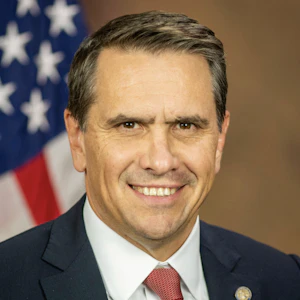
Todd Blanche
Todd Blanche
Biography of Deputy Attorney General Todd Blanche
The Honorable Todd Blanche is the 40th Deputy Attorney General of the United States, overseeing the work of the 115,000 dedicated employees who fulfill the Department of Justice’s mission at Main Justice, the FBI, DEA, U.S. Marshals, ATF, and 93 U.S. Attorney’s Offices.
Todd began his career at the Department where he served for over fifteen years in a variety of capacities, including as a contractor, a paralegal in the Criminal Division, and at the United States Attorney’s office for the Southern District of New York where he eventually became an AUSA and later a supervisor.
After leaving the Department, Todd worked as a criminal defense attorney that included representing President Donald Trump in three of the criminal cases brought against him in 2023 and 2024.
Following President Trump’s historic return to the White House, the President appointed Todd to work alongside Attorney General Pam Bondi to make America safe again. At the DOJ, Todd is working tirelessly to implement President Trump’s priorities that include confronting illegal protecting American businesses from fraud.
Todd has been married to his wonderful wife Kristine for nearly thirty years, is a father and grandfather.

Paul Atkins
Paul Atkins
Prior to returning to the SEC, Chairman Atkins was most recently chief executive of Patomak Global Partners, a company he founded in 2009. Chairman Atkins helped lead efforts to develop best practices for the digital asset sector. He served as an independent director and non-executive chairman of the board of BATS Global Markets, Inc. from 2012 to 2015.
Chairman Atkins was appointed by President George W. Bush to serve as a Commissioner of the SEC from 2002 to 2008. During his tenure, he advocated for transparency, consistency, and the use of cost-benefit analysis at the agency. Chairman Atkins also represented the SEC at meetings of the President’s Working Group on Financial Markets and the U.S.-EU Transatlantic Economic Council. From 2009 to 2010, he was appointed a member of the Congressional Oversight Panel for the Troubled Asset Relief Program.
Before serving as an SEC Commissioner, Chairman Atkins was a consultant on securities and investment management industry matters, especially regarding issues of strategy, regulatory compliance, risk management, new product development, and organizational control.
From 1990 to 1994, Chairman Atkins served on the staff of two chairmen of the SEC, Richard C. Breeden and Arthur Levitt, ultimately as chief of staff and counselor, respectively. He received the SEC’s 1992 Law and Policy Award for work regarding corporate governance matters.
Chairman Atkins began his career as a lawyer in New York, focusing on a wide range of corporate transactions for U.S. and foreign clients, including public and private securities offerings and mergers and acquisitions. He was resident for 2½ years in his firm's Paris office and admitted as conseil juridique in France.
A member of the New York and Florida bars, Chairman Atkins received his J.D. from Vanderbilt University School of Law in 1983 and was Senior Student Writing Editor of the Vanderbilt Law Review. He received his A.B., Phi Beta Kappa, from Wofford College in 1980.
Originally from Lillington, North Carolina, Chairman Atkins grew up in Tampa, Florida. He and his wife Sarah have three sons.

Mike Selig
Mike Selig
Chairman Selig brings to the role deep public and private sector experience working with a wide range of stakeholders across agriculture, energy, financial, and digital asset industries, which rely upon and operate in CFTC-regulated markets.
Prior to his leadership at the CFTC, Chairman Selig most recently served as chief counsel of the Securities and Exchange Commission’s Crypto Task Force and senior advisor to SEC Chairman Paul S. Atkins. In this role, Chairman Selig helped to develop a clear regulatory framework for digital asset securities markets, harmonize the SEC and CFTC regulatory regimes, modernize the agency’s rules to reflect new and emerging technologies, and put an end to regulation by enforcement. He also participated in the President’s Working Group on Digital Asset Markets and contributed to its report on “Strengthening American Leadership in Digital Financial Technology.”
Prior to government service, Chairman Selig was a partner at an international law firm, focusing on derivatives and securities regulatory matters. During his years in private practice, he represented a broad range of clients subject to regulation by the CFTC, including commercial end users, futures commission merchants, commodity trading advisors, swap dealers, designated contract markets, derivatives clearing organizations, and digital asset firms. Chairman Selig advised clients on compliance with the Commodity Exchange Act and the CFTC’s rules and regulations thereunder, including in connection with registration applications and obligations, enforcement matters, and complex transactions.
Chairman Selig earned his law degree from The George Washington University Law School and was articles editor of The George Washington Law Review. He received his undergraduate degree from Florida State University.

David Bailey
David Bailey

Eric Trump
Eric Trump
Mr. Trump also serves as Executive Vice President of The Trump Organization, where he oversees the global management and operations of the Trump family’s extensive real estate portfolio. This includes Trump Hotels, Trump Golf, commercial and residential real estate, Trump Estates, and Trump Winery. Known for his hands-on leadership and strong market instincts, he has played a key role in expanding the company’s presence across major U.S. and international markets.
A globally recognized business leader and public figure, Mr. Trump is a prominent advocate for Bitcoin and decentralized finance. He is a co-founder of World Liberty Financial, a decentralized finance (DeFi) platform, and serves on the Board of Advisors of Metaplanet, Japan’s largest corporate holder of Bitcoin.
Beyond his business activities, Mr. Trump has helped raise more than $50 million for St. Jude Children’s Research Hospital in the fight against pediatric cancer, a philanthropic mission he began at age 21.
Mr. Trump earned a degree in Finance and Management from Georgetown University. He currently resides in Florida with his wife, Lara, and their two children. He is also the author of Under Siege, his memoir published in October 2025.

Jack Mallers
Jack Mallers

Cynthia Lummis
Cynthia Lummis
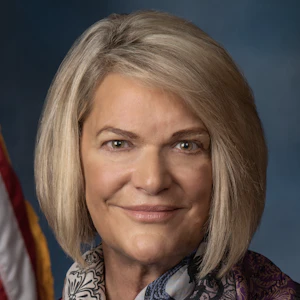
As the first-ever Chair of the Senate Banking Subcommittee on Digital Assets, Senator Lummis is the architect of the legislative framework shaping America's digital asset future. She introduced the landmark Lummis-Gillibrand Responsible Financial Innovation Act, the first comprehensive bipartisan crypto regulatory framework in Senate history. She co-authored the GENIUS Act — the first federal stablecoin law ever enacted — and introduced the BITCOIN Act, which would establish a U.S. strategic Bitcoin reserve of up to one million BTC. She is leading the Clarity Act, which will bring long-overdue regulatory certainty to the digital asset industry. She has also championed digital asset tax reform, including a de minimis exemption for small transactions and equal tax treatment for miners and stakers.
Known as Congress' "Crypto Queen," Senator Lummis represents Wyoming — a state she has helped build into one of the most digital asset-friendly regulatory environments in the nation. Before serving in the Senate, she served 14 years in the Wyoming Legislature, eight years as Wyoming State Treasurer, and eight years in the U.S. House. She is a three-time graduate of the University of Wyoming.
Her work represents a crucial bridge between traditional financial systems and the emerging digital economy, ensuring America leads the world in financial innovation while protecting the individual freedoms that define it.

Adam Back
Adam Back

Amy Oldenburg
Amy Oldenburg

David Marcus
David Marcus

Matt Schultz
Matt Schultz
Fred Thiel
Fred Thiel
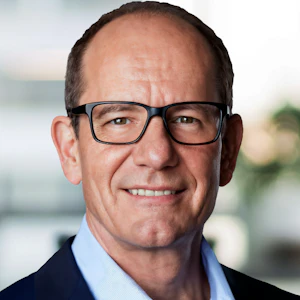
Throughout his career, Mr. Thiel has consistently driven rapid growth and created substantial shareholder value. Prior to MARA, Mr. Thiel served as the CEO of two other public companies, Local Corporation (NASDAQ: LOCM) and Lantronix, Inc (NASDAQ: LTRX). He has successfully raised billions in equity and debt through private and public offerings, led companies through IPOs, executed high-value exits to strategic and financial acquirers, and implemented effective M&A and roll-up strategies.
Mr. Thiel attended the Stockholm School of Economics and executive classes at Harvard Business School, and is fluent in English, Spanish, Swedish, and French. Mr. Thiel is the Chairman of the Board for Oden Technology, Inc. and is active in Young Presidents’ Organization where he has led initiatives in both the FinTech and Technology Networks.
A recognized voice in the industry, Fred frequently shares his insights on energy and technology with major media outlets like Bloomberg TV, CNBC, and FOX Business, contributing to vital discussions about the future of these sectors.
Tim Draper
Tim Draper
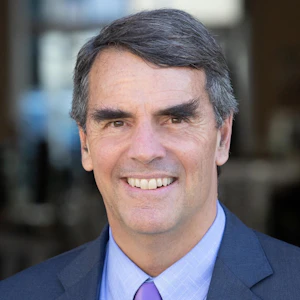
He is a supporter and global thought leader for entrepreneurs everywhere, and is a leading spokesperson for Bitcoin and decentralization, having won the Bitcoin US Marshall’s auction in 2014, invested in over 50 crypto companies, and led investments in Coinbase, Ledger, Tezos, and Bancor, among others.

Afroman
Afroman