Making Bitcoin Babies: Sovereignty Starts in the Womb
Speakers/Moderators

Conor Chepenik
Conor Chepenik

Session
Overview
Making Bitcoin Babies: Sovereignty Starts in the Womb brought together Justine Harper, Katie The Russian of CitizenX, and host Conor Chepenik for a conversation about pregnancy, birth, parenting, and Bitcoin values. The discussion connected self-directed prenatal care with themes familiar to Bitcoiners: sovereignty, personal responsibility, education, trade-offs, and long-term thinking.
The speakers compared home birth and hospital birth, emphasizing informed consent, comfort, preparation, and the importance of understanding medical systems without dismissing the role of interventions when needed. They also discussed motherhood, postpartum health, functional medicine, and the way family life changes priorities.
A major theme was building intentional communities for raising children. The conversation covered homeschooling, co-ops, AI as an educational tool, screen time, discipline, and choosing peer groups aligned with family values. The session framed children as a source of hope for the future and encouraged Bitcoin families to think deeply about birth, education, health, and community.
Thank you, guys. Thank you all for being here. This is Making Bitcoin Babies: Sovereignty Starts in the Womb.
I'll start by saying that before I had children, my father would always tell me, "You will never know what it's like to have a kid until you have one." I would always roll my eyes, but sure enough, after having a kid, I did experience what he was talking about: that unconditional love for something that you made with someone. I'd love to turn it over to our two moms and ask, once you had a child, how did your life change?
Dramatically, right? It's no longer about you. You are now not the most important thing in the room. Every decision that you make now affects a child for the rest of their life. So that's an emotional experience, and also it's the most beautiful thing ever. If you're wondering if you should have a child, it's totally worth it. Please do. We need more babies.
Yes. But yeah, it's a wonderful experience.
I think there was a big change. I was really humbled, because there were so many things where I was like, I'll never do this. This is exactly how I'm going to run my household. This is exactly how I'm going to raise my kids. And I keep getting humbled. But we still stick to our principles, I would say. The vision that we have for raising our kids is definitely still in place. But at this point, I'm scared to say things because motherhood humbles you like nothing else.
Better than the bear market.
It puts everything in perspective, too.
It does. You definitely have some grace for your parents after having children, and you realize how difficult it is and how easy it is to be hypocritical with your children. It's very easy to tell someone not to look at a screen while you're scrolling on one, or not to eat that cookie while you're eating the cookie.
One thing we were talking about backstage is the education component, and I think there are actually a lot of similarities between Bitcoin and home birth in the sense that there are trade-offs no matter what you decide, whether to give birth at the hospital or to give birth at home. I'd love to hear you both discuss the things you learned during the process, the things people should be aware of, and regardless of where you have the birth, whether at home or at a hospital, how to have a successful birth.
I think the most important thing is that you need to find the place where you feel comfortable. Fear is the worst thing in birth. It will slow down your labor. It will make everything stop. So I think it is finding the place where you're comfortable.
But just like with Bitcoin, there has to be some sort of self-education. You are taking extreme ownership, right? You have a lot at stake. So I think it's finding the network near you that you can learn from. Even if it's a documentary, The Business of Being Born is very educational about what is wrong with the current system.
We trust doctors. We trust hospitals, right? They have our best interests at heart. But actually, all of the things that they do, or the way that they do them, aren't always for us. It's for their convenience, or because that's what's easiest, or they're trying to create less liability for the insurance companies and whatnot. That doesn't mean that the doctor doesn't care about you. It just means that this is the way they were taught.
One we were talking about backstage is, why do we lay down in labor? Well, there must be a reason. It must be because that keeps us healthiest or the baby is in the best position. No, it's because King Louis XIV thought that was the best position for him to watch his wives giving birth, because he liked to watch. And the doctors were like, "Oh, that's super convenient. Wow, okay, we should stick with that." So we are shamed into being in positions that actually fight against labor. You need gravity. You need to move. We used to squat as women during labor until King Louis decided to start that.
So I think those things are really important to fall down that rabbit hole. These decisions that are made in the hospital may not be in the best interests of us and our child, and may not actually be the best for long-term success for your child's health and for you. So you really do have to dig into that. There are great resources: documentaries, anything by Ina May Gaskin is wonderful. There's one called Gentle Birth, Gentle Mothering. Wonderful. You probably have a local home birth network. You probably have moms who are doing natural birth in hospitals, or you have hypnobirthing courses. You really have to dig into that, get comfortable with it, and educate yourself.
Yeah, and just like with Bitcoin, the first jump is to consider, oh, maybe it's not the money of the crazy internet people. Let me try to learn about it. Same with home birth. You're like, let me consider birthing outside of the hospital. Once you make that trigger, you start learning about it, and it makes so much sense. The more you learn, the more you realize, yes, this should be the default option, and then there will be a crisis option.
It doesn't mean you can't have a natural birth in a hospital. Maybe you do feel most comfortable there. You can do that, and many hospitals are very supportive of it. I tried that myself. The problem was I was constantly fighting with those who weren't supportive of it. During birth, I didn't want to be fighting with someone. So the next time I did home birth, and it was the most amazing experience.
Unlike some women who I'm extremely impressed with, like Hunter's wife as well, I didn't seek out wanting to do a home birth. I wanted to do a birth center. And then as I started to get into it, I thought, actually, a home birth from a microbiome perspective, I never considered that. I can have all the same things that I have in a birth center at home. I don't have to go anywhere. So it's not something that I sought out immediately, but as you dig, it's like, oh wow, this might be for me. This might be for you too.
I was actually kind of on the other side. I was terrified of hospital birth, because I was preparing to give birth to my first child in 2021, post-COVID, and I completely distrusted the system. I thought there were little evil people thinking how to make you sicker.
But then, over time, I gained some respect for modern medicine, and I realized they are not evil people. They just optimize for scale, right? So you're not an individual, you're part of the protocol, and the protocol is optimizing for thousands of people doing the same thing. It is hard to be able to navigate and customize this care when you have 300 women giving birth simultaneously in this hospital. So you have to stick to the protocol to minimize mistakes.
But are we there to minimize mistakes, or are we there to actually have your perfect birth? Because perfect birth exists. I had a birth where two minutes after, I said, that was amazing. I want to do it again. And I have goosebumps right now because of how amazing it was. Women need to hear that more because we're terrified of these experiences.
I was lucky. I witnessed my sister give birth nine years ago, and it was peaceful, it was beautiful. It was outside of a hospital. She trusted her body. She trusted her care provider. I was right there to see that miracle. So I was never scared of the birth itself, but I was scared of the hospital birth.
Now I know there is definitely a time and place for interventions. But when people imagine, what if something goes wrong with the home birth, they think it's a total crisis scenario, everybody's dying and we might not make it. In reality, that barely ever happens. In reality, your body gives you little triggers to tell you, hey, there might be complications. Your midwife, if she's knowledgeable, will know ahead of time, maybe during the pregnancy, that there might be potential complications. The reasons are going up, let's reconsider. You will see those signs. Your care provider should see those signs. It's almost never a crisis transfer. It's usually, you know what, let's reconsider. We might change the plan and be ready for that. And many midwives are prepared for many emergencies.
That was a question I had when we decided to home birth as well. I was like, what if something happens? And my midwife was like, well, that's why we're here. Our job is to make sure that the what-ifs, we're ready for those. There are situations where you might have to go to the hospital, and many times they're prepared for the small stuff. We told Conor we could just take over this panel and talk forever.
You're making my job easy, and that's beautifully said by both of you. It's funny, after the nine months, that's just the start. There are a lot of similarities when it comes to Bitcoin, like both of you elaborated. It's all just trade-offs to consider. Everyone's situation is different. I wouldn't tell my grandpa to roll his own seed. I'd probably say buy an ETF. But someone my age, I would definitely highly encourage them to buy Bitcoin and take self custody.
I think it's the same thing with your situation. The more you know, the more you understand that fear is not a productive thing. Unfortunately, there's a lot of that in the system. But the more you know, the more you can likely have a better birth experience. But that's just the start. Once the baby is born, that's when the real fun begins.
We live in a time where AI is exploding. A hammer is a tool, right? A hammer can build a house or beat someone's head in. Same thing with AI. You can fill the world with slop, or you can create beautiful things that you never otherwise would be able to create. When it comes to living in the modern world and raising a kid in these times, I'd love to hear how both of you think about it and any practical tips you have from raising children.
You know how they say guns don't kill people, people do? As of right now, I would say the same about AI and screens. It's not the tool that is bad. It's the user. I find AI a great tool for mothers. I was able to customize my homeschooling classes for my child specifically because I know his challenges and I know his strengths. That's been such a wonderful tool. I'm totally bullish on homeschooling because of that.
One thing regarding having children with Bitcoiners, what I notice is we thrive in discipline. Bitcoiners are just more disciplined people. HODLing requires discipline. And that actually really helps parents, because kids thrive through discipline too. If you can stick to good routines over time, kids thrive through that stuff. That's why I feel like Bitcoiners just need to have kids. We're good at it. We're good at sticking to the plan and building good habits. So, yeah, have kids. Amen, Bitcoin. Bitcoin is number-go-up technology.
I think kind of what Katie said earlier about parenthood will humble you, right? You may start out thinking, I'm only going to do wooden toys, I'm never going to have a screen. Those are great goals. My child watches TV. We try to limit that, what they watch, what kind of TV it is, and nothing too close in front of your face.
But I think as Bitcoiners, we're really thinking long term, that low time preference. So it's like, okay, this might fix the issue right now. It's easier if I get my kid McDonald's. It's easier if I do this. It's easier if I give him a tablet. Last night at dinner, my child was going crazy, and it would have been really great if I had an iPad that I could put in front of him so I could relax. But that's not going to help him long term, right? So it is really always thinking about the future.
I think many people come to Bitcoin because they have that thought process, or Bitcoin brings them to that thought process. One of the revolutionary things about Bitcoin is it starts to make you think about incentives and how your decisions affect you long term. Of course, that's super beneficial in parenting. We're always thinking about the future. Try not to get too black-pilled about it. The future feels a little rough right now, but we're raising the next generation. That's really important. The decisions that you make are really important.
To bring it back to birth, all those decisions in birth actually do affect them long term. C-sections result in higher allergies. They result in lung issues. They don't have the microbiome. Their immune system isn't set up. Even though a doctor won't tell you that, because at the end of the day we go home with a healthy baby, it might have an effect long term. So as Bitcoiners, these are things that we're thinking about: how is this affecting us long term? As a parent, that's a super vital trait to have, and I think Bitcoiners have it.
I remember I wrote an article for Bitcoin Magazine about home birth and Bitcoin. From my wife, I learned that a little under a third of women in the United States have a C-section, which is kind of a crazy number considering the United States is what it is.
Obviously, children are not investments. They are so much more than that. But this is anecdotal evidence: it seems like all my friends who are having babies are mostly Bitcoiners, people who are hopeful for the future, who are very bullish on the things to come. Whereas a lot of my friends who aren't that minded are very nervous. It's too costly.
If you're going to look at a child that way, I think one of the things to keep in mind is that I can't think of a better ROI, not even Bitcoin, than having a child. I don't care how good robots get. I do not want a Tesla Optimus bot next to my deathbed. I want to be surrounded by my family. I'd love to hear you both pontificate on the return on investment that children bring, because so often I feel like people focus on just the cost rather than what you bring back from having kids.
Kids are hope, right? I know Saylor says Bitcoin is hope, but I'll take kids over Bitcoin. Sorry, I know we're at a Bitcoin conference. But if there are no children for the future, then why does the money even matter? We're trying to build a better life for our children, and therefore we need to build a better future, but we need kids to live that future and continue on. So, yeah, kids are the best investment you can ever make, 100%. I'd get rid of all my Bitcoin if I had to choose between my kids and Bitcoin.
I recently heard a saying: kids are not expensive, you are. And that's totally true. My kid doesn't need the expensive crib that I want. My kid doesn't need beautiful outfits that I want her to wear. So it's definitely not my kid. It's me who's expensive, and you need to realize that.
I'm kidding too. Yeah, it's totally me. So I want to tell it to all parents: reconsider those things, because kids don't require that much. Your convenience does. That's definitely what I'm currently buying with money. I want convenience because that will allow me to have more and more kids. Maybe that is kind of expensive. Living close to your in-laws might be more expensive than living in the suburbs, or having cleaning help.
I love having kids. I want to have more kids. I have a friend who was speaking here on Family Day last year. They have eight kids. Over the last 15 years, they had eight kids. She basically says, bite off more than you can chew and figure out how to chew. If you want kids, that should be your motto. You will figure it out. You will definitely find a new regimen, you will find a new routine that works.
For us, we transitioned from two to three kids three months ago. I heard both sides. Somebody said it was the hardest transition. Somebody said they didn't notice it. I'm from the part that didn't notice it. Two to three was probably the easiest transition so far, because our house is optimized for children. Our lifestyle is optimized for children. Obviously, I have more knowledge now about motherhood than ever. So I feel like I can have a lot more just because I built the life around the goal of having kids.
I love that quote, kids aren't expensive, you are. I'm totally going to go home and tell my wife that one. I bet that'll go over really well. Maybe I'll phrase it as "we" instead of "you."
One thing I'd love to double-click: you mentioned homeschool, Katie, and I'm trying to convince my wife to do the same thing. My mother is very set on putting her in school, and it's a debate we talk about. But I do feel now with these AI tools, you can use them to build custom curriculums, make storybooks with your kid in them. It's never been easier to educate a child, assuming you know what you're doing. I'd love to hear how both of you think about educating your kids.
Remember how I said many times that motherhood humbled me? So I'm not going to say that I'm for sure going to homeschool my kids, but it is the plan. For the last four years, I've been putting together in a Figma board different curriculums that I find. But now it's useless because there's AI that is helping me so much better than my Figma board that I've been gathering for four years. I think this is going to be a great tool for mothers to help us build those curriculums. But I'm going to give the mic to Justine because she has actually homeschooled her oldest.
I think homeschool is great. What I'll say is that she's in public school now. I'm aging myself, but she's in high school now, and she wanted to go to public school. I think homeschool is wonderful if you have the community. It also depends on the temperament of your child. I probably will not homeschool my son. He is extremely social, feral, and needs to be moving constantly. He needs that outside enrichment.
But I think we do have choices now. In Idaho, there's a farm school where they're out helping with the chickens and the goats while they're learning things. Something like that might be a good option while you're also doing it at home as well. Homeschooling is an amazing resource. I just think the most important thing about parenting is that your child's temperament is going to decide how things work.
You might think you have the perfect plan. I'm going to do this. This is what I'm supposed to do. Why is this child not going along with the thing that I'm supposed to be doing? When you realize that the temperament of your child should be what guides you, it makes it all much easier.
I think it can totally work for families. I do think community is really important, though. When kids get to a certain age, those outside communities do matter. I think it's silly when people say they have to go to daycare because the kid needs to be socialized at six months. The kid doesn't need anyone but their mother at six months. But at some point, yeah, our peers are important.
The greatest thing is you can decide who your peers are as a parent, and you should be deciding who your child's peers are. Whether that is homeschooling or choosing the education that works best for your family or your child, it should be a top priority for you. You should not just choose because you live in that district, so that's where you're going to send them.
I think schools are unfortunately run by the same people that we have issues with in the medical system, in the military system. The industrial school complex is not really looking out for us. It's the same treatment. So it's important to stay informed.
I also want to mention that in the U.S., there are certain states right now that really support homeschooling. They will actually give you resources for that. By resources, I mean actual money. If your kid is not utilizing a public school system, you might be eligible to get from $6,000 to $12,000 per year to homeschool your child. You can spend this money on all kinds of education and skill development, even dues to classes, buying books, buying toys on Amazon, things that will help you educate your child. I know Arizona does it. Texas and Florida definitely give people a pretty solid chance to help with that.
There are cities that are very homeschool-oriented, and you will find nice communities that will say, bring your kids to my home on Mondays, you have some free time, I'll do some music classes for them. This village is pretty cool. It doesn't scale, again. Good things seem like they don't scale, but it will be more customized to you.
Then you really do get to pick and choose the people your kid is hanging out with. It's hard to stick with your routines and principles and habits if your child sees other kids eating candy for lunch. How are you going to explain to your three-year-old that, oh, that's actually not good, that's not the food, and we need cheese? It's going to be a hard explanation. But if you bring your kid to a village that sticks to the same principles, and they see we are on a similar diet, we are on similar principles regarding screen time, we spend our time in the sun, we really value that, there's not going to be a question of how to keep them out of this world that gives them bad habits.
It's just like there is a birth community, there are co-ops for homeschooling. When it worked with my daughter was when we had a really strong co-op. Certain classes she could take, we would all get together. "Oh, you know how to can? Let's teach the kids how to can this week." Or they were doing robotics. They had all sorts of fun stuff to do. Sometimes it's a paid co-op with a professional teacher. So there are a lot of options out there that you should look at.
When we didn't have that village is when it felt like it wasn't what was best for her anymore. Losing the village has affected us in many ways. I think birth is a really important factor. We don't grow up around birth anymore. Our mothers weren't at their sisters' births. Our aunts aren't at our births. They're not our network anymore. Because we lost that, we lost the knowledge.
As women, we grew up seeing birth in movies as a woman screaming bloody murder. You're like, yeah, I'm going to take the epidural. Why would I do that? A lot of fearmongering. I think it's the same in homeschooling: we don't see it. We're not exposed to it. It's really important to get around folks who do have that knowledge, and you can just see a little bit of it and see if it's right for you.
That's all incredibly well said. The point about it being kind of like the hospital system: there are so many kids in the classroom, and when you have to standardize something, when you have that many people in one place, it's hard to get it right for every situation. Doing the proof of work to get educated, whether it's birth, homeschooling your kids, whatever, makes a big difference. You can make an informed decision rather than a fear-based one, and an informed decision is going to be much better.
I know all of us up here have multiple children. Obviously everyone's situation is different, but if you can, I highly recommend having multiple kids. Maybe you find it easier. My wife and I always post up, and she's like, all right, you're going to take the three-year-old and wean her, and she's the one changing the diapers and breastfeeding the six-month-old. But I would love to hear, going from one to multiple kids, what that was like for you guys, and whether you thought it was easier, more difficult, etc.
We actually have a joke about it in Russia. An iPhone is a very expensive thing for the Russian economy, right? So there's a joke that when a new iPhone comes out, you buy it for the wife, and the older one goes to the father. Same with children. Once you get a new one, the older one goes to the father.
I definitely had to rely on my husband a lot. I'm three months postpartum right now, in the early postpartum days. He had to deal with two toddlers, and he figured it out. I really appreciate that. We also have a pretty good village in Austin, Texas. My in-laws live there and are very hands-on. They're really part of our family, for sure.
Again, we optimized our life for that. Our house looks optimized for multiple children now. Everything is convenient for them, or for me to mother them. Building this system, investing effort in the system, really pays off.
I have a man and a mini-me, so I didn't have a toddler and a newborn, hopefully soon. We'd like to have some more. Your brain has to be split, whether you're in newborn and toddler mode, or for me, I'm in teenage and toddler mode, which is very confusing many times. You have to be in multiple places at once and your partner does have to step up. My husband was very strong postpartum. If we're able to have more, he's going to be in toddler mode. He's running around. My little one is running around over there now. That is going to be his responsibility.
When you're in it, you figure it out. You just go through the motions. You're in that season, and that season will pass. When it's hardest, I always try to remind myself the season will pass and I'll be in a new season. It's all part of it.
A lot of it depends on your overall health, for sure. Postpartum depression very often comes from dietary deficiencies. Figure out the other things in your life that do not help you be a better mother. Figure out your sleep so you can be a better mother. Figure out your diet so you can be a better mother. It makes your life so much easier when other things are in place.
What I found is Bitcoiners really thrive with numbers. So I really advise everyone who can do functional medicine to do that. I have done that for the last six years. It just gives you perspective on your health in numbers, and that's how my brain works. I know how to optimize things based on real numbers, how to bring them back to normal. I highly recommend looking into functional medicine.
If you've done your blood work before, do not trust the normal American ranges as optimal, because they are optimized for sick people. Look at the functional medicine ranges and optimize for those. Being healthy really helps you to be a better mother and a better parent, because you have so much more energy. You don't waste your time and effort on other things that don't deserve your time when your child is around.
It's vital if you're wanting to do a natural or home birth. You need to take extreme ownership. That is extremely important. You are taking a risk, essentially, and your health is vital. As a woman who decided to do home birth, you're looking into all those things. You're making sure that you're eating the right things. You're taking the right herbs to make sure your nutrients are right.
My nutrients were terrible after I had my son and didn't prioritize my health while I nursed for over two years. They were in the tank. Now I'm having to rebuild that. Next time, that's going to be a main priority for me. I think that's an important part of extreme ownership.
I think it's pretty clear we're all pro-children, pro making more Bitcoin babies. I know we're coming up on time, so I'll turn it over to you guys for final thoughts. I'll just say one last reason to have children is for your grandparents. I swear to God it makes them younger. Watching my grandparents play with the babies, and their great-grandparents. I'm blessed that my children still get to meet their great-grandparents. It's been such a gift, so I can't recommend it enough. I'll turn it over to you two for any final comments.
Bite off more than you can chew and figure out how to chew it. I really like that quote, so I'll stick with that. You can have more kids than you think you're able to. So just keep going.
Birth is not a disease. The medical industry treats it as that. Birth is an amazing rite of passage. You're built to do it. I don't care what anybody else says. It's beautiful. It's amazing. Many times, women who wrote about home birth want to talk about it because we want you to experience it. I want you to feel how amazing it is. So if you have any questions whatsoever, please dig in more. And I have a Bitcoin moms Telegram chat if anybody wants to join.
Awesome. Justine, Katie, it's been a pleasure chatting with you guys. Everyone who attended, thank you for listening. Have a great rest of your conference.
Similar
Sessions
Making Bitcoin Babies: Sovereignty Starts in the Womb
Conor Chepenik
Conor Chepenik
Making Bitcoin Babies: Sovereignty Starts in the Womb
Speakers/Moderators
Conor Chepenik
Conor Chepenik
Other
Speakers

Michael Saylor
Michael Saylor
Todd Blanche
Todd Blanche
Biography of Deputy Attorney General Todd Blanche
The Honorable Todd Blanche is the 40th Deputy Attorney General of the United States, overseeing the work of the 115,000 dedicated employees who fulfill the Department of Justice’s mission at Main Justice, the FBI, DEA, U.S. Marshals, ATF, and 93 U.S. Attorney’s Offices.
Todd began his career at the Department where he served for over fifteen years in a variety of capacities, including as a contractor, a paralegal in the Criminal Division, and at the United States Attorney’s office for the Southern District of New York where he eventually became an AUSA and later a supervisor.
After leaving the Department, Todd worked as a criminal defense attorney that included representing President Donald Trump in three of the criminal cases brought against him in 2023 and 2024.
Following President Trump’s historic return to the White House, the President appointed Todd to work alongside Attorney General Pam Bondi to make America safe again. At the DOJ, Todd is working tirelessly to implement President Trump’s priorities that include confronting illegal protecting American businesses from fraud.
Todd has been married to his wonderful wife Kristine for nearly thirty years, is a father and grandfather.

Paul Atkins
Paul Atkins
Prior to returning to the SEC, Chairman Atkins was most recently chief executive of Patomak Global Partners, a company he founded in 2009. Chairman Atkins helped lead efforts to develop best practices for the digital asset sector. He served as an independent director and non-executive chairman of the board of BATS Global Markets, Inc. from 2012 to 2015.
Chairman Atkins was appointed by President George W. Bush to serve as a Commissioner of the SEC from 2002 to 2008. During his tenure, he advocated for transparency, consistency, and the use of cost-benefit analysis at the agency. Chairman Atkins also represented the SEC at meetings of the President’s Working Group on Financial Markets and the U.S.-EU Transatlantic Economic Council. From 2009 to 2010, he was appointed a member of the Congressional Oversight Panel for the Troubled Asset Relief Program.
Before serving as an SEC Commissioner, Chairman Atkins was a consultant on securities and investment management industry matters, especially regarding issues of strategy, regulatory compliance, risk management, new product development, and organizational control.
From 1990 to 1994, Chairman Atkins served on the staff of two chairmen of the SEC, Richard C. Breeden and Arthur Levitt, ultimately as chief of staff and counselor, respectively. He received the SEC’s 1992 Law and Policy Award for work regarding corporate governance matters.
Chairman Atkins began his career as a lawyer in New York, focusing on a wide range of corporate transactions for U.S. and foreign clients, including public and private securities offerings and mergers and acquisitions. He was resident for 2½ years in his firm's Paris office and admitted as conseil juridique in France.
A member of the New York and Florida bars, Chairman Atkins received his J.D. from Vanderbilt University School of Law in 1983 and was Senior Student Writing Editor of the Vanderbilt Law Review. He received his A.B., Phi Beta Kappa, from Wofford College in 1980.
Originally from Lillington, North Carolina, Chairman Atkins grew up in Tampa, Florida. He and his wife Sarah have three sons.

Mike Selig
Mike Selig
Chairman Selig brings to the role deep public and private sector experience working with a wide range of stakeholders across agriculture, energy, financial, and digital asset industries, which rely upon and operate in CFTC-regulated markets.
Prior to his leadership at the CFTC, Chairman Selig most recently served as chief counsel of the Securities and Exchange Commission’s Crypto Task Force and senior advisor to SEC Chairman Paul S. Atkins. In this role, Chairman Selig helped to develop a clear regulatory framework for digital asset securities markets, harmonize the SEC and CFTC regulatory regimes, modernize the agency’s rules to reflect new and emerging technologies, and put an end to regulation by enforcement. He also participated in the President’s Working Group on Digital Asset Markets and contributed to its report on “Strengthening American Leadership in Digital Financial Technology.”
Prior to government service, Chairman Selig was a partner at an international law firm, focusing on derivatives and securities regulatory matters. During his years in private practice, he represented a broad range of clients subject to regulation by the CFTC, including commercial end users, futures commission merchants, commodity trading advisors, swap dealers, designated contract markets, derivatives clearing organizations, and digital asset firms. Chairman Selig advised clients on compliance with the Commodity Exchange Act and the CFTC’s rules and regulations thereunder, including in connection with registration applications and obligations, enforcement matters, and complex transactions.
Chairman Selig earned his law degree from The George Washington University Law School and was articles editor of The George Washington Law Review. He received his undergraduate degree from Florida State University.

David Bailey
David Bailey

Eric Trump
Eric Trump
Mr. Trump also serves as Executive Vice President of The Trump Organization, where he oversees the global management and operations of the Trump family’s extensive real estate portfolio. This includes Trump Hotels, Trump Golf, commercial and residential real estate, Trump Estates, and Trump Winery. Known for his hands-on leadership and strong market instincts, he has played a key role in expanding the company’s presence across major U.S. and international markets.
A globally recognized business leader and public figure, Mr. Trump is a prominent advocate for Bitcoin and decentralized finance. He is a co-founder of World Liberty Financial, a decentralized finance (DeFi) platform, and serves on the Board of Advisors of Metaplanet, Japan’s largest corporate holder of Bitcoin.
Beyond his business activities, Mr. Trump has helped raise more than $50 million for St. Jude Children’s Research Hospital in the fight against pediatric cancer, a philanthropic mission he began at age 21.
Mr. Trump earned a degree in Finance and Management from Georgetown University. He currently resides in Florida with his wife, Lara, and their two children. He is also the author of Under Siege, his memoir published in October 2025.

Jack Mallers
Jack Mallers
Cynthia Lummis
Cynthia Lummis
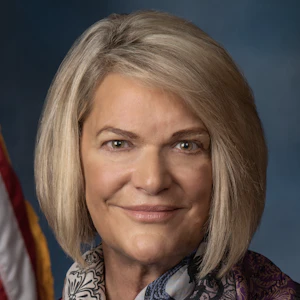
As the first-ever Chair of the Senate Banking Subcommittee on Digital Assets, Senator Lummis is the architect of the legislative framework shaping America's digital asset future. She introduced the landmark Lummis-Gillibrand Responsible Financial Innovation Act, the first comprehensive bipartisan crypto regulatory framework in Senate history. She co-authored the GENIUS Act — the first federal stablecoin law ever enacted — and introduced the BITCOIN Act, which would establish a U.S. strategic Bitcoin reserve of up to one million BTC. She is leading the Clarity Act, which will bring long-overdue regulatory certainty to the digital asset industry. She has also championed digital asset tax reform, including a de minimis exemption for small transactions and equal tax treatment for miners and stakers.
Known as Congress' "Crypto Queen," Senator Lummis represents Wyoming — a state she has helped build into one of the most digital asset-friendly regulatory environments in the nation. Before serving in the Senate, she served 14 years in the Wyoming Legislature, eight years as Wyoming State Treasurer, and eight years in the U.S. House. She is a three-time graduate of the University of Wyoming.
Her work represents a crucial bridge between traditional financial systems and the emerging digital economy, ensuring America leads the world in financial innovation while protecting the individual freedoms that define it.

Adam Back
Adam Back
Amy Oldenburg
Amy Oldenburg
David Marcus
David Marcus

Matt Schultz
Matt Schultz
Fred Thiel
Fred Thiel
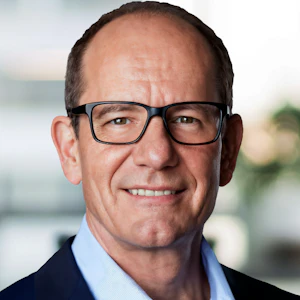
Throughout his career, Mr. Thiel has consistently driven rapid growth and created substantial shareholder value. Prior to MARA, Mr. Thiel served as the CEO of two other public companies, Local Corporation (NASDAQ: LOCM) and Lantronix, Inc (NASDAQ: LTRX). He has successfully raised billions in equity and debt through private and public offerings, led companies through IPOs, executed high-value exits to strategic and financial acquirers, and implemented effective M&A and roll-up strategies.
Mr. Thiel attended the Stockholm School of Economics and executive classes at Harvard Business School, and is fluent in English, Spanish, Swedish, and French. Mr. Thiel is the Chairman of the Board for Oden Technology, Inc. and is active in Young Presidents’ Organization where he has led initiatives in both the FinTech and Technology Networks.
A recognized voice in the industry, Fred frequently shares his insights on energy and technology with major media outlets like Bloomberg TV, CNBC, and FOX Business, contributing to vital discussions about the future of these sectors.
Tim Draper
Tim Draper
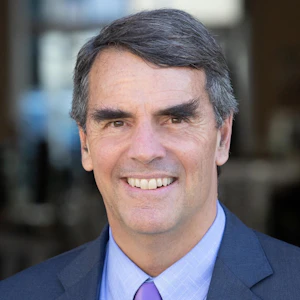
He is a supporter and global thought leader for entrepreneurs everywhere, and is a leading spokesperson for Bitcoin and decentralization, having won the Bitcoin US Marshall’s auction in 2014, invested in over 50 crypto companies, and led investments in Coinbase, Ledger, Tezos, and Bancor, among others.

Afroman
Afroman