Maximizing Your Bitcoin Mining Tax Strategy
Speakers/Moderators

Rob Massey
Rob Massey
Rob’s blockchain expertise spans the comprehensive tax considerations of blockchain enabled transactions and the analysis of the tax impacts of tokenization and digital asset transactions across business models, industries, and geographies. He also has a growing expertise in tax controversy matters involving digital assets and blockchain based business models.
Rob (and co-Author Conor O’Brien) worked with 50 other tax specialists in Deloitte to produce Bloomberg BNA’s Tax Management Portfolio, Taxation of Cryptocurrency and Other Digital Assets, No. 190-2nd. This 400-page tax treatise examines U.S. federal and state income taxation of digital assets, including cryptocurrencies, providing a detailed analysis of the classification of digital assets for tax purposes. It offers an inclusive overview of the digital asset ecosystem, tax guidance to date, tax classification, and accounting treatment. The portfolio further delves into the tax implications of using, dealing, trading, and investing in digital assets, and addresses novel tax questions raised by digital asset transactions.

Danny Condon
Danny Condon
10+ years of various sales roles of increasing responsibility leading to Vice President, Enterprise Sales at Fusion Risk Management.
B.S. in Finance and Certificate in Entrepreneurship from University of Colorado, Boulder's Leeds School of Business.
University of Colorado Men's Hockey Team.

Session
Overview
Rob Massey of Deloitte Tax LLP hosted a discussion with Danny Condon of Blockware and Jeffrey Li of FinTax on the tax and compliance issues that Bitcoin miners face as they launch, operate, and scale mining businesses.
The panel covered hardware depreciation, entity and jurisdiction planning, electricity costs, VAT and import duties, and the importance of determining whether mining activity qualifies as a trade or business. The speakers emphasized that physically located ASICs create tax considerations across federal, state, and international rules.
A major theme was recordkeeping. Mining rewards can create frequent taxable income events, requiring reliable tracking of fair market value, basis, pool data, on-chain records, and later dispositions. The discussion also addressed lending against Bitcoin, specific identification, FIFO, average cost rules in other jurisdictions, and the need to configure accounting systems around local tax treatment.
The speakers closed by noting that energy constraints, AI infrastructure demand, and expected regulatory clarity may shape the next phase of Bitcoin mining. Clean data and defensible books and records were presented as essential for miners seeking both compliance and tax efficiency.
Hey, thanks for having us. We are going to talk about taxation considerations for Bitcoin. To be clear, there are not a ton of rules out there directly on point, so we are going to talk about what people are doing and how to handle it. We will go through a bit of a life cycle: how to get started, what that entails, how to think about operations and mining, some yield generation, dispositions for those who do not hodl, and then some future-looking views.
My name is Rob Massey. I am a tax partner at Deloitte. I spend all my time in crypto and have done that since 2012. We have a big team at Deloitte, with 2,000 people across all functions, many of whom are here. Come see us in Enterprise Hall. I am looking forward to bringing some insights.
I am Danny Condon. I am chief revenue officer at Blockware. We are a Bitcoin mining-as-a-service company, so we enable Bitcoin mining opportunities for individuals and institutions.
I am Jeffrey Li from FinTax. We work in the compliance field, helping companies with their accounting systems and helping them reconcile on-chain to off-chain. We also help a lot of international companies set up companies around the world. Today I may be able to bring up a lot from outside of the United States.
The lenses we are putting on this are: the operator standpoint, those helping you from an infrastructure standpoint to actually stand it up and what to think about there; the subledger component, which is critically important because the data elements we are gathering have to land in reports and considerations with tax in mind; and then different jurisdictions throughout.
Let’s get started. When people are getting started, what are they doing? What are they inspired by? How do you get things started, with maybe some emphasis on the hardware element first?
Let’s talk about the business opportunity that is Bitcoin mining. I will take it from that lens and break it down into three buckets. Why would you mine Bitcoin? Why should you mine Bitcoin?
From a business opportunity perspective, when you are mining Bitcoin, the first bucket is that you are generating free cash flow. Businesses are designed to generate profit. You can go on an exchange and purchase Bitcoin around $77,000 per Bitcoin, or you can mine Bitcoin, where the objective is to accumulate Bitcoin. I like to think about it as constantly dollar cost averaging Bitcoin at a discount to the spot price of Bitcoin. The spread between my revenue, which is Bitcoin-denominated, and my cost, which is primarily electricity, is my profit.
The second bucket, as a byproduct of the first bucket, is that you are inherently building a Bitcoin treasury. There are a lot of considerations on that front. You can hold it, you can sell it, or you can lend against it to generate incremental liquidity.
The third, which will be a primary focus of this discussion, is that there are significant tax advantages, tax efficiencies, and tax incentives associated with Bitcoin mining. Most recently, that is on the back of the Big Beautiful Bill, which was passed last summer and brought back 100% year-one bonus depreciation. In short, 100% of the CapEx that you put toward purchasing ASICs may be eligible for 100% year-one bonus depreciation. As a simple example, and I am on stage with the CPA so keep me in line here, if you spend $100,000 on ASICs, you may be eligible to apply $100,000 of bonus depreciation against ordinary income. I like to think about it as a mechanism to pay less taxes and instead put those funds toward a productive asset that generates Bitcoin.
When we are talking about Bitcoin mining, Danny is highlighting an important point. Many would choose to buy their own hardware. There is a physical element to this, which we do not always think about with crypto. With Bitcoin mining, there is hardware somewhere. There are machines and ASICs. That means there is a physical location somewhere in the world where you are mining.
To Danny’s point, you need to think about whether you are going to expense that right away. In the U.S., those rules differ from around the world, which we can talk about with Jeffrey. Where that exists is really important. It is not just federal taxation, but also state taxation. Where you put that hardware is going to govern where that taxation might occur. Where the humans are that run the software could be in the U.S. or somewhere else around the world.
When you are setting up a mining operation, whether it is small or big, you need to think about where it exists and the roles of those operations. That is critically important as we get to other elements, as well as thinking about procuring hardware. You have sales tax considerations, VAT around the world, customs, and duties. You have to layer on all the components, and it is really important where it exists.
We have helped a lot of clients set up around the world. Outside of the United States, you have to consider VAT, which we do not have here. Depreciation is also different. We have a very good case here with 100% accelerated depreciation, but outside the U.S. it is different. Customs or import duty is also something to consider.
In Canada, just north of us, they also have accelerated depreciation, but not as good as here. It is 27.5% in the first year, and then the remaining balance is at 55% each year afterward. It is accelerated, but not the same. They have a VAT system, so you have to take into consideration VAT and the input tax credit, whether or not you are able to claim it back. They have special rules about it that you have to look into. They do not have import duty.
Contrast that to the UAE. We also set up there. The three taxes are similar, but depreciation is different because they do not have accelerated depreciation. Their corporate tax is quite low, only 9%, so in a sense depreciation is not costing that much on your profit level. They have a very simple VAT structure at only 5% and no import tax. That is a place with a very simple tax scheme.
There is another place where we set up with very low electricity bills. People want to go there because electricity is very low, but the tax structure is much more complicated. They have import duty of more than 5% and VAT of more than 10%, so up front, when you set up the whole thing, you already have additional cost. They also have an interesting add-on tax to electricity. For every kilowatt hour you are using, you have to pay another $0.02 to $0.05 depending on how much you are using.
In general, when you look around the world, you have to plan where you set things up and look at the details of VAT, depreciation, import tax, and any add-ons in order to have the best scheme for your company.
It is very common for us to think about mining operations in different jurisdictions. You might have a management team and a parent company in one jurisdiction or country, and mining operations with machines in another. You have to put the tax lens on every jurisdiction and think about how it rolls up. Because we have hardware involved, there are special considerations.
Let’s get into operational components and electricity. This tends to be one of the bigger expenditures out there now, power.
For context, I am looking at this through the lens of a capital-efficient hosted mining operation. That is what Blockware does. We work with individuals and institutions to enable folks to get access to mine Bitcoin without having to turn screws in a data center.
To qualify it, the revenue side is that when you are mining Bitcoin, your revenue is Bitcoin. Then you have a cost side associated with that. In a Blockware example, 99% of your cost is the cost of electricity that those ASICs consume. One component is the CapEx on the hardware, which domestically is 100% year-one bonus depreciation, as I talked about. On the operating side of the business, you have a reasonably fixed cost side of electricity, and then the revenue side is variable.
This provides a lot of interesting treasury strategies because, as a client, your obligation is to pay your energy bill. That can be in dollars, funded separately, or it can be with a portion of your Bitcoin revenue while you hold or do what you would like in your treasury with the profit. By and large, 99% of the cost is fixed in energy.
Something to remember is that we are talking about deductions. Deductions are really allowed, and this is a heavy U.S. lens but also applies thematically abroad, only if you have a trade or business. When people are just mining for fun, you have to think about whether there is even a business there. Is it a hobby? If not, you need to think about what your business is and whether you are generating revenue.
If you are hodling and not selling anything, you may get a question later from the IRS: do you really have a trade or business, or are you just accumulating Bitcoin? This is a really important question. Keep in mind that the tax deductions in the U.S., and thematically abroad, are only allowed if you have a trade or business. That is when you can recover those costs.
For operational considerations outside the U.S., if you have a trade or business around the world, operating expenses are deductible on your income statement and when you calculate tax. But there are finer details in each set of tax rules around the world.
For Canada, they have the VAT system. When you buy electricity, they will charge GST. Normally, for any trade or business, you can claim that GST as part of your input tax credit. But in Canada there are special rules for mining. It is called GST exempt. When you hear exempt, it sounds like a good word, like you are not paying tax. In this case, it is actually worse because you are not able to claim the input tax credit for that VAT.
When you look at operations, you have to look at those finer details and maybe structure your business separately, where you have mining operations, pool management, and service management. All of those are separate so that you can claim as much input tax credit as possible.
Let’s pivot now and talk about the mining activities. If you have a lot of miners set up, you might be realizing mining rewards on a really frequent basis, multiple times a day. When you take in those rewards, most would come to the conclusion, and there is some guidance in the U.S. on this, that whenever you take in those rewards, that is income.
You have established that income by tranche. Imagine you have a large mining operation and you are hitting multiple times a day. Each new tranche is likely to be taxed on receipt at the value at the time you received it, at the minute you have dominion and control of those assets. But we watch the price of Bitcoin move around all the time, so think about how granular you want to track that. Whenever you are taxed on it, that informs basis.
If you pick up $77,000 worth of Bitcoin per Bitcoin at the time it is taxed, you are paying income tax on that and that establishes your basis. The next day, if you are picking up mining rewards at $85,000, then you have established $85,000 in basis per Bitcoin. This is important to track on a tranche-by-tranche basis if you are doing a lot of this high-volume activity.
Can you aggregate this? Maybe. But there is a lot of planning involved, and you want to make sure you have a methodology set up to be systematic and rational, to track those tranches, attach basis, and get it into a system so you can track it on an ongoing basis.
Again, we do not have a ton of rules directly on point, but in the fall of 2024, the IRS dropped some pretty sizable Treasury regulations that allow us to say this is how you track basis on different tranches of fungible assets. That is pretty instructive to what is going on, but it is a highly manual process unless you get a subledger involved.
If you have a large mining operation and generate hundreds of transactions per day, that can be more than 100,000 per year. Those are each tranches you have to calculate or track manually. With a subledger like ours, for each tranche we are able to get the block generation time stamp, the pricing, and the fair market value at that given point. We can provide proof of how we calculated fair value and reconcile between the on-chain data and the pool CSV provided.
If there is a mismatch and you find it later, that will be way too late. Everything is in the system, so whenever you click on any of those transactions, you are able to see all of the data provided. One simple test I like to give my clients is to find a transaction from 12 months ago, click on it, and see if you already have all the data points. If not, you might need to find a better solution for your current system. If you already have those, then you are in a good place. Maintain that.
The data elements are critically important. It is not just the outputs from your system. We need to feel comfortable that you can drill down and gain a sense of comfort as to the data elements. This is coming from your infrastructure. We get questions, and we have been through IRS exams on this. They want you to prove to the IRS that the source data can support what is coming out of your system.
We went into the weeds there intentionally to show that there are a lot of moving pieces here. With anything that can be super opportunistic, it is important to be organized. Through the Blockware lens, you can see all of this information and export it in CSV format, which provides the data necessary to input into the system so that you can take advantage and be compliant with the tax rules associated with the opportunity. It is important to be organized. One thing we strive to do is make it incredibly simple so you do not have to worry about all the intricacies.
The big takeaway is that books and records are critically important. Books and records for something like Bitcoin mining are going to feel a little different than traditional books and records for an ordinary brick-and-mortar business. You need to be organized in the way it is reported out and in the ability to go back and prove where it came from.
Nobody is going back to a bank reconciliation anymore, not in this space. The source data we are talking about comes back to the infrastructure. How do you prove it out and associate it back with the data so that you are ready for your external auditors or the IRS? Books and records, systematic and rational. Remember that phrase.
Now let’s talk about yield-generating activities. I know everybody likes to hodl, but on occasion you may have a disposal or you may want to put it to work. One of the things we have been talking about is that you are getting a lot of questions about lending activities.
Think about Bitcoin mining as a wealth-generating system. You are generating Bitcoin as your revenue, you are generating free cash flow as a business, you are creating a Bitcoin treasury, and you may be eligible for significant tax savings in conjunction with the purchase of Bitcoin mining servers, ASICs.
At the end of this, you have a Bitcoin treasury. You have Bitcoin. You can sell it, hold it, or borrow against it. There are a number of different lenders here that would probably love to talk to you about these opportunities. The theory is that I am giving my Bitcoin another job. Its job is not just to go up in dollar value. Now I am able to extract U.S. dollar liquidity out of that Bitcoin via Bitcoin-backed loans or Bitcoin-backed lines of credit.
As it pertains to the tax side, I am avoiding a taxable event because I am not selling my Bitcoin treasury. If you need liquidity, you can borrow against the Bitcoin. You can use that for life, paying energy bills, or put it back into this machine and purchase more ASICs that create more Bitcoin, go into my Bitcoin treasury, and give me more tax advantages. Then I can run the playbook again. We have found with our customer base that folks are very interested in taking advantage of lending opportunities to juice this flywheel.
Now we are going to wave a really big caution flag over Bitcoin lending, because we do not have rules on point to protect you. If you have a Bitcoin and you lend it to another party, there is no rule on point that says that is not a disposition event. That means there is risk that when you lend it to another party or use it as collateral, you have disposed of that Bitcoin from a tax perspective.
Someday we may have rules in the U.S. and abroad similar to securities lending, which do have a safe harbor protecting this dynamic. We do not have that today. There are theories, and you can go back to tax principles, but this is important. You need to design the agreement and also design the tech around what is actually happening.
The first test is whether there was a transfer of ownership. If there was a transfer of ownership, you need to look to other principles out there to protect against disposition of it. But do not assume that if you lend your Bitcoin out or use it as collateral, you did not have a disposition event.
If you are worried about it, let’s go back to books and records. Could you choose a Bitcoin today? If you lend it out today and it is $77,000, could you choose a Bitcoin that you actually mined at $77,000, so you do not have a lot of unrealized gain? You would choose that one. There are rules in the U.S. for specific identification to choose that Bitcoin and minimize your risk. You would choose that one versus the one you mined at $13,000, probably.
For other countries like Hong Kong or Singapore, the rules are much simpler. We are not counting that as a disposition. But when we talk to our clients and set up these features in our system, clients are mostly hesitant about how we are accounting for this transaction. Is this lending really a disposition, or are we just marking this toward another party, marking it as lending, and then accounting for it back when we get it back from the lending?
Our system is able to elect both features and have clients talk to their own adviser who knows the local tax law. Then our system can run both scenarios under their management report. This is a very interesting topic that we are able to incorporate, but you have to talk to your adviser locally.
The system configuration is really important. People have different points of view, and your transactions could differ. You may have one lending activity that triggers gain or loss, which you would recognize in the system. You may have another one that does not. When you do, you want to make sure you are very specific about which ones you are using.
If you are using your Bitcoin to pay employees or to pay a vendor, you are going to have a disposition event. When you use that Bitcoin, that is a barter transaction. Then you look at which Bitcoin you used, what your basis was, and what the fair value was. That is a disposition event.
Around the world, there are different types of disposition methodologies you can use. Here in the States, we can use specific identification. Outside of the U.S., we have aggregation. In the UK there is pooling. Germany has FIFO. In Canada, you calculate average cost. Different places have different ways of calculation.
In our system, when we get the position and elect the jurisdiction that uses that law, we can count FIFO and find the first transaction that matches the disposition, or we can do weighted average and count all inputs to find the current weighted average. Back in the States, we can help you match which disposition you want to do with the inputs you already have. We can set it automatically if you want to use HIFO, highest in, first out, or another approach. But you need to find out which election you want to do, set it up in the system, and then we can run it automatically for you.
The rules around the world differ as to what is allowed. Average cost is allowable in some jurisdictions, not all. It is actually not an acceptable method here, which is surprising to some people. You need to make sure that you have your books and records set up. The concept of standing instructions does work. The concept of specific identification does work, but you really need to maintain those books and records in real time, with conscious decisions documenting what you are doing.
We go back to the source data. You have to make sure those books and records can go back and tie. If anybody ever asks you how you know that was the source data for that transaction, you need to be ready.
Where do you see the future going? You live in this space. What do you see coming next? How do you see mining evolve and other activities?
Things are shifting. If you think about the layer stack that goes into what you need to mine Bitcoin, you need land, power, infrastructure, and ASICs. We make this all really simple, but this is the stuff that goes into it.
Land, power, and infrastructure are the bottleneck. Right now there is a lot of competition from a little thing called artificial intelligence for every kilowatt hour of energy. That is extremely bullish for Bitcoin mining, because the dollar profit equation for Bitcoin mining is Bitcoin price as your numerator and network hash rate as the denominator.
The numerator, Bitcoin price, can move at a very high velocity. The denominator, hash rate, moves at a very slow velocity in a lagging capacity, typically because there are a lot of real-world constraints: land, power, energy, building data centers, billions of dollars of capital, and so on. With artificial intelligence coming into play, and with a lot of publicly traded Bitcoin mining companies pivoting to being infrastructure AI hosting companies, I think hash price is going to pace up for the foreseeable future through this halving cycle.
For the next year or so, taxpayers already have their eyes on the transactions. You cannot just use Excel to manage your books. You need a subledger. One thing we are sharing, and that we have a lot of agreement with our clients on, is that whoever can be successful over the next 24 months is not just the people who can find the lowest electricity bill or the best tax. It is the people who can keep their data clean, because at the end of the day, people will start looking at your data. If you can keep it clean, you are golden.
The other thing that is coming is rules. We are expecting clarity in the rules around tax, not just here in the U.S., but around the world. There is a big push on this as the industry matures. It is not just crypto natives getting engaged. We have large, mature public companies engaged in mining operations and other derivatives. We need the clarity to support the space. More to come on that. Thank you all for engaging. This has been great. Enjoy the conference.
Similar
Sessions
Maximizing Your Bitcoin Mining Tax Strategy
Rob Massey
Rob Massey
Rob’s blockchain expertise spans the comprehensive tax considerations of blockchain enabled transactions and the analysis of the tax impacts of tokenization and digital asset transactions across business models, industries, and geographies. He also has a growing expertise in tax controversy matters involving digital assets and blockchain based business models.
Rob (and co-Author Conor O’Brien) worked with 50 other tax specialists in Deloitte to produce Bloomberg BNA’s Tax Management Portfolio, Taxation of Cryptocurrency and Other Digital Assets, No. 190-2nd. This 400-page tax treatise examines U.S. federal and state income taxation of digital assets, including cryptocurrencies, providing a detailed analysis of the classification of digital assets for tax purposes. It offers an inclusive overview of the digital asset ecosystem, tax guidance to date, tax classification, and accounting treatment. The portfolio further delves into the tax implications of using, dealing, trading, and investing in digital assets, and addresses novel tax questions raised by digital asset transactions.
Danny Condon
Danny Condon
10+ years of various sales roles of increasing responsibility leading to Vice President, Enterprise Sales at Fusion Risk Management.
B.S. in Finance and Certificate in Entrepreneurship from University of Colorado, Boulder's Leeds School of Business.
University of Colorado Men's Hockey Team.
Maximizing Your Bitcoin Mining Tax Strategy
Speakers/Moderators
Rob Massey
Rob Massey
Rob’s blockchain expertise spans the comprehensive tax considerations of blockchain enabled transactions and the analysis of the tax impacts of tokenization and digital asset transactions across business models, industries, and geographies. He also has a growing expertise in tax controversy matters involving digital assets and blockchain based business models.
Rob (and co-Author Conor O’Brien) worked with 50 other tax specialists in Deloitte to produce Bloomberg BNA’s Tax Management Portfolio, Taxation of Cryptocurrency and Other Digital Assets, No. 190-2nd. This 400-page tax treatise examines U.S. federal and state income taxation of digital assets, including cryptocurrencies, providing a detailed analysis of the classification of digital assets for tax purposes. It offers an inclusive overview of the digital asset ecosystem, tax guidance to date, tax classification, and accounting treatment. The portfolio further delves into the tax implications of using, dealing, trading, and investing in digital assets, and addresses novel tax questions raised by digital asset transactions.
Danny Condon
Danny Condon
10+ years of various sales roles of increasing responsibility leading to Vice President, Enterprise Sales at Fusion Risk Management.
B.S. in Finance and Certificate in Entrepreneurship from University of Colorado, Boulder's Leeds School of Business.
University of Colorado Men's Hockey Team.
Guide to Institutional Maturity: Tax, Insurance, and Corporate Governance

Vijay Selvam
Vijay Selvam
Rob Massey
Rob Massey
Rob’s blockchain expertise spans the comprehensive tax considerations of blockchain enabled transactions and the analysis of the tax impacts of tokenization and digital asset transactions across business models, industries, and geographies. He also has a growing expertise in tax controversy matters involving digital assets and blockchain based business models.
Rob (and co-Author Conor O’Brien) worked with 50 other tax specialists in Deloitte to produce Bloomberg BNA’s Tax Management Portfolio, Taxation of Cryptocurrency and Other Digital Assets, No. 190-2nd. This 400-page tax treatise examines U.S. federal and state income taxation of digital assets, including cryptocurrencies, providing a detailed analysis of the classification of digital assets for tax purposes. It offers an inclusive overview of the digital asset ecosystem, tax guidance to date, tax classification, and accounting treatment. The portfolio further delves into the tax implications of using, dealing, trading, and investing in digital assets, and addresses novel tax questions raised by digital asset transactions.

Becca Rubenfeld
Becca Rubenfeld

Allison Handy
Allison Handy
Guide to Institutional Maturity: Tax, Insurance, and Corporate Governance
Speakers/Moderators
Vijay Selvam
Vijay Selvam
Rob Massey
Rob Massey
Rob’s blockchain expertise spans the comprehensive tax considerations of blockchain enabled transactions and the analysis of the tax impacts of tokenization and digital asset transactions across business models, industries, and geographies. He also has a growing expertise in tax controversy matters involving digital assets and blockchain based business models.
Rob (and co-Author Conor O’Brien) worked with 50 other tax specialists in Deloitte to produce Bloomberg BNA’s Tax Management Portfolio, Taxation of Cryptocurrency and Other Digital Assets, No. 190-2nd. This 400-page tax treatise examines U.S. federal and state income taxation of digital assets, including cryptocurrencies, providing a detailed analysis of the classification of digital assets for tax purposes. It offers an inclusive overview of the digital asset ecosystem, tax guidance to date, tax classification, and accounting treatment. The portfolio further delves into the tax implications of using, dealing, trading, and investing in digital assets, and addresses novel tax questions raised by digital asset transactions.
Becca Rubenfeld
Becca Rubenfeld
Allison Handy
Allison Handy
The Corporate Bitcoin Journey: Lessons from Early Allocators

Allen Helm
Allen Helm

Rob Massey
Rob Massey
Rob’s blockchain expertise spans the comprehensive tax considerations of blockchain enabled transactions and the analysis of the tax impacts of tokenization and digital asset transactions across business models, industries, and geographies. He also has a growing expertise in tax controversy matters involving digital assets and blockchain based business models.
Rob (and co-Author Conor O’Brien) worked with 50 other tax specialists in Deloitte to produce Bloomberg BNA’s Tax Management Portfolio, Taxation of Cryptocurrency and Other Digital Assets, No. 190-2nd. This 400-page tax treatise examines U.S. federal and state income taxation of digital assets, including cryptocurrencies, providing a detailed analysis of the classification of digital assets for tax purposes. It offers an inclusive overview of the digital asset ecosystem, tax guidance to date, tax classification, and accounting treatment. The portfolio further delves into the tax implications of using, dealing, trading, and investing in digital assets, and addresses novel tax questions raised by digital asset transactions.

Urban Lavrenčič
Urban Lavrenčič
Today, he bridges the gap between legacy finance and the Bitcoin ecosystem, overseeing Operations, Financial Infrastructure, AML, and Marketing at the group level. A specialist in navigating the intersection of the Bitcoin economy and traditional finance within an evolving regulatory landscape, Urban is a leading voice on how Bitcoin enterprises can integrate with traditional financial systems while ensuring institutional-grade compliance without compromising the ethos of Bitcoin.
The Corporate Bitcoin Journey: Lessons from Early Allocators
Speakers/Moderators
Allen Helm
Allen Helm
Rob Massey
Rob Massey
Rob’s blockchain expertise spans the comprehensive tax considerations of blockchain enabled transactions and the analysis of the tax impacts of tokenization and digital asset transactions across business models, industries, and geographies. He also has a growing expertise in tax controversy matters involving digital assets and blockchain based business models.
Rob (and co-Author Conor O’Brien) worked with 50 other tax specialists in Deloitte to produce Bloomberg BNA’s Tax Management Portfolio, Taxation of Cryptocurrency and Other Digital Assets, No. 190-2nd. This 400-page tax treatise examines U.S. federal and state income taxation of digital assets, including cryptocurrencies, providing a detailed analysis of the classification of digital assets for tax purposes. It offers an inclusive overview of the digital asset ecosystem, tax guidance to date, tax classification, and accounting treatment. The portfolio further delves into the tax implications of using, dealing, trading, and investing in digital assets, and addresses novel tax questions raised by digital asset transactions.
Urban Lavrenčič
Urban Lavrenčič
Today, he bridges the gap between legacy finance and the Bitcoin ecosystem, overseeing Operations, Financial Infrastructure, AML, and Marketing at the group level. A specialist in navigating the intersection of the Bitcoin economy and traditional finance within an evolving regulatory landscape, Urban is a leading voice on how Bitcoin enterprises can integrate with traditional financial systems while ensuring institutional-grade compliance without compromising the ethos of Bitcoin.
Other
Speakers
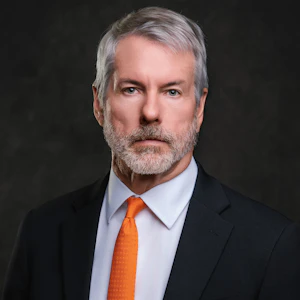
Michael Saylor
Michael Saylor

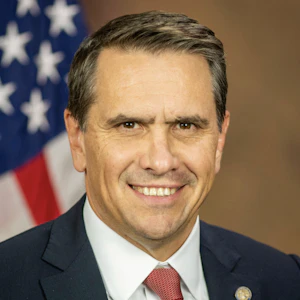
Todd Blanche
Todd Blanche
Biography of Deputy Attorney General Todd Blanche
The Honorable Todd Blanche is the 40th Deputy Attorney General of the United States, overseeing the work of the 115,000 dedicated employees who fulfill the Department of Justice’s mission at Main Justice, the FBI, DEA, U.S. Marshals, ATF, and 93 U.S. Attorney’s Offices.
Todd began his career at the Department where he served for over fifteen years in a variety of capacities, including as a contractor, a paralegal in the Criminal Division, and at the United States Attorney’s office for the Southern District of New York where he eventually became an AUSA and later a supervisor.
After leaving the Department, Todd worked as a criminal defense attorney that included representing President Donald Trump in three of the criminal cases brought against him in 2023 and 2024.
Following President Trump’s historic return to the White House, the President appointed Todd to work alongside Attorney General Pam Bondi to make America safe again. At the DOJ, Todd is working tirelessly to implement President Trump’s priorities that include confronting illegal protecting American businesses from fraud.
Todd has been married to his wonderful wife Kristine for nearly thirty years, is a father and grandfather.

Paul Atkins
Paul Atkins
Prior to returning to the SEC, Chairman Atkins was most recently chief executive of Patomak Global Partners, a company he founded in 2009. Chairman Atkins helped lead efforts to develop best practices for the digital asset sector. He served as an independent director and non-executive chairman of the board of BATS Global Markets, Inc. from 2012 to 2015.
Chairman Atkins was appointed by President George W. Bush to serve as a Commissioner of the SEC from 2002 to 2008. During his tenure, he advocated for transparency, consistency, and the use of cost-benefit analysis at the agency. Chairman Atkins also represented the SEC at meetings of the President’s Working Group on Financial Markets and the U.S.-EU Transatlantic Economic Council. From 2009 to 2010, he was appointed a member of the Congressional Oversight Panel for the Troubled Asset Relief Program.
Before serving as an SEC Commissioner, Chairman Atkins was a consultant on securities and investment management industry matters, especially regarding issues of strategy, regulatory compliance, risk management, new product development, and organizational control.
From 1990 to 1994, Chairman Atkins served on the staff of two chairmen of the SEC, Richard C. Breeden and Arthur Levitt, ultimately as chief of staff and counselor, respectively. He received the SEC’s 1992 Law and Policy Award for work regarding corporate governance matters.
Chairman Atkins began his career as a lawyer in New York, focusing on a wide range of corporate transactions for U.S. and foreign clients, including public and private securities offerings and mergers and acquisitions. He was resident for 2½ years in his firm's Paris office and admitted as conseil juridique in France.
A member of the New York and Florida bars, Chairman Atkins received his J.D. from Vanderbilt University School of Law in 1983 and was Senior Student Writing Editor of the Vanderbilt Law Review. He received his A.B., Phi Beta Kappa, from Wofford College in 1980.
Originally from Lillington, North Carolina, Chairman Atkins grew up in Tampa, Florida. He and his wife Sarah have three sons.

Mike Selig
Mike Selig
Chairman Selig brings to the role deep public and private sector experience working with a wide range of stakeholders across agriculture, energy, financial, and digital asset industries, which rely upon and operate in CFTC-regulated markets.
Prior to his leadership at the CFTC, Chairman Selig most recently served as chief counsel of the Securities and Exchange Commission’s Crypto Task Force and senior advisor to SEC Chairman Paul S. Atkins. In this role, Chairman Selig helped to develop a clear regulatory framework for digital asset securities markets, harmonize the SEC and CFTC regulatory regimes, modernize the agency’s rules to reflect new and emerging technologies, and put an end to regulation by enforcement. He also participated in the President’s Working Group on Digital Asset Markets and contributed to its report on “Strengthening American Leadership in Digital Financial Technology.”
Prior to government service, Chairman Selig was a partner at an international law firm, focusing on derivatives and securities regulatory matters. During his years in private practice, he represented a broad range of clients subject to regulation by the CFTC, including commercial end users, futures commission merchants, commodity trading advisors, swap dealers, designated contract markets, derivatives clearing organizations, and digital asset firms. Chairman Selig advised clients on compliance with the Commodity Exchange Act and the CFTC’s rules and regulations thereunder, including in connection with registration applications and obligations, enforcement matters, and complex transactions.
Chairman Selig earned his law degree from The George Washington University Law School and was articles editor of The George Washington Law Review. He received his undergraduate degree from Florida State University.

David Bailey
David Bailey

Eric Trump
Eric Trump
Mr. Trump also serves as Executive Vice President of The Trump Organization, where he oversees the global management and operations of the Trump family’s extensive real estate portfolio. This includes Trump Hotels, Trump Golf, commercial and residential real estate, Trump Estates, and Trump Winery. Known for his hands-on leadership and strong market instincts, he has played a key role in expanding the company’s presence across major U.S. and international markets.
A globally recognized business leader and public figure, Mr. Trump is a prominent advocate for Bitcoin and decentralized finance. He is a co-founder of World Liberty Financial, a decentralized finance (DeFi) platform, and serves on the Board of Advisors of Metaplanet, Japan’s largest corporate holder of Bitcoin.
Beyond his business activities, Mr. Trump has helped raise more than $50 million for St. Jude Children’s Research Hospital in the fight against pediatric cancer, a philanthropic mission he began at age 21.
Mr. Trump earned a degree in Finance and Management from Georgetown University. He currently resides in Florida with his wife, Lara, and their two children. He is also the author of Under Siege, his memoir published in October 2025.

Jack Mallers
Jack Mallers

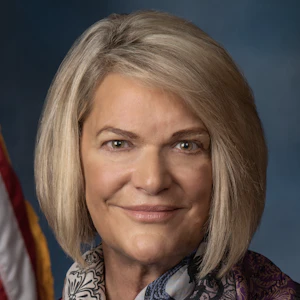
Cynthia Lummis
Cynthia Lummis
As the first-ever Chair of the Senate Banking Subcommittee on Digital Assets, Senator Lummis is the architect of the legislative framework shaping America's digital asset future. She introduced the landmark Lummis-Gillibrand Responsible Financial Innovation Act, the first comprehensive bipartisan crypto regulatory framework in Senate history. She co-authored the GENIUS Act — the first federal stablecoin law ever enacted — and introduced the BITCOIN Act, which would establish a U.S. strategic Bitcoin reserve of up to one million BTC. She is leading the Clarity Act, which will bring long-overdue regulatory certainty to the digital asset industry. She has also championed digital asset tax reform, including a de minimis exemption for small transactions and equal tax treatment for miners and stakers.
Known as Congress' "Crypto Queen," Senator Lummis represents Wyoming — a state she has helped build into one of the most digital asset-friendly regulatory environments in the nation. Before serving in the Senate, she served 14 years in the Wyoming Legislature, eight years as Wyoming State Treasurer, and eight years in the U.S. House. She is a three-time graduate of the University of Wyoming.
Her work represents a crucial bridge between traditional financial systems and the emerging digital economy, ensuring America leads the world in financial innovation while protecting the individual freedoms that define it.

Adam Back
Adam Back

Amy Oldenburg
Amy Oldenburg

David Marcus
David Marcus

Matt Schultz
Matt Schultz
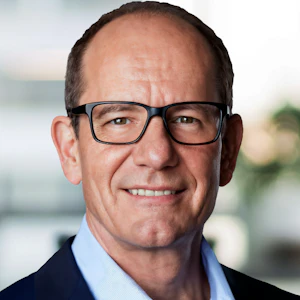
Fred Thiel
Fred Thiel
Throughout his career, Mr. Thiel has consistently driven rapid growth and created substantial shareholder value. Prior to MARA, Mr. Thiel served as the CEO of two other public companies, Local Corporation (NASDAQ: LOCM) and Lantronix, Inc (NASDAQ: LTRX). He has successfully raised billions in equity and debt through private and public offerings, led companies through IPOs, executed high-value exits to strategic and financial acquirers, and implemented effective M&A and roll-up strategies.
Mr. Thiel attended the Stockholm School of Economics and executive classes at Harvard Business School, and is fluent in English, Spanish, Swedish, and French. Mr. Thiel is the Chairman of the Board for Oden Technology, Inc. and is active in Young Presidents’ Organization where he has led initiatives in both the FinTech and Technology Networks.
A recognized voice in the industry, Fred frequently shares his insights on energy and technology with major media outlets like Bloomberg TV, CNBC, and FOX Business, contributing to vital discussions about the future of these sectors.
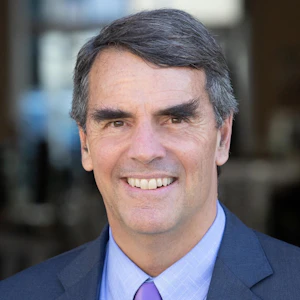
Tim Draper
Tim Draper
He is a supporter and global thought leader for entrepreneurs everywhere, and is a leading spokesperson for Bitcoin and decentralization, having won the Bitcoin US Marshall’s auction in 2014, invested in over 50 crypto companies, and led investments in Coinbase, Ledger, Tezos, and Bancor, among others.

Afroman
Afroman