Sovereign E-Commerce Payments & Platforms
Speakers/Moderators

Bob Scully
Bob Scully

Evan Kaloudis
Evan Kaloudis
With a background in cybersecurity and infrastructure engineering, Evan has spent the past several years focused on advancing self-sovereign finance. He is a vocal advocate for privacy-preserving, self-custodial technology and has been a prominent voice in defending open-source Bitcoin tools amid growing regulatory pressure.
Through ZEUS, Evan is pushing Bitcoin payments forward — making them more accessible while equipping users with tools that preserve their financial sovereignty.

Keith Gardner
Keith Gardner
Branta enables sending Bitcoin with absolute certainty; confirming counterparty addresses without revealing sensitive data. Branta’s triangulated security model adds an independent verification layer that eliminates the threat of address-swap and man-in-the-middle attacks.
Branta supports ecommerce, remittances, OTC, and wallet infrastructure.
Prior to founding Branta, Keith was a software engineer at Bloomberg. Keith loves coffee, cigars, surfing and boxing.

Session
Overview
Sovereign E-Commerce Payments & Platforms brought together builders from ZEUS, Branta, Shopstr Markets, and Agicash to discuss Bitcoin-native commerce, Lightning payments, Nostr storefronts, and tools that help merchants accept payments without depending entirely on traditional processors.
The panel focused on practical merchant use cases, including local farms, bars, restaurants, remittance providers, and niche online sellers. Speakers discussed why self custody, open source infrastructure, lower payment costs, and censorship resistance matter for small businesses, while also acknowledging the role of custodial onboarding tools like ecash and Square.
Key themes included BTCPay Server, Cashu, Lightning scaling, prepayment security, privacy, and the user experience needed for broader Bitcoin payment adoption. The conversation also explored how AI and open source software could accelerate self-sovereign business tools.
The panel closed with a discussion of stablecoins, with participants generally arguing that Bitcoin offers a distinct monetary system for merchants, while stablecoins may be more relevant in markets with weaker local currencies. They emphasized that better UX, merchant distribution, and social exposure to Bitcoin payments may be as important as protocol-level scaling.
Welcome, everyone, to the panel on Bitcoin e-commerce payments. To set the stage, the past year has been the biggest for Bitcoin payments in the history of Bitcoin. Lightning grew 300%. It is now doing over $1 billion in monthly volume and 5 million transactions a month. On the retail side, Square is turning on Bitcoin payments for 4 million merchants. Stripe is integrating Lightning into its payments protocol for its 5 million merchants. Self-sovereign tools like BTCPay Server continue to grow, allowing anyone globally to access open source point-of-sale solutions.
So we are adding billions of dollars of payments volume and millions of merchants, and we are fortunate to have three builders on stage who are leading that charge. Let’s meet the panel. Tell us a bit about yourself and your business.
I’m calvadev. I’m working on Shopstr Markets, a permissionless marketplace for truly free commerce. We are building marketplace infrastructure to allow e-commerce merchants to buy and sell things with Bitcoin. We also have different solutions specifically focused on local farms and local food, because that is the main thing we think can really benefit from all of this. We are trying to make it as easy as possible for people to tap into the circular economy, permissionlessly, without having huge technical hurdles to get started.
I’m Keith Gardner from Branta. Branta is prepayment security for transferring Bitcoin. A lot of the focus is on security, but also on UX for the end user. Before you transact with Bitcoin, how does that feel? We want to make that feel very good for the user and the next 8 billion users, instead of how it feels today when you send Bitcoin and hope it settles at the right place.
I’m Evan Kaloudis, the founder of ZEUS. First and foremost, we are a free and open source Bitcoin and Lightning wallet. We just had a big new release recently. You start as a newcomer with ecash, and you graduate to either self-custody Lightning or swap on-chain. We also have white-glove services for merchants who want to accept payments online, institutions that want to do routing, and general infrastructure build-outs.
Great. Welcome. I’m Bob, founder of Agicash. We make Bitcoin payment solutions for merchants and AI agents. First topic: why don’t we start talking about real merchant stories? Let’s hear about who is actually building on Bitcoin payment rails. Pick a Shopstr merchant. What are they selling? What does running on Nostr and Bitcoin mean for them?
One of the less traditional groups of people selling on it is local farms. With the Milk Market platform specifically, we are focused on helping local dairies sell their products online, because there are a lot of regulatory burdens that stop them from being able to process payments using traditional processors like Stripe, and even from using things like Shopify to list their products and operate.
They benefit greatly from the fact that it is cheaper to run. The services we offer still provide Shopify-like tools, like a full suite. They are able to set up their site and customize everything they need. But the great thing is that they are able to operate on Nostr. With Nostr, they are able to control all the data structures, the way the website is laid out, and all their products. We have no control over whether or not they are able to sell or process payments. It is all facilitated over the Nostr protocol and using Bitcoin.
We still have services like Stripe integrated for people who want fiat. But one of the things we are betting on is that, at some point, Stripe is going to want to close that gate. When the people who are transitioning into Bitcoin from fiat realize that the primary payment processor can shut them off, we want transitioning into Bitcoin to be as easy as possible. They can already start accepting it without needing to set up a wallet or anything. It is all integrated natively.
Really, it is the ability to tap into the market without facing all the massive hurdles it takes to onboard into fiat land. It might not seem like a lot to pay $30 a month for Shopify and deal with terms of service. But with local foods, there is so much regulatory scrutiny that we are not aware of, and it becomes a chokehold on local producers. They are not able to sell anything at all. They cannot even get started.
Most people know Nostr as a decentralized communication protocol, kind of like an alternative to Twitter. How are your customers using Nostr? How do you use Nostr specifically?
The only way they use it is basically to host their storefront data and to message merchants and customers directly. In my opinion, the social media aspect of Nostr is an experiment that we should move on from, in terms of just focusing on trying to build a Twitter-like client. The purpose of social media is distribution, and Nostr might not have the network effect to provide that goal. Using it as a communication protocol to facilitate transactions and interactions outside of global platforms is what is actually beneficial for people.
Same question. Pick a merchant or customer using ZEUS. What is the Bitcoin benefit?
We have such a wide array of customers, it is really hard to pick a favorite. We have small merchants local to me and exchanges that are getting started up and use our services. If I had to pick a few, I would say Pubkey, the New York and DC bar, has been a really cool one because we have helped them manage their node.
On the regulatory side, the New York Department of Financial Services has some of the most draconian restrictions in the whole world. So we got to prove that if we can serve a customer and help them enable Bitcoin payments there, we can do it anywhere in the world. This is a place where, at least until recently, you could not use Strike in New York. I still do not think you can use Lightning on Cash App. Correct me if I’m wrong.
We have a great e-commerce merchant, Based Trading Cards, Bitcoin trading cards, that had a great new series. The volume we processed in Bitcoin was insane. That is a really cool one. On a personal level, I really like Tallow, which is a Philadelphia-based go-birds joint. They are named Tallow because they cook everything in beef tallow, and it is delicious.
Compared to Stripe, the benefit is obviously the cost. It is practically free. It is self-custodial. You hold your own keys at any given moment. Stripe can rug you, take all your funds, and say, no, we are not going to process this. If I get into a dispute with any of our merchants, they can say, Evan, just piss off. We have the keys. You cannot take our money. End of discussion. It seems like it is getting worse and worse with some of the centralized processors.
Keith, you see the threat side. You see what merchants and customers are concerned about. How do they use Branta?
For merchants using Branta, I think we have over 50 now. A lot of the answers could be selfish, like wine, Peony Lane, or chocolate. But one of the use cases we have been focused on recently is remittances.
With remittances, obviously Bitcoin solves cross-border issues. With Lightning, it is fast, cheap, and final. That is great. What is not great is remittance companies trying to distribute the tech to their people when there is an association with scams in Bitcoin. That is not good.
For us, we are very focused on how these businesses can show the end user and the consumer that this is safe, and actually flip the conversation from feeling scared or anxious when sending Bitcoin for the first time into maybe inserting a little bit of dopamine.
The reason credit cards are so successful is that everything is gamified. There are no buttons, no pins, and you come back with the dopamine. By integrating Branta, the remittance company’s end users can see the logo of the remittance provider before they pay. If you imagine scanning a QR code in your wallet right now, it is not very interesting. What is interesting is if you scan a QR code for a fully private BOLT11 invoice and see the logo of the recipient beforehand. All of a sudden there is a visual association. You can kind of see who is on the other side. If you are abroad sending money home, we are seeing much better customer retention and new conversations for customers.
Now let’s zoom out a bit from the companies you are building and your products. Let’s talk about other Bitcoin ecosystem tools that merchants might need. If you are accepting Lightning, what other tools do you need in your e-commerce toolkit?
There are so many great free and open source solutions that anyone can pick up and use free of charge, without restrictive clauses or licenses. In terms of e-commerce, I really like BTCPay Server. I think they are second to none. We use it in our own infrastructure. In some cases with merchants, we just set them up with that, plug in the Lightning node, and handle the Lightning stuff on ZEUS’s side. We let BTCPay do all the bookkeeping, the amounts, and invoice generation. It is a fantastic tool, and we try to contribute back to it when we can.
I completely agree. Shout out to Rockstar Dev and the team. Calvadev, you have Nostr tools and Bitcoin tools. What other tools do you need in your stack?
Probably the most interesting one is Cashu. Evan mentioned it for getting started on ZEUS. Having ecash specifically is really helpful because, one, it adds privacy natively. The trade-off is that it is custodial, so you do not control the keys. But it is a great way to onboard a complete novice to Bitcoin who does not understand how to set up a wallet or handle keys. You are able to seamlessly receive Bitcoin. You might not know what to do with it, but at least you have some, and you are able to transact.
Especially if you are integrating it with the native Nostr network or something like that, you can very seamlessly spend it in the network. You can earn through Nostr and then spend directly within Nostr, so you are never touching any legacy rails. I think ecash is definitely one of the most important things that needs to be explored more.
We are actually giving away 6,000 ecash notes at the conference over the next few days, so everyone out there, come find me. We have free Bitcoin to give away.
I completely agree. Ecash is an awesome tool, although it is custodial. In the world of self-sovereignty, what do you think about custodial solutions? Where does Square fit in, or ecash? How do you think about pairing self-sovereignty with custodial solutions?
For us, we like ecash because it is a great onboarding tool. It also has some functionality we were not able to do just by being a self-custodial wallet. We were not able to do gifting. We also had higher costs to enable people to get Lightning channels or hold their keys self-custodially. A lot of people do not want to bear those costs just to try out a wallet for the first time.
We just rolled out our new graduated wallet system. It allows you to start with ecash, build up a balance, and as you hit different balance thresholds, the wallet tries to point you toward self-custody. It says, hey, you have this balance, and it is in this ecash mint. It is more like a bank, albeit with way better privacy. Maybe you want to upgrade to self-custody Lightning, or maybe you want to swap out to an on-chain address where you control the keys.
The wallet tries not to be opinionated. It just tries to give you the information you need to make an informed decision, because what is a lot for one person is peanuts for another. We let the user choose when they want to upgrade, if they want to upgrade, and we think it is an incredibly powerful flow that you can onboard your grandma with.
In a similar way, I have heard of Square merchants using Square to accept Bitcoin and then, at a certain point, withdrawing it to cold storage via Square. You get flexibility.
They have the option to either keep it in Bitcoin and get it out or convert it to dollars. I think a lot of merchants really just want the U.S. dollars they are accustomed to. But just having the option there, and being able to see the Bitcoin price appreciate over the years, more and more are going to take a higher percentage of their payout in Bitcoin. Shout out to Square for finally turning the switch on. We are seeing a lot of merchants across the U.S. and local to me being onboarded, and it has been fantastic.
Keith, how do you work with custodial providers, and where does that fit in?
Both have their time and place. For our specific stack, we can work anywhere. On the receive side, it is a better fit for centralized services. I would also shout out BTCPay Server. It has blown me away over and over, how much that infrastructure is used and battle tested.
You have an integration?
Yes, we do. We have first-class support for BTCPay Server, and most of our traffic is through that infra right now.
How is that expanding and changing over time?
It is growing.
Let’s close this section out with a prediction. I think the number of self-sovereignty tools is about to rapidly accelerate. With AI, you can now run a small business almost entirely on your own with an AI agent and Bitcoin. You do not need designers, marketers, third-party software, or banks. Is self-sovereignty about to explode? What do you think? Or maybe the opposite?
I do not have a strong opinion on this, to be honest. I am not tracking it too closely. I am more focused on the humans.
I think AI, despite its shortcomings and limitations, is really a great gift to us all. We are going to see an incredible amount of free and open source software tools that enable sovereignty and human flourishing being developed at an unprecedented rate. I am seeing it today. I am seeing an incredible amount of new contributions to ZEUS. We use it in our workflows to assist us in writing code as well as reviewing it. It is unbelievable the rate at which you can ship now.
I think there is a bit of a dichotomy. At the individual level, obviously it increases the amount of sovereignty we can operate under, and we are able to do so much that we otherwise would not expect. For us, as payment handlers, it is best to add the tooling to make it as easy as possible for people to interact with those systems.
On the other side, there are large corporate entities. Anything by OpenAI is going to become some surveillance-state tool, so it is best to avoid that type of stuff and just experiment with what you can. The open source models are getting a lot better, and the iteration is going quickly even within those systems. Learning the skill set to interact with those systems is very important.
That is a good point. You could use OpenAI or Claude, and that is less self-sovereign. But the open models are catching up so fast that theoretically, in a year, you can get that same ability running on your personal home computer or your own Bitcoin node. That is where I hope we are headed.
If we are headed there, and self-sovereignty tools are about to explode, and Lightning payments are about to 10x, what does Bitcoin payments need? What do we need from an enterprise perspective to be doing $10 billion of Lightning volume a month, or 10, 20, 30 million transactions a month? What are the additional enterprise tools? Keith, you are talking to big customers. What do they need to see in the Bitcoin space?
The key thing we always need to go back to is that Bitcoin settles with finality. That is a core feature. Right now, in our view, there is not a lot of infrastructure in the pre-settlement, pre-transaction phase of moving Bitcoin.
If you look at credit cards, chargebacks are an industry now. But that is post-payment. It is such an industry that many companies operate in that space. In Bitcoin, the analogous problem is kind of man in the middle. If you go to transact and something happens on the front end, you cannot call anybody. Everybody knows this. But as we scale to the next users, these problems amplify in magnitude so much that it is going to be a massive burden.
When we look at massive adoption for AI, gaming, remittances, or wherever, I think we are going to see much more focus on what happens before you actually broadcast and settle. That is the space we are hyper-focused on.
One of the other concerns people have is Lightning scaling specifically and certain drawbacks of Lightning. People are working on improving the Lightning protocol, but there are also a handful of new Bitcoin protocols. We have Cashu, Spark, Ark, Fedimint, Liquid, and others. What is your favorite new scaling protocol? What do you think it enables that Lightning does not? Or maybe Lightning will enable all of this.
We are pretty all in on Cashu right now. We like Cashu because of its simplicity. There is a single mint and a blossoming ecosystem of those mints. We like how easy it is to onboard. You can hand someone one of these notes that we are handing out at the conference. They scan a QR code, hit import, and boom, they have their first sats.
I was waiting in line to get coffee and handing them out. I had this really nice lady download the wallet right in front of me, scan it, hit receive, and see the magic moment. It was awesome. Having a wallet that acts like a Sherpa and gets her to self-custody as her balance grows is a nice, reassuring thing.
I love the experimentation with all these other protocols coming up. I just think there are a lot of marketing tricks people are doing right now, and they are not being forthcoming about the trade-offs. Most of them are not really self-custodial.
It seems like we are still in the experimental phase with some of the newer protocols. Agicash is focused really on Cashu because of the scalability. You can send thousands and thousands of Cashu tokens for literally no cost, which you cannot do with something like Lightning. There is also embedded privacy. You get privacy by default. You do not have to think about it. There are no options. It just comes private with payment.
That is one of the reasons we went with Cashu for this onboarding layer. With basically all the new ones you see out there, they have some really big red flags in terms of privacy, or they are run by megacorps. Nothing is going to compare to the privacy that ecash and solutions like Cashu and Fedi provide right now.
That is why I like the Lightning plus Cashu stack. I think it gets you a lot of the way there on scalability.
I want to add on the scalability point. The most important scalability thing we need to focus on is not technical, but social. It is being exposed to Bitcoin more in general, and in a context that is not as a financial gambling asset, because that is what everyone knows it as.
That is why Square turning on Bitcoin payments is so powerful. I have gone to different coffee shops and restaurants, and they say you can pay in Bitcoin. They click through and say, oh, what? I did not even know you could do this. Most people are neutral because most people do not even know. We have Gen Z people who work for us, and they have no idea what Bitcoin is, which is crazy to think.
They do not know what crypto is. A lot of people are not involved in it at all. The people who are have been rugged. They have been sent to these casinos. They wanted to get whatever coin of the day someone was trying to sell to get trade fees on.
I think the real opportunity is shoehorning backwards. Getting the distribution and just shoehorning Bitcoin in there is why Cash App is such a big deal. There are so many unlocks that come from that.
Put a little exposure on the side. They interact with the general application, and then say, oh, this is a Bitcoin thing. This is an awesome thing. Then they are exposed to it more, see it on a daily basis, and eventually learn enough to actually transition over.
At the end of the day, the dream is that we all wake up and instead of the dollar sign in all of our apps, it is the Bitcoin sign. Obviously we need education and proper privacy, but changing user behavior is not what we are trying to go for.
Last topic for the day, and it is a little controversial: does Bitcoin need a stablecoin? When you talk to merchants, do you get that question? What do you think? And if it does, how do we do it?
We live in the United States, right? Why do we need a stablecoin? Credit cards are amazing for getting dollars. Bitcoin provides something completely different to merchants: a completely different financial system that helps them escape inflation. That is something most small business owners can relate to, especially over the last several years.
There are stablecoins everywhere already. There are definitely different places in the world where stablecoins can act as a lifeline, especially when they have fiat currencies locally that melt at a much quicker rate than the U.S. dollar does. But in the United States, Bitcoin, stablecoins, no.
Stablecoins are downstream of the U.S. government. Bitcoin is, you could say, upstream. What we really need is UX that far surpasses anything analogous in fiat. When we get that, game over.
The biggest downside of stablecoins is that basically you are making the trade-off of saying, let me make it easier to get sanctioned and have my money confiscated than it already is. Why even interact with them in the first place?
They are going to say, instead of these credit card processing fees, we can slash them.
Stripe is doing the opposite. They are charging 1.5% to use stablecoin rails, which is absolutely ridiculous.
At least with Bitcoin as the base monetary layer, stay focused on the mission. Zero distractions. Bitcoin is money, period. Keep it that way.
They can be helpful in emerging markets where you have tight liquidity issues, cash-flow issues, or no access to U.S. dollars and you want the stability. But the U.S. feels like an amazing place where Bitcoin can almost leapfrog stablecoins. We do not even need stablecoins here. We have the dollars. Just teach people about Bitcoin and move right to the Bitcoin standard.
That is one of the things we are focused on as well: how do you combine fiat and Bitcoin, specifically in the U.S., and give an amazing experience? I think Square does a great job. You can accept cash, dollars, and Bitcoin payments, and they convert it automatically. Same for sending. Something like that feels like where we are headed, at least in the U.S. specifically.
They just need a little more competition. More payment processors need to accept Bitcoin as well. Toast, Clover, we are looking at you. Let’s do it. Call us up.
Final question: what is your favorite Bitcoin merchant? Tell the audience what we should go buy.
My favorite Bitcoin merchant is Great Guy. He makes the best cooking oil there is, third-party lab tested and everything. It is awesome. Soap Miner as well. He makes great tallow soaps, also available online and everything, only Bitcoin. I will also shill my own little product. We sell our own goat milk caramel, a traditional Mexican thing, also third-party lab tested. If you are into any of that health stuff, come check us out at the booth. We have one in the open source area.
I will not repeat those here, but those are really good. There is also Orange Horizon and suntan lotion. There is Peony Lane wine out of Colorado. There is Cacao Now from somewhere in Central America, and Bitcoin Beans. There are really a lot of niche, high-quality merchants now, peer to peer too.
I found a couple new ones on Nostr. This guy Kid Warp has this vanilla extract I got that was delicious. Tallow from Tallow in Philadelphia, they will mail it to your door. I got this sports powder, sports drink, that you could buy with Bitcoin. Absolutely delicious. Kicks the crap out of Gatorade. It is unbelievable.
I will shout out Pink Owl Coffee, which is a Bay Area coffee shop, Epicurean Trader, which is a San Francisco store that accepts Bitcoin, and Mariposa Bakery, which is a gluten-free bakery in the Ferry Building in San Francisco. Check them out if you are in SF.
Thank you, guys. Cheers. Thank you.
Similar
Sessions
Sovereign E-Commerce Payments & Platforms
Bob Scully
Bob Scully
Evan Kaloudis
Evan Kaloudis
With a background in cybersecurity and infrastructure engineering, Evan has spent the past several years focused on advancing self-sovereign finance. He is a vocal advocate for privacy-preserving, self-custodial technology and has been a prominent voice in defending open-source Bitcoin tools amid growing regulatory pressure.
Through ZEUS, Evan is pushing Bitcoin payments forward — making them more accessible while equipping users with tools that preserve their financial sovereignty.
Keith Gardner
Keith Gardner
Branta enables sending Bitcoin with absolute certainty; confirming counterparty addresses without revealing sensitive data. Branta’s triangulated security model adds an independent verification layer that eliminates the threat of address-swap and man-in-the-middle attacks.
Branta supports ecommerce, remittances, OTC, and wallet infrastructure.
Prior to founding Branta, Keith was a software engineer at Bloomberg. Keith loves coffee, cigars, surfing and boxing.
Sovereign E-Commerce Payments & Platforms
Speakers/Moderators
Bob Scully
Bob Scully
Evan Kaloudis
Evan Kaloudis
With a background in cybersecurity and infrastructure engineering, Evan has spent the past several years focused on advancing self-sovereign finance. He is a vocal advocate for privacy-preserving, self-custodial technology and has been a prominent voice in defending open-source Bitcoin tools amid growing regulatory pressure.
Through ZEUS, Evan is pushing Bitcoin payments forward — making them more accessible while equipping users with tools that preserve their financial sovereignty.
Keith Gardner
Keith Gardner
Branta enables sending Bitcoin with absolute certainty; confirming counterparty addresses without revealing sensitive data. Branta’s triangulated security model adds an independent verification layer that eliminates the threat of address-swap and man-in-the-middle attacks.
Branta supports ecommerce, remittances, OTC, and wallet infrastructure.
Prior to founding Branta, Keith was a software engineer at Bloomberg. Keith loves coffee, cigars, surfing and boxing.
Lightning + Ecash: An Atomic Match Made in Heaven?

Shinobi
Shinobi

Evan Kaloudis
Evan Kaloudis
With a background in cybersecurity and infrastructure engineering, Evan has spent the past several years focused on advancing self-sovereign finance. He is a vocal advocate for privacy-preserving, self-custodial technology and has been a prominent voice in defending open-source Bitcoin tools amid growing regulatory pressure.
Through ZEUS, Evan is pushing Bitcoin payments forward — making them more accessible while equipping users with tools that preserve their financial sovereignty.

Alex Lewin
Alex Lewin
Lightning + Ecash: An Atomic Match Made in Heaven?
Speakers/Moderators
Shinobi
Shinobi
Evan Kaloudis
Evan Kaloudis
With a background in cybersecurity and infrastructure engineering, Evan has spent the past several years focused on advancing self-sovereign finance. He is a vocal advocate for privacy-preserving, self-custodial technology and has been a prominent voice in defending open-source Bitcoin tools amid growing regulatory pressure.
Through ZEUS, Evan is pushing Bitcoin payments forward — making them more accessible while equipping users with tools that preserve their financial sovereignty.
Alex Lewin
Alex Lewin
ZEUS Wallet Onboarding Workshop
Evan Kaloudis
Evan Kaloudis
With a background in cybersecurity and infrastructure engineering, Evan has spent the past several years focused on advancing self-sovereign finance. He is a vocal advocate for privacy-preserving, self-custodial technology and has been a prominent voice in defending open-source Bitcoin tools amid growing regulatory pressure.
Through ZEUS, Evan is pushing Bitcoin payments forward — making them more accessible while equipping users with tools that preserve their financial sovereignty.
ZEUS Wallet Onboarding Workshop
Speakers/Moderators
Evan Kaloudis
Evan Kaloudis
With a background in cybersecurity and infrastructure engineering, Evan has spent the past several years focused on advancing self-sovereign finance. He is a vocal advocate for privacy-preserving, self-custodial technology and has been a prominent voice in defending open-source Bitcoin tools amid growing regulatory pressure.
Through ZEUS, Evan is pushing Bitcoin payments forward — making them more accessible while equipping users with tools that preserve their financial sovereignty.
Other
Speakers

Michael Saylor
Michael Saylor
Todd Blanche
Todd Blanche
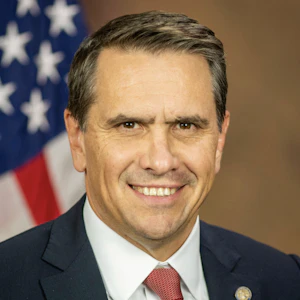
Biography of Deputy Attorney General Todd Blanche
The Honorable Todd Blanche is the 40th Deputy Attorney General of the United States, overseeing the work of the 115,000 dedicated employees who fulfill the Department of Justice’s mission at Main Justice, the FBI, DEA, U.S. Marshals, ATF, and 93 U.S. Attorney’s Offices.
Todd began his career at the Department where he served for over fifteen years in a variety of capacities, including as a contractor, a paralegal in the Criminal Division, and at the United States Attorney’s office for the Southern District of New York where he eventually became an AUSA and later a supervisor.
After leaving the Department, Todd worked as a criminal defense attorney that included representing President Donald Trump in three of the criminal cases brought against him in 2023 and 2024.
Following President Trump’s historic return to the White House, the President appointed Todd to work alongside Attorney General Pam Bondi to make America safe again. At the DOJ, Todd is working tirelessly to implement President Trump’s priorities that include confronting illegal protecting American businesses from fraud.
Todd has been married to his wonderful wife Kristine for nearly thirty years, is a father and grandfather.

Paul Atkins
Paul Atkins
Prior to returning to the SEC, Chairman Atkins was most recently chief executive of Patomak Global Partners, a company he founded in 2009. Chairman Atkins helped lead efforts to develop best practices for the digital asset sector. He served as an independent director and non-executive chairman of the board of BATS Global Markets, Inc. from 2012 to 2015.
Chairman Atkins was appointed by President George W. Bush to serve as a Commissioner of the SEC from 2002 to 2008. During his tenure, he advocated for transparency, consistency, and the use of cost-benefit analysis at the agency. Chairman Atkins also represented the SEC at meetings of the President’s Working Group on Financial Markets and the U.S.-EU Transatlantic Economic Council. From 2009 to 2010, he was appointed a member of the Congressional Oversight Panel for the Troubled Asset Relief Program.
Before serving as an SEC Commissioner, Chairman Atkins was a consultant on securities and investment management industry matters, especially regarding issues of strategy, regulatory compliance, risk management, new product development, and organizational control.
From 1990 to 1994, Chairman Atkins served on the staff of two chairmen of the SEC, Richard C. Breeden and Arthur Levitt, ultimately as chief of staff and counselor, respectively. He received the SEC’s 1992 Law and Policy Award for work regarding corporate governance matters.
Chairman Atkins began his career as a lawyer in New York, focusing on a wide range of corporate transactions for U.S. and foreign clients, including public and private securities offerings and mergers and acquisitions. He was resident for 2½ years in his firm's Paris office and admitted as conseil juridique in France.
A member of the New York and Florida bars, Chairman Atkins received his J.D. from Vanderbilt University School of Law in 1983 and was Senior Student Writing Editor of the Vanderbilt Law Review. He received his A.B., Phi Beta Kappa, from Wofford College in 1980.
Originally from Lillington, North Carolina, Chairman Atkins grew up in Tampa, Florida. He and his wife Sarah have three sons.

Mike Selig
Mike Selig
Chairman Selig brings to the role deep public and private sector experience working with a wide range of stakeholders across agriculture, energy, financial, and digital asset industries, which rely upon and operate in CFTC-regulated markets.
Prior to his leadership at the CFTC, Chairman Selig most recently served as chief counsel of the Securities and Exchange Commission’s Crypto Task Force and senior advisor to SEC Chairman Paul S. Atkins. In this role, Chairman Selig helped to develop a clear regulatory framework for digital asset securities markets, harmonize the SEC and CFTC regulatory regimes, modernize the agency’s rules to reflect new and emerging technologies, and put an end to regulation by enforcement. He also participated in the President’s Working Group on Digital Asset Markets and contributed to its report on “Strengthening American Leadership in Digital Financial Technology.”
Prior to government service, Chairman Selig was a partner at an international law firm, focusing on derivatives and securities regulatory matters. During his years in private practice, he represented a broad range of clients subject to regulation by the CFTC, including commercial end users, futures commission merchants, commodity trading advisors, swap dealers, designated contract markets, derivatives clearing organizations, and digital asset firms. Chairman Selig advised clients on compliance with the Commodity Exchange Act and the CFTC’s rules and regulations thereunder, including in connection with registration applications and obligations, enforcement matters, and complex transactions.
Chairman Selig earned his law degree from The George Washington University Law School and was articles editor of The George Washington Law Review. He received his undergraduate degree from Florida State University.

David Bailey
David Bailey

Eric Trump
Eric Trump
Mr. Trump also serves as Executive Vice President of The Trump Organization, where he oversees the global management and operations of the Trump family’s extensive real estate portfolio. This includes Trump Hotels, Trump Golf, commercial and residential real estate, Trump Estates, and Trump Winery. Known for his hands-on leadership and strong market instincts, he has played a key role in expanding the company’s presence across major U.S. and international markets.
A globally recognized business leader and public figure, Mr. Trump is a prominent advocate for Bitcoin and decentralized finance. He is a co-founder of World Liberty Financial, a decentralized finance (DeFi) platform, and serves on the Board of Advisors of Metaplanet, Japan’s largest corporate holder of Bitcoin.
Beyond his business activities, Mr. Trump has helped raise more than $50 million for St. Jude Children’s Research Hospital in the fight against pediatric cancer, a philanthropic mission he began at age 21.
Mr. Trump earned a degree in Finance and Management from Georgetown University. He currently resides in Florida with his wife, Lara, and their two children. He is also the author of Under Siege, his memoir published in October 2025.

Jack Mallers
Jack Mallers

Cynthia Lummis
Cynthia Lummis
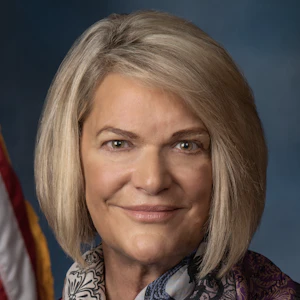
As the first-ever Chair of the Senate Banking Subcommittee on Digital Assets, Senator Lummis is the architect of the legislative framework shaping America's digital asset future. She introduced the landmark Lummis-Gillibrand Responsible Financial Innovation Act, the first comprehensive bipartisan crypto regulatory framework in Senate history. She co-authored the GENIUS Act — the first federal stablecoin law ever enacted — and introduced the BITCOIN Act, which would establish a U.S. strategic Bitcoin reserve of up to one million BTC. She is leading the Clarity Act, which will bring long-overdue regulatory certainty to the digital asset industry. She has also championed digital asset tax reform, including a de minimis exemption for small transactions and equal tax treatment for miners and stakers.
Known as Congress' "Crypto Queen," Senator Lummis represents Wyoming — a state she has helped build into one of the most digital asset-friendly regulatory environments in the nation. Before serving in the Senate, she served 14 years in the Wyoming Legislature, eight years as Wyoming State Treasurer, and eight years in the U.S. House. She is a three-time graduate of the University of Wyoming.
Her work represents a crucial bridge between traditional financial systems and the emerging digital economy, ensuring America leads the world in financial innovation while protecting the individual freedoms that define it.

Adam Back
Adam Back

Amy Oldenburg
Amy Oldenburg

David Marcus
David Marcus

Matt Schultz
Matt Schultz

Fred Thiel
Fred Thiel
Throughout his career, Mr. Thiel has consistently driven rapid growth and created substantial shareholder value. Prior to MARA, Mr. Thiel served as the CEO of two other public companies, Local Corporation (NASDAQ: LOCM) and Lantronix, Inc (NASDAQ: LTRX). He has successfully raised billions in equity and debt through private and public offerings, led companies through IPOs, executed high-value exits to strategic and financial acquirers, and implemented effective M&A and roll-up strategies.
Mr. Thiel attended the Stockholm School of Economics and executive classes at Harvard Business School, and is fluent in English, Spanish, Swedish, and French. Mr. Thiel is the Chairman of the Board for Oden Technology, Inc. and is active in Young Presidents’ Organization where he has led initiatives in both the FinTech and Technology Networks.
A recognized voice in the industry, Fred frequently shares his insights on energy and technology with major media outlets like Bloomberg TV, CNBC, and FOX Business, contributing to vital discussions about the future of these sectors.

Tim Draper
Tim Draper
He is a supporter and global thought leader for entrepreneurs everywhere, and is a leading spokesperson for Bitcoin and decentralization, having won the Bitcoin US Marshall’s auction in 2014, invested in over 50 crypto companies, and led investments in Coinbase, Ledger, Tezos, and Bancor, among others.

Afroman
Afroman