The Financial, Physical & Legal Architecture of the HPC Transition
Speakers/Moderators

Nishant Sharma
Nishant Sharma

Rachel Silverstein
Rachel Silverstein

Gary Vecchiarelli
Gary Vecchiarelli

Charles L'Ecuyer
Charles L'Ecuyer
In 2019, Chuck led the development of the Intelliflex product line—an advanced, fully integrated modular solution purpose-built for next-generation computing. Originally designed to meet the demanding needs of blockchain and cloud infrastructure, the Intelliflex platform has since expanded to power cutting-edge AI factories and high-density modular data centers. Engineered for rapid deployment and scalability, Intelliflex enables clients to fast-track infrastructure rollouts and accelerate return on investment.
Session
Overview
This panel examined what it really takes for Bitcoin mining operators to move into high-performance computing and AI data center infrastructure. Nishant Sharma hosted Rachel Silverstein of Keel Infrastructure, Gary Vecchiarelli of CleanSpark, and Charles L'Ecuyer of Intelliflex for a discussion spanning physical infrastructure, capital formation, contracts, and community engagement.
A central theme was that the transition is not a simple swap from ASICs to GPUs. The speakers emphasized that land and power may carry over, but most Bitcoin mining infrastructure is not reusable for tier three HPC requirements, redundancy, liquid cooling, higher density, and strict uptime expectations. Modular infrastructure was presented as one way to manage deployment speed, future upgrades, and hardware obsolescence.
The session also covered the financial and legal shift involved in moving from mining to HPC. The panel discussed larger CapEx requirements, tenant-first financing, high-yield debt, Bitcoin-backed borrowing, SLAs, liquidated damages, force majeure clauses, and the need to allocate risk across customers, developers, landlords, and power providers.
The closing advice focused on avoiding rushed conversions, learning from early market participants, building flexible contracts and infrastructure, and prioritizing community engagement. The discussion framed the HPC transition as a fundamentally different business model for Bitcoin miners, not just an infrastructure upgrade.
Hello everyone. Good afternoon, and thanks for coming to the Energy Stage. Today's topic is the financial, physical, and legal architecture of the HPC transition. We have three great panelists from each of these domains to talk about this more.
I'll start with a quick round of introductions. My name is Nishant. I run a consulting firm for publicly traded Bitcoin mining companies, and we also run a media business called The Energy Mag. You can check it out to learn more about the companies present here.
Good afternoon. I'm Rachel Silverstein. I'm the general counsel at Keel Infrastructure, formerly known as Bitfarms. Thanks for having me.
Gary Vecchiarelli, president and CFO of CleanSpark, based here in Las Vegas. So you're on our home turf.
Hi, everyone. I'm the CEO and founder of Intelliflex. We build modular infrastructure, so I'll be on that side of things today.
Great to have you all. When we talk about Bitcoin, you must have read a lot of headlines about Bitcoin miners pivoting to HPC. We imagine it's as simple as just swapping ASICs for GPUs, but it's more complicated than that. Three things have to come together to make it happen: the physical side, which is the infrastructure side; the legal side, which includes contracts and various other issues these sites are increasingly facing, including community issues; and then, of course, the finance side. The CapEx required for these sites is way more than for Bitcoin mining sites.
What, in your opinion, is the big difference between a Bitcoin mining site and an HPC site, especially from the point of view of transitioning from one to the other?
I think the list of things they have in common is probably shorter. The stuff they have in common is essentially access to land and power. Other than that, it's a completely different business. Bitcoin miners generally, unless you're hosting, don't have customers. You're dealing with a completely different regulatory regime, especially now, which I'm sure we'll get into later.
But other than that, yes, you're plugging in computers, but they're really very different businesses. The density is different. The hardware is different. The software is different. The teams you need in place are different. So I do think that list is actually easier to cover.
To give you an idea, and they talked about this in the last panel, it's infrastructure. Right now, for a Bitcoin mine, it's about $500,000 to $600,000 per megawatt. For an AI data center, it's $10 million to $12 million per megawatt.
That's because most Bitcoin miners could be considered tier zero infrastructure. A lot of our buildings have very efficient air cooling, and they're basically three-sided buildings with not a lot of infrastructure. But when you're looking at data centers, traditionally you're looking at four walls. Chuck will talk more about modular because I think that's where the future is going.
You have a lot of mechanical engineering and plumbing running through a small amount of square footage. For every dollar of megawatt infrastructure you have, you have $3 of GPUs going in there. So you have upwards of $40 million per megawatt worth of equipment in a very small amount of square footage.
With that comes a tremendous amount of support, engineering, and planning. Not only on the financial side, where you have to raise that type of money, which fortunately has much larger pools of capital available than we ever experienced in Bitcoin mining. But at every stage, from planning through execution, it's just a completely different ballgame.
I agree 100%. When you're looking at infrastructure, it's a completely different ballgame. We're talking about concurrently maintainable systems with no single point of failure. We need to meet Nvidia reference guidelines and different guidelines that we're typically not following on the Bitcoin mining side.
When you need to meet a tier three system versus a tier zero, like Gary was saying, it makes you different not just on the CapEx, but on the amount of infrastructure you need. To deploy it and operate it, you need a completely different team, or you need to beef up the team you already have with new training in place, just to understand more of the complexity of running GPUs compared to Bitcoin miners.
When someone thinks about a Bitcoin mine being converted to an HPC site, the most obvious thing they think about is that the ASICs are going to become GPUs, and they think about the physical transition. Chuck, I would like to start with you. What are the different challenges from the physical infrastructure point of view that come into play when you are transitioning a site from a Bitcoin mine to an HPC site?
I think there's a bit of misconception on how you could actually do a transition. When we talk about transitioning, again, what you have in common is the land and power. That's great. Even at that level, sometimes you need a different power contract.
But we're not talking about the same solution altogether. When you build modular AI factories, there are multiple different components. You can't just transition existing Bitcoin mining infrastructure to that overnight. Basically, it's a complete redo. You'd have to start all over again and build new infrastructure that will meet your tier three requirements.
When we say that, we're talking about a concurrently maintainable system. The number one thing you have to keep in mind is that you need N+1 redundancy. Any piece of equipment you deploy will have to have a concurrently maintainable option. If you have a smart PDU, a chiller unit, or any part in your power system or cooling system, you need to be able to maintain it during operation without any downtime. That's what it means to have a tier three solution with a concurrently maintainable setup. It's a completely different system.
Let's talk about what is common. What can you reuse? Where do you save costs because you already have a Bitcoin mine?
There's truly nothing you can reuse if you have a facility. I think the best way to look at it is to plan a proper transition. Transitioning your energy and the use of your land to AI infrastructure is the way I look at it, and I think everyone is looking at it that way.
Let me chime in from a financial point of view. The brain damage and cost it takes to try to figure out what to use is not worth the time it takes. You might as well level the site and get on with it, because this industry is moving at light speed. Terms are changing every week, both on the financing side and the leasing side.
You're better off starting with what could be considered brownfield, but essentially starting with a greenfield plot of dirt. If you're able to move some of your infrastructure somewhere else, where Bitcoin mining economics are better, sure, you could probably save 80% or 90% of the infrastructure if you move it somewhere else. But honestly, with the time value of money, it's not worth it. You're probably better off just leveling your site.
The best-case scenario is that you keep running your Bitcoin mining infrastructure while you're manufacturing, let's say, a modular system. You could deploy it and then transition your power to it as you're phasing down your Bitcoin. That's about as good as it gets.
And you've got to have the land to be able to do that. There are some sites out there that need 3,000 to 6,000 workers, so think about where all those people are going to park. If you just have 20 acres or whatever, there's not going to be enough land.
If you have that opportunity, we do that at Sandersville. We've announced that we bought some additional land, and we're going to continue to mine until we're able to energize AI. But I don't think most Bitcoin mines have that luxury.
Yesterday we were on a panel with Fred from Marathon and Matt from CleanSpark, and we talked about how these contracts for HPC, or the SLAs, have various teeth that have not been noticed so much in the press or media. That requires more awareness and diligence when you are going through these contracts.
Rachel, from your point of view, what are the biggest risks and biggest points of concern that these contracts have? And looking at Bitcoin mining contracts, which are very different when it comes to hosting contracts, what are the biggest differences?
Again, I think the differences are more than the similarities. You mentioned SLAs. That's certainly a huge one. I would say delay damages and liquidated damages are extremely important in HPC agreements. That is really where your customer is going to try to stick it to you. You certainly want to have sage, experienced counsel advising you on all of those things.
Of course, it depends on the type of transaction you're doing. If it's a joint venture type of agreement, then governance structure is going to be extremely important. Who is responsible for what tasks is extremely important. If you're doing a tenant lease, you want to have really strong force majeure language. You want to be very clear on who is going to be responsible for delays that are coming from the grid or other types of energy processes.
It's a landmine, frankly. You have to be on the lookout for things like cross-default provisions. When you look at SLAs, you want to make sure that that's the tenant's sole remedy and that it's not just an SLA but a material breach of your agreement. You really have to read these things holistically, not just directly with your customer, but with your other providers too, to make sure you're allocating risk appropriately among all of the parties.
None of that exists, really, in Bitcoin mining. You don't have to deal with a customer, generally speaking, unless you're hosting. Even those types of agreements have been the subject of many lawsuits where those things are litigated. I'm sure we're going to see the same thing in the data center space as these projects inevitably get delayed.
One other thing I'd add is a piece of news that just came out the other day that I think is going to change the way these agreements happen. President Trump designated grid infrastructure and related equipment to be essentially earmarked under the Defense Production Act, which will allow folks in this business to skip lines and prioritize manufacturing. It will certainly lead to an increase in capital sent to the space, which will speed up production. It will probably speed up production within the United States. All of that is to the end of creating a sovereign AI system in this country that allows for the grid to be expanded to support sovereign AI. That's going to change the way these agreements work also.
You touched on a very interesting piece, which was the recent regulation. From what I read, this recent regulation is going to make it harder to import important components of your data center from abroad because of security issues. Would that change existing lead times for people who have already signed SLAs and have a delivery obligation to meet? Would it make it complicated to meet those? And if they are not able to deliver, can they use some kind of force majeure clause because of this new, unexpected law that gives them some leeway?
I would challenge the notion that it's going to make it harder. First of all, we've already seen the ways in which the tariff regulations and import rules impacted the industry, so it was already a challenge. But if you're able to designate a lot of this equipment as essentially national security imperative equipment, it's going to make it easier to create it here in the United States: cheaper, faster, better. It will prioritize it.
And then, like you mentioned, if I'm wrong and it does have a delay impact, that's why your force majeure clauses are so critical. Because yes, it may be completely out of the developer's, builder's, or landlord's control.
That's a relief. That's good to know. I hope what you mentioned before is true, that it just makes everything better overall.
Gary, you mentioned how, with capital, you should be following a tenant-first approach where you get a tenant, and that brings in some of the big capital that you need to set up these operations. Considering that, what's the best way to approach this in steps? What kind of capital should you be spending on what things before you get a tenant, and what kind of capital and what things should you spend after you get one?
That's a tough question because it really depends on your access to the capital markets. Let's break this down. The common path is one that many of our peers have already blazed. Some of them, if they don't have access to good capital, are getting into what's called pre-lease arrangements. Those facilities end up having a very expensive cost of capital, sometimes a minimum return on investment of 1.4 to 1.6 over three years. That is 15% to 20% a year, which can be really expensive.
What they'll do with that amount is typically build out a substation or acquire land and power. But there needs to be a lease at some point in the near future, which the financier will do due diligence on and ensure is coming.
The majority of the CapEx right now is being financed through high-yield deals. I think you see most of our peers financing about 85%. I'm hearing that it's such a hot market, you can finance up to 90% high yield. In fact, there was a deal done a couple of months ago that was six and an eighth percent, which to me doesn't seem like high-yield territory, but it was rated so well and the market was so hot that they got a great rate.
Those were rates we never saw in ASIC mining. If you could get financing, you were maybe at 15% on a very short amortization period, like two or three years. So having a high-yield deal of billions of dollars at 85% to 90% is actually quite attractive, I think, to most miners.
But then the question becomes, how do you fill the rest of that equity? Most of the space has been built on issuing common shares through the ATM. I think you're starting to see fewer of those ATMs. There's one company out there that has a very large ATM to help finance their builds, but you're going to see more debt, more traditional debt. That one deal I was telling you about, at six and an eighth, was subscribed six times over. So it goes to show you the type of investor demand that's there.
When it comes to what you should be spending your money on first, it's always land and power. Land and power right now, even though we're finding in the market that prices are going up per megawatt, is still about 2% to 4% plus of the total cost per megawatt to build. It is a small part of the overall cost to build. But if you don't have capital for that, that's going to be expensive capital if you've got to issue equity or do a pre-lease type of arrangement.
To Gary's point, probably the only two things in the entire buildout that will not be obsolete at some point are land and power. You don't want to get too far ahead of the curve because things are changing so quickly, which of course increases the entire risk profile of the deal. That should also be taken into account when you're doing your lease contract and building in flexibility to upgrade various parts of the infrastructure.
Other than land and power, everything is going to change rapidly. IT moves more quickly than you can pour the concrete. So it's a good point.
I'd be remiss if I didn't mention this because we are at a Bitcoin conference. Let's remember, we're one of the top ten corporate holders of Bitcoin. We have 13,500 on the balance sheet, which is about $1 billion at today's value. We all know that Bitcoin is pristine collateral. One of the things that we're deploying is borrowing against that Bitcoin balance, which is a non-dilutive way of raising capital. We're talking single-digit rates, very similar to what a high yield would be.
We feel pretty comfortable that, at least for certain-sized sites, we can finance 100% right off our balance sheet, including the high-yield deals. Again, let's not discount the value of Bitcoin and how Bitcoin can be used as collateral or capital for financing these builds.
That's a very good point, especially at a Bitcoin conference: using Bitcoin as a treasury asset. That changes the capital structure of these deals. Rachel, you also brought up the obligation to upgrade, which is very different from Bitcoin mining. We will come back to that because it's a very interesting topic.
I have this burning question for Chuck, regarding modular infrastructure. We spoke about it in our calls before this. How does that change the economics and the risk of such a project?
I think going modular really helps. It keeps you flexible. Talking about upgrades, your land and power will still be there and will always be good. Infrastructure built the right way can be flexible and live in time. You can adjust to the next GPU available on the market.
Right now, you always see a year or two ahead. You start looking at the Nvidia GPU roadmap, and that's what you have to build for. You have to have infrastructure flexible enough to accommodate that transition as you move forward.
You could have valid infrastructure operable for the course of that time, but at one point you always have to keep changing and refurbishing. That's why a modular solution versus a stick-built traditional data center is always a winner. It will always win the race just because of the flexibility and how quickly you can put it online.
Speed is one thing we have to talk about. You have to be under 12 months. Regardless of what you're doing, your projects will have to be online, operable, and giving your returns under the 12-month mark. You'll have to keep doing that and not be irrelevant after a hardware cycle. So you need to be able to adjust as you go.
One point I want to make, because it's a very good point you made, is you don't want to be irrelevant. I think that's one of the reasons why Bitcoin miners right now are such a good investment opportunity. If you take the legacy data centers of the world that have really low power density, and you have these big four-wall data centers that are not modular design and are trading at 20 times EBITDA multiples, which we all aspire to do someday when we have our leases in place, they are probably better off just scrapping.
They have a real functional issue because of the low power density. It will probably cost them more than $10 million to $12 million to redo their infrastructure. Whereas in a modular environment, you are actually future-proofing it, and the downtime is minimal.
Absolutely. When you start looking at these data centers, your power system and your cooling system are usually large, centralized plants. They're not flexible in nature. They're not scalable. They're built for what's there.
When you're looking at retrofitting, back then it was very easy. You'd go from one density to a slightly higher density. Now, every year or two, we're doubling the density of compute, which is just not feasible. You can't just go out there and say, hey, we're going to retrofit these data halls and all the power system and cooling system. It becomes impractical, with too much cost and downtime.
With a modular solution, again, to your point, Gary, it depends what type of land they have around. But with a high-density modular system, usually you could probably build your expansion on the same property or adjacent to it, and merge your power to it once it's fully commissioned, then decommission your low-density data center. That's the play that serves you best.
I do agree that modularity is probably a risk mitigation, but it should also be taken into account when you're drafting your agreements. If we think back ten years, there are leases that were drafted ten years ago that are still in effect today. I'm sure there's technology that exists today that we couldn't imagine ten years ago and couldn't contemplate ten years ago. So you really have to plan for that sort of obsolescence and build flexibility into your contracts.
We keep coming back to the upgrade point. Rachel, I would love for you to inform us more about what kind of upgrade obligations you usually see in these SLAs.
It depends. Classic legal answer, sorry. It depends what kind of transaction you're talking about. In an ideal world, the developer or landlord would be able to upgrade equipment and infrastructure without much restriction.
You want to retain as much flexibility as possible. Ultimately, that's what's best for the customer too. I think you can align your interests in building in flexibility like that, because any customer is going to want the most efficient setup possible. I think it's difficult to draft perfectly, but the point is to have an eye toward flexibility for sure.
I think we are moving toward closing the panel. What is one mistake that companies should avoid from each of your domains to make the transition from Bitcoin mining to HPC smoother?
Let's consider everything we just talked about. Don't try to reuse and shoehorn anything into infrastructure that exists. Plan ahead for what you need. Truly going with a flexible, modular system up front will save you a lot and help you future-proof your infrastructure. That's my two cents.
Fortunately, there is a second-mover advantage that we're finding. The trail has really been blazed by some of our peers. They're probably kicking themselves now because they signed some deals that were maybe not as lucrative as ones that are being signed now or are about to be signed.
The first mistake would be not following where the crowd and the other players are going. The second one is don't rush into it. Anytime you're scaling, you want to make sure you take your time and think about operations, legal, finance, infrastructure, whatever it is, from every single angle. Then you replicate and look to get the next one faster.
We're talking about such high stakes, with billions of dollars here and potential lawsuits if you can't meet minimum expectations. You can't get it wrong, particularly on the first one, because it can kill your company.
I would second learning from other people's mistakes and challenging all of your assumptions, because you're changing to a completely different business. You have to be humble about that and challenge everything you think you know about it.
The other thing I would add is something that I think traditional data centers can learn from the mistakes of Bitcoin miners, which is the community engagement aspect of data centers. It's something I learned in my time at CleanSpark. We do it at Keel Infrastructure. You go in the front door, you make sure the community is on board, and you educate the community patiently on what you're doing for it and how you're going to enrich the community at large.
The reason for that is simple. It's mutually beneficial to everybody, and usually all it takes is a little bit of engagement. We've seen that mistake made by some of the large hyperscalers, so I think it's a lesson that they can learn from the Bitcoin miners. It makes everything easier and better.
That's a great takeaway: community engagement. Don't forget to prioritize that. With that note, we can end this panel. Thanks everyone for coming here.
Similar
Sessions
The Evolution of Bitcoin Mining to AI
Charles L'Ecuyer
Charles L'Ecuyer
In 2019, Chuck led the development of the Intelliflex product line—an advanced, fully integrated modular solution purpose-built for next-generation computing. Originally designed to meet the demanding needs of blockchain and cloud infrastructure, the Intelliflex platform has since expanded to power cutting-edge AI factories and high-density modular data centers. Engineered for rapid deployment and scalability, Intelliflex enables clients to fast-track infrastructure rollouts and accelerate return on investment.
The Evolution of Bitcoin Mining to AI
Speakers/Moderators
Charles L'Ecuyer
Charles L'Ecuyer
In 2019, Chuck led the development of the Intelliflex product line—an advanced, fully integrated modular solution purpose-built for next-generation computing. Originally designed to meet the demanding needs of blockchain and cloud infrastructure, the Intelliflex platform has since expanded to power cutting-edge AI factories and high-density modular data centers. Engineered for rapid deployment and scalability, Intelliflex enables clients to fast-track infrastructure rollouts and accelerate return on investment.
The Financial, Physical & Legal Architecture of the HPC Transition
Nishant Sharma
Nishant Sharma
Rachel Silverstein
Rachel Silverstein
Gary Vecchiarelli
Gary Vecchiarelli
Charles L'Ecuyer
Charles L'Ecuyer
In 2019, Chuck led the development of the Intelliflex product line—an advanced, fully integrated modular solution purpose-built for next-generation computing. Originally designed to meet the demanding needs of blockchain and cloud infrastructure, the Intelliflex platform has since expanded to power cutting-edge AI factories and high-density modular data centers. Engineered for rapid deployment and scalability, Intelliflex enables clients to fast-track infrastructure rollouts and accelerate return on investment.
The Financial, Physical & Legal Architecture of the HPC Transition
Speakers/Moderators
Nishant Sharma
Nishant Sharma
Rachel Silverstein
Rachel Silverstein
Gary Vecchiarelli
Gary Vecchiarelli
Charles L'Ecuyer
Charles L'Ecuyer
In 2019, Chuck led the development of the Intelliflex product line—an advanced, fully integrated modular solution purpose-built for next-generation computing. Originally designed to meet the demanding needs of blockchain and cloud infrastructure, the Intelliflex platform has since expanded to power cutting-edge AI factories and high-density modular data centers. Engineered for rapid deployment and scalability, Intelliflex enables clients to fast-track infrastructure rollouts and accelerate return on investment.
Other
Speakers
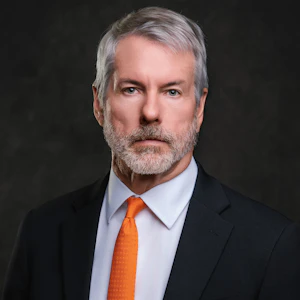
Michael Saylor
Michael Saylor
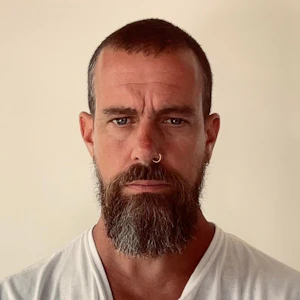
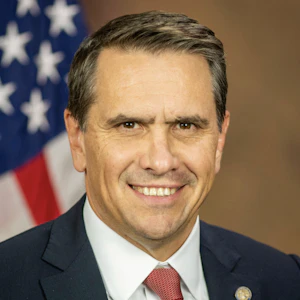
Todd Blanche
Todd Blanche
Biography of Deputy Attorney General Todd Blanche
The Honorable Todd Blanche is the 40th Deputy Attorney General of the United States, overseeing the work of the 115,000 dedicated employees who fulfill the Department of Justice’s mission at Main Justice, the FBI, DEA, U.S. Marshals, ATF, and 93 U.S. Attorney’s Offices.
Todd began his career at the Department where he served for over fifteen years in a variety of capacities, including as a contractor, a paralegal in the Criminal Division, and at the United States Attorney’s office for the Southern District of New York where he eventually became an AUSA and later a supervisor.
After leaving the Department, Todd worked as a criminal defense attorney that included representing President Donald Trump in three of the criminal cases brought against him in 2023 and 2024.
Following President Trump’s historic return to the White House, the President appointed Todd to work alongside Attorney General Pam Bondi to make America safe again. At the DOJ, Todd is working tirelessly to implement President Trump’s priorities that include confronting illegal protecting American businesses from fraud.
Todd has been married to his wonderful wife Kristine for nearly thirty years, is a father and grandfather.

Paul Atkins
Paul Atkins
Prior to returning to the SEC, Chairman Atkins was most recently chief executive of Patomak Global Partners, a company he founded in 2009. Chairman Atkins helped lead efforts to develop best practices for the digital asset sector. He served as an independent director and non-executive chairman of the board of BATS Global Markets, Inc. from 2012 to 2015.
Chairman Atkins was appointed by President George W. Bush to serve as a Commissioner of the SEC from 2002 to 2008. During his tenure, he advocated for transparency, consistency, and the use of cost-benefit analysis at the agency. Chairman Atkins also represented the SEC at meetings of the President’s Working Group on Financial Markets and the U.S.-EU Transatlantic Economic Council. From 2009 to 2010, he was appointed a member of the Congressional Oversight Panel for the Troubled Asset Relief Program.
Before serving as an SEC Commissioner, Chairman Atkins was a consultant on securities and investment management industry matters, especially regarding issues of strategy, regulatory compliance, risk management, new product development, and organizational control.
From 1990 to 1994, Chairman Atkins served on the staff of two chairmen of the SEC, Richard C. Breeden and Arthur Levitt, ultimately as chief of staff and counselor, respectively. He received the SEC’s 1992 Law and Policy Award for work regarding corporate governance matters.
Chairman Atkins began his career as a lawyer in New York, focusing on a wide range of corporate transactions for U.S. and foreign clients, including public and private securities offerings and mergers and acquisitions. He was resident for 2½ years in his firm's Paris office and admitted as conseil juridique in France.
A member of the New York and Florida bars, Chairman Atkins received his J.D. from Vanderbilt University School of Law in 1983 and was Senior Student Writing Editor of the Vanderbilt Law Review. He received his A.B., Phi Beta Kappa, from Wofford College in 1980.
Originally from Lillington, North Carolina, Chairman Atkins grew up in Tampa, Florida. He and his wife Sarah have three sons.

Mike Selig
Mike Selig
Chairman Selig brings to the role deep public and private sector experience working with a wide range of stakeholders across agriculture, energy, financial, and digital asset industries, which rely upon and operate in CFTC-regulated markets.
Prior to his leadership at the CFTC, Chairman Selig most recently served as chief counsel of the Securities and Exchange Commission’s Crypto Task Force and senior advisor to SEC Chairman Paul S. Atkins. In this role, Chairman Selig helped to develop a clear regulatory framework for digital asset securities markets, harmonize the SEC and CFTC regulatory regimes, modernize the agency’s rules to reflect new and emerging technologies, and put an end to regulation by enforcement. He also participated in the President’s Working Group on Digital Asset Markets and contributed to its report on “Strengthening American Leadership in Digital Financial Technology.”
Prior to government service, Chairman Selig was a partner at an international law firm, focusing on derivatives and securities regulatory matters. During his years in private practice, he represented a broad range of clients subject to regulation by the CFTC, including commercial end users, futures commission merchants, commodity trading advisors, swap dealers, designated contract markets, derivatives clearing organizations, and digital asset firms. Chairman Selig advised clients on compliance with the Commodity Exchange Act and the CFTC’s rules and regulations thereunder, including in connection with registration applications and obligations, enforcement matters, and complex transactions.
Chairman Selig earned his law degree from The George Washington University Law School and was articles editor of The George Washington Law Review. He received his undergraduate degree from Florida State University.

David Bailey
David Bailey

Eric Trump
Eric Trump
Mr. Trump also serves as Executive Vice President of The Trump Organization, where he oversees the global management and operations of the Trump family’s extensive real estate portfolio. This includes Trump Hotels, Trump Golf, commercial and residential real estate, Trump Estates, and Trump Winery. Known for his hands-on leadership and strong market instincts, he has played a key role in expanding the company’s presence across major U.S. and international markets.
A globally recognized business leader and public figure, Mr. Trump is a prominent advocate for Bitcoin and decentralized finance. He is a co-founder of World Liberty Financial, a decentralized finance (DeFi) platform, and serves on the Board of Advisors of Metaplanet, Japan’s largest corporate holder of Bitcoin.
Beyond his business activities, Mr. Trump has helped raise more than $50 million for St. Jude Children’s Research Hospital in the fight against pediatric cancer, a philanthropic mission he began at age 21.
Mr. Trump earned a degree in Finance and Management from Georgetown University. He currently resides in Florida with his wife, Lara, and their two children. He is also the author of Under Siege, his memoir published in October 2025.
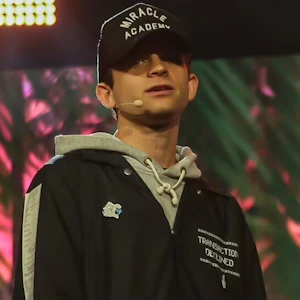
Jack Mallers
Jack Mallers
Cynthia Lummis
Cynthia Lummis
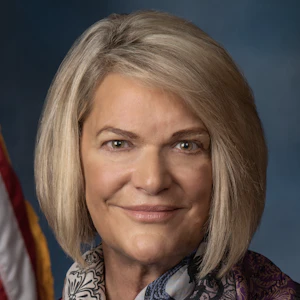
As the first-ever Chair of the Senate Banking Subcommittee on Digital Assets, Senator Lummis is the architect of the legislative framework shaping America's digital asset future. She introduced the landmark Lummis-Gillibrand Responsible Financial Innovation Act, the first comprehensive bipartisan crypto regulatory framework in Senate history. She co-authored the GENIUS Act — the first federal stablecoin law ever enacted — and introduced the BITCOIN Act, which would establish a U.S. strategic Bitcoin reserve of up to one million BTC. She is leading the Clarity Act, which will bring long-overdue regulatory certainty to the digital asset industry. She has also championed digital asset tax reform, including a de minimis exemption for small transactions and equal tax treatment for miners and stakers.
Known as Congress' "Crypto Queen," Senator Lummis represents Wyoming — a state she has helped build into one of the most digital asset-friendly regulatory environments in the nation. Before serving in the Senate, she served 14 years in the Wyoming Legislature, eight years as Wyoming State Treasurer, and eight years in the U.S. House. She is a three-time graduate of the University of Wyoming.
Her work represents a crucial bridge between traditional financial systems and the emerging digital economy, ensuring America leads the world in financial innovation while protecting the individual freedoms that define it.

Adam Back
Adam Back

Amy Oldenburg
Amy Oldenburg
David Marcus
David Marcus

Matt Schultz
Matt Schultz
Fred Thiel
Fred Thiel
Throughout his career, Mr. Thiel has consistently driven rapid growth and created substantial shareholder value. Prior to MARA, Mr. Thiel served as the CEO of two other public companies, Local Corporation (NASDAQ: LOCM) and Lantronix, Inc (NASDAQ: LTRX). He has successfully raised billions in equity and debt through private and public offerings, led companies through IPOs, executed high-value exits to strategic and financial acquirers, and implemented effective M&A and roll-up strategies.
Mr. Thiel attended the Stockholm School of Economics and executive classes at Harvard Business School, and is fluent in English, Spanish, Swedish, and French. Mr. Thiel is the Chairman of the Board for Oden Technology, Inc. and is active in Young Presidents’ Organization where he has led initiatives in both the FinTech and Technology Networks.
A recognized voice in the industry, Fred frequently shares his insights on energy and technology with major media outlets like Bloomberg TV, CNBC, and FOX Business, contributing to vital discussions about the future of these sectors.
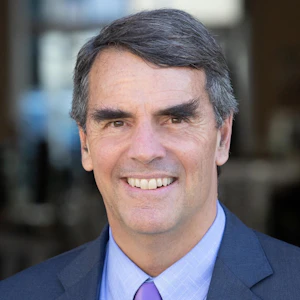
Tim Draper
Tim Draper
He is a supporter and global thought leader for entrepreneurs everywhere, and is a leading spokesperson for Bitcoin and decentralization, having won the Bitcoin US Marshall’s auction in 2014, invested in over 50 crypto companies, and led investments in Coinbase, Ledger, Tezos, and Bancor, among others.

Afroman
Afroman