Banking with Bitcoin & Digital Assets Built-In
Speakers/Moderators

Brian Hirschfield
Brian Hirschfield

Igor Istratov
Igor Istratov

Andrew Begin
Andrew Begin
Before joining Galoy, Andrew worked in strategic consulting within the WPP and Publicis Groupe networks, advising Fortune 500 companies across finance, technology, and healthcare on large-scale digital transformation initiatives.

Miles Paschini
Miles Paschini
Miles was awarded seven patents related to payment processing services during the development of EWI Holdings acquired by Blackhawk Inc. in 2006. In addition to developing the industry’s first cryptocurrency linked debit cards, Miles and FV Bank co-founder Nitin Agarwal are the first in history to be awarded a U.S. patent for the development of stablecoin instruments backed by sovereign debt and on chain KYC.
Session
Overview
This panel explored how banks are beginning to integrate Bitcoin and digital assets into traditional financial services. Brian Hirschfield moderated a discussion with Myles Paschini of FV Bank, Andrew Begin of Galoy, and Igor Istratov of Fifth Third Bank on the current state of banking access, custody, stablecoin settlement, and institutional demand.
The speakers described a market where only a small number of U.S. banks currently serve digital asset companies, but regulatory shifts and customer behavior are pushing more institutions to evaluate Bitcoin-related products. Key themes included separating Bitcoin from broader crypto risk, using banks as trust anchors, and building familiar customer experiences before moving toward more advanced self custody and blockchain-native services.
The conversation also covered the practical banking needs driving adoption, especially reliable fiat on- and off-ramps, stablecoin support, 24/7 settlement expectations, Bitcoin custody, and collateralized lending. The panelists emphasized that digital assets may not replace the financial system, but could modernize payments, liquidity, collateral management, and post-trade workflows.
Looking ahead, the group pointed to regulatory clarity, proof of reserves, interoperability standards, and on-chain messaging frameworks as important milestones for the convergence of traditional finance, Bitcoin, and digital asset infrastructure.
Good afternoon, everybody. Welcome to the panel. We tried to decide whether this is banks in the Bitcoin space or Bitcoin in the banking space. We will talk that out and try to answer both questions. I am really pleased to have the three gentlemen on the panel today, and I will allow them to introduce themselves.
Good afternoon. My name is Myles Paschini. I am the CEO and co-founder of FV Bank. We are a digital bank that provides traditional banking services, digital asset custody, stablecoin on- and off-ramps, and we are also a global Visa issuer.
Andrew Begin, chief strategy officer at Galoy. We build core banking and payments infrastructure, enabling community banks and credit unions to launch Bitcoin and digital asset-related products.
Igor Istratov, digital assets lead at Fifth Third Bank.
By way of introduction, my name is Brian Hirschfield. I was an actuary and a quant for about 30 years. I wrote the book Bitcoin for Institutions, and I am now creating a math academy called Magic Internet Math. Introductions are done, so let’s get into it.
Let’s establish the first question: what is the state of the union with regards to banks and Bitcoin?
At FV Bank, we are open for business. I think the demand for digital asset companies to get access to banking is still very strong, but it is still very limited. There are 4,700 U.S. banks, and I think I could count on one hand, or less than ten, that actually provide services to the industry. The opportunity for growth is still amazing, and there is a lot of opportunity for banks to step in further and provide growth for this industry.
I will add to that and maybe invert the question: banks providing Bitcoin services. I would say it is still very early. I have been to the Bitcoin Conference a number of times over the past four or five years, and over the past year I have been going to banking conferences and speaking with a lot of community banks, from $1 billion to $10 billion to $50 billion, about Bitcoin.
Some of the findings have been interesting. Stablecoins have reached a fever pitch. Everybody is talking about stablecoins and saying stablecoins are going to chase deposits out of traditional banks. That is a topic for another day, or later in this talk. But there is a lot of interest in Bitcoin.
One more thing regarding the state of the union in this space: there is no wedge between Bitcoin and crypto among a lot of bank executives. Personally speaking, that wedge needs to be driven, because I believe that crypto is very big and the risk perimeter is massive. With Bitcoin it is much smaller. Bitcoin is pretty simple, despite being a transformative technology. Now that regulation has shifted drastically in the past 18 months, I am really starting to see banks digging in in ways they were not 12 months ago.
I agree. Bitcoin is revolutionary, and it was essential to break into the financial system, but we have to start small. We have to start with practical cases of adoption in the banking industry. They come from derivatives of the blockchain and blockchain network. They come from atomic settlement, traceability, ownership, the concept of settlement, and the visibility of the entire process of a transaction on chain.
We have to start with the concepts and move to full production pilots. I think the key is to make it very familiar for our clients. We treat Bitcoin and the broader digital asset space in a similar manner, but the practical adoption of Bitcoin comes from small steps, where we treat them as a pilot to execution and start introducing them through the existing experience clients have today. They start getting the benefits of the digital asset space without a drastic shift to self custody wallets and exposure to the blockchain.
Then it comes from practical adoption of cross-border payments powered by stablecoins. It comes from atomic settlement. It comes from reducing funding requirements. It comes from reducing dependency on Fedwire, cut-off times, overnight delays, and weekends. From there, we bring the digital asset stack closer to the banking industry and merge them together.
We have established where we are. Here is my question: who is the chicken and who is the egg? Is Bitcoin leading, or are the banks leading all of this?
I think that is a tough one to answer. Bitcoin and banks will probably be most prevalent in the early stages as a custodial asset or as collateral, and I think that will drive the banks’ interest. The question for banks will be: why do I take on this additional security vector risk? Why do I take on this additional compliance risk? There has to be a revenue mechanism for banks to enter this space.
I think you will see early adoption driving these activities in the bank, because this is a new custodial asset that banks can hold for their clients. Most importantly, I think this is going to be the premium collateral in the industry. That is where FV Bank has really started with Bitcoin: providing digital asset custody and, very soon, providing collateralized loans. I think that is the entry point for most banks, and I think that will be the driver.
There is the pre-driver, which goes back to the early part of this industry, which was just providing on-ramps and off-ramps to the digital asset marketplace. That is bread and butter. You have to be able to provide traditional banking services so people can acquire or liquidate digital assets through fiat. After that it goes into custody, and lending is a natural evolution.
It is really interesting. If we look back over the past decade, crypto-native companies and Bitcoin-native companies have gotten all the benefits of interacting with the Bitcoin space. Traditional banks were told to stay out. There was a panel just two panels ago called Then They Fight You, and we know a lot of the stories of what happened. It was really two parallel economies that almost did not touch.
You had Bitcoin-native banks, companies like River, and of course the big exchanges that have been attracting people away from their traditional banking relationships. Since SAB 121, there has been a long series of changes in regulation and announcements where everything that used to be a red light, do not touch crypto, has now become a green light: America is going to be the crypto innovation hub of the world.
Now you are unleashing the banks to play in this space. There are a lot of interesting things happening, one of which is stablecoin yield. Banks are saying, do not pay yield on stablecoins. There are banks that are leaning in and saying, look, we have all the money. We have 70% of the deposits in the country. We have smart teams. We can partner. We can offer services.
That is where I see the chicken and the egg. It is really an interesting competition because the battle is for the customer of the future. Millennials and younger already own Bitcoin, and they are saying, mom, dad, you are the ones with the money. Why do you not have Bitcoin yet?
Now the handcuffs are off the banks. They can say, you know what, we could offer Bitcoin. We are experts in lending. We are 200 years old. We have been keeping people’s data and secrets safe for 200 years. We can play in this space. I think the next five years are going to be super interesting as crypto-native companies get charters and try to take those customers away from legacy banks, and legacy banks say, we are going to come into the space as well, and we are going to do it really safely and strongly.
I agree. I think we have two instances of Bitcoin living in parallel. We have a universe of users adopting Bitcoin through self custody wallets. They define where the best execution comes from. They define settlement. They define how custody works. They get the best pricing execution. They define where they get market data.
But that is not where the volume is coming from. The volume is coming from institutional players entering the game, and they define the second instance of Bitcoin that lives in an abstracted wrapper through structured instruments, custodial wallets, and financial institutions regulated by the OCC.
Those two Bitcoins do not live the same life cycle. They are both permissionless by nature, but they operate in two completely different universes that we have set up right now. They both drive demand, but from two different sides. I believe the next wave of adoption is coming from the banks. In the next two to three years, we are going to see more volume and more assets under management in Bitcoin held under banks and OCC-regulated, federally chartered banks than from the exchanges.
Having said all that, we have FV Bank, Galoy, and Fifth Third Bank here. Why do we need you? From a Bitcoiner’s perspective, what do we need banks for?
Everybody in this room probably would like to see $1 million Bitcoin, and the only way you are going to get $1 million Bitcoin is if more people buy it. The natural on-ramp is fiat to digital assets. Where does fiat flow through in the world? It flows through banks. The very first step is that banks play a very important role in access to acquire digital assets.
There is a myth that stablecoins just live on chain. That is not really true. If you want to on-ramp or off-ramp from a stablecoin, in every instance there is a bank involved in sending the fiat one way or the other. At the very basic level, banks play an extremely important role in on-ramps and off-ramps.
As we move forward, banks will have a larger and larger role in custody because of that 200-year legacy. The people who are going to come into this later in the game trust banks and trust the security. They know there are audits and all of that. Banks will play an extremely important role in custody and an extremely important role in lending. In the near term, it is still going to be access to on-ramps and off-ramps of fiat.
Self custody is paramount. It is necessary for the success of Bitcoin for people to be able to interact with the Bitcoin network. However, the next wave of adoption, if you think about the Crossing the Chasm chart, is coming from the early majority. These are people who are less technical. These are our parents in many cases. A lot of folks here are under 50, and you might be telling your mom and dad, you should buy some Bitcoin. You are the ones with the money. There is a big wealth transfer coming.
Self custody and sovereignty are the final destination and should be available to everybody in the world, but self custody is not the safest first step into Bitcoin. We probably all know people who have lost their own keys. Now AI can hack KYC processes that are online. Imagine what the future of a bank branch, in person, might mean for the Bitcoin network. They know who you are. You can have triggers that say, to spend the Bitcoin, I actually want to come into the bank.
Even for things like safe deposit boxes, which have gone out of style, I want self custody and you want self custody. But do you want to keep all of your key material in your house or bury it in your backyard, or do you want a relationship with a 200-year-old bank that is going to help you be self-sovereign, where they cannot spend your Bitcoin but they can help you?
I am very bullish on banks enabling the next wave of adoption and getting people on board, so long as we maintain sovereignty and self custody as the final destination, or available to all.
I agree, and I think banks act as trust anchors. That is very important as we continue to see growth from institutions adopting digital assets and blockchain, because they expect the same controls, the same experience, the same risk management framework, reporting, and auditability of the entire portfolio. When they bring digital assets to the existing services they get from banks, they expect the same experience.
That is very important because we are not trying to replace the financial system with Bitcoin and digital assets. We are trying to modernize it. We are trying to fill the gaps in the experience that cannot be resolved through traditional payment rails by implementing digital assets and concepts derived from digital assets and Bitcoin. That will be critical to scale from where we are over the next two to five years, and to bring the next set of volume into the space from traditional players, new players, and institutional players.
You brought up an interesting distinction. When it comes to banks and trust, maybe there is not a lot of trust around whether they have the money or whether they have the money to pay me back. But when it comes to whether they can hold the money, I might trust a bank more than the current set of custodians that exists, because that industry is really new. It essentially just arrived, and banks have been doing this for a much longer period of time. We probably do not grow to the next phase without banks helping.
Can I build on that? Cash App or Block announced proof of reserves yesterday. River has proof of reserves. There is math here. There is trust in a 200-year-old institution, and then there is trust in math and cryptography. The blend of those is really powerful.
The customer of the future is going to look at that and say, with fiat, is the money in the bank? Is it yours? Is it there? Is it money? But with Bitcoin, you know it is money. You run a node and you can verify that. Then you have potential proof of reserves.
The banks that study Bitcoin, it is just like orange-pilling your relative: study it. Do not buy it, study it. Learn about it. There is blue ocean for banks to really do a great job. You have FV and other banks that have been building all the way through Operation Choke Point that are now in a great position. There is still a lot of open space for banks to make a lot of headway in this area.
Proof of reserves is a great step. Just to be clear, what it is essentially is a solvency test. Here is my pool of liabilities and here are the assets backing it, and generally they cover it. What it does not necessarily do is verify at every level that the bank or custodian is in full ownership, but it at least answers the question: do they have the money? The current banking system is not doing anything to answer that question. Maybe future call reports will have a proof-of-reserves line on them. We will see.
That would be amazing. I think it should, and it probably will. There is a time horizon that we have to play with here. It takes a lot of time to get this stuff through, but I bet there will be. Maybe FV will be first. That is a great way to build trust.
Maybe we volunteer to do that, making an announcement right here. Unofficial.
Let’s go a little bit deeper. What are customers actually demanding from you? What are Bitcoin customers saying they want from the banking system?
It is really boring. The simple answer is that they need really good on-ramps and off-ramps so they can provide access to buy and sell digital assets to their customers. That is table stakes. You have got to be good at it. Speed matters. A lot of people are turning their capital over, so speed, efficiency, reliability, and core banking are probably some of the most important things.
Recently, and growing in importance, is stablecoin support. We have been supporting stablecoins directly for more than three years now. The ability to support on-ramps and off-ramps of stablecoins at the institutional level is very important, because stablecoins have become the fuel on exchanges and OTC desks for counter trades.
As a bank, it used to be, I need you to wire funds back and forth to counterparties and institutional trades. Now it is large-value, high-frequency movement of stablecoins, which is replacing the fiat transactions in a lot of ways. Those two things help Bitcoin, but they fuel the whole digital asset economy. As you increase the velocity and efficiency of that business, which again is kind of boring, it will help the whole industry grow. That will enable people to buy more Bitcoin and hold more Bitcoin. If you do not have that mechanism in place, which is a primary role that we play at FV Bank, then it is difficult to grow the market.
I will speak again just from conversations with banking and community bank or credit union executives. The customers are not asking. They are quietly wiring money to an exchange out of their deposit account, and then that money is not coming back.
You speak to a CFO of a bank and they are like, Bitcoin is not really on the radar of our board meetings. But then when they dig enough into their data, they go, 10%, 14%, there is a lot of money going out. It is this slow bleed. Now that the handcuffs are off and banks can participate directly, there is a piece of data that I am after. If anybody has it, let me know, or we are going to go do the research on it.
What is the delta between the people who are buying Bitcoin today and the people who would buy Bitcoin if their primary financial institution put up an ad beneath their savings account saying, would you like to save in Bitcoin? Do it here. If you remove the friction of leaving and giving your passport and address to a third party, how many more people, maybe less technical and a little bit older leaning, would actually participate in buying Bitcoin?
Long-winded way of saying they are not asking. They are just leaving, and it will continue to happen over the years. But I think banks are on the case.
We see demand in production grade for settlement and liquidity that clients expect to see in digital assets when they come to banking services. As clients operate on a 24/7 basis, they expect banks to move and build the back-end stack to bring it up to speed with the operational efficiency of digital assets and Bitcoin.
We see growing demand in capital markets business and post-trade. As we continue to see demand grow for tokenized stocks and tokenized assets, they expect the cash arm of that transaction to live by the same rules. As we see increased demand for trading stocks 24/7, the expectation is that the cash is going to settle on a 24/7 basis as well.
We expect digital assets not just to come into banking but to solve banking problems by improving liquidity, unlocking collateral, reducing funding requirements, and making it more visible through straight-through processing, programmability, and audit of the entire stack, not just the digital side of the transaction. Clients do not want to see a parallel workflow for digital assets. They expect the entire banking flow to be merged to support digital assets in the same manner as other banking services today.
I want to jump in because that is a great point. At FV Bank, when we introduced stablecoins, we introduced them Monday through Friday, from 9 to 5, when we first introduced them. In the last year, we moved to 24/7 settlement of stablecoins. That was pushing the envelope. You have compliance considerations and operational considerations that you have to take into account.
But I agree there is this expectation that if digital assets are moving at the speed of the internet, so should traditional banking. The banks that can figure out how to crack that, if it is even possible, are going to win. We are trying to leverage what we can, where we can, to give a more fluid experience. But I do think that is an expectation. People say, I settled $10 million in stablecoin to you in five minutes. I want the wire out at the beneficiary in five minutes as well. That is an expectation.
I think we have time for one more if we do it quickly. Instead of asking about the big challenges ahead, what is the next big milestone for the trajectory?
I think we are all holding our breath for the Clarity Act. That will be an unlock for everybody to put their foot on the gas a little bit more. For a bank, we are building. We are fintech. FV stands for Fintech Ventures. We have been building and building, and our roadmap is ahead of some of the legal and regulatory hurdles in front of us.
As simple examples, we built a Bitcoin lending platform last year. We certified it this year. We are waiting for a couple of legal and regulatory check boxes to be marked, and that will unlock our roadmap for us. There is this ability to install software, test it, and certify it, but from a bank perspective, it all has to align. We cannot operate purely like a fintech company and just build and deliver. There are gates and challenges that we go through, but it is happening. I can tell you it is definitely happening.
That will be a milestone. I am excited to give it up for FV Bank leading the way right now. The reason I say that is because there is the adage that nobody wants to go first. We know there have been people battling this, and it has been very difficult. They have spent a lot of time and energy, and they are paving the path on which the next 8,500 financial institutions will be able to drive.
The regulatory piece is big, and then also getting through an election. I think a lot of banks are saying, this is all well and good, but what happens should the administration change? Does all this get completely yanked away? I do not think so. For me, when SAB 121 went up for repeal in front of Congress and Chuck Schumer, Cory Booker, and Democrats walked across the aisle and said they were not standing next to that anti-crypto army, that was huge. This is a bipartisan thing. That is a milestone that will give people confidence.
I agree on both points, but I want to add that I am looking forward to seeing more standards in the industry. We do see a lot of talks today at the concept level and utility level around building tokenized deposits and evolving across different companies and startups. But I do not see a live use case for an interbank network in the near term.
I think the pain point is that we have a lack of interoperability and a lack of standards. I am looking forward to seeing how we align the messaging. I know it sounds boring, but it is very important to lay the foundation to bring standards in ISO messaging and Swift messaging on chain, to make interbank standards operate as traditional payments operate today.
Thank you very much.
Similar
Sessions
Transmuting AI Slop to AI Signal

Julian Figueroa
Julian Figueroa


Brian Hirschfield
Brian Hirschfield
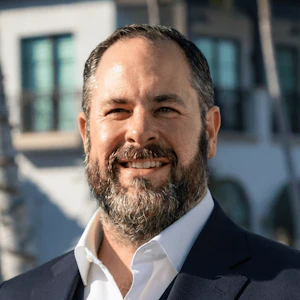
Bruce Barone Jr.
Bruce Barone Jr.
His work blends classical architecture, historical figures, and the development of “electric money” into a cohesive Bitcoin mythology. Drawing on figures such as Tesla and other architects of energy and industry, he frames Bitcoin as a structural achievement — a digital cathedral built from mathematics and electricity. Through cinematic storytelling, graphic novels, and serialized media, Bruce explores sovereignty, technocracy, AI, and intergenerational responsibility, presenting Bitcoin as durable truth infrastructure rather than speculative finance.
Transmuting AI Slop to AI Signal
Speakers/Moderators
Julian Figueroa
Julian Figueroa
Brian Hirschfield
Brian Hirschfield
Bruce Barone Jr.
Bruce Barone Jr.
His work blends classical architecture, historical figures, and the development of “electric money” into a cohesive Bitcoin mythology. Drawing on figures such as Tesla and other architects of energy and industry, he frames Bitcoin as a structural achievement — a digital cathedral built from mathematics and electricity. Through cinematic storytelling, graphic novels, and serialized media, Bruce explores sovereignty, technocracy, AI, and intergenerational responsibility, presenting Bitcoin as durable truth infrastructure rather than speculative finance.
Banking with Bitcoin & Digital Assets Built-In
Brian Hirschfield
Brian Hirschfield
Igor Istratov
Igor Istratov
Andrew Begin
Andrew Begin
Before joining Galoy, Andrew worked in strategic consulting within the WPP and Publicis Groupe networks, advising Fortune 500 companies across finance, technology, and healthcare on large-scale digital transformation initiatives.
Miles Paschini
Miles Paschini
Miles was awarded seven patents related to payment processing services during the development of EWI Holdings acquired by Blackhawk Inc. in 2006. In addition to developing the industry’s first cryptocurrency linked debit cards, Miles and FV Bank co-founder Nitin Agarwal are the first in history to be awarded a U.S. patent for the development of stablecoin instruments backed by sovereign debt and on chain KYC.
Banking with Bitcoin & Digital Assets Built-In
Speakers/Moderators
Brian Hirschfield
Brian Hirschfield
Igor Istratov
Igor Istratov
Andrew Begin
Andrew Begin
Before joining Galoy, Andrew worked in strategic consulting within the WPP and Publicis Groupe networks, advising Fortune 500 companies across finance, technology, and healthcare on large-scale digital transformation initiatives.
Miles Paschini
Miles Paschini
Miles was awarded seven patents related to payment processing services during the development of EWI Holdings acquired by Blackhawk Inc. in 2006. In addition to developing the industry’s first cryptocurrency linked debit cards, Miles and FV Bank co-founder Nitin Agarwal are the first in history to be awarded a U.S. patent for the development of stablecoin instruments backed by sovereign debt and on chain KYC.
Other
Speakers
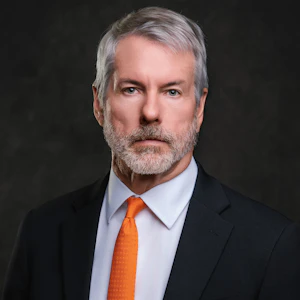
Michael Saylor
Michael Saylor
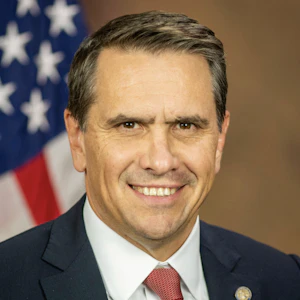
Todd Blanche
Todd Blanche
Biography of Deputy Attorney General Todd Blanche
The Honorable Todd Blanche is the 40th Deputy Attorney General of the United States, overseeing the work of the 115,000 dedicated employees who fulfill the Department of Justice’s mission at Main Justice, the FBI, DEA, U.S. Marshals, ATF, and 93 U.S. Attorney’s Offices.
Todd began his career at the Department where he served for over fifteen years in a variety of capacities, including as a contractor, a paralegal in the Criminal Division, and at the United States Attorney’s office for the Southern District of New York where he eventually became an AUSA and later a supervisor.
After leaving the Department, Todd worked as a criminal defense attorney that included representing President Donald Trump in three of the criminal cases brought against him in 2023 and 2024.
Following President Trump’s historic return to the White House, the President appointed Todd to work alongside Attorney General Pam Bondi to make America safe again. At the DOJ, Todd is working tirelessly to implement President Trump’s priorities that include confronting illegal protecting American businesses from fraud.
Todd has been married to his wonderful wife Kristine for nearly thirty years, is a father and grandfather.
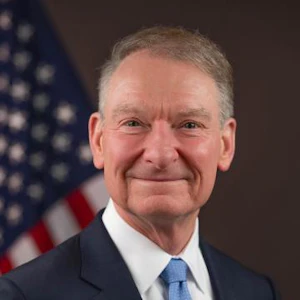
Paul Atkins
Paul Atkins
Prior to returning to the SEC, Chairman Atkins was most recently chief executive of Patomak Global Partners, a company he founded in 2009. Chairman Atkins helped lead efforts to develop best practices for the digital asset sector. He served as an independent director and non-executive chairman of the board of BATS Global Markets, Inc. from 2012 to 2015.
Chairman Atkins was appointed by President George W. Bush to serve as a Commissioner of the SEC from 2002 to 2008. During his tenure, he advocated for transparency, consistency, and the use of cost-benefit analysis at the agency. Chairman Atkins also represented the SEC at meetings of the President’s Working Group on Financial Markets and the U.S.-EU Transatlantic Economic Council. From 2009 to 2010, he was appointed a member of the Congressional Oversight Panel for the Troubled Asset Relief Program.
Before serving as an SEC Commissioner, Chairman Atkins was a consultant on securities and investment management industry matters, especially regarding issues of strategy, regulatory compliance, risk management, new product development, and organizational control.
From 1990 to 1994, Chairman Atkins served on the staff of two chairmen of the SEC, Richard C. Breeden and Arthur Levitt, ultimately as chief of staff and counselor, respectively. He received the SEC’s 1992 Law and Policy Award for work regarding corporate governance matters.
Chairman Atkins began his career as a lawyer in New York, focusing on a wide range of corporate transactions for U.S. and foreign clients, including public and private securities offerings and mergers and acquisitions. He was resident for 2½ years in his firm's Paris office and admitted as conseil juridique in France.
A member of the New York and Florida bars, Chairman Atkins received his J.D. from Vanderbilt University School of Law in 1983 and was Senior Student Writing Editor of the Vanderbilt Law Review. He received his A.B., Phi Beta Kappa, from Wofford College in 1980.
Originally from Lillington, North Carolina, Chairman Atkins grew up in Tampa, Florida. He and his wife Sarah have three sons.

Mike Selig
Mike Selig
Chairman Selig brings to the role deep public and private sector experience working with a wide range of stakeholders across agriculture, energy, financial, and digital asset industries, which rely upon and operate in CFTC-regulated markets.
Prior to his leadership at the CFTC, Chairman Selig most recently served as chief counsel of the Securities and Exchange Commission’s Crypto Task Force and senior advisor to SEC Chairman Paul S. Atkins. In this role, Chairman Selig helped to develop a clear regulatory framework for digital asset securities markets, harmonize the SEC and CFTC regulatory regimes, modernize the agency’s rules to reflect new and emerging technologies, and put an end to regulation by enforcement. He also participated in the President’s Working Group on Digital Asset Markets and contributed to its report on “Strengthening American Leadership in Digital Financial Technology.”
Prior to government service, Chairman Selig was a partner at an international law firm, focusing on derivatives and securities regulatory matters. During his years in private practice, he represented a broad range of clients subject to regulation by the CFTC, including commercial end users, futures commission merchants, commodity trading advisors, swap dealers, designated contract markets, derivatives clearing organizations, and digital asset firms. Chairman Selig advised clients on compliance with the Commodity Exchange Act and the CFTC’s rules and regulations thereunder, including in connection with registration applications and obligations, enforcement matters, and complex transactions.
Chairman Selig earned his law degree from The George Washington University Law School and was articles editor of The George Washington Law Review. He received his undergraduate degree from Florida State University.

David Bailey
David Bailey

Eric Trump
Eric Trump
Mr. Trump also serves as Executive Vice President of The Trump Organization, where he oversees the global management and operations of the Trump family’s extensive real estate portfolio. This includes Trump Hotels, Trump Golf, commercial and residential real estate, Trump Estates, and Trump Winery. Known for his hands-on leadership and strong market instincts, he has played a key role in expanding the company’s presence across major U.S. and international markets.
A globally recognized business leader and public figure, Mr. Trump is a prominent advocate for Bitcoin and decentralized finance. He is a co-founder of World Liberty Financial, a decentralized finance (DeFi) platform, and serves on the Board of Advisors of Metaplanet, Japan’s largest corporate holder of Bitcoin.
Beyond his business activities, Mr. Trump has helped raise more than $50 million for St. Jude Children’s Research Hospital in the fight against pediatric cancer, a philanthropic mission he began at age 21.
Mr. Trump earned a degree in Finance and Management from Georgetown University. He currently resides in Florida with his wife, Lara, and their two children. He is also the author of Under Siege, his memoir published in October 2025.

Jack Mallers
Jack Mallers
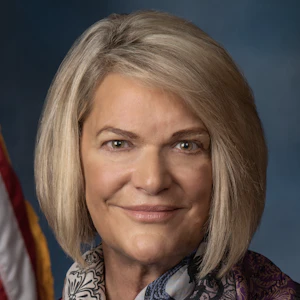
Cynthia Lummis
Cynthia Lummis
As the first-ever Chair of the Senate Banking Subcommittee on Digital Assets, Senator Lummis is the architect of the legislative framework shaping America's digital asset future. She introduced the landmark Lummis-Gillibrand Responsible Financial Innovation Act, the first comprehensive bipartisan crypto regulatory framework in Senate history. She co-authored the GENIUS Act — the first federal stablecoin law ever enacted — and introduced the BITCOIN Act, which would establish a U.S. strategic Bitcoin reserve of up to one million BTC. She is leading the Clarity Act, which will bring long-overdue regulatory certainty to the digital asset industry. She has also championed digital asset tax reform, including a de minimis exemption for small transactions and equal tax treatment for miners and stakers.
Known as Congress' "Crypto Queen," Senator Lummis represents Wyoming — a state she has helped build into one of the most digital asset-friendly regulatory environments in the nation. Before serving in the Senate, she served 14 years in the Wyoming Legislature, eight years as Wyoming State Treasurer, and eight years in the U.S. House. She is a three-time graduate of the University of Wyoming.
Her work represents a crucial bridge between traditional financial systems and the emerging digital economy, ensuring America leads the world in financial innovation while protecting the individual freedoms that define it.

Adam Back
Adam Back
Amy Oldenburg
Amy Oldenburg
David Marcus
David Marcus

Matt Schultz
Matt Schultz
Fred Thiel
Fred Thiel
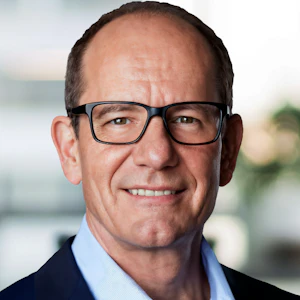
Throughout his career, Mr. Thiel has consistently driven rapid growth and created substantial shareholder value. Prior to MARA, Mr. Thiel served as the CEO of two other public companies, Local Corporation (NASDAQ: LOCM) and Lantronix, Inc (NASDAQ: LTRX). He has successfully raised billions in equity and debt through private and public offerings, led companies through IPOs, executed high-value exits to strategic and financial acquirers, and implemented effective M&A and roll-up strategies.
Mr. Thiel attended the Stockholm School of Economics and executive classes at Harvard Business School, and is fluent in English, Spanish, Swedish, and French. Mr. Thiel is the Chairman of the Board for Oden Technology, Inc. and is active in Young Presidents’ Organization where he has led initiatives in both the FinTech and Technology Networks.
A recognized voice in the industry, Fred frequently shares his insights on energy and technology with major media outlets like Bloomberg TV, CNBC, and FOX Business, contributing to vital discussions about the future of these sectors.
Tim Draper
Tim Draper
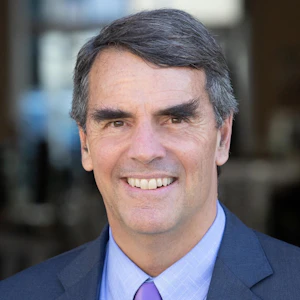
He is a supporter and global thought leader for entrepreneurs everywhere, and is a leading spokesperson for Bitcoin and decentralization, having won the Bitcoin US Marshall’s auction in 2014, invested in over 50 crypto companies, and led investments in Coinbase, Ledger, Tezos, and Bancor, among others.

Afroman
Afroman