Multiple Paths, One Asset: Spend, Borrow, or Hodl?
Speakers/Moderators

Danny Knowles
Danny Knowles
Venture Partner @ Epoch
Miles Suter
Miles Suter

Jack Mallers
Jack Mallers
Session
Overview
Danny Knowles hosts Miles Suter of Block and Jack Mallers of Strike / Twenty One for a discussion on whether Bitcoin should be spent, borrowed against, or held. The conversation frames these paths as complementary rather than opposed, with Bitcoin serving both as a savings asset and as a monetary network for value exchange.
The speakers explore Bitcoin payments through Cash App, Square, Strike, and the Lightning Network, including the challenges of merchant adoption, consumer behavior, card network incentives, fees, and the role of dollar-funded Bitcoin rails. They argue that making Bitcoin useful for everyday payments requires patience, infrastructure, wallet adoption, and a better user experience.
The discussion also covers borrowing against Bitcoin, with Mallers explaining why lending rates depend not only on Bitcoin’s quality as collateral but also on the opportunity cost for fiat lenders. Suter emphasizes the importance of preserving peer-to-peer digital cash and censorship-resistant money as financial systems become more permissioned and surveilled.
Let's go.
You guys have brought a bit of the crowd in. This is going to be a fun panel. Jack at Strike and Miles at Cash App and Square, you're both pushing the Bitcoin for payments side very strongly right now. I think we should take a step back to start off with Jack. Bitcoin has had this dominant narrative over the last few years of being a store of value. But to me, Bitcoin is freedom money, and it has to be used as money. Why do you see that as such an important thing?
Rule number one when you're on a panel is you don't ask the moderator questions back, but I'm going to break it. When I was thinking about doing the panel, I thought you have to define money. A lot of the debate and controversy is because people have different definitions of what money is. I have my own, but I'm more curious to define money first before we understand why or why not you should be using it a certain way. So I'm going to answer that question with another question.
Let's go. Bitcoin is money. Bitcoin already works as money, but people aren't really using it as money as much as I would like to see. I've traveled all over the world doing the podcast. I've been to developing countries, and that's where I've seen Bitcoin actually being used as money. But in the West, we see it as this store-of-value thing. So what I mean when I say, when is Bitcoin going to become money, is when is Bitcoin going to be used as money by people to buy things? When are people going to go out and spend sats, not dollars?
My definition of money, to be super succinct, or at least I'll try, because I never am, is that money is uniquely the market good that you don't consume. That's it.
If you, Danny, grow bananas and I have apples, and we want to directly exchange bananas for apples, that's called the coincidence of wants. You coincidentally want what I have, which are apples, and I coincidentally want what you have, which are bananas. Now, if you're growing bananas and I want some of your bananas, and you don't want my apples, well, I'm out of luck. What do I do? You want blueberries. So I go find someone who has blueberries. I exchange my apples. I now have blueberries. I go to you. What was the money in that scenario? It was the apples. I used the apples to transmit value.
So for me, money is the market good I don't live in, I don't eat, I don't fly, I don't drive. When people use real estate as money, I think that's bad money. Bitcoin to me is perfect money. I can't wear it in a rap video, I can't put it in jewelry, I can't eat it, I can't live in it, I can't fly it across the ocean. It's a market good that's perfect for allowing me to save and then later exchange the value I've created.
The two use cases for money, in my opinion, are saving and then later exchanging. Why is the exchange part in the West less used than in other places? I think things like Gresham's law. For Strike, payments are way more popular in some of the emerging markets. Lending for us in the United States is the biggest product we have, and it's not even close. I think things like Gresham's law are going to naturally play out.
I don't know if using money implies you need to spend it. I have a personal opinion of why I want that to happen and why I inevitably think that will happen. But I don't think it's a violation to use Bitcoin with a line of credit or a loan and spend the depreciating, debasing dollar.
That does make sense. And you did at least partially answer the question, because holding Bitcoin is still using Bitcoin. But Miles, both Cash App and Square have done tons to try and push this forward as a currency, as something that people are using in exchange for goods. Square rolled out Bitcoin payments to every merchant in America, which is absolutely amazing. I need you to bring that to Australia.
With this, I think there's always been a chicken-and-egg problem. I've seen restaurants and bars in my city put the Bitcoin accepted here sticker in, and then over time people aren't really using it because it requires a Bitcoiner to go out and basically sell Bitcoin to these merchants and try to explain why it's good money. How do you see that chicken-and-egg problem in what you've done?
At Block, one of our company missions is to make Bitcoin everyday money. Implied in that is the title of Satoshi's original white paper, peer-to-peer electronic cash. Maybe we're biased because we run a consumer app and we run a large merchant app, but that payments use case feels embedded in the original mission of Bitcoin to us, and embedded in the foundational premise of our company as well.
The title of this panel is probably a little bit rage bait. That's an exaggeration, but I actually don't think there's that much of a debate here. I think Jack and I both agree that payments are a really important use case. But it's one that's going to take the longest to achieve. To me, it's maybe one of the hardest things in the world: to overturn and put in place a new global financial system.
As Bitcoiners, while we're low time preference a lot of the time, when interfacing with the community sometimes it's like, hey, come on, guys, make it happen. But it's something that's going to take a long time. We need to be really deliberate and intentional about how we're doing that.
We didn't launch Square payments for many, many years, even though people on Twitter, when I first joined Block almost nine years ago, were asking, when are you guys going to do it? I think we needed a certain saturation point of enough people having Bitcoin wallets, of the infrastructure being in a strong enough place, and also the broader cultural and regulatory situation. It's not something that we can do overnight.
Jack and I go really far back. There were many years where it was you, me, Odell, Marty, pretty much shouting into the void on Twitter alone. I wanted to bring up the origin story of Strike. At the end of 2019, you reached out to me because we were buddies and you were working on Zap, I think, at the time. We wanted to do this collaboration where we would pull from the linked bank account in Cash App and send a Lightning payment.
That was a very ahead-of-its-time concept, and that's eventually what formed the foundation of Strike. Congratulations on all your success. I'm so glad that you ran and did that independently. But I think payments are core to your mission as well, and to your ethos. So I don't think there's too much of a debate here.
In the current reality, one of the products we're seeing really take off right now is using that original Strike vision of spending your dollars over the Lightning Network. What that means on Cash App right now is when you walk up to a Square merchant and scan the Bitcoin QR code, or use Tap to Pay, which everybody should go try out today or tomorrow, we're really trying to make the payment experience as seamless as possible, as good as Apple Pay.
When you do that from Cash App, you'll get the option of paying with your Bitcoin balance or paying with your dollar balance. We've seen an explosion of adoption of using that dollar balance because there's no taxable event. You don't burn down your stack at all. For the merchant, it's the same thing. They receive Bitcoin. There are 0% processing fees.
For me, it's a really interesting primitive for the future. Currently within Cash App, you need to be a Bitcoin user to have that optionality. But you can imagine a world in the future where every single month, there are 55 million people using Cash App that aren't using Bitcoin. You can imagine a world where those customers scan that QR code, pay with their dollars without even having to think about it, the merchant receives the Bitcoin they want, there's no Visa in the middle, and there's no transaction fee for the merchant.
All parties kind of win there, and it's something worth thinking about. It feels like a really strong rail for the future. What I love is that it keeps Bitcoin in the mix. It keeps Bitcoin moving and gives it that velocity. I truly believe, and I think Jack truly believes, that we need to keep it moving. We need it acting like peer-to-peer electronic cash in order for it to stay relevant and for us to win in the long term.
One of the really interesting things I've seen, and only quite recently, is that Strike and Zap before that have been pushing this Bitcoin-as-payment thing, and obviously Block has as well. But it feels like a lot of things have come together over the last few weeks. I saw David Marcus's announcement today with Lightspark, which is awesome. Are we moving from a world where paying in Bitcoin was always kind of a hack, where you could do it but there was a big barrier to entry, to everything falling into place and the world being ready for this now?
I think so, but the challenge is not technology. I really don't think so. Famous last words, right? There's some developer out there thinking otherwise. But I don't think the story of humanity is engineering a better world. We're good at making the world a better place, and we find our way. I'm not worried about that part.
The difficult thing in getting payments adoption for Bitcoin is actually consumer behavior. These card networks have all of us right where they want us. People use their Amex card or their Chase Sapphire card because they get free flights, airport lounges, Napa Valley wine, cash back. The way that works is they charge the merchant 3%, 4%, 5%, and then they share that with the consumers. So they're effectively holding merchants hostage and bribing the person at checkout to use their option instead of Bitcoin.
Then you also have a currency that's being actively debased and actively abused to bail out awful government decisions. So of course people are going to elect to get rid of the worst money as opposed to the better money, which is Gresham's law. I actually think it has more to do with human behavior than technology.
The 2019 idea that Miles and I were working on came from me trying to understand why Bitcoin was better than gold. The reason Bitcoin is better than gold is because Bitcoin is uniquely both a monetary asset, lowercase b, a bearer instrument, a commodity, and also a monetary network, uppercase B. What's the gold monetary network? It's us. My human legs are the gold monetary network. If I need to get gold to Nigeria, I better take myself to the airport. That's what the gold monetary network is.
Bitcoin was both. It was able to achieve transaction finality without me having to deposit it to the government, which gives me an IOU. And in 1971, they said, what's yours is no longer yours. It was this monetary network idea. I was like, holy crap. In 2019, I said, wait a second. So I can do the equivalent of throwing a gold bar from here to Nigeria in less than a second and at no cost? That's kind of cool.
If the person wanted to send naira or dollars or euros or pounds, they can give it to me, I'll turn it into the faster gold, throw it to Nigeria in less than a second and for free, and convert it back into the currency, no problem. Bitcoin is a global, liquid, salable asset. It's easy to get in and out.
My passion for using Bitcoin as payments is actually to dematerialize the chokehold that card networks and centralized entities have on our ability to facilitate settlement. That's what I want to be free and open, so that David Marcus can launch what he wants, so that Miles can launch what he wants. Ultimately, as an American, what do I want when I go check out? I want all the greatest entrepreneurs in this country to compete to give me the best wallet to check out.
Right now, I don't have access to the Visa rails. I don't have access to the Mastercard rails. They're abusing these merchants and treating them unfairly. If we could use Bitcoin, this network, as an open, interoperable network that does the job Visa does and does the job Swift does, and let everyone compete at the edges, drive costs down, and be innovative, there will be millions of wallets. If your favorite color is pink, why not? But right now there aren't a lot of options. You can either get a Visa or a Mastercard. That's it.
So I think it's a consumer problem. If we have this network implemented and it works, how do we change consumer behavior? Do we need to give them more Napa Valley wine? If so, who's going to pay for that? Is Dorsey paying for that? I assume not. I think it's a consumer behavioral thing, but the long arc vision is using the network to free ourselves of an abusive relationship with corporations that I think have created a duopoly, and open up competition and innovation to what is core to money, which is value exchange.
I could be naive here because airline miles are cool, but money that goes up forever is cooler. Is one of the consumer habits that needs to change this idea of opportunity cost with Bitcoin? I can go to the shop and spend dollars or pounds or euros or whatever, but all of that money could also be Bitcoin.
Yes. I actually think it's a dangerous game to try to interpret Satoshi's white paper as a particular intent or fact. This is where Miles and I can debate. I love Miles like a brother, so debate or no debate, I'm down for whatever.
I personally find it to be a dangerous game to try to interpret Satoshi's white paper that way. I find Bitcoiners sometimes contradict each other. They say, why are you using Bitcoin the way I think you should? And I say, whoa, I thought this was about property rights. Are you telling me how to use my property?
The other contradiction is, people love when Michael Saylor borrows fiat to stack more Bitcoin, but they don't like when I borrow fiat to go to Whole Foods. What the fuck? I think there's a slight contradiction there. If you have access to cheap, depreciating dollars and someone's willing to lend them to you, which is a luxury service, because 100 years from now no one's going to be willing to lend you pieces of crap paper, I think that's a fine use case.
It solves for a lot. It keeps Bitcoin off the market from being sold. It allows people to grow wealth. It changes lives. If you can find a way to hold an asset that's averaging 30% year over year, you can change your and your family's life if you find a way to do that for three, four, five years.
I don't necessarily have a problem with that. If Bitcoin is property rights, you'll find different pockets of the world finding value for different reasons. No one's wrong. It's no one's job or role to determine what Bitcoin is and why it's valuable for them. That's my broad strokes opinion. Serving a global user base, we see different behaviors everywhere, and they're all right. No one's wrong.
I actually don't disagree with that at all. From the Block perspective, we have a bit of an obligation because we have both sides of the counter, and we have the luxury of being a diversified company where we can play the long game on Bitcoin. We don't have to optimize for short-term profits immediately because we think in the long run this is going to be the biggest opportunity to have a global payments network.
There are not a lot of companies that have that luxury. Frankly, if we weren't doing that, I think it would be a real threat to Bitcoin. We take a lot of pride in that.
But I have no problem with lending at all. On the Cash App side of the house, and across Block, we've originated over $220 billion in helping consumers and small businesses, and across Afterpay as well. There's real economic value that can come from that.
I look at your lending business and I'm jealous. We'll probably do that shortly, and we think that's really important. But given where we are in the market over the last few years, it feels to me like we're in the midst of this big paradigm change. If Block is not doing this, I think there's real danger for the world.
Bitcoin is the only truly censorship-resistant money that there is right now. As we're moving into this AI world, and as we're moving into every single thing being recorded, watched, and permissioned, I truly think that if we don't preserve peer-to-peer digital cash right now, it's a right that we're going to lose, and we're going to lose forever.
I take that as a responsibility to lead the charge. The beautiful thing about Bitcoin is it's not just us. It's the whole community. Strike is interoperable. Phoenix is interoperable. We're laying the groundwork. We're thinking on a really long timeline, and we have the luxury of being able to do that because we think it's the best long-term decision.
If you look toward the future, if you ask any government right now, if something new came out of nowhere and they were laying down the financial laws, does anybody here think that they would institute this concept of cash? To me, it's a relic from an earlier time, and one that we need to cherish. From my view, it looks like around the world, every government wants to get rid of this. They want to see every payment. They want to control every payment. I think that's a really scary thing in the AI world.
That's my personal opinion on why I think it's so important. On a long enough time frame, it's going to pay out, and it's a really important thing for human freedom in the long run.
One hundred percent. To quickly switch this over to the borrowing against your Bitcoin conversation, Strike, you've done an amazing job there trying to get those rates as low as possible. But they're still relatively high. I understand that there's a cost of capital for the people that are actually lending the dollars. But we often talk about Bitcoin as being the best form of collateral ever. On the lender side, there's never zero risk, but risk is pretty low. It's 24/7 markets. You can liquidate things. When do you think the broader market will wake up to that and rates will go significantly lower?
I don't think people understand how the market works. It doesn't matter how risk-free the return is. What matters is if I have a billion dollars and you're asking me to lend it out to get 1% return, I'm better off buying a U.S. bond. That's risk free because those guys can print it out of thin air, and they're willing to give me 3.5%, 4%, 4.5%.
It doesn't matter that Bitcoin is as pristine as it is. That's never going to be a disagreement for me. What matters is the market of people that, for whatever reason, have fiat in the first place. If you've got billions of dollars of fiat, what are you doing? So you have this weird market of fixed income investors or institutional investors.
By the way, Bitcoin is so niche. You think you're doing well, and then you hear that Miles has lent out a quarter trillion dollars. If you want to scale these markets and lend out a lot of money, finding capital that is saying, I could be getting 30% year over year on average by owning Bitcoin, but I'll forgo that opportunity so you can borrow against it, how much do I need in return for that relationship?
Let's use Michael Saylor and Strategy as an example. Michael Saylor used to be borrowing money at 0%. Do you think he got sick of that and preferred 11%, 12%, 13%, Danny? Do you think he just prefers a higher number? Absolutely not. He's doing it because he ran out of people willing to give him money at 0%.
If you're going to ask someone in the crowd, don't buy Bitcoin, buy something else, how much are they going to demand from you to take that deal? Turns out what Michael Saylor is paying is kind of what the Bitcoin lending rate is. How much do you have to pay someone to say, I'm not going to buy Nvidia, I'm not going to buy Anthropic, I'm not going to buy Bitcoin, I'm not going to buy really nice real estate, I'm going to lend it to you?
I know it's pristine collateral, but people need to appreciate that's what the market is made up of. Ultimately, once we get into implicit government guarantees and Bitcoin finds its way, seeps through the cracks like universal acid as it always does, and ends up conquering the inner walls of all these institutions, we'll start getting really cheap dollars from the Jamie Dimons of the world. But we're just not there yet. That's why.
There is so much more that I want to talk to you two about, but we're running very low on time. From my perspective, Bitcoin is in a bear market and the price is quite low, but I've never been more bullish on the stuff that people are building. I think the developments we've had over the last six months are absolutely awesome. What a time to be in Bitcoin, guys. Maybe we'll have to do a podcast and get into this more deeply.
Deal.
Let's do it.
All right. Thank you, guys. Give it up for these two.
Similar
Sessions
Living on Bitcoin
Miles Suter
Miles Suter
Living on Bitcoin
Speakers/Moderators
Miles Suter
Miles Suter
Matt Odell and Friends


Alex Gladstein
Alex Gladstein
Matt Odell and Friends
Speakers/Moderators
Alex Gladstein
Alex Gladstein
Multiple Paths, One Asset: Spend, Borrow, or Hodl?
Danny Knowles
Danny Knowles
Venture Partner @ Epoch
Miles Suter
Miles Suter
Jack Mallers
Jack Mallers
Multiple Paths, One Asset: Spend, Borrow, or Hodl?
Speakers/Moderators
Danny Knowles
Danny Knowles
Venture Partner @ Epoch
Miles Suter
Miles Suter
Jack Mallers
Jack Mallers
Keynote: Jack Mallers
Jack Mallers
Jack Mallers
Keynote: Jack Mallers
Speakers/Moderators
Jack Mallers
Jack Mallers
Other
Speakers
Michael Saylor
Michael Saylor
Todd Blanche
Todd Blanche
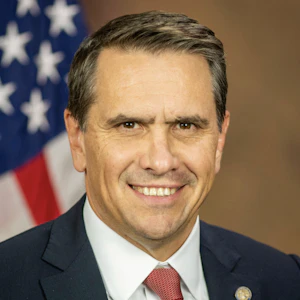
Biography of Deputy Attorney General Todd Blanche
The Honorable Todd Blanche is the 40th Deputy Attorney General of the United States, overseeing the work of the 115,000 dedicated employees who fulfill the Department of Justice’s mission at Main Justice, the FBI, DEA, U.S. Marshals, ATF, and 93 U.S. Attorney’s Offices.
Todd began his career at the Department where he served for over fifteen years in a variety of capacities, including as a contractor, a paralegal in the Criminal Division, and at the United States Attorney’s office for the Southern District of New York where he eventually became an AUSA and later a supervisor.
After leaving the Department, Todd worked as a criminal defense attorney that included representing President Donald Trump in three of the criminal cases brought against him in 2023 and 2024.
Following President Trump’s historic return to the White House, the President appointed Todd to work alongside Attorney General Pam Bondi to make America safe again. At the DOJ, Todd is working tirelessly to implement President Trump’s priorities that include confronting illegal protecting American businesses from fraud.
Todd has been married to his wonderful wife Kristine for nearly thirty years, is a father and grandfather.
Paul Atkins
Paul Atkins
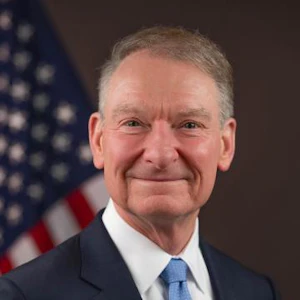
Prior to returning to the SEC, Chairman Atkins was most recently chief executive of Patomak Global Partners, a company he founded in 2009. Chairman Atkins helped lead efforts to develop best practices for the digital asset sector. He served as an independent director and non-executive chairman of the board of BATS Global Markets, Inc. from 2012 to 2015.
Chairman Atkins was appointed by President George W. Bush to serve as a Commissioner of the SEC from 2002 to 2008. During his tenure, he advocated for transparency, consistency, and the use of cost-benefit analysis at the agency. Chairman Atkins also represented the SEC at meetings of the President’s Working Group on Financial Markets and the U.S.-EU Transatlantic Economic Council. From 2009 to 2010, he was appointed a member of the Congressional Oversight Panel for the Troubled Asset Relief Program.
Before serving as an SEC Commissioner, Chairman Atkins was a consultant on securities and investment management industry matters, especially regarding issues of strategy, regulatory compliance, risk management, new product development, and organizational control.
From 1990 to 1994, Chairman Atkins served on the staff of two chairmen of the SEC, Richard C. Breeden and Arthur Levitt, ultimately as chief of staff and counselor, respectively. He received the SEC’s 1992 Law and Policy Award for work regarding corporate governance matters.
Chairman Atkins began his career as a lawyer in New York, focusing on a wide range of corporate transactions for U.S. and foreign clients, including public and private securities offerings and mergers and acquisitions. He was resident for 2½ years in his firm's Paris office and admitted as conseil juridique in France.
A member of the New York and Florida bars, Chairman Atkins received his J.D. from Vanderbilt University School of Law in 1983 and was Senior Student Writing Editor of the Vanderbilt Law Review. He received his A.B., Phi Beta Kappa, from Wofford College in 1980.
Originally from Lillington, North Carolina, Chairman Atkins grew up in Tampa, Florida. He and his wife Sarah have three sons.

Mike Selig
Mike Selig
Chairman Selig brings to the role deep public and private sector experience working with a wide range of stakeholders across agriculture, energy, financial, and digital asset industries, which rely upon and operate in CFTC-regulated markets.
Prior to his leadership at the CFTC, Chairman Selig most recently served as chief counsel of the Securities and Exchange Commission’s Crypto Task Force and senior advisor to SEC Chairman Paul S. Atkins. In this role, Chairman Selig helped to develop a clear regulatory framework for digital asset securities markets, harmonize the SEC and CFTC regulatory regimes, modernize the agency’s rules to reflect new and emerging technologies, and put an end to regulation by enforcement. He also participated in the President’s Working Group on Digital Asset Markets and contributed to its report on “Strengthening American Leadership in Digital Financial Technology.”
Prior to government service, Chairman Selig was a partner at an international law firm, focusing on derivatives and securities regulatory matters. During his years in private practice, he represented a broad range of clients subject to regulation by the CFTC, including commercial end users, futures commission merchants, commodity trading advisors, swap dealers, designated contract markets, derivatives clearing organizations, and digital asset firms. Chairman Selig advised clients on compliance with the Commodity Exchange Act and the CFTC’s rules and regulations thereunder, including in connection with registration applications and obligations, enforcement matters, and complex transactions.
Chairman Selig earned his law degree from The George Washington University Law School and was articles editor of The George Washington Law Review. He received his undergraduate degree from Florida State University.

David Bailey
David Bailey

Eric Trump
Eric Trump
Mr. Trump also serves as Executive Vice President of The Trump Organization, where he oversees the global management and operations of the Trump family’s extensive real estate portfolio. This includes Trump Hotels, Trump Golf, commercial and residential real estate, Trump Estates, and Trump Winery. Known for his hands-on leadership and strong market instincts, he has played a key role in expanding the company’s presence across major U.S. and international markets.
A globally recognized business leader and public figure, Mr. Trump is a prominent advocate for Bitcoin and decentralized finance. He is a co-founder of World Liberty Financial, a decentralized finance (DeFi) platform, and serves on the Board of Advisors of Metaplanet, Japan’s largest corporate holder of Bitcoin.
Beyond his business activities, Mr. Trump has helped raise more than $50 million for St. Jude Children’s Research Hospital in the fight against pediatric cancer, a philanthropic mission he began at age 21.
Mr. Trump earned a degree in Finance and Management from Georgetown University. He currently resides in Florida with his wife, Lara, and their two children. He is also the author of Under Siege, his memoir published in October 2025.
Jack Mallers
Jack Mallers
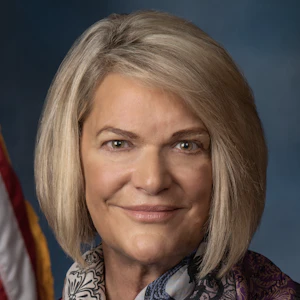
Cynthia Lummis
Cynthia Lummis
As the first-ever Chair of the Senate Banking Subcommittee on Digital Assets, Senator Lummis is the architect of the legislative framework shaping America's digital asset future. She introduced the landmark Lummis-Gillibrand Responsible Financial Innovation Act, the first comprehensive bipartisan crypto regulatory framework in Senate history. She co-authored the GENIUS Act — the first federal stablecoin law ever enacted — and introduced the BITCOIN Act, which would establish a U.S. strategic Bitcoin reserve of up to one million BTC. She is leading the Clarity Act, which will bring long-overdue regulatory certainty to the digital asset industry. She has also championed digital asset tax reform, including a de minimis exemption for small transactions and equal tax treatment for miners and stakers.
Known as Congress' "Crypto Queen," Senator Lummis represents Wyoming — a state she has helped build into one of the most digital asset-friendly regulatory environments in the nation. Before serving in the Senate, she served 14 years in the Wyoming Legislature, eight years as Wyoming State Treasurer, and eight years in the U.S. House. She is a three-time graduate of the University of Wyoming.
Her work represents a crucial bridge between traditional financial systems and the emerging digital economy, ensuring America leads the world in financial innovation while protecting the individual freedoms that define it.

Adam Back
Adam Back
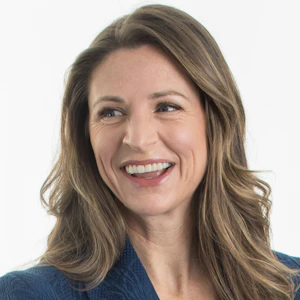
Amy Oldenburg
Amy Oldenburg
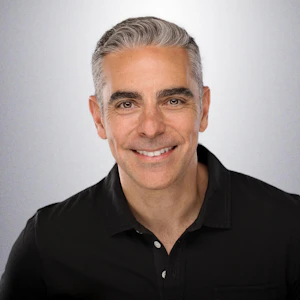
David Marcus
David Marcus

Matt Schultz
Matt Schultz
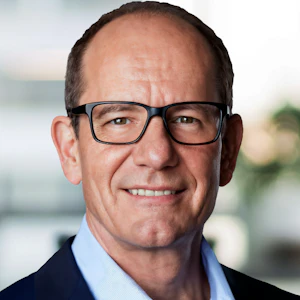
Fred Thiel
Fred Thiel
Throughout his career, Mr. Thiel has consistently driven rapid growth and created substantial shareholder value. Prior to MARA, Mr. Thiel served as the CEO of two other public companies, Local Corporation (NASDAQ: LOCM) and Lantronix, Inc (NASDAQ: LTRX). He has successfully raised billions in equity and debt through private and public offerings, led companies through IPOs, executed high-value exits to strategic and financial acquirers, and implemented effective M&A and roll-up strategies.
Mr. Thiel attended the Stockholm School of Economics and executive classes at Harvard Business School, and is fluent in English, Spanish, Swedish, and French. Mr. Thiel is the Chairman of the Board for Oden Technology, Inc. and is active in Young Presidents’ Organization where he has led initiatives in both the FinTech and Technology Networks.
A recognized voice in the industry, Fred frequently shares his insights on energy and technology with major media outlets like Bloomberg TV, CNBC, and FOX Business, contributing to vital discussions about the future of these sectors.
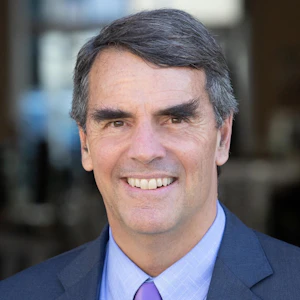
Tim Draper
Tim Draper
He is a supporter and global thought leader for entrepreneurs everywhere, and is a leading spokesperson for Bitcoin and decentralization, having won the Bitcoin US Marshall’s auction in 2014, invested in over 50 crypto companies, and led investments in Coinbase, Ledger, Tezos, and Bancor, among others.
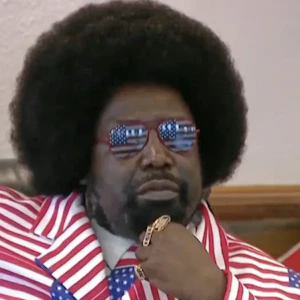
Afroman
Afroman