Zoomer to Boomer: Why Each Generation Needs Bitcoin
Speakers/Moderators
Julian Figueroa
Julian Figueroa

Mel Sands
Mel Sands
in 2015 I bought $100 worth of Bitcoin and promptly forgot about this "internet money." In 2017, someone asked if I’d heard about Bitcoin, and I thought, “I’ve got some of that.” I go hunt it down and that 100 bucks is worth $4700! That was a TON of money for us. It sent me down the rabbit hole, what is it, why did it do this, and what’s it going to do next? So I hung on for the ride and tried to add. I made plenty of mistakes along the way. But Bitcoin taught me about money and finance and how the world works. It changed our lives for the better. We literally thought we'd never be able to retire, now we've got a shot at it. :)
Ben GenZ4BTC
Ben GenZ4BTC

John Drew
John Drew

Ali Tager
Ali Tager
Session
Overview
Zoomer to Boomer: Why Each Generation Needs Bitcoin brought together Ben GenZ4BTC, Ali Tager, Mel Sands, John Drew, and host Julian Figueroa for a cross-generational discussion about money, Bitcoin, and the pressures created by the fiat system.
The panel compared how Gen Z, millennials, Gen X, and boomers think about Bitcoin as freedom, sovereignty, hope, and a store of future value. Speakers discussed lessons they inherited from parents about saving, housing, 401(k)s, and retirement, and why many of those assumptions feel less reliable in today’s economy.
A central theme was education. The speakers argued that many younger people misunderstand Bitcoin as a get-rich-quick asset, while older generations may feel they missed the opportunity or do not need to learn new financial tools. The conversation also touched on self custody, stablecoins, crypto scams, wealth transfer, and the difference between wealth creation and wealth preservation.
The discussion framed Bitcoin as relevant across age groups: a way for younger people to build and store value, and a way for older people to preserve wealth and prepare future generations.
All right, welcome to Zoomer to Boomer: Why Every Generation Needs Bitcoin. We are going to start with a little bit of introduction. We will go from Zoomer to Boomer with your name, your generation, what you do for work, and then really quick, I want you to think of one word you would use to describe fiat and one word you would use to describe Bitcoin.
Hello, good morning, everybody. My name is Ben, also known as GenZ4BTC. For work, I am an entrepreneur. I actually help pick up dog waste for tons of homes in my area, and I also like to educate about Bitcoin. A word I would use for Bitcoin would be freedom, and a word for fiat would probably be prisoner.
That is tough to follow. My name is Ali Tager. I am vice president of external affairs at the National Cryptocurrency Association, which is a nonprofit that helps everyday Americans understand and use crypto with confidence. I am a millennial, and the first word that comes to mind when I think of Bitcoin, or even cryptocurrency as a whole, is sovereignty. For fiat, not prisoner, but maybe a little bit outdated. Outdated, final answer.
Hi, I am Mel Sands. I am the one before the boomer, and I created the Bitcoin Boomers podcast. Hope is my word for Bitcoin.
Hi, I am John Drew, and I produce the Bitcoin Day Naples conference and the Naples Family Office Symposium. I also run a mining company called Curated Mining, where we partner with high net worth individuals and family offices to deploy their capital into Bitcoin mining projects. My word for Bitcoin was taken, it was hope, but I do have a backup, and it is future. Bitcoin is the future, and fiat is a psyop.
My name is Julian Figueroa. I run a show called The Exit Manual on YouTube, and I am a millennial, but I dabble with the Gen Z haircut a little bit. My word for Bitcoin would also be freedom. My word for fiat would be slavery. Polar opposites there.
First question I would love to tee off to all of you. This is a very generational panel, and you do not need to put your parents on blast, but what advice about money have you received from your parents that you feel was completely wrong?
I will go first. This is a hard one because my mom is sitting right there. I love her very much. She is a Bitcoiner and has taught me a lot of what I know.
We love the Bitcoin moms.
Yes, we do. So this is a hard one. One thing she has taught me that is wrong is probably... it is pretty hard, I am not going to lie. She is a really good mom. She has taught me much of what I know. She is sitting right there, so I am going to pass this one over. I do not want to publicly say something about my mom right now while she is sitting there, because I will hear it when I get back home in Florida.
Radical applause for the based Bitcoin mom. I love it.
Well, my mom is not here, so let me trash talk. I think my parents taught me that if you work hard and you invest in your 401(k), you will be able to retire and it will be there for you. Same deal with Social Security, right? This generation grew up with it. As a millennial, I grew up understanding that might not be the case. Traditional investment products like the stock market and 401(k)s, sure, those are great, no disrespect to them, but there are so many other ways you can diversify your assets, your portfolio, and your income, obviously with cryptocurrency being one of them. I think it is a new frontier, and I am excited to get my parents on chain and help them understand how they can not just retire, but also prosper by understanding the power of this tool, the power of this technology, educating themselves, and getting on board.
I was taught by my mom that money is only good for the things it buys. This is probably the worst advice ever given to anyone. Because of that, I was not a saver. Money was good for a purchase. It was not until I found Bitcoin that I realized it was worth saving.
I forgot to say what generation I am. Technically I am Gen X, but I am right on the cusp of the boomer and Gen X thing, and I do work with a lot of boomers. A lot of boomers come to my meetup in Naples, and of course my parents are boomers. My parents, interestingly enough, taught me something very similar. I should work hard, invest in my 401(k), and invest in my savings account. The other thing is that, interestingly, and I do not know if this applies to people in my generation and older, but my parents did not actually teach me a lot about money. I had to learn it on my own, and that was probably the worst mistake that they made.
For me, my dad was not a market operator or a real estate professional, and he unwittingly bought his first home at age 60 in 2007, not knowing what was to come. Our family got stuck holding the bag on a ten-year fixed mortgage on a house that lost 40% of its value, and it basically froze our family in place for a really long time. My dad kept telling me even through this, no, real estate is a good investment, you should try and save up for it. I saw the pain that he went through, beholden to these banks, the calls he made to the bank asking, can we pause the mortgage payment for this month? They would basically string him along. Banks are terrible, and mortgages can be a form of prison if you do not know what you are doing before you get into them. A lot of the previous generation says that is the number one pathway to wealth. No other financial asset will give you 5x leverage based on a job slip that has a couple of payroll statements. But it is very dangerous. It is a form of gambling if you do not know exactly what is going on in the housing market. We have been told housing only goes up, but it is just not true.
Before you move on, you just triggered a memory. My dad used to say all the time, buy more house and less car.
That is not terrible.
It is not terrible.
It is pretty terrible. What is a take on Bitcoin that you see in your generation that drives you insane?
I could talk about this for probably three hours straight, but I am going to get to the point. I think my generation, a lot of the kids have great ambition to do great things in life, but they have no direction with that. They see Bitcoin as just an investment when it comes to fiat monetary gain, and they do not really internally understand what it is and how much it can provide for them without even looking at dollars. I think that if people really understood the tool that Bitcoin is, how much it will provide, and that it is the first of its kind, people would be able to utilize it so much better. We really need to work on educating about Bitcoin, and that it will not make you millions of dollars in two years from now, but it will provide you with skills and an understanding of life that will make you rich internally, not externally.
I love that. Education is so important. That is exactly what the NCA is doing. I also host a podcast called Crypto Explained, where we are just trying to teach people what crypto is, how they can use it, and how it works without any of the hype and jargon. As a millennial, we are a pretty skeptical generation. We were around before the internet, the early days of the internet, AI, and cell phones. We grew up without it, and then we adopted it. We see the fake news. We see the hype, the misinformation, the negative headlines, and the internet trolls. I do not think it is necessarily a bad thing that we are taking a close look to make sure that things are really legit. But the biggest thing that drives me crazy is the fact that so many millennials and so many people are held back from even trying crypto and being open to it just because of what they hear in the news. We know that 76% of crypto holders in the U.S. say it is making a really positive impact on their lives. I could not agree more. I think we just have to educate and help open people’s eyes and perspectives so they can figure out where, when, and how crypto might be a tool for them.
I am going to rant a little bit myself. My generation, and I have heard this from the boomers generation too, think they missed it. On the Bitcoin Boomers podcast, we had a Ronald Reagan insider who worked for him and Nancy for years and years. As you can imagine, his circle of friends is pretty wealthy. The question to them was, why have you not gotten in? The answer was, we think we missed it. That is the same thing with my generation. We think we missed it, like it is too late. I said, no, no, no, you do not understand. Just get off zero. Get something in your wallet. I do not care if it is $25 a month, because I feel like if you just did that, you might start to see the rest of it. That is it. It is the idea that I think I missed it.
I will talk from the boomers perspective because I hang around a lot of boomers in Naples. They all say they do not need to learn anything new, or they do not want to learn anything new. They have already made their money, they are already set for life, and there is no need for them to learn anything new. My response to them is, well, think about your future generations. If you are intending to leave some of your wealth and your estate for future generations, it is important to learn this new technology, or at least encourage your sons and daughters and grandsons and granddaughters to learn it.
I am going to jump back in for one second. One of the reasons I started the Bitcoin Boomers podcast was because I wanted people to hear from three guys who did not need Bitcoin. They were completely good with the money that they made. Larry Lepard, Gary Leland, and Bob Burnett all would have been completely fine without Bitcoin, but they chose to invest a large share of their wealth in Bitcoin. I wanted people to listen to them to hear why. They did not have to do that. There was no reason for them to absolutely have to, except that they understand what it is and they believe in it.
I will pile on to say that seeing how people are using it and hearing from real people about the why is so important. We have actually been doing that at the NCA, traveling across the country, meeting people who are using crypto and asking them why. What lessons have you learned along the way? What benefits are you seeing? What challenges have you overcome? That can inspire and inform others who might be curious but do not know where to start. Humanizing the tool is such a critical part that we do not talk enough about.
I think there is a lot of overlap between how millennials view Bitcoin and how Gen Z view Bitcoin. You have the people who are Gen Z Bitcoiners because they understand it is a solution to a problem. The people who do not get Bitcoin yet look at it as just another problem, another derivative from the financial industrial complex, like it is a Ponzi scheme or pyramid scheme. The skepticism is one of the most frustrating things for non-Bitcoiners. But I think one of the big differences, and one of the things that really frustrates me about talking to millennials, is that it feels like millennials want someone to descend from the heavens and provide them a solution to fiat. That kind of did happen, but they will not accept it.
Gen Z is seeing all the problems going on. They are really the fourth turning generation, and they are trying to do something about it. There is such a high propensity of Gen Z building their own car setups because they are like, I cannot afford the housing market. Meanwhile millennials are on Reddit complaining about how they cannot afford homes. It is frustrating to get through to people who feel like they are screwed, but are also passive about the solution. I have really tried to figure out how I talk to people in my cohort who do not want to take action. Eventually you just go hands off. It is there for you if you want it, and if you do not want to do anything about it, that is on you.
That is why I particularly focus on tailoring the work that I do to Gen Z, because I see so many of them taking action. I find their propensity toward things like self custody has been a lot higher. They are using stablecoins. Ali, you might have a stat or two on immense stablecoin usage. I really look at stablecoins as a gateway to the Bitcoin ecosystem.
I totally agree. We are definitely seeing stablecoins as a type of digital asset. Some people do not even see it as a cryptocurrency at all. They think it is this other category. But it is bridging the gap between DeFi and TradFi, and it is helping more traditional institutions, banks, and retailers come on chain in a way that just makes sense. If I buy a shirt for $20 and I pay you in crypto, it is not going to be $25 or $30. I am not losing money on the deal. It really is a way that TradFi and DeFi can and should coexist. Hopefully soon there will be more regulatory clarity coming on stablecoins. Check back in a couple of weeks.
There is a stat I think is really interesting that will pass this conversation in a potentially different light. We think that digital natives are adopting cryptocurrency at higher rates, and to some extent that is true. But what we are actually seeing is that more people over 55 hold crypto than under 25. But Gen Z and millennials are using their crypto more. They want to spend it. They want to donate it. They want to pay businesses with it. It is an everyday tool that is baked into the system and makes sense with their lives because they grew up with everything being digital.
I am going to open a can of worms here. Show of hands in the audience, who is a boomer? All right. My controversial question of the day: boomers, do we give them too much flack or not enough flack for everything that is going on?
I am the youngest person over here, and I would say what happened in that generation, of course, with the gold standard is not good. But we cannot blame every single older person, sorry guys, because it already happened. Now all we can do is figure out how to change the future. We have the tool. I would say I am grateful. Everything that happens, happens for a reason. Bitcoin is real now. I think we are going to have a chance to see great changes in humans as a whole with this new technology, and the technology was made because of those mistakes made previously. I would not blame every older person. I would just be grateful for what we have now and continue to utilize it.
I agree. I think we give boomers way too much flack. Actually, speaking of our parents, today is my mom’s 78th birthday. Happy birthday, Mom. I see her every day with her email, text messages, and phone calls. It is just scammers nonstop. You hit a certain age, you end up on some list, and everyone is trying to come after you. Luckily, she is a very savvy person. I say I pity the fool who tries to scam her. She will not fall for it. But so many people do.
When we put people in this box, this category of older people, and say they are not adopting this technology, we miss the opportunity to help them learn how to use it safely and responsibly. That is another big thing the NCA is focused on: how to spot scams, and what it means when people are doing systemic crypto fraud like Sam Bankman-Fried. I know that is such a blemish on the crypto industry and has kept so many people back, but that was just traditional fraud, the same way we see fraud in traditional finance and banking. The more we can educate, spread the word, take the hype out of it, take the jargon out of it, and make it feel not so complex and overwhelming, the better everyone will be. We need to bring boomers, and every generation, along in that journey.
People over the age of 50 control 80% of the United States’ wealth, so I think giving boomers any kind of flack would be silly. That is a huge amount of wealth. The youngest boomer right now is around 61. Boomers are not going anywhere for a while. There seems to be this misconception that boomers are all on their deathbeds and they are going to be gone soon, but if the youngest boomer is 61, there is a lot of time left. This is the group that is making the majority of our decisions even today.
I know we are up here talking about generations, and we are very much generalizing about generations and all the people in them. I truly believe that every generation has a spectrum of people on their financial journey and on their learning journey. You could probably find boomers, Gen Zers, and millennials who all fit some category of where they are in their education, how much they understand Bitcoin, how much they understand the fiat system, how much they understand how money actually works, and what money actually is.
I do not think it is appropriate to give boomers any flack. We are all part of this bigger psyop that started back when the central bank was started. We all learned what we learned because we were fed that information. Now Bitcoin has given us a reason. Before Bitcoin, I was like the fish in the water that does not know what water is. I was like, what is money? I think we are all on that journey to figure out that we have been part of this system, and now we have a way out of that system.
I cannot blame an entire generation for things that happened with the Federal Reserve and the gold standard. I will say that it is wise that the younger generations are not just simply accepting the knowledge that boomers are passing on about the state of markets and how things work. Boomers have had a long period of prosperity where everything seemingly goes up forever, and you can just throw a dart at a stock. It feels like Gen X and millennials fell really closely in their footsteps. It is nice to see the younger generation start getting a little bit skeptical, but not cynical, about that advice and say, hey, we have to try some other things.
There is also going to be a massive wealth transfer at some point, and millennials and Gen Z are in a very good position to inherit that wealth. We are going to have a very interesting next 30 years, because I do not think that the same rules of, oh, I will just buy a house and park it, are going to work anymore. Something like $84 trillion of wealth is going to shift over the next 30 years, and those decisions and allocations are not going to look like they do today.
We kind of touched on this a little bit, Ali, but I would like to hear from everyone. How does your generation view Bitcoin in terms of a tool? Do they look at it more as a tool for wealth creation or a tool for wealth preservation?
I would say the majority of people my age in school all really want to be rich. They want to have a cool car, have fat stacks of cash, flex, be super cool and awesome, and post it on Instagram. When they hear and see Bitcoin, they think of the rich people posting on Instagram, faking how well they are actually doing. I think people my age see it as a get-rich-quick tool, and they see it incorrectly. Then they think, since I do not already have money, I am not going to be able to use it to get rich. We need to change their thought process of what it is so they can understand it as a tool for everybody, and not just for people wanting to make insane amounts of fiat money.
I am just so happy that you said Instagram, because I feel a little bit more hip. I thought you were going to say TikTok or something, and I was like, oh no. It is okay, Gen Z is still using Instagram. Great.
I would say wealth preservation, wealth creation, yes, and I think it is both of those. But I also think we are seeing more younger people in particular, but really all generations again, seeing this as everyday money, a way to donate with nonprofits, a way to shop at small businesses, and even large enterprises. You can actually shop and pay with crypto right now. I think people are also seeing the underlying blockchain technology as a way to power their businesses, as a way to tokenize other real world assets like property, artwork, and even cattle. Any industry where there is fraud, where they would benefit from greater transparency and provenance, we are seeing the tool really find its footing there. I would go a step further. It is not even just about wealth. It is about the way that any value moves, and anybody who wants more control and ownership of their assets.
I got really caught off guard there when you said tokenizing cattle.
I will tell you all about it. I know we are running tight on time, but check out Rob the rancher’s story. He is actually putting RFID tags on cows’ ears so you can track every single cow: how big it was, whether it was vaccinated, whether it was humanely treated. Not only can cattle ranchers know that they are not being duped and double-sold the same cow, which is a real problem in the industry, but consumers can scan QR codes when they buy a packet of beef at the grocery store and see the whole health history of the animal. It is pretty cool what people are doing with blockchain and crypto.
My three best friends in high school, I still talk to them today, and none of them are into Bitcoin. When I am with them, I have to pretend that I am someone else, kind of. It is not something they want to hear me talk about nonstop. One of them actually said to me, when she had seen the numbers that are supposed to be at this conference, do you really think that many people are coming? I said, yeah, I do. Finally, the one I absolutely expected the least to ever ask me asked me last week and told me she was in. She said, I am going to try this. So I gave her my River code and she got in. I was like, all right, now you are in. She can watch, and she will have questions, and I will be ready for her.
I think boomers and Gen Xers both are thinking of Bitcoin more as a wealth creation tool and a wealth preservation tool. They see it mostly as an investment at this point, and as a way to preserve the wealth they have already created over their lifetimes.
I want to jump in really quick and look at the word wealth. Wealth, in my opinion, is energy stored externally over time. You over there have probably been alive a lot longer than me, I could assume, and I have a lot of time left. When he is talking about his generation adopting, they have a lot of this energy stored externally because they have already spent that energy over time, years of working. They have it stored, and it should be able to stay worth the same amount. Time should not affect how much it is worth.
Since I am so young and I have so much time left, I have so much energy I am going to be outputting and hopefully being able to earn value back and store it. Having Bitcoin is going to be so amazing. I am so looking forward to being able to share and help so many other people. I am super glad we have this panel up here, because it is really good to highlight how Bitcoin is affecting everybody across the whole entire world, all differences aside.
Well said. Thank you.
This kid is going to go far.
That is a wrap. Thanks, everyone.
Similar
Sessions
Zoomer to Boomer: Why Each Generation Needs Bitcoin
Julian Figueroa
Julian Figueroa
Mel Sands
Mel Sands
in 2015 I bought $100 worth of Bitcoin and promptly forgot about this "internet money." In 2017, someone asked if I’d heard about Bitcoin, and I thought, “I’ve got some of that.” I go hunt it down and that 100 bucks is worth $4700! That was a TON of money for us. It sent me down the rabbit hole, what is it, why did it do this, and what’s it going to do next? So I hung on for the ride and tried to add. I made plenty of mistakes along the way. But Bitcoin taught me about money and finance and how the world works. It changed our lives for the better. We literally thought we'd never be able to retire, now we've got a shot at it. :)
Ben GenZ4BTC
Ben GenZ4BTC
John Drew
John Drew
Ali Tager
Ali Tager
Zoomer to Boomer: Why Each Generation Needs Bitcoin
Speakers/Moderators
Julian Figueroa
Julian Figueroa
Mel Sands
Mel Sands
in 2015 I bought $100 worth of Bitcoin and promptly forgot about this "internet money." In 2017, someone asked if I’d heard about Bitcoin, and I thought, “I’ve got some of that.” I go hunt it down and that 100 bucks is worth $4700! That was a TON of money for us. It sent me down the rabbit hole, what is it, why did it do this, and what’s it going to do next? So I hung on for the ride and tried to add. I made plenty of mistakes along the way. But Bitcoin taught me about money and finance and how the world works. It changed our lives for the better. We literally thought we'd never be able to retire, now we've got a shot at it. :)
Ben GenZ4BTC
Ben GenZ4BTC
John Drew
John Drew
Ali Tager
Ali Tager
Other
Speakers
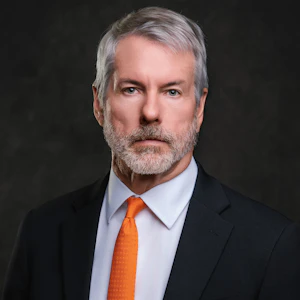
Michael Saylor
Michael Saylor
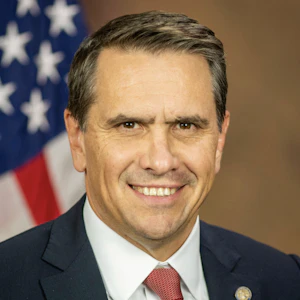
Todd Blanche
Todd Blanche
Biography of Deputy Attorney General Todd Blanche
The Honorable Todd Blanche is the 40th Deputy Attorney General of the United States, overseeing the work of the 115,000 dedicated employees who fulfill the Department of Justice’s mission at Main Justice, the FBI, DEA, U.S. Marshals, ATF, and 93 U.S. Attorney’s Offices.
Todd began his career at the Department where he served for over fifteen years in a variety of capacities, including as a contractor, a paralegal in the Criminal Division, and at the United States Attorney’s office for the Southern District of New York where he eventually became an AUSA and later a supervisor.
After leaving the Department, Todd worked as a criminal defense attorney that included representing President Donald Trump in three of the criminal cases brought against him in 2023 and 2024.
Following President Trump’s historic return to the White House, the President appointed Todd to work alongside Attorney General Pam Bondi to make America safe again. At the DOJ, Todd is working tirelessly to implement President Trump’s priorities that include confronting illegal protecting American businesses from fraud.
Todd has been married to his wonderful wife Kristine for nearly thirty years, is a father and grandfather.
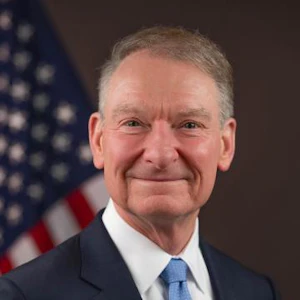
Paul Atkins
Paul Atkins
Prior to returning to the SEC, Chairman Atkins was most recently chief executive of Patomak Global Partners, a company he founded in 2009. Chairman Atkins helped lead efforts to develop best practices for the digital asset sector. He served as an independent director and non-executive chairman of the board of BATS Global Markets, Inc. from 2012 to 2015.
Chairman Atkins was appointed by President George W. Bush to serve as a Commissioner of the SEC from 2002 to 2008. During his tenure, he advocated for transparency, consistency, and the use of cost-benefit analysis at the agency. Chairman Atkins also represented the SEC at meetings of the President’s Working Group on Financial Markets and the U.S.-EU Transatlantic Economic Council. From 2009 to 2010, he was appointed a member of the Congressional Oversight Panel for the Troubled Asset Relief Program.
Before serving as an SEC Commissioner, Chairman Atkins was a consultant on securities and investment management industry matters, especially regarding issues of strategy, regulatory compliance, risk management, new product development, and organizational control.
From 1990 to 1994, Chairman Atkins served on the staff of two chairmen of the SEC, Richard C. Breeden and Arthur Levitt, ultimately as chief of staff and counselor, respectively. He received the SEC’s 1992 Law and Policy Award for work regarding corporate governance matters.
Chairman Atkins began his career as a lawyer in New York, focusing on a wide range of corporate transactions for U.S. and foreign clients, including public and private securities offerings and mergers and acquisitions. He was resident for 2½ years in his firm's Paris office and admitted as conseil juridique in France.
A member of the New York and Florida bars, Chairman Atkins received his J.D. from Vanderbilt University School of Law in 1983 and was Senior Student Writing Editor of the Vanderbilt Law Review. He received his A.B., Phi Beta Kappa, from Wofford College in 1980.
Originally from Lillington, North Carolina, Chairman Atkins grew up in Tampa, Florida. He and his wife Sarah have three sons.

Mike Selig
Mike Selig
Chairman Selig brings to the role deep public and private sector experience working with a wide range of stakeholders across agriculture, energy, financial, and digital asset industries, which rely upon and operate in CFTC-regulated markets.
Prior to his leadership at the CFTC, Chairman Selig most recently served as chief counsel of the Securities and Exchange Commission’s Crypto Task Force and senior advisor to SEC Chairman Paul S. Atkins. In this role, Chairman Selig helped to develop a clear regulatory framework for digital asset securities markets, harmonize the SEC and CFTC regulatory regimes, modernize the agency’s rules to reflect new and emerging technologies, and put an end to regulation by enforcement. He also participated in the President’s Working Group on Digital Asset Markets and contributed to its report on “Strengthening American Leadership in Digital Financial Technology.”
Prior to government service, Chairman Selig was a partner at an international law firm, focusing on derivatives and securities regulatory matters. During his years in private practice, he represented a broad range of clients subject to regulation by the CFTC, including commercial end users, futures commission merchants, commodity trading advisors, swap dealers, designated contract markets, derivatives clearing organizations, and digital asset firms. Chairman Selig advised clients on compliance with the Commodity Exchange Act and the CFTC’s rules and regulations thereunder, including in connection with registration applications and obligations, enforcement matters, and complex transactions.
Chairman Selig earned his law degree from The George Washington University Law School and was articles editor of The George Washington Law Review. He received his undergraduate degree from Florida State University.

David Bailey
David Bailey

Eric Trump
Eric Trump
Mr. Trump also serves as Executive Vice President of The Trump Organization, where he oversees the global management and operations of the Trump family’s extensive real estate portfolio. This includes Trump Hotels, Trump Golf, commercial and residential real estate, Trump Estates, and Trump Winery. Known for his hands-on leadership and strong market instincts, he has played a key role in expanding the company’s presence across major U.S. and international markets.
A globally recognized business leader and public figure, Mr. Trump is a prominent advocate for Bitcoin and decentralized finance. He is a co-founder of World Liberty Financial, a decentralized finance (DeFi) platform, and serves on the Board of Advisors of Metaplanet, Japan’s largest corporate holder of Bitcoin.
Beyond his business activities, Mr. Trump has helped raise more than $50 million for St. Jude Children’s Research Hospital in the fight against pediatric cancer, a philanthropic mission he began at age 21.
Mr. Trump earned a degree in Finance and Management from Georgetown University. He currently resides in Florida with his wife, Lara, and their two children. He is also the author of Under Siege, his memoir published in October 2025.

Jack Mallers
Jack Mallers
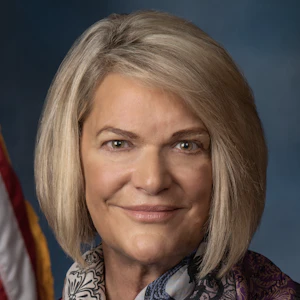
Cynthia Lummis
Cynthia Lummis
As the first-ever Chair of the Senate Banking Subcommittee on Digital Assets, Senator Lummis is the architect of the legislative framework shaping America's digital asset future. She introduced the landmark Lummis-Gillibrand Responsible Financial Innovation Act, the first comprehensive bipartisan crypto regulatory framework in Senate history. She co-authored the GENIUS Act — the first federal stablecoin law ever enacted — and introduced the BITCOIN Act, which would establish a U.S. strategic Bitcoin reserve of up to one million BTC. She is leading the Clarity Act, which will bring long-overdue regulatory certainty to the digital asset industry. She has also championed digital asset tax reform, including a de minimis exemption for small transactions and equal tax treatment for miners and stakers.
Known as Congress' "Crypto Queen," Senator Lummis represents Wyoming — a state she has helped build into one of the most digital asset-friendly regulatory environments in the nation. Before serving in the Senate, she served 14 years in the Wyoming Legislature, eight years as Wyoming State Treasurer, and eight years in the U.S. House. She is a three-time graduate of the University of Wyoming.
Her work represents a crucial bridge between traditional financial systems and the emerging digital economy, ensuring America leads the world in financial innovation while protecting the individual freedoms that define it.

Adam Back
Adam Back
Amy Oldenburg
Amy Oldenburg
David Marcus
David Marcus

Matt Schultz
Matt Schultz
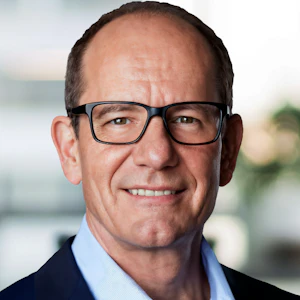
Fred Thiel
Fred Thiel
Throughout his career, Mr. Thiel has consistently driven rapid growth and created substantial shareholder value. Prior to MARA, Mr. Thiel served as the CEO of two other public companies, Local Corporation (NASDAQ: LOCM) and Lantronix, Inc (NASDAQ: LTRX). He has successfully raised billions in equity and debt through private and public offerings, led companies through IPOs, executed high-value exits to strategic and financial acquirers, and implemented effective M&A and roll-up strategies.
Mr. Thiel attended the Stockholm School of Economics and executive classes at Harvard Business School, and is fluent in English, Spanish, Swedish, and French. Mr. Thiel is the Chairman of the Board for Oden Technology, Inc. and is active in Young Presidents’ Organization where he has led initiatives in both the FinTech and Technology Networks.
A recognized voice in the industry, Fred frequently shares his insights on energy and technology with major media outlets like Bloomberg TV, CNBC, and FOX Business, contributing to vital discussions about the future of these sectors.
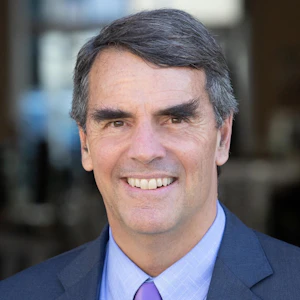
Tim Draper
Tim Draper
He is a supporter and global thought leader for entrepreneurs everywhere, and is a leading spokesperson for Bitcoin and decentralization, having won the Bitcoin US Marshall’s auction in 2014, invested in over 50 crypto companies, and led investments in Coinbase, Ledger, Tezos, and Bancor, among others.
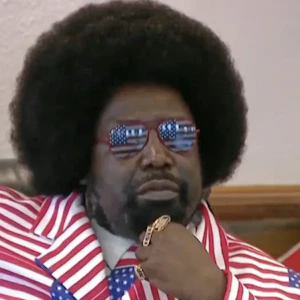
Afroman
Afroman