Mining Stewardship: Creating Value, Jobs, & Opportunities for Local Communities
Speakers/Moderators

Susie Violet Ward
Susie Violet Ward

Harvey Blom
Harvey Blom
Harvey Blom is a leading expert at the intersection of renewable energy and Bitcoin infrastructure. With over a decade of strategic leadership in energy, blockchain, and digital innovation, Harvey has become a recognized voice shaping the future of sustainable Bitcoin mining. His work centers on unlocking the synergy between clean power solutions and decentralized finance to create resilient, scalable, and environmentally responsible Bitcoin ecosystems.
As a senior strategist with GRN Energy, Harvey drives initiatives that integrate green energy systems with high-performance Bitcoin mining infrastructure. His deep understanding of power markets, energy optimization, and digital asset economics enables him to architect solutions that reduce environmental impact while maximizing ROI for industrial-scale mining operations.
Harvey is the author of The Bitcoin Mining Book—a comprehensive guide bridging technical, economic, and energy-centric perspectives of Bitcoin mining. His accessible insights have empowered professionals across finance, energy, and technology sectors to navigate the emerging Bitcoin economy with clarity and confidence.
An inventor and builder at heart, Harvey created the Bitcoin ROI Calculator, a widely used tool that demystifies mining economics by enabling operators and investors to model profitability with precision. His analytical tools have become benchmarks for transparency and efficiency in mining project planning.
Harvey is also the co-founder of BitcoinAwards.io, a platform celebrating excellence and innovation across the global Bitcoin community. Through highlighting impact and leadership, the initiative accelerates adoption and recognizes pioneers who are pushing the boundaries of the Bitcoin ecosystem.
Blending strategic vision with practical execution, Harvey Blom continues to lead the charge toward a future where Bitcoin and renewable energy work hand-in-hand to power the next generation of digital and decentralized infrastructure.
Curtis Harris
Curtis Harris

Megan Brooks-Anderson
Megan Brooks-Anderson
Former COO of Riot Platforms (NASDAQ: RIOT) Public company experience in bitcoin mining operations, hardware procurement, site evaluation, IT/Cybersecurity, SoX control design/implementation, and M&A.25+ of experience in operations, risk management, and finance.
B.S. in Finance, Master’s Certificate of Accountancy from the University of Houston, and certification in risk management.

Mohammed Bakhashwain
Mohammed Bakhashwain
Session
Overview
This panel examined Bitcoin mining as a local economic development issue, not only an energy issue. Susie Violet Ward moderated a discussion with Harvey Blom, Curtis Harris, Megan Brooks-Anderson, and Mohammed Bakhashwain on how mining operations can create jobs, support local vendors, and build trust in the communities where they operate.
The speakers emphasized that successful mining projects require early communication, local hiring, workforce training, and genuine community engagement. Examples included Rockdale, Texas, where mining-related development created contractor work and broader local economic activity, as well as Bitzero’s approach to working with municipalities and supporting grid stability in energy-rich regions.
The conversation also covered sustainability claims, flexible demand response, the relationship between Bitcoin mining and AI data centers, and the risks of poor stewardship in markets such as Kazakhstan and Ethiopia. A recurring theme was that mining companies need to bring value locally, not simply extract power and revenue, if they want long-term permission to operate.
Thank you so much for being here. I know it's at the end of the day, and it's really appreciated. Bitcoin mining is often talked about only in terms of energy, but it is not always talked about in terms of how it helps local communities. When Bitcoin mining shows up locally, that is how it is going to be viewed globally. So it is important to discuss what we get right and what we could do better.
To dig into this, we are going to discuss it with Harvey, Mo, Curtis, and Megan. Harvey, would you like to introduce yourself?
Hello, my name is Harvey Blom. I'm a partner at GRN Energy.
Hi, everyone. I'm Mohammed Bakhashwain. I'm the founder and CEO of Bitzero.
I'm Curtis Harris. I'm senior director of growth at Compass Mining.
My name is Megan Brooks-Anderson. I started my journey as CEO of Riot and then moved on to become chief strategy officer of Blockware.
Megan, I hope you don't mind me coming to you first for this question, but you have worked across sites in Rockdale and Kentucky. What would you say are the most tangible ways that mining has changed the local communities?
I have notes, I apologize, and I might get a little emotional when I talk about this because what I call mining is the dirty side of Bitcoin. The perspective I can bring is awareness of what is involved in mining: the people. You have jobs, you have retraining of trades, and you are giving opportunities. For instance, in Rockdale, the Alcoa plant was closed in 2000, and it wasn't until 2019, when Whinstone began building, that people were actually given more opportunity. The benefit of Bitcoin mining is to give those jobs back to the community.
That's amazing because I think that is overlooked. As I said in my introduction, how it shows up locally is how it is going to be viewed globally, so it is very important that we get this right. Curtis, what does good look like?
Three clear things stand out to me: jobs, community involvement, and communication. Everything that you can do to hire locally and employ local people is what good looks like. Community engagement is actually showing up, being purposefully involved, and being present inside that community. Then communication: tell them early, tell them often. The more you can talk out loud about what you're doing and the project you have going on, the better. Those three things are what good looks like: hiring locally, communication, and engagement.
Absolutely. We do not talk about it enough. When we had the pre-panel discussions, we were saying, why has this topic not been covered before? When it comes to Bitcoin mining and AI, do you see them as complementary, or do you think they can outcompete each other?
They are both energy-intensive businesses that are competing for the same power sources. In the end, it puts a lot of pressure on the power production side of things. It will also put a lot more pressure on the sustainability side, because sustainable power has not been developed in abundance over the past years in expectation of the demand that we now have. Technologies that we thought were going to take much longer are now becoming rapidly developed, such as modular nuclear technologies and other types of renewable energy, to catch up with this demand and try to stay away from non-sustainable sources of energy. That is what I see.
If Bitcoin mining can be used for flexible demand response, and the power for AI is intermittent, could Bitcoin mining be used to smooth out that power supply in the same way that it does with renewables and wind farms?
Yes, absolutely, because Bitcoin mining is a flexible load. You can use it more like a battery. For example, at one of our sites in Norway, we participate in something similar to a demand response program, which helps stabilize the grid during peak consumption in winter. We always have a portion of our capacity ready to go offline within five minutes to support the grid. That allows the grid to have stability through the winter.
That is another way of giving back to the community in a tangible manner. Also, Susie, if you remember, on our previous panel I mentioned that a portion of Bitzero's energy revenue goes directly to the municipality to invest in whatever they see fit for their local community, which is not something I think anyone else could claim.
Harvey told me that I have to ask this question in a positive way. You've been quite critical of how Bitcoin mining has been deployed locally. Where has the industry gone wrong?
In my opinion, a lot of Bitcoin miners had a short-term plan. I think they should have brought way more value to local economies and local jobs. That has been discussed before, and I think they should have done a better job.
Do you think that rather than benefiting the local community, the value is leaving the communities? Is that where you see the issue, that it is not staying locally and is being used in a way that gets extracted elsewhere?
It is not only about the economic value leaving, but also fundamentally, what does this Bitcoin mining facility contribute locally? Jobs, economic activity, maybe heat, and other solutions where it becomes integrated into the local community.
Megan, we are now seeing pushback around data centers and shifting to AI. How does Bitcoin mining fit into that conversation?
Recently someone told me that before the shovel hits the ground, we need to have a community strategy. Obviously, power strategies are very important, but so are community strategies, because power is a resource that belongs to all of us. We have an obligation to the communities and the people around us to focus on resources, jobs, and training.
How do you go about doing that? How do you make sure the balance is right?
The balance is right by going out into the community and listening to people. What we do in Bitcoin mining is give underserved and forgotten communities the ability to retrain and bring in opportunity for their families. We need to listen to that, and we need to pay attention to the political environment and understand, in some other cities where bad actors were in place, that we do not follow that same pattern.
Curtis, how do you measure the economic value? Because it is not just about jobs. There is so much more to it. How can you measure how economically valuable it is to a local community?
Early in my career, Chad Everett Harris taught me something directly. He said, Curtis, it is all about jobs, and I own that in my ethos. But if we look at the reality of Bitcoin mining, historically it does not employ that many site operators on site. We have gotten pretty good at operations. We have developed remote systems, and at Compass we are able to operate 10 megawatts with three people. That is not a lot of people on these sites.
However, these are generally in remote communities. Think of farmland. One thing to consider is that we are certainly employing more people per acre than the local farming community is. There is the negative of not a lot of jobs, but then look at it: we are using the area differently.
To be more direct to your question, and I am passionate about this, recognize that we are in a remote world. Bitcoin is 24/7 and decentralized. You have the opportunity to put up a job posting or bring someone in. The biggest economic impact you can make is to force yourself to hire locally. Go through every effort possible to hire locally, get involved in workforce development, and train for these positions. These are generally good-paying roles inside these communities.
But the economic impact goes beyond that. When you hire local contractors, when you work with the concrete company, the electrician, and local vendors, go through every effort to develop local vendors. If you are buying a product and just ordering it online for your site operations, is there a local vendor that you can develop so that you can invest in that community? Those contractors you might hire for your site buildout allow dollars to stay in that economy. Those people will end up being your biggest advocates when some issue comes up. Those contractors have deep connections across the community. It is incredibly valuable to keep every dollar local.
To further that, speaking of Chad and working in Rockdale, there was a report done where there were 650 contractors employed. However, there were 2,500 jobs in a trickle-down effect from the Whinstone facility at one time.
Amazing. And where was that?
Rockdale.
And how big is Rockdale? Just to give a rough sense of the size, because that is a lot of people.
Yes, it is. I am not exactly sure of the population of Rockdale, though it is a small town outside of Austin and Hutto. It is a bunch of small towns outside of Austin.
I would think that is a lot of people even for a city. If a new industry was going to come to a city, that is the point I was trying to make. It is a small town, so it must almost take over the community. Incredible.
Mo, Bitzero leans heavily into sustainability, but how much of this green mining narrative is real versus marketing?
We have seen a lot of abuse of the green narrative, but that does not mean that some of the players who market around that do not have a plan they are pursuing to achieve more sustainability. It is really hard to differentiate. For us, we are sustainable by nature. Our power sources are 100% sustainable.
What do you mine from?
Hydro energy dominantly. In Norway it is 100% hydro, and in Finland our site is mainly powered by nuclear with a mix of wind and solar.
Any geothermal?
There are geothermal plants nearby, but that does not come through our lines. There are geothermal sources being actively developed. There is also a big push in Finland around modular nuclear that we have been seeing, and we are really excited to see that come to fruition.
Harvey, you described mining as infrastructure. Can you explain what that means and why it matters long term?
It has to do with a couple of things. Since 2021, I have been advocating that Bitcoin mining and crypto mining should be part of the data center ecosystem. You have tier one, tier two, tier three, tier four, and even tier five. I have always advocated that Bitcoin mining should be tier zero, where data centers start. It would be a better strategy, and you would also have a better strategy to be part of that ecosystem.
If there is any issue in the country, instead of attacking Bitcoin mining as an ugly duck, they would be attacking the industry. You would have better support for it if Bitcoin mining becomes part of the data center ecosystem.
Curtis, you said you can't fake local. What are the biggest mistakes that companies make when they try to enter new regions?
I will share a story about Jeff Bryant, one of our phenomenal employees. Jeff started as a site technician at a site in Ohio and has now been promoted multiple times as a regional site leader, managing an incredibly large team. Jeff had a passion for feeding the homeless, and as a site technician in an entry-level role, he launched an initiative locally in his community called SATs for Soup. He and his colleagues on site gathered their own resources, went out to Sam's Club or Costco, loaded up food, and took it to the homeless shelter. He is a hardcore Bitcoiner, and he called it SATs for Soup.
We saw that and wanted to stand beside him. That is an example of a Bitcoiner seeing a need to give back. When we talk about how you can't fake local and the mistakes people make, I think there is this desire to say, I want better community engagement, so let me sponsor every little league team in town and put my name on it. I do not think that works. A better solution is to find the causes that your people are passionate about and get beside them as they serve, whether that is allowing some time off, recognizing that they are contributing, or matching a donation. Investing yourself and your team resources in what your people on the ground are already committed to is one of the best suggestions.
That intentional action turns their job into an actual career. It provides them opportunity. It provides pride in these communities and the ability to support their families further. I think that is a really good point.
It is fun to be at a conference in Las Vegas, but these are real people. They have real lives, families, schools, and churches. This is their community. If you are coming in and building a Bitcoin mine and you just want to extract electricity and mine your Bitcoin, you are missing a tremendous opportunity to make a real impact.
You are ignoring the boots on the ground, because the grit it takes, the hours it takes, and the time it takes matter. At Riot, I never asked others to do something I never did myself, because I needed to understand what it took to do that work. We spent time in Oklahoma City, upstate New York, and Massena working with people and with our auditors, hands-on. We would step out of that mine completely filthy. People miss the point that this is beautiful, great, amazing, and exciting, but what we miss is the dirty side of Bitcoin: the part that takes the grit, the time, and the 24/7 work. That is what creates all of that opportunity beyond it.
Mo, you build renewable energy sites. What have been the real-world challenges that you have faced, and how do you integrate energy systems into local communities?
There are two types of integration. One is what Curtis and Megan were just talking about, which is, in short, earning the trust of the local community and showing them that you are genuinely not just here to extract energy and mine Bitcoin, and that you can have a real impact in that sense.
The other is having a direct economic impact and a direct felt impact, like the grid stability we provide during winter, which could affect people negatively if it were not there. With the revenue we provide to municipalities, they can invest in schools, agriculture, or whatever they need for their community. Those are two ways of having a tangible impact that you need in order to have long-term stability in a region where you would like to operate, especially if you do not have a short-term horizon.
How do you even go about starting something like that? How do you approach people and integrate if you are coming in from nowhere?
Our sites are mainly developed with the local community. As Curtis was saying, if you go there and start bringing engineers from all over the world, you are not going to get anywhere.
How do you go in? Do you do surveys? What is the process?
You have to partner with the local community. You need to develop these lands from the ground up. It is not that you go to land that is ready and a project that is plug-and-play. You need to develop it from the ground up and see where it fits: where the closest connection points are, how it is going to affect the local community, who the closest resident is, how much they are going to be affected, how much you are going to affect the power grid in the area, and what you need to do to mitigate that. You need to determine what revenue or benefit you are giving directly to the municipality before you even engage in the project itself.
There is a lot of groundwork. Most of our sites have been worked on for more than a year before they were acquired.
A year before you even go in there?
Before you even go in there. It is a minimum of a year of integrating with the local communities, local authorities, power utilities, grid companies, and power production in the area before you even touch a project.
That makes perfect sense. If you go in all guns blazing, then you are not going to get a good reception.
Harvey, looking at countries like Kazakhstan, which got quite a bad rap when it comes to Bitcoin mining, and Venezuela, what should have been done differently?
As my fellow panelists acknowledged, the importance of people matters. In Kazakhstan, what a lot of people do not know is that when the ban came in China, a lot of people relocated to Kazakhstan, not knowing that Kazakhstan had an energy deficit. In the summer there were no problems. But in the winter, because of Bitcoin mining, a lot of cities could not heat their homes. This became a big problem, and that is why Bitcoin mining became very difficult.
Similarly in Ethiopia, Ethiopia has cheap power. I personally believe that Ethiopia should be one of the best data center havens and also one of the gateways to Africa for data centers, all the way up to tier three. I think because of greed, corruption, and bad stewardship, we messed that opportunity up.
When you talk about corruption, are you talking about governments?
Government, government officials, businesspeople, everybody that is part of the ecosystem. I will not mention any particular names here.
One last question. If mining is going to create long-term value, what needs to change?
Proactive, unselfish engagement. Be there early, do not be focused on yourself, and actively engage. That is the short answer: proactive, unselfish engagement.
I see the long-term value in mining as integrating it into a lot of other industries and marrying it to energy-intensive industries that are now eating up everything that is coming up in power production. There are gigawatts of AI compute clusters being built, and at some point there is going to be a marriage between Bitcoin mining and those clusters that makes it extremely efficient for the clusters and for the miners, especially to be used as backup power. You can consume that backup power and make cash flow out of it through mining, and within two minutes that power can be made available for redundancy. At some point, there is a marriage there that could integrate mining into that and other energy-intensive businesses.
There are lots of opportunities. Anything that produces heat, for example, heating. I think Bitcoin mining is going to be one of those things that gets integrated into every single part of our lives at some point.
I have a couple of suggestions. One is to have a strategy to be part of the data center ecosystem. Another is to understand how to not only get value, but also bring value. A lot of Bitcoin miners forget how important people are. People can make or break your business. Right now, a lot of data centers, not only Bitcoin mining, are not allowed to expand because people do not want them there. We should all reflect on that and make sure we become better stewards so we can all benefit from the digital world where it is going, because it needs data centers.
Thank you so much. I hope you found that very informative, and thank you very much for staying. I know it is late in the day. Thanks, and a round of applause for my amazing panelists.
Similar
Sessions
Mining Stewardship: Creating Value, Jobs, & Opportunities for Local Communities
Susie Violet Ward
Susie Violet Ward
Harvey Blom
Harvey Blom
Harvey Blom is a leading expert at the intersection of renewable energy and Bitcoin infrastructure. With over a decade of strategic leadership in energy, blockchain, and digital innovation, Harvey has become a recognized voice shaping the future of sustainable Bitcoin mining. His work centers on unlocking the synergy between clean power solutions and decentralized finance to create resilient, scalable, and environmentally responsible Bitcoin ecosystems.
As a senior strategist with GRN Energy, Harvey drives initiatives that integrate green energy systems with high-performance Bitcoin mining infrastructure. His deep understanding of power markets, energy optimization, and digital asset economics enables him to architect solutions that reduce environmental impact while maximizing ROI for industrial-scale mining operations.
Harvey is the author of The Bitcoin Mining Book—a comprehensive guide bridging technical, economic, and energy-centric perspectives of Bitcoin mining. His accessible insights have empowered professionals across finance, energy, and technology sectors to navigate the emerging Bitcoin economy with clarity and confidence.
An inventor and builder at heart, Harvey created the Bitcoin ROI Calculator, a widely used tool that demystifies mining economics by enabling operators and investors to model profitability with precision. His analytical tools have become benchmarks for transparency and efficiency in mining project planning.
Harvey is also the co-founder of BitcoinAwards.io, a platform celebrating excellence and innovation across the global Bitcoin community. Through highlighting impact and leadership, the initiative accelerates adoption and recognizes pioneers who are pushing the boundaries of the Bitcoin ecosystem.
Blending strategic vision with practical execution, Harvey Blom continues to lead the charge toward a future where Bitcoin and renewable energy work hand-in-hand to power the next generation of digital and decentralized infrastructure.
Curtis Harris
Curtis Harris
Megan Brooks-Anderson
Megan Brooks-Anderson
Former COO of Riot Platforms (NASDAQ: RIOT) Public company experience in bitcoin mining operations, hardware procurement, site evaluation, IT/Cybersecurity, SoX control design/implementation, and M&A.25+ of experience in operations, risk management, and finance.
B.S. in Finance, Master’s Certificate of Accountancy from the University of Houston, and certification in risk management.
Mohammed Bakhashwain
Mohammed Bakhashwain
Mining Stewardship: Creating Value, Jobs, & Opportunities for Local Communities
Speakers/Moderators
Susie Violet Ward
Susie Violet Ward
Harvey Blom
Harvey Blom
Harvey Blom is a leading expert at the intersection of renewable energy and Bitcoin infrastructure. With over a decade of strategic leadership in energy, blockchain, and digital innovation, Harvey has become a recognized voice shaping the future of sustainable Bitcoin mining. His work centers on unlocking the synergy between clean power solutions and decentralized finance to create resilient, scalable, and environmentally responsible Bitcoin ecosystems.
As a senior strategist with GRN Energy, Harvey drives initiatives that integrate green energy systems with high-performance Bitcoin mining infrastructure. His deep understanding of power markets, energy optimization, and digital asset economics enables him to architect solutions that reduce environmental impact while maximizing ROI for industrial-scale mining operations.
Harvey is the author of The Bitcoin Mining Book—a comprehensive guide bridging technical, economic, and energy-centric perspectives of Bitcoin mining. His accessible insights have empowered professionals across finance, energy, and technology sectors to navigate the emerging Bitcoin economy with clarity and confidence.
An inventor and builder at heart, Harvey created the Bitcoin ROI Calculator, a widely used tool that demystifies mining economics by enabling operators and investors to model profitability with precision. His analytical tools have become benchmarks for transparency and efficiency in mining project planning.
Harvey is also the co-founder of BitcoinAwards.io, a platform celebrating excellence and innovation across the global Bitcoin community. Through highlighting impact and leadership, the initiative accelerates adoption and recognizes pioneers who are pushing the boundaries of the Bitcoin ecosystem.
Blending strategic vision with practical execution, Harvey Blom continues to lead the charge toward a future where Bitcoin and renewable energy work hand-in-hand to power the next generation of digital and decentralized infrastructure.
Curtis Harris
Curtis Harris
Megan Brooks-Anderson
Megan Brooks-Anderson
Former COO of Riot Platforms (NASDAQ: RIOT) Public company experience in bitcoin mining operations, hardware procurement, site evaluation, IT/Cybersecurity, SoX control design/implementation, and M&A.25+ of experience in operations, risk management, and finance.
B.S. in Finance, Master’s Certificate of Accountancy from the University of Houston, and certification in risk management.
Mohammed Bakhashwain
Mohammed Bakhashwain
Other
Speakers
Michael Saylor
Michael Saylor
Todd Blanche
Todd Blanche
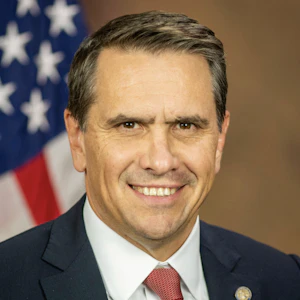
Biography of Deputy Attorney General Todd Blanche
The Honorable Todd Blanche is the 40th Deputy Attorney General of the United States, overseeing the work of the 115,000 dedicated employees who fulfill the Department of Justice’s mission at Main Justice, the FBI, DEA, U.S. Marshals, ATF, and 93 U.S. Attorney’s Offices.
Todd began his career at the Department where he served for over fifteen years in a variety of capacities, including as a contractor, a paralegal in the Criminal Division, and at the United States Attorney’s office for the Southern District of New York where he eventually became an AUSA and later a supervisor.
After leaving the Department, Todd worked as a criminal defense attorney that included representing President Donald Trump in three of the criminal cases brought against him in 2023 and 2024.
Following President Trump’s historic return to the White House, the President appointed Todd to work alongside Attorney General Pam Bondi to make America safe again. At the DOJ, Todd is working tirelessly to implement President Trump’s priorities that include confronting illegal protecting American businesses from fraud.
Todd has been married to his wonderful wife Kristine for nearly thirty years, is a father and grandfather.

Paul Atkins
Paul Atkins
Prior to returning to the SEC, Chairman Atkins was most recently chief executive of Patomak Global Partners, a company he founded in 2009. Chairman Atkins helped lead efforts to develop best practices for the digital asset sector. He served as an independent director and non-executive chairman of the board of BATS Global Markets, Inc. from 2012 to 2015.
Chairman Atkins was appointed by President George W. Bush to serve as a Commissioner of the SEC from 2002 to 2008. During his tenure, he advocated for transparency, consistency, and the use of cost-benefit analysis at the agency. Chairman Atkins also represented the SEC at meetings of the President’s Working Group on Financial Markets and the U.S.-EU Transatlantic Economic Council. From 2009 to 2010, he was appointed a member of the Congressional Oversight Panel for the Troubled Asset Relief Program.
Before serving as an SEC Commissioner, Chairman Atkins was a consultant on securities and investment management industry matters, especially regarding issues of strategy, regulatory compliance, risk management, new product development, and organizational control.
From 1990 to 1994, Chairman Atkins served on the staff of two chairmen of the SEC, Richard C. Breeden and Arthur Levitt, ultimately as chief of staff and counselor, respectively. He received the SEC’s 1992 Law and Policy Award for work regarding corporate governance matters.
Chairman Atkins began his career as a lawyer in New York, focusing on a wide range of corporate transactions for U.S. and foreign clients, including public and private securities offerings and mergers and acquisitions. He was resident for 2½ years in his firm's Paris office and admitted as conseil juridique in France.
A member of the New York and Florida bars, Chairman Atkins received his J.D. from Vanderbilt University School of Law in 1983 and was Senior Student Writing Editor of the Vanderbilt Law Review. He received his A.B., Phi Beta Kappa, from Wofford College in 1980.
Originally from Lillington, North Carolina, Chairman Atkins grew up in Tampa, Florida. He and his wife Sarah have three sons.

Mike Selig
Mike Selig
Chairman Selig brings to the role deep public and private sector experience working with a wide range of stakeholders across agriculture, energy, financial, and digital asset industries, which rely upon and operate in CFTC-regulated markets.
Prior to his leadership at the CFTC, Chairman Selig most recently served as chief counsel of the Securities and Exchange Commission’s Crypto Task Force and senior advisor to SEC Chairman Paul S. Atkins. In this role, Chairman Selig helped to develop a clear regulatory framework for digital asset securities markets, harmonize the SEC and CFTC regulatory regimes, modernize the agency’s rules to reflect new and emerging technologies, and put an end to regulation by enforcement. He also participated in the President’s Working Group on Digital Asset Markets and contributed to its report on “Strengthening American Leadership in Digital Financial Technology.”
Prior to government service, Chairman Selig was a partner at an international law firm, focusing on derivatives and securities regulatory matters. During his years in private practice, he represented a broad range of clients subject to regulation by the CFTC, including commercial end users, futures commission merchants, commodity trading advisors, swap dealers, designated contract markets, derivatives clearing organizations, and digital asset firms. Chairman Selig advised clients on compliance with the Commodity Exchange Act and the CFTC’s rules and regulations thereunder, including in connection with registration applications and obligations, enforcement matters, and complex transactions.
Chairman Selig earned his law degree from The George Washington University Law School and was articles editor of The George Washington Law Review. He received his undergraduate degree from Florida State University.

David Bailey
David Bailey

Eric Trump
Eric Trump
Mr. Trump also serves as Executive Vice President of The Trump Organization, where he oversees the global management and operations of the Trump family’s extensive real estate portfolio. This includes Trump Hotels, Trump Golf, commercial and residential real estate, Trump Estates, and Trump Winery. Known for his hands-on leadership and strong market instincts, he has played a key role in expanding the company’s presence across major U.S. and international markets.
A globally recognized business leader and public figure, Mr. Trump is a prominent advocate for Bitcoin and decentralized finance. He is a co-founder of World Liberty Financial, a decentralized finance (DeFi) platform, and serves on the Board of Advisors of Metaplanet, Japan’s largest corporate holder of Bitcoin.
Beyond his business activities, Mr. Trump has helped raise more than $50 million for St. Jude Children’s Research Hospital in the fight against pediatric cancer, a philanthropic mission he began at age 21.
Mr. Trump earned a degree in Finance and Management from Georgetown University. He currently resides in Florida with his wife, Lara, and their two children. He is also the author of Under Siege, his memoir published in October 2025.

Jack Mallers
Jack Mallers
Cynthia Lummis
Cynthia Lummis
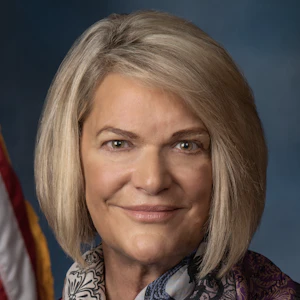
As the first-ever Chair of the Senate Banking Subcommittee on Digital Assets, Senator Lummis is the architect of the legislative framework shaping America's digital asset future. She introduced the landmark Lummis-Gillibrand Responsible Financial Innovation Act, the first comprehensive bipartisan crypto regulatory framework in Senate history. She co-authored the GENIUS Act — the first federal stablecoin law ever enacted — and introduced the BITCOIN Act, which would establish a U.S. strategic Bitcoin reserve of up to one million BTC. She is leading the Clarity Act, which will bring long-overdue regulatory certainty to the digital asset industry. She has also championed digital asset tax reform, including a de minimis exemption for small transactions and equal tax treatment for miners and stakers.
Known as Congress' "Crypto Queen," Senator Lummis represents Wyoming — a state she has helped build into one of the most digital asset-friendly regulatory environments in the nation. Before serving in the Senate, she served 14 years in the Wyoming Legislature, eight years as Wyoming State Treasurer, and eight years in the U.S. House. She is a three-time graduate of the University of Wyoming.
Her work represents a crucial bridge between traditional financial systems and the emerging digital economy, ensuring America leads the world in financial innovation while protecting the individual freedoms that define it.
Adam Back
Adam Back

Amy Oldenburg
Amy Oldenburg
David Marcus
David Marcus

Matt Schultz
Matt Schultz
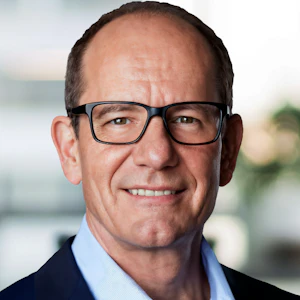
Fred Thiel
Fred Thiel
Throughout his career, Mr. Thiel has consistently driven rapid growth and created substantial shareholder value. Prior to MARA, Mr. Thiel served as the CEO of two other public companies, Local Corporation (NASDAQ: LOCM) and Lantronix, Inc (NASDAQ: LTRX). He has successfully raised billions in equity and debt through private and public offerings, led companies through IPOs, executed high-value exits to strategic and financial acquirers, and implemented effective M&A and roll-up strategies.
Mr. Thiel attended the Stockholm School of Economics and executive classes at Harvard Business School, and is fluent in English, Spanish, Swedish, and French. Mr. Thiel is the Chairman of the Board for Oden Technology, Inc. and is active in Young Presidents’ Organization where he has led initiatives in both the FinTech and Technology Networks.
A recognized voice in the industry, Fred frequently shares his insights on energy and technology with major media outlets like Bloomberg TV, CNBC, and FOX Business, contributing to vital discussions about the future of these sectors.
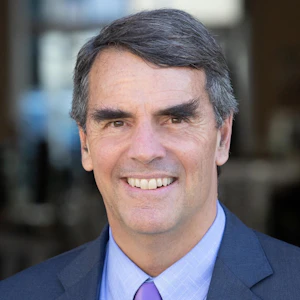
Tim Draper
Tim Draper
He is a supporter and global thought leader for entrepreneurs everywhere, and is a leading spokesperson for Bitcoin and decentralization, having won the Bitcoin US Marshall’s auction in 2014, invested in over 50 crypto companies, and led investments in Coinbase, Ledger, Tezos, and Bancor, among others.

Afroman
Afroman