Bitcoin & The Rise of Emerging Market Energy Economies
Speakers/Moderators

Susie Violet Ward
Susie Violet Ward

Timo Steipe
Timo Steipe
As the founder of MIM, Timo aims to democratize the Bitcoin mining industry and make it accessible to every enthusiast in Europe. His commitment to decentralization and his expertise continue to drive innovation in Bitcoin mining.
Alessandro Cecere
Alessandro Cecere
Daniel Jonsson
Daniel Jonsson
A passionate miner since 2017, Daniel has been active in the industry founding and leading companies such as mgmt Energy (formerly GreenBlocks), a bitcoin mining company and Viska Digital Assets, Iceland's first digital asset focused hedge fund.
Daniel has been an active angel investor in recent years.
Daniel is a firm believer in proof of work and doing hard things.
Session
Overview
This panel examined how Bitcoin mining can turn overlooked or stranded energy into economic activity in emerging markets and energy-abundant regions. Susie Violet Ward moderated a discussion with Daniel Jonsson of MGMT Digital Infrastructure, Timo Steipe of Munich International Mining, and Alessandro Cecere of Luxor.
The speakers focused on the practical realities of mining where electricity is cheap but infrastructure, uptime, regulation, and political education can be challenging. They discussed how mining can act as a flexible load for grid balancing, sometimes serving a role comparable to or better than batteries while also generating Bitcoin when operating.
Examples included Iceland's development of data center infrastructure, Germany's curtailed solar power, Ethiopia's mining framework and grid limits, and Venezuela's large installed generation capacity and flared gas. The conversation emphasized that Bitcoin mining's value is not only in cheap power, but in building local infrastructure, attracting capital, supporting grids, and creating a path for broader energy and data center development.
Brilliant. Well, thank you for coming to the 10:30 slot at the Energy Stage. I love that there are so many people here. I think it's quite a good turnout, all things considered. The next wave of superpowers is not going to come from the biggest economies. It is going to come from countries that have a lot of excess and stranded power.
Bitcoin mining is perfectly positioned to allow these countries to tap into these resources. It is going to completely change how we view emerging markets and emerging economies. My name is Susie Violet Ward. I am a journalist and a co-founder and director at Bitcoin Policy UK. We are going to be discussing these topics with this incredible panel.
Daniel, would you be able to start by introducing yourself, please?
Yes, thank you very much, Susie. My name is Daniel Jonsson. I am the CEO and co-founder of MGMT. Most people know us as Green Blocks. Up until now in the industry, I have been a miner since 2017. We have been mining at scale in Iceland since 2019, partnering with different companies operating out of Iceland.
It has been a journey. We have done a few things along the way. We started Iceland's first digital asset-focused hedge fund, and recently we helped one of our partners set up their initial AI operations in Iceland. So we are behind the import of over $100 million worth of AI equipment into Iceland as well.
We have been focusing on Iceland, which has become increasingly complicated. We are now branching out of Iceland, so we are working on two projects in Finland at the moment and a project in Alaska. All of those should be online before the end of this year. That is what we are up to.
Super exciting stuff. I had a lot of questions I wanted to ask you, but realized that we should complete the introductions before I start asking questions on Iceland. Timo, would you like to introduce yourself?
Yes, of course. My name is Timo Steipe. I am the co-founder of Munich International Mining, and we specialize in mining in emerging markets. If you look at my picture there, I think I had a lot more hair because of mining in emerging markets.
Our company was born out of the fact that we are bitcoiners, and we wanted to give everybody access to Bitcoin mining. This was our main mission. We looked for energy sources in these countries so that normal, average people could get access to these cheap prices as well, and not only the big miners.
This was our mission for the last year. We have several projects up and running in the UAE. We have Ethiopia, we had Paraguay, and now we are going more and more into Europe, which I also consider an emerging market. Normally people think about emerging markets as the Global South, but in mining it is maybe a little bit different. This is what we have done since 2021.
Alessandro, would you please introduce yourself?
Hey everybody. My name is Alessandro Cecere. I am also known as El Sultan Bitcoin on socials. I got into this space in 2013 by mining Bitcoin in Caracas at home to escape a broken financial system. Venezuela is still the story that I care about the most in this space.
After more than a decade, I have been involved in a number of startups, either co-founding or scaling them. Currently I am on the BD team at Luxor Technology, helping miners globally scale their operations.
Thank you. Timo, I would like to come to you first. You mentioned that you have been mining in Paraguay, the UAE, and Ethiopia. What are the biggest misconceptions that people have with Bitcoin mining?
I think the biggest misconception in these emerging markets is that people only focus on the electricity price. They are only looking for cheap electricity. But in reality, if you go to these countries, you also have to look at the downsides. You have to look at uptime and things like that.
What normally comes with cheap prices is some kind of instability, either in the infrastructure or in the political surroundings. What you really have to focus on, next to the energy price, is uptime. I think this is one big misconception when people are always running after cheap electricity.
The other big misconception that I hear a lot, and what we see, is that emerging markets are much safer than people expect them to be. They are much safer for mining companies because we can create big value. In countries like Ethiopia, for example, what they are looking for is people who buy electricity and are reliable payers for electricity.
This is what Bitcoin mining does. Bitcoin mining itself, to be honest, is the easiest thing in the world. You have your miner, you plug it in, you have the internet, and that is it. Then you are mining. I am not talking about the pools and the technical stuff. The big thing is really navigating the political infrastructure and the electricity infrastructure. I think these are the two biggest misconceptions.
So when you say uptime, you mean you have stranded energy and it can be monetized, but it might not always be available.
Yes. For example, if we look at Ethiopia, Ethiopia built a complete law around Bitcoin mining. They created licenses and a tax-free zone so you can import miners without paying import duties, which is also a big factor in mining. But they oversold it. Too much came in, and what happened is that the grid could not handle it anymore.
So they had to shut down in peak times, even though it was against the PPA. This is really the core thing about uptime. You do not have 100% uptime. You may only have 60%, 70%, or 80%. You have to factor this in. The economics change a lot in mining if you do not consider uptime.
Thank you for explaining that. Daniel, you have talked about emerging markets. When it comes to grid participation, what is actually happening in the emerging markets that you are working in?
As Timo mentioned, and Timo stole my line, Europe is an emerging market in this regard, definitely. If you look at any modern energy grid, they are getting increasingly complicated. We have had a massive focus over the last few years on putting renewable energy production online. Most of that is wind and solar, which comes with a lot of challenges.
The actual production from those is maybe around 50% of the time at best. Grid operators and energy producers are faced with challenges, particularly around grid balancing and frequency regulation. If you have a lot of energy that comes online and goes offline intermittently, you not only need large-scale users of energy to counter that, but you need help balancing the grid.
You need large-scale energy users that can go offline at a moment's notice. I think this is one of the biggest opportunities for our industry at the moment. A lot of things are lining up and creating that opportunity. A few years ago, nobody would even talk to us because Bitcoin was seen as so bad.
What do they do when they do not use Bitcoin mining?
That is a great question. What we have generally been seeing is the installation of large battery farms, which are suboptimal if you compare them to Bitcoin mining. A battery can only do one thing. A battery has a lot of hazardous material. There is a massive fire risk from a battery farm. The lifespan is not great, and it does one thing. You can either charge the battery or release the energy.
When we show up with a Bitcoin mining data center, we can do this at varying scale. We can go from a few hundred kilowatts to multiple megawatts, obviously. What we can effectively do is create two separate revenue streams. We are providing a critical service to the grid operator, and they are paying us for that service.
Do they pay you to take the electricity away?
They do not necessarily pay us to take the electricity away. But if you look at areas like Finland, for example, there is a pool you can bid on and participate in. Let's say I have a five megawatt data center. I can offer that up into the grid balancing pool.
Our data center is there. We are running at five megawatts. We have told them, okay, tomorrow we have five megawatts available for you. There is equipment on our site, and the grid operating system automatically sends a signal to the data center. We can scale down our usage in a matter of seconds.
We get paid for being on standby because we are a necessary service that they may need. They do not know when they will need it, but they will need it throughout the course of any given day. This is an automatic process. We can get a signal saying, I need you to go down by three megawatts or five megawatts, or whatever. That happens without human intervention.
We get paid for being on standby or we get paid for being activated. What is different between us and a battery farm is that we also get paid when we are on. We are mining Bitcoin, obviously. This is quite lucrative.
I think the Nordics are a bit open to this at the moment, but the rest of Europe needs this. The rest of Europe is about to open up. I think the only limiting factor is the negative narrative that has dominated Bitcoin for years, as we all know. I really feel that shifting. The limiting factor is just the amount of time it takes for people to realize that this is an option.
You are providing a very valuable service and mining Bitcoin at the same time. Alessandro, Venezuela has incredible potential. What is preventing Venezuela from taking this forward? What are the issues that you are seeing?
I think there are three main things that need to change in Venezuela for mining to come back. But first, let me give the audience the actual numbers so they can realize the potential. Venezuela has an installed generation capacity of 36 gigawatts against a national historic peak demand of 17 gigawatts. The energy assets are there.
What is missing is, first, the legal framework needs to change. That has already been improving since the U.S. intervention in Venezuela recently through OFAC. The U.S. issued a general license under which authorized American companies can go to Venezuela and generate, sell, store, and distribute electricity in dollars. Basically, the Trump administration created a legal framework that is already in place and can bypass the monopolistic model that we have for the electrical grid in Venezuela.
The other one is that operators interested in eventually entering the market need to focus on off-grid operations as well, because Venezuela is flaring away more than $10 billion worth of gas a year. This is the equivalent of more or less 350,000 barrels of oil per day.
Can you explain why flaring happens?
When you extract oil, you also get gas and water out of the fields. If you do not collect that gas, you just burn it. In the case of Venezuela, out of that $10 billion worth of gas that we are flaring, there is also toxic gas. So we would need chemical plants.
There are mixes, and they burn it because they do not want to release the methane into the environment. They think CO2 is less harmful. They are still putting bad stuff out there, basically.
One hundred percent. The third thing that I believe needs to be kept in mind when it comes to changing Venezuela and letting mining operators like Timo or Daniel enter the market once again is the pitch to the regulator.
The business model set up for operations in Venezuela cannot only benefit the operators themselves. It is also about teaching the current regulator and the national grid operator that Bitcoin miners can participate in the process of refinancing and rebuilding the national grid, also known as the national electrical system in Venezuela.
Perfect. It blows me away. I cannot wait to see what Venezuela does with this because there is a huge amount of potential there. Watch this space.
I believe that operators should not be treating Venezuela as a future maybe. They should rather treat it as an active line item in their pipeline.
Love that. Timo, how much of your job is actually managing political risk rather than the actual energy infrastructure?
Very good question. First of all, if Venezuela is ready for mining, we are coming.
I got you.
Now back to your question. If you go to these countries, they do not know about Bitcoin. They do not know about mining. You have to give them some education first, and you have to tell them the benefits.
For most people, you know it in your normal life, if you talk to people about Bitcoin, it has changed a little bit in the last years, luckily, but still it had something negative to it. On one side, it is political education that we have to do. Then we also have to do a lot of lobbying.
As I said in the beginning, the mining itself is the easiest part in the end. I would say in total it is like 60% lobbying, talking to people, constantly having feet on the ground in these countries, and trying to assess our risk. It is also not easy sometimes to evaluate how risky it really is, because people are normally selling you something, a dream or whatever it is.
You need to factor this in all the time. I would say roughly 60% is political work, 20% is operations, and the other 20% is whatever comes along the way.
It is tricky because I think a lot of politicians read newspapers and form their opinions based on really poor media coverage of Bitcoin. We are trying to unwind that damage. Do you find that their views on Bitcoin come from very lazy journalism?
Yes. I see it right now. For example, in Germany we have a company that focuses on mining on solar power plants. Germany is famous for turning off all the nuclear power plants in the world.
And selling its Bitcoin.
Exactly. And selling the Bitcoin, of course. That is what Germany does. But they built a lot of these solar power plants, and right now we have such a huge load of solar power plants that some do not even come online. They are not allowed to turn online.
We have a lot of clients nowadays who are looking for active solutions because sometimes the battery storage is either too expensive or it does not fit in the infrastructure there. So they go to Bitcoin mining.
We now have a lot of clients in Germany building micro data centers up to one megawatt. They always need approval from the local government. In Germany, we have one big government and then it goes down to the city, and the city needs to approve it. Every time, in all these places, we also have to talk to the political people there and educate them on this.
And unwind the damage, basically.
Yes. This is the same every time. But I have to say, it is getting better and better.
They are reading my articles. That is why.
Hopefully. Do you write them in German as well?
No, but I am assuming they can read English. Or they can translate it.
So that is basically it. We also see huge potential in Germany. We see how many people are buying machines in Germany and doing that, even though normal electricity prices are around $0.24 per kilowatt hour. But if nobody buys your electricity, or you are not allowed to put it into the grid, mining is perfect for you.
Daniel, this is something I have often thought about when it comes to value and where the value goes. Is it actually going back into local communities, or is it flowing back to where we do not necessarily want to see the value flowing?
That is a great question. I do not know where we do not want to see value flowing.
We do not want it leaving the country. We want it to serve the local community.
That is a fair point to some extent. I have a pretty good example. We are absolutely creating local value, and I have a very close example to home. A great example of this is Iceland.
First of all, way back in the late 60s, Iceland as a nation was an energy-abundant nation. We decided to make electricity an export product, and we figured out the only way we could.
From geothermal?
Yes. It is about 70% hydro, 30% geothermal, and a 100% clean energy grid. We thought, this is something we can sell. We started lobbying for the aluminum industry to come to Iceland successfully. We have pretty big aluminum smelters in Iceland.
It has always been the case that the bulk of the profit is not generated in Iceland. It is generated at headquarters somewhere abroad. However, there is massive value for the local community, and our data centers are no different.
At North, which is the data center where I used to work for a brief while, we were a big part of the reason Iceland is known for mining. Back in 2013 and 2014, they were among the first data center facilities to build purpose-built facilities within Europe for Bitcoin mining. They were quite popular and successful in doing so.
At the time it was funny, because I am probably on the record a couple of times saying there was strong lobbying against it. A lot of people in Iceland were saying, we do not want Bitcoin mining here. This is a waste of energy. We can do something better.
My point was, okay, we are building up a data center here on the back of an industry at the moment. Enterprise data centers were not a thing in Iceland. There was no international market.
So they thought you could only have one or the other. They did not understand that you could have your cake and eat it.
The whole headline narrative was, I read a headline that Bitcoin is bad, so Bitcoin is bad. That was a very strong narrative. We had to lobby against that narrative.
Fast forward a few years. A couple of weeks ago it was announced that this data center, which started with two locations in Iceland and now has three locations in Iceland, as well as data centers across the Nordics, was acquired by Equinix and the Canadian Pension Fund for $4 billion. Iceland is a pretty small country, and this made them one of the most valuable companies in Iceland.
Along the way they have been creating hundreds of jobs pretty consistently, direct and indirect jobs. The value is very clearly there, and on the books it cannot be denied anymore.
I think that is a great example because, like Timo was talking about, there are massive challenges going into some of these areas. Venezuela and Ethiopia are good examples. These countries are not going to get enterprise data centers today. But maybe, if things go well, a little bit down the line, that is on the horizon.
You are not going to start there. Who is ready to come? We are. It is such a logical and excellent stepping stone into building value for your community, monetizing that stranded energy, spending the money on great infrastructure, showing people that you are serious about your business and that you are not doing anything weird. Then that can gradually grow into larger and different areas of business.
It is huge potential. Considering it is only a 17-year-old asset, sometimes it blows my mind how far it has actually come. Alessandro, what is your role with reactivation of mining in Venezuela? What are the current states of discussions? What are the sticking points, and what are you talking about and to whom?
I believe my role is twofold. Timo said it best when it comes to emerging markets: 60% is sometimes political education. In that regard, we are actively having discussions with the national grid operator in Venezuela, teaching about the potential of Bitcoin mining to use it as a flexible load to balance the grid and refinance the reconstruction of the national grid.
We are also in active discussions with María Corina Machado's team to include Bitcoin mining in the $150 billion national economic recovery plan for Venezuela, and basically define Bitcoin mining as a matter of national emergency for Venezuela.
Then on the other side, maybe more so on the Luxor side, it is helping attract foreign capital to the market whenever we push for the right framework. The potential is massive. It is moving in the right direction. The political situation is honestly fragile, but it is moving in the right direction. Bitcoin mining will come back to Venezuela.
What kind of timeline? Is that an unfair question?
Her team tells me to tell you it is going to be six months. I am balancing expectations and telling people to wait at least a year. But it is going to happen.
I cannot wait. Do you think you will be documenting the progress? Is there any way that we can follow this?
Follow me on Twitter as El Sultan Bitcoin. I am posting everything. The interest both from foreign mining operators and from the local national grid operator has been massive, and we did not expect it. If you want to follow what is going on with mining coming back to Venezuela, follow El Sultan and Luxor. Let's stay in touch.
I have only got a couple of minutes left. In one line, what do you think the most overlooked opportunities are in Bitcoin mining? Daniel, start with you.
I think Bitcoin mining in and of itself is quite overlooked these days with the AI hype as an opportunity. Deeper into that, I think one of the most overlooked things, particularly with regard to the grids and everything, is the fact that Bitcoin mining is a better solution than a battery to balance your grid.
Perfect. Timo?
I think, to be honest, the biggest chance or the most overlooked thing right now is for everybody. They can build their own mining, maybe in Europe with only one miner, two miners, or three miners. We are not always looking at these huge mining farms, where we already see large public miners. I think all the small operators are doing much better. This is the biggest chance. Look at your home, look at what you can do, and how you can actually start Bitcoin mining.
Especially if you have solar panels.
Yes, especially if you have solar panels.
Alessandro?
I think the most overlooked thing in mining right now is Venezuela. Again, 36 gigawatts of installed capacity and current national peak demand at 13 gigawatts. We have three times the national peak demand right now.
Well, I think what we have established is that Bitcoin mining is pretty awesome. Can I have a round of applause for my amazing panel? Thank you so much.
Similar
Sessions
Derechos de Propiedad Absolutos con Bitcoin
Jethro Toro
Jethro Toro
Jethro also hosts the Bitcoin Country Podcast, where he highlights the most interesting people and projects visiting and working on hyperbitcoinization in El Salvador.

Alessandro Cecere
Alessandro Cecere
Clara García Prieto
Clara García Prieto
Derechos de Propiedad Absolutos con Bitcoin
Speakers/Moderators
Jethro Toro
Jethro Toro
Jethro also hosts the Bitcoin Country Podcast, where he highlights the most interesting people and projects visiting and working on hyperbitcoinization in El Salvador.
Alessandro Cecere
Alessandro Cecere
Clara García Prieto
Clara García Prieto
Bitcoin & The Rise of Emerging Market Energy Economies
Susie Violet Ward
Susie Violet Ward
Timo Steipe
Timo Steipe
As the founder of MIM, Timo aims to democratize the Bitcoin mining industry and make it accessible to every enthusiast in Europe. His commitment to decentralization and his expertise continue to drive innovation in Bitcoin mining.
Alessandro Cecere
Alessandro Cecere
Daniel Jonsson
Daniel Jonsson
A passionate miner since 2017, Daniel has been active in the industry founding and leading companies such as mgmt Energy (formerly GreenBlocks), a bitcoin mining company and Viska Digital Assets, Iceland's first digital asset focused hedge fund.
Daniel has been an active angel investor in recent years.
Daniel is a firm believer in proof of work and doing hard things.
Bitcoin & The Rise of Emerging Market Energy Economies
Speakers/Moderators
Susie Violet Ward
Susie Violet Ward
Timo Steipe
Timo Steipe
As the founder of MIM, Timo aims to democratize the Bitcoin mining industry and make it accessible to every enthusiast in Europe. His commitment to decentralization and his expertise continue to drive innovation in Bitcoin mining.
Alessandro Cecere
Alessandro Cecere
Daniel Jonsson
Daniel Jonsson
A passionate miner since 2017, Daniel has been active in the industry founding and leading companies such as mgmt Energy (formerly GreenBlocks), a bitcoin mining company and Viska Digital Assets, Iceland's first digital asset focused hedge fund.
Daniel has been an active angel investor in recent years.
Daniel is a firm believer in proof of work and doing hard things.
Why Energy Investment Matters More than AI Hype
Brad Cuddy
Brad Cuddy
Stephen Barbour
Stephen Barbour

Sean McDonough
Sean McDonough
Daniel Jonsson
Daniel Jonsson
A passionate miner since 2017, Daniel has been active in the industry founding and leading companies such as mgmt Energy (formerly GreenBlocks), a bitcoin mining company and Viska Digital Assets, Iceland's first digital asset focused hedge fund.
Daniel has been an active angel investor in recent years.
Daniel is a firm believer in proof of work and doing hard things.
Why Energy Investment Matters More than AI Hype
Speakers/Moderators
Brad Cuddy
Brad Cuddy
Stephen Barbour
Stephen Barbour
Sean McDonough
Sean McDonough
Daniel Jonsson
Daniel Jonsson
A passionate miner since 2017, Daniel has been active in the industry founding and leading companies such as mgmt Energy (formerly GreenBlocks), a bitcoin mining company and Viska Digital Assets, Iceland's first digital asset focused hedge fund.
Daniel has been an active angel investor in recent years.
Daniel is a firm believer in proof of work and doing hard things.
Other
Speakers
Michael Saylor
Michael Saylor
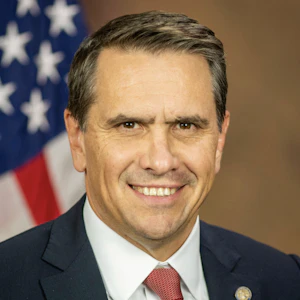
Todd Blanche
Todd Blanche
Biography of Deputy Attorney General Todd Blanche
The Honorable Todd Blanche is the 40th Deputy Attorney General of the United States, overseeing the work of the 115,000 dedicated employees who fulfill the Department of Justice’s mission at Main Justice, the FBI, DEA, U.S. Marshals, ATF, and 93 U.S. Attorney’s Offices.
Todd began his career at the Department where he served for over fifteen years in a variety of capacities, including as a contractor, a paralegal in the Criminal Division, and at the United States Attorney’s office for the Southern District of New York where he eventually became an AUSA and later a supervisor.
After leaving the Department, Todd worked as a criminal defense attorney that included representing President Donald Trump in three of the criminal cases brought against him in 2023 and 2024.
Following President Trump’s historic return to the White House, the President appointed Todd to work alongside Attorney General Pam Bondi to make America safe again. At the DOJ, Todd is working tirelessly to implement President Trump’s priorities that include confronting illegal protecting American businesses from fraud.
Todd has been married to his wonderful wife Kristine for nearly thirty years, is a father and grandfather.
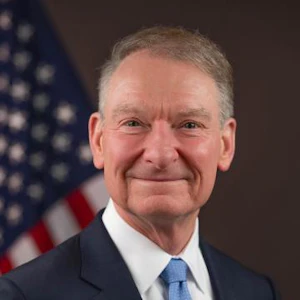
Paul Atkins
Paul Atkins
Prior to returning to the SEC, Chairman Atkins was most recently chief executive of Patomak Global Partners, a company he founded in 2009. Chairman Atkins helped lead efforts to develop best practices for the digital asset sector. He served as an independent director and non-executive chairman of the board of BATS Global Markets, Inc. from 2012 to 2015.
Chairman Atkins was appointed by President George W. Bush to serve as a Commissioner of the SEC from 2002 to 2008. During his tenure, he advocated for transparency, consistency, and the use of cost-benefit analysis at the agency. Chairman Atkins also represented the SEC at meetings of the President’s Working Group on Financial Markets and the U.S.-EU Transatlantic Economic Council. From 2009 to 2010, he was appointed a member of the Congressional Oversight Panel for the Troubled Asset Relief Program.
Before serving as an SEC Commissioner, Chairman Atkins was a consultant on securities and investment management industry matters, especially regarding issues of strategy, regulatory compliance, risk management, new product development, and organizational control.
From 1990 to 1994, Chairman Atkins served on the staff of two chairmen of the SEC, Richard C. Breeden and Arthur Levitt, ultimately as chief of staff and counselor, respectively. He received the SEC’s 1992 Law and Policy Award for work regarding corporate governance matters.
Chairman Atkins began his career as a lawyer in New York, focusing on a wide range of corporate transactions for U.S. and foreign clients, including public and private securities offerings and mergers and acquisitions. He was resident for 2½ years in his firm's Paris office and admitted as conseil juridique in France.
A member of the New York and Florida bars, Chairman Atkins received his J.D. from Vanderbilt University School of Law in 1983 and was Senior Student Writing Editor of the Vanderbilt Law Review. He received his A.B., Phi Beta Kappa, from Wofford College in 1980.
Originally from Lillington, North Carolina, Chairman Atkins grew up in Tampa, Florida. He and his wife Sarah have three sons.

Mike Selig
Mike Selig
Chairman Selig brings to the role deep public and private sector experience working with a wide range of stakeholders across agriculture, energy, financial, and digital asset industries, which rely upon and operate in CFTC-regulated markets.
Prior to his leadership at the CFTC, Chairman Selig most recently served as chief counsel of the Securities and Exchange Commission’s Crypto Task Force and senior advisor to SEC Chairman Paul S. Atkins. In this role, Chairman Selig helped to develop a clear regulatory framework for digital asset securities markets, harmonize the SEC and CFTC regulatory regimes, modernize the agency’s rules to reflect new and emerging technologies, and put an end to regulation by enforcement. He also participated in the President’s Working Group on Digital Asset Markets and contributed to its report on “Strengthening American Leadership in Digital Financial Technology.”
Prior to government service, Chairman Selig was a partner at an international law firm, focusing on derivatives and securities regulatory matters. During his years in private practice, he represented a broad range of clients subject to regulation by the CFTC, including commercial end users, futures commission merchants, commodity trading advisors, swap dealers, designated contract markets, derivatives clearing organizations, and digital asset firms. Chairman Selig advised clients on compliance with the Commodity Exchange Act and the CFTC’s rules and regulations thereunder, including in connection with registration applications and obligations, enforcement matters, and complex transactions.
Chairman Selig earned his law degree from The George Washington University Law School and was articles editor of The George Washington Law Review. He received his undergraduate degree from Florida State University.
David Bailey
David Bailey

Eric Trump
Eric Trump
Mr. Trump also serves as Executive Vice President of The Trump Organization, where he oversees the global management and operations of the Trump family’s extensive real estate portfolio. This includes Trump Hotels, Trump Golf, commercial and residential real estate, Trump Estates, and Trump Winery. Known for his hands-on leadership and strong market instincts, he has played a key role in expanding the company’s presence across major U.S. and international markets.
A globally recognized business leader and public figure, Mr. Trump is a prominent advocate for Bitcoin and decentralized finance. He is a co-founder of World Liberty Financial, a decentralized finance (DeFi) platform, and serves on the Board of Advisors of Metaplanet, Japan’s largest corporate holder of Bitcoin.
Beyond his business activities, Mr. Trump has helped raise more than $50 million for St. Jude Children’s Research Hospital in the fight against pediatric cancer, a philanthropic mission he began at age 21.
Mr. Trump earned a degree in Finance and Management from Georgetown University. He currently resides in Florida with his wife, Lara, and their two children. He is also the author of Under Siege, his memoir published in October 2025.

Jack Mallers
Jack Mallers
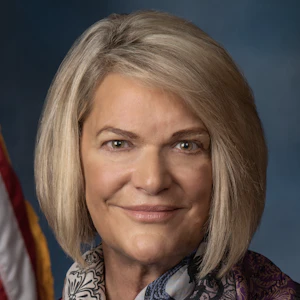
Cynthia Lummis
Cynthia Lummis
As the first-ever Chair of the Senate Banking Subcommittee on Digital Assets, Senator Lummis is the architect of the legislative framework shaping America's digital asset future. She introduced the landmark Lummis-Gillibrand Responsible Financial Innovation Act, the first comprehensive bipartisan crypto regulatory framework in Senate history. She co-authored the GENIUS Act — the first federal stablecoin law ever enacted — and introduced the BITCOIN Act, which would establish a U.S. strategic Bitcoin reserve of up to one million BTC. She is leading the Clarity Act, which will bring long-overdue regulatory certainty to the digital asset industry. She has also championed digital asset tax reform, including a de minimis exemption for small transactions and equal tax treatment for miners and stakers.
Known as Congress' "Crypto Queen," Senator Lummis represents Wyoming — a state she has helped build into one of the most digital asset-friendly regulatory environments in the nation. Before serving in the Senate, she served 14 years in the Wyoming Legislature, eight years as Wyoming State Treasurer, and eight years in the U.S. House. She is a three-time graduate of the University of Wyoming.
Her work represents a crucial bridge between traditional financial systems and the emerging digital economy, ensuring America leads the world in financial innovation while protecting the individual freedoms that define it.
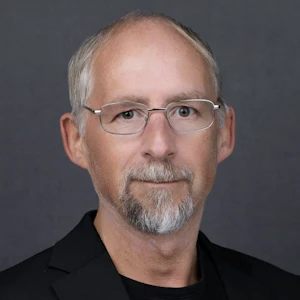
Adam Back
Adam Back
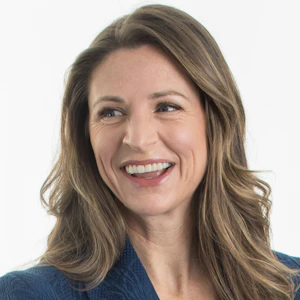
Amy Oldenburg
Amy Oldenburg
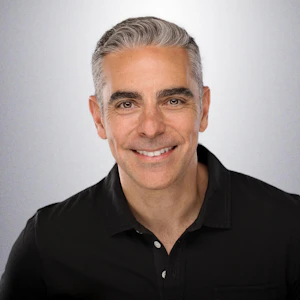
David Marcus
David Marcus

Matt Schultz
Matt Schultz
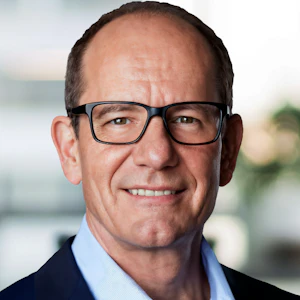
Fred Thiel
Fred Thiel
Throughout his career, Mr. Thiel has consistently driven rapid growth and created substantial shareholder value. Prior to MARA, Mr. Thiel served as the CEO of two other public companies, Local Corporation (NASDAQ: LOCM) and Lantronix, Inc (NASDAQ: LTRX). He has successfully raised billions in equity and debt through private and public offerings, led companies through IPOs, executed high-value exits to strategic and financial acquirers, and implemented effective M&A and roll-up strategies.
Mr. Thiel attended the Stockholm School of Economics and executive classes at Harvard Business School, and is fluent in English, Spanish, Swedish, and French. Mr. Thiel is the Chairman of the Board for Oden Technology, Inc. and is active in Young Presidents’ Organization where he has led initiatives in both the FinTech and Technology Networks.
A recognized voice in the industry, Fred frequently shares his insights on energy and technology with major media outlets like Bloomberg TV, CNBC, and FOX Business, contributing to vital discussions about the future of these sectors.
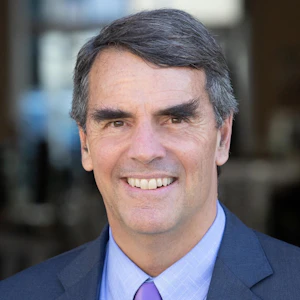
Tim Draper
Tim Draper
He is a supporter and global thought leader for entrepreneurs everywhere, and is a leading spokesperson for Bitcoin and decentralization, having won the Bitcoin US Marshall’s auction in 2014, invested in over 50 crypto companies, and led investments in Coinbase, Ledger, Tezos, and Bancor, among others.

Afroman
Afroman