Fixing The Healthcare System With Bitcoin
Speakers/Moderators
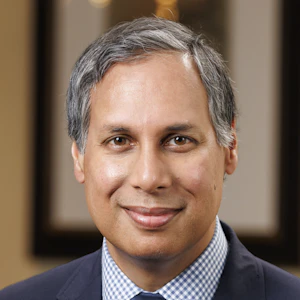
Avik Roy
Avik Roy
In 2021, he authored the widely-cited essay “Bitcoin and the U.S. Fiscal Reckoning,” published in National Affairs, in which he first proposed establishing a U.S. federal bitcoin reserve. Avik also serves on the Boards of Directors of Strive Inc. and the Texas Bitcoin Foundation, and is the Senior Advisor to the Bitcoin Policy Institute.
Avik has advised several presidential candidates on policy, including Mitt Romney and Marco Rubio. In one of those roles, as Senior Advisor to Texas Gov. Rick Perry in 2015, Perry became the first presidential candidate in the U.S. to support Bitcoin, arguing that the protocol offers “the possibility of reducing the cost and improving the quality of financial transactions in much the way that the conventional internet has done for consumer goods and services.”
Avik is well known for his public policy work outside of bitcoin, especially in fiscal and health care policy. National Review has called him one of the nation’s “sharpest policy minds,” while the New York Times’ Paul Krugman concedes, “Roy is about as good as you get in this stuff…he actually knows something.”
Along with Forbes, where Roy served as the Opinion and Policy Editor for a decade, Roy’s writing has appeared in The Wall Street Journal, The New York Times, The Washington Post, USA Today, and The Atlantic, among other publications, and he has appeared on numerous national television programs including Meet the Press, Face the Nation, PBS NewsHour, and Real Time with Bill Maher.
Avik previously worked as a hedge fund manager at J.P. Morgan, Bain Capital, and other firms. He was educated at MIT and the Yale School of Medicine.

Andy Schoonover
Andy Schoonover
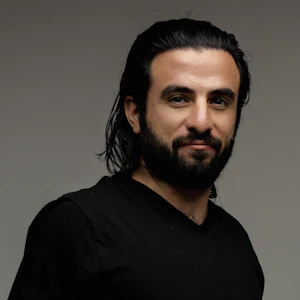
Jon Gordon
Jon Gordon
SOUND HSA also enables individuals to save step data to Nostr, and is moving towards decentralizing health data. Jon serves on the board of the Bitcoin Physicians Network. Jon is also a co-founder of NosFabrica, building web of trust tooling on Nostr.
Jon has been studying bitcoin for 5+ years and is an active leader in the Chicago bitcoin community. A certified yoga teacher, Jon believes bitcoin is the best form of money humans have ever discovered and has written extensively on the connection between bitcoin and yoga. He's currently manifesting hyperbitcoinization...

Dr. Christian Smith
Dr. Christian Smith
Session
Overview
Moderated by Avik Roy, this discussion brought together Andy Schoonover of CrowdHealth, Jon Gordon of Sound HSA, and Dr. Christian Smith of Premier Direct Primary Care to examine how Bitcoin-aligned ideas can be applied to healthcare. The panel focused on alternatives to insurance-driven care, including peer-funded healthcare expenses, cash-pay medical services, and health savings accounts that can hold real Bitcoin.
Key themes included decentralization, transparency, direct patient-doctor relationships, and the incentive problems created by third-party payment systems. CrowdHealth was presented as a model for members funding each other's medical bills directly, while Sound HSA described a Bitcoin-enabled health savings account structure. Dr. Smith discussed direct primary care and how Bitcoin helped support a practice built around longer visits, home care, and patient autonomy.
The conversation also covered policy barriers, including HSA eligibility rules and the link between employment and health insurance. The speakers argued that Bitcoin, direct payments, and emerging tools like Nostr could support more patient-owned healthcare models, including better pricing transparency and eventually more control over health records.
I am chief strategy officer at Strive, the Bitcoin treasury company, and chairman of a think tank called the Foundation for Research on Equal Opportunity, or FREOPP. We do a lot of work on Bitcoin, and I am also a senior advisor on Bitcoin policy. I am here to moderate a panel on healthcare and Bitcoin because, as some of you may know, that is how I got involved in Bitcoin. Actually, I was a healthcare guy worried about the deficit and the debt.
I am really excited about this group because a lot of times you can have a topic like this and it seems forced, like, okay, healthcare and Bitcoin, what is that? But I think what you are going to find out today from our panelists is there are really some interesting things going on in the use of Bitcoin in healthcare.
To my immediate right is Christian Smith, who is an internist and a physician who has been deploying some of these tools that some of our colleagues have built. We have Jon, who is pioneering a startup that allows you to have a health savings account that is tooled with Bitcoin. And to my far right, my friend and former neighbor Andy Schoonover, who has a startup that is maturing and fast growing. I think, as a board member, it will be a $1 billion company in a few years. It has made incredible progress and had real traction as an alternative to health insurance, in which Bitcoin is a future element.
I think you are going to learn a lot from this crowd. I am going to start with you, Andy. As the guy who has really done the most to bring Bitcoin into healthcare, tell us what the CrowdHealth model is and why Bitcoiners are drawn to it.
Thanks for having me. I am Andy, CEO of CrowdHealth. A few years ago, I had health insurance. I had just left my company, and I thought my only option was the Affordable Care Act. So I bought something for me, my wife, and my two girls. It was $1,100 or $1,200 a month, and it worked until I had to use it.
My little one, who was one at the time, was having a recurring ear infection. We went to the ENT doctor, who said she had a hole in her eardrum. No big deal. We went in network, we did everything right, and I got the bill: $8,000 for a 15-minute procedure. I was like, holy crap, $8,000 for 15 minutes. Then I got a note from my health insurance plan that said it was medically unnecessary, so they were not going to pay for it.
At that point, I quit health insurance. I said, there has got to be a way to pay for our healthcare expenses outside of health insurance. So I started paying in cash directly. What I found was I was getting 50% better rates than health insurance plans by paying my doctors directly.
So I started a company around that idea. What if we get a group of people together that could all fund each other's healthcare expenses, get rid of the middlemen, get rid of the rent seekers, and make it a decentralized healthcare model? Here we are five years later. We had our fifth birthday last week or two weeks ago, and we have 30,000 people who are funding each other's healthcare expenses.
Ultimately, about 20% of those are Bitcoiners. What we are trying to do is create this where they fund each other in Bitcoin and then pay hospitals in Bitcoin, so we can build this Bitcoin ecosystem within a $5 or $6 trillion industry. If we can do that, I think that goes a long way toward getting Bitcoin to be a medium of exchange in healthcare.
Tell us more about how Bitcoiners are drawn to this model. As you said, 20% of your members are Bitcoiners, which is a pretty high percentage for healthcare. Also, if you are a Bitcoiner, how can you use your Bitcoin in the CrowdHealth model? How does it work?
I think Bitcoiners typically are looking at these systems that we all, at one point in our lives, thought were there for us and, as we have seen, are actually working against us, especially in the financial system. The healthcare system is the same way. The food system is the same way. I think Bitcoiners are tending to look very critically at the systems that society has told them are there for you and saying, you know what, I am ready to exit. I am ready to exit the financial system. In our case, we are exiting the fiat medical system and doing it on our own in a decentralized way.
That decentralization, without the middleman and without the rent seekers, is what is really interesting to Bitcoiners. We built our platform so that you can actually fund each other in Bitcoin. We are waiting on one little regulatory deal to get there, but we are actually in conversation with one of the largest hospital systems in the country, a top ten hospital system, to accept Bitcoin. What we are trying to do is create that Bitcoin ecosystem within healthcare.
How many members does CrowdHealth have now?
30,000.
And what has the growth been? How many did you have a year ago?
About this time last year, we had 7,000. So we went from 7,000 to 30,000 over the last year.
That tells you the growth trajectory and the traction. It is pretty impressive.
Jon, you are actually a CrowdHealth alum. You were there at the beginning of CrowdHealth, and you spun out and started your own thing. Tell us about Sound HSA.
I am really excited to be here and to be talking about this intersection of Bitcoin and healthcare, which I have really been thinking about deeply for the past five or six years since going down the Bitcoin rabbit hole. I got my start in the healthcare industry doing strategy consulting for health systems, working in big insurance, and working in medical supplies.
Ultimately, when I started asking the question, what is money, I realized that healthcare is broken because the money is broken. The most natural fit for Bitcoin, which is savings technology, is within the HSA. An HSA is a health savings account that was instantiated in 2003. It is a triple tax-advantaged account where either an employer or an individual can contribute pretax or tax deductible. There are no taxes on your gains and no taxes when you spend.
How many of you have a health savings account? Okay, about half the room. Awesome.
There are over 40 million health savings accounts in the country, holding over $170 billion in value, and over half of that is sitting in cash. It is melting in fiat. You think that is going to be there for your future health and for your family to pay for your medical bills, which continue to increase and inflate at a rate above the general inflation rate, and it is not.
The idea for Sound HSA is to put real Bitcoin within the HSA. You could go and get an ETF at a bigger broker, but what we are doing is real Bitcoin with multi-institutional, multi-signature custody. We are really excited to be partnering with Unchained and Gemini Trust. Our partner Horizon Trust is a self-directed retirement company that has over 9,000 accounts based out of New Mexico.
We are utilizing state-based trusts to play by the rules, but ultimately you can have anything in an HSA. You could put some cattle in there. You can put other investments in there that you think will increase over time. We think Bitcoin, as the best money that humans have ever discovered, is an ideal asset for long-term time horizon thinking and healthcare.
And you have officially launched now, right? Tell us when you launched.
We launched just over a month ago. We had a beta group of users come on board in December and January to start the year, but we are live. It is really exciting to be having real Bitcoin here.
The next step is moving toward the spending. The IRS is very clear that you need to contribute in dollars, and then you can convert to Bitcoin within our platform. You can distribute in Bitcoin. So we are looking at integrating with Lightning Network and also on-chain if we get more hospital systems.
We will hear from Dr. Smith about the direct primary care business model, but healthcare businesses that are working outside the system and accepting peer-to-peer payments are a perfect fit for Bitcoin.
Tell us how it plugs in. For example, I know you and I talked about how we can use this at Strive, because we are obviously a pro-Bitcoin company. I connected you with our benefits people, and they said, well, we cannot do this right now because our benefits platform has its own HSA thing that it is going to use, and they are not going to want to use some outside HSA vendor.
From a business standpoint, how do you plug into these existing rails with employers so that if somebody works at a company and says, can I have a Sound HSA option, their employer will actually be able to put it together?
The HSA is a pretty flexible instrument. You can have multiple HSAs. You just cannot exceed the contribution limit for the year, which for an individual is $4,400 and for a family is $8,750. Companies often contribute directly to their employees' HSAs to encourage long-term savings.
We can plug in with payroll for companies and be the primary health savings account option attached to any high-deductible health plan. Or, even in cases where you are working with a benefits platform that has it kind of wrapped up tight, and maybe it is not your first priority but it is something you want to get to eventually, put it on the docket. It is a bit of a longer cycle.
Ultimately, we can be that primary option, or the individual in the company can go and sign up for their own account, transfer dollars from their existing HSA into Sound HSA, and buy Bitcoin. You are not stopped from opening an account. It is just that the integration with payroll might take a little longer.
I can say, as a CrowdHealth member who has an HSA, not a Sound HSA hopefully soon, I use my HSA to pay for my CrowdHealth bills. If I am getting a bill that is negotiated by CrowdHealth to half the price of insurance, and I have to pay that bill, I pay it with my HSA. These two products work together.
That brings me to you, because you are in a part of clinical medicine where you interface with a lot of this stuff. You are in direct primary care. For those who do not know what direct primary care is, explain what direct primary care is.
Thank you so much for being here. I am Christian Smith. I am an internal medicine physician. I worked in the fiat healthcare system for about ten years at a hospital and eventually got fed up with how everything works with insurance and broke away.
Bitcoin enabled me to start my own direct primary care practice. Basically, I directly reach out to patients who do not want to have insurance tell them what they can do with their money. I spent ten years working at a hospital and paid $150,000 in premiums to an insurance company. What did I really get for that? I do not think the return was very good for me.
Combining with resources like CrowdHealth, you could basically cut your health insurance bill in half and use that leftover money to buy more Bitcoin and have your own personal Bitcoin savings to help buffer against any medical needs in the future.
What is the monthly charge for your direct primary care practice?
For my region, I am probably way below where most people are. It is about $150 a month for an individual. It is $1,700 for a year if you want to pay that way, with a little bit of a discount there, and additional discounts for additional family members. Most of my patients are older. It is adult medicine, but I am looking into expanding to some level of pediatrics.
So it is $150 per month per member. And how much does CrowdHealth cost a family of four?
About $600.
Typically, an insurance plan that covers a family of four would be basically $1,500 a month, with a high deductible and pretty high deductibles.
This is a model where, in the case of CrowdHealth, how does CrowdHealth work? Let's say you are a klutz like me and you break your hip. How does CrowdHealth fund that episode of care?
I think I can talk about this, right? I got a text from you that said, I slipped on the ice and I just broke my hip. Am I okay? I am like, we got you, brother. We got you.
I do not know how much your expenses were. What, $50,000, $60,000, $70,000?
That is probably what was billed from the hospitals and everybody else, added up.
Say it is $70,000. You send us your bills. If you go to the hospital like he did, you never pay at the hospital. If anybody makes you pay at the hospital, always say no. They will say, oh, we are giving you the best rate, we promise. It should be $800,000, but we are going to give it to you at a bargain basement price. Never take it, because it is never the best price.
He sent us all his bills. We are negotiating those bills, because it just happened. Once we negotiate those bills, we will send it out to the community. The community then funds directly. Their money goes directly from their bank account to his bank account. Now he has the money in his bank account to go and pay the hospital directly.
We are taking out all the middlemen, all the insurance companies, all of that. As a result, he is getting about a 50% better rate than a health insurance plan would pay. You would think UnitedHealthcare, which is one of the top ten largest companies on the planet, would use its power to negotiate the best rates for you. They do not. They are actually incentivized to see rates go up.
It is interesting because everybody says healthcare is so complex. It is not that complex. Follow the incentives. Bitcoiners will understand. You have the buyer of healthcare, these health insurance companies, who are actually paid a percentage of your premium. They max out at 15% of your premium as profit. So if you have a $1,000 premium, they can max out at $150 of profit, or $150 to $200 depending on the plan.
If they want to make $165 of profit, a 10% increase, what do they have to do? The premiums have to go up over time. So the buyers of healthcare actually want the price to go up. The sellers of healthcare, the hospital systems, want the price to go up. If you have the buyer and seller of a service wanting the price to go up, what happens? The price goes up. That is why we have the craziness in healthcare right now, because of that dynamic.
How do these new models change the way patients interact with the healthcare system? Let's start with you, Christian. You have a direct primary care practice. The selling point to me, other than the fact that it costs so much less, is that you take more ownership of your healthcare as a patient, at least in theory. Give us some concrete examples of how, in a direct primary care practice like yours, your patients start to behave differently.
First, I want to touch on one point. The capacity to negotiate with hospitals does not exist for individuals. You could go to your doctor and say, I am paying cash, I think this is a reasonable rate, and the doctor might say, okay, maybe that is, because they do not have to share their money with insurance companies in that case. When you try to do that with a hospital, there is just no way. You need somebody who knows the ins and outs of the hospital system in order to make those negotiations.
Bitcoin has a health culture that I see more and more prominently. As people go to meetups, they see that in other people. They are fit. There is more of a low-carb lifestyle. There is regular exercise, weightlifting. It is a health-conscious lifestyle that is facilitated once people start embracing Bitcoin, which leads to better health.
Can I add something real quick? I think it is important. I always say that if you are not paying for the product, you are the product. In the insurance system, you are not actually the payer. The insurance system is. So the doctors in the insurance system are actually being employed by, or the insurance company is the boss. They are the one paying the bills.
If you take the insurance company out of the middle of that, now the relationship is between you and your doctor. You do not have an insurance company, you do not have the government, you do not have your employer, you do not have anybody in between. Not only do the patients act differently, but the doctors act differently. You can go to the doctor and say, this is between me and you. We can do what is right for my health as opposed to what insurance companies think is right for my health. I think there is a huge change in the way doctors react to that.
I do home visits exclusively. That is a dimension that most people have never experienced. I get to know people and their families. My visits are usually about an hour long. We catch up for the reason I am visiting and then all the other matters. What is going on in your life? How are the kids doing? That kind of stuff.
Normal primary care is like 12 to 14 minutes or something like that.
Less than that. Seven minutes is the average session with your doctor if they are getting it through insurance.
Really, the beauty of DPC is that it is the ethos of value for value within Bitcoin. I have been working in the last couple of years consulting. I actually helped Dr. Smith get set up with Zaprite to accept Bitcoin payments. It is really not that hard. Doctors, dentists, anyone who is offering this service directly and can list a fair price, you are the customer and you are going to get a better service.
Just to share with you, pre-fiat, when Medicare and Medicaid were instantiated in 1965, the rate of self-pay within healthcare was 70%. People were paying their own way. Today, 10% of healthcare is being paid by an individual. That number is $550 billion, so there is a lot being spent by individuals. But the issue is the third-party payment, the government and insurance, that is deciding what should be paid for and how much it should cost, rather than the service provider and ultimately the individual.
What is interesting, and the common thread of all three of you, is you are working in healthcare, which is extremely heavily regulated, heavily subsidized, and heavily controlled by the government. Basically, all of you have found these little leaks or holes in the regulatory apparatus that your green shoots are shooting through to do something different. But at the same time, you all deal with the government. There are things you have to do to stay under the government's radar.
Starting with you, what would be one policy change, regulatory, legal, or statutory, that would transform your business?
I think it is eliminating the stipulation that you need to have a high-deductible health plan in order to have an HSA. Make anyone eligible so that you can save for your future. That might involve a bit of a tax trade. Maybe it is a Roth HSA and you pay taxes on the way in, but there are no taxes on gains or when you spend on eligible health and medical goods and services.
We see action as well. You can now spend your HSA on direct primary care as of this year, which you think, why would you not be able to? But that was not allowed previously. There are a lot of laws out there, but that would be a huge one, to make anyone eligible for an HSA.
I would say decouple health insurance and employment. I do not think there is any reason for our employer to be paying our health insurance. Give me the money. Let me do what I want with it. In essence, health insurance is getting forced down your throat. The plan that they want to give you is the only plan that you have the option for. If you can decouple that and get the employer out of the business of health insurance, that would be my recommendation.
That is a key reform that we have advocated at FREOPP. There are ways to do that now, actually. There is a new regulation that Trump enacted in his first term called ICHRA, Individual Coverage Health Reimbursement Arrangement. Your employer can give you, instead of buying health insurance for you, the dollars, and then you go shop for insurance yourself. The only limitation or problem with that is the insurance you have to shop for is Obamacare-based insurance, which has its own problems. So we have to fix the ACA as well to make this a really powerful tool. But there are people working on that.
I am really excited about some of the technological aspects of Bitcoin and people who are working on that moving forward in the future. I think Jon is involved with Fabrica and Brainstorm, which is an initiative with a web of trust. Say, for instance, you are interested in finding a doctor who does this particular treatment, which is maybe not widely accepted in traditional medicine, but you believe that is the way you should be cared for and you want to explore that. How do you find a doctor like that?
We have years and years of medicine, and more doctors are starting to use AI to help us with note writing, research, and double-checking our work. I think that is going to perpetuate some of the old knowledge base and make it even harder to find doctors who are willing to do what you are interested in. Brainstorm is going to be able to help you find the signal for the care that you want, and I am really excited for that coming.
That reminds me of a capability that you have built at CrowdHealth around how to help connect patients to doctors who will charge an attractive rate. Are you able to talk about some of the work you have done on that front?
I think healthcare transparency is really important, but there are two components of this. Everybody is talking about healthcare transparency, and these hospitals are putting their transparency files out there. But people really have to care what the prices are. If you do not care what the prices are, you are basically going to the grocery store with somebody else's credit card.
The system that we have put in place is that you actually have to care about the prices. In Austin, Texas, a colonoscopy is about $4,000 with health insurance. If you pay in cash, it is about $1,200. If you want to go and get it for $4,000 as opposed to the person who will take it for $1,200, then the community should know that before they fund it.
In essence, in our community, what we are trying to do is say, look, we want you to treat other people's money like it is your money. Would you decide to go to the $1,200 provider if you were paying with your own money? Of course you would. You would save the $2,800.
We have built a system that really incentivizes people to shop for their doctor and their services. We now have a transparent platform. You can go into our app and say, give me an orthopedic surgeon in Dallas, Texas, who will do a knee surgery. We will give you all the orthopedic surgeons that we have in our database, what the cost is, and the quality ratings for these doctors. That transparency is really important in healthcare.
I think we have covered this topic pretty well. The last thing before we close out, with one minute left: is there something interesting going on with healthcare and Bitcoin that is not represented on the stage that you want to give a shout out to?
I will just say we are working on, and have at Sound HSA, a Nostr integration and a move-to-earn platform where individuals can earn sats for steps. We are really all about this intersection of sound money and sound health.
Something we did not talk about on the stage, and maybe for next year, is really around the healthcare data piece and how you can own your own health record. We think pairing Bitcoin with Nostr can help enable that into the future.
That is terrific. Thanks, everybody. Great turnout today. I really appreciate you.
Similar
Sessions
Fixing The Healthcare System With Bitcoin
Avik Roy
Avik Roy
In 2021, he authored the widely-cited essay “Bitcoin and the U.S. Fiscal Reckoning,” published in National Affairs, in which he first proposed establishing a U.S. federal bitcoin reserve. Avik also serves on the Boards of Directors of Strive Inc. and the Texas Bitcoin Foundation, and is the Senior Advisor to the Bitcoin Policy Institute.
Avik has advised several presidential candidates on policy, including Mitt Romney and Marco Rubio. In one of those roles, as Senior Advisor to Texas Gov. Rick Perry in 2015, Perry became the first presidential candidate in the U.S. to support Bitcoin, arguing that the protocol offers “the possibility of reducing the cost and improving the quality of financial transactions in much the way that the conventional internet has done for consumer goods and services.”
Avik is well known for his public policy work outside of bitcoin, especially in fiscal and health care policy. National Review has called him one of the nation’s “sharpest policy minds,” while the New York Times’ Paul Krugman concedes, “Roy is about as good as you get in this stuff…he actually knows something.”
Along with Forbes, where Roy served as the Opinion and Policy Editor for a decade, Roy’s writing has appeared in The Wall Street Journal, The New York Times, The Washington Post, USA Today, and The Atlantic, among other publications, and he has appeared on numerous national television programs including Meet the Press, Face the Nation, PBS NewsHour, and Real Time with Bill Maher.
Avik previously worked as a hedge fund manager at J.P. Morgan, Bain Capital, and other firms. He was educated at MIT and the Yale School of Medicine.
Andy Schoonover
Andy Schoonover
Jon Gordon
Jon Gordon
SOUND HSA also enables individuals to save step data to Nostr, and is moving towards decentralizing health data. Jon serves on the board of the Bitcoin Physicians Network. Jon is also a co-founder of NosFabrica, building web of trust tooling on Nostr.
Jon has been studying bitcoin for 5+ years and is an active leader in the Chicago bitcoin community. A certified yoga teacher, Jon believes bitcoin is the best form of money humans have ever discovered and has written extensively on the connection between bitcoin and yoga. He's currently manifesting hyperbitcoinization...
Dr. Christian Smith
Dr. Christian Smith
Fixing The Healthcare System With Bitcoin
Speakers/Moderators
Avik Roy
Avik Roy
In 2021, he authored the widely-cited essay “Bitcoin and the U.S. Fiscal Reckoning,” published in National Affairs, in which he first proposed establishing a U.S. federal bitcoin reserve. Avik also serves on the Boards of Directors of Strive Inc. and the Texas Bitcoin Foundation, and is the Senior Advisor to the Bitcoin Policy Institute.
Avik has advised several presidential candidates on policy, including Mitt Romney and Marco Rubio. In one of those roles, as Senior Advisor to Texas Gov. Rick Perry in 2015, Perry became the first presidential candidate in the U.S. to support Bitcoin, arguing that the protocol offers “the possibility of reducing the cost and improving the quality of financial transactions in much the way that the conventional internet has done for consumer goods and services.”
Avik is well known for his public policy work outside of bitcoin, especially in fiscal and health care policy. National Review has called him one of the nation’s “sharpest policy minds,” while the New York Times’ Paul Krugman concedes, “Roy is about as good as you get in this stuff…he actually knows something.”
Along with Forbes, where Roy served as the Opinion and Policy Editor for a decade, Roy’s writing has appeared in The Wall Street Journal, The New York Times, The Washington Post, USA Today, and The Atlantic, among other publications, and he has appeared on numerous national television programs including Meet the Press, Face the Nation, PBS NewsHour, and Real Time with Bill Maher.
Avik previously worked as a hedge fund manager at J.P. Morgan, Bain Capital, and other firms. He was educated at MIT and the Yale School of Medicine.
Andy Schoonover
Andy Schoonover
Jon Gordon
Jon Gordon
SOUND HSA also enables individuals to save step data to Nostr, and is moving towards decentralizing health data. Jon serves on the board of the Bitcoin Physicians Network. Jon is also a co-founder of NosFabrica, building web of trust tooling on Nostr.
Jon has been studying bitcoin for 5+ years and is an active leader in the Chicago bitcoin community. A certified yoga teacher, Jon believes bitcoin is the best form of money humans have ever discovered and has written extensively on the connection between bitcoin and yoga. He's currently manifesting hyperbitcoinization...
Dr. Christian Smith
Dr. Christian Smith
The Inflation Trap: The Ethics of Money Creation
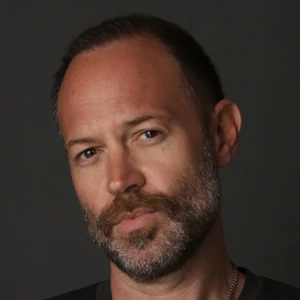
James Poulos
James Poulos

Guido Hülsmann
Guido Hülsmann
Avik Roy
Avik Roy
In 2021, he authored the widely-cited essay “Bitcoin and the U.S. Fiscal Reckoning,” published in National Affairs, in which he first proposed establishing a U.S. federal bitcoin reserve. Avik also serves on the Boards of Directors of Strive Inc. and the Texas Bitcoin Foundation, and is the Senior Advisor to the Bitcoin Policy Institute.
Avik has advised several presidential candidates on policy, including Mitt Romney and Marco Rubio. In one of those roles, as Senior Advisor to Texas Gov. Rick Perry in 2015, Perry became the first presidential candidate in the U.S. to support Bitcoin, arguing that the protocol offers “the possibility of reducing the cost and improving the quality of financial transactions in much the way that the conventional internet has done for consumer goods and services.”
Avik is well known for his public policy work outside of bitcoin, especially in fiscal and health care policy. National Review has called him one of the nation’s “sharpest policy minds,” while the New York Times’ Paul Krugman concedes, “Roy is about as good as you get in this stuff…he actually knows something.”
Along with Forbes, where Roy served as the Opinion and Policy Editor for a decade, Roy’s writing has appeared in The Wall Street Journal, The New York Times, The Washington Post, USA Today, and The Atlantic, among other publications, and he has appeared on numerous national television programs including Meet the Press, Face the Nation, PBS NewsHour, and Real Time with Bill Maher.
Avik previously worked as a hedge fund manager at J.P. Morgan, Bain Capital, and other firms. He was educated at MIT and the Yale School of Medicine.

Hector Alvero
Hector Alvero
The Inflation Trap: The Ethics of Money Creation
Speakers/Moderators
James Poulos
James Poulos
Guido Hülsmann
Guido Hülsmann
Avik Roy
Avik Roy
In 2021, he authored the widely-cited essay “Bitcoin and the U.S. Fiscal Reckoning,” published in National Affairs, in which he first proposed establishing a U.S. federal bitcoin reserve. Avik also serves on the Boards of Directors of Strive Inc. and the Texas Bitcoin Foundation, and is the Senior Advisor to the Bitcoin Policy Institute.
Avik has advised several presidential candidates on policy, including Mitt Romney and Marco Rubio. In one of those roles, as Senior Advisor to Texas Gov. Rick Perry in 2015, Perry became the first presidential candidate in the U.S. to support Bitcoin, arguing that the protocol offers “the possibility of reducing the cost and improving the quality of financial transactions in much the way that the conventional internet has done for consumer goods and services.”
Avik is well known for his public policy work outside of bitcoin, especially in fiscal and health care policy. National Review has called him one of the nation’s “sharpest policy minds,” while the New York Times’ Paul Krugman concedes, “Roy is about as good as you get in this stuff…he actually knows something.”
Along with Forbes, where Roy served as the Opinion and Policy Editor for a decade, Roy’s writing has appeared in The Wall Street Journal, The New York Times, The Washington Post, USA Today, and The Atlantic, among other publications, and he has appeared on numerous national television programs including Meet the Press, Face the Nation, PBS NewsHour, and Real Time with Bill Maher.
Avik previously worked as a hedge fund manager at J.P. Morgan, Bain Capital, and other firms. He was educated at MIT and the Yale School of Medicine.
Hector Alvero
Hector Alvero
The Satoshi Papers
Avik Roy
Avik Roy
In 2021, he authored the widely-cited essay “Bitcoin and the U.S. Fiscal Reckoning,” published in National Affairs, in which he first proposed establishing a U.S. federal bitcoin reserve. Avik also serves on the Boards of Directors of Strive Inc. and the Texas Bitcoin Foundation, and is the Senior Advisor to the Bitcoin Policy Institute.
Avik has advised several presidential candidates on policy, including Mitt Romney and Marco Rubio. In one of those roles, as Senior Advisor to Texas Gov. Rick Perry in 2015, Perry became the first presidential candidate in the U.S. to support Bitcoin, arguing that the protocol offers “the possibility of reducing the cost and improving the quality of financial transactions in much the way that the conventional internet has done for consumer goods and services.”
Avik is well known for his public policy work outside of bitcoin, especially in fiscal and health care policy. National Review has called him one of the nation’s “sharpest policy minds,” while the New York Times’ Paul Krugman concedes, “Roy is about as good as you get in this stuff…he actually knows something.”
Along with Forbes, where Roy served as the Opinion and Policy Editor for a decade, Roy’s writing has appeared in The Wall Street Journal, The New York Times, The Washington Post, USA Today, and The Atlantic, among other publications, and he has appeared on numerous national television programs including Meet the Press, Face the Nation, PBS NewsHour, and Real Time with Bill Maher.
Avik previously worked as a hedge fund manager at J.P. Morgan, Bain Capital, and other firms. He was educated at MIT and the Yale School of Medicine.



The Satoshi Papers
Speakers/Moderators
Avik Roy
Avik Roy
In 2021, he authored the widely-cited essay “Bitcoin and the U.S. Fiscal Reckoning,” published in National Affairs, in which he first proposed establishing a U.S. federal bitcoin reserve. Avik also serves on the Boards of Directors of Strive Inc. and the Texas Bitcoin Foundation, and is the Senior Advisor to the Bitcoin Policy Institute.
Avik has advised several presidential candidates on policy, including Mitt Romney and Marco Rubio. In one of those roles, as Senior Advisor to Texas Gov. Rick Perry in 2015, Perry became the first presidential candidate in the U.S. to support Bitcoin, arguing that the protocol offers “the possibility of reducing the cost and improving the quality of financial transactions in much the way that the conventional internet has done for consumer goods and services.”
Avik is well known for his public policy work outside of bitcoin, especially in fiscal and health care policy. National Review has called him one of the nation’s “sharpest policy minds,” while the New York Times’ Paul Krugman concedes, “Roy is about as good as you get in this stuff…he actually knows something.”
Along with Forbes, where Roy served as the Opinion and Policy Editor for a decade, Roy’s writing has appeared in The Wall Street Journal, The New York Times, The Washington Post, USA Today, and The Atlantic, among other publications, and he has appeared on numerous national television programs including Meet the Press, Face the Nation, PBS NewsHour, and Real Time with Bill Maher.
Avik previously worked as a hedge fund manager at J.P. Morgan, Bain Capital, and other firms. He was educated at MIT and the Yale School of Medicine.
Other
Speakers

Michael Saylor
Michael Saylor
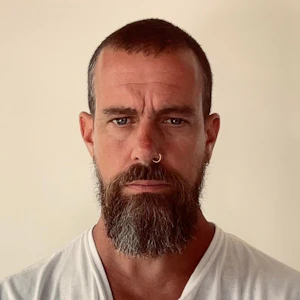
Todd Blanche
Todd Blanche
Biography of Deputy Attorney General Todd Blanche
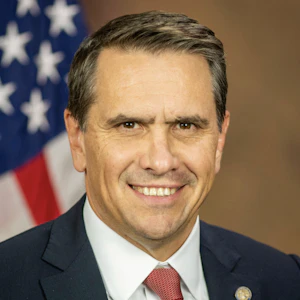
The Honorable Todd Blanche is the 40th Deputy Attorney General of the United States, overseeing the work of the 115,000 dedicated employees who fulfill the Department of Justice’s mission at Main Justice, the FBI, DEA, U.S. Marshals, ATF, and 93 U.S. Attorney’s Offices.
Todd began his career at the Department where he served for over fifteen years in a variety of capacities, including as a contractor, a paralegal in the Criminal Division, and at the United States Attorney’s office for the Southern District of New York where he eventually became an AUSA and later a supervisor.
After leaving the Department, Todd worked as a criminal defense attorney that included representing President Donald Trump in three of the criminal cases brought against him in 2023 and 2024.
Following President Trump’s historic return to the White House, the President appointed Todd to work alongside Attorney General Pam Bondi to make America safe again. At the DOJ, Todd is working tirelessly to implement President Trump’s priorities that include confronting illegal protecting American businesses from fraud.
Todd has been married to his wonderful wife Kristine for nearly thirty years, is a father and grandfather.

Paul Atkins
Paul Atkins
Prior to returning to the SEC, Chairman Atkins was most recently chief executive of Patomak Global Partners, a company he founded in 2009. Chairman Atkins helped lead efforts to develop best practices for the digital asset sector. He served as an independent director and non-executive chairman of the board of BATS Global Markets, Inc. from 2012 to 2015.
Chairman Atkins was appointed by President George W. Bush to serve as a Commissioner of the SEC from 2002 to 2008. During his tenure, he advocated for transparency, consistency, and the use of cost-benefit analysis at the agency. Chairman Atkins also represented the SEC at meetings of the President’s Working Group on Financial Markets and the U.S.-EU Transatlantic Economic Council. From 2009 to 2010, he was appointed a member of the Congressional Oversight Panel for the Troubled Asset Relief Program.
Before serving as an SEC Commissioner, Chairman Atkins was a consultant on securities and investment management industry matters, especially regarding issues of strategy, regulatory compliance, risk management, new product development, and organizational control.
From 1990 to 1994, Chairman Atkins served on the staff of two chairmen of the SEC, Richard C. Breeden and Arthur Levitt, ultimately as chief of staff and counselor, respectively. He received the SEC’s 1992 Law and Policy Award for work regarding corporate governance matters.
Chairman Atkins began his career as a lawyer in New York, focusing on a wide range of corporate transactions for U.S. and foreign clients, including public and private securities offerings and mergers and acquisitions. He was resident for 2½ years in his firm's Paris office and admitted as conseil juridique in France.
A member of the New York and Florida bars, Chairman Atkins received his J.D. from Vanderbilt University School of Law in 1983 and was Senior Student Writing Editor of the Vanderbilt Law Review. He received his A.B., Phi Beta Kappa, from Wofford College in 1980.
Originally from Lillington, North Carolina, Chairman Atkins grew up in Tampa, Florida. He and his wife Sarah have three sons.

Mike Selig
Mike Selig
Chairman Selig brings to the role deep public and private sector experience working with a wide range of stakeholders across agriculture, energy, financial, and digital asset industries, which rely upon and operate in CFTC-regulated markets.
Prior to his leadership at the CFTC, Chairman Selig most recently served as chief counsel of the Securities and Exchange Commission’s Crypto Task Force and senior advisor to SEC Chairman Paul S. Atkins. In this role, Chairman Selig helped to develop a clear regulatory framework for digital asset securities markets, harmonize the SEC and CFTC regulatory regimes, modernize the agency’s rules to reflect new and emerging technologies, and put an end to regulation by enforcement. He also participated in the President’s Working Group on Digital Asset Markets and contributed to its report on “Strengthening American Leadership in Digital Financial Technology.”
Prior to government service, Chairman Selig was a partner at an international law firm, focusing on derivatives and securities regulatory matters. During his years in private practice, he represented a broad range of clients subject to regulation by the CFTC, including commercial end users, futures commission merchants, commodity trading advisors, swap dealers, designated contract markets, derivatives clearing organizations, and digital asset firms. Chairman Selig advised clients on compliance with the Commodity Exchange Act and the CFTC’s rules and regulations thereunder, including in connection with registration applications and obligations, enforcement matters, and complex transactions.
Chairman Selig earned his law degree from The George Washington University Law School and was articles editor of The George Washington Law Review. He received his undergraduate degree from Florida State University.

David Bailey
David Bailey

Eric Trump
Eric Trump
Mr. Trump also serves as Executive Vice President of The Trump Organization, where he oversees the global management and operations of the Trump family’s extensive real estate portfolio. This includes Trump Hotels, Trump Golf, commercial and residential real estate, Trump Estates, and Trump Winery. Known for his hands-on leadership and strong market instincts, he has played a key role in expanding the company’s presence across major U.S. and international markets.
A globally recognized business leader and public figure, Mr. Trump is a prominent advocate for Bitcoin and decentralized finance. He is a co-founder of World Liberty Financial, a decentralized finance (DeFi) platform, and serves on the Board of Advisors of Metaplanet, Japan’s largest corporate holder of Bitcoin.
Beyond his business activities, Mr. Trump has helped raise more than $50 million for St. Jude Children’s Research Hospital in the fight against pediatric cancer, a philanthropic mission he began at age 21.
Mr. Trump earned a degree in Finance and Management from Georgetown University. He currently resides in Florida with his wife, Lara, and their two children. He is also the author of Under Siege, his memoir published in October 2025.

Jack Mallers
Jack Mallers
Cynthia Lummis
Cynthia Lummis
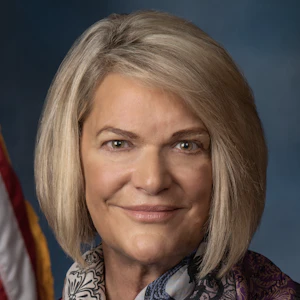
As the first-ever Chair of the Senate Banking Subcommittee on Digital Assets, Senator Lummis is the architect of the legislative framework shaping America's digital asset future. She introduced the landmark Lummis-Gillibrand Responsible Financial Innovation Act, the first comprehensive bipartisan crypto regulatory framework in Senate history. She co-authored the GENIUS Act — the first federal stablecoin law ever enacted — and introduced the BITCOIN Act, which would establish a U.S. strategic Bitcoin reserve of up to one million BTC. She is leading the Clarity Act, which will bring long-overdue regulatory certainty to the digital asset industry. She has also championed digital asset tax reform, including a de minimis exemption for small transactions and equal tax treatment for miners and stakers.
Known as Congress' "Crypto Queen," Senator Lummis represents Wyoming — a state she has helped build into one of the most digital asset-friendly regulatory environments in the nation. Before serving in the Senate, she served 14 years in the Wyoming Legislature, eight years as Wyoming State Treasurer, and eight years in the U.S. House. She is a three-time graduate of the University of Wyoming.
Her work represents a crucial bridge between traditional financial systems and the emerging digital economy, ensuring America leads the world in financial innovation while protecting the individual freedoms that define it.

Adam Back
Adam Back
Amy Oldenburg
Amy Oldenburg
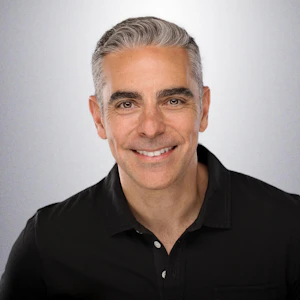
David Marcus
David Marcus

Matt Schultz
Matt Schultz
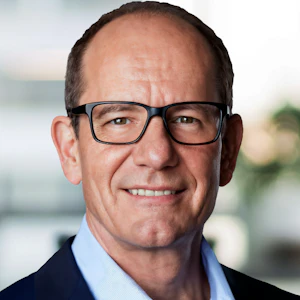
Fred Thiel
Fred Thiel
Throughout his career, Mr. Thiel has consistently driven rapid growth and created substantial shareholder value. Prior to MARA, Mr. Thiel served as the CEO of two other public companies, Local Corporation (NASDAQ: LOCM) and Lantronix, Inc (NASDAQ: LTRX). He has successfully raised billions in equity and debt through private and public offerings, led companies through IPOs, executed high-value exits to strategic and financial acquirers, and implemented effective M&A and roll-up strategies.
Mr. Thiel attended the Stockholm School of Economics and executive classes at Harvard Business School, and is fluent in English, Spanish, Swedish, and French. Mr. Thiel is the Chairman of the Board for Oden Technology, Inc. and is active in Young Presidents’ Organization where he has led initiatives in both the FinTech and Technology Networks.
A recognized voice in the industry, Fred frequently shares his insights on energy and technology with major media outlets like Bloomberg TV, CNBC, and FOX Business, contributing to vital discussions about the future of these sectors.
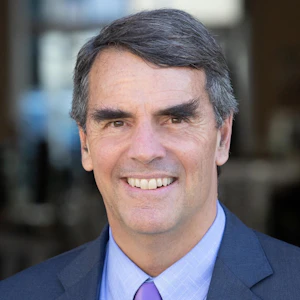
Tim Draper
Tim Draper
He is a supporter and global thought leader for entrepreneurs everywhere, and is a leading spokesperson for Bitcoin and decentralization, having won the Bitcoin US Marshall’s auction in 2014, invested in over 50 crypto companies, and led investments in Coinbase, Ledger, Tezos, and Bancor, among others.

Afroman
Afroman