The Hashrate Arms Race: Conflict in a Softwar World
Speakers/Moderators
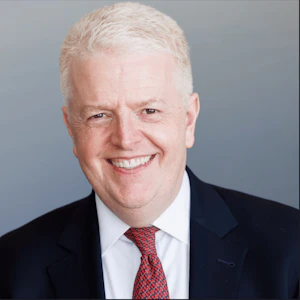
Ken Egan
Ken Egan
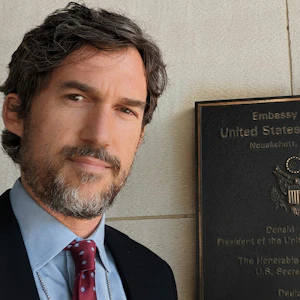
Ben Kincaid
Ben Kincaid
Served on the editorial team and contributed a chapter to 'National Security in the Digital Age: Bitcoin as a Tool for Modern Statecraft,' a first-of-its-kind volume to inform policymakers and elected officials on how digital assets can serve American interests in a rapidly evolving geopolitical landscape.
Co-founder of Bridger Solutions, an Africa-focused Bitcoin Mining Company
Former diplomat/national security practitioner, past speaker/panelist at BPI.

Jacob Langenkamp
Jacob Langenkamp

Kyle Schneps
Kyle Schneps
The majority of Kyle’s career was spent as a U.S. Intelligence Officer. He also served in a diplomatic post at the U.S. Department of State advising the Special Envoy for Guantanamo Bay and in the New York State Governor’s Office overseeing state operations. He is a former White House Fellow focused on national security and federal budgeting.
Kyle is co-author and editor of National Security in the Digital Age. He holds two master’s degrees from Columbia University.
Session
Overview
Ken Egan of the Bitcoin Policy Institute moderated a discussion with Kyle Schneps of DCG, Ben Kincaid of ReElement Technologies, and Jake Langenkamp of Bridger on the geopolitical importance of Bitcoin mining and the hashrate arms race. The conversation centered on the Softwar thesis, recent national security testimony about proof-of-work, and how Bitcoin's compute network could become relevant to U.S. strategy.
The panel explored supply chain risks around ASIC manufacturing, critical minerals, and refining capacity, especially the concentration of key inputs and processing in China. Speakers argued that reshoring and friend-shoring must go beyond final assembly and include deeper industrial capacity across mining, refining, chip development, and infrastructure.
A major theme was that U.S. Bitcoin mining leadership does not necessarily require all hash rate to be located domestically. The speakers discussed how American companies operating abroad could strengthen energy grids, monetize stranded or wasted energy, expand U.S. influence, and support a more decentralized Bitcoin network.
The session connected Bitcoin mining to energy policy, national security, industrial strategy, and global trade. It framed hash rate not only as an economic competition, but also as part of a broader contest over resilient infrastructure, open monetary networks, and the future distribution of power in digital systems.
Everybody, thank you for joining us at the Energy Stage. My name is Ken Egan. I'm head of government affairs at the Bitcoin Policy Institute. Today we're going to have a very timely discussion that we're calling The Hashrate Arms Race: Conflict in a Softwar World. I think you'll get a flavor for how timely this is when we get started. Let's begin by introducing our panelists. Good friend Kyle Schneps.
Good to see everybody again. Kyle Schneps, director of public policy at DCG. I've been doing this for five years in the policy space, advocating for Bitcoin, proof-of-work, and other aspects focused on decentralization of some of the most important assets. My background is in U.S. national security and the federal government. I'm very happy to be here with my good friends here and with you all.
We have Ben Kincaid.
Hi, everybody. Good to see everyone. I'm a former diplomat and Bitcoiner. I've worked around Bitcoin mining opportunities in Africa and am currently helping run a critical minerals business on the refining side, where we are trying to take the decentralization step and apply it to the critical minerals supply chain. Good to be here.
Last but not least, former Marine Jake Langenkamp.
Hey, everyone. Jake Langenkamp. As stated a couple of times, I was in the military and then worked for the DoD as a civilian. In the last couple of years, I've been running a company called Bridger, where we're trying to mine internationally, particularly in Africa, but in other parts of the world as well.
All right, let's kick it off. Last week in Washington, D.C., the Softwar thesis was front and center. Admiral Paparo, who was the commander of INDOPACOM, testified in front of the Senate Armed Services Committee and the House Armed Services Committee. Among the things he discussed was his view of the importance of the Bitcoin network and proof-of-work as a potential tool of national power.
For those of you who don't know, INDOPACOM is responsible for securing the Pacific region. That, of course, involves any potential conflict with China. His testimony raised a lot of eyebrows. Back to the Softwar thesis, there were some deep reflections of Jason Lowery's Softwar work. Everybody saw on X people posting pictures of their copies of Softwar, and the discussion is back front and center.
I'd like to get your thoughts on that. Jake, I know we discussed briefly the admiral's testimony and what this means for Bitcoin and financial security. What was your takeaway?
I think Bitcoin probably carries the most democratic ideals of any technology and therefore is uniquely American. I think that was along the lines of what the admiral said and what Jason Lowery has said. For BPI, I forgot to mention that I'm also a fellow there, and the first thing I wrote was about how this current administration wanted to be the headquarters for AI compute, but also wanted to make Bitcoin in America, or make American Bitcoin. My thesis was that by American companies exporting hash rate to other locales, that would count as American Bitcoin. I think that is very much along the lines of what the admiral was saying: American power projection through energy and foreign markets.
Ben, as you know, we occasionally see commentary from China about Bitcoin. There's a lot of stablecoin talk too, but Bitcoin is occasionally front and center. I'm sure Beijing was watching the admiral's testimony, looking for hints about what U.S. strategy is going to be in the Pacific. What did you take away from the admiral's discussion?
First, I just have to say that as one of a small handful of national security practitioners in government who were also Bitcoiners, hearing something like this is still almost hard to believe. We spent a lot of time wandering in the wilderness, talking to our colleagues about the intersection of Bitcoin and national security and why it's important. I don't know if you guys had the same experience, but most of those times folks would look at me like I had something growing out of my forehead and try to change the conversation as fast as possible.
Fast forward to today, and obviously there have been huge changes since this administration took office. But to hear the commander of INDOPACOM talk about the Bitcoin network as a tool for national security is extraordinary. Obviously thanks to Jason Lowery and his influence there.
On what he said specifically, it is very interesting and maybe still a little controversial within the Bitcoin community, this idea of Bitcoin and the network as a utility or tool for national security objectives. But it is by far the strongest computing network through proof-of-work. That mechanism really creates extraordinary cost for an adversary like China to be able to attack networks, and he hit that head on.
What I would love to layer onto that is a step upstream, which would be the truth layer and how protocols using Bitcoin timestamps can help. There's a great company called Simple Proof that can help ensure we have truth and integrity in our data. Think about the strategic impact of that as AI in the hands of our adversaries can be used to wage propaganda campaigns. We need truth in the digital realm, and I think Bitcoin can play a big role in that.
Maybe I'm getting greedy, but what I would love to have heard from the admiral is what I know senior officials at the Department of War are thinking about, and that is the trade-offs we're trying to resolve around having the reserve currency with the dollar, and how a strong dollar has come at the expense of industry being built overseas. Of course, we're going through massive reindustrialization, but there is no organization that understands the importance and the challenges around that more than the Department of War. You have to have supply chains, munitions, and everything that goes into our defense industrial base free of China and the supply chain. I think we'll talk more about that, but I do believe that probably behind closed doors, the admiral and others are talking to the Treasury secretary about how Bitcoin as sound money can resolve that issue as well.
My very quick anecdote about when I felt hope as a national security person in Bitcoin: I'm a retired CIA officer. When I first got into Bitcoin, I thought I was by myself. Walking through the halls of my office, there was a cubicle with a young guy, and he had a bumper sticker on his wall that said, We are all Satoshi. I thought, okay, fine, I think we're going to win. It may take a little bit of time.
I agree with you, Ben. Also remember, the admiral has certain constraints. He's testifying, and he's not going to get involved in legislation. He's not going to advocate for controversial political issues. So I tend to agree with you.
Kyle, I know Jason Lowery's overall Softwar thesis is controversial. Some people think it has legs, some people don't. The admiral clearly ascribes to at least some aspects of it. You've got a lot of experience around Bitcoin mining. From your perch at DCG, and as someone who has been in government and in this space for a long time, what did you take away from the admiral's testimony?
I think it was positive. To Ben's point, as somebody who's been working in the policy space, especially as one of the few people with a national security background, it was heartening. It is something that we are going to be able to point to.
It was a lonely road for a while.
Yeah. We're going to be able to educate on that. We've already received outreach from people wanting to learn more about what he may be talking about. From the policy realm, it has opened up a lot of doors and windows in terms of curiosity and interest in what this technology means. I've already done briefings on this and different aspects.
In general, without getting too far into the weeds, it's a great way of introducing the concept of America participating in the largest computer network in the world in some way, shape, or form. I've had conversations with my colleagues on the stage in different forums about how this is a digital Belt and Road in many ways. We want to embrace that, because we're not going to catch up with China on an actual physical Belt and Road. They're too far ahead. They have invested in that realm, but it may not be the right realm for the future digital and AI world. As rails, it is incredibly important.
Hopefully once that interaction gets started, it shifts over to the larger concept illustrated in Softwar of having a sort of hash force, of having power projection that can allow the U.S. to operate in cyberspace by providing huge hurdles to adversary attack.
Let's stick with that basic theme. It's not a tough guess that this crowd would agree that Bitcoin mining is overall good for America. Let's accept the thesis that proof-of-work provides some sort of novel national security application. But a lot of the discussion in Washington now is about reshoring, bringing back the industrial base and supply chains. There are some companies doing the Lord's work trying to build predominantly American ASICs. Block is probably most prominent among them.
Let's talk through supply chains and domestic manufacturing. If we assume that Bitcoin mining is a national asset, what do we have to do? If you were king for a day, what do we have to do to encourage construction of domestic ASICs and bring those supply chains back to the United States?
I'll give two answers. First, I'll set the stage by saying it's really important to understand that in the decentralized Bitcoin network, it is a little bit contrary to have most machines made in a centralized fashion. Even taking nationalities out of it, it is concerning to have them all come from one place.
That said, I brought up previously in a conversation we had that if the roles were reversed in terms of AI, if Nvidia had been a Chinese company, the United States would embark on a huge, well-funded Manhattan Project, so to speak, in order to compete because of the value of the future of AI. I would argue that AI is important, but so is Bitcoin. Now the situation is reversed.
In a blue-sky scenario, I would love to see heavy investment, a Manhattan Project for a Bitcoin mining machine developed in the United States to compete with foreign-manufactured machines. In a realistic scenario, I'd love to see tax incentives from the government for developers of these machines, and subsidies to support the development. Right now we have some really productive bills out there, but they're offering more emotional support than actual financial support. I'd love to see the finance side.
It's a controversial topic. The majority of ASICs in the United States are made by Chinese companies. There's a lot of FUD out there that if you connect them to the power grid, they can turn the lights off. Part of what we do at BPI is try to inform policymakers about what that really means. What is the core problem we face having most bitcoin mining infrastructure produced in China and located inside the United States?
If you all will indulge me for a minute, I'll paint a picture of where we are right now on supply chain dependence on China for literally everything that goes into powering the modern world. From the cell phone in your pocket to the car you drive, to exquisite defense applications on the strategic side, CPUs, and of course purpose-built processors, ASICs for Bitcoin mining.
This is what I've lived and breathed on the critical minerals side for the last couple of years working for ReElement Technologies, which is endeavoring to bring non-Chinese critical minerals processing to the United States and overseas, and to do it in a decentralized fashion so that we can have resilient supply chains.
When we came together and chatted about the discussion we were going to have today, my mind went directly to connecting the dots: drawing a straight line between Bitcoin, specifically Bitcoin mining and the hardware that underpins it, and the knowledge I've gained over the last couple of years on critical mineral supply chains.
Kyle spoke about manufacturing ASICs, and we have fantastic companies. Auradine is one. I believe there are others that are going to manufacture and probably employ more innovative, better technology, and I think they will compete well. But let's go upstream to where the raw inputs come from to build every single component of an ASIC. China is the origin story.
It goes back to something that we in the Bitcoin community care very deeply about, and what makes Bitcoin such a powerful protocol: decentralization. Kyle made reference to this, but I think it's really important. I'll get to where I think there is opportunity, but I'll be a little Cassandra to start.
Today, 90% of the rare earths that go into manufacturing around the world are processed in China. To get a little more technical, they have almost a pure monopoly, about 99%, of what are called heavy rare earths, which go into applications that need to resist heat. You can take the military side of that. You can take ASICs, because of the heat resistance needed in those processors. It's not just rare earths. It's titanium, tin, germanium, gallium. It's a whole list of things you will remember from high school chemistry class.
The reason that's really important is because what we watched unfold early in the Trump administration was the beginning of a trade war. That trade war was defined by, on one side, the tool we had in our toolkit, which was putting tariff regimes on countries around the world in order to promote reshoring and protect industry in the United States. I believe the first tariff number for China was 185%. Forget military for a second. I'm guessing that within about five or six days, large OEMs like General Motors, Ford, and others called the White House.
China's response to the tariffs was, we're going to cut off export of the rare earths. OEMs called the administration and said, hey, we've got about three to six months of stockpile before we are shutting everything down. This happened about two or three times where things went back and forth, and the administration was called to the negotiation table and had to make big concessions on tariffs.
It is a massive point of leverage that China has. Where we are today is not much better, but we bought ourselves time to really ramp up our industrial manufacturing and to figure out how we can get mining going in the United States and with partners. Importantly, because it's the choke point, we need to get refining going so we can get those materials that come from mines in the United States, Africa, and around the world refined in the United States or with American or Western technology.
Otherwise, the alternative is that it continues to go all the way to China for processing, and they continue to have that tool in the kit that says, we'll let the rare earths flow, we'll let the rare earth magnets flow, but for defense customers and strategic customers using these materials to point weapons at us, we need to see IP. We need to see what it's going downstream into. If we were China, in that position we would do the same thing.
So how long is it going to take, as the Bitcoin network continues to grow and as Bitcoin becomes more understood as a geopolitically relevant strategic asset, for China to apply that same thought process toward what they have control over, that flows into production of ASICs and the ecosystem of infrastructure around data centers that support it?
We've got to move. We've got to go fast. I think that is absolutely what is happening on the critical minerals side, on mining and refining. What I offer to you today is drawing that line back to what is extraordinarily important for the Bitcoin network to be truly decentralized, and that is to have a decentralized supply chain.
As government is employing industrial policy and supporting companies like ours on the critical minerals side, I think we're going to see a great opportunity. This is where I get much more optimistic. We're going to build refining and mining capacity in the United States, in Africa, and in Latin America. This is going to open up additional opportunities to decentralize the hash rate.
This is a thesis Jake had a couple of years ago, and I think we're going to watch it play out over the next two to three years. As these industrial processes, mining, refining, and manufacturing, start coming online, it's going to be foolish for any company not to have Bitcoin mining embedded and integrated into its operations as a profit center, to soak up every spare watt of power for the economic side of it. That's exciting. But we've got to go, because we're digging ourselves out of a hole.
I just want to foot-stomp one of his points. If we are just importing components and then assembling them in the United States, we're not solving anything. There needs to be some sort of innovation and actual ground-floor development.
Jake, I want to ask you about geography, but first give us your view. You've probably got more frequent flier miles across the continent than everybody else does. Give us your view on the state of competition with China for energy infrastructure and critical mineral infrastructure, and how Bitcoin mining can possibly give the United States a leg up.
To dovetail on what Ben was saying, on the U.S. side, before I jump to the international side, we've come a long way in the last four or five years of stigmatizing Bitcoin mining. You don't see nearly the amount of environmental hit pieces. That has either gone away or gone toward HPC data centers. But the pendulum hasn't fully swung the other way.
There are some great success stories that are known within this community, in grids like ERCOT and places that allow the flexibility of Bitcoin mining to be that capacitor on the grid and soak up the extra energy.
Along with Kyle's idea of really championing manufacturing of ASICs in the country, I think there are some great companies. I think Block is a great product company. If given the time and runway, they'll get competitive or even surpass other machines out there that aren't being manufactured in the United States. But they need the runway.
If I were king for a day with U.S. policy, I would have U.S. policymakers embrace that idea of optimizing the grid, especially as we're putting so much AI on it that is inherently inflexible.
As far as the international component is concerned, and going back to your original question about the admiral's testimony and where we are vis-a-vis Softwar and competition with China, I think clearly in this second Cold War that we've already entered into, the monetary domain is one of the arenas of combat.
We're pushing stablecoins very hard through the GENIUS Act and trying to have that proliferate throughout the world. China has been pushing its CBDC to mixed results. But they're also trying other things, like in Africa, pushing countries to redenominate their debt that they owe to China as part of the Belt and Road Initiative, to denominate it in yuan instead of dollars.
By exporting our lessons learned, like how we've optimized ERCOT, and taking that to these countries, we're bringing them something where they don't necessarily have to opt into the dollar system, but it's more analogous to the U.S. dollar system than it is to the yuan, because Bitcoin is an open capital account.
Bitcoin mining as an energy resilience tool, both here in America and then exported to other countries, serves U.S. policy goals.
To that point, the president has made it clear he wants the United States to be the Bitcoin mining capital, to make the most amazing Bitcoin. For that to happen, do we have to have hash rate geographically all inside the United States, or is there room for American companies like Bridger to build infrastructure in different countries? Does that still fulfill the goal of making America the dominant Bitcoin mining state?
Clearly I'm very biased. But as I thought through this, and the reason I positioned the company to do what we're doing, I think emphatically American companies going overseas, partnering with these nations to mine Bitcoin, serves their interests but also serves America's interests.
An American company is going to be importing IP into that country. They're going to be making that grid more resilient. So it's furthering the soft power agenda of that diplomatic mission in that country. But as an American company, we're going to export that commodity over the internet and inject it into the U.S. economy. In our little dose, we're going to be pushing American GDP.
If we sell Bitcoin to pay the bills, we're going to sell it into a U.S. exchange or U.S. OTC desk. It will benefit the U.S. economy, but it also brings the type of mutual benefit those countries aren't used to. If you go to those countries, almost universally, they want to do business with America. I think that's a misnomer we have with our inward cynicism in the media. We are by far the preferred business partner in these countries. They want to do business with us. They want to work for an American company. We always kind of do what we say.
Almost unanimously they will tongue-in-cheek say, hey, China's stuff breaks, but they're here, they're doing business. That's the way things are perceived. So emphatically, yes: us going overseas and utilizing their infrastructure in a way that is mutually beneficial is also very productive for the American economy and American policy goals.
I agree tremendously with Jake's points and especially with Bridger's business model in general. I do not think the actual physical location of what is ultimately a decentralized network of machines is totally central for the U.S. to be number one in Bitcoin or proof-of-work mining.
One of DCG's subsidiary companies is Foundry USA, which is the largest Bitcoin mining pool in the world, with around 30% of hash rate. The next three or four largest companies are Chinese-operated companies. I bring this up because it is incredibly important that U.S. pools are supported in the United States for the U.S. to be number one in Bitcoin mining and crypto.
It is something that doesn't get talked about very much, but the pools, as the aggregators of hash rate and distributors of rewards, serve a really important function within the Bitcoin network. If there is any part of this decentralized network that has some governance influence, not on the rules of Bitcoin, of course, those are firm and it's decentralized, but if there is one area where a little bit of influence can be had on governance, you want it to be one that's in the United States and has U.S. values, which are so analogous to Bitcoin values, as we've heard on this stage.
That is a really important point. I can tell you that over the last six months there has been a tremendously renewed interest from U.S. policymakers on just that point. I get outreach all the time to learn more about it because it is evident, it's important, and it's imminent.
Ben, there is obviously some tension between the core Softwar thesis of hash rate dominance and the decentralization of the network.
I would simply state that what is good for the network is good for the USA. I think that is something we need to continue to foot-stomp with this administration. Thankfully, we've got a number of folks across the interagency who understand this, and we've got a lot of open ears. Having Patrick Witt head the Digital Asset Task Force is fantastic, and I know he gets it.
That takes you back to what is good for the network, and decentralization is good for the network. I think what can go into the programmatic side of industrial buildout with our partners, the friend-shoring portion of industrialization, is my critical minerals world: working with friendly jurisdictions that already have mature mining projects that can feed refining that we put alongside them, as opposed to sending all of that to China, where all of the processing is done today.
Integrating Bitcoin mining as part of that industrial buildout goes to what Bob Burnett talks about as extremely important on the Bitcoin mining side: more small and medium-sized jurisdictions spread across the world, with Bitcoin mining projects as something extremely important long term for decentralization of the network and the hash rate.
Jake, billions of people are going to watch this panel, and maybe a few of them are going to take away that their country should also get into the hash race. What does that look like for other countries adopting what we've been talking about and looking for hash rate dominance?
At the beginning, it's almost backing into it. Our business proposition is essentially: hey, you've got a lot of wasted energy. A lot of times that's either due to lack of infrastructure, like transmission and distribution, or countries over-indexing on renewables.
I think renewables are great, especially in places like Africa. The capacity factors are through the roof, four times the capacity factor of solar in Africa compared with Europe. So it makes a ton of sense, but it leads to a lot of variability.
We come in and say, hey, we can turn this wasted energy into dollars, which is by far the commodity they are the shortest on. But over time, one of the most under-discussed aspects of Bitcoin, where I see it going, is its utilization in trade.
I think there is going to be a growing bifurcation between the Chinese yuan economic system and the U.S. dollar economic system. For middle powers, regional powers like Brazil, Turkey, Saudi Arabia, and countries like that, they're not going to want to be pigeonholed into either of those. If you want to float in between those systems, you need a truly neutral reserve asset.
There are basically two options. There's gold, which is very slow and very expensive to ship all over the world. We've tried that a couple of times. And there's Bitcoin. So if Bitcoin goes to that place where it is truly a global macro asset and is used in trade, then dominance of hash rate becomes every country's interest.
It goes from being this cool, novel technology where I can monetize unused energy to being, okay, we need to have as much control of hash rate as possible. We don't get there overnight, but I think starting now, these smaller countries can front-run where that's going. It's a huge opportunity.
We have two minutes left. Let's play a game. Kyle Schneps, you're given access to President Trump's Truth Social account. He wants a post on Bitcoin mining. What are you posting?
I think I would post something in all caps, of course. But the most important message is actually to prepare the United States for the things we don't know yet about what the Bitcoin network can bring. You will hear on the panels we're on right now and many others a lot of amazing things that people are using this for and could use. But we want to understand what it could be used for in the future and what that's going to mean.
I think it is going to revolve around AI, payments, and privacy, and how the Bitcoin rails are going to be able to enhance that and protect that. Those three factors are going to be huge. So I would post, all caps: Bitcoin, AI, privacy. Let's figure it out.
Ben, chance of a lifetime.
I may have gotten some intel that this question was going to be asked ahead of the panel. So I wrote it out, but I am not a Donald Trump impersonator.
It's way too many machines and way too many minerals, all in China. No longer. You're welcome.
Make Bitcoin mining great again. Jake, you have the last word.
I can't top that. I would just add, thank you for this attention. Thank you for your attention to this matter.
Thanks, everyone. The gentlemen are available for autographs, selfies, whatever you want afterwards. Thank you for your attention. We really appreciate it. Enjoy the rest of the conference.
Let's keep it going. Ladies and gentlemen, I do want to make a special note. These men spent their lives defending American freedom and liberty, and it's no joke that they are now doing it for Bitcoin. This is American values being extended to the world. It's an incredible opportunity for us to take advantage of their knowledge, their patriotism, and their dedication. Please give them a round of applause.
Similar
Sessions
The Hashrate Arms Race: Conflict in a Softwar World
Ken Egan
Ken Egan
Ben Kincaid
Ben Kincaid
Served on the editorial team and contributed a chapter to 'National Security in the Digital Age: Bitcoin as a Tool for Modern Statecraft,' a first-of-its-kind volume to inform policymakers and elected officials on how digital assets can serve American interests in a rapidly evolving geopolitical landscape.
Co-founder of Bridger Solutions, an Africa-focused Bitcoin Mining Company
Former diplomat/national security practitioner, past speaker/panelist at BPI.
Jacob Langenkamp
Jacob Langenkamp
Kyle Schneps
Kyle Schneps
The majority of Kyle’s career was spent as a U.S. Intelligence Officer. He also served in a diplomatic post at the U.S. Department of State advising the Special Envoy for Guantanamo Bay and in the New York State Governor’s Office overseeing state operations. He is a former White House Fellow focused on national security and federal budgeting.
Kyle is co-author and editor of National Security in the Digital Age. He holds two master’s degrees from Columbia University.
The Hashrate Arms Race: Conflict in a Softwar World
Speakers/Moderators
Ken Egan
Ken Egan
Ben Kincaid
Ben Kincaid
Served on the editorial team and contributed a chapter to 'National Security in the Digital Age: Bitcoin as a Tool for Modern Statecraft,' a first-of-its-kind volume to inform policymakers and elected officials on how digital assets can serve American interests in a rapidly evolving geopolitical landscape.
Co-founder of Bridger Solutions, an Africa-focused Bitcoin Mining Company
Former diplomat/national security practitioner, past speaker/panelist at BPI.
Jacob Langenkamp
Jacob Langenkamp
Kyle Schneps
Kyle Schneps
The majority of Kyle’s career was spent as a U.S. Intelligence Officer. He also served in a diplomatic post at the U.S. Department of State advising the Special Envoy for Guantanamo Bay and in the New York State Governor’s Office overseeing state operations. He is a former White House Fellow focused on national security and federal budgeting.
Kyle is co-author and editor of National Security in the Digital Age. He holds two master’s degrees from Columbia University.
Other
Speakers
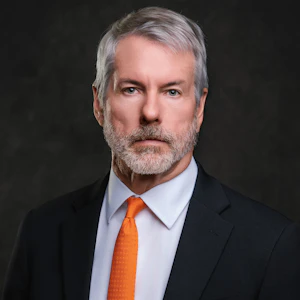
Michael Saylor
Michael Saylor
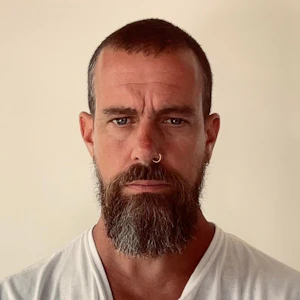
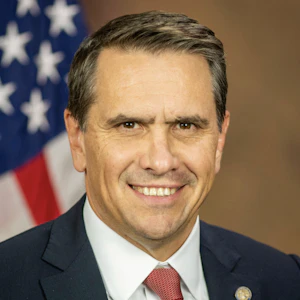
Todd Blanche
Todd Blanche
Biography of Deputy Attorney General Todd Blanche
The Honorable Todd Blanche is the 40th Deputy Attorney General of the United States, overseeing the work of the 115,000 dedicated employees who fulfill the Department of Justice’s mission at Main Justice, the FBI, DEA, U.S. Marshals, ATF, and 93 U.S. Attorney’s Offices.
Todd began his career at the Department where he served for over fifteen years in a variety of capacities, including as a contractor, a paralegal in the Criminal Division, and at the United States Attorney’s office for the Southern District of New York where he eventually became an AUSA and later a supervisor.
After leaving the Department, Todd worked as a criminal defense attorney that included representing President Donald Trump in three of the criminal cases brought against him in 2023 and 2024.
Following President Trump’s historic return to the White House, the President appointed Todd to work alongside Attorney General Pam Bondi to make America safe again. At the DOJ, Todd is working tirelessly to implement President Trump’s priorities that include confronting illegal protecting American businesses from fraud.
Todd has been married to his wonderful wife Kristine for nearly thirty years, is a father and grandfather.

Paul Atkins
Paul Atkins
Prior to returning to the SEC, Chairman Atkins was most recently chief executive of Patomak Global Partners, a company he founded in 2009. Chairman Atkins helped lead efforts to develop best practices for the digital asset sector. He served as an independent director and non-executive chairman of the board of BATS Global Markets, Inc. from 2012 to 2015.
Chairman Atkins was appointed by President George W. Bush to serve as a Commissioner of the SEC from 2002 to 2008. During his tenure, he advocated for transparency, consistency, and the use of cost-benefit analysis at the agency. Chairman Atkins also represented the SEC at meetings of the President’s Working Group on Financial Markets and the U.S.-EU Transatlantic Economic Council. From 2009 to 2010, he was appointed a member of the Congressional Oversight Panel for the Troubled Asset Relief Program.
Before serving as an SEC Commissioner, Chairman Atkins was a consultant on securities and investment management industry matters, especially regarding issues of strategy, regulatory compliance, risk management, new product development, and organizational control.
From 1990 to 1994, Chairman Atkins served on the staff of two chairmen of the SEC, Richard C. Breeden and Arthur Levitt, ultimately as chief of staff and counselor, respectively. He received the SEC’s 1992 Law and Policy Award for work regarding corporate governance matters.
Chairman Atkins began his career as a lawyer in New York, focusing on a wide range of corporate transactions for U.S. and foreign clients, including public and private securities offerings and mergers and acquisitions. He was resident for 2½ years in his firm's Paris office and admitted as conseil juridique in France.
A member of the New York and Florida bars, Chairman Atkins received his J.D. from Vanderbilt University School of Law in 1983 and was Senior Student Writing Editor of the Vanderbilt Law Review. He received his A.B., Phi Beta Kappa, from Wofford College in 1980.
Originally from Lillington, North Carolina, Chairman Atkins grew up in Tampa, Florida. He and his wife Sarah have three sons.

Mike Selig
Mike Selig
Chairman Selig brings to the role deep public and private sector experience working with a wide range of stakeholders across agriculture, energy, financial, and digital asset industries, which rely upon and operate in CFTC-regulated markets.
Prior to his leadership at the CFTC, Chairman Selig most recently served as chief counsel of the Securities and Exchange Commission’s Crypto Task Force and senior advisor to SEC Chairman Paul S. Atkins. In this role, Chairman Selig helped to develop a clear regulatory framework for digital asset securities markets, harmonize the SEC and CFTC regulatory regimes, modernize the agency’s rules to reflect new and emerging technologies, and put an end to regulation by enforcement. He also participated in the President’s Working Group on Digital Asset Markets and contributed to its report on “Strengthening American Leadership in Digital Financial Technology.”
Prior to government service, Chairman Selig was a partner at an international law firm, focusing on derivatives and securities regulatory matters. During his years in private practice, he represented a broad range of clients subject to regulation by the CFTC, including commercial end users, futures commission merchants, commodity trading advisors, swap dealers, designated contract markets, derivatives clearing organizations, and digital asset firms. Chairman Selig advised clients on compliance with the Commodity Exchange Act and the CFTC’s rules and regulations thereunder, including in connection with registration applications and obligations, enforcement matters, and complex transactions.
Chairman Selig earned his law degree from The George Washington University Law School and was articles editor of The George Washington Law Review. He received his undergraduate degree from Florida State University.

David Bailey
David Bailey

Eric Trump
Eric Trump
Mr. Trump also serves as Executive Vice President of The Trump Organization, where he oversees the global management and operations of the Trump family’s extensive real estate portfolio. This includes Trump Hotels, Trump Golf, commercial and residential real estate, Trump Estates, and Trump Winery. Known for his hands-on leadership and strong market instincts, he has played a key role in expanding the company’s presence across major U.S. and international markets.
A globally recognized business leader and public figure, Mr. Trump is a prominent advocate for Bitcoin and decentralized finance. He is a co-founder of World Liberty Financial, a decentralized finance (DeFi) platform, and serves on the Board of Advisors of Metaplanet, Japan’s largest corporate holder of Bitcoin.
Beyond his business activities, Mr. Trump has helped raise more than $50 million for St. Jude Children’s Research Hospital in the fight against pediatric cancer, a philanthropic mission he began at age 21.
Mr. Trump earned a degree in Finance and Management from Georgetown University. He currently resides in Florida with his wife, Lara, and their two children. He is also the author of Under Siege, his memoir published in October 2025.

Jack Mallers
Jack Mallers
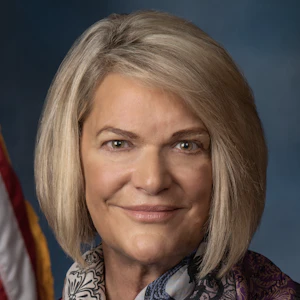
Cynthia Lummis
Cynthia Lummis
As the first-ever Chair of the Senate Banking Subcommittee on Digital Assets, Senator Lummis is the architect of the legislative framework shaping America's digital asset future. She introduced the landmark Lummis-Gillibrand Responsible Financial Innovation Act, the first comprehensive bipartisan crypto regulatory framework in Senate history. She co-authored the GENIUS Act — the first federal stablecoin law ever enacted — and introduced the BITCOIN Act, which would establish a U.S. strategic Bitcoin reserve of up to one million BTC. She is leading the Clarity Act, which will bring long-overdue regulatory certainty to the digital asset industry. She has also championed digital asset tax reform, including a de minimis exemption for small transactions and equal tax treatment for miners and stakers.
Known as Congress' "Crypto Queen," Senator Lummis represents Wyoming — a state she has helped build into one of the most digital asset-friendly regulatory environments in the nation. Before serving in the Senate, she served 14 years in the Wyoming Legislature, eight years as Wyoming State Treasurer, and eight years in the U.S. House. She is a three-time graduate of the University of Wyoming.
Her work represents a crucial bridge between traditional financial systems and the emerging digital economy, ensuring America leads the world in financial innovation while protecting the individual freedoms that define it.

Adam Back
Adam Back

Amy Oldenburg
Amy Oldenburg
David Marcus
David Marcus

Matt Schultz
Matt Schultz
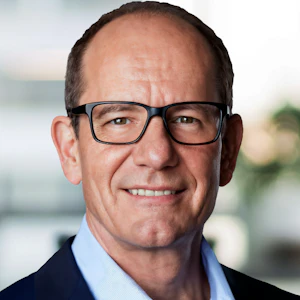
Fred Thiel
Fred Thiel
Throughout his career, Mr. Thiel has consistently driven rapid growth and created substantial shareholder value. Prior to MARA, Mr. Thiel served as the CEO of two other public companies, Local Corporation (NASDAQ: LOCM) and Lantronix, Inc (NASDAQ: LTRX). He has successfully raised billions in equity and debt through private and public offerings, led companies through IPOs, executed high-value exits to strategic and financial acquirers, and implemented effective M&A and roll-up strategies.
Mr. Thiel attended the Stockholm School of Economics and executive classes at Harvard Business School, and is fluent in English, Spanish, Swedish, and French. Mr. Thiel is the Chairman of the Board for Oden Technology, Inc. and is active in Young Presidents’ Organization where he has led initiatives in both the FinTech and Technology Networks.
A recognized voice in the industry, Fred frequently shares his insights on energy and technology with major media outlets like Bloomberg TV, CNBC, and FOX Business, contributing to vital discussions about the future of these sectors.
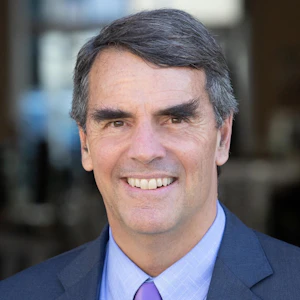
Tim Draper
Tim Draper
He is a supporter and global thought leader for entrepreneurs everywhere, and is a leading spokesperson for Bitcoin and decentralization, having won the Bitcoin US Marshall’s auction in 2014, invested in over 50 crypto companies, and led investments in Coinbase, Ledger, Tezos, and Bancor, among others.

Afroman
Afroman