Make Bitcoin Mining Great Again
Speakers/Moderators

Colin Harper
Colin Harper
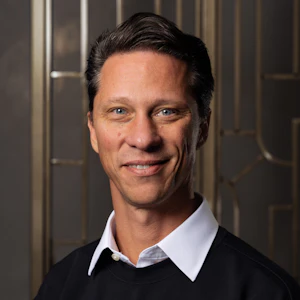
Rapha Zagury
Rapha Zagury

Kent Halliburton
Kent Halliburton
Sazmining's Bitcoin Mining as a Service provides clients direct access to the Bitcoin network, allowing them to mine "wild sats" without relying on exchanges. Driven by renewable energy and fully aligned with client success, Sazmining is redefining the future of sustainable, purpose-driven Bitcoin mining.
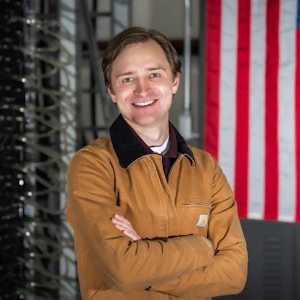
Matt Prusak
Matt Prusak
Session
Overview
This panel, hosted by Colin Harper of Blockspace, focused on Bitcoin miners that are choosing to stay committed to Bitcoin mining while many public mining companies explore AI and high-performance computing. Rapha Zagury of Elektron Energy, Matt Prusak of American Bitcoin, and Kent Halliburton of Sazmining discussed why conviction, capital discipline, and operational efficiency still matter in a changing mining market.
A major theme was how the AI pivot may create opportunities for miners that remain focused on Bitcoin. The speakers examined a potential hash rate bear market, difficulty adjustments, ASIC pricing pressure, and the possibility that lower equipment prices could help disciplined operators build more efficient fleets.
The discussion also covered geography and power markets. The panelists pointed to the United States as still important for mining, while also highlighting opportunities in regions with stranded or excess energy, including Brazil, Paraguay, Ethiopia, Bhutan, Venezuela, Canada, and other markets. They emphasized that jurisdictional risk, local partnerships, and energy quality are central to site selection.
The session framed Bitcoin mining as a long-term business shaped by capital access, energy strategy, and belief in Bitcoin itself. While AI is changing demand for power and infrastructure, the panelists argued that miners able to stay lean, adapt, and secure favorable assets may be positioned to benefit from the industry’s current reset.
Super excited for this panel. Just for quick background, I'm Colin Harper, editor in chief of Blockspace Media. We cover Bitcoin mining, so I'm very familiar with these gentlemen and the things they do. Also, because we cover Bitcoin mining, we've had to cover AI as well. We'll get into that during this conversation.
I'm really excited for this panel because I think the name itself might belie how well Bitcoin mining is actually doing in the U.S. and elsewhere, despite all of these AI pivots. If you're wondering, Make Bitcoin Mining Great Again, there is a lot of hype around AI. It's going to shake things up. But there are still guys like this deploying hash rate.
Before we hop into the conversation, I'd love some quick background on you all: your titles and what you do at your companies. Rapha, we'll start with you.
I'm Rapha Zagury, CEO and founder of Elektron. Elektron is a private Bitcoin miner, probably one of the largest miners out there that is 100% focused on Bitcoin mining. One of the last men standing, I think. Bitcoin mining is a very bad business, by the way. Nobody should mine. I wish everybody leaves. Just joking. We'll talk more about that.
Everybody, it's Matt here. I'm the president of American Bitcoin. We launched the company about a year ago at this conference. Since then, we've gone public. We have over 7,000 Bitcoin and 90,000 machines. Eric Trump is the co-founder of the company, so making things great again is what we do. Excited to be here.
Hi, my name is Kent Halliburton, CEO and co-founder of Sazmining. We're providing an on-ramp to acquire Bitcoin through mining, through a tech layer that we've developed. We operate data centers on four different continents now: Africa, Norway, the U.S., and Paraguay. We do this with an aligned incentive model, so our competition is more exchanges than other miners.
Focusing on the topic of the panel again, Make Bitcoin Mining Great Again, during this whole AI pivot there has been a lot of talk and hype around some of these big public miners transitioning and changing some of their business models to serve other forms of compute. But you all are staying within Bitcoin mining, staying laser focused on that. Can you speak to the decision your companies made to stay focused on this one thing rather than chasing the shiny new thing?
I would say one thing. I think the public mining companies are doing what's right for their shareholders. At the end of the day, they want to maximize stock price. Unfortunately, in a very fiat world, public stocks are measured quarter by quarter. I think they didn't do a good job telling their shareholders that Bitcoin mining is longer term. That's a separate conversation. But in the short term, going to HPC is the way that they secure large revenue contracts, and the market is paying for that.
It's good that they're pivoting for us because we are private. If you just think about the simplest way to think about the unit economics of ASICs, you can get the latest generation ASICs, S21s and S23s, and even at six or seven cent power you're still mining very profitably. You're mining at roughly low $30,000 Bitcoin prices, which means you're acquiring at a much better price.
So the question is, why aren't more miners doing that? The first part I answered. The second part is because it requires a lot of capital. I think the capital structure that was in place for a lot of these miners was not the ideal one. If you go back to the last cycle, not this one but the last one, most miners didn't go down because hash price at that time was down. They went under because of the high leverage that they had. At the end of the day, they couldn't sustain their balance sheets.
Having a low cost of capital does matter. If you have a low cost of capital, I think you can still mine very, very efficiently. Unfortunately, for a lot of the public miners, to get cheap cost of capital they had to issue more stock and dilute their shareholders.
Our choice has been to try to be extremely lean, which is another huge difference. If you look at our company, rough numbers, and look at our SG&A as a percentage of revenue, we are talking about numbers south of 4%. Most public miners, if they're very, very good, are going to be close to 10%. Some of them are 25%, so 25% of their revenue is going out in SG&A.
If you're very lean, then as hash price comes down, the first ones on the cost curve are the ones that are going to get kicked out. Our goal should be to be on the left side of that cost curve, so that by the time it gets to us, everybody else is going to be wiped out. There is this beautiful thing in Bitcoin, which is the difficulty adjustment. As they get pushed out, network hash rate stabilizes, and we'll be able to gather more market share because people are exiting.
I think we're seeing, maybe for the first time, a bear market in hash rate. We have some initial evidence. If you look from October, when we peaked, network hash rate has gradually been coming down from that level. I think the ones that stick around and can sustain because they have low costs and good balance sheets are going to survive and thrive. Like everything in Bitcoin, we've seen this movie before. The patient ones are the ones that collect the prizes at the end of the day.
I think it's quite poetic that you're talking about how this created an opportunity for a private miner. I actually think this also created an opportunity for a public miner. If you think about the category of Bitcoin mining, we are securing a one to two trillion dollar asset that 40 to 50 million Americans own. Having our competitors leave, someone has to do it. I think someone in the public markets has to keep doing it as well.
You can do it in a disciplined way. You can do it in a way that makes money, gross margin, and so on. For the everyday American who wants exposure to that story, to the security of the network, and to the idea of accumulating Bitcoin for less than spot, to me it's a no-brainer. That's something the everyday American wants access to.
As our peer group in the public miners really started to buy into the AI narrative, perhaps that has been rewarded by shareholders. But I think that left an entire class of everyday American investors who really wanted a Bitcoin miner. That's still something the market needs, and we're happy to play that role and take on that leadership position among the public miners.
I hear you guys talk and it's amazing. All three of us have a different approach to this, but the theme running through it all is adaptation. For us, we're pioneering Bitcoin mining as a service. That model is different because we find the opportunities for our clients, but it's ultimately our clients' desire to acquire Bitcoin that's driving our growth and demand.
Rather than being a traditional hosting provider, we allow clients to own the hardware directly. You don't need to have this layer in between, like a typical investor trying to go through equity. They're acquiring their Bitcoin directly and it's going directly to their wallets. It's serving a completely different market, but at the same time it's allowing us to aggregate capital and form it in a different way.
This adaptation right now is basically what we see the division of labor for a supply chain naturally doing as things get more competitive. I'm actually quite bullish on this division of labor concept, and it's where we've placed our bet.
You all in some ways referred to the idea that the AI boom and some competitors leaving to chase that opens up opportunities. It creates a vacuum. I'm really happy that you talked about the hash rate bear market, because this is something I've been keeping track of. We have been chopping and actually slipping in terms of hash rate.
So two questions. As we start seeing more of the largest miners in the world, like the public miners in the U.S., move toward AI and some of their hash rate comes offline, do you expect to see much less hash rate growth than we've seen historically in terms of multiples each year? And what does this mean for hash rate distribution around the globe? The U.S. really took up the mantle as the premier hash rate capital following the China mining ban. Depending on the quarter, anywhere from 30% to 40% is probably housed in the U.S., maybe as much as 50%. What does the AI pivot mean for changing that, and what does it mean for Bitcoin's hash rate growth in the future?
Both parts of that are interesting. Thinking about geographic distribution, I know we've got a very international panel here as well. There are still mining opportunities in the United States, but even we've expanded across North America. We just did somewhat of a large purchase in Alberta, Canada. So we've seen, like everyone else, that there could be opportunities outside just the United States.
It's been interesting for us as a player trying to navigate this as so many of our peer group is leaving toward the AI world, and what that means for difficulty. As someone who continues to buy machines, that puts us in a good position. Our vendors are quite keen to do deals, as are we, as long as it's the right structure.
After years of situations where maybe the mining manufacturers had the upper hand, we've created an opportunity for us. Not only do we want to put hash rate online still, but we're able to do it in a more risk-adjusted or creative fashion and really make the dollars go a bit further.
A bear market in hash rate is interesting. The other thing is, I don't think a lot of the major miners have shut off their mining yet. Some of them may not. They may do greenfield AI data centers. But at some point they're going to need to cut the cord. They're going to need to flip over some of those sites to AI, and we may further see difficulty adjustments that are to our favor as remaining miners.
I see it as a wonderful opportunity. If you look at a lot of the downstream impacts of the folks that have been hashing and providing hash rate, we have mining centralization issues that have occurred. Largely, in my opinion, that's because they've been after Bitcoin as a stepping stone to get more dollars. They haven't necessarily been aligned with the network.
What I see is that people coming in now who are providing hash rate really have to be here with the belief that Bitcoin and the price of Bitcoin are going to go up in the future. That, by definition, is more Bitcoin-aligned and is, I think, going to be healthier hash rate for the network.
The other part is that with the AI pressure and demand, a lot of that AI pressure is not happening in more developing nations. As a result, power prices in the U.S. are more likely to go up than in other developing nations, which creates an opportunity for more entrepreneurial miners to discover low-cost electricity in other regions of the world. I think this is healthy for decentralization of the network as well.
Let me start with the geographic question first, and then I'll talk about hash rate. In terms of geography, the U.S. market is still probably one of the best places to mine in the world. You have rule of law, a little bit less than you had in the past, and I'll talk about that. You have ample availability of energy, and the beautiful thing is that you have states competing. They're going to continue to compete for assets and energy in the long term.
I joke because last year, of course, a lot of machines were being imported into the U.S. and the whole tariff situation blew up. We had machines that were about to get in. We literally had to charter airplanes to put machines in and get them to the West. We paid a lot of money for that. Then I started to question personally the rule of law and stable government that we thought we had. We avoided places at the other extreme, maybe like Ethiopia and other countries, because you don't know what's going to happen to your machines. But then I was looking at the U.S. and thinking, well, it's probably not as predictable as we thought.
As a Brazilian, everybody kept asking me for a long time, why don't we mine in Brazil? Why don't we write in Brazil? I always said, listen, I know Brazil very well, and because of that I don't think I will ever mine there.
Then, because of one of these good coincidences of life, as we were dealing with those machines, a partner came to us and said, since you guys cannot get these machines into the U.S. because these machines are from China, there is a project in Brazil. Why don't you start mining there?
We started learning about the country in Brazil. Funny enough, I went to have conversations with energy companies in Brazil, and in every situation I sat down, they kept telling me, in Brazil we have a lot of curtailment. I'm thinking about taxes, like, they have a lot of taxes and I don't want to be here when there is curtailment. Then they said, no, you're not understanding. The curtailment here is on our generation part. We have to shut down the generation because the grid can't take the power. So we have to curtail the power generation. I said, oh, that's great. Actually, I can mine there for free.
There are other places in the world, Brazil is one example, where there are going to be opportunities to continue to mine. We've always had this thesis that Bitcoin mining will seek the cheapest energy around the globe.
On hash rate, I truly believe we are going to be in a bear market if we stay here, and that's a big if. If Bitcoin price stays where it is and hash price stays where it is, I think we are going to see network hash rate gradually decline. It's going to be super interesting to see what happens when we get to the halving, because we estimate probably around 40% to 50% of the network will not be profitable at that point. We may actually see a huge decrease in network hash rate if nothing changes.
The beautiful thing about Bitcoin is that we continue to mine Bitcoin and stay in Bitcoin because most of my team came from Bitcoin. We're bitcoiners. We came into this because we believe in the asset. So every time we go back to our models and put in our assumptions for Bitcoin price, this is still one of the best investments you could make out there. The only thing Bitcoin mining will not beat as a benchmark is Bitcoin itself. In my mind, that one is super hard. I tell that to my investors. Beating Bitcoin is pretty much impossible.
You mentioned that there will obviously be opportunities outside the U.S. The U.S. should not be discounted. It's a great place to do business. But Kent also mentioned there is a risk that energy prices will get bid up in the U.S., and that might crowd out some miners or investors looking to park capital there. As you all think about expanding hash rate and future opportunities, what are you looking for in the U.S. and elsewhere in terms of expanding and looking for sites to deploy more hash rate? Where are the opportunities going to be in the future? Where are the new meccas of mining, so to speak?
I think there are a few hotspots around the planet, but it's important to point out that because we're not an infrastructure provider, we're the layer in between. We go curate and find the right data center operations. A big part of it is the operator themselves and the trust that we can develop with them.
As far as our business model is concerned, we try to diversify across geographies because right now I don't see that any place is risk-free from a jurisdiction standpoint, exactly like Rapha was saying. Things do come up even in the U.S., or maybe even at a state level. Being diversified, I think, is a sane and safe approach.
Where I see hotspots is places that have long-term, viable excess power. I think Brazil is interesting. I think Venezuela is interesting. Paraguay, a lot of people know about the excess electricity there. I think Ethiopia is interesting, potentially even Bhutan. They still seem like they have excess power. But having a seat at the table in these jurisdictions is great for the long term.
The problem is that you can't just have a seat passively at the table there. The politics and the education of the governments there are fickle, and there is risk. If you're going to play that game, you really need to be careful about who you partner with and who you work with at the local level. The rule of law is lower in a lot of developing nations, and as a result, who you work with becomes much more important.
One interesting thing that I think we will start to see, and we're kind of starting to see, is that there is almost a bifurcation because not all energy assets are the same. The high-quality energy assets, the ones that have access to water, redundancy, and are close to tier-one areas, we as Bitcoin miners are not going to compete for those. Those are going to be HPC sites, as they should, and they're going to trade at a premium.
Now, that's a fraction of total energy availability. The stranded energy, the lower-quality sites, the sites that don't have redundancy, the sites that are in remote areas, those sites will try to sell to AI or HPC buyers. We've seen this. They go there to do diligence and the deals fall apart. I think we're going to go through that cycle, and then those sites are going to start trading again at the same price, or even at a discount to what they were trading before.
I think that will create an opportunity. We're probably six months to a year away from that because you have to go through this cycle. But eventually, particularly in the U.S., I think there will be a great opportunity to scout out some of these sites that went to market three or four times and don't sell to AI or HPC. They are still for us. We don't care. Even if the uptime is 95%, we just own the machines. The kind of machines and infrastructure we put there, the flexibility we have as Bitcoin miners, no other industry has. That won't change.
I agree with that completely. At American Bitcoin, we're in a somewhat unique position because of our strategic partnership with Hut 8. There are opportunities where sites may not be fit for purpose for AI or HPC yet. There is redundancy you want with fiber or power, and that takes time to get there. These are opportunities where Bitcoin mining may make some sense in the near term, where we come in as somewhat of a stopgap, even at scale, in a way that others are unable or unwilling to do. There is a wedge there as well.
Echoing the points both of my colleagues have made, you just have to get more creative. You have to go slightly further afield or find the needle in the haystack. They're certainly out there. It's a big planet. There are a lot of electrons. But the easy sites are largely picked clean. Miners are scrappy by nature, so I'm pretty confident we'll continue to find plenty of power.
Gentlemen, I think we have time for maybe two more questions. One of the biggest disruptions to the Bitcoin mining market outside of hash rate, and this is all tied together because there has to be demand for hash rate for there to be demand for ASICs, has been to the ASIC market. Dynamics are shifting pretty rapidly. The OEMs don't have nearly as much bargaining power with their clients because one of their largest buyers, the public miners, a lot of them are freezing their purchases. Matt, you mentioned that at this point those OEMs are really trying to keep these relationships close with the miners that are still around. What impact has the AI boom had on the ASIC market dynamics, and what are you seeing in terms of how those dynamics have changed in this moment?
I would first say that you start to see demand ease off. I think that started last summer. The big headline hash buys that were pretty common on a quarterly basis for years really began to ease off as folks doubled down on the AI side of the business. That then moved upstream into the major manufacturers wondering, who's going to buy all this equipment?
I think we've now seen a softer market. American Bitcoin has been willing to step up and continue to engage with our vendors. We've got long-term relationships with these folks. They want us to succeed. We want them to succeed. It's a symbiotic relationship. Deals will continue to get done and machines will continue to come online.
But I think the era of the marquee 50 exahash in five months, or whatever the purchase is, paid up in cash, those days are probably over. Part of our industry is the adaptability and resilience to make it work. In cycles past, ASIC manufacturers have been caught out before. They have a long memory. They remember who's been there for them. We remember who supported us in times of need as well. It's a great industry where we all want to succeed together, and I think we'll continue to do so.
Operating in a different area of the supply chain, it's been interesting to see this pivot from AI. It's actually put a lot of used equipment on the market that's still very high quality, and that's very much depressed prices for new equipment coming in. It's left the manufacturers scrambling to a large degree. There is innovation that comes out of that.
Some of the innovation we see is more partnerships to come upstream into the supply chain, at least within the vertical that I operate within, so they can provide mining rigs on site with hardware, infrastructure, and a kind of pseudo-financing to help make it easier for companies like ours to then resell that equipment to the end user.
There is adaptation and recognition from the manufacturers right now that things are challenging and that they need to figure out other ways to move product. They're trying to do what they can to do that. I anticipate that if conditions continue as-is, there is likely going to be a reduction in manufacturing capacity, because why oversupply the market with ASICs? Maybe there is some consolidation. Maybe there is some opportunity for disruption within the manufacturing market. I certainly hope so. But at the end of the day, that part of the market is also adapting.
The market has definitely changed. We are very data-oriented at Elektron. About a year or a year and a half ago, our president and I were debating secondary prices of machines. These machines are priced in dollars per terahash. We were looking historically and debating what really drives the price at the end of the day. Is it network hash rate? Is it hash price? Is it Bitcoin price? What really determines the price?
We ran all kinds of correlations. There is one thing that drives prices: Bitmain. That's all. Bitmain sets the price, and the whole curve sets up or down. They could do that because they were pretty much a monopoly and there was ample demand for machines. There was more than ample demand for machines. I remember competing with public miners to try to get machines. People were just killing each other to get them, and then you don't get the machines. The machines get delivered later.
So the industry is changing to what it should be. I think the service quality is improving a ton. I think Bitmain has been very good at adapting to all of that. Price, of course, came down. That's the first thing we would see. Prices in dollars per terahash for newer generation machines haven't been this low, maybe ever. I think it's natural and it's a good thing for the industry because it's going to drive more competition. It's going to drive other players to come in as well.
For us as miners, this is another thing a lot of the people exiting the mining space right now are not realizing: this is an opportunity to get a very efficient new fleet in conditions that we've never seen before. Then when we go to the next halving, the same thing is going to drive down all the inefficient machines. Those that stay around with an efficient fleet are, in our thesis, the ones that are actually going to survive and thrive.
We've got about a minute and 40 seconds, so quick lightning round question. In retrospect, the answer to this will probably be obvious, but what's the biggest headwind right now for Bitcoin miners?
I think it's the same one it has always been: capital. That's why we're very thankful to have a very good capital partner behind us that is also true bitcoiners. Tether is our main backer. They're true bitcoiners. They believe in this the same way that we do, and that gives us access through having a very lean and very well-structured balance sheet at the end of the day.
I think it's sentiment. Sentiment tends to follow price in Bitcoin historically. As Bitcoin continues to meander up toward the price we know it's worth, I think you're going to see sentiment toward mining once again come back into vogue. We're very patient, but boy, it would be nice if that happened sooner rather than later.
I'm going to go with Rapha here and say it's capital as well. One thing that's been really unique during this bear market for us is to see that there is smart mining capital out there. We are seeing that some of our client base is deploying in bulk right now during the bear market, because there has been a classic trope that you buy during the bear market when the numbers look the worst and you reap the rewards later. Although capital is hard to come by right now, it's also the time when we see the smartest players actually deploying.
That's great. I thought you were going to say profitability and hash price, so that was a nice mixed bag there. Gentlemen, thank you so much. This was a great conversation. Best of luck with your endeavors throughout the rest of the year and into the future. Let's give it up for our panelists.
Thank you.
Similar
Sessions
Make Bitcoin Mining Great Again
Colin Harper
Colin Harper
Rapha Zagury
Rapha Zagury
Kent Halliburton
Kent Halliburton
Sazmining's Bitcoin Mining as a Service provides clients direct access to the Bitcoin network, allowing them to mine "wild sats" without relying on exchanges. Driven by renewable energy and fully aligned with client success, Sazmining is redefining the future of sustainable, purpose-driven Bitcoin mining.
Matt Prusak
Matt Prusak
Make Bitcoin Mining Great Again
Speakers/Moderators
Colin Harper
Colin Harper
Rapha Zagury
Rapha Zagury
Kent Halliburton
Kent Halliburton
Sazmining's Bitcoin Mining as a Service provides clients direct access to the Bitcoin network, allowing them to mine "wild sats" without relying on exchanges. Driven by renewable energy and fully aligned with client success, Sazmining is redefining the future of sustainable, purpose-driven Bitcoin mining.
Matt Prusak
Matt Prusak
Other
Speakers
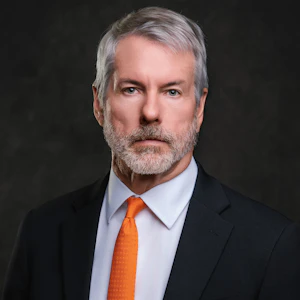
Michael Saylor
Michael Saylor
Todd Blanche
Todd Blanche
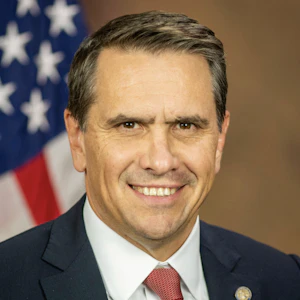
Biography of Deputy Attorney General Todd Blanche
The Honorable Todd Blanche is the 40th Deputy Attorney General of the United States, overseeing the work of the 115,000 dedicated employees who fulfill the Department of Justice’s mission at Main Justice, the FBI, DEA, U.S. Marshals, ATF, and 93 U.S. Attorney’s Offices.
Todd began his career at the Department where he served for over fifteen years in a variety of capacities, including as a contractor, a paralegal in the Criminal Division, and at the United States Attorney’s office for the Southern District of New York where he eventually became an AUSA and later a supervisor.
After leaving the Department, Todd worked as a criminal defense attorney that included representing President Donald Trump in three of the criminal cases brought against him in 2023 and 2024.
Following President Trump’s historic return to the White House, the President appointed Todd to work alongside Attorney General Pam Bondi to make America safe again. At the DOJ, Todd is working tirelessly to implement President Trump’s priorities that include confronting illegal protecting American businesses from fraud.
Todd has been married to his wonderful wife Kristine for nearly thirty years, is a father and grandfather.

Paul Atkins
Paul Atkins
Prior to returning to the SEC, Chairman Atkins was most recently chief executive of Patomak Global Partners, a company he founded in 2009. Chairman Atkins helped lead efforts to develop best practices for the digital asset sector. He served as an independent director and non-executive chairman of the board of BATS Global Markets, Inc. from 2012 to 2015.
Chairman Atkins was appointed by President George W. Bush to serve as a Commissioner of the SEC from 2002 to 2008. During his tenure, he advocated for transparency, consistency, and the use of cost-benefit analysis at the agency. Chairman Atkins also represented the SEC at meetings of the President’s Working Group on Financial Markets and the U.S.-EU Transatlantic Economic Council. From 2009 to 2010, he was appointed a member of the Congressional Oversight Panel for the Troubled Asset Relief Program.
Before serving as an SEC Commissioner, Chairman Atkins was a consultant on securities and investment management industry matters, especially regarding issues of strategy, regulatory compliance, risk management, new product development, and organizational control.
From 1990 to 1994, Chairman Atkins served on the staff of two chairmen of the SEC, Richard C. Breeden and Arthur Levitt, ultimately as chief of staff and counselor, respectively. He received the SEC’s 1992 Law and Policy Award for work regarding corporate governance matters.
Chairman Atkins began his career as a lawyer in New York, focusing on a wide range of corporate transactions for U.S. and foreign clients, including public and private securities offerings and mergers and acquisitions. He was resident for 2½ years in his firm's Paris office and admitted as conseil juridique in France.
A member of the New York and Florida bars, Chairman Atkins received his J.D. from Vanderbilt University School of Law in 1983 and was Senior Student Writing Editor of the Vanderbilt Law Review. He received his A.B., Phi Beta Kappa, from Wofford College in 1980.
Originally from Lillington, North Carolina, Chairman Atkins grew up in Tampa, Florida. He and his wife Sarah have three sons.

Mike Selig
Mike Selig
Chairman Selig brings to the role deep public and private sector experience working with a wide range of stakeholders across agriculture, energy, financial, and digital asset industries, which rely upon and operate in CFTC-regulated markets.
Prior to his leadership at the CFTC, Chairman Selig most recently served as chief counsel of the Securities and Exchange Commission’s Crypto Task Force and senior advisor to SEC Chairman Paul S. Atkins. In this role, Chairman Selig helped to develop a clear regulatory framework for digital asset securities markets, harmonize the SEC and CFTC regulatory regimes, modernize the agency’s rules to reflect new and emerging technologies, and put an end to regulation by enforcement. He also participated in the President’s Working Group on Digital Asset Markets and contributed to its report on “Strengthening American Leadership in Digital Financial Technology.”
Prior to government service, Chairman Selig was a partner at an international law firm, focusing on derivatives and securities regulatory matters. During his years in private practice, he represented a broad range of clients subject to regulation by the CFTC, including commercial end users, futures commission merchants, commodity trading advisors, swap dealers, designated contract markets, derivatives clearing organizations, and digital asset firms. Chairman Selig advised clients on compliance with the Commodity Exchange Act and the CFTC’s rules and regulations thereunder, including in connection with registration applications and obligations, enforcement matters, and complex transactions.
Chairman Selig earned his law degree from The George Washington University Law School and was articles editor of The George Washington Law Review. He received his undergraduate degree from Florida State University.

David Bailey
David Bailey

Eric Trump
Eric Trump
Mr. Trump also serves as Executive Vice President of The Trump Organization, where he oversees the global management and operations of the Trump family’s extensive real estate portfolio. This includes Trump Hotels, Trump Golf, commercial and residential real estate, Trump Estates, and Trump Winery. Known for his hands-on leadership and strong market instincts, he has played a key role in expanding the company’s presence across major U.S. and international markets.
A globally recognized business leader and public figure, Mr. Trump is a prominent advocate for Bitcoin and decentralized finance. He is a co-founder of World Liberty Financial, a decentralized finance (DeFi) platform, and serves on the Board of Advisors of Metaplanet, Japan’s largest corporate holder of Bitcoin.
Beyond his business activities, Mr. Trump has helped raise more than $50 million for St. Jude Children’s Research Hospital in the fight against pediatric cancer, a philanthropic mission he began at age 21.
Mr. Trump earned a degree in Finance and Management from Georgetown University. He currently resides in Florida with his wife, Lara, and their two children. He is also the author of Under Siege, his memoir published in October 2025.

Jack Mallers
Jack Mallers
Cynthia Lummis
Cynthia Lummis
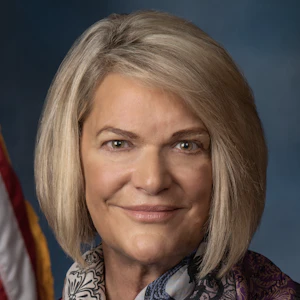
As the first-ever Chair of the Senate Banking Subcommittee on Digital Assets, Senator Lummis is the architect of the legislative framework shaping America's digital asset future. She introduced the landmark Lummis-Gillibrand Responsible Financial Innovation Act, the first comprehensive bipartisan crypto regulatory framework in Senate history. She co-authored the GENIUS Act — the first federal stablecoin law ever enacted — and introduced the BITCOIN Act, which would establish a U.S. strategic Bitcoin reserve of up to one million BTC. She is leading the Clarity Act, which will bring long-overdue regulatory certainty to the digital asset industry. She has also championed digital asset tax reform, including a de minimis exemption for small transactions and equal tax treatment for miners and stakers.
Known as Congress' "Crypto Queen," Senator Lummis represents Wyoming — a state she has helped build into one of the most digital asset-friendly regulatory environments in the nation. Before serving in the Senate, she served 14 years in the Wyoming Legislature, eight years as Wyoming State Treasurer, and eight years in the U.S. House. She is a three-time graduate of the University of Wyoming.
Her work represents a crucial bridge between traditional financial systems and the emerging digital economy, ensuring America leads the world in financial innovation while protecting the individual freedoms that define it.

Adam Back
Adam Back

Amy Oldenburg
Amy Oldenburg
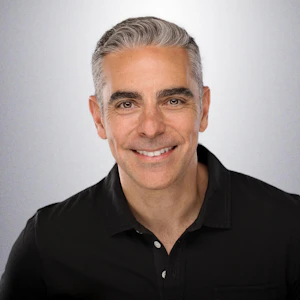
David Marcus
David Marcus

Matt Schultz
Matt Schultz
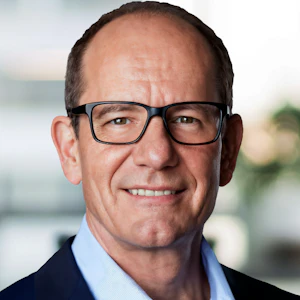
Fred Thiel
Fred Thiel
Throughout his career, Mr. Thiel has consistently driven rapid growth and created substantial shareholder value. Prior to MARA, Mr. Thiel served as the CEO of two other public companies, Local Corporation (NASDAQ: LOCM) and Lantronix, Inc (NASDAQ: LTRX). He has successfully raised billions in equity and debt through private and public offerings, led companies through IPOs, executed high-value exits to strategic and financial acquirers, and implemented effective M&A and roll-up strategies.
Mr. Thiel attended the Stockholm School of Economics and executive classes at Harvard Business School, and is fluent in English, Spanish, Swedish, and French. Mr. Thiel is the Chairman of the Board for Oden Technology, Inc. and is active in Young Presidents’ Organization where he has led initiatives in both the FinTech and Technology Networks.
A recognized voice in the industry, Fred frequently shares his insights on energy and technology with major media outlets like Bloomberg TV, CNBC, and FOX Business, contributing to vital discussions about the future of these sectors.
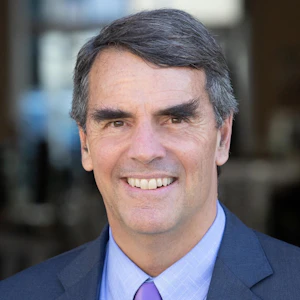
Tim Draper
Tim Draper
He is a supporter and global thought leader for entrepreneurs everywhere, and is a leading spokesperson for Bitcoin and decentralization, having won the Bitcoin US Marshall’s auction in 2014, invested in over 50 crypto companies, and led investments in Coinbase, Ledger, Tezos, and Bancor, among others.

Afroman
Afroman