Teaching Private Credit: How to Value Bitcoin Companies
Speakers/Moderators

Brian Dixon
Brian Dixon


Scott Marmoll
Scott Marmoll

Marc Syz
Marc Syz
Suisse and Zurich Insurance.
Marc was Co-Founder, CEO, and Managing Partner of SYZ Capital, and a member of the Executive Leadership Team of the SYZ Group, overseeing CHF 26.5 billion in assets under management. As a member of the Executive and Investment Committees, he led the firm’s
private equity strategy. Marc has completed over 120 investments globally and is an active participant in the Bitcoin ecosystem.
At Syz Capital he launched and scaled the BTC Alpha fund to become one of the world's largest bitcoin denominated funds.
He serves on the boards of Nasdaq-listed MoneyHero and is an advisor to H100, a leading European Bitcoin treasury company. He holds an Executive MBA from INSEAD and has been an active investor in Bitcoin and blockchain since 2014.
Session
Overview
Brian Dixon of Off the Chain Capital moderated a discussion with Marc Syz, Scott Marmoll, and Jonathan Kirkwood on why private credit markets remain cautious about lending to Bitcoin-focused companies. The panel focused on the core concerns lenders evaluate: cash flow, collateral, regulatory risk, reputational risk, and the short track record of the Bitcoin lending market compared with traditional asset classes.
The speakers discussed why Bitcoin-backed loans have been the most successful structure so far, largely because they can be overcollateralized and liquidated around the clock. They also noted that many lenders still approach Bitcoin as collateral to be sold if needed, rather than as an asset they understand or believe in.
A major theme was competition for capital from AI and Strategy-related yield products, which may be easier for institutions to underwrite or fit into existing mandates. The panel argued that opportunities remain in Bitcoin private credit because capital is scarce, underwriting is more complex, and strong Bitcoin companies may offer better terms to lenders willing to do the work.
The discussion closed with differing views on what will unlock broader lending participation. Some emphasized education, standardized underwriting, regulatory clarity, and more mature credit products, while others argued that a much higher Bitcoin price and market cap will be the decisive factor in drawing institutional credit into the sector.
All right. Hello, everybody. Good morning. My name is Brian Dixon. I'm the CEO of Off the Chain Capital. We are a Warren Buffett and Benjamin Graham-style discount value investor in the blockchain space, and we lean very Bitcoin-heavy with a lot of our investment strategy. I'm excited to speak with the panel today. We're going to be talking about the intersection of Bitcoin and private credit.
I'd like to start off by going down the row. If you guys would, please do a quick introduction of yourselves.
Thanks, Brian. I'm Marc. I'm a Swiss national. I come from a dynasty of traditional finance. People created banks and insurance companies, which, believe it or not, 170 years ago were innovative at the time. Now I lead an alternative investment firm focused on growth and stability, basically growing capital and preserving capital.
Hey, I'm Scott Marmoll. I'm a founder and managing director of Capital B Advisory. We're a boutique investment bank focused on M&A and capital raising advisory for Bitcoin business owners.
Hi, everyone. I am Jonathan Kirkwood, one of the co-founders of Ten31, an investment platform that invests in businesses that touch Bitcoin. We do everything from early-stage investing to public markets to credit, and we try to help push the Bitcoin space forward.
Awesome. Thank you. The first topic I want to talk through is the elephant in the room, which is that we are basically 16 years into this asset, with over $1.5 trillion in market cap, yet institutions and the private credit market are still very scared to get exposed to this. I'd love to get your perspective on why you think that is.
I think the way to look at that question, why private institutions are scared to get into the space, is to look at Bitcoin as a whole. About 95% of Bitcoin is held in cold storage. It is not being used. Maybe about 2% is being leveraged. There are about $24 billion in total outstanding Bitcoin-collateralized loans right now. Maybe 1% is being used for transactions.
That means the majority of Bitcoin, yes, is a productive use of capital in that you're saving and storing your time and energy for use moving forward, but it is idle. When Bitcoin had a market cap of $400 billion, there was significant volatility. The overall risk in trying to lend against the asset was extremely high. That is coming down as we've gotten to $1.4 trillion.
But as we move the price appreciation forward to $4 trillion or $10 trillion, that's going to be the real key that unlocks the ability for more private credit to come in. That 95% that is solely in cold storage will then be able to have a different spectrum of time preference, where people will be able to use a sleeve of capital for borrowing against Bitcoin, or being able to put it toward some type of yield generation and overcollateralized use.
As price appreciates more, the risk will come down with the volatility of the asset, so that private credit can come in and further unlock it. Right now, private credit in the space is mostly people who have been in it, weathered multiple bear cycles, and survived.
I think private credit needs to see a longer track record as well. Bitcoin is 17 years old. It can't even buy a beer yet. Institutional investors need a lot more time to get comfortable that this thing isn't going anywhere. I know in this room that feels like a foregone conclusion, but you have to explain that to a committee of investors, and they have limited partners to answer to. So there's a lot of work left to be done.
I think what we've seen work so far is Bitcoin-backed loans, overcollateralized, where the lender provides some level of value beneath the total amount of collateral that's posted. Ledn, for example, has managed to achieve the final form of this financing in a securitization. That's a huge win.
But the counterparty for that transaction, the lender, is underwriting an asset where they have more than 100% of their outstanding risk as collateral that they can liquidate 24/7/365. So it's a huge win for our industry, but we have a lot of work to do because the private credit and institutional credit that is lending to Bitcoin-backed loans is in a zero-loss position.
We as Bitcoiners understand that, and those lenders are starting to understand that. But most of these policies have an 85% loan-to-value covenant where they can liquidate, sell into the market, and close their lending position, which means that it's very hard to actually lose money on that trade.
My point is that while there is great momentum here, these lenders are not bullish Bitcoin. They're just doing enough diligence to understand that whatever they're lending against, they can sell overnight or over the weekend and get whole on the position. We need to work hard as an industry to educate these folks to a point where they are actually comfortable with gap risk and equity-like exposure in the private credit and institutional credit markets.
It's not just a 100% overcollateralized position. In reality, that collateral could be inventory. It could be chairs. As long as they've underwritten their ability to take the asset and sell it to close their loan, they don't really care about Bitcoin yet.
A lot has been said by my two colleagues. Private credit managers are not paid to be early. They're basically paid to survive mistakes. As you said, Bitcoin has been here for 16 years, but it is still early for a lot of these players to understand the asset.
Private credit funds, or any kind of lender, need to manage downside risk. Today, you still have a lot of these firms saying the underlying asset is extremely volatile, so the cash flows are volatile and the collateral is volatile. The underwriting framework for a lot of these private credit funds is still very uncertain. They just don't know.
So it's not a question of whether Bitcoin is a great asset. It's more: is there a standardized underwriting framework that we can understand and that my investment committee will understand? A lot of the conversations have to be about how the collateral behaves. What happens if Bitcoin loses 50%? How do I get my money back? Until this matures, a lot of education has to happen for private credit funds to be comfortable coming into the asset class.
Those are great points. From a lending perspective, traditionally lenders really care about three things: cash flow, collateral, and regulatory or reputational risk. Bitcoin infringes on all three of those topics. I'd love to get your perspective on the frameworks of how lenders are looking at this. Do you think it's accurate? Is it reasonable? Or are they just pattern matching throughout history?
When you think about those three items, cash flow is a very valid point. Any kind of lender will look and say, what is the cash flow of the business? How is there a mismatch, for example if you're a Bitcoin miner, between your costs, which are all paid in fiat, and the bitcoins you are generating? That cash flow underwriting model is very valid.
In terms of collateral, the reality is that again, it's a framework of understanding how the collateral actually behaves. That's where a lot of lenders get it wrong. They say it can be volatile, but what is the right underwriting framework? Is it LTV? Is it something else? Do I have other cross-collateral potential?
The third one, regulatory, is also a valid concern. The problem we still have today is that a lot of private credit funds, even if they want to lend to Bitcoin-denominated firms, can't because it's not in their mandate. Do I go against the people who are giving me money as a private credit fund and lend to an asset class I shouldn't be lending to? That's still a problem.
If you can have a conversation with your investors and say, listen, it's not about Bitcoin, forget Bitcoin for a moment, but I can explain how we've done this underwriting and how we're going to get cash back even if the firm goes to zero, and how the asset behaves, then those are three legitimate concerns you can actually address.
I'm going to focus just on regulatory, because for me cash flow is just an understanding mismatch. The whole investor world, the whole fiat economy, is built on cash flows. It's an education hurdle to understand that Bitcoin is an asset that doesn't need cash flows. It's just money. For collateral, Bitcoin is perfect collateral. It's the reason it is so easy to underwrite these Bitcoin-backed loans, because of the quality of that collateral.
The regulatory piece is the big one. There are two things I think we need. One is more time to heal from the scars of really bad mismanagement of capital in previous cycles. If someone at an institutional investor fund wants to learn about Bitcoin and just Googles Bitcoin-backed loans and reads the history of how that's gone, there were a lot of mistakes made last cycle and a lot of businesses no longer exist because of it. If you're a busy institutional allocator, you close the web page after you read a couple of those headlines.
We need more time and more work to differentiate the right way to do that work from the wrong way, as far as reputational risk goes.
The other is stroke-of-the-pen risk. The current administration is the first to have a pretty friendly posture toward Bitcoin and crypto, with a bunch of asterisks. If you're trying to underwrite a 10- or 15-year thesis on this, you need to have in your threat model that the administration changes and the body language toward Bitcoin also changes.
I'm very hopeful that Bitcoin can remain a nonpartisan or bipartisan asset class. But one thing that would be really helpful for underwriting and for inviting institutional investors into this space would be more than one political cycle of a supportive environment for Bitcoin and the institutions building in this space. Then it is not just an easy environment that could change very quickly if there is a change of administration. That's a derivative of needing more time, but we need more time with a non-adversarial environment for this space.
I definitely agree that this administration is head and shoulders better to work with. My thought on why we haven't cracked the nut on private credit, and why it hasn't expanded further, is that I don't think we've necessarily figured out the actual order of operations or the structure to unlock the value that has accrued to Bitcoin. Ninety-five percent of Bitcoin hasn't moved or isn't being used.
If you compare that to gold, just look at India. India has a large population with a heavy concentration of gold, and 20% to 40% of gold in India is collateralized. That's one subsection of a population that uses gold as a store of value and also as a productive use of capital.
With Bitcoin, if 20% of Bitcoin were being used in a productive way for collateralized debt, that's a $240 billion market. That is ten times the size of where we are today. Yes, the regulatory risk has come down, and maybe that can open us up to thinking differently about how we structure this or what the actual order of operations is. Is Bitcoin the first loss? Or maybe Bitcoin is the second loss because it is overcollateralized and the first loss has a lower threshold for liquidation.
This is a new technology. We're all here pioneering how to unlock the value that is here for productive use, to create the cash flow to satisfy the obligation.
That's a great point. I want to walk through the competition for capital. We've seen AI really suck the oxygen out of the room in terms of new investment and new capital flowing into that. We've seen Strategy's Stretch product likely pull in five to ten years of future institutional demand into the Bitcoin space via that product.
If you're looking at things like that, why would you not just go get 11.5% on a product like that? Or why would you not chase AI opportunities? What is the reason today to really take Bitcoin private credit seriously?
It's a good question. Most of our funds are raised from endowments, pension funds, and insurance. Being able to have a guaranteed 11.5% is a high bar to clear, because we're looking for venture-style 25% IRRs. With private credit, if you're only looking for 16% to 17%, why are you taking the risk when you can put it into Stretch?
So we have to be creative. Not necessarily venture-style debt, because we do want to be more private-equity-focused, where there are businesses with cash flows. Is it free cash flow, or just enough cash flow to satisfy the obligation? That's where we're going to be targeting.
But I think the benefit of Stretch is that five to ten years of demand for Bitcoin that would not have existed, because it is offering 11.5%, will push the price of Bitcoin much higher. It will pull forward the price appreciation of Bitcoin. That's then the key to unlock the ability to create innovative products for collateral.
I have to assume that a dollar into Stretch ends up buying Bitcoin after some fees along the way. That is an assumption. I'm not able to verify that myself. I think Jonathan is right that Stretch is likely pulling forward a lot of Bitcoin purchasing, and that's exciting as someone who only owns Bitcoin.
The countervailing trend is that, for the general market of investors who are not aware of Stretch, the risk-free rate and treasuries are higher today than they were in the easy-money environment that we've been in for a lot of Bitcoin's history. That raises the hurdle rate and makes it harder to bring capital into this space.
But the real competition for capital and attention right now is AI. In the Bitcoin mining space in particular, folks are starting to look at their operations and say, I don't make great money on Bitcoin mining. It's a brutally competitive, narrow-margin business. When the price of Bitcoin is down like it is right now, the margins are really thin. There is a lot of enticing opportunity to pivot or switch some of that compute to the current darling of AI.
I think Bitcoin typically chooses the most ironic and painful path forward for the miners. There is a real scenario where there is a Bitcoin price at which Bitcoin mining is just as profitable to these Bitcoin mining businesses that pivot to AI as the current AI price per megawatt. It's probably in the $200,000 Bitcoin price range.
The real irony would be that we see a bunch of Bitcoin miners currently pivoting from Bitcoin mining to AI, and then in October of this year we hit a $200,000 Bitcoin price, and they've been offline not mining Bitcoin for six months. They're about to plug in GPUs and they're like, oh, we could have just had ASICs the whole time. That's my contrarian take.
But the reality is that in the meantime, AI is sucking the wind out of a lot of other investment conversations because it is a massive new industry. My thesis is that there is orders of magnitude more compute needed per human, per person, per white-collar job, and that the industry is a little overexuberant. Those two things can be true at the same time.
To build on that, AI is a much simpler model to underwrite. It's a lot like a data center. It facilitates the work of a lot of private credit funds to say, this is something we can understand. There are cash flows, there is real estate, and I can understand all the underlying collateral and assets. So it's much easier, from an underwriting perspective, to give money to those companies.
Regarding the Stretch product, it's similar. The 11.5% headline interest rate is variable, and let's not forget that you're taking single-credit risk. You have to assume that Strategy can continue to service that debt and has the cash to pay for it.
I think that's precisely where the opportunity lies for private credit investments, because you get a diversification approach. You're backing a number of Bitcoin-denominated firms, and apart from diversification, the opportunity lies in the fact that it is niche. It's a much less crowded space. You have more complexity, which also means potentially more yield. But in order to do that, you have to do the hard work, which is almost taking a leap of faith in understanding what metrics to look at, how to price downside risk, and then coming up with a compelling value proposition. I think the opportunity definitely lies in the private credit space.
If I could just add one thing on Stretch, I find it interesting that if you can underwrite the creditworthiness of Stretch paying you back, and if you do that diligence all the way to its conclusion, then you've underwritten Bitcoin and its growth. The irony is that if you've made that conclusion, you can run the Stretch trade yourself. You can just be spot long Bitcoin and peel off 11.5% yourself. I think that's the bearish take on Stretch.
The bullish take would be that there's a lot of capital that can come to that conclusion but is literally not capable, because of fund mandates or allocation requirements, of making that trade themselves. So Stretch does it for them.
The other really significant opportunity is the fact that capital is scarce. It is being sucked into AI and starting to be sucked into Stretch, which means that good companies that have good businesses and operate morally and ethically are starved for capital. That gives us a clear opportunity to have better terms and better stewardship of that capital than we necessarily would have had in 2022 or 2021.
One of the things that's interesting is that the private credit professionals underwriting these deals almost have a structural incentive not to understand Bitcoin, because once they do the numbers on it and start understanding and educating people on it, they're basically talking themselves out of a job. How do you think we get past that? How do we really drive toward making this make sense? Is it the allocators or the managers who are the first people that need to enter this to get the market moving?
I've got a lot of thoughts on this one. As someone who came from that world, the reason I left private equity was because I was writing co-investment checks into the platforms where we were doing control buyouts, and we were underwriting returns that I believed were going to underperform Bitcoin. It started to get laborious writing checks into things that I didn't have as much conviction in as I did in Bitcoin.
A quick lesson on private equity and private credit: the economic model is usually something like five to seven years of illiquidity. The fund manager charges a 2% management fee and a 20% carry on the return they generate. They're targeting return profiles that oftentimes underperform, or in the past at least have underperformed, spot Bitcoin.
There's a lot of work that goes into diligence, closing, negotiating, and closing either a buyout equity or private credit financing. Then you go into management mode and spend five to seven years hoping they pay that money back. Then you exit, make that return, and return that money to LPs.
All of that work to generate a lower return than just spot Bitcoin. If you force a five- to seven-year hold period onto a spot Bitcoin position, suddenly the fund manager two-and-20 model gets really hard to justify.
So I think you find two phenomena. The folks trapped in that industry struggle to understand Bitcoin, maybe because it fundamentally changes their value proposition to the marketplace. And the other folks end up like me, quitting and figuring out a way to work in this industry instead.
The maxim that you get Bitcoin at the price you deserve is absolutely true. Anyone working in the space knows it. What I think will separate the wheat from the chaff on private credit is whether you have more Bitcoin in five years than you started with today. That's it. It's literally that simple.
Yes, Bitcoin is going to appreciate, and you're going to have all these other business models. Who knows what Saylor is going to create to find more Bitcoin? But when we're doing private credit and we issue notes, our goal is: do we have more Bitcoin in five years or ten years than we started with? That's credit finance. Are you a good steward of the capital?
A lot has been said, but a lot of these credit managers are not paid to say, I found this great new asset called Bitcoin, it's very novel. It's more about saying, I am doing an investment and here is how I protect my capital, and I can explain it to my investment committee.
That makes it a very hard conversation because it's much easier to avoid. If you can come and say, listen, I have an amazing company we're lending money to, it's going to give us mid- or high-teens double-digit returns, and this is how we're going to get paid back, this is how we can underwrite the collateral, that makes for a much more meaningful conversation. But for a lot of these guys, that is not the case, and that is really the difficult part.
This will be the final lightning round question. We need Bitcoin to significantly appreciate in value to really unlock these lending markets. In your opinion, what is the milestone we should be looking for? Is it market cap? Is it regulatory posture? What should we really be paying attention to that is going to drive the lending market so that they just can't ignore it anymore?
I think it's a number of things. It's definitely not just price. A lot has to do with translation and education. One of the most obvious things any Bitcoin-denominated company should have as a conversation with a lender is not saying Bitcoin is going to the moon. It should be a boring conversation. It should be: these are the metrics. If you're a miner, what is my cost per coin? How do I recover my bitcoins? Where is my debt service coverage ratio if Bitcoin falls 30% or 50%?
Then you create a framework and give assurance to the lender that you know what you're actually doing. So it has a lot to do with maturity of the asset class, and then seeing more products like Stretch, preferred shares, and other credit instruments coming onto the market. The market needs maturity.
The final point is regulatory. Yes, it needs to continue to evolve, but it needs to come into the mind of people that today a lot of these funds, in their placement memorandums or contracts with their own investors, shun certain industries, vice industries, or even Bitcoin. Defense for years was not investable. Bitcoin is not investable for some. I think that's wrong.
These are the kinds of things that need to change in the mindset of people, so they say, I don't really care whether you invest in Bitcoin-denominated companies or not, as long as I get my money back and you understand what you're doing.
I'll be quick. I'll disagree with Marc. It's just price. At this point, when people talk about the Bitcoin price crashing, everybody has pretty much dismissed the possibility that we return to somewhere like $10,000. Higher highs and higher lows need to happen over and over again.
I think when we're sad about being a $10 trillion market cap, that's a pretty big unlock for institutional capital, and also the time frame that comes with that. We're maybe 25 basis points, maybe 50 basis points, into our total TAM of $500 trillion to $1 quadrillion of total value of money in all the world. So we're babies still. It's just time and number go up that makes that happen.
I'm going to take a different route and say this is all incentives. We had the underlying thesis that capital begets capital. When we started Ten31 seven years ago, it was the idea that if we could put capital to work and show that it produced more capital, then more capital would come into this space. That's really going to be what drives it. Greed is good.
Thank you so much. I really appreciate everybody joining us today. Please join me in giving our panelists a round of applause.
Similar
Sessions
Teaching Private Credit: How to Value Bitcoin Companies
Brian Dixon
Brian Dixon
Scott Marmoll
Scott Marmoll
Marc Syz
Marc Syz
Suisse and Zurich Insurance.
Marc was Co-Founder, CEO, and Managing Partner of SYZ Capital, and a member of the Executive Leadership Team of the SYZ Group, overseeing CHF 26.5 billion in assets under management. As a member of the Executive and Investment Committees, he led the firm’s
private equity strategy. Marc has completed over 120 investments globally and is an active participant in the Bitcoin ecosystem.
At Syz Capital he launched and scaled the BTC Alpha fund to become one of the world's largest bitcoin denominated funds.
He serves on the boards of Nasdaq-listed MoneyHero and is an advisor to H100, a leading European Bitcoin treasury company. He holds an Executive MBA from INSEAD and has been an active investor in Bitcoin and blockchain since 2014.
Teaching Private Credit: How to Value Bitcoin Companies
Speakers/Moderators
Brian Dixon
Brian Dixon
Scott Marmoll
Scott Marmoll
Marc Syz
Marc Syz
Suisse and Zurich Insurance.
Marc was Co-Founder, CEO, and Managing Partner of SYZ Capital, and a member of the Executive Leadership Team of the SYZ Group, overseeing CHF 26.5 billion in assets under management. As a member of the Executive and Investment Committees, he led the firm’s
private equity strategy. Marc has completed over 120 investments globally and is an active participant in the Bitcoin ecosystem.
At Syz Capital he launched and scaled the BTC Alpha fund to become one of the world's largest bitcoin denominated funds.
He serves on the boards of Nasdaq-listed MoneyHero and is an advisor to H100, a leading European Bitcoin treasury company. He holds an Executive MBA from INSEAD and has been an active investor in Bitcoin and blockchain since 2014.
Preparing to Take a Bitcoin Company Public

Anne Peetz
Anne Peetz

David Lange
David Lange
David leads Weaver’s blockchain and digital assets advisory practice and also drives the strategy and execution of SOX and internal audit programs for clients in the asset management, life sciences and commercial industries. He partners with senior leadership teams to prioritize and address risk across all three lines of defense, integrating financial, operational and technology perspectives.
He is a member of the Institute of Internal Auditors (IIA) and holds the Certified Internal Auditor (CIA) and Certified Blockchain and Digital Assets Professional (CBDA) designations. David earned a Bachelor of Business Administration in financial services and planning from Baylor University.
Jody Mettler
Jody Mettler
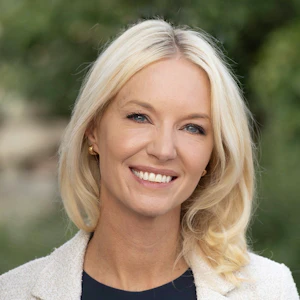
Prior to joining BitGo, Jody was the Director of Global Transformation at Citicorp. She spent over 20 years with Citicorp in various capacities ranging from corporate accounting to operations management primarily within the Institutional Client Group servicing large corporations to develop payment facilitation methods.
Jody also served as a member of the Board of Directors for Citicorp South Dakota Trust Company and is a member of the digital asset legislative task force to facilitate trust administration digital asset laws.
Preparing to Take a Bitcoin Company Public
Speakers/Moderators
Anne Peetz
Anne Peetz
David Lange
David Lange
David leads Weaver’s blockchain and digital assets advisory practice and also drives the strategy and execution of SOX and internal audit programs for clients in the asset management, life sciences and commercial industries. He partners with senior leadership teams to prioritize and address risk across all three lines of defense, integrating financial, operational and technology perspectives.
He is a member of the Institute of Internal Auditors (IIA) and holds the Certified Internal Auditor (CIA) and Certified Blockchain and Digital Assets Professional (CBDA) designations. David earned a Bachelor of Business Administration in financial services and planning from Baylor University.
Jody Mettler
Jody Mettler
Prior to joining BitGo, Jody was the Director of Global Transformation at Citicorp. She spent over 20 years with Citicorp in various capacities ranging from corporate accounting to operations management primarily within the Institutional Client Group servicing large corporations to develop payment facilitation methods.
Jody also served as a member of the Board of Directors for Citicorp South Dakota Trust Company and is a member of the digital asset legislative task force to facilitate trust administration digital asset laws.
Other
Speakers

Michael Saylor
Michael Saylor
Todd Blanche
Todd Blanche
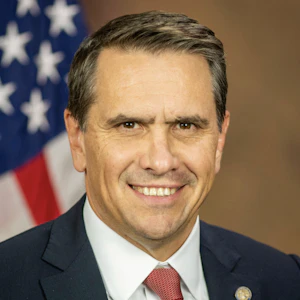
Biography of Deputy Attorney General Todd Blanche
The Honorable Todd Blanche is the 40th Deputy Attorney General of the United States, overseeing the work of the 115,000 dedicated employees who fulfill the Department of Justice’s mission at Main Justice, the FBI, DEA, U.S. Marshals, ATF, and 93 U.S. Attorney’s Offices.
Todd began his career at the Department where he served for over fifteen years in a variety of capacities, including as a contractor, a paralegal in the Criminal Division, and at the United States Attorney’s office for the Southern District of New York where he eventually became an AUSA and later a supervisor.
After leaving the Department, Todd worked as a criminal defense attorney that included representing President Donald Trump in three of the criminal cases brought against him in 2023 and 2024.
Following President Trump’s historic return to the White House, the President appointed Todd to work alongside Attorney General Pam Bondi to make America safe again. At the DOJ, Todd is working tirelessly to implement President Trump’s priorities that include confronting illegal protecting American businesses from fraud.
Todd has been married to his wonderful wife Kristine for nearly thirty years, is a father and grandfather.

Paul Atkins
Paul Atkins
Prior to returning to the SEC, Chairman Atkins was most recently chief executive of Patomak Global Partners, a company he founded in 2009. Chairman Atkins helped lead efforts to develop best practices for the digital asset sector. He served as an independent director and non-executive chairman of the board of BATS Global Markets, Inc. from 2012 to 2015.
Chairman Atkins was appointed by President George W. Bush to serve as a Commissioner of the SEC from 2002 to 2008. During his tenure, he advocated for transparency, consistency, and the use of cost-benefit analysis at the agency. Chairman Atkins also represented the SEC at meetings of the President’s Working Group on Financial Markets and the U.S.-EU Transatlantic Economic Council. From 2009 to 2010, he was appointed a member of the Congressional Oversight Panel for the Troubled Asset Relief Program.
Before serving as an SEC Commissioner, Chairman Atkins was a consultant on securities and investment management industry matters, especially regarding issues of strategy, regulatory compliance, risk management, new product development, and organizational control.
From 1990 to 1994, Chairman Atkins served on the staff of two chairmen of the SEC, Richard C. Breeden and Arthur Levitt, ultimately as chief of staff and counselor, respectively. He received the SEC’s 1992 Law and Policy Award for work regarding corporate governance matters.
Chairman Atkins began his career as a lawyer in New York, focusing on a wide range of corporate transactions for U.S. and foreign clients, including public and private securities offerings and mergers and acquisitions. He was resident for 2½ years in his firm's Paris office and admitted as conseil juridique in France.
A member of the New York and Florida bars, Chairman Atkins received his J.D. from Vanderbilt University School of Law in 1983 and was Senior Student Writing Editor of the Vanderbilt Law Review. He received his A.B., Phi Beta Kappa, from Wofford College in 1980.
Originally from Lillington, North Carolina, Chairman Atkins grew up in Tampa, Florida. He and his wife Sarah have three sons.

Mike Selig
Mike Selig
Chairman Selig brings to the role deep public and private sector experience working with a wide range of stakeholders across agriculture, energy, financial, and digital asset industries, which rely upon and operate in CFTC-regulated markets.
Prior to his leadership at the CFTC, Chairman Selig most recently served as chief counsel of the Securities and Exchange Commission’s Crypto Task Force and senior advisor to SEC Chairman Paul S. Atkins. In this role, Chairman Selig helped to develop a clear regulatory framework for digital asset securities markets, harmonize the SEC and CFTC regulatory regimes, modernize the agency’s rules to reflect new and emerging technologies, and put an end to regulation by enforcement. He also participated in the President’s Working Group on Digital Asset Markets and contributed to its report on “Strengthening American Leadership in Digital Financial Technology.”
Prior to government service, Chairman Selig was a partner at an international law firm, focusing on derivatives and securities regulatory matters. During his years in private practice, he represented a broad range of clients subject to regulation by the CFTC, including commercial end users, futures commission merchants, commodity trading advisors, swap dealers, designated contract markets, derivatives clearing organizations, and digital asset firms. Chairman Selig advised clients on compliance with the Commodity Exchange Act and the CFTC’s rules and regulations thereunder, including in connection with registration applications and obligations, enforcement matters, and complex transactions.
Chairman Selig earned his law degree from The George Washington University Law School and was articles editor of The George Washington Law Review. He received his undergraduate degree from Florida State University.

David Bailey
David Bailey

Eric Trump
Eric Trump
Mr. Trump also serves as Executive Vice President of The Trump Organization, where he oversees the global management and operations of the Trump family’s extensive real estate portfolio. This includes Trump Hotels, Trump Golf, commercial and residential real estate, Trump Estates, and Trump Winery. Known for his hands-on leadership and strong market instincts, he has played a key role in expanding the company’s presence across major U.S. and international markets.
A globally recognized business leader and public figure, Mr. Trump is a prominent advocate for Bitcoin and decentralized finance. He is a co-founder of World Liberty Financial, a decentralized finance (DeFi) platform, and serves on the Board of Advisors of Metaplanet, Japan’s largest corporate holder of Bitcoin.
Beyond his business activities, Mr. Trump has helped raise more than $50 million for St. Jude Children’s Research Hospital in the fight against pediatric cancer, a philanthropic mission he began at age 21.
Mr. Trump earned a degree in Finance and Management from Georgetown University. He currently resides in Florida with his wife, Lara, and their two children. He is also the author of Under Siege, his memoir published in October 2025.

Jack Mallers
Jack Mallers

Cynthia Lummis
Cynthia Lummis
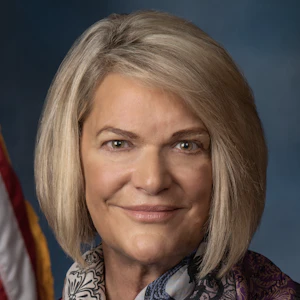
As the first-ever Chair of the Senate Banking Subcommittee on Digital Assets, Senator Lummis is the architect of the legislative framework shaping America's digital asset future. She introduced the landmark Lummis-Gillibrand Responsible Financial Innovation Act, the first comprehensive bipartisan crypto regulatory framework in Senate history. She co-authored the GENIUS Act — the first federal stablecoin law ever enacted — and introduced the BITCOIN Act, which would establish a U.S. strategic Bitcoin reserve of up to one million BTC. She is leading the Clarity Act, which will bring long-overdue regulatory certainty to the digital asset industry. She has also championed digital asset tax reform, including a de minimis exemption for small transactions and equal tax treatment for miners and stakers.
Known as Congress' "Crypto Queen," Senator Lummis represents Wyoming — a state she has helped build into one of the most digital asset-friendly regulatory environments in the nation. Before serving in the Senate, she served 14 years in the Wyoming Legislature, eight years as Wyoming State Treasurer, and eight years in the U.S. House. She is a three-time graduate of the University of Wyoming.
Her work represents a crucial bridge between traditional financial systems and the emerging digital economy, ensuring America leads the world in financial innovation while protecting the individual freedoms that define it.

Adam Back
Adam Back

Amy Oldenburg
Amy Oldenburg
David Marcus
David Marcus

Matt Schultz
Matt Schultz
Fred Thiel
Fred Thiel
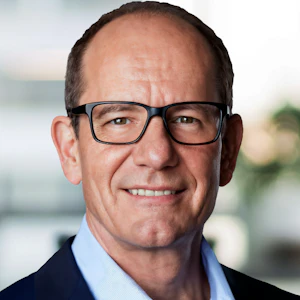
Throughout his career, Mr. Thiel has consistently driven rapid growth and created substantial shareholder value. Prior to MARA, Mr. Thiel served as the CEO of two other public companies, Local Corporation (NASDAQ: LOCM) and Lantronix, Inc (NASDAQ: LTRX). He has successfully raised billions in equity and debt through private and public offerings, led companies through IPOs, executed high-value exits to strategic and financial acquirers, and implemented effective M&A and roll-up strategies.
Mr. Thiel attended the Stockholm School of Economics and executive classes at Harvard Business School, and is fluent in English, Spanish, Swedish, and French. Mr. Thiel is the Chairman of the Board for Oden Technology, Inc. and is active in Young Presidents’ Organization where he has led initiatives in both the FinTech and Technology Networks.
A recognized voice in the industry, Fred frequently shares his insights on energy and technology with major media outlets like Bloomberg TV, CNBC, and FOX Business, contributing to vital discussions about the future of these sectors.
Tim Draper
Tim Draper
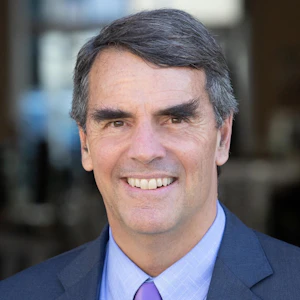
He is a supporter and global thought leader for entrepreneurs everywhere, and is a leading spokesperson for Bitcoin and decentralization, having won the Bitcoin US Marshall’s auction in 2014, invested in over 50 crypto companies, and led investments in Coinbase, Ledger, Tezos, and Bancor, among others.

Afroman
Afroman