The Inflation Trap: The Ethics of Money Creation
Speakers/Moderators
James Poulos
James Poulos

Guido Hülsmann
Guido Hülsmann
Avik Roy
Avik Roy
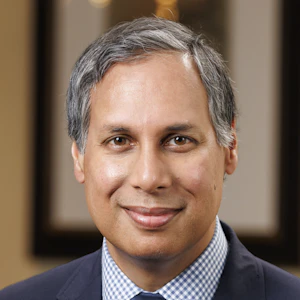
In 2021, he authored the widely-cited essay “Bitcoin and the U.S. Fiscal Reckoning,” published in National Affairs, in which he first proposed establishing a U.S. federal bitcoin reserve. Avik also serves on the Boards of Directors of Strive Inc. and the Texas Bitcoin Foundation, and is the Senior Advisor to the Bitcoin Policy Institute.
Avik has advised several presidential candidates on policy, including Mitt Romney and Marco Rubio. In one of those roles, as Senior Advisor to Texas Gov. Rick Perry in 2015, Perry became the first presidential candidate in the U.S. to support Bitcoin, arguing that the protocol offers “the possibility of reducing the cost and improving the quality of financial transactions in much the way that the conventional internet has done for consumer goods and services.”
Avik is well known for his public policy work outside of bitcoin, especially in fiscal and health care policy. National Review has called him one of the nation’s “sharpest policy minds,” while the New York Times’ Paul Krugman concedes, “Roy is about as good as you get in this stuff…he actually knows something.”
Along with Forbes, where Roy served as the Opinion and Policy Editor for a decade, Roy’s writing has appeared in The Wall Street Journal, The New York Times, The Washington Post, USA Today, and The Atlantic, among other publications, and he has appeared on numerous national television programs including Meet the Press, Face the Nation, PBS NewsHour, and Real Time with Bill Maher.
Avik previously worked as a hedge fund manager at J.P. Morgan, Bain Capital, and other firms. He was educated at MIT and the Yale School of Medicine.

Hector Alvero
Hector Alvero
Session
Overview
The Inflation Trap: The Ethics of Money Creation examined Bitcoin through moral, philosophical, and institutional questions rather than only technical or economic ones. James Poulos moderated a discussion with Guido Hülsmann, Avik Roy, and Hector Alvero on fiat money, inflation, stablecoins, capital controls, and the ethical consequences of monetary systems.
A central theme was whether Bitcoin can remain permissionless and censorship resistant as it becomes more connected to regulated financial infrastructure. The panel discussed stablecoins, ETFs, exchanges, and the risk that governments could use capital controls or custody rules to limit access to Bitcoin during a fiscal crisis.
The speakers also explored trust, decentralization, and the limits of the term “trustless.” They argued that Bitcoin can reduce dependence on centralized authorities, but users still need institutions, communities, technical literacy, and vigilance to avoid recreating the weaknesses of the fiat system.
The conversation closed by connecting sound money to hope, savings, moral life, and community. Bitcoin was presented not simply as an asset, but as a social movement built around autonomy, long-term thinking, and the possibility of a monetary system less exposed to discretionary money creation.
This is the Inflation Trap panel, the ethics of money creation. Very hot topic right now. I am your host, James Poulos. I'm a senior fellow at the Foundation for American Innovation, and I have mucked about publishing books on Bitcoin and doing some stuff with film now. It's a good time.
I see lots of smiling faces, inwardly smiling faces, but there are questions that we're going to answer some of today, hopefully. Going from my right to my far right: Guido Hülsmann is a senior fellow at the Mises Institute. Avik Roy is many things. He's a member of the board of directors at Strive. And Hector Alvero is the chief operating officer of Rhino Bitcoin.
So let's step into it. I think one of the best ways that we can crack into this question of what's at stake philosophically and morally right now when it comes to Bitcoin is to look through the lens of stables. Everyone's favorite. Some people's favorite.
We now have some legislative clarity, quote unquote. And I think stables really raise this question of to what extent this is a state project, and to what extent it is a project of other actors with other sorts of frameworks that they're applying to the question that we're looking at today.
So maybe we can just take a cut from there. Say a little bit about what your philosophical and moral view is about the fundamentals of Bitcoin, and then apply that to what's going on in the debate around the stables. Go ahead.
I can jump that up. I wrote a chapter for a book called The Satoshi Papers, which is actually on sale in the book area, and we're going to be doing a signing at 3 p.m. on this topic.
The Clarity Act is important for a KYC approach. It's important for a bunch of things, and I don't want to pooh-pooh it. But for the long-term issue of the impending fiscal collapse of America, and how inflation is connected to that because the government has to print money to pay the debt, this is where the future of the dollar, in terms of the technological rails the dollar is on, is really important.
Because when the fiscal collapse happens, and I have argued that we have no more than 20 years, maybe it's 10, maybe it's 5, maybe 15, but no more than 20 years. The math just stops working at 20 years in terms of the amount of money we have to borrow and the supply of lenders in the world to lend us the money.
And so when you get to that point, what will the government do? In this essay called Then They Fight You, I argue that the most likely scenario, it's not the only scenario, but the most likely scenario, is that the government is going to engage in the same things governments always do in these situations, which is capital controls. They restrict.
Look at Argentina or Venezuela or Turkey and these places. What do they do? They say, you are not allowed to exchange your native fiat currency for some better currency, like Bitcoin.
So how would they do that? They might say, like we did in 1934, you're not going to be able to hold Bitcoin yourself, even though that's going to be hard. Corporations can't hold Bitcoin. You have to sell it back to the government. Or all your Bitcoin has to be in the form of an ETF. They'll do things to control your ability to hold Bitcoin outside of the dollar system.
So how do we avoid that outcome where the government really restricts your ability to own Bitcoin? My argument is that what we have to do is come up with a decentralized, permissionless, censorship-resistant way to exchange U.S. dollars for Bitcoin. Not just to buy Bitcoin or send Bitcoin to other people. That part, I think we figured out a long time ago. But to actually be able to exchange U.S. dollars for Bitcoin.
To bring this back to your original question, James, right now, that's not what we have. Tether just worked with the U.S. government to shut down $334 million of Iranian USDT. Tether is the stablecoin that is being discussed with the Clarity Act and the GENIUS bill. The Treasury Department has a kill switch for all of that. And I understand why they need that.
But the point is, unless we have a permissionless way to exchange fiat currencies for Bitcoin, we will not be able to escape the capital controls that are coming when the fiscal collapse inevitably takes place. That's my concern. That's my call to the space. Help us figure out how to do that.
I see a lot of nodding over there. Are you black pilling?
No. But I do highly recommend Avik's article, because it's fantastic.
Speaking to your question around the moral underpinnings of Bitcoin, and maybe the lack thereof in our fiat monetary system, when I started to think about this topic, my mind, for whatever reason, went to Thomas Jefferson. Specifically, the last of the inalienable rights that he enshrined in the Declaration of Independence. We all know the one: life, liberty, and the pursuit of happiness.
We think of those words usually in historical or political discussions, but I would submit that they are equally as important in conversations about money. Here's why. Money does a lot more than just represent value. It shapes our belief about whether or not we think that the work we do today is going to help us build a better tomorrow.
In order to understand why that is, we need to talk for a minute about property, which is ironically the exact word that Jefferson set aside in order to put the pursuit of happiness into the Declaration.
The thing is, most property represents the past. It reflects what somebody decided was the best thing they could trade their time and energy for in a given moment. Whether it's a house, a car, a vacation, these are all the choices you've already made.
But money is different. Money represents the future. It's the bridge between the work you've already done and the life you hope to build, whether that's a business, a family, or a dignified retirement. Property represents happiness already chosen. But money actually enables the pursuit of the happiness still to come.
That's why I think our current fiat monetary system is so unethical. Because when a privileged few can create money, without effort, it hurts our society in a much deeper way than just degrading everybody's purchasing power. It increases the distance between effort and reward.
It tells people, little by little, that discipline doesn't matter, that patience doesn't matter, that saving doesn't matter, that the future doesn't matter. And when people stop thinking that their efforts matter, they eventually give up on the pursuit entirely.
So fiat money, in my opinion, is the death of hope. And we see that in our society all around us, whether that's record levels of substance abuse, deaths of despair, or broken families. When people stop believing that tomorrow is going to be better than today, that's when they start looking for shortcuts, for escapism, or for lucky breaks instead.
And that is why Bitcoin matters. Because by offering money whose supply can't be manipulated, whose rules are transparent, and to which insiders don't have privileged access, Bitcoin can restore that hope. Bitcoin protects not just purchasing power. Bitcoin protects the pursuit of happiness itself.
How huge is the risk or the danger that over the next one to five years, Bitcoin is just kind of folded back into that fiat system?
Let me just say a few words. Bitcoin was created precisely as a response to a big moral problem that we have with a coercive fiat money system. The problem with the fiat money system is not just that people are coerced into using something that is actually very bad money. Fiat money itself, dematerialized into paper tokens or accounting entries, is just the last stage of an evolution that started already before, and which involved all kinds of financial allegiance in favor of government funding. Most notably, fractional reserve banking.
That is the model on which all our commercial banks function today. This was invented in the Middle Ages, and it came into full swing from the 17th century, and governments were always promoting this.
The problem with fractional reserve banking is that it's fragile. Banks do not have all the money that they promised to pay to their customers. So eventually the government steps in and creates a central bank in order to pay out the commercial banks.
Central banks themselves were first operating on a fractional reserve basis, so they were vulnerable themselves. That's why eventually fiat money came to be instituted as a response. With fiat money, the central bank doesn't have to pay anything else but what it itself creates. That's very bad money, but everybody has to use it.
So the problem is that we have institutionalized fraudulent financial practices. My warning here to the Bitcoin community is, and I'm not really a regular part of it, I just said to my colleagues here that I have a few students working on this, but I'm not really a Bitcoiner myself. My warning, since we are talking about the ethics of money creation, is that Bitcoin itself is not immune to such shenanigans.
If you are trading Bitcoin as a get-rich-quick scheme, you already have one foot in the current financial system. If you're using Bitcoin as collateral, you're having one foot in the current financial system. If you're operating a Bitcoin fractional reserve operation, you are already in the same scheme.
So Bitcoin itself can be a very powerful tool, but it's not an automatic thing. Users have to be vigilant. You have to look very closely at whom you're getting into bed with.
We're doing great on time. I'm happy to report all these monitors are telling me so. I'm just going to throw one more ingredient into the soup here and then we can all talk among ourselves.
You brought up permissionless and just how important it is to Bitcoin. It has all kinds of ethical, philosophical, and legal implications. When some people hear permissionless innovation, they get kind of scared. Some people get excited. There's one other moral category that I think is tightly bound with the permissionless character of Bitcoin, and that's, quote unquote, trustless.
I think there's this kind of paradox in human society where trustless works best among people in a community who trust each other. When you think about fiat, when did fiat really start looking really bad? One way of digging into that question is to say, if you look at social trust in America, we went from a very high-trust society coming out of the Second World War to being an extraordinarily low-trust society over the course of just 25 or 30 years.
That was around the time when, lo and behold, the gold standard is gone and Nixon has the bullet. Fast forward to now, and we've got endemic social decay, a very low-trust society, an inflated fiat currency, and all these things seem in some way to be bound together.
When we look out over the landscape here, the figures who dominate the space tend to be people who have some kind of trust gap. You think of Bankman-Fried going to jail. You think of Donald Trump sitting down and yelling at Howard Lutnick, and his sons are doing stuff that doesn't make people feel very good. Obviously, all the guys across AI have various kinds of trust gaps. Sam Altman, not a high-trust figure.
So I just want to introduce this idea of how much these questions around the future of Bitcoin and the foundations of social coherence that we need in order to ensure that we don't just get sucked back up into the fiat complex are tied together.
It's a really interesting question, James. You're hitting on something. Really, we could have spent the whole session on just this topic. I'll say a couple things.
One, I never loved the term trustless to describe the Bitcoin architecture because, if you're not a coder who can audit the code yourself, you're trusting that the code works. Yeah, you may not trust the bank to hold your money, but you are trusting that Bitcoin and the blockchain and the consensus mechanism work. Because you don't know.
How many of you are coders? Raise your hand if you've audited the code. Okay, we've got one hardcore guy over there. Two out of like 300 people who are sitting here right now. So that gives you a sense. We're all trusting that this works.
Why do we trust that it works? Because it's been working for almost 20 years. It's never been hacked, et cetera. So there are good reasons to have confidence that Bitcoin works, but we are trusting it on a certain level. So the term trustless, I don't love.
Having said that, I think sociologically you're onto something, which is that the people who are in Bitcoin are people who don't trust the broader economic, fiscal, and monetary system. That's a cultural thing that you see at conferences like this. We're all kind of like, we have a little screw loose in our heads because we're dissenting from the world that everyone else thinks is completely great and working fine.
Those of us who are in the space notice that. That's a common mental thread that we all have. We see that there's something wrong, and you pull on that thread.
I think actually there's a degree to which Bitcoiners can overreact to that point. I’m with Strategy, which is a Bitcoin treasury company that buys a lot of Bitcoin. A lot of other financial institutions are here. Morgan Stanley now has a Bitcoin ETF, et cetera. Some people look at that and say, oh, that's just Wall Street Bitcoiners, or these other terms, that if you're not a cypherpunk with your one S19 in your basement, then you're not a real Bitcoiner.
I would say, to go back to the first answer I gave about how we actually survive the fiscal collapse that's coming, you've got to understand how to build new institutions. We have to have institutions people can trust, where normal people can put their money. Let's say I get hit by a bus on my way out of here. It's great that my Bitcoin is in cold storage, but how are my kids going to get it? That requires institutions. That requires things that you can trust, that we all have to build together.
Again, I think the most important thing we have to build is a censorship-resistant way to trade dollars for Bitcoin. It's great that Kraken and Coinbase and all the great businesses out here are helping us buy Bitcoin with our dollars, but those institutions exist at the permission of the government. So we do have to have some mistrust of the government, but we also have to build new institutions that we also trust.
Yes, I completely agree with you. I've never liked the word trustless because that really is not reality. I've always preferred the term trust minimized. More importantly, it's the fact that you get to choose, as a Bitcoiner, what you want to trust and who. You have the option not to trust anyone.
If you want to dig down into the code because you don't want to trust it, you can. If you don't want to trust somebody else holding custody of your wealth, you don't have to. If you don't want to trust somebody else's rules or record of the blockchain, you can run your own node.
In my opinion, what makes Bitcoin so valuable is not that we're trying to get to this perfect utopia of trustlessness, because that's probably an ideal we can approach and never reach. It's the fact that you get to choose. Somebody is not forcing their rules on you, their custody on you, their code on you, and you always have the opportunity to respect yourself. That's what I think makes Bitcoin powerful.
The consequence of the fiat system is centralized trust. Eventually, all people just trust the central bank. The central bank will do what is necessary to pay out banks and governments so that you don't lose your pension, that you don't lose the money that's in your bank account, and all these things.
In a way, ironically, Bitcoin is something very similar. It centralizes trust. So I'm a bit skeptical of the further social consequences that follow from it, because we are still centralizing. We're not relating horizontally to others, but to this one system, which is private, which is big progress. But it's a centralization.
As I said before, the important thing is always, when you take care of your life and your money, which is part of your life, you have to look very closely at the people with whom you are cooperating. There's no easy way out. You don't just trust one thing in your life and everything will automatically follow from this. You still have the homework to do.
Bitcoin does not fundamentally change the fact that you have to find the right people to whom you can relate your life, who will help you with mining, who will help you with custodial services, and various other things. Yes, you have to find the right people.
Given your experience and your research and your background, how can we be vigilant to preserve and find that right level of trust, to diffuse the tendency toward centralization? The price of freedom is eternal vigilance, as one of our founding fathers said. So what would you suggest, from having seen the failures of other systems, that we can try to be proactive in Bitcoin so that we can resist that tendency of centralization?
First of all, of course, we have to familiarize ourselves at least to a minimum with the functioning of the system and potential threats. Currently, lots of potential threats are coming from financial technology, from governments weaponizing the financial system and governance. They can exchange them very quickly. So you have to be aware of these risks.
Then, if you're looking at the people with whom you are interacting, look at their track record. That's the very first thing. What has this person been doing? If this person pops out of nowhere and suddenly has this business and promises you that you can get rich in three months, that's probably not the right person for you to cooperate with.
If somebody has a longstanding career, maybe in the financial industry, as an engineer, and has demonstrated that they are a reliable partner to others, for customers, for employees, and so on, then we are on safer ground. It's the basic homework that you need to do.
Why did gold work for as long as it did? Because gold was everywhere. Gold was gold, and gold worked in Asia, it worked in Europe, it worked everywhere. It worked in South America. So Bitcoin can be similar in that, as more states, more countries, more jurisdictions become open to Bitcoin and use Bitcoin and buy Bitcoin and operate nodes in Bitcoin, then yes, Bitcoin can be more decentralized. It already is pretty decentralized.
Again, just to hammer the point home, I think the next step is to decentralize the exchange of fiat for Bitcoin. Right now, there's a handful of institutions that drive most of the trading volume between fiat and Bitcoin. That's the thing that we need to decentralize to improve and strengthen resilience, along with trust. These two things are related.
I think what you said is exactly right, that it's not so much trustless. It's decentralized. I trust that the code works because, even though I don't know the two guys who said they audited the code, I know enough people who I respect who have, and I assume that someone among these smart people would have figured it out by now and hacked the thing.
Similarly with the exchanges, the more we can make the system not dependent on any one exchange or any one currency that we're exchanging into Bitcoin, the better. But right now, the trend is toward more permissioned involvement between the mainstream financial system and Bitcoin. So we have to make sure that there's always that escape hatch, that if people try to crack down, people can still use it.
What about centralization of hardware and centralization of energy? Bitcoin isn't really Bitcoin if all the mining stops, if there are only a few ASIC miner manufacturers. You look at what's going on with AI, and aside from all the things that are making the real headlines, you kind of can't get a Mac Mini right now. The electrical grid, maybe there are all kinds of state-level explanations for why we should be funneling more energy into those data centers. But if you do not have the rig that you need to mine, then your right to compute is going to everything.
Paradoxically, I think the fact that a lot of Bitcoin mining companies are transitioning to AI is going to increase the decentralization of Bitcoin. A couple years ago, everyone was worried that there are these big companies like Riot and MARA that are going to dominate the space, because mining is so brutally competitive and it's actually a very hard business to make money on. The concern was that a handful of companies were going to dominate the space and mining was going to get very centralized.
Then all of a sudden AI comes along and says, hey, we'll pay you even more for your energy. So a lot of those companies are migrating their big mining farms into AI, which means that people with six miners in Idaho Falls or wherever, where there's so much stranded energy all around the world, those people are actually more relevant again, I hope. That's what I'm observing anyway, but I'd be interested in anybody else's thoughts on that.
A couple more minutes. One thing that I always think about, going back to the trustless bit, is people talk a lot these days about tribalism and the rise of tribalism. They're not real tribes, right? It's not like multi-generational families living in one spot over a period of time, caring about bloodline and coming of age. It's a little bit different, and some of these tribes are online only.
But what I've noticed is there is a resurgence of spiritual life going on in America right now. Whether it's in the more traditional religions, or whether it's in the classic American cult. America has been a great place for cults over the years. We're seeing resurgences of cults right now, especially in and around San Francisco. A lot of people seem to be needing to up their spiritual engagement in order to process what's going on with the rate of psychological change.
So I wonder, when you're looking at Bitcoin from that standpoint, whether you see a resource here. The thing about Bitcoin is you can use it to grow markets that benefit your friends, your family, your community. That seems to plug in very well into the kinds of approaches that religious communities, whether they're very new or very old, have toward building that trust and soft exiting from this overarching political economy superstructure that seems like it could be on the rocks unless some drastic action is taken.
It relates to the fact that Bitcoin is not supposed to lose its money through unlimited printing, as we have with the fiat system. Precisely because you can rely on the value that you have acquired in the past, you don't need to run after new opportunities.
That's the implication of the current monetary system. If prices constantly rise, everyone is heading into debt in order to invest as early as possible. If you're in debt, you need to watch the annual money stream, the monthly money, the weekly money, because you have to put the money back on the table. So life becomes more materialistic. That's something that I explain in my book on the ethics of money production, which is on sale at the Mises Institute.
The tendency of the Bitcoin system is that prices will fall. It's a deflationary monetary system. That is beneficial for saving, for a spiritual life, for a moral life. So there is this promise, and I appreciate this a lot.
I'll leave you with this. I went to my first Bitcoin conference in 2021, and I'll never forget it. It was after COVID. It was in Miami. The place was completely packed. I thought, I found my people. I finally found my people, the people who are worrying about the Fed and the deficit.
The thing that I took away from that conference that really gave me the most conviction I've ever had about Bitcoin, and that I maintain up to this point, is that you go to a crypto conference and people are just looking to make money. You come to a Bitcoin conference and people are really trying to change the world. There's very much this sense that this is a social movement, and not merely a group of people who are looking for a trade.
That's what I discovered in the 2021 Bitcoin conference. It continues to be true. And what I've observed in history and politics is that those are the movements that always win. Because the people who oppose Bitcoin, who criticize it, don't have the same motivation and conviction to defeat us that we have to win. That's why I think Bitcoin will be ultimately successful.
I appreciate that. Thank you.
When we think about the three primary drivers of motivation, mastery, autonomy, and community, you're asking about the third: community. We all want to believe we're part of something bigger than ourselves, and we all want to believe that what we do in this life is going to extend beyond the time when our life is over.
Bitcoin, I think, surrounds itself with and proposes a set of ideals: a better tomorrow for ourselves, for our children, for our families, for our communities, that people are drawn to. Whether it is a specific spiritual motivation or a specific set of roles that people congeal around, Bitcoin is another one of those opportunities. I think it's valuable, I think it's important, and I hope for those of you who are new to the community that you join us.
Nice round of applause, everyone. Thank you.
Similar
Sessions
The Inflation Trap: The Ethics of Money Creation
James Poulos
James Poulos
Guido Hülsmann
Guido Hülsmann
Avik Roy
Avik Roy
In 2021, he authored the widely-cited essay “Bitcoin and the U.S. Fiscal Reckoning,” published in National Affairs, in which he first proposed establishing a U.S. federal bitcoin reserve. Avik also serves on the Boards of Directors of Strive Inc. and the Texas Bitcoin Foundation, and is the Senior Advisor to the Bitcoin Policy Institute.
Avik has advised several presidential candidates on policy, including Mitt Romney and Marco Rubio. In one of those roles, as Senior Advisor to Texas Gov. Rick Perry in 2015, Perry became the first presidential candidate in the U.S. to support Bitcoin, arguing that the protocol offers “the possibility of reducing the cost and improving the quality of financial transactions in much the way that the conventional internet has done for consumer goods and services.”
Avik is well known for his public policy work outside of bitcoin, especially in fiscal and health care policy. National Review has called him one of the nation’s “sharpest policy minds,” while the New York Times’ Paul Krugman concedes, “Roy is about as good as you get in this stuff…he actually knows something.”
Along with Forbes, where Roy served as the Opinion and Policy Editor for a decade, Roy’s writing has appeared in The Wall Street Journal, The New York Times, The Washington Post, USA Today, and The Atlantic, among other publications, and he has appeared on numerous national television programs including Meet the Press, Face the Nation, PBS NewsHour, and Real Time with Bill Maher.
Avik previously worked as a hedge fund manager at J.P. Morgan, Bain Capital, and other firms. He was educated at MIT and the Yale School of Medicine.
Hector Alvero
Hector Alvero
The Inflation Trap: The Ethics of Money Creation
Speakers/Moderators
James Poulos
James Poulos
Guido Hülsmann
Guido Hülsmann
Avik Roy
Avik Roy
In 2021, he authored the widely-cited essay “Bitcoin and the U.S. Fiscal Reckoning,” published in National Affairs, in which he first proposed establishing a U.S. federal bitcoin reserve. Avik also serves on the Boards of Directors of Strive Inc. and the Texas Bitcoin Foundation, and is the Senior Advisor to the Bitcoin Policy Institute.
Avik has advised several presidential candidates on policy, including Mitt Romney and Marco Rubio. In one of those roles, as Senior Advisor to Texas Gov. Rick Perry in 2015, Perry became the first presidential candidate in the U.S. to support Bitcoin, arguing that the protocol offers “the possibility of reducing the cost and improving the quality of financial transactions in much the way that the conventional internet has done for consumer goods and services.”
Avik is well known for his public policy work outside of bitcoin, especially in fiscal and health care policy. National Review has called him one of the nation’s “sharpest policy minds,” while the New York Times’ Paul Krugman concedes, “Roy is about as good as you get in this stuff…he actually knows something.”
Along with Forbes, where Roy served as the Opinion and Policy Editor for a decade, Roy’s writing has appeared in The Wall Street Journal, The New York Times, The Washington Post, USA Today, and The Atlantic, among other publications, and he has appeared on numerous national television programs including Meet the Press, Face the Nation, PBS NewsHour, and Real Time with Bill Maher.
Avik previously worked as a hedge fund manager at J.P. Morgan, Bain Capital, and other firms. He was educated at MIT and the Yale School of Medicine.
Hector Alvero
Hector Alvero
The Satoshi Papers
Avik Roy
Avik Roy
In 2021, he authored the widely-cited essay “Bitcoin and the U.S. Fiscal Reckoning,” published in National Affairs, in which he first proposed establishing a U.S. federal bitcoin reserve. Avik also serves on the Boards of Directors of Strive Inc. and the Texas Bitcoin Foundation, and is the Senior Advisor to the Bitcoin Policy Institute.
Avik has advised several presidential candidates on policy, including Mitt Romney and Marco Rubio. In one of those roles, as Senior Advisor to Texas Gov. Rick Perry in 2015, Perry became the first presidential candidate in the U.S. to support Bitcoin, arguing that the protocol offers “the possibility of reducing the cost and improving the quality of financial transactions in much the way that the conventional internet has done for consumer goods and services.”
Avik is well known for his public policy work outside of bitcoin, especially in fiscal and health care policy. National Review has called him one of the nation’s “sharpest policy minds,” while the New York Times’ Paul Krugman concedes, “Roy is about as good as you get in this stuff…he actually knows something.”
Along with Forbes, where Roy served as the Opinion and Policy Editor for a decade, Roy’s writing has appeared in The Wall Street Journal, The New York Times, The Washington Post, USA Today, and The Atlantic, among other publications, and he has appeared on numerous national television programs including Meet the Press, Face the Nation, PBS NewsHour, and Real Time with Bill Maher.
Avik previously worked as a hedge fund manager at J.P. Morgan, Bain Capital, and other firms. He was educated at MIT and the Yale School of Medicine.


The Satoshi Papers
Speakers/Moderators
Avik Roy
Avik Roy
In 2021, he authored the widely-cited essay “Bitcoin and the U.S. Fiscal Reckoning,” published in National Affairs, in which he first proposed establishing a U.S. federal bitcoin reserve. Avik also serves on the Boards of Directors of Strive Inc. and the Texas Bitcoin Foundation, and is the Senior Advisor to the Bitcoin Policy Institute.
Avik has advised several presidential candidates on policy, including Mitt Romney and Marco Rubio. In one of those roles, as Senior Advisor to Texas Gov. Rick Perry in 2015, Perry became the first presidential candidate in the U.S. to support Bitcoin, arguing that the protocol offers “the possibility of reducing the cost and improving the quality of financial transactions in much the way that the conventional internet has done for consumer goods and services.”
Avik is well known for his public policy work outside of bitcoin, especially in fiscal and health care policy. National Review has called him one of the nation’s “sharpest policy minds,” while the New York Times’ Paul Krugman concedes, “Roy is about as good as you get in this stuff…he actually knows something.”
Along with Forbes, where Roy served as the Opinion and Policy Editor for a decade, Roy’s writing has appeared in The Wall Street Journal, The New York Times, The Washington Post, USA Today, and The Atlantic, among other publications, and he has appeared on numerous national television programs including Meet the Press, Face the Nation, PBS NewsHour, and Real Time with Bill Maher.
Avik previously worked as a hedge fund manager at J.P. Morgan, Bain Capital, and other firms. He was educated at MIT and the Yale School of Medicine.
Other
Speakers
Michael Saylor
Michael Saylor
Todd Blanche
Todd Blanche
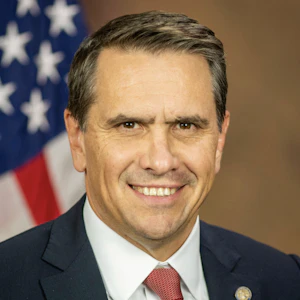
Biography of Deputy Attorney General Todd Blanche
The Honorable Todd Blanche is the 40th Deputy Attorney General of the United States, overseeing the work of the 115,000 dedicated employees who fulfill the Department of Justice’s mission at Main Justice, the FBI, DEA, U.S. Marshals, ATF, and 93 U.S. Attorney’s Offices.
Todd began his career at the Department where he served for over fifteen years in a variety of capacities, including as a contractor, a paralegal in the Criminal Division, and at the United States Attorney’s office for the Southern District of New York where he eventually became an AUSA and later a supervisor.
After leaving the Department, Todd worked as a criminal defense attorney that included representing President Donald Trump in three of the criminal cases brought against him in 2023 and 2024.
Following President Trump’s historic return to the White House, the President appointed Todd to work alongside Attorney General Pam Bondi to make America safe again. At the DOJ, Todd is working tirelessly to implement President Trump’s priorities that include confronting illegal protecting American businesses from fraud.
Todd has been married to his wonderful wife Kristine for nearly thirty years, is a father and grandfather.
Paul Atkins
Paul Atkins
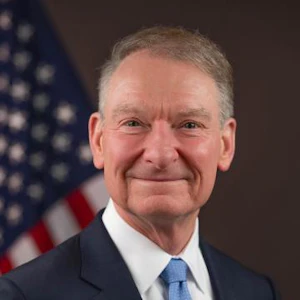
Prior to returning to the SEC, Chairman Atkins was most recently chief executive of Patomak Global Partners, a company he founded in 2009. Chairman Atkins helped lead efforts to develop best practices for the digital asset sector. He served as an independent director and non-executive chairman of the board of BATS Global Markets, Inc. from 2012 to 2015.
Chairman Atkins was appointed by President George W. Bush to serve as a Commissioner of the SEC from 2002 to 2008. During his tenure, he advocated for transparency, consistency, and the use of cost-benefit analysis at the agency. Chairman Atkins also represented the SEC at meetings of the President’s Working Group on Financial Markets and the U.S.-EU Transatlantic Economic Council. From 2009 to 2010, he was appointed a member of the Congressional Oversight Panel for the Troubled Asset Relief Program.
Before serving as an SEC Commissioner, Chairman Atkins was a consultant on securities and investment management industry matters, especially regarding issues of strategy, regulatory compliance, risk management, new product development, and organizational control.
From 1990 to 1994, Chairman Atkins served on the staff of two chairmen of the SEC, Richard C. Breeden and Arthur Levitt, ultimately as chief of staff and counselor, respectively. He received the SEC’s 1992 Law and Policy Award for work regarding corporate governance matters.
Chairman Atkins began his career as a lawyer in New York, focusing on a wide range of corporate transactions for U.S. and foreign clients, including public and private securities offerings and mergers and acquisitions. He was resident for 2½ years in his firm's Paris office and admitted as conseil juridique in France.
A member of the New York and Florida bars, Chairman Atkins received his J.D. from Vanderbilt University School of Law in 1983 and was Senior Student Writing Editor of the Vanderbilt Law Review. He received his A.B., Phi Beta Kappa, from Wofford College in 1980.
Originally from Lillington, North Carolina, Chairman Atkins grew up in Tampa, Florida. He and his wife Sarah have three sons.

Mike Selig
Mike Selig
Chairman Selig brings to the role deep public and private sector experience working with a wide range of stakeholders across agriculture, energy, financial, and digital asset industries, which rely upon and operate in CFTC-regulated markets.
Prior to his leadership at the CFTC, Chairman Selig most recently served as chief counsel of the Securities and Exchange Commission’s Crypto Task Force and senior advisor to SEC Chairman Paul S. Atkins. In this role, Chairman Selig helped to develop a clear regulatory framework for digital asset securities markets, harmonize the SEC and CFTC regulatory regimes, modernize the agency’s rules to reflect new and emerging technologies, and put an end to regulation by enforcement. He also participated in the President’s Working Group on Digital Asset Markets and contributed to its report on “Strengthening American Leadership in Digital Financial Technology.”
Prior to government service, Chairman Selig was a partner at an international law firm, focusing on derivatives and securities regulatory matters. During his years in private practice, he represented a broad range of clients subject to regulation by the CFTC, including commercial end users, futures commission merchants, commodity trading advisors, swap dealers, designated contract markets, derivatives clearing organizations, and digital asset firms. Chairman Selig advised clients on compliance with the Commodity Exchange Act and the CFTC’s rules and regulations thereunder, including in connection with registration applications and obligations, enforcement matters, and complex transactions.
Chairman Selig earned his law degree from The George Washington University Law School and was articles editor of The George Washington Law Review. He received his undergraduate degree from Florida State University.

David Bailey
David Bailey

Eric Trump
Eric Trump
Mr. Trump also serves as Executive Vice President of The Trump Organization, where he oversees the global management and operations of the Trump family’s extensive real estate portfolio. This includes Trump Hotels, Trump Golf, commercial and residential real estate, Trump Estates, and Trump Winery. Known for his hands-on leadership and strong market instincts, he has played a key role in expanding the company’s presence across major U.S. and international markets.
A globally recognized business leader and public figure, Mr. Trump is a prominent advocate for Bitcoin and decentralized finance. He is a co-founder of World Liberty Financial, a decentralized finance (DeFi) platform, and serves on the Board of Advisors of Metaplanet, Japan’s largest corporate holder of Bitcoin.
Beyond his business activities, Mr. Trump has helped raise more than $50 million for St. Jude Children’s Research Hospital in the fight against pediatric cancer, a philanthropic mission he began at age 21.
Mr. Trump earned a degree in Finance and Management from Georgetown University. He currently resides in Florida with his wife, Lara, and their two children. He is also the author of Under Siege, his memoir published in October 2025.

Jack Mallers
Jack Mallers
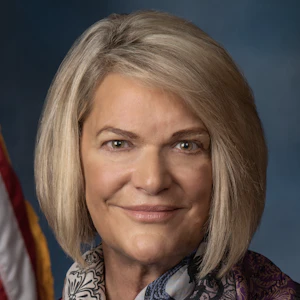
Cynthia Lummis
Cynthia Lummis
As the first-ever Chair of the Senate Banking Subcommittee on Digital Assets, Senator Lummis is the architect of the legislative framework shaping America's digital asset future. She introduced the landmark Lummis-Gillibrand Responsible Financial Innovation Act, the first comprehensive bipartisan crypto regulatory framework in Senate history. She co-authored the GENIUS Act — the first federal stablecoin law ever enacted — and introduced the BITCOIN Act, which would establish a U.S. strategic Bitcoin reserve of up to one million BTC. She is leading the Clarity Act, which will bring long-overdue regulatory certainty to the digital asset industry. She has also championed digital asset tax reform, including a de minimis exemption for small transactions and equal tax treatment for miners and stakers.
Known as Congress' "Crypto Queen," Senator Lummis represents Wyoming — a state she has helped build into one of the most digital asset-friendly regulatory environments in the nation. Before serving in the Senate, she served 14 years in the Wyoming Legislature, eight years as Wyoming State Treasurer, and eight years in the U.S. House. She is a three-time graduate of the University of Wyoming.
Her work represents a crucial bridge between traditional financial systems and the emerging digital economy, ensuring America leads the world in financial innovation while protecting the individual freedoms that define it.

Adam Back
Adam Back
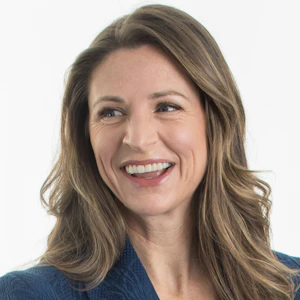
Amy Oldenburg
Amy Oldenburg
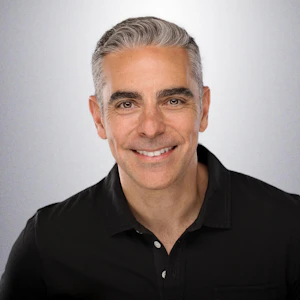
David Marcus
David Marcus

Matt Schultz
Matt Schultz
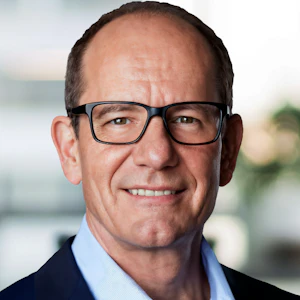
Fred Thiel
Fred Thiel
Throughout his career, Mr. Thiel has consistently driven rapid growth and created substantial shareholder value. Prior to MARA, Mr. Thiel served as the CEO of two other public companies, Local Corporation (NASDAQ: LOCM) and Lantronix, Inc (NASDAQ: LTRX). He has successfully raised billions in equity and debt through private and public offerings, led companies through IPOs, executed high-value exits to strategic and financial acquirers, and implemented effective M&A and roll-up strategies.
Mr. Thiel attended the Stockholm School of Economics and executive classes at Harvard Business School, and is fluent in English, Spanish, Swedish, and French. Mr. Thiel is the Chairman of the Board for Oden Technology, Inc. and is active in Young Presidents’ Organization where he has led initiatives in both the FinTech and Technology Networks.
A recognized voice in the industry, Fred frequently shares his insights on energy and technology with major media outlets like Bloomberg TV, CNBC, and FOX Business, contributing to vital discussions about the future of these sectors.
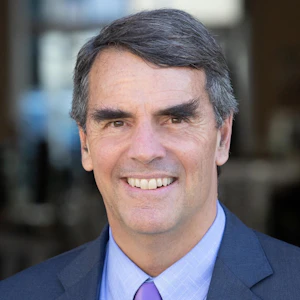
Tim Draper
Tim Draper
He is a supporter and global thought leader for entrepreneurs everywhere, and is a leading spokesperson for Bitcoin and decentralization, having won the Bitcoin US Marshall’s auction in 2014, invested in over 50 crypto companies, and led investments in Coinbase, Ledger, Tezos, and Bancor, among others.

Afroman
Afroman