Making Impacts in Bitcoin Policy at the State Level
Speakers/Moderators

Dom Bei
Dom Bei

Dan Hersey
Dan Hersey
His work focuses on framing Bitcoin as sound money, consumer protection, and public digital infrastructure rather than ideology. With a background in financial services marketing and journalism, Dan brings a ground-level perspective on how Bitcoin legislation actually moves through statehouses; and how smaller states can play an outsized leadership role.
Colin Crossman
Colin Crossman
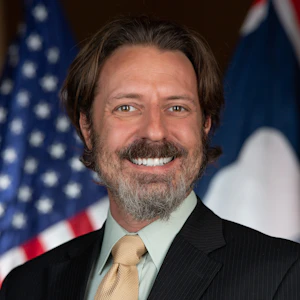
As in-house counsel for Distributed Hash, he directed regulatory compliance for crypto-adjacent infrastructure and developed Python-based tools for operational monitoring. Crossman advocates for Bitcoin sovereignty, co-authoring amicus briefs on state authority and digital assets. He codes in Python for compliance systems and explores patent work in Bitcoin tech.
Dana Criswell
Dana Criswell
Session
Overview
This panel focused on how Bitcoin policy is advancing at the state and local level, with discussion from Dan Hersey of the Rhode Island Bitcoin Policy Initiative, Colin Crossman of the State of Wyoming, Dana Criswell of Young Americans for Liberty, and host Dom Bei of Proof of Workforce.
The conversation covered state Bitcoin legislation, including self custody protections, warrant requirements for wallet access, tax treatment for everyday Bitcoin payments, strategic Bitcoin reserves, and the idea of Bitcoin as legal tender. Panelists also discussed the practical challenge of educating legislators who may not understand Bitcoin or may view policy mainly through an election lens.
A major theme was the tension between government adoption of Bitcoin and limiting government power. Some panelists argued that state Bitcoin exposure could serve as a defense against inflation and federal monetary policy, while others opposed reserves funded by taxpayer money and preferred that citizens keep and invest their own money directly.
The discussion also highlighted pensions, retirement systems, and local advocacy as important areas for Bitcoin policy. The panel encouraged Bitcoin supporters to engage with city councils, state legislators, and community organizations through simple actions such as emails, calls, letters, and local events.
We're here at Bitcoin Conference 2026 in Las Vegas. There are all kinds of booths. They're handing out free Bitcoin. You can pay with Bitcoin. And as we sit here today, no fewer than 40 states have introduced or passed some form of Bitcoin legislation.
That means if you are a state that has not introduced or passed some form of Bitcoin legislation, you are in the minority of the United States as far as legislation is concerned. That's incredible. We've come a long way.
I want to start by asking you all: what piece of legislation at the state level excites you the most right now? What do you see passing next? You all have done a lot of work at the state level, long before 40 states introduced Bitcoin legislation. What is exciting you right now at the state level for Bitcoin adoption and policy?
Of all the legislation we've looked at, there is no one bill that's perfect. North Carolina is dealing with some of the privacy issues that we have, such as whether the government can access your Bitcoin or your wallet without a warrant. I think that's very important. Oklahoma has dealt with guaranteeing your right to self custody, and I think that's a key issue for anybody in the Bitcoin world. We want assurance that the government is not going to try to outlaw me holding my own coins. Those are two that I think have been very important to deal with.
Dana, an elected official talking about privacy? Be careful. We might get you reelected into the House, because it's a big deal for us, and it's rare to hear. So that's exciting. What else, as far as pending legislation?
As you know, Wyoming is pretty far ahead in a lot of these areas compared with most states. Right now I'm playing a little more defense, trying to preserve what Wyoming has for privacy and a couple of other things, dealing with people coming back against data centers and other things like that. Also, if we're going to do another run at a strategic reserve for the state of Wyoming, maybe doing that. But a lot of it for me is defense and helping other states bring themselves up to where we are now.
In Rhode Island, it's a traditionally blue state. We have 113 state representatives and senators, and 95 of them are Democrats. So we are not going to out-Wyoming Wyoming, which has passed 50 bills since the blockchain committee was formed in 2018. But we're still in the education phase. For us, it has a lot to do with the discussions that we're currently having to pass a committee to study blockchain and Bitcoin. Once we can get through the education phase, then we can begin to legislate responsibly.
Colin, a lot of people here don't know, but correct me if I'm wrong: you participated in the first state-level Bitcoin strategic reserve legislation, is that correct?
Yeah, I wrote it.
He wrote it. I would say that's participating.
With some other friends in the space. I gave it to a legislator who wanted to run it. We worked on it together, and then he ran it. It failed. It was the first to be filed, the first to run, and the first to fail. The issue there was getting the office of the treasurer on board. We knew we were going to face opposition from conservatives and others who normally would be friendly to this in the Senate, but we didn't even make it there.
I think there is a categorical difference between a state, municipality, or county owning Bitcoin and the federal government doing it. I'm from Wyoming. My senator was running the strategic reserve for the U.S. government. There is a massive difference. The U.S. government can print its own money, so it can do whatever it wants. A state has to have some way of defending itself against that. I see a state having exposure to Bitcoin as more of a defensive measure against the Federal Reserve than just a strategic reserve in the way people think about it at the federal level.
I want to ask two questions. Number one, why should people in a state care whether their state adopts Bitcoin in a strategic reserve and holds it or not? Number two, how difficult is it to pass something like a strategic reserve? I believe Texas is the only state, or maybe there is one other, that got it done. I don't know if they've executed on buying it yet. But why does it matter, and how difficult is it to have that actually pass through at the state level?
It's difficult. The reason is that I designed it as self custody. The state of Wyoming does own Bitcoin, but it owns it through the same way you would own it if you owned ETFs, MicroStrategy, or things like that. So they have exposure through more traditional mechanisms. But I wanted it to be self custody so that they could have it the way Wyoming did with a gold strategic reserve. We have about ten gold bars somewhere in the capitol. That is the kind of thing we should have.
Getting legislators to understand what that means, why that is different from just owning it as a stock, and getting the treasury on board with managing it and understanding the risks and how that works and why that's different, that's an education problem more than anything else.
Dana, you had two successful terms in the state legislature in Mississippi. What are legislators like? What are elected officials thinking when a bill like that is brought to them? Are they paying attention? Do they dismiss it as a crazy bill that will die out? Walk us through that process when a bill comes through. As I understand it, you're not entirely in favor of a federal strategic reserve for the United States. Expand on that if you can.
If you're talking about legislators, number one, most of them don't understand Bitcoin. The vast majority of them are not smart enough to understand much of what's happening, and they really don't care. They are fed information. They vote for things that are going to get them reelected. All they really care about is how it's going to affect their next election. So trying to get them to understand Bitcoin, and trying to get them to understand the importance of any aspect of it, is a difficult task because it's something that you really have to spend time thinking about.
I don't have a very high opinion of the vast majority of legislators out there, and I just don't think they have the ability to do that.
Why do we as an organization oppose a state Bitcoin reserve or the federal Bitcoin reserve? We look at legislation under two basic principles. Number one, does it expand the freedom of the citizens? Number two, does it limit the power of government? When we look at a Bitcoin reserve, I don't see that it meets either one of those.
If you look at the government side of it, does it limit government? Anything that government is putting money into, they want it to grow. More money to the government means less freedom for the people. If the government has extra money that they can put into a reserve and let it grow, give me my money back. Then I can invest it in Bitcoin, and my family directly benefits from that instead of giving it to the state, letting it grow, and then having the state have more and more money.
I believe Bitcoin is going way up, and I don't want that extra money going to the state. I want it to come to me and the citizens.
That's a very interesting point. We hear all the time at these conferences, often from the same mouths, on one hand, abolish taxes and income taxes, and in the same sentence, let's get a Bitcoin strategic reserve with taxpayer money. I think it's a great point and something to consider.
Where do you all stand on a federal strategic Bitcoin reserve? To that point, does it weaken sovereignty within the states? Does it strengthen sovereignty? I see both angles. I also see the point of strengthening state sovereignty if you can have a force field against inflation and debasement.
I think there's game theory at play at every angle. There are two dozen governments that currently own Bitcoin on their balance sheets. There are hundreds of companies that own Bitcoin on their balance sheets. There are tens of millions of individuals that own Bitcoin on their personal balance sheets.
When you put all that together, from a government perspective, this goes back to 1944 and the Bretton Woods agreement and backing our money by something strong. Fast forward to 1971 and Nixon suspending convertibility into gold. We're now on a 55-year tirade of watching our public debt go from zero to $39 trillion and gold go from $35 an ounce to $5,000.
When that happens and our money isn't backed by anything, maybe there is an opportunity from a government perspective to back our dollar by something strong, whether that's gold from Fort Knox, if it still exists, and Bitcoin that we have in some sort of reserve. Whether that's accrued through civil forfeiture or not is a big question versus just buying it en masse. That's something we can debate on the stage. But if it's civil forfeiture, I see it as no different than if someone were to forfeit cash, stocks, or anything else. Is the government going to hold it in that asset or liquidate it for something else?
Speaking of Dan, I saw on your website for the Rhode Island Bitcoin Policy Initiative that there are a lot of bills in Rhode Island in committee right now. One of them was a tax exemption. We're here today and a lot of people are buying coffee with Bitcoin. They're going to have to report that on their taxes. If you walk to the Cash App booth and get $21 in Bitcoin and then buy coffee for $8, I think you'll have to report the Bitcoin received and then the purchase. It's a nightmare for something so simple. Tell us about that and what else is going on in Rhode Island.
I wrote that bill. A couple of years ago, I was really empowered and excited when I was able to testify on behalf of it, which was, I believe, the first state tax exemption where we were treating digital money like money. In doing so, I realized that there is a massive gap in the discourse and understanding of what this is.
Dana touched on it earlier, how they really just don't understand and they are focused on getting elected or reelected. When writing that, I likened it to the internet. Go back to 1998. I remember going into a Burger King at six years old and seeing AOL discs sitting at the counter. You put that disc in your computer, and now you're online. What did that do? It removed so much friction that existed before getting on the internet.
The equivalent friction for Bitcoin right now is being able to treat it like money and spend it like money. When I have to worry about highest in, first out; last in, first out; or first in, first out from a tax perspective, that's onerous. When we remove that friction at both the state and federal level, we're going to the moon.
I have to say that Wyoming already has a minimum exemption for that because we don't have an income tax.
We've talked about some of the things that we think are the most important things to come. I do believe we've got to treat Bitcoin as money. You cannot be taxed if I buy one Bitcoin. It doesn't matter if the government screws up the U.S. dollar and devalues it, and now I can buy more with my one Bitcoin. What gives them the right to tax me because they can't do their job with the U.S. dollar?
I agree that is a key issue that we've got to get past. We've got to educate legislators and say, you just don't have a right to tax this. It's money.
How do you tell folks at home? I always say the local level doesn't get people as excited. But if your neighborhood, your local organization, or your church is not dealing in Bitcoin, and you're cheering for a strategic reserve at the federal level, but you don't know if your local group will adopt it, you're skipping a lot of levels.
What do you say to folks at home who are interested in educating their local organizations, their cities, or the state level? For the folks who have served in government, how would you recommend people try to get their state legislators to come to a local event of that kind?
I want to be careful here, but one way to get legislators interested in this space is the same way you get anybody interested in the space: make them holders.
It would be really great if you offered a donation to a legislator for their campaign in Bitcoin. Now, you're going to have to check your local regulations and follow the rules. But if they were to get it, maybe they'd be more interested in it. They might ask, why is this person doing that? Maybe we'll see some movement on that at the state level in the future. That would be one way. Make them holders. Make them have to deal with it and understand it and how it works. It's like, I just gave you this money, but it's different.
I've got a bunch of kids. All of my kids are in their mid to late 20s, and all of them are at the point where they're saying, I'm working hard, I'm working two jobs or three jobs, and I still can't afford a house. What's wrong? That gives you the opportunity, because there are a lot of people who know there is a problem.
That's usually where we start, and that's where I think most Bitcoiners started. You start to say, something is wrong here. That's why I'm very leery of government getting involved in Bitcoin at all, because government is what messed up our money. Government is the reason my kids can't work two jobs and afford a home.
To me, that is the intro to: here's an answer. Not that I'm advertising the book, but I gave away about seven of Natalie Brunell's books because it's a great history of where our money has come from and what's wrong. It has spurred a lot of my kids to say, what is this and what are we doing? There are some legislators who care enough to do that, and you can walk them down that road.
Dana, real quick, how did you get orange-pilled? What's the short version? Who introduced Bitcoin to you? How did you find it and get into it?
I was playing around on the computer and I found the Bitcoin faucet. So I put in my address, I put in my wife's address, and those are sitting on a hard drive somewhere. I asked my wife about it about a year ago: hey, where's that hard drive? She said, oh, you mean the one we gave our son to tear apart? I was like, oh, that was worth a million bucks.
Honestly, I left it. I thought it was just internet gamer money until a few years later, when you started hearing about it and you start going down that road again. It was when I was in the legislature that I started down that road, because I kept realizing I don't want politicians involved in my money.
That's a great story. The faucet story is a great way to find Bitcoin.
Quick question, not to open this whole Pandora's box, but I'm very interested in pension systems and retirement at the state level. Do you see Bitcoin fitting into that? The ETF has now been around for over a year, and yet pensions are very slow to enter the Bitcoin space. They also deal with underfunding. Most of them have not caught up to healthy funding levels since the financial crisis.
This is an interesting area, and maybe one where a state owning Bitcoin would be potentially acceptable to some people who might otherwise be against it. Some states have defined contribution plans and some have defined benefit plans. In a defined benefit plan, the state has to manage the money and then pay it out as a defined benefit. Having Bitcoin in that could help alleviate the underfunded aspect of it and buffer the state with respect to how fast those liabilities can grow, because Bitcoin could also be growing along with it.
I think that is something that hopefully people in the state retirement funds around the country are looking at as a way to defray the issues that their defined benefit plans might create. Obviously, in a defined contribution plan, you want Bitcoin in it because you get the growth, but it's less of an actual budgetary concern for the state's long-term health.
One of the things I say is that we don't elect a chief hedge fund manager or a chief investor. But the fact is, when you look at retirement benefits, they are charged with taking this money and investing it. That is a small portion of the government where they do have to make money grow.
I've put a bunch of my 401(k) in a Bitcoin ETF or wherever else I can put it. Certainly, as somebody who takes a retirement from the state of Mississippi, I think they should look at all of that. It obviously is not a crazy, harebrained idea. You look at Fidelity and everybody else involved in it. I think we're going to get to the point where people say they're not doing their fiduciary duty if they don't at least explore it.
For sure. No doubt. I hope the firefighters become one of the first unions to put Bitcoin on the balance sheet. It's only a matter of time if pensions continue to underperform. Individuals who are part of these pension systems are holding Bitcoin, and it's only a matter of time before they say, this is the easiest thing I've ever done. I don't know what graduate school you went to. I hold Bitcoin, it grows over time, and you can't figure out why I need to keep contributing to a system that's underfunded. I think it's a matter of time.
A couple of quick questions. If you could introduce any Bitcoin policy at the state level now, and you were state king for the day and it passes no matter what, what would you be interested in introducing? Dana might just say he'd go on vacation, but what would you be interested in legislation-wise?
I think the sky is Bitcoin as legal tender, but I really think it's removing friction at any possible juncture. If we make this easier to spend, whether it is private key protections or some sort of comprehensive bill that really goes through and ensures there is no question that we are treating this like money, because that's what it is, any law we can pass that further solidifies and codifies that will go so much further for the advancement of this technology.
I guess I would have to go with Bitcoin as legal tender.
I would go along with that too. I would say that is a key issue for all the states to do. I think there are plenty of other things that need to be done, like guaranteeing that you can have self custody. On the negative side, I would ban the government from being involved in anything where they can manipulate the market, because that's what we want them out of.
So we have consensus reached here, folks, for Bitcoin as legal tender.
For the folks at home, or sitting here at the booths, or watching from home, we as Bitcoiners often think, that's great, I love the panel, I'm going to go home, stack Bitcoin, and live my life. The political system is corrupt. It's fiat-based. I'll never make a change. I don't want to get involved.
Where is the most important area to get involved? How can they do it, and why should they fight that feeling to just stay away from the broken system and try to do something regarding Bitcoin in their home city or home state?
My story of how I got into politics was that I got 11 people to email my city council, and they changed the ordinance. It wasn't on Bitcoin, but they completely changed. I asked my alderman why, and he said, that was 11 more emails than I get on any other topic.
The fact is, one email matters. Everybody here who deals with politics knows that if you take the time to send one email, a politician looks at that and knows there are 20 other people who believe the same way. Whether it's your city alderman or your state representative, if you live in their district and can vote against them, they will pay attention to what you say. Your voice is actually amplified because you've got a whole row of people behind you who just haven't taken the time to make that contact.
You may not care about politics, but politics cares about you. If people want to stick their heads in the sand, you're going to be governed by what everyone else is saying. The best thing to do is either be involved or support the people who are involved and agree with you.
This is not a Bitcoin-specific issue. Let's say you have a city council that is trying to force-annex a farm. You get a bunch of people coming out, and they have to back off. This is wide-ranging. If you don't get involved in politics, politics is going to overrun everything you like.
You don't have to go and testify in front of a Senate Finance Committee or an emerging tech and AI committee. You can write letters. I understand that there are two camps here. There are people who say this is pseudonymous money, I can stay anonymous, I can stay pseudonymous, I don't have to worry about it. But you can also send letters, call, reach out, and have support.
You heard it here. I think we have good consensus. We have Bitcoin as legal tender front and center. We have some consensus on pensions being a good spot where, even if you're against a strategic Bitcoin reserve, that's a great place for a state to at least start exploring Bitcoin.
To the folks at home, please get involved in your local community and your state, and offer support for Bitcoin. At the end of the day, Bitcoin may not need the state, but that's where you live, and what happens at your local and state level will impact you.
Please give a huge round of applause for our panel today. I think they did an incredible job, and they continue to work on our behalf in Bitcoin adoption. Make some noise, y'all.
Similar
Sessions
Making Impacts in Bitcoin Policy at the State Level
Dom Bei
Dom Bei
Dan Hersey
Dan Hersey
His work focuses on framing Bitcoin as sound money, consumer protection, and public digital infrastructure rather than ideology. With a background in financial services marketing and journalism, Dan brings a ground-level perspective on how Bitcoin legislation actually moves through statehouses; and how smaller states can play an outsized leadership role.
Colin Crossman
Colin Crossman
As in-house counsel for Distributed Hash, he directed regulatory compliance for crypto-adjacent infrastructure and developed Python-based tools for operational monitoring. Crossman advocates for Bitcoin sovereignty, co-authoring amicus briefs on state authority and digital assets. He codes in Python for compliance systems and explores patent work in Bitcoin tech.
Dana Criswell
Dana Criswell
Making Impacts in Bitcoin Policy at the State Level
Speakers/Moderators
Dom Bei
Dom Bei
Dan Hersey
Dan Hersey
His work focuses on framing Bitcoin as sound money, consumer protection, and public digital infrastructure rather than ideology. With a background in financial services marketing and journalism, Dan brings a ground-level perspective on how Bitcoin legislation actually moves through statehouses; and how smaller states can play an outsized leadership role.
Colin Crossman
Colin Crossman
As in-house counsel for Distributed Hash, he directed regulatory compliance for crypto-adjacent infrastructure and developed Python-based tools for operational monitoring. Crossman advocates for Bitcoin sovereignty, co-authoring amicus briefs on state authority and digital assets. He codes in Python for compliance systems and explores patent work in Bitcoin tech.
Dana Criswell
Dana Criswell
Other
Speakers

Michael Saylor
Michael Saylor
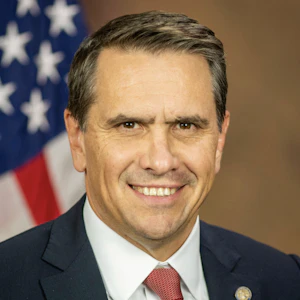
Todd Blanche
Todd Blanche
Biography of Deputy Attorney General Todd Blanche
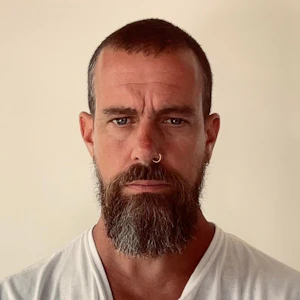
The Honorable Todd Blanche is the 40th Deputy Attorney General of the United States, overseeing the work of the 115,000 dedicated employees who fulfill the Department of Justice’s mission at Main Justice, the FBI, DEA, U.S. Marshals, ATF, and 93 U.S. Attorney’s Offices.
Todd began his career at the Department where he served for over fifteen years in a variety of capacities, including as a contractor, a paralegal in the Criminal Division, and at the United States Attorney’s office for the Southern District of New York where he eventually became an AUSA and later a supervisor.
After leaving the Department, Todd worked as a criminal defense attorney that included representing President Donald Trump in three of the criminal cases brought against him in 2023 and 2024.
Following President Trump’s historic return to the White House, the President appointed Todd to work alongside Attorney General Pam Bondi to make America safe again. At the DOJ, Todd is working tirelessly to implement President Trump’s priorities that include confronting illegal protecting American businesses from fraud.
Todd has been married to his wonderful wife Kristine for nearly thirty years, is a father and grandfather.
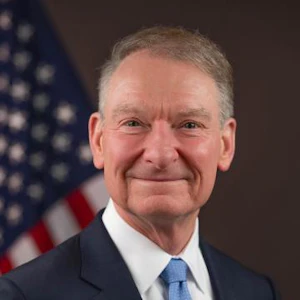
Paul Atkins
Paul Atkins
Prior to returning to the SEC, Chairman Atkins was most recently chief executive of Patomak Global Partners, a company he founded in 2009. Chairman Atkins helped lead efforts to develop best practices for the digital asset sector. He served as an independent director and non-executive chairman of the board of BATS Global Markets, Inc. from 2012 to 2015.
Chairman Atkins was appointed by President George W. Bush to serve as a Commissioner of the SEC from 2002 to 2008. During his tenure, he advocated for transparency, consistency, and the use of cost-benefit analysis at the agency. Chairman Atkins also represented the SEC at meetings of the President’s Working Group on Financial Markets and the U.S.-EU Transatlantic Economic Council. From 2009 to 2010, he was appointed a member of the Congressional Oversight Panel for the Troubled Asset Relief Program.
Before serving as an SEC Commissioner, Chairman Atkins was a consultant on securities and investment management industry matters, especially regarding issues of strategy, regulatory compliance, risk management, new product development, and organizational control.
From 1990 to 1994, Chairman Atkins served on the staff of two chairmen of the SEC, Richard C. Breeden and Arthur Levitt, ultimately as chief of staff and counselor, respectively. He received the SEC’s 1992 Law and Policy Award for work regarding corporate governance matters.
Chairman Atkins began his career as a lawyer in New York, focusing on a wide range of corporate transactions for U.S. and foreign clients, including public and private securities offerings and mergers and acquisitions. He was resident for 2½ years in his firm's Paris office and admitted as conseil juridique in France.
A member of the New York and Florida bars, Chairman Atkins received his J.D. from Vanderbilt University School of Law in 1983 and was Senior Student Writing Editor of the Vanderbilt Law Review. He received his A.B., Phi Beta Kappa, from Wofford College in 1980.
Originally from Lillington, North Carolina, Chairman Atkins grew up in Tampa, Florida. He and his wife Sarah have three sons.

Mike Selig
Mike Selig
Chairman Selig brings to the role deep public and private sector experience working with a wide range of stakeholders across agriculture, energy, financial, and digital asset industries, which rely upon and operate in CFTC-regulated markets.
Prior to his leadership at the CFTC, Chairman Selig most recently served as chief counsel of the Securities and Exchange Commission’s Crypto Task Force and senior advisor to SEC Chairman Paul S. Atkins. In this role, Chairman Selig helped to develop a clear regulatory framework for digital asset securities markets, harmonize the SEC and CFTC regulatory regimes, modernize the agency’s rules to reflect new and emerging technologies, and put an end to regulation by enforcement. He also participated in the President’s Working Group on Digital Asset Markets and contributed to its report on “Strengthening American Leadership in Digital Financial Technology.”
Prior to government service, Chairman Selig was a partner at an international law firm, focusing on derivatives and securities regulatory matters. During his years in private practice, he represented a broad range of clients subject to regulation by the CFTC, including commercial end users, futures commission merchants, commodity trading advisors, swap dealers, designated contract markets, derivatives clearing organizations, and digital asset firms. Chairman Selig advised clients on compliance with the Commodity Exchange Act and the CFTC’s rules and regulations thereunder, including in connection with registration applications and obligations, enforcement matters, and complex transactions.
Chairman Selig earned his law degree from The George Washington University Law School and was articles editor of The George Washington Law Review. He received his undergraduate degree from Florida State University.

David Bailey
David Bailey

Eric Trump
Eric Trump
Mr. Trump also serves as Executive Vice President of The Trump Organization, where he oversees the global management and operations of the Trump family’s extensive real estate portfolio. This includes Trump Hotels, Trump Golf, commercial and residential real estate, Trump Estates, and Trump Winery. Known for his hands-on leadership and strong market instincts, he has played a key role in expanding the company’s presence across major U.S. and international markets.
A globally recognized business leader and public figure, Mr. Trump is a prominent advocate for Bitcoin and decentralized finance. He is a co-founder of World Liberty Financial, a decentralized finance (DeFi) platform, and serves on the Board of Advisors of Metaplanet, Japan’s largest corporate holder of Bitcoin.
Beyond his business activities, Mr. Trump has helped raise more than $50 million for St. Jude Children’s Research Hospital in the fight against pediatric cancer, a philanthropic mission he began at age 21.
Mr. Trump earned a degree in Finance and Management from Georgetown University. He currently resides in Florida with his wife, Lara, and their two children. He is also the author of Under Siege, his memoir published in October 2025.

Jack Mallers
Jack Mallers

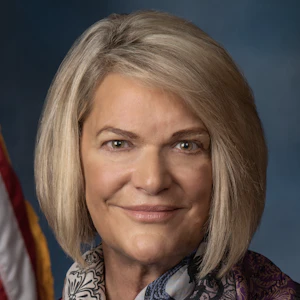
Cynthia Lummis
Cynthia Lummis
As the first-ever Chair of the Senate Banking Subcommittee on Digital Assets, Senator Lummis is the architect of the legislative framework shaping America's digital asset future. She introduced the landmark Lummis-Gillibrand Responsible Financial Innovation Act, the first comprehensive bipartisan crypto regulatory framework in Senate history. She co-authored the GENIUS Act — the first federal stablecoin law ever enacted — and introduced the BITCOIN Act, which would establish a U.S. strategic Bitcoin reserve of up to one million BTC. She is leading the Clarity Act, which will bring long-overdue regulatory certainty to the digital asset industry. She has also championed digital asset tax reform, including a de minimis exemption for small transactions and equal tax treatment for miners and stakers.
Known as Congress' "Crypto Queen," Senator Lummis represents Wyoming — a state she has helped build into one of the most digital asset-friendly regulatory environments in the nation. Before serving in the Senate, she served 14 years in the Wyoming Legislature, eight years as Wyoming State Treasurer, and eight years in the U.S. House. She is a three-time graduate of the University of Wyoming.
Her work represents a crucial bridge between traditional financial systems and the emerging digital economy, ensuring America leads the world in financial innovation while protecting the individual freedoms that define it.

Adam Back
Adam Back

Amy Oldenburg
Amy Oldenburg
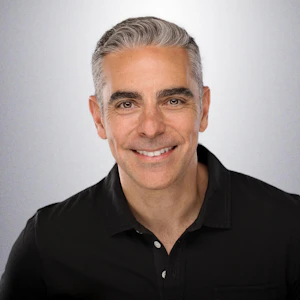
David Marcus
David Marcus

Matt Schultz
Matt Schultz
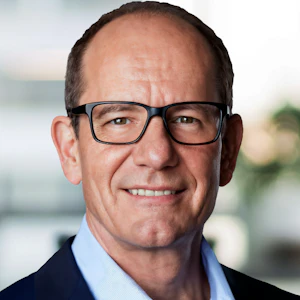
Fred Thiel
Fred Thiel
Throughout his career, Mr. Thiel has consistently driven rapid growth and created substantial shareholder value. Prior to MARA, Mr. Thiel served as the CEO of two other public companies, Local Corporation (NASDAQ: LOCM) and Lantronix, Inc (NASDAQ: LTRX). He has successfully raised billions in equity and debt through private and public offerings, led companies through IPOs, executed high-value exits to strategic and financial acquirers, and implemented effective M&A and roll-up strategies.
Mr. Thiel attended the Stockholm School of Economics and executive classes at Harvard Business School, and is fluent in English, Spanish, Swedish, and French. Mr. Thiel is the Chairman of the Board for Oden Technology, Inc. and is active in Young Presidents’ Organization where he has led initiatives in both the FinTech and Technology Networks.
A recognized voice in the industry, Fred frequently shares his insights on energy and technology with major media outlets like Bloomberg TV, CNBC, and FOX Business, contributing to vital discussions about the future of these sectors.
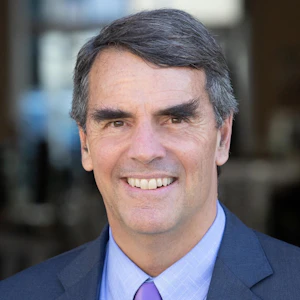
Tim Draper
Tim Draper
He is a supporter and global thought leader for entrepreneurs everywhere, and is a leading spokesperson for Bitcoin and decentralization, having won the Bitcoin US Marshall’s auction in 2014, invested in over 50 crypto companies, and led investments in Coinbase, Ledger, Tezos, and Bancor, among others.

Afroman
Afroman