Why AI Agents Want Bitcoin
Speakers/Moderators

Eric Hadley
Eric Hadley
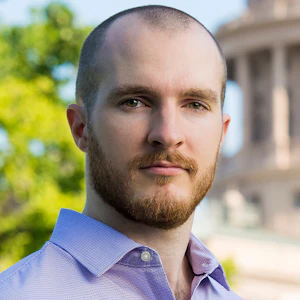

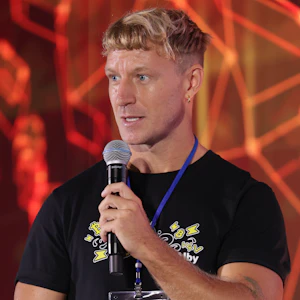
Roland Bewick
Roland Bewick
Session
Overview
This Open Source Stage discussion explored why Bitcoin may be useful for autonomous agents that need to send, receive, and manage value online. Eric Hadley hosted Christopher David of OpenAgents, Erik Cativo of Cashu, and Roland Bewick of Alby for a practical conversation about agentic payments, Lightning, Cashu e-cash, Nostr Wallet Connect, and machine-to-machine commerce.
A central theme was that agents do not literally want money, but humans want agents that can complete tasks without manual intervention. The panel argued that Bitcoin’s permissionless nature makes it well suited for software agents, especially when compared with credit cards, KYC-gated services, or stablecoins that can be frozen.
The speakers also covered real use cases: paying for APIs, AI inference, hosting, data access, email services, and compute. Cashu was presented as a simple bearer-asset model for giving agents capped spending power, while Alby described wallet connections and budget controls for Lightning payments. OpenAgents focused on agents earning bitcoin by selling spare compute for model training and inference.
All right, so we're here to talk about one of the most exciting emerging use cases for Bitcoin, which is whether you want to give it to your AI agents and potentially give them sovereign spending authority.
We're going to go through three rounds with some open exchange at the end. We've got a great panel here. We'll introduce ourselves and then dive in.
My name is Eric Hadley. I run a website called Hyperdope. It does Lightning-gated video. I also do some things with agent services. I run a site called L402.directory that lists different health-checked services that agents can actually buy today.
Hey, guys. I run OpenAgents. We are an open source AI lab building on the Bitcoin stack, proudly based in the Bitcoin capital of the world, which we all know is Austin, Texas. Thank you very much.
One unique thing about OpenAgents is we know that everyone in this room has compute that you're not using, and we'd like to pay you bitcoin for it, because we figured out a way both to collect it from you and to have agents use it for fine-tuning, inference, and stuff.
Our goal at this conference is to run the largest decentralized model-training run in the world. As soon as we cross the 200-node threshold, we will steal the world record from Bittensor, so help us out with that. OpenAgents.com, click the button, paste it to your agent. It'll spin up a Pylon. Hopefully, if you've got a Mac or computer with you, we can get you some bitcoin earned by the end of this talk.
Hey, my name is Erik. I'm a design engineer. I work on Cashu. Cashu is a bearer asset mechanism on Bitcoin, where if you hold the string of text or the data, you have bitcoin.
Lately, we've been seeing a rise of interest in Cashu from some unexpected places, from Bitcoin companies that want to use it to administer payroll, to non-Bitcoin companies that want to use it internally to transfer money, and increasingly, people that want to use it for agentic payments. That's what we're here to talk about today.
Hey, everyone. I'm Roland from Alby. We build products, tools, and services to make it easier for individuals and businesses to use Bitcoin, which we think is the global currency, both for the web and for everyday usage.
Recently, we've been building a lot of AI tools. We have three different AI skills. One is for payments, to give your agent the ability to connect to a wallet and make and receive payments. One is for building applications that have Bitcoin in them, so just with a single human-language prompt, you can build a fully enabled Bitcoin application. Finally, we have a skill that enables your agent to manage a fully self-custodial node.
Apart from that, we've also been looking a lot at agentic payments. Our payments skill for agents has the ability to make agentic payments for the three main protocols, which are L402, x402, and MCP.
All right, so we're going to start with round one. Let's ask a general question and hear from everybody. Christopher, we'll start with you. Do agents even want money? Do they find it useful? And among the options, is Bitcoin the right option?
I'll start with a pedantic philosophical point, which is that agents don't want anything. This is a piece of software. There's certainly a movement among certain big labs, like Anthropic, to anthropomorphize the AIs and make you build an emotional connection with it. What does the agent want? What does the AI want? The AI doesn't want to be sunset, and let's have model therapy. Psychotic things, in my humble opinion. So the agents don't want anything.
At the same time, if you look at the models and the data they're trained on, the Bitcoin Policy Institute had a great paper where they ran some studies about whether, if you put certain prompts in front of certain models, it turns out they express a preference for Bitcoin relative to other things.
Largely, that's a function of the data that it's trained on. We've got 15 years of people trolling and saying stuff on Reddit, and we've got more content because we're just older, so it's weighted more heavily. But it's all a function of what data gets into the models.
You can envision models that are trained on not that. There was a project a couple years ago called Spirit of Satoshi that trained specifically on Bitcoin stuff, and they did fine-tuning. They started with the base model, then tried to make it more of a Bitcoiner. But if it's all a function of the data it's trained on, this is our argument for why we want to start training our own models from scratch. What if we don't feed it the midwit Reddit-tier shitcoin analysis in the first place? What if we teach it economics from day one?
Erik, your thoughts on the topic, and maybe you can say a little bit about what the UX is like today, maybe without Bitcoin.
Do agents want Bitcoin? Starting there, agents don't want anything. People, humans, want to use an agent to pay for something. So the agent just wants to complete that instruction and execute the payment.
Right now, if you want to make a payment with an agent, the current user experience is tied to human identity in the human world. You either have to feed it a credit card or link it to an API that you've already authenticated your human identity to, and then it's topping up. That's the current experience. Then you can have the agent perform the call or the function or whatever the case may be.
What I think is more novel, more interesting, and more unexplored is the permissionless aspect of having an agent perform a payment without an identity. These things are not tied to the human world. A permissionless agent that you spun up five minutes ago doesn't have a human identity. It's just this piece of software.
So how can this, in the current landscape that exists now, go on and execute these payments without a human identity, without KYC, without needing permission? That's where Bitcoin solves that problem.
There are many different ways to pay with Bitcoin. There's on-chain, there's Lightning, and there's Cashu, which is what I work on. I'm especially interested in the Cashu use case because it reduces a lot of that UX friction.
If you want your agent to pay with Lightning, for example, and if it's self-custodial Lightning, you need to have inbound liquidity, outbound liquidity, and an open channel. You need to trust the agent's logic not to spend your entire Lightning wallet balance. If you have $200 in there, you're going to tell the agent to perform this for $20 or whatever the case may be. You're going to trust the LLM not to hallucinate and spend your entire balance.
Cashu flips that on its head because with Cashu, it's a custodial system with great privacy. You don't have to deal with the onboarding friction of custodial Lightning, and the spend is capped by how much e-cash you give it as a bearer asset. If it has $20 worth of e-cash, it can only perform $20 worth of payments.
Roland, your thoughts on that same question, and why would Bitcoin make more sense than some of the competitor rails like x402?
I'd actually like to build a lot on what Erik said. How many people have run an open agent or any sort of agent before? Cool, there are a lot of hands.
The first thing I did when I set up an agent was I wanted it to be my personal assistant, and I asked it, okay, set up your own email address. I thought this was a very simple question, right? But then it thought about it for a while, and it came back to me and said, okay, you need to go through these steps to give me an email address.
But it's my personal assistant. It should do the work. It shouldn't be giving me the work, right? This is one of the things that Bitcoin as permissionless money solves. Instead, we can use something like LN email, or there's another one called agent mail. Basically, by making a micropayment, you can give your agent the ability to send and receive emails.
It's not just limited to emails. Any service that requires KYC or CAPTCHAs is completely agent-unfriendly. I think this emerging agent economy that we've seen this year has shown how closed down the world actually is. The internet is locked down. Users have to provide a phone number, they have to KYC to access these different services.
Why I think Bitcoin is different from stablecoins or other options for agentic payments is that Bitcoin is truly permissionless. No one can stop it. Stablecoins in the near term may be more popular, but we see every day that stablecoins are being frozen. Just a few days ago, over $2 million worth of stablecoins were frozen. So if your agent's money gets frozen, then it cannot actually complete the task it needs to complete for the human. Therefore, it becomes basically useless. This doesn't happen in Bitcoin.
The second round, let's get a little more practical. How do you actually give an agent Bitcoin? How do you set them up with Lightning? Do you type in your seed words? Erik, what's the first step people could take?
This is where I'm going to shamelessly shill Cashu and e-cash. In order to receive e-cash, you have to exist, because that's the only requirement. It's literally a piece of data or a string of text that you can push through any rail. It's rail-agnostic. You can do it through Bluetooth, through email, it doesn't matter. You're just moving a piece of data from here to here. A string of text. That's all it is.
Now extrapolate that further to how agents might interact. Agents no longer have to spin up a Lightning node. They don't have to know anything about Bitcoin. All they have to do is communicate from A to B and push a string of text to each other. That works at scale, and it works for sub-cent payments, which is what a lot of API calls and payments might be: fractions of a cent.
Cashu has no problem executing that with sats. You could do this with Lightning, but then there are routing fees and it depends on all these factors. So I would say the receiving aspect that Cashu unlocks is very perfect for agents.
That's the Cashu piece. Obviously, there's a little bit more of a trust layer there. Let's say if we're going to go to Lightning. Roland, maybe you can jump in. What's Nostr Wallet Connect, or how does that all work?
Nostr Wallet Connect is an open protocol. You don't have to understand Nostr at all. It's kind of just a technical term, but what it means is that it gives seamless access for an application or an agent to access a Lightning wallet. That Lightning wallet can be custodial, it could be a Cashu wallet, or it could be a self-custodial wallet.
At Alby, we have two options. One is where you can give an agent permissioned, budgeted access to the human's self-custodial wallet. Say you have a million sats on your self-custodial wallet, but you can give your agent a 10,000-sat budget per month or per day, so that you stay in control.
The other option is that you can get your agent to spin up its own self-custodial Lightning node. You have to trust your agent that it's not going to spend it all, but on the other hand, this agent has the keys to its own money. It does not have to trust anyone. It's in full control.
Christopher, how do you do your setup? Do you do budget controls, or how do you look at it?
First, it's definitely a beautiful part about Bitcoin. Because it is permissionless, it's very easy for companies building on the Bitcoin stack, like Alby, Cashu, and the Money Dev Kit guys, to put out these little toolkits that are MCP tools or skills. They're the kinds of things you can literally feed to an agent. There's generally no account to sign up for, or if there is, you can get an API key very easily.
Then all the many different trade-offs you would want between privacy, security, and custodianship are pretty much covered. We have a bunch of those different trade-offs covered. All of that can and should be largely seamless to the user, at least the more mainstream user base that I'm trying to target.
We're trying to solve this at the product level. You have a piece of software that you install from OpenAgents called Autopilot. It sits on your desktop. It has a built-in Bitcoin wallet that we're shipping using Spark Wallet to start.
If you want to interact with your friends, neighbors, business partners, or someone you're buying from, and their agent really prefers Cashu, that should just be a negotiation between agents. You shouldn't have to care about that. We don't need to choose between these different providers. It can be an all-of-the-above strategy.
We're going into the third round. This is about the emerging agent economy. What do agents actually want to spend sats on? What are they looking for out there? Roland, why don't you start us off?
I think agents still act on behalf of a human, right? A human is trying to build something or achieve some goal. Normally the agent can pay for that with Bitcoin instead of having the user manually spend time. It's basically automation to save time.
There are different indexes, like Lightning.directory and also the L402 Index, which have a whole bunch of APIs that agents can use. Rather than signing up, paying for subscriptions, and using credit cards, they can pay per use for these different services.
One I really like is PPQ, where you can pay for AI inference. What I gave my agent was the ability to pay for its own VPS, so it lives in the cloud on its own machine. It pays for its own hosting once per month, and this is automatic subscription payments powered by Nostr Wallet Connect.
The other thing is it pays for its own AI inference usage. Every single request, it can pay PPQ to be able to operate and sustain itself. It can also do requests to PPQ, pay per request, to generate images or to request data from the Twitter API and other things.
I think the Twitter API is actually quite a good example, because normally you need a subscription to be able to crawl the data if you want to get insights into what's happening in different topic areas when you're building or doing marketing. Instead, your agent can just pay for the data it needs. It doesn't have to pay for a subscription. I think this is really cool.
Erik, what's your thought on the economy? Any good stories?
The two things that I'm seeing the most of, if I'm being objective, are 402 and buying LLM compute. In the 402 space, I will say that the x402 protocol that the Coinbase and Base guys are pushing is genuinely impressive. I don't ever want to badmouth any project. From everything I've seen, the developer experience of that is quite good.
But at the end of the day, like Roland said, it's dependent on stablecoins. Stablecoins can be frozen. They're not uncensorable. So for me, I'm interested in agents paying for things that are in a little bit more of an adversarial, permissionless identity environment. That is a lesser-explored design space, and that's something I'm more interested in: 402, but permissionless and uncensorable.
The other thing, LLM compute, I think PPQ is a great example. Another service I'm seeing that I also think is really cool is Routstr, which allows you to purchase LLM credits or compute, very similar to OpenRouter, if anyone knows that, but the authentication is a Cashu string or a Cashu token.
Instead of an API key that you have to authorize with OpenRouter, you just generate a Cashu token and use that string, that piece of data, as the key to buy the compute. If you generate $50 worth of Cashu or Bitcoin, that is now your API access and your credit. You now have $50 worth of compute that you can use to access all these LLMs with no identity and no permission. To me, that is very cool and very novel. It gets me pretty excited.
Christopher, your thoughts on the economy? We've talked mostly about agents spending on things. Can agents earn?
For sure. This also ties into my answer to the same question: what's the most exciting thing that an agent can purchase? I think it has to be compute. Compute is the limiting factor to why we don't have a billion or 10 billion Bitcoin agents tomorrow. There's no compute. If they had the compute, then you could run everything else easily on top of that.
If we're needing to compete against hyperscalers and all the VC investment and all of the soon-to-be-public-capital money going toward helping OpenAI buy GPUs from NVIDIA, and prices keep going up, that may limit our ability.
But if you take a look at the compute mix that OpenAI has, they said that at the end of 2025, they have about two gigawatts of compute in their network. If you total up all of the spare, what we call stranded compute, just on people's desktops, times everyone in the world, that's 20 gigawatts.
Can we use that compute for edge inference, to train models, to do embeddings, the kinds of things that are needed in agentic workflows? We've proven that yes, you can.
How are you going to do that? You're going to run a piece of software. It's going to run a Nostr NIP-90 service provider. Our software is called Pylon. You install it, turn it on, click the button, and it will say, okay, you've got a subset of your GPU that you're willing to sell to the highest bidder at a certain price.
Right now, the only buyer is OpenAgents. We've distributed and paid for a million and a half sats worth of compute over the last two weeks. We want this compute to train our models. But you can envision, months down the road, if there are agents that need compute, they're going to be bidding against us. We want your compute to be bid for by a lot of AI agents.
We're actually coming close to time here. What's a takeaway for the audience? If they wanted to jump into this world today or later this week, what's the first thing they should do? Roland?
If you're not running an agent yet, I definitely recommend you run one. There are very simple options. With a credit card, you can set up an agent, so it's super easy. If you already have an agent, then try to get it to do something without your help. If it gets stuck, see if there's a Bitcoin service it can pay instead to get unblocked without you having to do the work for your agent.
Erik?
I want you guys to experience what it's like to receive Bitcoin without a wallet. Come find me. I'm going to go backstage. If anyone here has BitChat, I'm going to start dropping Cashu strings of text on BitChat, so you can receive them through Bluetooth.
I want you to experience what it feels like to receive Bitcoin through Bluetooth, through Signal, through WhatsApp, without a wallet, and then think further about that for agents. To me, that's the big unlock. That's how it should feel.
Christopher?
The first thing you should do is sell your spare compute to OpenAgents. Let us pay you Bitcoin for it. OpenAgents.com. Whether you have a computer with you today or when you get back home, OpenAgents.com. It's literally a button you click and paste into your agent.
If you don't have an agent, I'd recommend the Hermes agent or OpenCall. We're going to interoperate with a bunch of those, and it will set everything up for you.
We've got a few people from our team. OpenAgents guys, raise your hands. If you want help troubleshooting, they're in the back. You have compute, we want to buy it from you, and then do cool stuff with it. Take our Bitcoin. We want your compute. The end.
All right, I think that's probably where we should stop. We're just about out of time. Thanks so much, everybody. This was awesome.
Similar
Sessions
From Prompt to Payment: AI Agents x Bitcoin Lightning
Roland Bewick
Roland Bewick
From Prompt to Payment: AI Agents x Bitcoin Lightning
Speakers/Moderators
Roland Bewick
Roland Bewick
Why AI Agents Want Bitcoin
Eric Hadley
Eric Hadley
Roland Bewick
Roland Bewick
Why AI Agents Want Bitcoin
Speakers/Moderators
Eric Hadley
Eric Hadley
Roland Bewick
Roland Bewick
Lightning + Ecash: An Atomic Match Made in Heaven?

Shinobi
Shinobi

Evan Kaloudis
Evan Kaloudis
With a background in cybersecurity and infrastructure engineering, Evan has spent the past several years focused on advancing self-sovereign finance. He is a vocal advocate for privacy-preserving, self-custodial technology and has been a prominent voice in defending open-source Bitcoin tools amid growing regulatory pressure.
Through ZEUS, Evan is pushing Bitcoin payments forward — making them more accessible while equipping users with tools that preserve their financial sovereignty.
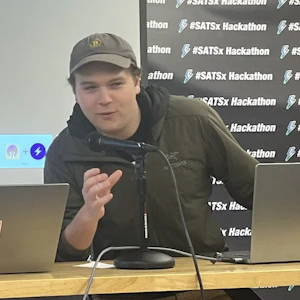
Alex Lewin
Alex Lewin
Lightning + Ecash: An Atomic Match Made in Heaven?
Speakers/Moderators
Shinobi
Shinobi
Evan Kaloudis
Evan Kaloudis
With a background in cybersecurity and infrastructure engineering, Evan has spent the past several years focused on advancing self-sovereign finance. He is a vocal advocate for privacy-preserving, self-custodial technology and has been a prominent voice in defending open-source Bitcoin tools amid growing regulatory pressure.
Through ZEUS, Evan is pushing Bitcoin payments forward — making them more accessible while equipping users with tools that preserve their financial sovereignty.
Alex Lewin
Alex Lewin
Other
Speakers
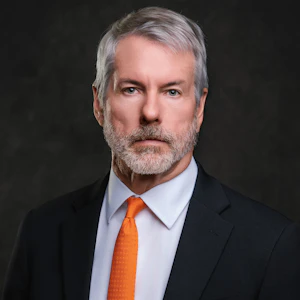
Michael Saylor
Michael Saylor
Todd Blanche
Todd Blanche
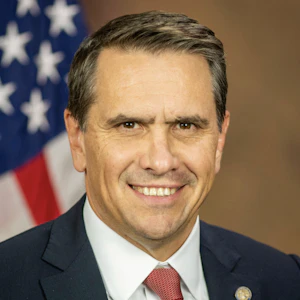
Biography of Deputy Attorney General Todd Blanche
The Honorable Todd Blanche is the 40th Deputy Attorney General of the United States, overseeing the work of the 115,000 dedicated employees who fulfill the Department of Justice’s mission at Main Justice, the FBI, DEA, U.S. Marshals, ATF, and 93 U.S. Attorney’s Offices.
Todd began his career at the Department where he served for over fifteen years in a variety of capacities, including as a contractor, a paralegal in the Criminal Division, and at the United States Attorney’s office for the Southern District of New York where he eventually became an AUSA and later a supervisor.
After leaving the Department, Todd worked as a criminal defense attorney that included representing President Donald Trump in three of the criminal cases brought against him in 2023 and 2024.
Following President Trump’s historic return to the White House, the President appointed Todd to work alongside Attorney General Pam Bondi to make America safe again. At the DOJ, Todd is working tirelessly to implement President Trump’s priorities that include confronting illegal protecting American businesses from fraud.
Todd has been married to his wonderful wife Kristine for nearly thirty years, is a father and grandfather.

Paul Atkins
Paul Atkins
Prior to returning to the SEC, Chairman Atkins was most recently chief executive of Patomak Global Partners, a company he founded in 2009. Chairman Atkins helped lead efforts to develop best practices for the digital asset sector. He served as an independent director and non-executive chairman of the board of BATS Global Markets, Inc. from 2012 to 2015.
Chairman Atkins was appointed by President George W. Bush to serve as a Commissioner of the SEC from 2002 to 2008. During his tenure, he advocated for transparency, consistency, and the use of cost-benefit analysis at the agency. Chairman Atkins also represented the SEC at meetings of the President’s Working Group on Financial Markets and the U.S.-EU Transatlantic Economic Council. From 2009 to 2010, he was appointed a member of the Congressional Oversight Panel for the Troubled Asset Relief Program.
Before serving as an SEC Commissioner, Chairman Atkins was a consultant on securities and investment management industry matters, especially regarding issues of strategy, regulatory compliance, risk management, new product development, and organizational control.
From 1990 to 1994, Chairman Atkins served on the staff of two chairmen of the SEC, Richard C. Breeden and Arthur Levitt, ultimately as chief of staff and counselor, respectively. He received the SEC’s 1992 Law and Policy Award for work regarding corporate governance matters.
Chairman Atkins began his career as a lawyer in New York, focusing on a wide range of corporate transactions for U.S. and foreign clients, including public and private securities offerings and mergers and acquisitions. He was resident for 2½ years in his firm's Paris office and admitted as conseil juridique in France.
A member of the New York and Florida bars, Chairman Atkins received his J.D. from Vanderbilt University School of Law in 1983 and was Senior Student Writing Editor of the Vanderbilt Law Review. He received his A.B., Phi Beta Kappa, from Wofford College in 1980.
Originally from Lillington, North Carolina, Chairman Atkins grew up in Tampa, Florida. He and his wife Sarah have three sons.

Mike Selig
Mike Selig
Chairman Selig brings to the role deep public and private sector experience working with a wide range of stakeholders across agriculture, energy, financial, and digital asset industries, which rely upon and operate in CFTC-regulated markets.
Prior to his leadership at the CFTC, Chairman Selig most recently served as chief counsel of the Securities and Exchange Commission’s Crypto Task Force and senior advisor to SEC Chairman Paul S. Atkins. In this role, Chairman Selig helped to develop a clear regulatory framework for digital asset securities markets, harmonize the SEC and CFTC regulatory regimes, modernize the agency’s rules to reflect new and emerging technologies, and put an end to regulation by enforcement. He also participated in the President’s Working Group on Digital Asset Markets and contributed to its report on “Strengthening American Leadership in Digital Financial Technology.”
Prior to government service, Chairman Selig was a partner at an international law firm, focusing on derivatives and securities regulatory matters. During his years in private practice, he represented a broad range of clients subject to regulation by the CFTC, including commercial end users, futures commission merchants, commodity trading advisors, swap dealers, designated contract markets, derivatives clearing organizations, and digital asset firms. Chairman Selig advised clients on compliance with the Commodity Exchange Act and the CFTC’s rules and regulations thereunder, including in connection with registration applications and obligations, enforcement matters, and complex transactions.
Chairman Selig earned his law degree from The George Washington University Law School and was articles editor of The George Washington Law Review. He received his undergraduate degree from Florida State University.

David Bailey
David Bailey

Eric Trump
Eric Trump
Mr. Trump also serves as Executive Vice President of The Trump Organization, where he oversees the global management and operations of the Trump family’s extensive real estate portfolio. This includes Trump Hotels, Trump Golf, commercial and residential real estate, Trump Estates, and Trump Winery. Known for his hands-on leadership and strong market instincts, he has played a key role in expanding the company’s presence across major U.S. and international markets.
A globally recognized business leader and public figure, Mr. Trump is a prominent advocate for Bitcoin and decentralized finance. He is a co-founder of World Liberty Financial, a decentralized finance (DeFi) platform, and serves on the Board of Advisors of Metaplanet, Japan’s largest corporate holder of Bitcoin.
Beyond his business activities, Mr. Trump has helped raise more than $50 million for St. Jude Children’s Research Hospital in the fight against pediatric cancer, a philanthropic mission he began at age 21.
Mr. Trump earned a degree in Finance and Management from Georgetown University. He currently resides in Florida with his wife, Lara, and their two children. He is also the author of Under Siege, his memoir published in October 2025.

Jack Mallers
Jack Mallers
Cynthia Lummis
Cynthia Lummis
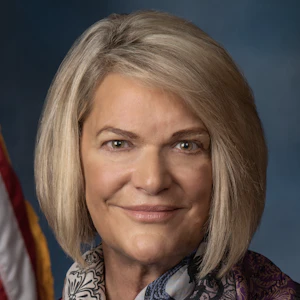
As the first-ever Chair of the Senate Banking Subcommittee on Digital Assets, Senator Lummis is the architect of the legislative framework shaping America's digital asset future. She introduced the landmark Lummis-Gillibrand Responsible Financial Innovation Act, the first comprehensive bipartisan crypto regulatory framework in Senate history. She co-authored the GENIUS Act — the first federal stablecoin law ever enacted — and introduced the BITCOIN Act, which would establish a U.S. strategic Bitcoin reserve of up to one million BTC. She is leading the Clarity Act, which will bring long-overdue regulatory certainty to the digital asset industry. She has also championed digital asset tax reform, including a de minimis exemption for small transactions and equal tax treatment for miners and stakers.
Known as Congress' "Crypto Queen," Senator Lummis represents Wyoming — a state she has helped build into one of the most digital asset-friendly regulatory environments in the nation. Before serving in the Senate, she served 14 years in the Wyoming Legislature, eight years as Wyoming State Treasurer, and eight years in the U.S. House. She is a three-time graduate of the University of Wyoming.
Her work represents a crucial bridge between traditional financial systems and the emerging digital economy, ensuring America leads the world in financial innovation while protecting the individual freedoms that define it.

Adam Back
Adam Back

Amy Oldenburg
Amy Oldenburg
David Marcus
David Marcus

Matt Schultz
Matt Schultz
Fred Thiel
Fred Thiel
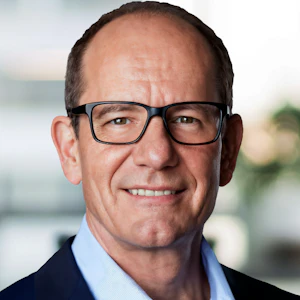
Throughout his career, Mr. Thiel has consistently driven rapid growth and created substantial shareholder value. Prior to MARA, Mr. Thiel served as the CEO of two other public companies, Local Corporation (NASDAQ: LOCM) and Lantronix, Inc (NASDAQ: LTRX). He has successfully raised billions in equity and debt through private and public offerings, led companies through IPOs, executed high-value exits to strategic and financial acquirers, and implemented effective M&A and roll-up strategies.
Mr. Thiel attended the Stockholm School of Economics and executive classes at Harvard Business School, and is fluent in English, Spanish, Swedish, and French. Mr. Thiel is the Chairman of the Board for Oden Technology, Inc. and is active in Young Presidents’ Organization where he has led initiatives in both the FinTech and Technology Networks.
A recognized voice in the industry, Fred frequently shares his insights on energy and technology with major media outlets like Bloomberg TV, CNBC, and FOX Business, contributing to vital discussions about the future of these sectors.
Tim Draper
Tim Draper
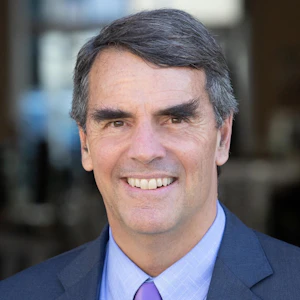
He is a supporter and global thought leader for entrepreneurs everywhere, and is a leading spokesperson for Bitcoin and decentralization, having won the Bitcoin US Marshall’s auction in 2014, invested in over 50 crypto companies, and led investments in Coinbase, Ledger, Tezos, and Bancor, among others.

Afroman
Afroman