Open-Sourcing the Bitcoin Mining Ecosystem
Speakers/Moderators

Tyler Stevens
Tyler Stevens



Session
Overview
Open-Sourcing the Bitcoin Mining Ecosystem focused on the 256 Foundation’s effort to open source the core components of Bitcoin mining: hash boards, control boards, firmware, and mining pools. Speakers Michael Schmid, Ryan Kuester, and Skot discussed projects including the Libre control board, Ember One hash board, Bitaxe, Gina firmware, and HydroPool.
The conversation emphasized why open source hardware and software matter for miners at every scale. The speakers argued that closed source mining systems limit verification, customization, repairability, and business control, while open source reference designs can support home miners, heat reuse systems, larger industrial deployments, and new forms of energy integration.
A recurring theme was that open source can improve both accessibility and performance. The panel compared Bitcoin mining to the broader computing industry, where shared open source layers such as Linux became foundations for competitors to build profitable products and services. They also discussed how open tooling can shorten development cycles, make integrations easier, and enable rapid experimentation with AI-assisted software development.
The session closed with a discussion of open source as a viable commercial foundation, not just a hobbyist movement. The speakers framed open source mining as a path toward more resilient, decentralized, and user-controlled Bitcoin mining infrastructure.
Thank you for the kind introduction. This is going to be exciting. We are here to talk about open sourcing the Bitcoin mining stack. It is a little bit different than what you may see walking around the trade show today. Why do we not start at the end and let everyone introduce themselves?
First, I should mention what the 256 Foundation is. The 256 Foundation, and there are a lot of supporters in the audience, so thank you all for being here, is a 501(c)(3) nonprofit organization domiciled in Nashville, Tennessee, with the sole mission of open sourcing the Bitcoin mining stack.
For anyone unfamiliar, Bitcoin miners are power hungry, hot, and there is a lot to manage. Inside that shoebox, most people do not know what is going on. It is a closed black box. These core developers on stage are working on the core pillars that make up a Bitcoin miner and how we can open source that, bringing Bitcoin mining back to Bitcoin's open source, do not trust, verify ethos. I am excited to dive into it.
My name is Michael Schmid. Most people know me as Schnitzel. I am building the Libre board, an open source control board that allows you to connect all kinds of hash boards to a Bitcoin miner.
I have built a lot of systems where I want to heat a house or heat a pool. One of the major issues with existing control boards is that you cannot really connect additional temperature sensors, pumps, and things like that to them. What I am building with the Libre board is a control board that allows you to do that. You can connect temperature sensors and flow sensors to really control the miner for what you need.
In mining, or in heat reuse, the main product is actually the heat. In the previous panel, heat was treated as a byproduct. In our world, heat is the main product, so we need to control the miners. We need to change the wattage. We need to do all of this, and only an open source control board allows you to do that.
I think most people know who you are because of the Bitaxe project. Why do you not talk about Bitaxe and what you are working on with 256, and for the newcomer, how those are different projects. Is one just a bigger version than the other?
Sure. My name is Skot. I am the instigator of the Bitaxe project. It started out a few years ago. For those who do not know, it is an open source home miner. You can get it, build it, and run it. It is the first ever open source ASIC miner, which came a decade after ASICs were introduced, which is kind of ridiculous. It is an open source miner and the first miner that you can truly own. You can own all of it. You can be a self-sovereign Bitcoin miner, which is pretty important in Bitcoin.
When I heard about the 256 Foundation, started by Rod and Alchemist at Bitcoin Park, I was like, this is my jam. I am incredibly passionate about open source and the freedom that it provides. To have a foundation dedicated to advancing that cause, I was all in. I have joined the board of the 256 Foundation with Tyler, and I am also working on a project for the 256 Foundation called Ember One. It is an open source hash board.
Bitaxe is a small, relatively low hash rate miner. It has a single chip. There are new models that have multiple chips. It is a self-contained miner. It runs the firmware, connects over Wi-Fi, and you just plug it in and it goes.
Ember One is a hash board. It is just a component in a bigger miner. It is part of the system that makes a miner. It has a higher hash rate and uses more power. More importantly, the goal with Ember One is to be a reference design. People can take this design and change it and build it into the form factor they need, like a water heater, a space heater, or whatever you can dream up. It is a fully open source hash board showing how to interface with these ASICs electrically and mechanically. It is meant to be a springboard to design bigger and better systems that can properly decentralize Bitcoin mining.
The analogy that comes to mind is this: imagine no one knew how to build a car, and there were RC cars, little electric toy cars. Maybe that is the Bitaxe. It is a little car, it works, it does the thing, it drives around. But then there are really awesome hobbyist RC cars that have a tiny gasoline V8 engine, a transmission, a steering column, and all the parts a real car has.
That is how I view the core pillar parts of the 256 Foundation. We are not building a mining product. We are not building a system intended to go into rack space. We are building reference designs to say, these are the pieces of the puzzle that make up a Bitcoin miner. They are open source. Have at it. Use it. Reference it. Hack it, build it, and work on the kinds of things Michael was talking about.
But to control all of this, we need software. Ryan, why do you not talk to us about that?
I am Ryan. I am the lead developer for Gina, the open source Bitcoin mining firmware that runs in the 256 Foundation stack. Over the last year, we have been building out the core of the software and hardware support. First, for Bitaxe boards, you can put Bitaxes into a special pass-through mode where they are no longer self-contained. They just act like dumb hash boards. We use those as development boards for software developers.
Then there is hardware support for all the 256 Foundation hardware, running on the Libre control board and driving the Ember One hash boards. But our ambitions for Gina are actually quite big. It is the one piece of the stack that is not entirely meant just to be a reference design. We intend for Gina to be the Linux kernel project of Bitcoin mining.
Right now we are working on support for the S19, being able to drive S19 hash boards and be installed on the stock S19 control board. Our goal is to see Gina running everywhere we can possibly port it, and to be the open source alternative to firmware that comes from the vendors themselves and also third-party firmware. We believe everyone should be running open source software on their hardware.
Let us double click on this. One thing I thought was funny when I was brainstorming with one of the co-founders of the 256 Foundation, Alchemist, was that 99.9% of miners on Earth are closed source black boxes. You cannot verify your shares are actually going to the pool. You cannot verify that no one is scraping some of your hash rate off the top through the firmware.
On the flip side, at the home scale, with Bitaxe, you have these open source miners. It is 180 degrees opposite from the computing space in general, where my MacBook Pro is closed source and proprietary in the consumer computing space, but all of AWS runs on Linux. It is backwards.
Why is this such an important problem to overcome for enterprise hash rate? Let us talk about the bigger miners, because I think a lot of folks think we are just tinkering with little desktop toys. We view this as a necessary step for the future of Bitcoin mining in its entirety, across all scales.
It is great for hobbyists. You can build things at hobbyist scale. There are some rad builders here who are taking this stuff and building what they want to see. But it also scales all the way up to the largest miners.
To me, it seems ridiculous that you would have a company mining millions of dollars in Bitcoin a month entirely dependent on closed source firmware from a proven sketchy vendor that you do not have any control over. How can you justify that you get all of your revenue from a tool that you do not control? That is absolutely ridiculous.
You cannot improve on it either. A miner knows their operation best. It is like an F1 team having to race cars they cannot change and do not know how they work. That is ridiculous. They need to know how to adjust these things to get their advantage and win. It is a very similar situation with a Bitcoin miner. All the projects from the 256 Foundation can provide immense value to miners of all sizes and all scales.
There are examples in the software world. You mentioned AWS. Microsoft is actually one of the biggest open source contributors to Linux in terms of money, because they realized they depend so much on Linux. Their Azure data centers, which are one of their main revenue sources, run a lot of Linux. So they decided to invest a lot of money and donate money to the Linux Foundation.
The same happened with Facebook. They had a problem where hardware in the data centers was a massive issue. Every provider and every vendor did not fit together. So they decided on an open source standard and said, if you want to have your hardware inside the Facebook data center, you need to base it on this open source spec.
Now there is an open hardware foundation that Facebook started, and all these companies are working together to make open source data centers. Like Skot said, there are examples everywhere. Somehow in large-scale mining, we decided not to do any of this. Bitcoin is open source. It works because it is open source. Without that, it would have never taken off. But in the mining world, we ended up listening to two companies, and that is what we are trying to fix. This is happening everywhere else except Bitcoin mining, and I think it is just a matter of time.
Everyone is very aware that there is a standard for Bitcoin, the protocol running in the node. But the status quo in mining is different. How did we get here?
I think the reason why we are here, and why a lot of Bitcoin mining is proprietary, is just because we are early. A lot of these things start off proprietary. The initial mining ASICs were incredibly expensive, and a lot of capital had to be invested in them, so it became a proprietary thing.
But it is inevitable for these things to go open source. We have seen it across the internet. Microsoft used to make the entire web stack: web servers, databases, all of that stuff. Once viable open source alternatives came, people dropped the proprietary stuff really quickly. Once they saw the power, they realized they could understand how it works and were free to make the changes they wanted in order to start and run profitable businesses on top of it, with full control over how it works.
The proprietary landscape we are in with mining right now is just because we are early. Once there are real concrete examples of what can be done, and once the exponential progress that can be made on top of open source becomes obvious to everyone, we are going to look back on this and wonder what we were thinking, if we even remember it.
It is the same arc the computer industry took. We are on that same arc, just shifted and delayed. Like you say, we are early.
Which should be exciting, because it means you have an opportunity if you are early. Your monopoly is my opportunity, is how it feels a little bit.
Michael, talk through what you have on stage and, building off that comment, show what you can do with an open source stack. I would like some insight into how quickly you could put some of that together with AI and vibe coding, how that impacted what you are able to do, and how that is something you cannot really do with closed source firmware. Then maybe we can extrapolate from this little desktop toy demonstrating the open source mining stack to what a mega miner might be interested in integrating into a setup.
What we have here is called the Doomaxe. In the Bitcoin open source mining world, we spend a lot of time naming things. It will become clear why it is called that.
I build hardware, and hardware needs to be validated. I sit for hours in front of a computer, create a PCB, send it off to a manufacturer, build it, put all these chips on it, and then there is the moment when you power it on and hope there is no magic smoke. Luckily, there was not.
The Libre board has a lot of connectors. You can connect a display, temperature sensors, fans, and different inputs and outputs. I have to test all of those. At home, I have all these different connections, and I tested all of it. I showed it off in a group chat and said, should it be possible to show all four projects that we have? We have two hardware projects, the hash board and the control board, plus the firmware and the pool.
The fourth project of 256 is an open source mining pool. It is a Stratum V2 pool called HydroPool. I thought, if I have a control board that has Linux, I should be able to run and install everything on it.
What this is, basically, is all four projects. There is the control board. There is a Bitaxe as the hash board. There is a Bitcoin node running on it that talks to the pool. The pool talks to Gina, and Gina talks to the Bitaxe. It is all four projects in one. Because I was walking around and could not carry a cable with me, I also put a battery in it. So it is a fully autonomous Bitcoin miner with batteries. All it needs is Wi-Fi. It has its own Bitcoin node, pool, and everything.
I added some displays to it. One of the things on the front is a display that shows different stats, like how much it is mining. As usual, for a person who grew up playing Doom, whenever you see a small display on a device, you ask, does it play Doom?
If you press the middle button six times, which is hard to do here and probably hard to see from the stage, you can literally play Doom on a Bitcoin node now. While you are waiting for the block to be mined, you can play Doom. That is why it is called the Doomaxe.
Doom is obviously awesome. You can run it on anything. But it is also an example that you can modify anything to your liking for this setup.
That is what is awesome. This is all open source. We have open source hardware and open source software. I literally pointed Claude Code to it and said, here is a Bitcoin miner. It runs this open source software and this hardware. Here is a display. Can you please install Doom on it? It took three minutes, and later I was playing Doom. That was only possible because everything is open source. It can see the software and the hardware, and it can figure out how to talk to it.
Obviously, in a big mining installation, you probably do not want to play Doom, even though it would be cool. But imagine that the electrical grid company launches a new API for load demand. Today, in a closed source environment, you have to talk to your mining firmware provider, your pool, your fleet management provider, or your rep, and hope they will implement it. It can take weeks, months, or sometimes years to integrate into these systems.
When everything is open source, you can point your agents to it and say, here is the open source hardware, here is the API, and whenever the price of energy is below a certain amount, I want you to turn on the miner or turn it off. An agent can literally build this. I proved it here. It took me three minutes to run Doom. It would probably take maybe an hour to deploy a new integration across a fleet of 1,000 miners, integrating into new APIs, weather systems, or whatever.
That is only possible because it is open source. The AI needs to understand how this is built. In a closed source environment, it does not have access to the source. When this happened the first time, and I said, how about Doom, and it built it in three minutes, the light bulb went off. This is incredible.
If you have used miners for more than a little bit, it becomes apparent very quickly that there are things that could change. It depends on how you are running them, whether you are in a massive data center or a small operation, and where you are getting your electricity from. No matter what level you are at, there is always something where you think, it would be cool to do it like this, or to try this out. You have an idea and wish you could just try it to see if that improves your operation, profitability, or uptime.
What is so cool about open source, and having something you can point AI at, is that you can just do those things. The time it takes to get a proof of concept, try it out, and test your idea is getting shorter and shorter. This is what leads to exponential progress. Maybe you tell people about it. Someone sees how you did it, and they have a new idea. The rate of acceleration is going to get intense.
Specifically, we see big miners trying to integrate AI and Bitcoin. It used to be that they just ran Bitcoin miners. Now they run AI data centers. But AI is not using the same amount of energy all the time, so you need to adapt your Bitcoin mining usage to offload the energy that AI is not using. That needs algorithms analyzing things.
That is only going to be possible with automated AI systems that analyze how much the LLMs and TPUs are using and automatically modulate the Bitcoin miners on top of that. As this transition goes on, where Bitcoin miners now run not only Bitcoin but also other things, the fact that they can run open source, modify it, and automate it is going to allow things to go exponentially faster.
That is good for the network. It is good for Bitcoin. We want Bitcoin to be the last resort of energy use. That is what Bitcoin is so good at. Whether we are integrating with AI, solar panels, or systems where you automatically change the wattage of the miner based on how much the sun is shining, all these systems where we want to integrate Bitcoin are only going to be possible with open source.
The freedom and accessibility are super interesting. I think that is why open source mining has brought in a lot of nontraditional miners like myself, and others in the audience who do not have 1,000 machines. Maybe they are just trying to build a space heater, a water heater, or something else, and we really rely on these open source building blocks so we can turn the miner into what we need.
The four core pillars are the hash board, the control board, the firmware, and the pool. Once you unlock those four pieces of the puzzle, you can craft them and shape them into the size, use case, or application that you need.
Ryan, beyond freedom, accessibility, and new ideas, open source also inevitably turns into better quality and better performing software. I imagine that has a lot to do with the fact that you basically get the whole world to be your developer base. Talk a little bit about that, where we are now with Gina, and the long-term vision for it becoming selected because it is the best firmware.
There are a lot of reasons people prefer or like open source over closed source. Are you paying a dev fee for your box over there? No. So it is free in that sense, free as in beer. A lot of people come for the freedom to do whatever they want and not have it owned or controlled by a corporation.
That has tangents. Do you want your business to be dependent on software written by somebody else that you do not have control over? What if they have different priorities than you? What if they go out of business?
But open source also tends to be a superior development model for software. That is why we call it the Linux kernel of Bitcoin mining. That is what happened with the Linux kernel. You have companies that are fierce competitors in the marketplace, in their area of specialization. Samsung and Qualcomm are rivals in the chip industry, but they are collaborators at the Linux kernel layer. They get together at conferences, share ideas, and share code because they view that as the common base commodity layer, the substrate of the industry. Then they go off and build their special verticals on top of it.
There is no reason that cannot happen with mining firmware. The core pieces would be shared. Competitors today could contribute their specialties, whether it is a driver for their chip or their special cooling thing. As mentioned before, it starts to snowball into standards.
If you show up with a power supply solution that you want to sell into these different things, you want to make sure it works with everything else. So you build a driver for it. Unless you have that common software layer, you cannot get all of those feedback loops working in your favor. But once you have open source software becoming the standard, you have a place for everyone to show up, plug in, and accelerate the industry. That is what we want to do.
Skot, you speak to this well: open source does not mean you cannot make money. Talk about that for a minute, and then we will talk about the competition going on here with the 256 Foundation. Let us remind folks that open source does not mean nonprofit.
That is a really important point. People have this misconception that because we are giving away everything we developed, free as in beer, you cannot start a business around it. We have seen on top of the Linux stack, including with AWS, that this is not true.
Open source is not a vow of poverty. You can make money working on open source software. You can make money deploying open source software, improving on it, and committing back to it. Just because the software is free does not imply that you cannot make money on it. The software needs to run on something. It needs to run on hardware, which will always have a price. You can take hardware, combine it into a product, mark it up, and sell it.
Software is one component of that. You can build products, build services, and make money. And you do not necessarily have to start from the ground developing everything. Your time to market becomes significantly shorter with open source. If you were going to make a computer and had to make the chip, the CPU, the operating system, and the kernel, that is an insane level of development that basically only Apple has pulled off. It takes an absurd amount of capital, time, and money to get there. Open source can be a springboard for very profitable endeavors.
Think about how exciting the computing space has become because Intel sells their chips, AMD sells their chips, Nvidia makes graphics cards, and AMD has its own graphics cards. They end up in all kinds of form factors, from desktops to laptops to tablets. You pick up the pieces and build what you want. It will be really exciting to see what changes, what comes out of the mining industry, and what the status quo becomes. I think the current lay of the land is about to change drastically.
I want to finish by talking about a competition that was announced this morning by Fred Thiel from MARA. MARA is probably the largest solo miner. They do not run a pool. They just solo mine. They are a big publicly traded mining company.
They started a foundation, and their booth is a little bit behind the stage. It is an organization aimed at promoting open source software, Bitcoin education, funding developers, and the whole thing. They are kickstarting this foundation with a competition where three organizations are in competition, pending votes from conference attendees and those voting online, to win $100,000.
Whichever organization gets the most votes in the next two days will be gifted $100,000 to support its initiative. The 256 Foundation is one of the three in competition. We will be hanging out there throughout the rest of the conference. You can come find us there or around the conference.
All of our stuff is on GitHub. Check it out. All this stuff works and it exists.
It all works. It is coming together. All the projects work. The 256 Foundation has a brand new website.
We solo mined a block during a hash event in January 2025. That is a little bit of lore about how we kickstarted the funding of these developers and the organization. Go check out the website, find us off stage, check out the booth, and make sure to vote to support us in the competition. Thank you.
Similar
Sessions
Open-Sourcing the Bitcoin Mining Ecosystem
Tyler Stevens
Tyler Stevens
Open-Sourcing the Bitcoin Mining Ecosystem
Speakers/Moderators
Tyler Stevens
Tyler Stevens
Bitcoin's Return to Its Roots: Why Home Mining is Making a Comeback
Tatum Turn Up
Tatum Turn Up

Aviral Shukla
Aviral Shukla

Leo Wang
Leo Wang
He brings over a decade of senior leadership experience across fundraising, investment, and capital markets at high-growth companies. Leo began his career in law and is a graduate of Columbia Law School. He is admitted to the New York State Bar.
Bitcoin's Return to Its Roots: Why Home Mining is Making a Comeback
Speakers/Moderators
Tatum Turn Up
Tatum Turn Up
Aviral Shukla
Aviral Shukla
Leo Wang
Leo Wang
He brings over a decade of senior leadership experience across fundraising, investment, and capital markets at high-growth companies. Leo began his career in law and is a graduate of Columbia Law School. He is admitted to the New York State Bar.
Decentralizing Bitcoin: The Solo Mining Movement
Tyler Stevens
Tyler Stevens
WantClue
WantClue
Decentralizing Bitcoin: The Solo Mining Movement
Speakers/Moderators
Tyler Stevens
Tyler Stevens
WantClue
WantClue
Other
Speakers
Michael Saylor
Michael Saylor
Todd Blanche
Todd Blanche
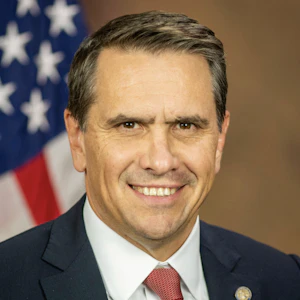
Biography of Deputy Attorney General Todd Blanche
The Honorable Todd Blanche is the 40th Deputy Attorney General of the United States, overseeing the work of the 115,000 dedicated employees who fulfill the Department of Justice’s mission at Main Justice, the FBI, DEA, U.S. Marshals, ATF, and 93 U.S. Attorney’s Offices.
Todd began his career at the Department where he served for over fifteen years in a variety of capacities, including as a contractor, a paralegal in the Criminal Division, and at the United States Attorney’s office for the Southern District of New York where he eventually became an AUSA and later a supervisor.
After leaving the Department, Todd worked as a criminal defense attorney that included representing President Donald Trump in three of the criminal cases brought against him in 2023 and 2024.
Following President Trump’s historic return to the White House, the President appointed Todd to work alongside Attorney General Pam Bondi to make America safe again. At the DOJ, Todd is working tirelessly to implement President Trump’s priorities that include confronting illegal protecting American businesses from fraud.
Todd has been married to his wonderful wife Kristine for nearly thirty years, is a father and grandfather.

Paul Atkins
Paul Atkins
Prior to returning to the SEC, Chairman Atkins was most recently chief executive of Patomak Global Partners, a company he founded in 2009. Chairman Atkins helped lead efforts to develop best practices for the digital asset sector. He served as an independent director and non-executive chairman of the board of BATS Global Markets, Inc. from 2012 to 2015.
Chairman Atkins was appointed by President George W. Bush to serve as a Commissioner of the SEC from 2002 to 2008. During his tenure, he advocated for transparency, consistency, and the use of cost-benefit analysis at the agency. Chairman Atkins also represented the SEC at meetings of the President’s Working Group on Financial Markets and the U.S.-EU Transatlantic Economic Council. From 2009 to 2010, he was appointed a member of the Congressional Oversight Panel for the Troubled Asset Relief Program.
Before serving as an SEC Commissioner, Chairman Atkins was a consultant on securities and investment management industry matters, especially regarding issues of strategy, regulatory compliance, risk management, new product development, and organizational control.
From 1990 to 1994, Chairman Atkins served on the staff of two chairmen of the SEC, Richard C. Breeden and Arthur Levitt, ultimately as chief of staff and counselor, respectively. He received the SEC’s 1992 Law and Policy Award for work regarding corporate governance matters.
Chairman Atkins began his career as a lawyer in New York, focusing on a wide range of corporate transactions for U.S. and foreign clients, including public and private securities offerings and mergers and acquisitions. He was resident for 2½ years in his firm's Paris office and admitted as conseil juridique in France.
A member of the New York and Florida bars, Chairman Atkins received his J.D. from Vanderbilt University School of Law in 1983 and was Senior Student Writing Editor of the Vanderbilt Law Review. He received his A.B., Phi Beta Kappa, from Wofford College in 1980.
Originally from Lillington, North Carolina, Chairman Atkins grew up in Tampa, Florida. He and his wife Sarah have three sons.

Mike Selig
Mike Selig
Chairman Selig brings to the role deep public and private sector experience working with a wide range of stakeholders across agriculture, energy, financial, and digital asset industries, which rely upon and operate in CFTC-regulated markets.
Prior to his leadership at the CFTC, Chairman Selig most recently served as chief counsel of the Securities and Exchange Commission’s Crypto Task Force and senior advisor to SEC Chairman Paul S. Atkins. In this role, Chairman Selig helped to develop a clear regulatory framework for digital asset securities markets, harmonize the SEC and CFTC regulatory regimes, modernize the agency’s rules to reflect new and emerging technologies, and put an end to regulation by enforcement. He also participated in the President’s Working Group on Digital Asset Markets and contributed to its report on “Strengthening American Leadership in Digital Financial Technology.”
Prior to government service, Chairman Selig was a partner at an international law firm, focusing on derivatives and securities regulatory matters. During his years in private practice, he represented a broad range of clients subject to regulation by the CFTC, including commercial end users, futures commission merchants, commodity trading advisors, swap dealers, designated contract markets, derivatives clearing organizations, and digital asset firms. Chairman Selig advised clients on compliance with the Commodity Exchange Act and the CFTC’s rules and regulations thereunder, including in connection with registration applications and obligations, enforcement matters, and complex transactions.
Chairman Selig earned his law degree from The George Washington University Law School and was articles editor of The George Washington Law Review. He received his undergraduate degree from Florida State University.

David Bailey
David Bailey

Eric Trump
Eric Trump
Mr. Trump also serves as Executive Vice President of The Trump Organization, where he oversees the global management and operations of the Trump family’s extensive real estate portfolio. This includes Trump Hotels, Trump Golf, commercial and residential real estate, Trump Estates, and Trump Winery. Known for his hands-on leadership and strong market instincts, he has played a key role in expanding the company’s presence across major U.S. and international markets.
A globally recognized business leader and public figure, Mr. Trump is a prominent advocate for Bitcoin and decentralized finance. He is a co-founder of World Liberty Financial, a decentralized finance (DeFi) platform, and serves on the Board of Advisors of Metaplanet, Japan’s largest corporate holder of Bitcoin.
Beyond his business activities, Mr. Trump has helped raise more than $50 million for St. Jude Children’s Research Hospital in the fight against pediatric cancer, a philanthropic mission he began at age 21.
Mr. Trump earned a degree in Finance and Management from Georgetown University. He currently resides in Florida with his wife, Lara, and their two children. He is also the author of Under Siege, his memoir published in October 2025.
Jack Mallers
Jack Mallers
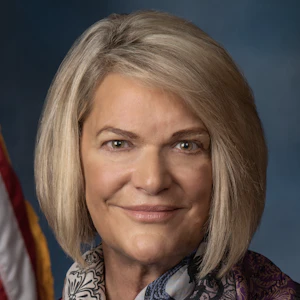
Cynthia Lummis
Cynthia Lummis
As the first-ever Chair of the Senate Banking Subcommittee on Digital Assets, Senator Lummis is the architect of the legislative framework shaping America's digital asset future. She introduced the landmark Lummis-Gillibrand Responsible Financial Innovation Act, the first comprehensive bipartisan crypto regulatory framework in Senate history. She co-authored the GENIUS Act — the first federal stablecoin law ever enacted — and introduced the BITCOIN Act, which would establish a U.S. strategic Bitcoin reserve of up to one million BTC. She is leading the Clarity Act, which will bring long-overdue regulatory certainty to the digital asset industry. She has also championed digital asset tax reform, including a de minimis exemption for small transactions and equal tax treatment for miners and stakers.
Known as Congress' "Crypto Queen," Senator Lummis represents Wyoming — a state she has helped build into one of the most digital asset-friendly regulatory environments in the nation. Before serving in the Senate, she served 14 years in the Wyoming Legislature, eight years as Wyoming State Treasurer, and eight years in the U.S. House. She is a three-time graduate of the University of Wyoming.
Her work represents a crucial bridge between traditional financial systems and the emerging digital economy, ensuring America leads the world in financial innovation while protecting the individual freedoms that define it.
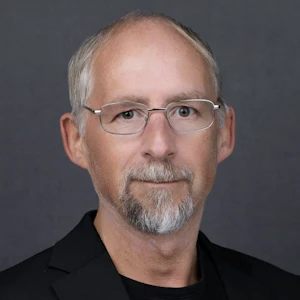
Adam Back
Adam Back

Amy Oldenburg
Amy Oldenburg
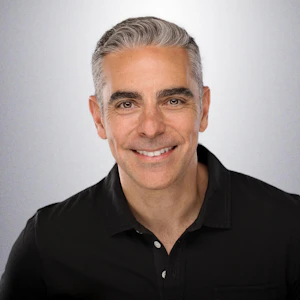
David Marcus
David Marcus

Matt Schultz
Matt Schultz
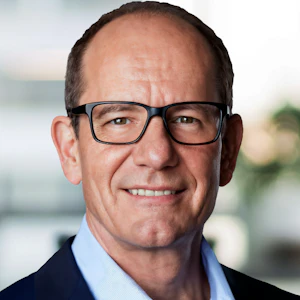
Fred Thiel
Fred Thiel
Throughout his career, Mr. Thiel has consistently driven rapid growth and created substantial shareholder value. Prior to MARA, Mr. Thiel served as the CEO of two other public companies, Local Corporation (NASDAQ: LOCM) and Lantronix, Inc (NASDAQ: LTRX). He has successfully raised billions in equity and debt through private and public offerings, led companies through IPOs, executed high-value exits to strategic and financial acquirers, and implemented effective M&A and roll-up strategies.
Mr. Thiel attended the Stockholm School of Economics and executive classes at Harvard Business School, and is fluent in English, Spanish, Swedish, and French. Mr. Thiel is the Chairman of the Board for Oden Technology, Inc. and is active in Young Presidents’ Organization where he has led initiatives in both the FinTech and Technology Networks.
A recognized voice in the industry, Fred frequently shares his insights on energy and technology with major media outlets like Bloomberg TV, CNBC, and FOX Business, contributing to vital discussions about the future of these sectors.
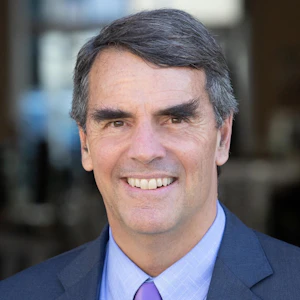
Tim Draper
Tim Draper
He is a supporter and global thought leader for entrepreneurs everywhere, and is a leading spokesperson for Bitcoin and decentralization, having won the Bitcoin US Marshall’s auction in 2014, invested in over 50 crypto companies, and led investments in Coinbase, Ledger, Tezos, and Bancor, among others.

Afroman
Afroman