Paper Bitcoin Summer or Self-Custody Spring?
Speakers/Moderators
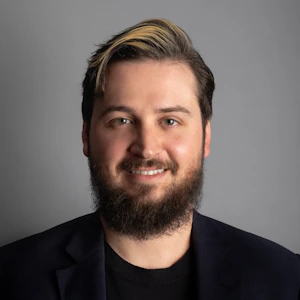
Nico Moran
Nico Moran
His mission is to guide people to thrive in an ever-growing future towards individuals claiming back full financial sovereignty through Bitcoin.
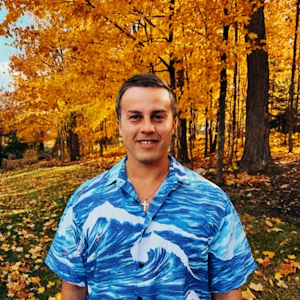


Chris Seedor
Chris Seedor
Session
Overview
Hosted by Nico Moran, this panel with Ben Jarvie, Hodl Dee, and Chris Seedor examined whether Bitcoin adoption is moving toward institutionally held “paper Bitcoin” or a renewed emphasis on self custody. The discussion centered on ETFs, custodians, and financial products that make Bitcoin exposure easier while removing the sovereignty benefits of holding private keys.
The speakers argued that self custody remains central to Bitcoin’s purpose as censorship-resistant money, but they also acknowledged why many people choose convenience, tax-advantaged accounts, and familiar financial platforms. They discussed the learning curve around seed phrases, hardware wallets, multisig, passphrases, privacy, and the need for better education and tools.
The conversation also covered broader risks, including concentrated custody, government regulation, CBDCs, sanctions, and the possibility that institutions and states may prefer “captured Bitcoin” within the existing financial system. The panel framed self custody as both a personal security practice and a key part of preserving Bitcoin’s permissionless nature.
How's everybody doing? Hello, Las Vegas, Genesis Stage, right after lunch. I hope everyone had a good lunch. It has been quite interesting in Bitcoin, and I have these gentlemen here. We're all self-custody maxis, so I think this panel is going to go one way.
We're at a very interesting moment in Bitcoin's history, where Bitcoin essentially got financialized with the launch of the ETF. And it's not just BlackRock anymore. You have banks launching ETFs. You have a lot of traditional finance launching products on top of Bitcoin. So it has never been easier to get exposure to Bitcoin than it is now through the traditional financial system.
The problem is, as we all know here, that's paper Bitcoin. I'm a true believer that if it's not Bitcoin in self custody, it's not actual Bitcoin. It's an IOU, and it doesn't come with the sovereignty aspects of holding Bitcoin in self custody.
One of the things that worries me the most is that, for the first time in Bitcoin's history, the amount of people actually taking self custody of their coins since the launch of the ETF has gone down. This revolution, because it is a financial revolution and it is a peaceful revolution, does not work unless individuals are taking self custody of their Bitcoin. They're sacrificing their sovereignty by not doing that, and they're also creating a situation where paper Bitcoin can arise.
That's what I want to focus on today: the positives of taking Bitcoin into self custody. Is this going to be an acceleration of more paper Bitcoin, of more captured Bitcoin? If we want to spice it up a little bit more, are people going to remember, if something blows up, how important self custody is?
I'm going to start with Dee from Coinkite. They make incredible hardware wallets. Dee, you focus on this. You dedicate your life to getting people to choose the right hardware to take self custody of their coins. I'm sure you've seen exactly what I've seen. The focus has been on traditional finance entering the Bitcoin space. It seems like the revolutionary appeal dissipated a little bit. The big breaking news was the ETF. The big breaking news is the politicians. The big breaking news is the financial institutions getting into Bitcoin. It's no longer, “Oh my God, fix the money, fix the world.” It's like, “Fix the money, fix the world, but buy my ETF.” So what's your take?
Personally, I work for a self-custody hardware wallet company, so obviously I'm going to be a little more pro self custody. It's tough, because everyone has their benefits. People want the ETF because it's easy, and they think self custody is so far out there now and so hard that they can just buy Bitcoin in their stock portfolio and they're good.
But I think we are taking the soul out of Bitcoin a little bit. We're taking those sovereignty properties away. They think it's just number-go-up technology, and that's all they care about. It's collateral in the future. It doesn't matter if I hold it; it just goes up in my ledger here, so I'm good.
But as we've seen in the past, with FTX, Celsius, Mt. Gox, and all those exchanges that collapsed, that Bitcoin is not really yours. Even though you may think you have some redemption toward it, it's not really yours. The fine print is always the kicker.
It's tough because people are taking the tax advantages, the IRAs, the tax deferments, whatever. But I definitely think having self custody of at least some Bitcoin is beneficial to everyone. Over time, if we can get more people to self custody, it would be great.
But I understand why people are moving toward these financial institutions and financial instruments that are already embedded into the system we have now. How do we get back to what it used to be? I think that's a good question.
I'll pass it on to you, Chris. Now that these financial Bitcoin products have been released and have become popular, for a lot of people who don't know this, the BlackRock Bitcoin ETF was the most successful ETF launch in BlackRock's history. Morgan Stanley quickly followed, and the Morgan Stanley ETF was the most successful ETF launch in Morgan Stanley's history.
I had a good friend of mine who works at Goldman. This is someone I've been trying to orange-pill for more than a decade. I was like, “Hey, man, you have to get into Bitcoin.” It wasn't until recently that he was like, “Hey, Nico, by the way, we're launching a product.” Goldman Sachs is one of the most conservative wealth management banks in the world.
Obviously, everyone is getting attracted to the number-go-up perspective. Chris, what worries me is: is a revolution even possible? Did people forget? Is a revolution possible if people don't take self custody of some of their coins?
There's a lot to unpack there. I'm in Bitcoin because of the freedom aspect and sovereignty, and you forfeit that entirely if you have paper Bitcoin. It was inevitable that, if you build this thing and this thing is really cool, institutions and governments would also want to come in. There's nothing we can do to prevent that.
Self custody is great, but if you're an American with a Roth IRA or a 401(k), you don't have access to those instruments directly. You can't directly buy Bitcoin in some of those accounts. Any form of Bitcoin exposure is better than no Bitcoin exposure.
If you want the revolution, that's not going to be with an ETF. That's not going to be Fidelity. Of course you need this asset, this money that you can send and nobody can stop you. You can't do that with paper Bitcoin. Take self custody. Get a Coldcard or a BitBox, and then you're golden. That's how you fight.
Bring this message to as many people as possible. That's what we're doing here. Bitcoin is the peaceful revolution out of this fiat system. Don't feed it if you don't have to.
Ben, I think a lot of people had this utopian vision. I know you guys know what I'm talking about. Five years ago, we had this conception that we were going to get to a world where every single person was holding their own keys, and that fundamentally was going to shift the balance of power from the state to the individual.
Looking back on that, I'm kind of like, yeah, that was a utopian vision, because I think as bitcoiners we underestimated how many people would rather choose convenience over sovereignty. My fear is that this trend will continue. It's really up to you guys in the crowd. How many of you take self custody? We're talking to the wrong crowd. Everybody here is waving their hand.
Ben, were we wrong in that worldview? Were we naive? We just kept winning and winning and winning, and a lot of us, including myself, celebrated when the ETF came. But as with all things, there are tradeoffs. I think a lot of people underestimated that. When Wall Street got in, Wall Street was going to do what Wall Street always does. They weren't going to change behavior, and Larry Fink isn't going on TV and saying how awesome Bitcoin is because he wants all of you to buy a hardware wallet and take self custody. He's saying that because he's like, “Buy my ETF, bro. It's fantastic.” What was the wrong assumption that we had? And do you foresee a world a decade from now where people say, “Okay, perhaps these maniacs on stage were right”?
I think you were right in the sense that it was a bit of a utopian idea, purely because of the convenience aspect. The masses want convenience, and the ultimate accountability and ultimate responsibility that come with self custody are not within their toolkit initially.
But I don't necessarily see paper Bitcoin and self custody as antithetical systems. I see it more as a stepping stone for most people. The more exposure they get, the more likely they are to say, “Oh, this counterparty risk is now bigger than I'm actually comfortable with.”
The lessons learned from the hot stoves, whether it's FTX or BlockFi and the rest, matter. There will be a lot of people who will always touch that stove, because it's like moths to a flame for convenience, and there's not really anything you can do about that.
But I do think in the next ten years it will become trivial to self custody as AI progresses and as the tools improve. I think it will become easier and more attainable for most individuals. I'm hoping to see that increase rather than decrease, even though the convenience side will also become easier.
Absolutely. That's something we actively have to fight for. That's something we constantly have to advocate for. I always borrow a little bit from JFK's speech: “Don't ask what your country can do for you. Ask what you can do for your country.” I always say, don't ask what Bitcoin can do for you. Ask what you can do for Bitcoin. I think the most powerful thing you can do is advocate for self custody.
Remember the next generation. I have a daughter. She's three or four months old. She was born into a world where Bitcoin already existed, meaning she's going to be Bitcoin-native. From a very early age, I'm going to try to educate her on the fact that if it's not your keys, it's not your Bitcoin. If it's not your Bitcoin in self custody, it's not really yours. If you have to ask somebody else for permission to use your money, it isn't your money.
I think a lot of us take that for granted because we live in countries that have relatively stable financial systems. But we forget that the vast majority of the world, the Global South, does have capital controls. It's not easy to move money, not to mention the inflation that comes with it.
You're on the forefront of this. You work at one of the companies that makes one of the best hardware wallets in the industry. Do you see more people buying Coldcards today than five years ago?
Yeah, I think it's a tough question because, as Bitcoin becomes more mainstream, we obviously do get more customers coming in. There are the new Bitcoiners and the plebs, or the self-custody people, right now. It doesn't have to be either-or. But we do see a lot of people stepping up and buying our products. Of course, that's why we're still in business.
I think it takes steps. It's baby steps. When you go down the Bitcoin rabbit hole, you just want to learn everything all at once, or you're someone who already has a lot of money and just wants to buy an ETF and move on.
People are definitely coming, and I think people are learning. That's why you're all here today. But it's baby steps. There are a lot of topics. There's single-sig, there's the quantum threat, the AI stuff. There is a lot in this industry, and there's a lot to talk about and dive into, including Miniscript, which a lot of people may not even know about.
I think it's just taking it one step at a time and throwing five bucks onto a hardware wallet and moving it around. That's your first step. You don't have to throw $1 million onto a hardware wallet and freak out that you lost your seed. You can throw ten bucks and learn first.
Educational platforms and YouTube channels that educate people are really important. The ETF companies have a lot of money and they're going to sell you a lot of products because that is their financial incentive. Larry makes money off his ETF. Every time there's a trade, he makes some money.
It's definitely a ground-up thing, and it takes time. Everyone is here today to learn, and I think it's great. I hope we keep going in that direction. I think we're going to get there, and I think people will learn over time, hopefully sooner rather than later.
I always like to say trial by fire is definitely the quickest way to learn, because people get burned and then change their behavior. Maybe don't go down that road and save yourself some money. Self custody is extremely important.
Absolutely. I think self custody is the way. I will also add to this point: I don't really think you can call yourself a bitcoiner unless you have at least a little bit of Bitcoin in self custody. I don't think you can have a true appreciation of the network.
I also want to talk about the geopolitical implications of what happens in a world where 5% to 10% of the population has decided to opt out into a parallel, censorship-resistant financial system, or protocol, better said. What happens in that type of world?
I'll give you a real-world example that just happened one or two weeks ago. We had the situation in the Strait of Hormuz and the conflict in Iran. This was fascinating. They said that if you wanted to pass through the Strait of Hormuz, you had to pay them $2 million. Specifically, they said they wanted to get paid in Bitcoin. They didn't say they wanted to get paid in dollars, and they didn't say they wanted to get paid in Iranian currency. They said they wanted to get paid in Bitcoin.
Why is that so important? Governments get a tremendous amount of power not only from issuing their own currency, but also from controlling money flows. What happens when a significant portion of their population decides, “Enough is enough. I'm just going to opt out. This isn't working for me”?
Chris, do you see a world five to ten years from now where governments, specifically in the West, say, “We're okay with Bitcoin, but it has to be captured Bitcoin. It has to be Bitcoin within the system”? Europe is marching full speed ahead in that direction with MiCA and other regulations.
We love good regulation in Europe. We are all afraid of CBDCs, which will come. We will have captured money that can be controlled and seized at a whim. That's why Iran and other nations, you may think of them what you will, opt for money that cannot be messed with by any centralized authority. It's open to anybody. It's the first public money that we have. It might make sense to get some in case it catches on.
In Europe, we shout from the roofs: get off this sinking ship. To the earlier point, do I see a future where 5% or 10% of people only accept Bitcoin? I'm very bearish on 100% adoption of Bitcoin. There will always be fiat, I think. But with the Pareto principle, 20% of people are responsible for 80% of the work. At a certain point, this very productive class of people will realize, “I no longer want to be paid in this melting ice cube. I will only take payment for my goods and services in Bitcoin.” That is where we're moving toward, and that is enough to make this whole thing work and make the world better, I think.
I have a hard time believing that the two systems are compatible. We're in this transitional period. If you're a government, specifically the U.S. government, the Office of Foreign Assets Control sanctions entire countries. Their justification is, “The government of Cuba is evil.” You could say, okay. I'm Venezuelan, I'm from Miami, I don't like the government of Cuba. But what people don't talk about is that when they sanction Cuba, the vast majority of people are not part of the Cuban government, and they get affected by those sanctions as well.
Bitcoin is for that. Bitcoin serves them. I don't see a world where a central bank digital currency system and a Bitcoin system are compatible. I don't think the two systems are compatible. If the two systems are not compatible, that means eventually, if they truly believe in rolling out a central bank digital currency, to use Christine Lagarde's own words, she called Bitcoin an escape valve. She said the quiet part out loud.
Obama called it a Swiss bank account in your pocket, speaking truth. They should not coexist, but they will coexist. We need to have this peaceful revolution of starving the beast. If we only take payment in Bitcoin, if we only take this money that cannot be controlled, sooner or later the government does not have the money to pay the police force or the people to force you to accept anything else.
And they're going to demonize people. I'm calling this right now. I've been at this for a while, and so far I've gotten the vast majority of things I've said right. Not because I'm a genius, but because of the game theory.
I think we're going to get to a point where, in the future, and you saw this with the Biden administration, Operation Chokepoint 2.0 was very scary. They tried to kill the Bitcoin industry by death by a thousand regulatory cuts. You could make a very strong argument that Kamala lost the election because a big portion of her voting demographic held Bitcoin and altcoins. You could make an argument that cost her the election.
You have to understand, the current president of the United States felt the necessity to go to the Bitcoin 2024 conference because he believed that was a very powerful voting bloc. He was right, and he won that election.
Ben, I think one of the biggest hangups, and something you've probably experienced as well, is that what stops people from taking self custody is not only the convenience aspect. It's not only, “I can just buy Bitcoin through my account.” I also think it's the complexity aspect. I think a lot of us underestimated the fact that some people are just not built for writing down 12 words and storing those 12 words. Is that something we overestimated as bitcoiners? Did we underestimate how difficult self custody was for the vast majority of people?
Yeah. As much as we want to say, “It's just writing down 12 words,” it's more than that. In order to put a meaningful amount in self custody, you really need to have a solution to protect you and your family, because ultimate accountability and ultimate responsibility come with the setup.
That can be single-sig with a passphrase and a decoy, or it can be multisig. But then you get into the complexity of questions like: does a Coldcard have secure elements? Is a SeedSigner stateless? Is a device open source and viewable? How do I understand all these nuances?
You kind of need to in order to help. You could just go into a hot wallet and do it slowly but surely and take steps. But it's not just about the convenience of the opposition. It's also about how complex this is to learn. It can be daunting at the start.
If you're trying to orange-pill a friend, it's like, “Hey, watch this video. Use this link to buy this. Then see this tutorial and this software.” You're giving them ten links by the end of it. That's why we wanted to do Bitcoin Butlers, to try to make that easier. This is my preferred method that I think is good for my friend, so we're not having to say, “This is what you should do.” We just want to help with how it can be done and have one link to buy from and see tutorials from.
I think these things will become clearer in terms of understanding their complexity. But it's not writing down the 12 words; actually securing it is the part that freaks people out. There needs to be more of a conversation about what that looks like. At the same time, people don't want to talk about that because it's poor optics. All of you raised your hand saying you self custody. Congratulations. Everyone in the room is now like, “Okay, that person self custodies.” There is a meaningful threat with it as well that we should address and not just say, “It's just 12 words. Write it down.”
I think we've made such large strides. Hardware signers were invented in 2013 by the SatoshiLabs guys, and since then a lot of different new tools have come on the scene. I sell seed backups, but I work with people with disabilities too, and I realize I am very privileged. There are people who cannot emboss their seed in steel on their own.
Now we have Bitkey and seedless hardware. That's not for me, but I see there is a demographic where that is the right tool. We just keep building better tools and better wallets. We have time-decaying wallets. We can have redundancy, stuff that was not possible five years ago.
The best way to achieve more of that is if actual users interact with the builders and developers and voice how they would like to have things. You don't have to build it yourself, but people really like feedback. That way we can find solutions. I truly believe anybody can self custody their Bitcoin one way or another. For some people it's easier. For some people it's okay now, and maybe in the future it gets easier. All these things need to be solved for this to become bigger than it is now, and I think this is the place to connect and exchange those ideas.
Speaking of that privacy stuff, as an educator, you always get the question, “What's the best setup? What do you do?” And you're like, “Here are options.” I don't own any Bitcoin. Don't think any of us on stage own any Bitcoin.
Yeah, we all got in a boating accident last week.
But it's a tough one, because people may not like all the options. You give them all the options and then they say, “Oh, it's too complicated. I'm going to go buy the ETF like my buddy.” That's something we have to navigate as educators. You want to help people out and guide them, but you obviously don't want to dox your own coins and exactly how you do it. There are best practices, of course, but there's no one size fits all. For some people, it's a tradeoff game.
There's no one size fits all. Talk to somebody you trust who brought you to Bitcoin. You can learn from some of their mistakes. Some mistakes you have to make yourself, I believe that. But talk to people, get educated. It may take 100 hours to be fully proficient in that, but you've done that before in your life. It's much easier to Bitcoin than it is to figure out the financial system, I can assure you.
Like driving a car, you will make a mistake the first time. I know all you guys on stage probably understand this, and I'm assuming some people in the crowd as well. The first time you recover your Bitcoin from your seed phrase, it's a mixed feeling. First you have a heart attack because you're like, “Oh my God.” Second, you're like, “Wow, this is magic.” Then after a while, you just know it's going to recover.
There's no amount of education or explanation that makes someone literally understand those words. It's something someone has to experience themselves. But the positive side is that it's a one-way door. If you take the time to learn how to reclaim your financial sovereignty by taking Bitcoin into self custody, and you understand the power that comes with that, I have yet to meet a person who says, “You know what, I sold all my Bitcoin in self custody. I'm just going to buy the ETF instead.” It's very difficult to go back once you have a taste of that freedom.
We're running out of time here. How much paper Bitcoin do you think there actually was over the summer? We had a very interesting cycle. You had the China mining ban in 2021, which I would say cut the cycle short. Then in 2017, you had the famous euphoric run. For all of us dopamine addicts, we haven't had our hit since 2021. This last cycle peaked on apathy. It didn't peak on euphoria. How much of that was caused by Wall Street's involvement in the game? How much of that was caused by potentially paper Bitcoin? What's your opinion?
That's a good question. It's tough to gauge because obviously they have to comply with orders.
Do they, though?
Exactly. That's the question. Do they, though? But what do they have to lose? Those audits, their whole business, their ETF, their license to offer these financial services. They have a lot to lose.
That being said, one of the more interesting things that came out over the last few months was Strategy and their filing. They actually listed who their custodians are, their weighting with each one, and introduced language to be able to self custody at a moment's notice.
It's interesting that self custody isn't just for individuals and small businesses. It's for institutions too. Introducing that language keeps those custodians on their toes. If they lose that trust, there goes their source of revenue from custodying Bitcoin.
Let's talk about that as well. The majority of the ETFs have one custodian only. Fidelity is the one that takes custody of their own Bitcoin. The rest of the ETFs, including very big companies, custody their Bitcoin with Coinbase. I heard a rumor that Brian Armstrong has all that Bitcoin in a Ledger in his nightstand. It's just a rumor, though. I don't know that for sure.
But that is a problem. It's not that I have anything against Coinbase or Coinbase Custody. It's the concentration of Bitcoin that is literally one 6102 order away from belonging to the United States government.
Everybody who is exposed to an ETF or some paper Bitcoin should ask for not just an attestation or an audit. I'm German. Wirecard Bank had all these things and they failed. They had nothing. Bitcoin is very easy to prove. You can make a signature. You don't even have to move it. Ask for proof of reserves. There is a big Bitcoin company, River, that does that. Michael Saylor and Coinbase could prove they actually have those keys, can move them, and they are not fudged.
I'll push back on that, though, because that stuff can be fudged. Even Alex says it's not the be-all and end-all. It can be fudged, but at least we're going in the right direction versus companies that have to comply with orders from big financial regulators who would absolutely love to shut them down.
Proof of reserves is not enough. You need proof of liabilities, which is impossible, but it's more than they do right now.
Ladies and gentlemen, that was the panel. Thank you so much. Bitcoin in self custody, or slavery.
Similar
Sessions
Paper Bitcoin Summer or Self-Custody Spring?
Nico Moran
Nico Moran
His mission is to guide people to thrive in an ever-growing future towards individuals claiming back full financial sovereignty through Bitcoin.
Chris Seedor
Chris Seedor
Paper Bitcoin Summer or Self-Custody Spring?
Speakers/Moderators
Nico Moran
Nico Moran
His mission is to guide people to thrive in an ever-growing future towards individuals claiming back full financial sovereignty through Bitcoin.
Chris Seedor
Chris Seedor
The Subtle Art of Buying the Top

Ryan Long
Ryan Long
Ryan has made some of the most viral sketches on the internet involving the crypto world
https://www.youtube.com/watch?v=uag9TSN7qUY
https://www.youtube.com/watch?v=dRuXOtD3CwE&t=7s
https://www.youtube.com/watch?v=g_aacBuhODE
https://www.youtube.com/watch?v=N50lwEB4LJs&t=20s
Based in New York City, Ryan is a regular at The Comedy Cellar, New York Comedy Club, and The Stand, and tours internationally performing his unique brand of sharp, satirical stand-up.
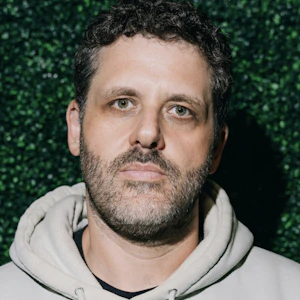
Danny Polishchuk
Danny Polishchuk
Chris Seedor
Chris Seedor
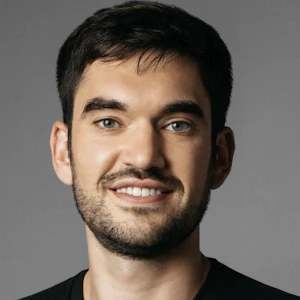
Alex Leishman
Alex Leishman

The Subtle Art of Buying the Top
Speakers/Moderators
Ryan Long
Ryan Long
Ryan has made some of the most viral sketches on the internet involving the crypto world
https://www.youtube.com/watch?v=uag9TSN7qUY
https://www.youtube.com/watch?v=dRuXOtD3CwE&t=7s
https://www.youtube.com/watch?v=g_aacBuhODE
https://www.youtube.com/watch?v=N50lwEB4LJs&t=20s
Based in New York City, Ryan is a regular at The Comedy Cellar, New York Comedy Club, and The Stand, and tours internationally performing his unique brand of sharp, satirical stand-up.
Danny Polishchuk
Danny Polishchuk
Chris Seedor
Chris Seedor
Alex Leishman
Alex Leishman
Self-Custody Insurance: Protecting Your Bitcoin without Giving It Up
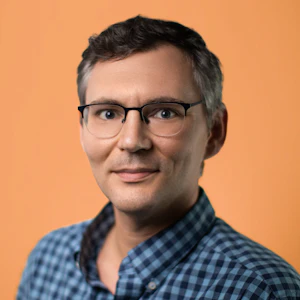
Aaron Daniel
Aaron Daniel
Chris Seedor
Chris Seedor

Kevin Loaec
Kevin Loaec
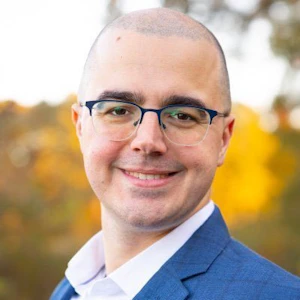
Rob Hamilton
Rob Hamilton
AnchorWatch designs bespoke Bitcoin custody solutions using multisignature wallets, timelocks, and Miniscript, tailored to the specific security and operational needs of each client. These custody architectures can be deployed independently or paired with insurance coverage, giving individuals and institutions flexibility in how they secure and manage their bitcoin.
Rob’s broader focus is on advancing Bitcoin as a financial system, bridging the gap between self-custody and institutional-grade security through custody solutions, insurance, and improved user experience. He frequently speaks on custody design, Bitcoin Script engineering, and the role of insurance in scaling Bitcoin adoption.
Self-Custody Insurance: Protecting Your Bitcoin without Giving It Up
Speakers/Moderators
Aaron Daniel
Aaron Daniel
Chris Seedor
Chris Seedor
Kevin Loaec
Kevin Loaec
Rob Hamilton
Rob Hamilton
AnchorWatch designs bespoke Bitcoin custody solutions using multisignature wallets, timelocks, and Miniscript, tailored to the specific security and operational needs of each client. These custody architectures can be deployed independently or paired with insurance coverage, giving individuals and institutions flexibility in how they secure and manage their bitcoin.
Rob’s broader focus is on advancing Bitcoin as a financial system, bridging the gap between self-custody and institutional-grade security through custody solutions, insurance, and improved user experience. He frequently speaks on custody design, Bitcoin Script engineering, and the role of insurance in scaling Bitcoin adoption.
Other
Speakers

Michael Saylor
Michael Saylor
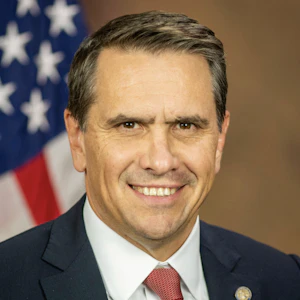
Todd Blanche
Todd Blanche
Biography of Deputy Attorney General Todd Blanche
The Honorable Todd Blanche is the 40th Deputy Attorney General of the United States, overseeing the work of the 115,000 dedicated employees who fulfill the Department of Justice’s mission at Main Justice, the FBI, DEA, U.S. Marshals, ATF, and 93 U.S. Attorney’s Offices.
Todd began his career at the Department where he served for over fifteen years in a variety of capacities, including as a contractor, a paralegal in the Criminal Division, and at the United States Attorney’s office for the Southern District of New York where he eventually became an AUSA and later a supervisor.
After leaving the Department, Todd worked as a criminal defense attorney that included representing President Donald Trump in three of the criminal cases brought against him in 2023 and 2024.
Following President Trump’s historic return to the White House, the President appointed Todd to work alongside Attorney General Pam Bondi to make America safe again. At the DOJ, Todd is working tirelessly to implement President Trump’s priorities that include confronting illegal protecting American businesses from fraud.
Todd has been married to his wonderful wife Kristine for nearly thirty years, is a father and grandfather.

Paul Atkins
Paul Atkins
Prior to returning to the SEC, Chairman Atkins was most recently chief executive of Patomak Global Partners, a company he founded in 2009. Chairman Atkins helped lead efforts to develop best practices for the digital asset sector. He served as an independent director and non-executive chairman of the board of BATS Global Markets, Inc. from 2012 to 2015.
Chairman Atkins was appointed by President George W. Bush to serve as a Commissioner of the SEC from 2002 to 2008. During his tenure, he advocated for transparency, consistency, and the use of cost-benefit analysis at the agency. Chairman Atkins also represented the SEC at meetings of the President’s Working Group on Financial Markets and the U.S.-EU Transatlantic Economic Council. From 2009 to 2010, he was appointed a member of the Congressional Oversight Panel for the Troubled Asset Relief Program.
Before serving as an SEC Commissioner, Chairman Atkins was a consultant on securities and investment management industry matters, especially regarding issues of strategy, regulatory compliance, risk management, new product development, and organizational control.
From 1990 to 1994, Chairman Atkins served on the staff of two chairmen of the SEC, Richard C. Breeden and Arthur Levitt, ultimately as chief of staff and counselor, respectively. He received the SEC’s 1992 Law and Policy Award for work regarding corporate governance matters.
Chairman Atkins began his career as a lawyer in New York, focusing on a wide range of corporate transactions for U.S. and foreign clients, including public and private securities offerings and mergers and acquisitions. He was resident for 2½ years in his firm's Paris office and admitted as conseil juridique in France.
A member of the New York and Florida bars, Chairman Atkins received his J.D. from Vanderbilt University School of Law in 1983 and was Senior Student Writing Editor of the Vanderbilt Law Review. He received his A.B., Phi Beta Kappa, from Wofford College in 1980.
Originally from Lillington, North Carolina, Chairman Atkins grew up in Tampa, Florida. He and his wife Sarah have three sons.

Mike Selig
Mike Selig
Chairman Selig brings to the role deep public and private sector experience working with a wide range of stakeholders across agriculture, energy, financial, and digital asset industries, which rely upon and operate in CFTC-regulated markets.
Prior to his leadership at the CFTC, Chairman Selig most recently served as chief counsel of the Securities and Exchange Commission’s Crypto Task Force and senior advisor to SEC Chairman Paul S. Atkins. In this role, Chairman Selig helped to develop a clear regulatory framework for digital asset securities markets, harmonize the SEC and CFTC regulatory regimes, modernize the agency’s rules to reflect new and emerging technologies, and put an end to regulation by enforcement. He also participated in the President’s Working Group on Digital Asset Markets and contributed to its report on “Strengthening American Leadership in Digital Financial Technology.”
Prior to government service, Chairman Selig was a partner at an international law firm, focusing on derivatives and securities regulatory matters. During his years in private practice, he represented a broad range of clients subject to regulation by the CFTC, including commercial end users, futures commission merchants, commodity trading advisors, swap dealers, designated contract markets, derivatives clearing organizations, and digital asset firms. Chairman Selig advised clients on compliance with the Commodity Exchange Act and the CFTC’s rules and regulations thereunder, including in connection with registration applications and obligations, enforcement matters, and complex transactions.
Chairman Selig earned his law degree from The George Washington University Law School and was articles editor of The George Washington Law Review. He received his undergraduate degree from Florida State University.

David Bailey
David Bailey

Eric Trump
Eric Trump
Mr. Trump also serves as Executive Vice President of The Trump Organization, where he oversees the global management and operations of the Trump family’s extensive real estate portfolio. This includes Trump Hotels, Trump Golf, commercial and residential real estate, Trump Estates, and Trump Winery. Known for his hands-on leadership and strong market instincts, he has played a key role in expanding the company’s presence across major U.S. and international markets.
A globally recognized business leader and public figure, Mr. Trump is a prominent advocate for Bitcoin and decentralized finance. He is a co-founder of World Liberty Financial, a decentralized finance (DeFi) platform, and serves on the Board of Advisors of Metaplanet, Japan’s largest corporate holder of Bitcoin.
Beyond his business activities, Mr. Trump has helped raise more than $50 million for St. Jude Children’s Research Hospital in the fight against pediatric cancer, a philanthropic mission he began at age 21.
Mr. Trump earned a degree in Finance and Management from Georgetown University. He currently resides in Florida with his wife, Lara, and their two children. He is also the author of Under Siege, his memoir published in October 2025.

Jack Mallers
Jack Mallers
Cynthia Lummis
Cynthia Lummis
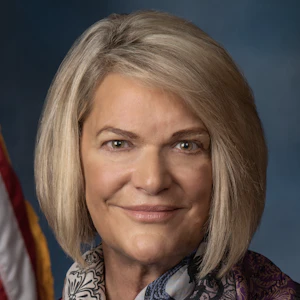
As the first-ever Chair of the Senate Banking Subcommittee on Digital Assets, Senator Lummis is the architect of the legislative framework shaping America's digital asset future. She introduced the landmark Lummis-Gillibrand Responsible Financial Innovation Act, the first comprehensive bipartisan crypto regulatory framework in Senate history. She co-authored the GENIUS Act — the first federal stablecoin law ever enacted — and introduced the BITCOIN Act, which would establish a U.S. strategic Bitcoin reserve of up to one million BTC. She is leading the Clarity Act, which will bring long-overdue regulatory certainty to the digital asset industry. She has also championed digital asset tax reform, including a de minimis exemption for small transactions and equal tax treatment for miners and stakers.
Known as Congress' "Crypto Queen," Senator Lummis represents Wyoming — a state she has helped build into one of the most digital asset-friendly regulatory environments in the nation. Before serving in the Senate, she served 14 years in the Wyoming Legislature, eight years as Wyoming State Treasurer, and eight years in the U.S. House. She is a three-time graduate of the University of Wyoming.
Her work represents a crucial bridge between traditional financial systems and the emerging digital economy, ensuring America leads the world in financial innovation while protecting the individual freedoms that define it.

Adam Back
Adam Back
Amy Oldenburg
Amy Oldenburg
David Marcus
David Marcus

Matt Schultz
Matt Schultz
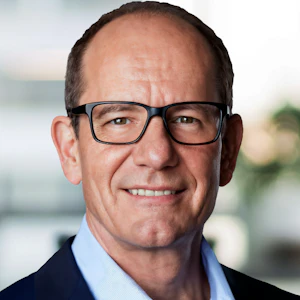
Fred Thiel
Fred Thiel
Throughout his career, Mr. Thiel has consistently driven rapid growth and created substantial shareholder value. Prior to MARA, Mr. Thiel served as the CEO of two other public companies, Local Corporation (NASDAQ: LOCM) and Lantronix, Inc (NASDAQ: LTRX). He has successfully raised billions in equity and debt through private and public offerings, led companies through IPOs, executed high-value exits to strategic and financial acquirers, and implemented effective M&A and roll-up strategies.
Mr. Thiel attended the Stockholm School of Economics and executive classes at Harvard Business School, and is fluent in English, Spanish, Swedish, and French. Mr. Thiel is the Chairman of the Board for Oden Technology, Inc. and is active in Young Presidents’ Organization where he has led initiatives in both the FinTech and Technology Networks.
A recognized voice in the industry, Fred frequently shares his insights on energy and technology with major media outlets like Bloomberg TV, CNBC, and FOX Business, contributing to vital discussions about the future of these sectors.
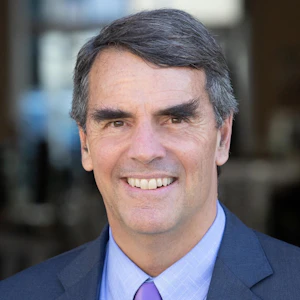
Tim Draper
Tim Draper
He is a supporter and global thought leader for entrepreneurs everywhere, and is a leading spokesperson for Bitcoin and decentralization, having won the Bitcoin US Marshall’s auction in 2014, invested in over 50 crypto companies, and led investments in Coinbase, Ledger, Tezos, and Bancor, among others.

Afroman
Afroman