Past Performance, Future Structure: Is Bitcoin at a Turning Point as a Risk Asset?
Speakers/Moderators

Brandon Gentile
Brandon Gentile

Chris Kuiper
Chris Kuiper
Prior to joining Fidelity Digital Assets®, Chris served as Vice President of equity research at CFRA Research, one of the largest independent global investment research providers. There he covered financial exchanges as well as payment and fintech companies, while also expanding CFRA’s research capabilities to include digital assets and led the creation of CFRA’s research methodology. Chris also previously served as a research analyst at various asset management firms, as well as a research fellow at the Mercatus Center, a university-based public policy research center where he focused on technology- and finance-related public policy issues.
Chris holds an MA in Economics from George Mason University as well as a BA in Business Administration from Dordt University. Chris Kuiper is a CFA® charterholder.

Sam Callahan
Sam Callahan

Greg Cipolaro
Greg Cipolaro
Session
Overview
Brandon Gentile moderated a discussion with Chris Kuiper of Fidelity Digital Assets, Sam Callahan of OranjeBTC, and Greg Cipolaro of NYDIG on whether Bitcoin is still best understood as a risk asset. The panel focused on institutional allocation, Bitcoin’s long-term performance, volatility, correlation with equities, and the argument that investors should have a clear reason if they choose to remain at a 0% allocation.
The speakers discussed how macro uncertainty, geopolitical fragmentation, currency debasement, capital controls, and debt levels may be changing how investors evaluate Bitcoin. They explored whether Bitcoin’s perceived risk is falling, or whether traditional assets are becoming riskier by comparison.
The conversation also covered Bitcoin’s difficulty fitting into traditional portfolio categories, the role of new Bitcoin-backed investment products, generational wealth transfer, and stablecoins. Stablecoins were described as useful for dollar access and user familiarity with wallets, but distinct from Bitcoin because they inherit the properties and centralized controls of the U.S. dollar.
The panel closed by considering Bitcoin’s progression as money, from store of value to possible medium of exchange and unit of account. The speakers emphasized that Bitcoin adoption varies by jurisdiction and use case, with some users treating it as portfolio diversification and others using it for payments, remittances, or protection from capital controls.
Time's rolling. Boys, I'll make sure I'm going to get these correct. You know who we are speaking to. Mr. Chris Kuiper. I'm going to start from this end, actually. Chris is a VP of research at Fidelity Digital Assets. Mr. Sam Callahan here in the middle is the director of Bitcoin Strategy Research at OranjeBTC. And then Greg Cipolaro is global head of research at NYDIG.
Today we are talking about Bitcoin being a risky asset. Everyone thinks it's a risky asset, right? Past Performance, Future Structure: Is Bitcoin at a Turning Point as a Risk Asset? Maybe the best place to start is your report, Chris, that you just updated from six years ago. Maybe we start there to set the tone and work our way through. Why don't you give a little rundown on where we're at and the update you just did to your report?
Yeah, thank you. Thanks for reading the report. It's called Getting Off Zero. We published it many years ago. We did a little refresh, and the message is the same: to implore people to at least look at getting off zero.
The biggest thing is that having a 0% allocation may be fine for some people. Maybe Bitcoin doesn't make sense. Let's state that up front. The point we tried to make was, if that's your position, you need to have some well-reasoned arguments for that. It's no longer acceptable, especially for an institutional investor, to just ignore it and say, we haven't looked at it, we don't care.
Because it's the best-performing asset, hands down, of the last decade. It's got one of the highest Sharpe ratios, Sortino ratios. You can go through all the nerdy stats of it. From an objective money management, CFA lens, you should have some reasons why you're at zero. If you don't have good reasons, then you should evaluate it. That's what the report goes through.
I'll just add one thing from it. This idea of volatility has really changed. In traditional finance, volatility equals risk. That is the bedrock of traditional finance. For good reason. It's the old adage with stocks, for example: they take the escalator up, the elevator down. Whenever volatility is spiking, it's because things are crashing.
But Bitcoin is unique. It has high volatility not just to the downside, which we all know about, but also to the upside. That's what makes it so different from everything else and why we think investors need to consider it in their portfolios.
To set the stage a little bit more, the last four months seemed like 10 years have gone by. We've had all kinds of things going on. We have wars going on now. Very uncertain times, and markets don't like uncertainty.
Sam, what are your thoughts when looking at this? I think we've seen huge benchmark things with straight-off moves, things Bitcoiners have talked about for a long time, and the turning point for whether Bitcoin is a risk asset. What are your thoughts when it comes to money for your enemies? Greg and I talked about this a few minutes ago. What happens when these enemies, whatever people want to call them, start getting into Bitcoin? How are institutions and people going to look at that when there is probably going to be public pushback? We're through this process where institutions are in, or seemingly making it less risky, but now we're going to have nation-states and other players coming in. What are your thoughts when you zoom out?
Well, I think Bitcoin is money and just a tool. It's used by everybody. The intentions of how you use that tool should be criticized, not the tool itself. Bitcoin is used by enemies and friends. Bitcoin is for everybody. It doesn't discriminate.
It's really the intentions that we should criticize, not how people are using the tool. But I think what you're speaking to is the risk profile of everything else, both in the broader cryptocurrency space as well as traditional assets. The risk profile of everything else is deteriorating, and that's causing investors to rerate Bitcoin in their minds a little bit.
I think about it through the lens of Darwin. It's not survival of the strongest, it's not survival of the fastest, it's survival of the fittest. So you have to ask yourself, what asset is best fit for this macro environment?
When you look out at the macro environment, you see rising uncertainty, geopolitical fragmentation, war, increased risk of capital controls, highly indebted governments, which raises the risk of currency debasement and financial repression. When you think about Bitcoin and the traits that make it special, you start to realize that perhaps this is the fittest asset in this environment, best able to survive and even thrive.
That flips it on its head. It's not that the risk of Bitcoin is becoming less. It's actually the risk of everything else that is getting worse in investors' minds.
I'd like to add, since the conflict in Iran erupted on February 28, the price of Bitcoin took a short dip but rallied in the wake of that. We also had commodities spike, oil spike, but other risk assets, equities, gold, which has actually been performing quite well in recent months, and interest rates went south. Bitcoin was really showing its use case in this geopolitical environment.
Back to Chris's report, I like to tell investors, if you were to close your eyes and imagine an asset and what financial properties it would have for a portfolio, you would want low correlation to other asset classes, high returns, and low risk. Luckily, we have two out of three of those. That risk, that volatility, is more than made up for in its return. Those financial properties, as well as some of the technical properties, are things that are increasingly being appreciated by investors.
Obviously, there is a big idea that Bitcoin is a tech stock. We've seen this for years. It's correlated to the Nasdaq, and there's some truth to that in a way. We've all seen it. This is something that we still deal with today.
Greg, what are your thoughts on this decoupling? We've seen moments where everyone is looking at it and saying, I think it's decoupling, I think it's decoupling. What do you think has to happen? What signposts are you looking for to really decouple and be this thing that we know it to be? Bitcoin is unchanging. One Bitcoin equals one Bitcoin. Why do people keep running back into the burning building and getting out of Bitcoin when they have the real thing right there?
I like to tell investors that assets, and Bitcoin particularly, have no natural correlations to other factors. Those are given to them by investors and what they do with their money and these investments as a reaction function to events that happen.
If you look at Bitcoin in particular, its correlations with most other macro factors and other asset classes essentially meander about zero throughout its history. The one exception has been U.S. equities, tech equities, for example.
There really are two distinct eras. It really came in the wake of the monetary and fiscal stimulus that happened after COVID. You have the BC era, before COVID, and the AC era, after COVID. Prior to COVID, Bitcoin's correlation with equities was essentially zero. Since that time, it has been elevated.
There were two reaction functions as a result of this. One, you had monetary stimulus, rates went lower, money got printed. Then you had fiscal stimulus, deficits and spending, and then higher inflation. I think that pushed money into risk assets and other corners of the investment sphere, and it happened along with Bitcoin. You're seeing what seems to be a structurally higher correlation with Bitcoin.
Now, even though the rolling 90-day correlation with the S&P is 0.56, it still has a nice diversifying principle attached to it. It's not zero or negatively correlated to the S&P, but it still gives you diversification benefits.
Sam, do you want to give your thoughts on the correlation here and when it breaks?
The work that Chris has done, and others, and Greg, shows that if you look long term, Bitcoin does have very low to moderate correlation with pretty much every other asset class. The data is the data. It's actually more closely correlated to different liquidity measures.
Bitcoin has different risk factors and different drivers. That's really a function of supply and demand. Demand is adoption trends, and we're seeing very positive adoption trends right now at the institutional level, corporate level, individual level, and regulatory level. On the supply side, Bitcoin is unique because it has a fixed supply that doesn't exist anywhere else in the world.
There are two data points I had even in the last two days. I was on a panel with Brent Johnson, who's a very respected market commentator. He's into gold, and he's a financial advisor. He's always been skeptical of Bitcoin. I asked him, has your view shifted? He said, well, I no longer think it's going to zero. I think you're seeing investors start to think that the tail risks are starting to fade when it comes to Bitcoin.
Then we saw Paul Tudor Jones today give a long-form interview, very rare, and he spoke on Bitcoin. He said that Bitcoin is unequivocally the best inflation hedge and it has the most valuable scarcity of anything. But he did mention two risks. He mentioned quantum risk, and he mentioned the risk of some kind of large global cybersecurity attack.
Those are both highly theoretical tail risks. When he mentioned gold's risk, he mentioned dilution. Supply increases about 1.7%, and that's structural. That's not theoretical. That's happening. I think you're going to see the tail risk in an investor's mind continue to fade as Bitcoin builds a track record, adoption continues to grow, and investor access grows.
Obviously, it all depends on 21 million staying 21 million and remaining secure. That's how I think about investors shifting their minds around this new asset.
To your point, Brandon, quite frankly, that is the most frustrating thing to me and the hardest question I get from institutional investors we talk to: why is this thing so correlated right now? To Sam's point, over the long term, it's not. But that doesn't help when you're in the room in the conversation and it's acting like a leveraged tech stock, or it's acting like gold on steroids. We were just talking about Cliff Asness, the great quant AQR guy, saying it's just extra beta. Why would you own this? It's really frustrating.
One of the things I go back to is a very early article I read that unlocked a lot of understanding for me when I was first getting into Bitcoin. It's an article called What Does Bitcoin and the Platypus Have in Common? by Spencer Bogart. I don't know if any of you here have read this article. It's a great article, but you have to know the story about the platypus.
In the late 17th century, European naturalists stumbled upon the platypus, I think in Australia. If you've ever looked at a platypus, it's a very odd animal. It's got the bill of a duck. It's got fur like a mammal, but it lays eggs. I believe the male even has a venomous spur on one of its hind legs.
They sent sketches back to their European counterparts, and they said, this thing is a joke. That doesn't exist. They sent a pelt back. They still didn't believe them. They said this thing is the work of some skilled taxidermist, probably from Asia, that sewed together different parts of an animal.
Of course, they realized this thing actually lived and was real. But even after that, for decades, they argued about how to classify this scientifically. That's what Bitcoin constantly goes through. Is it a commodity? Is it a currency? Is it a payment system? Is it a platform? People argue about that.
Now, in the investment community, we argue, is it gold on steroids? Is it leveraged tech stocks? Is it this? Investors always want to put it into a box, but they don't open their mind and say, maybe this is a category creator. Maybe it's different.
To Sam's point, it has all of these characteristics that no other thing has. There is no other commodity on Earth whose supply will not change when the price changes. There is no other immutable thing like it.
Until investors start to realize that, which I think they will, and geopolitical and other things will help them realize that, they're going to treat it just like another asset on their screen. They're going to trade it how it's trading during that week, month, or quarter. But I personally think we'll get there, where people realize this is fundamentally different and it starts to trade differently. I guess we'll keep waiting for that decoupling moment.
There are practical implementation questions from investors who are trying to deploy this. They need to classify this into which bucket am I taking this from? I like to do a thought experiment. If people didn't know the word, if you didn't presuppose any knowledge about Bitcoin, and you didn't even tell them this was Bitcoin, you just gave them the technical, economic, risk, and return properties and allowed them to naturally allocate to the asset that way, you get a much different allocation profile than what you have today, which is most people still being on zero.
I think because the word Bitcoin has preconceived notions for some people, they come charged. They have ideas about what it is and what it isn't. It doesn't allow for what would be an ideal allocation to this asset.
It's interesting too, because investors are looking at this and they’re like, this thing is a platypus. What is this? They're having trouble classifying it. What allocation bucket does Bitcoin fit in? That's how institutional investors think.
But what we're seeing in the Bitcoin community is that we're building products to meet them where they are, to fit into their buckets, with Bitcoin as the underlying asset supporting it. That's what Michael Saylor with his preferreds is doing. At OranjeBTC, we have Bitcoin-backed equity now listed in B3 that gives investors better access to get Bitcoin exposure. Maybe they have a domestic equity bucket and they don't have spot Bitcoin, but they can buy our equity if they want exposure to Bitcoin.
You're seeing companies start to build and develop products that meet investors where they are, which makes them feel more comfortable. Maybe they don't want the 45% or 50% volatility Bitcoin. Maybe they want to turn that down. But it's all supported by Bitcoin, and a lot of these products still increase demand for the underlying. It's good for the ecosystem because not only does it drive demand for Bitcoin, but it provides better investor access.
I think you're seeing the community build to meet investors where they are so they don't have to try to classify what a platypus is.
That's a great point. I think we're in this spot where there is a cultural shift. Dollars are used the world over. Everyone uses dollars. The dollar is the reserve currency. We're so used to dollars. It's in songs. It's in everything. We have this dollarism, or whatever you want to call it.
What do you guys see going forward when you have older generations and the wealth transfer that's going to come down over the next five, 10, 15, 20 years? How do you see Bitcoin as this shifting asset, going from seeming risky now to a lot of people, to the younger generation being more digitally native? Right now, a lot of the younger generation doesn't have the wealth. We're in this weird gap, this weird bridge, where it's like, how do we get from the old world to this new world?
Chris, where do you see the path going in that sense? Do you think over the next decade or so there is going to be a real shift as wealth transfers down, sunsets from the older generation, and comes to the younger generation?
It's one of the most obvious things that is talked about a lot, but that doesn't make it any less underrated. I don't think people are fully grasping the size of this. If you look at the actual numbers and put on your analyst hat, there's a huge amount of wealth in the older generations.
I go to these traditional finance events. I was at one a few months ago, and one guy said to me, there is no way I'm putting money in something like Bitcoin. I'd rather own art. I can hold art. I can see it. I can touch it.
I thought, that's very odd, because you're doubting the subjective value of Bitcoin, but art is one of the most subjective value things in the world. The canvas and ink are worth pennies, even if the art is valued at millions. I thought that was a little odd.
But then I took a step back, and I get it. Another thing that helped me understand this was when companies like Microsoft went public. There were people who said, how in the world is this company going to be worth anything? It's code. It's just ones and digits, digital. How can something that is so ephemeral and digital be worth so much money?
Now, of course, it's one of the top five most valuable companies in the world. It seems obvious to us today, and I think it will seem obvious to us tomorrow. I've got young kids. They're digitally native. I'm a millennial, so I've kind of bridged that gap. It's going to be no problem whatsoever for them to get their heads around owning something of digital value that has true digital scarcity, in my opinion.
I mean, it's kind of a dark quote, but it's that quote that progress happens one funeral at a time. I think the demographic ownership of Bitcoin is one of the most bullish things, period, because it's really hard for critics to push back on that. When you see who's owning this, who's adopting it, it makes sense. Young people are digitally native. They understand this. Anybody born after 2009 has never lived in a world where digital money and Bitcoin didn't exist. It's what they've known.
That trend, the wealth transfer that happens as the elderly pass away and transfer their wealth over, what do you think they're going to buy? It goes back to what I said before. What asset is best fit for this environment? The market awareness in the younger generation of what this asset is is much higher than in the older generations, who hold a significant amount of wealth today. But that will change. Demographics happen and people do pass away. It's one of the bullish secular trends I see in Bitcoin that's really difficult for a critic to push back on.
I think a bit about the social and economic divide that is occurring and seemingly widening over time. The wealthy and the have-nots are splitting further and further apart, and this is causing all sorts of ripples in politics, for example, growing populism on the right and growing populism on the left.
I feel as though there's an increasing belief that the boomers have made all the wealth and they're pulling the ladder up. The younger generation no longer sees hard work, effort, and some luck getting ahead in society. It's difficult to afford a new home, and that American dream is increasingly out of reach.
I think about an asset like Bitcoin that has some of these financial properties that can transform financial outcomes for investors. This is a repository for society's inability to solve these intractable problems. Bitcoin is a repository for that, and that's not changing.
I'll add one thing. Yes, younger people tend to adopt Bitcoin more so today than older generations, but that doesn't mean that everybody doesn't need Bitcoin. Everyone suffers from currency debasement today, across the board. I actually think about retirees who are on a fixed income. Given the rate of currency debasement today, they really need to think about how to protect themselves in this new macro regime.
It's very different than the last 30 or 40 years, where you could just set it and forget it in a 60/40 target date mutual fund. You really have to think differently about how you add real diversification into a portfolio. That goes back to Chris's work and his paper. Bitcoin provides that diversification and that protection against debasement. Older generations need it just as much as younger generations.
With just over six minutes left, we can touch on stablecoins. People see Bitcoin, which is why this session is about volatility and the perceived riskiness of Bitcoin. A lot of people are going to stablecoins, obviously.
How do you guys see stablecoins playing in this? The dollar is entrenched. People want stablecoins all around the world. You have UBI talk and all these things coming in America. What are you going to do with AI? People are very scared. We talk about market uncertainty. When you zoom way out, how do stablecoins and Bitcoin fit together?
I view stablecoins as a bit orthogonal to Bitcoin. Obviously, there's a centralized issuer who is holding cash or investments on one side of its balance sheet and has a liability of issuing tokens on the other side. Because these are essentially all U.S. dollar denominated, they're inheriting all of the financial properties of the U.S. dollar.
Their exponential growth speaks to the demand for the U.S. dollar on a blockchain. There are still investors who don't have access to currencies that they can trust. For them, stablecoins offer that option, even though they're inheriting the properties of the U.S. dollar.
I think it's a little bit of a Trojan horse into the space, but it is still very much orthogonal versus Bitcoin as open, permissionless technology.
Sam, before you go, do you think people are going to go to stablecoins because of the dollar, like we just mentioned, but do you think it's going to train people as well? How do you use wallets? How do you use exchanges? How do you go down this path? Then you still have the contrast of seeing Bitcoin. If I'm in stablecoins, it's still melting. It's still the dollar.
It will definitely get more people familiar with just using things like wallets. Try sending a wire. It's so archaic. It's so slow. It's so frustrating. There's no doubt that stablecoins improve some of the inefficiencies of sending dollars around the world and will improve dollar access.
It's all relative. If I'm in a country where the currency is really mismanaged, then dollars look great. But to quote my friend Jeff Booth, there is nothing stable about a stablecoin because it doesn't protect against debasement. I sound like a broken record. It's a fancy wrapper that still has questionable monetary policy in it, let's say.
Also, like we saw just last week, Tether froze more than $300 million in response to violations of sanctions. Whether you agree with that or not, it really just shows what's possible with a stablecoin and should wake people up to, okay, could this be used against me, a law-abiding citizen? It's sometimes scary to think about a centralized company that has the ability not just to censor and seize, but also to surveil.
When you look at stablecoins in contrast to Bitcoin, it shines a light on some of the things that make Bitcoin special. I think you're going to see stablecoins and Bitcoin continue to rise from here. U.S.-based stablecoins.
I think it's important to reiterate that. It's acknowledging that stablecoins are here and people are going to use them. It's the game theory of people going to them, not advocating for them by any means. Well said.
I'm in the camp of what you said previously, Brandon, about stablecoins making people comfortable with using the infrastructure, the wallets, and opening that first door of, oh, this is a protocol. This is how the world can work more seamlessly, because we're so used to our current system.
There is huge product-market fit for countries that have high inflation and everything. But even just in the U.S., my kids had a lemonade stand the other day. Of course they accepted cash, but nobody has cash. They all have their phones. We'd ask, do you have Zelle? Do you have PayPal? Do you have Venmo? Do you have Cash App? We had to go through four different apps with some people to see which ones we both had.
Do you realize how ridiculous that is in our day and age? You wouldn't say, do you have a certain type so I can call you or send you a text message? We don't all have to be on the same email provider to send emails. Email is just email. It's a protocol.
If we get to the point where people are just sending stablecoins, it doesn't matter what app they have. It doesn't matter which one they use or what phone they have. Hopefully that can unlock people's brains into showing them this is a protocol. Then maybe we can get to Bitcoin.
But I'm a little bit with Greg here. It's more of a jump that they will all understand Bitcoin as money coming from stablecoins. But it's a good start, and there's obviously a huge product-market fit there for all the usage and rise we've seen in it.
We have a minute here. Are you guys believers in Bitcoin going through the four stages of money? Dr. Jeff Ross has talked about this over the years: the collectible phase, then the store of value phase, then medium of exchange, then unit of account. Maybe over the next decade or two it takes another decade or two to get through those last few phases. Greg, where do you see that?
In the early days, Bitcoin had a lot of ideas about what it could and should be. Now we're really narrowing down on how to pitch it and analogize it. I think that's good for investors. What that ends up looking like, whether it is an investment or is used as money, is still TBD. The fixed supply property makes it more suitable as an investment than a medium of exchange, but I'm still open to all of these options.
It always made sense to me that people would have to adopt it broadly as a store of value first before they begin using it as a medium of exchange. As it grew as a store of value, the volatility would fall, which would make it more suitable to be used as a medium of exchange.
At the same time, Bitcoin is being adopted in every which way all at once, depending on where you are in your jurisdiction. That's one of the beauties of Bitcoin. It's a technology that people come to for very different reasons, for their own personal reasons.
If I'm in Latin America and I need to send remittances cheaply, and I'm afraid of capital controls or something, I am going to be using Bitcoin as a medium of exchange. If I'm in the U.S., it's probably more about store of value and portfolio diversification. With any revolutionary technology, people come to it for different reasons, and there are a ton of different use cases, just like the internet, just like electricity. Bitcoin is no different. It's going to be adopted in every which way, all at once.
I agree with all of that. The only thing I'll add is the unit of account is usually thought of as, when do we start keeping our books and records and pricing things in Bitcoin as the final stage? But one twist you can think about is, when do people start internally thinking of Bitcoin's rate of return as their hurdle rate for their own investments and business decisions?
Because that's, to me, the real unit of account. Can you outpace inflation is the real question. People think they're making a lot of money nominally. They need to start pricing their returns in Bitcoin.
That's a superpower, by the way. You start pricing things in Bitcoin.
Thank you so much, guys. Again, Brandon Gentile, Bitcoin content creator. We got Greg Cipolaro, NYDIG; Sam Callahan, OranjeBTC; Chris Kuiper, Fidelity Digital Assets. Thank you so much, guys.
Similar
Sessions
Past Performance, Future Structure: Is Bitcoin at a Turning Point as a Risk Asset?
Brandon Gentile
Brandon Gentile
Chris Kuiper
Chris Kuiper
Prior to joining Fidelity Digital Assets®, Chris served as Vice President of equity research at CFRA Research, one of the largest independent global investment research providers. There he covered financial exchanges as well as payment and fintech companies, while also expanding CFRA’s research capabilities to include digital assets and led the creation of CFRA’s research methodology. Chris also previously served as a research analyst at various asset management firms, as well as a research fellow at the Mercatus Center, a university-based public policy research center where he focused on technology- and finance-related public policy issues.
Chris holds an MA in Economics from George Mason University as well as a BA in Business Administration from Dordt University. Chris Kuiper is a CFA® charterholder.
Sam Callahan
Sam Callahan
Greg Cipolaro
Greg Cipolaro
Past Performance, Future Structure: Is Bitcoin at a Turning Point as a Risk Asset?
Speakers/Moderators
Brandon Gentile
Brandon Gentile
Chris Kuiper
Chris Kuiper
Prior to joining Fidelity Digital Assets®, Chris served as Vice President of equity research at CFRA Research, one of the largest independent global investment research providers. There he covered financial exchanges as well as payment and fintech companies, while also expanding CFRA’s research capabilities to include digital assets and led the creation of CFRA’s research methodology. Chris also previously served as a research analyst at various asset management firms, as well as a research fellow at the Mercatus Center, a university-based public policy research center where he focused on technology- and finance-related public policy issues.
Chris holds an MA in Economics from George Mason University as well as a BA in Business Administration from Dordt University. Chris Kuiper is a CFA® charterholder.
Sam Callahan
Sam Callahan
Greg Cipolaro
Greg Cipolaro
Other
Speakers
Michael Saylor
Michael Saylor
Todd Blanche
Todd Blanche
Biography of Deputy Attorney General Todd Blanche
The Honorable Todd Blanche is the 40th Deputy Attorney General of the United States, overseeing the work of the 115,000 dedicated employees who fulfill the Department of Justice’s mission at Main Justice, the FBI, DEA, U.S. Marshals, ATF, and 93 U.S. Attorney’s Offices.
Todd began his career at the Department where he served for over fifteen years in a variety of capacities, including as a contractor, a paralegal in the Criminal Division, and at the United States Attorney’s office for the Southern District of New York where he eventually became an AUSA and later a supervisor.
After leaving the Department, Todd worked as a criminal defense attorney that included representing President Donald Trump in three of the criminal cases brought against him in 2023 and 2024.
Following President Trump’s historic return to the White House, the President appointed Todd to work alongside Attorney General Pam Bondi to make America safe again. At the DOJ, Todd is working tirelessly to implement President Trump’s priorities that include confronting illegal protecting American businesses from fraud.
Todd has been married to his wonderful wife Kristine for nearly thirty years, is a father and grandfather.

Paul Atkins
Paul Atkins
Prior to returning to the SEC, Chairman Atkins was most recently chief executive of Patomak Global Partners, a company he founded in 2009. Chairman Atkins helped lead efforts to develop best practices for the digital asset sector. He served as an independent director and non-executive chairman of the board of BATS Global Markets, Inc. from 2012 to 2015.
Chairman Atkins was appointed by President George W. Bush to serve as a Commissioner of the SEC from 2002 to 2008. During his tenure, he advocated for transparency, consistency, and the use of cost-benefit analysis at the agency. Chairman Atkins also represented the SEC at meetings of the President’s Working Group on Financial Markets and the U.S.-EU Transatlantic Economic Council. From 2009 to 2010, he was appointed a member of the Congressional Oversight Panel for the Troubled Asset Relief Program.
Before serving as an SEC Commissioner, Chairman Atkins was a consultant on securities and investment management industry matters, especially regarding issues of strategy, regulatory compliance, risk management, new product development, and organizational control.
From 1990 to 1994, Chairman Atkins served on the staff of two chairmen of the SEC, Richard C. Breeden and Arthur Levitt, ultimately as chief of staff and counselor, respectively. He received the SEC’s 1992 Law and Policy Award for work regarding corporate governance matters.
Chairman Atkins began his career as a lawyer in New York, focusing on a wide range of corporate transactions for U.S. and foreign clients, including public and private securities offerings and mergers and acquisitions. He was resident for 2½ years in his firm's Paris office and admitted as conseil juridique in France.
A member of the New York and Florida bars, Chairman Atkins received his J.D. from Vanderbilt University School of Law in 1983 and was Senior Student Writing Editor of the Vanderbilt Law Review. He received his A.B., Phi Beta Kappa, from Wofford College in 1980.
Originally from Lillington, North Carolina, Chairman Atkins grew up in Tampa, Florida. He and his wife Sarah have three sons.

Mike Selig
Mike Selig
Chairman Selig brings to the role deep public and private sector experience working with a wide range of stakeholders across agriculture, energy, financial, and digital asset industries, which rely upon and operate in CFTC-regulated markets.
Prior to his leadership at the CFTC, Chairman Selig most recently served as chief counsel of the Securities and Exchange Commission’s Crypto Task Force and senior advisor to SEC Chairman Paul S. Atkins. In this role, Chairman Selig helped to develop a clear regulatory framework for digital asset securities markets, harmonize the SEC and CFTC regulatory regimes, modernize the agency’s rules to reflect new and emerging technologies, and put an end to regulation by enforcement. He also participated in the President’s Working Group on Digital Asset Markets and contributed to its report on “Strengthening American Leadership in Digital Financial Technology.”
Prior to government service, Chairman Selig was a partner at an international law firm, focusing on derivatives and securities regulatory matters. During his years in private practice, he represented a broad range of clients subject to regulation by the CFTC, including commercial end users, futures commission merchants, commodity trading advisors, swap dealers, designated contract markets, derivatives clearing organizations, and digital asset firms. Chairman Selig advised clients on compliance with the Commodity Exchange Act and the CFTC’s rules and regulations thereunder, including in connection with registration applications and obligations, enforcement matters, and complex transactions.
Chairman Selig earned his law degree from The George Washington University Law School and was articles editor of The George Washington Law Review. He received his undergraduate degree from Florida State University.

David Bailey
David Bailey

Eric Trump
Eric Trump
Mr. Trump also serves as Executive Vice President of The Trump Organization, where he oversees the global management and operations of the Trump family’s extensive real estate portfolio. This includes Trump Hotels, Trump Golf, commercial and residential real estate, Trump Estates, and Trump Winery. Known for his hands-on leadership and strong market instincts, he has played a key role in expanding the company’s presence across major U.S. and international markets.
A globally recognized business leader and public figure, Mr. Trump is a prominent advocate for Bitcoin and decentralized finance. He is a co-founder of World Liberty Financial, a decentralized finance (DeFi) platform, and serves on the Board of Advisors of Metaplanet, Japan’s largest corporate holder of Bitcoin.
Beyond his business activities, Mr. Trump has helped raise more than $50 million for St. Jude Children’s Research Hospital in the fight against pediatric cancer, a philanthropic mission he began at age 21.
Mr. Trump earned a degree in Finance and Management from Georgetown University. He currently resides in Florida with his wife, Lara, and their two children. He is also the author of Under Siege, his memoir published in October 2025.

Jack Mallers
Jack Mallers
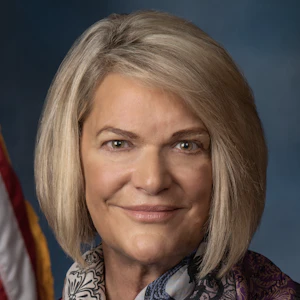
Cynthia Lummis
Cynthia Lummis
As the first-ever Chair of the Senate Banking Subcommittee on Digital Assets, Senator Lummis is the architect of the legislative framework shaping America's digital asset future. She introduced the landmark Lummis-Gillibrand Responsible Financial Innovation Act, the first comprehensive bipartisan crypto regulatory framework in Senate history. She co-authored the GENIUS Act — the first federal stablecoin law ever enacted — and introduced the BITCOIN Act, which would establish a U.S. strategic Bitcoin reserve of up to one million BTC. She is leading the Clarity Act, which will bring long-overdue regulatory certainty to the digital asset industry. She has also championed digital asset tax reform, including a de minimis exemption for small transactions and equal tax treatment for miners and stakers.
Known as Congress' "Crypto Queen," Senator Lummis represents Wyoming — a state she has helped build into one of the most digital asset-friendly regulatory environments in the nation. Before serving in the Senate, she served 14 years in the Wyoming Legislature, eight years as Wyoming State Treasurer, and eight years in the U.S. House. She is a three-time graduate of the University of Wyoming.
Her work represents a crucial bridge between traditional financial systems and the emerging digital economy, ensuring America leads the world in financial innovation while protecting the individual freedoms that define it.

Adam Back
Adam Back
Amy Oldenburg
Amy Oldenburg
David Marcus
David Marcus

Matt Schultz
Matt Schultz
Fred Thiel
Fred Thiel
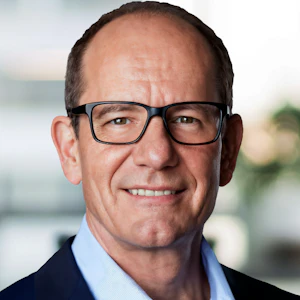
Throughout his career, Mr. Thiel has consistently driven rapid growth and created substantial shareholder value. Prior to MARA, Mr. Thiel served as the CEO of two other public companies, Local Corporation (NASDAQ: LOCM) and Lantronix, Inc (NASDAQ: LTRX). He has successfully raised billions in equity and debt through private and public offerings, led companies through IPOs, executed high-value exits to strategic and financial acquirers, and implemented effective M&A and roll-up strategies.
Mr. Thiel attended the Stockholm School of Economics and executive classes at Harvard Business School, and is fluent in English, Spanish, Swedish, and French. Mr. Thiel is the Chairman of the Board for Oden Technology, Inc. and is active in Young Presidents’ Organization where he has led initiatives in both the FinTech and Technology Networks.
A recognized voice in the industry, Fred frequently shares his insights on energy and technology with major media outlets like Bloomberg TV, CNBC, and FOX Business, contributing to vital discussions about the future of these sectors.
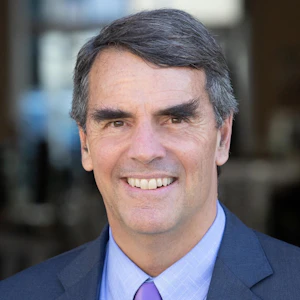
Tim Draper
Tim Draper
He is a supporter and global thought leader for entrepreneurs everywhere, and is a leading spokesperson for Bitcoin and decentralization, having won the Bitcoin US Marshall’s auction in 2014, invested in over 50 crypto companies, and led investments in Coinbase, Ledger, Tezos, and Bancor, among others.

Afroman
Afroman