Pepe Stays Rare: Ten Years of Bitcoin Memes
Speakers/Moderators

Subterranean
Subterranean

Session
Overview
Pepe Stays Rare: Ten Years of Bitcoin Memes looked back at Rare Pepes as an early Bitcoin-native meme economy built on Counterparty. Subterranean hosted a casual conversation with Shawn Leary, Tommy Marcheschi, and the DJ Pepe persona tied to Rare Scrilla, covering how tokenized meme cards became provably scarce digital collectibles before NFTs became a mainstream term.
The discussion traced Rare Pepe culture from Telegram chats, trading memes, and early Counterparty experimentation to the Rare Pepe Wallet, the Rare Pepe scientists, and the directory that cataloged more than a thousand cards. Speakers also discussed how Pepes introduced people to Bitcoin by requiring them to use Bitcoin tools to trade and collect.
A major theme was the relationship between memes and Bitcoin art. Tommy Marcheschi described how Pepe imagery has become inseparable from Bitcoin art history and from the collection at the Bitcoin Museum and Art Gallery in Nashville. The panel also touched on physical-digital art, ordinals, artist provenance, and why collectors still value these early Bitcoin cultural artifacts.
To quote the song by Rare Scrilla, we're going to talk about frogs. Frogs, frogs.
I'm Subterranean. I'm honored to be here at the convention. I'm glad they asked me, and I really appreciate it. A little bit about me: we're celebrating the ten-year anniversary of Rare Pepes. I've written articles on wallets and Pepes. I wrote a book about Pepes, and I do the lore every day on Twitter for Pepe lore lessons.
We've got three excellent guests here. My first guest is the artist in residence for Bitcoin Magazine. He's the curator of the museum in Nashville. He's got a fake rare called Tucker Pepe, rated early AI manipulation. That's Tommy Marcheschi.
Next, we've got an early Bitcoin artist. He's the creator of the first tokenized drug reference, which is Dank Pepe. He's a Rare Pepe scientist, and he's an overall OG: Shawn Leary.
Our final guest is an early artist as well, a music producer and DJ, Rare Scrilla.
Hello? Scrilla? Rare Scrilla is missing.
Oh man, DJ Pepe here, man. Scrilla's always getting on that side.
Oh, yo, DJ Pepe. What do you know about Pepes?
I was there in the early days.
Day one?
Day 13.
Yo, Shawn was day one. I don't know about you.
Shawn's real.
DJ Pepe was like the first artist, the real first artist to come to the collection. It's a real honor to have him too.
Yeah, you guys are really lucky. You're talking to DJ Pepe.
So what is a Rare Pepe, if you don't mind?
Rare Pepes are tokens on a meta layer. We ended up assigning art and selling memes, basically creating an economy with Counterparty, which wasn't really being used for a whole lot. When you think about ownership in a company, do you want a hacker to be able to take 20% voting rights of Apple? No. It doesn't work.
One day, Mike came into the chat and said, I'm going to make Rare Pepes provably rare by issuing a token for each image. There are only 300 of these. I was instantly hooked, instantly FOMOed in. I knew I was scamming myself, but it turned out the Nakamoto card. There it is. That's the famous Rare Pepe. That's the rarest.
So what do you think makes Pepes still relevant? They've been here for 10 years. They started two years after Counterparty. They're still selling. Someone paid $50,000 for one yesterday. I still can't believe it.
We were just kind of having fun in a chat room during the bear market. I made Dank Pepe. I made 420 of them, of course, and I sold 410 of them the next day for a dollar each. I think the all-time is $5,000, and I think Scrilla's friend bought it. So I apologize. I didn't sell it to them, but yeah, it's crazy.
That sounds rare.
Super rare.
Rare Scrilla, who's not here, said, Pepe is something you do. Rare Pepe is something you live. DJ Pepe, what does that mean?
That's just a code to live by. With Rare Pepe, Rare Pepe is something you live, and Pepe is something you do. Anybody can be a Pepe, but Rare Pepe is like a lifestyle.
Thank you, Pepe baby.
Tommy, you have the Bitcoin Museum in Nashville. How do you think Pepe fits in with Bitcoin art? Do they overlap?
Yeah, you can't have Bitcoin art without Pepe, probably, at this point. My background: I've worked at Bitcoin Magazine and the conference for almost nine years now. I curated the art gallery back in the day. Now I help with the art gallery, and it's the Bitcoin Museum and Art Gallery now. We have a space in Nashville.
In the space in Nashville, we have over 300 artworks, or let's say 300 Bitcoin collectibles. I would say a quarter of them are probably Pepe-related. I think that's because it's one of the earliest images to be on Bitcoin or be referenced in a Bitcoin context, and it's hard, from that provenance, to separate it from Bitcoin art.
Bitcoin art is different for every artist. We've got a bunch of Bitcoin artists in the crowd here, all with completely different styles. Scrilla has a completely different style. It's totally unique. Making Rare Pepes in Shawn Leary's style is an art form that eludes many people. But as far as Bitcoin art goes, you can't separate Pepe from it.
You're kind of the Pepe expert, the go-to at Bitcoin Magazine.
I have a little backstory. When I started as a graphic designer at Bitcoin Magazine in 2017, Rare Pepe was already going at that point. I was trying to put Pepes in our graphics for the website. When we had an article go out, I would try to put a Pepe in it. I'm not going to name names, but some higher-ups at the company would tell me, we can't do Pepes. It's like a hate symbol. At that point, the vibe was more like that.
I wish at the time that was my cue to go down the rabbit hole and get into Rare Pepes, but as a young graphic designer I took it as, okay, no Pepes, we won't do Pepes. Then as the years went on and I learned more about what the Pepes actually are and what Counterparty actually is, because at that point I didn't really understand Counterparty either, we slowly integrated the Pepes. Nobody panicked, and everything was okay.
Now in the company, they printed my name tag and it just says Tommy Pepe. That's basically how they know me. They also don't know how to say our last names, so that's easier that way.
So I put my book at the museum. Next year we're all going to Nashville, we're going to take a tour, and we're going to see how the Pepes have it. Happy forever.
Shawn, you had an early introduction to Rare Pepes. You said you had a funny crypto celebrity that brought you in. Is that kind of what happened?
You can't really mention Rare Pepes without talking about Telegram chat. Is anyone on Telegram, by chance? That's where it was all happening. That's where it all took place. There was a guy named Clay who was a Bitcoin OG, and he had a sticker kit called Best of Clay. It had all the best Pepe memes, like trading memes. When you lost your position, Pepe's hanging himself, or the green candles are going up, or the red ones are going down. That kind of permeated online culture, so it makes sense.
But the best story I had for making Pepe rare was a video of this young 14-year-old boy. He's like, I've got to make the rarest Pepe. I've drawn it. I haven't looked at it yet, and now I must eat it. He sits there and eats the piece of paper. He's like, that is the rarest Pepe. It's never been seen. He made it, but he doesn't even know what it looks like. So it kind of clicked for me then.
DJ Pepe did something unusual. If you hold his card and you go to the Rare Pepe Wallet, you can flip it over, and there's bonus content. That content was mixes and music by DJ Pepe. Is that correct?
Yeah. I had a music page. If you had the token, you could flip the card over, and there was bonus content. It took you to a private link of cutting-room-floor songs and DJ mixes that only the token holders could listen to.
DJ is like the king of SoundCloud. Is that what I understand?
DJ Pepe stole your SoundCloud.
Exactly. It's too rare. People can't hear it.
Shawn, Bitcoin Uncensored had a big part in Rare Pepes. Nakamoto led to the breakup of one of the greatest podcasts.
Yeah. I met Chris and Josh in person in late 2014. I threw a Bitcoin pizza party for the five-year, and they came up from South Florida. Their interaction together made me say, you guys need to make a podcast. They would finish each other's sentences. They argued like an old married couple. The podcast took off, and Pepe kind of came around that same time. They were into it, and they promoted it.
One of them, being a collector, happened to buy a few of those cards. One of the tenets of Bitcoin Uncensored was that they would never take any type of sponsorship. They would never get paid for any content. But the problem was that when Mike airdropped Pepe Cash to the holders of that card, Josh had now received some type of remuneration. That was one of the things that kind of broke them apart. That one's been memorialized in Pepe as well.
Probably worth it.
Rare Pepes destroyed the best Bitcoin podcast of that time.
That's true. It destroys a lot of things.
But it brings people together as well. All my friends here, I made relationships through Peps. DJ Pepe's handler met somebody, and Shawn had something to do with that as well. I don't know if DJ Pepe ever told that story.
DJ Pepe really stole your girl. That's a real thing. That's all you say. It's just a fact.
In 2021, Pepes and other digital art went to Sotheby's auctions. One Pepe sold for $3.65 million at that time. Even today, people are still paying that amount of money, right? As far as a JPEG on Bitcoin, it has more value than that. It has more significance than that.
Yeah, you're buying a digital token that is a receipt of an art. It's a way to support digital artists, and we saw that right off the bat. How else can they get a fan base to support them? Yeah, you could send someone Venmo, but now you actually hold a digital signature signed by an artist, and it kind of took off from there.
Counterparty has always been big on physical and digital. A lot of the artists ended up making a digital card and turning it into a physical one, or vice versa. Tommy, you do a lot of bidding as well. You buy a lot of Bitcoin art.
Yeah. That's basically the origin of the museum. I'm an artist, but I also love to collect art. When I see artwork from other artists that I respect and I love the art, and I see that I'm able to buy it, it's hard for me not to. So this has led to me collecting way too much Bitcoin art and Pepes.
David Bailey, the CEO of the company, is basically just like me, but probably 3X as crazy. So together, that's the main bulk of the museum collection in Nashville, and it is a lot of Pepes.
I think it's valuable to see it hanging against fine art. It is fine art, right? It's frogs, but we've got fine artists thinking. Beautiful artwork just happens to have a frog involved.
I think the fun thing about Pepe is that there's Rare Pepe, which obviously few see and many can't. It's something you live. Then Pepe evolves from artist to artist. You have an artist in residence at Bitcoin Magazine right now who almost exclusively paints Pepes these days. She does other works too, but her Bitcoin art, and what she inscribes on Bitcoin as ordinals after she paints them, are usually oil, Rembrandt-quality pieces.
The way she renders the Pepe is definitely less true to the original cartoon than someone like Pepenardo, for instance, who will render a beautiful Renaissance-style painting and then slap the cartoonish Pepe on top of it to have that contrast. Both are equally amazing to me, and I think history will appreciate these works. We've gone 10 years, and it's morphed into something bigger.
People can get funny about art on Bitcoin. Scrilla really appreciates Bitcoin. He was one of the earliest Bitcoin artists to accept Bitcoin, and he kind of protects it. Scrilla, DJ Pepe, is that kind of a true statement as far as your beliefs about Bitcoin and Bitcoin art?
I can't speak for Rare Scrilla, but for DJ Pepe, I live in the mempool. I DJ in the mempool.
He stays in the mempool and never gets confirmed. That's why it's so rare.
Yeah, we just stay getting confirmed. If you go to the DJ Pepe site, you can see all the confirmations on there.
Thank you, DJ Pepe.
DJ Pepe has been rejected from Pepes, and in fact had to start fake Rare Pepe. We've got the guy sitting on stage, Shawn, maybe having made that ban possible. We don't allow fake rares in the chat. Shout out to fake rares. Shout out to Mark. Fake DJ Pepe.
That was a fake ban, though, right? You were able to come back to Rare Pepes.
Yeah, the ban was temporary. Thankful to the Rare Pepe scientists for helping extend fake rares.
Speaking of the scientists, in 2018 they were done. They were doing too much work. They couldn't do it anymore. They posted a farewell letter, which was meant to be read by Joe Looney.
All right, here. This is something Joe Looney wrote on behalf of the Rare Pepe scientists. Okay, this is the most people I've ever read in front of, so bear with me. Rare Pepe Foundation, official letterhead. That's what it says up there.
A letter from the scientists: Since Rare Pepes were first discovered on the Bitcoin block chain, two words, mind you, in September 2016, we have worked tirelessly to verify both rareness and dankness for the Rare Pepe trading community. Over the last 18 months, we have certified nearly 1,800 Pepes as rare and have listed each one and its likeness in the Rare Pepe Directory.
Today, we are hanging up our lab coats and closing the book on future submissions to the Rare Pepe Directory. It's been a fantastic journey honing our craft and discovering and cataloging new Rare Pepes. We have no doubt that Rare Pepe trading will continue to thrive, with every existing Pepe becoming more rare as time moves forward.
The Rare Pepe Directory and Rare Pepe Wallet will continue to be maintained as an homage to this brief moment in time in internet history. Your friends, the Rare Pepe Scientists.
Thank you, Tommy. Shout out Joe Looney, who does it for the love of the game. The Rare Pepe Wallet hasn't made him rich, yet he maintains it to this day. It's one of the only ways you can look at your Rare Pepes in a Bitcoin wallet, and it's a Bitcoin wallet. In total there were 1,774 Rare Pepe cards.
Shawn, was that a bittersweet moment, the retiring ceremony of the scientists, in real life and in Telegram?
We were just really drained. It's a fun job, but we're not getting paid to do it because we did it for free. Yeah, 18 months is enough.
According to my art, there are 300 artists worldwide in the Rare Pepe directory. A lot of them are still unknown to this day. Some of them still hold their value, or they hold the collection, right? It's called dead wallets and waking-up wallets. Diamond hands never let go of their Pepes. DJ Pepe, they've even burned Pepes and destroyed Pepes. There's so much we can talk about.
Trading the Pepes is all about doing hood rat stuff with your friends on the blockchain. You're using Bitcoin. You create many Bitcoin users because you have to use Bitcoin to trade Rare Pepes. A lot of people learned about Rare Pepes and learned about Bitcoin through Rare Pepe. A lot of people.
At one point, there was like 40 or 50% of the mempool filled with Rare Pepe transactions in 2017 or 2018 or something. Every time a block hits, it says, Pepe!
Shawn, you had to let go of your Pepes. People come to you, they want your Pepes. You don't just give away your Pepes.
I like to trade. I think trade is the best way to go. As an artist, that's your exchange. That's your value. If you trade leverage and someone wants something very rare, you can get something you want. There's a leaderboard, so you want to be higher. I think I'm number nine or 10 on the leaderboard.
I was there, but I also didn't have the funds to really collect a lot of them, because the Hansel ones were expensive right from the beginning. I only have like two or three of his, and they're all awesome.
Mr. Hansel is taking his to the grave. They're going to be in a sarcophagus with all of his worldly treasures. He doesn't want anybody to have his rare art.
Well, he doesn't want anyone to have his physical artworks either. He just does prints and sells the prints, and I'm trying to get my hands on one of those originals. Mr. Hansel, what do you have to say for yourself?
I do it too, so I don't blame you. Selling is nice. It's hard to make your art and give your art away.
I grew up on Reddit and making memes on Advice Animals, and that was a perfect segue to make that. But, of course, on Reddit you're just going for karma points, and you want to get that front page. For me, it was kind of making my mark, but it got me creative again. It got me feeling like a little kid. You're drawing and doing all those things again, and you're like, oh, I still like doing this. It did that for a lot of people.
Check out my new mixtape: Rare Pepes Are Not NFTs, dropping this summer.
Rare Pepes started before the word NFT was the word, correct?
Yeah, way before. You could say Rare Pepes laid the idea for all of the NFTs to come up out of the ground.
I would say Only One Pepe is probably the first NFT. It's the first one-of-one, in Series 1 too.
We're almost out of time. I really appreciate my panelists here. I really wish Scrilla was here, but I understand he's acting up.
He'll be with me in the art gallery through Wednesday. Don't bring a girl to the art gallery.
If anybody wants to talk more about rare, I'll be hanging out over here. The book is available. We've got stuff on auction. There's a lot of Rare Pepe history back there. There's a great book back there for sale too that has a whole Pepe section.
Bitcoin through art. The Bitcoin Art Magazine is involved, and there is Pepe art in the Bitcoin Art Magazine. That's what's important.
Thank you, guys. Appreciate everybody. Thanks for coming out. Love you guys.
Similar
Sessions
Pepe Stays Rare: Ten Years of Bitcoin Memes
Subterranean
Subterranean
Pepe Stays Rare: Ten Years of Bitcoin Memes
Speakers/Moderators
Subterranean
Subterranean
Other
Speakers

Michael Saylor
Michael Saylor
Todd Blanche
Todd Blanche
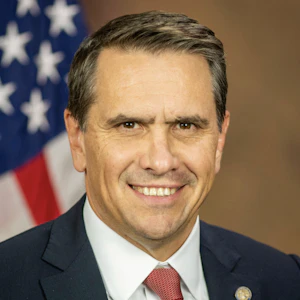
Biography of Deputy Attorney General Todd Blanche
The Honorable Todd Blanche is the 40th Deputy Attorney General of the United States, overseeing the work of the 115,000 dedicated employees who fulfill the Department of Justice’s mission at Main Justice, the FBI, DEA, U.S. Marshals, ATF, and 93 U.S. Attorney’s Offices.
Todd began his career at the Department where he served for over fifteen years in a variety of capacities, including as a contractor, a paralegal in the Criminal Division, and at the United States Attorney’s office for the Southern District of New York where he eventually became an AUSA and later a supervisor.
After leaving the Department, Todd worked as a criminal defense attorney that included representing President Donald Trump in three of the criminal cases brought against him in 2023 and 2024.
Following President Trump’s historic return to the White House, the President appointed Todd to work alongside Attorney General Pam Bondi to make America safe again. At the DOJ, Todd is working tirelessly to implement President Trump’s priorities that include confronting illegal protecting American businesses from fraud.
Todd has been married to his wonderful wife Kristine for nearly thirty years, is a father and grandfather.
Paul Atkins
Paul Atkins
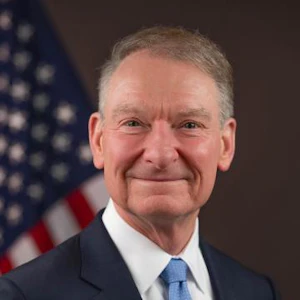
Prior to returning to the SEC, Chairman Atkins was most recently chief executive of Patomak Global Partners, a company he founded in 2009. Chairman Atkins helped lead efforts to develop best practices for the digital asset sector. He served as an independent director and non-executive chairman of the board of BATS Global Markets, Inc. from 2012 to 2015.
Chairman Atkins was appointed by President George W. Bush to serve as a Commissioner of the SEC from 2002 to 2008. During his tenure, he advocated for transparency, consistency, and the use of cost-benefit analysis at the agency. Chairman Atkins also represented the SEC at meetings of the President’s Working Group on Financial Markets and the U.S.-EU Transatlantic Economic Council. From 2009 to 2010, he was appointed a member of the Congressional Oversight Panel for the Troubled Asset Relief Program.
Before serving as an SEC Commissioner, Chairman Atkins was a consultant on securities and investment management industry matters, especially regarding issues of strategy, regulatory compliance, risk management, new product development, and organizational control.
From 1990 to 1994, Chairman Atkins served on the staff of two chairmen of the SEC, Richard C. Breeden and Arthur Levitt, ultimately as chief of staff and counselor, respectively. He received the SEC’s 1992 Law and Policy Award for work regarding corporate governance matters.
Chairman Atkins began his career as a lawyer in New York, focusing on a wide range of corporate transactions for U.S. and foreign clients, including public and private securities offerings and mergers and acquisitions. He was resident for 2½ years in his firm's Paris office and admitted as conseil juridique in France.
A member of the New York and Florida bars, Chairman Atkins received his J.D. from Vanderbilt University School of Law in 1983 and was Senior Student Writing Editor of the Vanderbilt Law Review. He received his A.B., Phi Beta Kappa, from Wofford College in 1980.
Originally from Lillington, North Carolina, Chairman Atkins grew up in Tampa, Florida. He and his wife Sarah have three sons.

Mike Selig
Mike Selig
Chairman Selig brings to the role deep public and private sector experience working with a wide range of stakeholders across agriculture, energy, financial, and digital asset industries, which rely upon and operate in CFTC-regulated markets.
Prior to his leadership at the CFTC, Chairman Selig most recently served as chief counsel of the Securities and Exchange Commission’s Crypto Task Force and senior advisor to SEC Chairman Paul S. Atkins. In this role, Chairman Selig helped to develop a clear regulatory framework for digital asset securities markets, harmonize the SEC and CFTC regulatory regimes, modernize the agency’s rules to reflect new and emerging technologies, and put an end to regulation by enforcement. He also participated in the President’s Working Group on Digital Asset Markets and contributed to its report on “Strengthening American Leadership in Digital Financial Technology.”
Prior to government service, Chairman Selig was a partner at an international law firm, focusing on derivatives and securities regulatory matters. During his years in private practice, he represented a broad range of clients subject to regulation by the CFTC, including commercial end users, futures commission merchants, commodity trading advisors, swap dealers, designated contract markets, derivatives clearing organizations, and digital asset firms. Chairman Selig advised clients on compliance with the Commodity Exchange Act and the CFTC’s rules and regulations thereunder, including in connection with registration applications and obligations, enforcement matters, and complex transactions.
Chairman Selig earned his law degree from The George Washington University Law School and was articles editor of The George Washington Law Review. He received his undergraduate degree from Florida State University.

David Bailey
David Bailey

Eric Trump
Eric Trump
Mr. Trump also serves as Executive Vice President of The Trump Organization, where he oversees the global management and operations of the Trump family’s extensive real estate portfolio. This includes Trump Hotels, Trump Golf, commercial and residential real estate, Trump Estates, and Trump Winery. Known for his hands-on leadership and strong market instincts, he has played a key role in expanding the company’s presence across major U.S. and international markets.
A globally recognized business leader and public figure, Mr. Trump is a prominent advocate for Bitcoin and decentralized finance. He is a co-founder of World Liberty Financial, a decentralized finance (DeFi) platform, and serves on the Board of Advisors of Metaplanet, Japan’s largest corporate holder of Bitcoin.
Beyond his business activities, Mr. Trump has helped raise more than $50 million for St. Jude Children’s Research Hospital in the fight against pediatric cancer, a philanthropic mission he began at age 21.
Mr. Trump earned a degree in Finance and Management from Georgetown University. He currently resides in Florida with his wife, Lara, and their two children. He is also the author of Under Siege, his memoir published in October 2025.
Jack Mallers
Jack Mallers
Cynthia Lummis
Cynthia Lummis
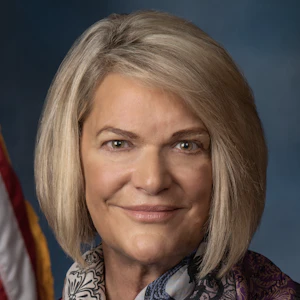
As the first-ever Chair of the Senate Banking Subcommittee on Digital Assets, Senator Lummis is the architect of the legislative framework shaping America's digital asset future. She introduced the landmark Lummis-Gillibrand Responsible Financial Innovation Act, the first comprehensive bipartisan crypto regulatory framework in Senate history. She co-authored the GENIUS Act — the first federal stablecoin law ever enacted — and introduced the BITCOIN Act, which would establish a U.S. strategic Bitcoin reserve of up to one million BTC. She is leading the Clarity Act, which will bring long-overdue regulatory certainty to the digital asset industry. She has also championed digital asset tax reform, including a de minimis exemption for small transactions and equal tax treatment for miners and stakers.
Known as Congress' "Crypto Queen," Senator Lummis represents Wyoming — a state she has helped build into one of the most digital asset-friendly regulatory environments in the nation. Before serving in the Senate, she served 14 years in the Wyoming Legislature, eight years as Wyoming State Treasurer, and eight years in the U.S. House. She is a three-time graduate of the University of Wyoming.
Her work represents a crucial bridge between traditional financial systems and the emerging digital economy, ensuring America leads the world in financial innovation while protecting the individual freedoms that define it.

Adam Back
Adam Back

Amy Oldenburg
Amy Oldenburg
David Marcus
David Marcus

Matt Schultz
Matt Schultz

Fred Thiel
Fred Thiel
Throughout his career, Mr. Thiel has consistently driven rapid growth and created substantial shareholder value. Prior to MARA, Mr. Thiel served as the CEO of two other public companies, Local Corporation (NASDAQ: LOCM) and Lantronix, Inc (NASDAQ: LTRX). He has successfully raised billions in equity and debt through private and public offerings, led companies through IPOs, executed high-value exits to strategic and financial acquirers, and implemented effective M&A and roll-up strategies.
Mr. Thiel attended the Stockholm School of Economics and executive classes at Harvard Business School, and is fluent in English, Spanish, Swedish, and French. Mr. Thiel is the Chairman of the Board for Oden Technology, Inc. and is active in Young Presidents’ Organization where he has led initiatives in both the FinTech and Technology Networks.
A recognized voice in the industry, Fred frequently shares his insights on energy and technology with major media outlets like Bloomberg TV, CNBC, and FOX Business, contributing to vital discussions about the future of these sectors.
Tim Draper
Tim Draper
He is a supporter and global thought leader for entrepreneurs everywhere, and is a leading spokesperson for Bitcoin and decentralization, having won the Bitcoin US Marshall’s auction in 2014, invested in over 50 crypto companies, and led investments in Coinbase, Ledger, Tezos, and Bancor, among others.
Afroman
Afroman