Powering the Future Economy: How HPC + Bitcoin Mining Changes Energy Markets for the Better
Speakers/Moderators
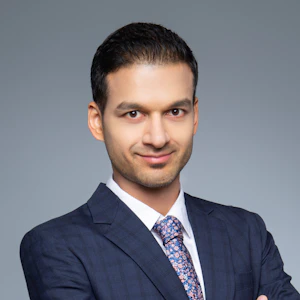
Nishant Sharma
Nishant Sharma

Matt Schultz
Matt Schultz
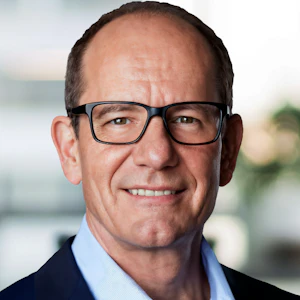
Fred Thiel
Fred Thiel
Throughout his career, Mr. Thiel has consistently driven rapid growth and created substantial shareholder value. Prior to MARA, Mr. Thiel served as the CEO of two other public companies, Local Corporation (NASDAQ: LOCM) and Lantronix, Inc (NASDAQ: LTRX). He has successfully raised billions in equity and debt through private and public offerings, led companies through IPOs, executed high-value exits to strategic and financial acquirers, and implemented effective M&A and roll-up strategies.
Mr. Thiel attended the Stockholm School of Economics and executive classes at Harvard Business School, and is fluent in English, Spanish, Swedish, and French. Mr. Thiel is the Chairman of the Board for Oden Technology, Inc. and is active in Young Presidents’ Organization where he has led initiatives in both the FinTech and Technology Networks.
A recognized voice in the industry, Fred frequently shares his insights on energy and technology with major media outlets like Bloomberg TV, CNBC, and FOX Business, contributing to vital discussions about the future of these sectors.
Session
Overview
Nishant Sharma of BlocksBridge Consulting hosts Matt Schultz of CleanSpark and Fred Thiel of MARA for a discussion on how high-performance computing and Bitcoin mining can work together in energy markets. The conversation focuses on flexible computing loads, curtailment, and how Bitcoin mining can help utilities monetize stranded or underused power while supporting grid stability.
The speakers explain that Bitcoin mining can be rapidly curtailed, unlike many AI and HPC workloads that need more consistent uptime. They discuss how miners can act as a demand response resource, absorb excess generation from hydro, nuclear, wind, and solar, and potentially complement AI inference or training loads inside hybrid data center models.
The panel also covers site selection, power interconnection, PUE, latency, fiber access, cooling needs, and the difference between deploying a Bitcoin mining facility and an AI data center. Schultz highlights how mining can help “plow the road” by monetizing power before a larger HPC facility is built, while Thiel describes how energy companies may increasingly partner with miners as digital infrastructure becomes more power constrained.
A key theme is discipline around HPC contracts. The speakers caution that headline-grabbing AI data center deals can carry significant timing, construction, penalty, and community-impact risks, making long-term execution more important than short-term market reaction.
Nishant Sharma: Good afternoon, everyone. Thanks for coming here to the Nakamoto Stage today. Our panel is about HPC and Bitcoin mining, and how both can help the grid and energy infrastructure for the better. We are joined by two companies that are at the front lines of this transition between Bitcoin miners, HPC, and everything in between. We will be talking about a lot of things, but I’ll start with a quick round of introductions.
My name is Nishant. I run a consulting firm called BlocksBridge. We own a media firm called The Energy Mag, which covers the Bitcoin mining space and, increasingly, the energy infrastructure space. Matt, I’ll let you take it.
Matt Schultz: Thank you. Matt Schultz, CleanSpark. CleanSpark is a Bitcoin miner. We recently announced that we plan to expand into AI data centers. We have 35 locations across seven states and about 1.8 gigawatts of active power capacity.
Fred Thiel: Fred Thiel, chairman and CEO of MARA Holdings. We are one of the leading Bitcoin miners, with 18 sites across four continents and about 1.1 gigawatts of power energized.
Nishant Sharma: When people talk about Bitcoin mining and HPC, especially in the context of power, they often think of them as competing for the same capacity. They think of one versus the other. But as we have discussed before, and as we read, they can complement each other in many ways. I would like to hear from the panelists how they complement each other, starting with Matt.
Matt Schultz: Bitcoin mining is very unique in the fact that it is interruptible. Anytime there is an act of God, an event that requires power elsewhere, or an issue with temperature that drives utility costs up, we can curtail our power very rapidly. The utilities love that.
Duke University published a study called Rethinking Load Growth, and it says that right now there is between 75 and 125 gigawatts of stranded capacity on the U.S. grid across the 22 largest utilities. The challenge is that it has to be interruptible one-half to 1.5% of the time. What that really means is, if you can shut off your power for 117 hours a year, it unlocks 100 gigawatts of capacity.
Manufacturing facilities and traditional AI data centers are generally fixed loads. They are not interruptible. But Bitcoin mining is an easily interruptible load. I know MARA, as well as CleanSpark, frequently curtail our loads for the benefit of the utility grids and the communities we operate in.
Think about securing a hyperscale customer, a Magnificent Seven company, or whoever has a requirement for a certain amount of energy. They publish a peak number that says they consume a certain number of megawatts, assuming it is the hottest day of the year, the most humid, and all of the systems are running. But over the course of a year, the average usage is much lower.
If you are a utility, and one of our sites has 250 megawatts of power, to convert that to an HPC data center you take the reduction in PUE to provide the critical load. You may have 50 or 60 megawatts of capacity that only gets used 5% or 6% of the time. The idea is that you can mine Bitcoin in that PUE. When the power is available, you can mine. When it is not, you curtail and push it back to support the data center. It is a very complementary process.
Nishant Sharma: Interesting. You mentioned that Bitcoin mining helps keep the constant load or fill the gap between what you hope to keep and what you sometimes end up getting. Fred, maybe you can explain more to the audience about how PUE is different between Bitcoin mining and HPC, and also touch on how the overhead is different. There is the theory coming from the computation itself and how power dense the computation is. Intuitively, you might believe that Bitcoin mining would have a very low PUE because it does not have the overhead on cooling, air conditioners, and all that you need for an HPC data center. But in the end, the PUE often ends up being lower sometimes because of other factors. What are the factors that PUE depends on?
Fred Thiel: I think you have to look at the nature of the load. Bitcoin mining is a fixed load in the sense that you turn it on and it runs. You only turn it off or turn it down if there is a demand from the grid that you curtail, as Matt was explaining.
If you are running training loads, training is constant, then there is a drop, then it is constant, then there is a drop. In that drop, you are not necessarily taking power. In inference, however, you have a load that is shaped by the number of queries you are getting.
As an example, if you are an Anthropic user in Europe, you have a very different token allocation after 5 p.m. Eastern U.S. time than before that. Why? Because the U.S. capacity on Anthropic inference systems is so high, and when U.S. offices shut down, that load drops and Europe can consume more of that capacity. They are trying to load-balance this curve of demand based on queries.
If you marry Bitcoin to that, it works like a perfect way to create a fixed load, which, to Matt’s point, is what the power utilities want to have: just this flat line. That is their dream. Bitcoin mining can do that, and Bitcoin mining is flexible. It can shut off.
If you marry Bitcoin mining and inference, and you can load-balance in the data center, you provide the best of both worlds. You help the inference company because you are balancing their load and lowering their cost of electricity. As a Bitcoin miner, you are mining with a subsidized cost of electricity because they are paying you for that service. And the power company loves you.
Nishant Sharma: You talked about how Bitcoin mining helps keep the load constant. You both mentioned that, and you showed different angles on how that helps the grid. The grid loves flexible loads. Why is that?
Fred Thiel: The grid likes flexible loads because of how the grid operates. Think about the plumbing in your house. If you have a certain amount of water pressure coming in and you open your taps, you are taking water pressure off the water utility system. But if you shut the tap, that pressure builds in your system. If the water company kept pushing all that water at you, your taps would explode.
The grid works the same way. If power generators constantly generated and did not regulate their supply to match demand, transformers would blow up and the electrical grid would short out. Utility companies are constantly trying to figure out how much power people will use over the course of the day.
It varies. There is a thing called the duck curve, which is like the belly of a duck. Electricity consumption peaks at 9 a.m., then it drops midday, then it starts scaling up from 3 p.m. to 9 p.m., and then it drops again. Utilities have to match generation capacity to that consumption, that offtake.
Bitcoin miners are perfect partners because the power utility can say, tomorrow between 9 and 12, I need you to take all the power you can, and then after 3, I need you to scale back about 20%. We are a perfect partner because we can act as that demand response mechanism for them. AI cannot do that. AI wants to run constantly. AI is baseload demand, whereas Bitcoin mining is flexible demand that can be shaped.
Matt mentioned the Duke study. Curtailing 1.5% to 2% of the time a day is the only time when the U.S. grid uses maximum generation capacity. If you operate outside of that, there is almost 40% to 50% of U.S. grid capacity available. That is where Bitcoin miners traditionally operate.
I think if the AI industry marries Bitcoin mining and AI, all of a sudden it can solve a lot of the energy challenges. But the AI industry has to adapt to a world where it is dealing with more flexible loads.
Matt Schultz: To add to Fred’s point, a lot of the jurisdictions we operate in have hydro and nuclear, and those are always on. There is this narrative that Bitcoin mining and data centers drive utility rates up. The issue is that once generation is built and deployed, especially with those types of generation, if it is not being used, it is being lost.
Fred owns a wind farm. It is the same way. When the wind is blowing, the power is being generated. If it is not being used, it is being lost. The idea is that if you can design consumption that meets the generation, now you are monetizing all of that power being generated for the benefit of the community and the utility, because that revenue would otherwise go unrealized.
Instead of power going to ground, it becomes revenue generation that can be reinvested in new CapEx and new types of generation. It really becomes a flywheel if you can manage it and balance it properly.
Nishant Sharma: You both talked about curtailment, and that is a very important point. As you both pointed out, AI demand is not as curtailable because people need their ChatGPT running and they want their inference all the time. Whereas with Bitcoin mining, you can turn it off, turn it on, and curtail. How can anyone measure how much curtailment flexibility is enough for the grid or the utility operator?
Fred Thiel: Utility planners estimate, on a daily and weekly basis, how much demand there will be for power on their grid based on weather, day of the week, seasonality, and years of history. They know May 29 is typically a day of this temperature, so people are going to run air conditioning or not. They have a lot of historical demand data. They forecast demand and then essentially purchase that amount of power from generation.
But if you have renewable energy on the grid, meaning wind and solar, it may be cloudy that day even though you planned for it to be sunny. Now you are running short of power on the grid, so maybe you need Bitcoin miners to curtail a little. Or maybe the wind is blowing more than expected, and now you suddenly have more energy on the grid, so they have to curtail something else.
The use of renewable energy has exacerbated the problem for utilities in balancing load. If you look at ERCOT, for example, you had Winter Storm Uri a few years ago, which was a total disaster for the state of Texas. This winter, you had another really bad storm, but no disaster. Why? Because you had two gigawatts of Bitcoin miners that basically could shut down and give all that power back to the grid. So they did not have that crisis situation.
Renewable energy causes a lot of inaccurate estimates regarding power generation capacity that have to be modulated in real time. You cannot use a nuclear reactor to modulate your electricity. You cannot just press the accelerator on a nuclear reactor and say, increase capacity by 10%. Typically, you have to use thermal peaker plants, which are like jet engines in a building. You turn them on for two hours and then turn them off, and they can charge the grid a huge amount of money for that excess energy.
Bitcoin miners offset that. Teaching AI companies to build systems that can operate together with Bitcoin miners, so the Bitcoin miner can act as that curtailment buffer to the grid and balance the consumption of the AI load, will be a huge innovation.
The other thing you are starting to see now, especially for inference, is that data center operators are willing to come off the tier four data center requirement of five nines resiliency because they can have multiple data centers that provide redundancy for each other. Therefore, you can save cost on build, which means you can now do more of a modular model, more like Bitcoin mining. I think you are going to see the two industries become more and more similar in what they do.
Nishant Sharma: Taking a step back, we talked about how these two complement each other. But when you are looking at a new site, what are you looking at? How does it change from a Bitcoin mining site to an HPC site, or even a hybrid site? What matters most to you: interconnection, firm power, tenant demand? What factors do you consider most when looking at a new site?
Matt Schultz: I think we are geographically agnostic. The reason we have approached it that way, and the way we built our Bitcoin business, is that when the grid was laid out 20 years ago, Georgia, as an example, was the textile manufacturing capital of the world. When all of that manufacturing and industry went offshore, you had pockets of power that these communities had bonded their participation in generation for. They own the opportunity for that power, but it is underutilized.
We use Bitcoin mining, and we talk about it internally as effectively plowing the road. In Cheyenne, Wyoming, there was 100 megawatts and 100 acres that came available from the local utility. There was a trillion-dollar Magnificent Seven hyperscale client that bid for it, and there was CleanSpark. CleanSpark prevailed, not because we have a better credit rating or a better balance sheet, but because the other customer wanted to build a proper data center. They agreed with the utility that they would take or pay that power starting in 30 months.
The utility has generation capacity and transmission capacity available today, so they are more interested in monetizing those megawatts now rather than later. They care less about the guarantor of the offtake agreement.
The way we built these relationships from CleanSpark’s perspective is we enter into an agreement with a blockchain-specific tariff. We get a little bit lower utility rate with the understanding that we will curtail and push that power back. We also buy plenty of additional land in conjunction with that acquisition so we can build a proper data center behind that.
We are benefiting the community by buying the available power now, and then we can build a data center. As we are buying that power, it generates revenue for the utility to reinvest in additional CapEx to build more generation. Then we can convert that to a firm load, switch that over to an AI factory, and take the modular immersion-cooled Bitcoin mining facility, pick it up, plant it somewhere else, and repeat that cycle.
Nishant Sharma: That is a very interesting point that Matt just brought up. Bitcoin mining helped CleanSpark secure this new site faster than a hyperscaler could have, because Bitcoin mining sites can come up faster. They can consume the power that the grid needs to sell faster and consume it at scale faster. Now, Matt, I would love to hear from you about how the monetization hierarchy works for a particular megawatt when you are looking at a hybrid site that has both Bitcoin mining and HPC.
Fred Thiel: If you look at a particular site, there are basic requirements for Bitcoin mining: power available and enough land to build on. You do not need water for cooling in Bitcoin mining, and you do not need high-speed internet because you can use Starlink.
If you are going to do any form of AI, you need some form of wired internet connection, ideally 400 gigabits of bandwidth. You may or may not need water for cooling, depending on the GPUs or the ASICs you are using. Some may be closed-loop water cooled, some may be open loop. It all depends on the technology.
Then there is proximity to a major metro. If your clients are in major metros and you want low latency, you need a short distance for that fiber connection to connect to a point of presence on the internet. If you are trying to service financial services clients running trading systems on your AI stack, they want super low latency because it is high-frequency trading. If your client is taking huge amounts of data, processing it in a model, and can wait hours or a couple of days for results, then you can run that in a data center in Midland, Texas, get the results back, and operate at a lower cost.
The key is, as you look at a data center solution, what load can you run at that data center? Is it Bitcoin mining? Is it AI? Is it critical IT load, which is a mix of AI, CPU, and storage? Then it is what customer you are going to bring into the site and how you will monetize that. Lastly, it is what type of technology is going in there relative to GPUs or silicon, and whether you are going to do it modular or build a building.
It is a much more complex decision. You become much more like a real estate developer. Here is a piece of land that has power on it. What can I do with it? Am I going to build an office building? A hospital? A mall? What is the right solution? Then you go through that calculus, figure out what you are going to do, and go ahead and do it.
Nishant Sharma: We talked about the operational side. We talked about how these two complement each other. We talked about how mining can be a bridge to a new HPC operation and also coexist after the HPC operation starts. What we did not talk about, and what is an interesting topic, are the contracts. What are the biggest risks that someone should consider before rushing into any HPC contract? We have heard many headlines. We have seen a lot of stock appreciation for some companies that have made these headlines, and they sometimes have yet to deliver. What are the risks you are considering while having these conversations today with hyperscalers?
Matt Schultz: From our perspective, we have worked through the basis of design conversation with the offtake client, and we have gone to review of the lease agreements. What we found is that the penalties for even a one-day delay on a contracted ready-for-service date can be so severe that if you sign an eight-year lease and you are one day late, you lose a year of revenue, which could potentially be the entire margin on the contract.
I am certain Fred has probably seen as many of the opportunities as we have. While the headline and the short-term stock appreciation are amazing, the long-term value is a bigger consideration. At the end of the day, you are making a commitment to the community, and you have an expectation to meet all of the commitments you make.
If you fall short and the company cannot support the contract it enters into, now it is a loser for the investors in the company and it is also damaging for the community. A lot of the contracts we have seen are a neocloud with a Bitcoin miner, but wrapped by a hyperscaler. Some of the surprising nuance is that the hyperscaler’s wrap backstops that lease agreement, but if they are forced to guarantee it, that increases their equity at the site level. It does nothing to benefit a common stockholder.
CleanSpark and MARA have both been very successful at Bitcoin mining by being pragmatic and disciplined in the approach. Instead of chasing the initial headline, at least from CleanSpark’s perspective, we have been focused on the viability, the long-term viability of the contract, and the ability to deliver the right product on time.
The last thing I will say is that when we build a Bitcoin mining facility, and it is probably consistent with many of my peers, it is about half a million dollars a megawatt, and you have about one employee for every 10 megawatts of capacity. You switch that to an AI factory, and it is now $10 million to $12 million a megawatt and about 80 people per 100 megawatts.
Now you have a massive impact on the tax base for real property and personal property. You have a whole new workforce that has to be trained, and it is a massive build. The challenge is that you do not want just the headline of a transaction. You want something you can deliver on that meets the expectations of all the interested parties.
Nishant Sharma: We are out of time. Fred, before we leave, I would love to hear from you: where do you see Bitcoin mining in the broader digital infrastructure space in the next five years?
Fred Thiel: I think Bitcoin mining is going to continue to operate on a global basis. You are now starting to see more large international power companies willing to take exposure to hash rate risk and partner with Bitcoin miners. Instead of just signing a PPA, which is a power purchase agreement, with an energy company, they are starting to be willing to say, listen, I have so many megawatts or gigawatts of power in this location and I cannot sell all of it. I want you to come here and set up a Bitcoin mining data center. Maybe we will do some AI as well, and we will be partners in that.
In Saudi Arabia and the UAE, the owners of oil-producing wells realized they were selling to somebody who turned it into plastic, fertilizer, and other things, and those companies made a lot more money. So they started vertically integrating up that stack. The Emirates and the Saudis have bought companies that leverage the refined products of oil.
It is kind of the same thing with power companies. They look at energy and realize this is the one resource where there is a shortage in the world, with electrification, renewable energy needs, and the advent of AI. They are sitting on an asset that they are underutilizing because they are selling it for a couple of cents a kilowatt-hour, when they could get more money if they partnered and actually got into the data center business themselves.
We have been very active in talking with energy companies and building relationships. Four years ago at Mining Disrupt, I gave a speech saying the power companies are going to own this business. I think longer term, the power companies are going to be the only ones who can mine Bitcoin at industrial scale economically, because every electron they put into Bitcoin mining is one they could not sell somewhere else. So it is free.
Nishant Sharma: And if Bitcoin reaches $1 million, then everything changes.
Matt Schultz: Absolutely. When Bitcoin reaches.
Nishant Sharma: All right. Thank you for your time, gentlemen. Thank you, everyone.
Matt Schultz: Thank you.
Similar
Sessions
MARA
Fred Thiel
Fred Thiel
Throughout his career, Mr. Thiel has consistently driven rapid growth and created substantial shareholder value. Prior to MARA, Mr. Thiel served as the CEO of two other public companies, Local Corporation (NASDAQ: LOCM) and Lantronix, Inc (NASDAQ: LTRX). He has successfully raised billions in equity and debt through private and public offerings, led companies through IPOs, executed high-value exits to strategic and financial acquirers, and implemented effective M&A and roll-up strategies.
Mr. Thiel attended the Stockholm School of Economics and executive classes at Harvard Business School, and is fluent in English, Spanish, Swedish, and French. Mr. Thiel is the Chairman of the Board for Oden Technology, Inc. and is active in Young Presidents’ Organization where he has led initiatives in both the FinTech and Technology Networks.
A recognized voice in the industry, Fred frequently shares his insights on energy and technology with major media outlets like Bloomberg TV, CNBC, and FOX Business, contributing to vital discussions about the future of these sectors.
MARA
Speakers/Moderators
Fred Thiel
Fred Thiel
Throughout his career, Mr. Thiel has consistently driven rapid growth and created substantial shareholder value. Prior to MARA, Mr. Thiel served as the CEO of two other public companies, Local Corporation (NASDAQ: LOCM) and Lantronix, Inc (NASDAQ: LTRX). He has successfully raised billions in equity and debt through private and public offerings, led companies through IPOs, executed high-value exits to strategic and financial acquirers, and implemented effective M&A and roll-up strategies.
Mr. Thiel attended the Stockholm School of Economics and executive classes at Harvard Business School, and is fluent in English, Spanish, Swedish, and French. Mr. Thiel is the Chairman of the Board for Oden Technology, Inc. and is active in Young Presidents’ Organization where he has led initiatives in both the FinTech and Technology Networks.
A recognized voice in the industry, Fred frequently shares his insights on energy and technology with major media outlets like Bloomberg TV, CNBC, and FOX Business, contributing to vital discussions about the future of these sectors.
Powering the Future Economy: How HPC + Bitcoin Mining Changes Energy Markets for the Better
Nishant Sharma
Nishant Sharma
Matt Schultz
Matt Schultz
Fred Thiel
Fred Thiel
Throughout his career, Mr. Thiel has consistently driven rapid growth and created substantial shareholder value. Prior to MARA, Mr. Thiel served as the CEO of two other public companies, Local Corporation (NASDAQ: LOCM) and Lantronix, Inc (NASDAQ: LTRX). He has successfully raised billions in equity and debt through private and public offerings, led companies through IPOs, executed high-value exits to strategic and financial acquirers, and implemented effective M&A and roll-up strategies.
Mr. Thiel attended the Stockholm School of Economics and executive classes at Harvard Business School, and is fluent in English, Spanish, Swedish, and French. Mr. Thiel is the Chairman of the Board for Oden Technology, Inc. and is active in Young Presidents’ Organization where he has led initiatives in both the FinTech and Technology Networks.
A recognized voice in the industry, Fred frequently shares his insights on energy and technology with major media outlets like Bloomberg TV, CNBC, and FOX Business, contributing to vital discussions about the future of these sectors.
Powering the Future Economy: How HPC + Bitcoin Mining Changes Energy Markets for the Better
Speakers/Moderators
Nishant Sharma
Nishant Sharma
Matt Schultz
Matt Schultz
Fred Thiel
Fred Thiel
Throughout his career, Mr. Thiel has consistently driven rapid growth and created substantial shareholder value. Prior to MARA, Mr. Thiel served as the CEO of two other public companies, Local Corporation (NASDAQ: LOCM) and Lantronix, Inc (NASDAQ: LTRX). He has successfully raised billions in equity and debt through private and public offerings, led companies through IPOs, executed high-value exits to strategic and financial acquirers, and implemented effective M&A and roll-up strategies.
Mr. Thiel attended the Stockholm School of Economics and executive classes at Harvard Business School, and is fluent in English, Spanish, Swedish, and French. Mr. Thiel is the Chairman of the Board for Oden Technology, Inc. and is active in Young Presidents’ Organization where he has led initiatives in both the FinTech and Technology Networks.
A recognized voice in the industry, Fred frequently shares his insights on energy and technology with major media outlets like Bloomberg TV, CNBC, and FOX Business, contributing to vital discussions about the future of these sectors.
Other
Speakers
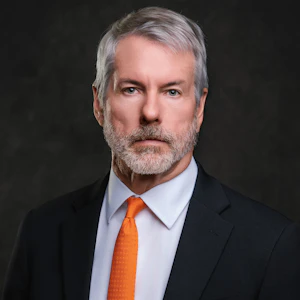
Michael Saylor
Michael Saylor
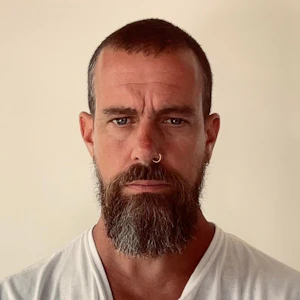
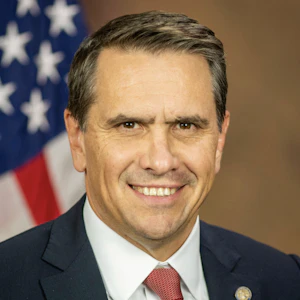
Todd Blanche
Todd Blanche
Biography of Deputy Attorney General Todd Blanche
The Honorable Todd Blanche is the 40th Deputy Attorney General of the United States, overseeing the work of the 115,000 dedicated employees who fulfill the Department of Justice’s mission at Main Justice, the FBI, DEA, U.S. Marshals, ATF, and 93 U.S. Attorney’s Offices.
Todd began his career at the Department where he served for over fifteen years in a variety of capacities, including as a contractor, a paralegal in the Criminal Division, and at the United States Attorney’s office for the Southern District of New York where he eventually became an AUSA and later a supervisor.
After leaving the Department, Todd worked as a criminal defense attorney that included representing President Donald Trump in three of the criminal cases brought against him in 2023 and 2024.
Following President Trump’s historic return to the White House, the President appointed Todd to work alongside Attorney General Pam Bondi to make America safe again. At the DOJ, Todd is working tirelessly to implement President Trump’s priorities that include confronting illegal protecting American businesses from fraud.
Todd has been married to his wonderful wife Kristine for nearly thirty years, is a father and grandfather.
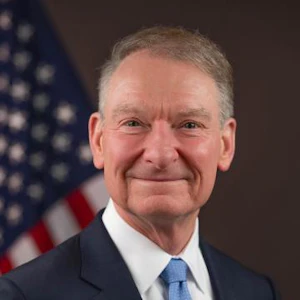
Paul Atkins
Paul Atkins
Prior to returning to the SEC, Chairman Atkins was most recently chief executive of Patomak Global Partners, a company he founded in 2009. Chairman Atkins helped lead efforts to develop best practices for the digital asset sector. He served as an independent director and non-executive chairman of the board of BATS Global Markets, Inc. from 2012 to 2015.
Chairman Atkins was appointed by President George W. Bush to serve as a Commissioner of the SEC from 2002 to 2008. During his tenure, he advocated for transparency, consistency, and the use of cost-benefit analysis at the agency. Chairman Atkins also represented the SEC at meetings of the President’s Working Group on Financial Markets and the U.S.-EU Transatlantic Economic Council. From 2009 to 2010, he was appointed a member of the Congressional Oversight Panel for the Troubled Asset Relief Program.
Before serving as an SEC Commissioner, Chairman Atkins was a consultant on securities and investment management industry matters, especially regarding issues of strategy, regulatory compliance, risk management, new product development, and organizational control.
From 1990 to 1994, Chairman Atkins served on the staff of two chairmen of the SEC, Richard C. Breeden and Arthur Levitt, ultimately as chief of staff and counselor, respectively. He received the SEC’s 1992 Law and Policy Award for work regarding corporate governance matters.
Chairman Atkins began his career as a lawyer in New York, focusing on a wide range of corporate transactions for U.S. and foreign clients, including public and private securities offerings and mergers and acquisitions. He was resident for 2½ years in his firm's Paris office and admitted as conseil juridique in France.
A member of the New York and Florida bars, Chairman Atkins received his J.D. from Vanderbilt University School of Law in 1983 and was Senior Student Writing Editor of the Vanderbilt Law Review. He received his A.B., Phi Beta Kappa, from Wofford College in 1980.
Originally from Lillington, North Carolina, Chairman Atkins grew up in Tampa, Florida. He and his wife Sarah have three sons.

Mike Selig
Mike Selig
Chairman Selig brings to the role deep public and private sector experience working with a wide range of stakeholders across agriculture, energy, financial, and digital asset industries, which rely upon and operate in CFTC-regulated markets.
Prior to his leadership at the CFTC, Chairman Selig most recently served as chief counsel of the Securities and Exchange Commission’s Crypto Task Force and senior advisor to SEC Chairman Paul S. Atkins. In this role, Chairman Selig helped to develop a clear regulatory framework for digital asset securities markets, harmonize the SEC and CFTC regulatory regimes, modernize the agency’s rules to reflect new and emerging technologies, and put an end to regulation by enforcement. He also participated in the President’s Working Group on Digital Asset Markets and contributed to its report on “Strengthening American Leadership in Digital Financial Technology.”
Prior to government service, Chairman Selig was a partner at an international law firm, focusing on derivatives and securities regulatory matters. During his years in private practice, he represented a broad range of clients subject to regulation by the CFTC, including commercial end users, futures commission merchants, commodity trading advisors, swap dealers, designated contract markets, derivatives clearing organizations, and digital asset firms. Chairman Selig advised clients on compliance with the Commodity Exchange Act and the CFTC’s rules and regulations thereunder, including in connection with registration applications and obligations, enforcement matters, and complex transactions.
Chairman Selig earned his law degree from The George Washington University Law School and was articles editor of The George Washington Law Review. He received his undergraduate degree from Florida State University.

David Bailey
David Bailey

Eric Trump
Eric Trump
Mr. Trump also serves as Executive Vice President of The Trump Organization, where he oversees the global management and operations of the Trump family’s extensive real estate portfolio. This includes Trump Hotels, Trump Golf, commercial and residential real estate, Trump Estates, and Trump Winery. Known for his hands-on leadership and strong market instincts, he has played a key role in expanding the company’s presence across major U.S. and international markets.
A globally recognized business leader and public figure, Mr. Trump is a prominent advocate for Bitcoin and decentralized finance. He is a co-founder of World Liberty Financial, a decentralized finance (DeFi) platform, and serves on the Board of Advisors of Metaplanet, Japan’s largest corporate holder of Bitcoin.
Beyond his business activities, Mr. Trump has helped raise more than $50 million for St. Jude Children’s Research Hospital in the fight against pediatric cancer, a philanthropic mission he began at age 21.
Mr. Trump earned a degree in Finance and Management from Georgetown University. He currently resides in Florida with his wife, Lara, and their two children. He is also the author of Under Siege, his memoir published in October 2025.
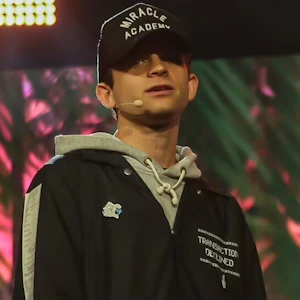
Jack Mallers
Jack Mallers
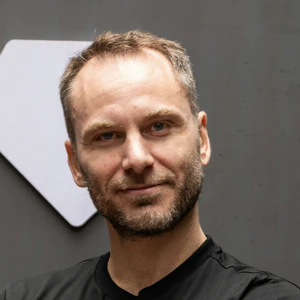
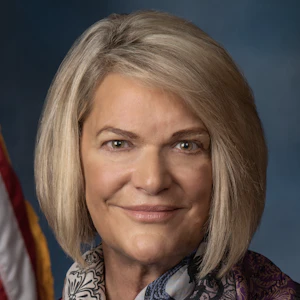
Cynthia Lummis
Cynthia Lummis
As the first-ever Chair of the Senate Banking Subcommittee on Digital Assets, Senator Lummis is the architect of the legislative framework shaping America's digital asset future. She introduced the landmark Lummis-Gillibrand Responsible Financial Innovation Act, the first comprehensive bipartisan crypto regulatory framework in Senate history. She co-authored the GENIUS Act — the first federal stablecoin law ever enacted — and introduced the BITCOIN Act, which would establish a U.S. strategic Bitcoin reserve of up to one million BTC. She is leading the Clarity Act, which will bring long-overdue regulatory certainty to the digital asset industry. She has also championed digital asset tax reform, including a de minimis exemption for small transactions and equal tax treatment for miners and stakers.
Known as Congress' "Crypto Queen," Senator Lummis represents Wyoming — a state she has helped build into one of the most digital asset-friendly regulatory environments in the nation. Before serving in the Senate, she served 14 years in the Wyoming Legislature, eight years as Wyoming State Treasurer, and eight years in the U.S. House. She is a three-time graduate of the University of Wyoming.
Her work represents a crucial bridge between traditional financial systems and the emerging digital economy, ensuring America leads the world in financial innovation while protecting the individual freedoms that define it.
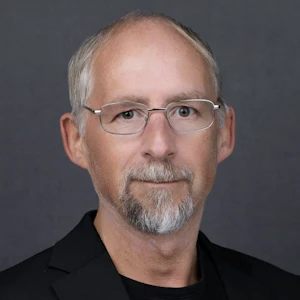
Adam Back
Adam Back
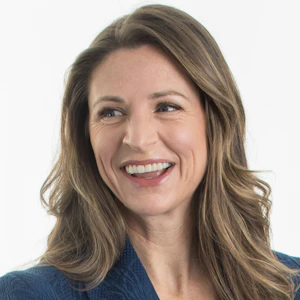
Amy Oldenburg
Amy Oldenburg
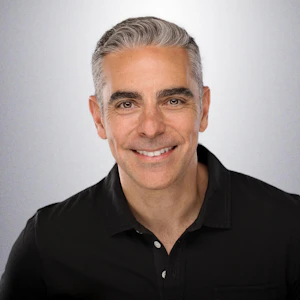
David Marcus
David Marcus
Matt Schultz
Matt Schultz
Fred Thiel
Fred Thiel
Throughout his career, Mr. Thiel has consistently driven rapid growth and created substantial shareholder value. Prior to MARA, Mr. Thiel served as the CEO of two other public companies, Local Corporation (NASDAQ: LOCM) and Lantronix, Inc (NASDAQ: LTRX). He has successfully raised billions in equity and debt through private and public offerings, led companies through IPOs, executed high-value exits to strategic and financial acquirers, and implemented effective M&A and roll-up strategies.
Mr. Thiel attended the Stockholm School of Economics and executive classes at Harvard Business School, and is fluent in English, Spanish, Swedish, and French. Mr. Thiel is the Chairman of the Board for Oden Technology, Inc. and is active in Young Presidents’ Organization where he has led initiatives in both the FinTech and Technology Networks.
A recognized voice in the industry, Fred frequently shares his insights on energy and technology with major media outlets like Bloomberg TV, CNBC, and FOX Business, contributing to vital discussions about the future of these sectors.
Tim Draper
Tim Draper
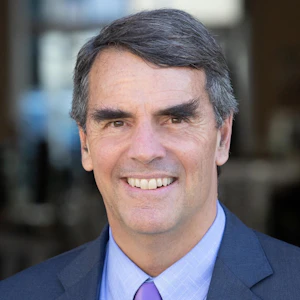
He is a supporter and global thought leader for entrepreneurs everywhere, and is a leading spokesperson for Bitcoin and decentralization, having won the Bitcoin US Marshall’s auction in 2014, invested in over 50 crypto companies, and led investments in Coinbase, Ledger, Tezos, and Bancor, among others.

Afroman
Afroman