Preserving the Historical Record of Bitcoin Knowledge
Speakers/Moderators
Paul Rosenberg
Paul Rosenberg


Jonathan Bier
Jonathan Bier
Jonathan is also an advisor to Bitwise and a chartered accountant, having started his career at KPMG in London.

Aaron van Wirdum
Aaron van Wirdum
Session
Overview
Paul Rosenberg moderates a discussion with Michael Goldstein, Jonathan Bier, and Aaron van Wirdum on why Bitcoin’s historical record matters. The panel connects Bitcoin’s development to cypherpunk ideas, Austrian economics, early digital cash projects, and the debates that shaped Bitcoin’s design and governance.
The conversation addresses recurring attempts to identify Satoshi Nakamoto, with the speakers emphasizing that Satoshi’s identity is less important than the ideas and motivations behind Bitcoin. They discuss privacy, censorship resistance, self custody, running nodes, proof of work, and the 21 million supply cap as concepts that future Bitcoin users will need to understand.
The panel also focuses on preservation. Goldstein describes the Satoshi Nakamoto Institute’s effort to build a durable archive for Bitcoin knowledge, while Bier and van Wirdum highlight the importance and difficulty of preserving discussions from Bitcoin Talk, Reddit, Twitter, cypherpunk archives, and interviews with early participants.
All right. Thank you, everybody, for coming. Gentlemen, why don't we begin? We'll start on the end with you. Aaron, why don't you introduce yourself to the audience?
Yeah. I'm Aaron. I've been a journalist in this space for over a decade by now, mostly at Bitcoin Magazine. And I'm the author of the Genesis Book, which tells the origin story of Bitcoin. It's about the prehistory of Bitcoin, the people and projects that inspired Bitcoin and that led to Bitcoin.
I am Jonathan Bier, and I published a book called The Blocksize War in March 2021 about the events that happened in Bitcoin between August 2015 and November 2017. And I've read your book, the Genesis Book, and I think it really stands out in terms of the maturity of the content compared to other Bitcoin literature.
Thanks. The Blocksize War is also great. It really is.
My name is Michael Goldstein, also known as Bitstein, and I am the founder and president of the Satoshi Nakamoto Institute, which since 2013 has been teaching people about the history and economics of Bitcoin, especially the prehistory: Austrian economists, cypherpunks, crypto anarchists, etc. I'm honored to have had my resources used for the Genesis Book, which is in fact a very good book.
Yeah, for sure. I used quite a bit of the research you've put on your website as part of my storytelling, essentially.
I'm Paul Rosenberg. I've been involved in crypto projects for a long, long time. I wrote a novel called The Lodging of Wayfaring Men. I ran a company called Crypto Hippie for many years, and this is a subject near and dear to my heart.
So let's start with this. In the last few weeks, there have been Satoshi reveal sorts of things going on. What are your thoughts on this whole subject of the search for Satoshi? What do you think about it?
Well, as president of the Satoshi Nakamoto Institute, I find it inappropriate for myself to engage in speculation about the identity of Satoshi. That being said, this is a perennial thing that comes up. What I hope comes from it is that, as people look into that question, it leads them to the history of the ideas that go into Bitcoin so they can properly understand why Bitcoin is so important, why Satoshi made it, and then from there realize that Satoshi does not matter in terms of how Bitcoin runs today. They still have all of the knowledge they need to understand why Bitcoin is still important today.
Yeah, I think it's interesting. It's a repeat of what's already happened. In March 2014, Newsweek came out with an article saying someone called Dorian Prentice Nakamoto was Satoshi. Leah McGrath Goodman published that article. The evidence, as far as I could tell, was that the name Nakamoto matched the name Satoshi Nakamoto, and the journalist had looked up Nakamoto in the phone book and found someone. That was the evidence.
More recently, last year there was the documentary saying Peter Todd was Satoshi. Then this year the New York Times said Adam Back was Satoshi. Then there was another film last week that said someone else was. It's interesting that it repeats. As time goes on, more and more people will learn that the journalists do not know who Satoshi is. They're just generating content. This new revelation is not fundamentally different than another revelation a year ago or two years ago. It's just a repeat of the cycle, I guess.
Yeah. I very intentionally sidestepped that topic in my book, and that's really for three reasons, in no particular order. First of all, I don't know. I don't know who Satoshi was. I have my list of candidates in my head, of course, like many people do. But at the end of the day, I don't know.
Second reason: I find it unethical to dox someone. Clearly Satoshi Nakamoto wanted to be pseudonymous, and there's good reason for that. If you look at some of the prehistory projects or the early digital cash projects, like Douglas Jackson's e-gold, he was prosecuted. He didn't go to jail, but he was sentenced to house arrest, so he couldn't leave his house. Also, if Satoshi mined a lot of coins, that's a risk for him personally. In other domains, we find it unethical to dox someone. I think the same should apply to Satoshi.
Furthermore, it doesn't matter. Bitcoin is free and open source software. It's math based. It's decentralized. Whoever created it actually really doesn't make a difference.
As for the recent reveals, I think it's kind of poetic that we had two big reveals recently and they both point to someone else. As for the specifics for why they pointed to these people, I remain unconvinced.
For the Adam Back one, a lot of the argument was that Adam and Satoshi had similar interests. Well, that's known. Adam Back was a very influential person within the cypherpunks and among the digital cash pioneers. If Satoshi comes from that group, which I do suspect, then obviously there's going to be a lot of cross-pollination. Then the other part of the article was more linguistic analysis of how Adam Back wrote. Years ago, we had another linguistic study, a similar approach, that pointed to someone else. Again, similar approaches come up with different names.
The recent one that reveals Hal Finney as Satoshi, I thought especially with the Hal Finney part, they really left out of the documentary that Hal did in fact help Satoshi. He was the first person to recognize the potential of Bitcoin and helped Satoshi. That is known. That was sort of left out of the documentary, and it was reframed like that means he was Satoshi.
For example, they mentioned there was a gap where it was not clear what he was doing between the release of the white paper and the release of the code. But we do know what he was doing. He was helping Satoshi. We know that.
There were a couple of these things. I feel that the way they framed the interview with Fran Finney did seem a bit manipulative to me. I think she was saying he was helping create Bitcoin, but not that he was Satoshi Nakamoto.
Having said that, I did like the research they did and the story they told. It does introduce a lot of new people to the cypherpunks' ideas and to the original motivations for why Bitcoin exists. I like that part. I think it's great if more people are introduced to these ideas. The documentary in particular had a bit of an uplifting idea and story, which is a breath of fresh air given all the negative media attention that Bitcoin has gotten over the years. But I remain unconvinced unless Satoshi reveals himself.
It's funny, you guys are talking about all this stuff, and I think I know what the next Satoshi reveal story is going to be. Somebody is going to take AI and say, hey, AI has now proven that Satoshi is so-and-so. Somebody is going to do that in the next month.
Probably that's been done, but it's not been done in a major documentary. Usually these things in Bitcoin first originate on Bitcoin Talk ten years ago, and then they become a mainstream thing later.
Right. Beyond that, I agree with you guys. Satoshi wanted to be anonymous, and out of respect, if nothing else, I'll do that. I've gone so far as to say that I'm convinced Satoshi was from cypherpunks. But more than that, this person gave us a great, great gift. Show some respect. Thank you.
Next question: to what extent does Bitcoin history matter today? What about this is important for us right now?
I think that Bitcoin history is extremely important and will always be extremely important. The extent to which people actually focus on that topic depends on how many we can have running their own nodes, holding their own keys, etc. In order to be engaged with Bitcoin, you do have to be running your own node and holding your own keys. Understanding why there's only 21 million, understanding why there's proof of work. If you're not doing those things, you're just relying on someone else who is doing those things.
Whoever is doing those things needs to have an understanding of what it is so they can pass it down. In order to understand these questions, you have to dig into the history, not just the history of Bitcoin since it was created, but also the prehistory of Bitcoin, of all of the intellectual traditions that led into it.
What are the economics that can help us understand why it makes sense that there's only 21 million, and why that's a good thing, and why the economy is not going to crash because there's a limited supply? Why is it important that people can have sovereignty over their own keys? All of these things are immensely important.
The other thing to understand is there are always going to be new Bitcoiners. Not just today, obviously. There might even be new people here coming to this conference wanting to learn about Bitcoin. But even our children and their children, every generation of people, none of them come into this world as Bitcoiners. They have to relearn why we are using this thing, and why it is important that we remain using these things and not slip back into a fiat system.
Yeah, I think it's very interesting. Bitcoin launched in 2009, and most of the people who became interested in Bitcoin were relatively young, mostly in their mid-20s or late 20s. So 17 years later, pretty much everyone is alive today. Therefore, there's still relatively strong knowledge about what happened.
The question is what will happen in the future as people start retiring and dying. Will we lose that historical record? And does that matter? If Bitcoin is going to be a strong, successful money, do we need to pass on the knowledge about Bitcoin history to later generations? Or maybe we don't need to, and Bitcoin can still survive and thrive even if that historical knowledge is lost.
I think it's interesting comparing it to the U.S. dollar, because of course the U.S. dollar has mass adoption. Everyone uses it day to day, but no one really cares about the history of money. There are no big U.S. dollar conferences where thousands of people go to discuss the dollar. Will we transition to a more normalized state where Bitcoin is still there, growing and successful, and people don't care about the history? That said, I personally am very interested in Bitcoin history and think it's very important to archive things, research, write books, and pass the knowledge on.
Yeah. As a historian, I like to think that history matters a bit. In the case of Bitcoin specifically, Bitcoin to an extent is an evolving system. It sort of lives and breathes, and ultimately the people who use it and interact with it also form Bitcoin themselves to an extent. I think it matters a lot that people understand where Bitcoin came from.
So indeed, the cypherpunks tradition, the Austrian economic tradition. I think it's important to keep that intact in Bitcoin, not just for an ideological reason, in the sense that I also agree that censorship resistance and a level of privacy in money are important. I wouldn't want to live in a world where every transaction can be monitored and traced and potentially used against you. That is what the cypherpunks set out to prevent: maintaining a level of privacy in a digital age, also for money.
I think it's important for an ideological reason that people understand why that matters. But in Bitcoin's case, I think it also matters for the viability or the value proposition of Bitcoin itself. It's ultimately what distinguishes Bitcoin from other forms of money, including other forms of digital money. If Bitcoin were to lose its censorship resistance, for example, then what's really the difference from something like PayPal?
I think that the core value proposition of Bitcoin does come from cypherpunk properties. These ideals are embedded in the protocol and need to stay there. It needs to stay that type of project in order to be unique and offer unique value to the world, ultimately.
In order to have value, people need to understand why they value it. All value is subjective, right? It doesn't have value on its own. It has value because people appreciate what value it delivers to them.
That's one thing. Also, the project itself, if people stop caring about these things, the project itself could evolve in a way that they get lost. Like the email effect of Bitcoin, as people have called it, where the email protocol is used by almost no one anymore because everyone just logs into one of three email servers. In Bitcoin's case, you would lose the censorship resistance and, in a way, even decentralized governance, which Jonathan wrote a whole book about. You would lose these things if people stop caring about them. For that reason, I hope people care about the history of where Bitcoin came from too.
I absolutely agree with everything you guys have said. It's very interesting to me that the more people understand about Bitcoin history, the more they begin to understand the Bitcoin philosophy. It's a fascinating study because you look at all the parts of the prehistory that came together. Funny things like Napster, and you mentioned e-gold before. I think e-gold was tremendously important to Bitcoin, not for the technical side, but for the social side, for lack of a better word, the business side.
For anyone who doesn't know, with e-gold you could buy digital gold. There was gold in a warehouse, and you could just send a gram or half a gram or 1.2039 grams to your friend, and it was very easy. It was a big thing at one time. One of the fascinating things about this was that, as soon as it came out, there was this network of exchangers and people who would sell you e-gold in your native currency. These guys just popped up out of nowhere. I know one of them was in Alaska. Another one was a telephone repairman from Australia. These guys just jumped up at an opportunity and really did a good job of it.
There are so many details to talk about, but I think this was important to Satoshi for knowing that if you build a structure like mining or something like that, there are people who will show up and fill in the gaps. I think that was really important.
Yeah. The way I think about it is, when it comes to these pre-Bitcoin digital cash projects, e-gold kind of got the economic side of it right because it was backed by gold. But it didn't get the technical side right because it could be shut down. It was centralized.
Whereas something like RPOW got the technical side right. There were some issues with that as well. There were other digital cash projects that were more focused on the technical side, but they didn't get the economic side right because they could be inflated too much. For example, you could just make as much as your computer could produce. Bitcoin really brings these two things together in a clever way: both the economic side and the technical side. That makes it such a powerful project.
Yeah, to me that was the genius of the whole thing. He just made everything work together in one ecosystem, and you go, oh, this could work. And it did.
What happens if we get extreme Bitcoinization? Bitcoin becomes a very important international currency and so on. Does Bitcoin history become more important or less important?
Going back to what you were saying about passing on these cypherpunk values and maintaining them, I think Bitcoin is about game theory and asymmetry in many ways. The more popular it gets, the more we get to mass adoption, the more unfeasible it is that a majority of people will have these cypherpunk values or believe in censorship resistance.
Bitcoin has to exist in such a way that even if only a small minority of people have these values, those values can prevail because of the design, asymmetry, and game theory in the system. It is very important to preserve and maintain and pass on these lessons, and hope that Bitcoin is structured in such a way that even if it is a small minority, maybe 5% of users or less, because of the design of it, because it is very robust and resilient, it will still be censorship resistant even if 95% of users don't know or don't care about that.
I think if we reach a point of hyperbitcoinization where Bitcoin is the global currency and the central pillar of the global economy, Bitcoin history will be considered very important. I've likened it in the past to the idea that the cypherpunks could go down in history in a similar way as the founding fathers of the United States, for example.
They were both groups of people who wanted to create a new type of society. The founding fathers on a new continent, and the cypherpunks in a new realm, in the digital space. They were really thinking about it as a new economy and even a new society. Even some of the ideals or things they tried to achieve overlap. There's a lot of strong emphasis on individual freedom, for example.
If cypherpunk technologies, and Bitcoin in particular, go mainstream and become a historic project, there will be history books written about that era. I already wrote one, but many more.
Let's go to our last question. We can take some time on this one. How do we approach documenting Bitcoin's history?
This is very much the job of the Satoshi Nakamoto Institute. We face a number of key issues. One is just making sure that we actually have that information to pass down. Another is dealing with the problem of AI slop. We're just going to have more and more information flooding the internet, and it's going to be harder and harder to find information, especially when we already have issues with link rot.
What we find is that passing down the information about what Bitcoin is and why it's important is in many ways as difficult as making Bitcoin itself. It's actually very easy to send Bitcoin to someone else. It's harder to pass on the knowledge of why this thing matters.
The way I'm approaching it at the Satoshi Nakamoto Institute is I'm trying to build what I call the library of Bitcoin, sort of the Library of Congress for Bitcoin. The idea is that the preservation and passing down of knowledge requires dealing with issues of integrity, making sure that the files actually are what you meant them to be the whole time. We use hashes for that. It also requires availability, making sure that you have a document or a file and can actually access it 50 or 100 years down the line. That's not a trivial problem because we don't know the future of computing.
Finally, there is intelligibility: knowing what this thing is that I'm being handed down. What is the Bitcoin white paper? If those things have changed over time, you need to understand what was happening. I'm trying to build an archive system that is on the level of what you would see at the Library of Congress, at National Archives, etc., that follows these standards and allows us to actually pass down the information.
Once we have that, it's a matter of finding everything that is important from Bitcoin history and getting it processed so that we can pass it down to future generations with confidence that they will understand Bitcoin not just as well as we do, but hopefully even better, because they will have been building on that foundation of knowledge.
I'm going to have to stop this right now because we're almost out of time. Last words, guys. Give me 15 or 20 seconds. What have you got?
I'll just answer your question real quick. For the Genesis Book, the main resources I used were, one, the great work of other journalists and historians before me. Steven Levy, for example, has done great work documenting the history of the cypherpunks and the hacker movement. He was around. He was basically a cypherpunk himself.
I've done a lot of archival research myself, just scrolling through the cypherpunks archives and speaking with the people who were around back then, insofar as they are still around and alive and reachable. These were my main resources for writing the book.
In terms of where the Bitcoin discussion has happened, I think it started off on Bitcoin Talk in 2011. Then in 2013, it transitioned to Reddit and r/Bitcoin. Then in 2017 it transitioned to Twitter. I think that's why the work you do at the institute is really important, because Reddit and Twitter in particular have extremely poor archival qualities. On Reddit, if you go to an old post, by default you can't even see the old comments. That's where a lot of the Bitcoin debate happened. I think the work you're doing is really, really important.
Thank you. I would just like to say please visit Nakamoto Institute and get in touch. Study Bitcoin history, and help me collect and protect Bitcoin history for future generations.
And with that, we're done. We love you all. Thank you so much for caring about this.
Thank you.
Similar
Sessions
Preserving the Historical Record of Bitcoin Knowledge
Paul Rosenberg
Paul Rosenberg
Jonathan Bier
Jonathan Bier
Jonathan is also an advisor to Bitwise and a chartered accountant, having started his career at KPMG in London.
Aaron van Wirdum
Aaron van Wirdum
Preserving the Historical Record of Bitcoin Knowledge
Speakers/Moderators
Paul Rosenberg
Paul Rosenberg
Jonathan Bier
Jonathan Bier
Jonathan is also an advisor to Bitwise and a chartered accountant, having started his career at KPMG in London.
Aaron van Wirdum
Aaron van Wirdum
Through the Eyes of a Cypherpunk Legend: Hyperbitcoinization = HyperAmericanization
Through the Eyes of a Cypherpunk Legend: Hyperbitcoinization = HyperAmericanization
Speakers/Moderators
The Genesis Book / Bitcoin: The Honest Money
Aaron van Wirdum
Aaron van Wirdum

Alex von Frankenberg
Alex von Frankenberg
Alex is a sought-after keynote speaker at international conferences and the author of Bitcoin – The Honest Money, published in German, English, and Spanish, in which he explores Bitcoin as a transparent and incorruptible monetary system. He actively invests in and serves on the boards and advisory councils of Bitcoin- and crypto-focused startups and funds, contributing to the growth of the global Bitcoin ecosystem.
Alex holds an MBA from the University of Texas at Austin and a PhD from the University of Mannheim, Germany, where his research focused on the establishment of de-facto technology standards.
The Genesis Book / Bitcoin: The Honest Money
Speakers/Moderators
Aaron van Wirdum
Aaron van Wirdum
Alex von Frankenberg
Alex von Frankenberg
Alex is a sought-after keynote speaker at international conferences and the author of Bitcoin – The Honest Money, published in German, English, and Spanish, in which he explores Bitcoin as a transparent and incorruptible monetary system. He actively invests in and serves on the boards and advisory councils of Bitcoin- and crypto-focused startups and funds, contributing to the growth of the global Bitcoin ecosystem.
Alex holds an MBA from the University of Texas at Austin and a PhD from the University of Mannheim, Germany, where his research focused on the establishment of de-facto technology standards.
What's the Plan For a Post-Quantum Soft-Fork?
Aaron van Wirdum
Aaron van Wirdum
Jonathan Bier
Jonathan Bier
Jonathan is also an advisor to Bitwise and a chartered accountant, having started his career at KPMG in London.

Mike Casey
Mike Casey
Volunteer Lifeguard, MaraPool
Product Owner, Slipstream
Author: Speculative Bitcoin Adoption/Price Theory (https://medium.com/@mcasey0827/speculative-bitcoin-adoption-price-theory-2eed48ecf7da) as referenced in "The Bullish Case for Bitcoin" by Vijay Boyapati.
Bitcoin Class of 2012

Christian Papathanasiou
Christian Papathanasiou

What's the Plan For a Post-Quantum Soft-Fork?
Speakers/Moderators
Aaron van Wirdum
Aaron van Wirdum
Jonathan Bier
Jonathan Bier
Jonathan is also an advisor to Bitwise and a chartered accountant, having started his career at KPMG in London.
Mike Casey
Mike Casey
Volunteer Lifeguard, MaraPool
Product Owner, Slipstream
Author: Speculative Bitcoin Adoption/Price Theory (https://medium.com/@mcasey0827/speculative-bitcoin-adoption-price-theory-2eed48ecf7da) as referenced in "The Bullish Case for Bitcoin" by Vijay Boyapati.
Bitcoin Class of 2012
Christian Papathanasiou
Christian Papathanasiou
Other
Speakers

Michael Saylor
Michael Saylor

Todd Blanche
Todd Blanche
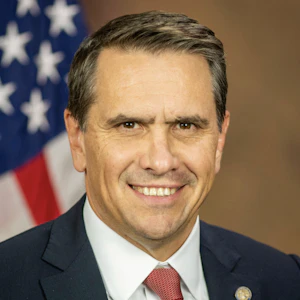
Biography of Deputy Attorney General Todd Blanche
The Honorable Todd Blanche is the 40th Deputy Attorney General of the United States, overseeing the work of the 115,000 dedicated employees who fulfill the Department of Justice’s mission at Main Justice, the FBI, DEA, U.S. Marshals, ATF, and 93 U.S. Attorney’s Offices.
Todd began his career at the Department where he served for over fifteen years in a variety of capacities, including as a contractor, a paralegal in the Criminal Division, and at the United States Attorney’s office for the Southern District of New York where he eventually became an AUSA and later a supervisor.
After leaving the Department, Todd worked as a criminal defense attorney that included representing President Donald Trump in three of the criminal cases brought against him in 2023 and 2024.
Following President Trump’s historic return to the White House, the President appointed Todd to work alongside Attorney General Pam Bondi to make America safe again. At the DOJ, Todd is working tirelessly to implement President Trump’s priorities that include confronting illegal protecting American businesses from fraud.
Todd has been married to his wonderful wife Kristine for nearly thirty years, is a father and grandfather.

Paul Atkins
Paul Atkins
Prior to returning to the SEC, Chairman Atkins was most recently chief executive of Patomak Global Partners, a company he founded in 2009. Chairman Atkins helped lead efforts to develop best practices for the digital asset sector. He served as an independent director and non-executive chairman of the board of BATS Global Markets, Inc. from 2012 to 2015.
Chairman Atkins was appointed by President George W. Bush to serve as a Commissioner of the SEC from 2002 to 2008. During his tenure, he advocated for transparency, consistency, and the use of cost-benefit analysis at the agency. Chairman Atkins also represented the SEC at meetings of the President’s Working Group on Financial Markets and the U.S.-EU Transatlantic Economic Council. From 2009 to 2010, he was appointed a member of the Congressional Oversight Panel for the Troubled Asset Relief Program.
Before serving as an SEC Commissioner, Chairman Atkins was a consultant on securities and investment management industry matters, especially regarding issues of strategy, regulatory compliance, risk management, new product development, and organizational control.
From 1990 to 1994, Chairman Atkins served on the staff of two chairmen of the SEC, Richard C. Breeden and Arthur Levitt, ultimately as chief of staff and counselor, respectively. He received the SEC’s 1992 Law and Policy Award for work regarding corporate governance matters.
Chairman Atkins began his career as a lawyer in New York, focusing on a wide range of corporate transactions for U.S. and foreign clients, including public and private securities offerings and mergers and acquisitions. He was resident for 2½ years in his firm's Paris office and admitted as conseil juridique in France.
A member of the New York and Florida bars, Chairman Atkins received his J.D. from Vanderbilt University School of Law in 1983 and was Senior Student Writing Editor of the Vanderbilt Law Review. He received his A.B., Phi Beta Kappa, from Wofford College in 1980.
Originally from Lillington, North Carolina, Chairman Atkins grew up in Tampa, Florida. He and his wife Sarah have three sons.

Mike Selig
Mike Selig
Chairman Selig brings to the role deep public and private sector experience working with a wide range of stakeholders across agriculture, energy, financial, and digital asset industries, which rely upon and operate in CFTC-regulated markets.
Prior to his leadership at the CFTC, Chairman Selig most recently served as chief counsel of the Securities and Exchange Commission’s Crypto Task Force and senior advisor to SEC Chairman Paul S. Atkins. In this role, Chairman Selig helped to develop a clear regulatory framework for digital asset securities markets, harmonize the SEC and CFTC regulatory regimes, modernize the agency’s rules to reflect new and emerging technologies, and put an end to regulation by enforcement. He also participated in the President’s Working Group on Digital Asset Markets and contributed to its report on “Strengthening American Leadership in Digital Financial Technology.”
Prior to government service, Chairman Selig was a partner at an international law firm, focusing on derivatives and securities regulatory matters. During his years in private practice, he represented a broad range of clients subject to regulation by the CFTC, including commercial end users, futures commission merchants, commodity trading advisors, swap dealers, designated contract markets, derivatives clearing organizations, and digital asset firms. Chairman Selig advised clients on compliance with the Commodity Exchange Act and the CFTC’s rules and regulations thereunder, including in connection with registration applications and obligations, enforcement matters, and complex transactions.
Chairman Selig earned his law degree from The George Washington University Law School and was articles editor of The George Washington Law Review. He received his undergraduate degree from Florida State University.

David Bailey
David Bailey

Eric Trump
Eric Trump
Mr. Trump also serves as Executive Vice President of The Trump Organization, where he oversees the global management and operations of the Trump family’s extensive real estate portfolio. This includes Trump Hotels, Trump Golf, commercial and residential real estate, Trump Estates, and Trump Winery. Known for his hands-on leadership and strong market instincts, he has played a key role in expanding the company’s presence across major U.S. and international markets.
A globally recognized business leader and public figure, Mr. Trump is a prominent advocate for Bitcoin and decentralized finance. He is a co-founder of World Liberty Financial, a decentralized finance (DeFi) platform, and serves on the Board of Advisors of Metaplanet, Japan’s largest corporate holder of Bitcoin.
Beyond his business activities, Mr. Trump has helped raise more than $50 million for St. Jude Children’s Research Hospital in the fight against pediatric cancer, a philanthropic mission he began at age 21.
Mr. Trump earned a degree in Finance and Management from Georgetown University. He currently resides in Florida with his wife, Lara, and their two children. He is also the author of Under Siege, his memoir published in October 2025.

Jack Mallers
Jack Mallers

Cynthia Lummis
Cynthia Lummis
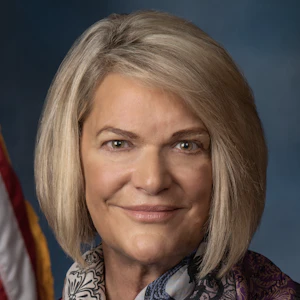
As the first-ever Chair of the Senate Banking Subcommittee on Digital Assets, Senator Lummis is the architect of the legislative framework shaping America's digital asset future. She introduced the landmark Lummis-Gillibrand Responsible Financial Innovation Act, the first comprehensive bipartisan crypto regulatory framework in Senate history. She co-authored the GENIUS Act — the first federal stablecoin law ever enacted — and introduced the BITCOIN Act, which would establish a U.S. strategic Bitcoin reserve of up to one million BTC. She is leading the Clarity Act, which will bring long-overdue regulatory certainty to the digital asset industry. She has also championed digital asset tax reform, including a de minimis exemption for small transactions and equal tax treatment for miners and stakers.
Known as Congress' "Crypto Queen," Senator Lummis represents Wyoming — a state she has helped build into one of the most digital asset-friendly regulatory environments in the nation. Before serving in the Senate, she served 14 years in the Wyoming Legislature, eight years as Wyoming State Treasurer, and eight years in the U.S. House. She is a three-time graduate of the University of Wyoming.
Her work represents a crucial bridge between traditional financial systems and the emerging digital economy, ensuring America leads the world in financial innovation while protecting the individual freedoms that define it.

Adam Back
Adam Back

Amy Oldenburg
Amy Oldenburg

David Marcus
David Marcus

Matt Schultz
Matt Schultz

Fred Thiel
Fred Thiel
Throughout his career, Mr. Thiel has consistently driven rapid growth and created substantial shareholder value. Prior to MARA, Mr. Thiel served as the CEO of two other public companies, Local Corporation (NASDAQ: LOCM) and Lantronix, Inc (NASDAQ: LTRX). He has successfully raised billions in equity and debt through private and public offerings, led companies through IPOs, executed high-value exits to strategic and financial acquirers, and implemented effective M&A and roll-up strategies.
Mr. Thiel attended the Stockholm School of Economics and executive classes at Harvard Business School, and is fluent in English, Spanish, Swedish, and French. Mr. Thiel is the Chairman of the Board for Oden Technology, Inc. and is active in Young Presidents’ Organization where he has led initiatives in both the FinTech and Technology Networks.
A recognized voice in the industry, Fred frequently shares his insights on energy and technology with major media outlets like Bloomberg TV, CNBC, and FOX Business, contributing to vital discussions about the future of these sectors.
Tim Draper
Tim Draper
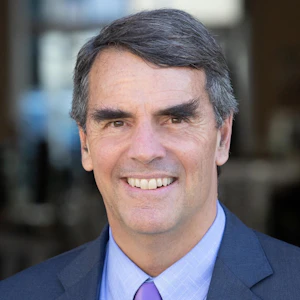
He is a supporter and global thought leader for entrepreneurs everywhere, and is a leading spokesperson for Bitcoin and decentralization, having won the Bitcoin US Marshall’s auction in 2014, invested in over 50 crypto companies, and led investments in Coinbase, Ledger, Tezos, and Bancor, among others.

Afroman
Afroman