The Right to Self-Custody Shall Not Be Infringed
Speakers/Moderators

Grant McCarty
Grant McCarty
Before founding BPI, Grant built an education startup dedicated to reducing inequity in college admissions and then led the public policy team at BTC Inc. He received his undergraduate degree in History and Political Science from the University of Alabama and his MBA from Johns Hopkins University.

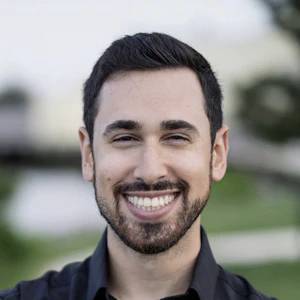
Zach Herbert
Zach Herbert
Session
Overview
This Nakamoto Stage discussion focused on the right to self-custody as a core Bitcoin issue and an emerging civil liberties topic. Joe Kelly of Unchained, Zach Herbert of Foundation Devices, and Congressman Nick Begich discussed why the ability to control private keys matters for financial sovereignty, privacy, and property rights in the digital age.
The conversation covered lessons from Mt. Gox, FTX, historical gold confiscation, and the risks of concentrating bitcoin with large custodians. The speakers emphasized that self-custody is not only a philosophical principle, but also a product design, user experience, and legal challenge.
The panel also explored policy efforts around the Bitcoin Act and the American Reserves Modernization Act, including the need to codify self-custody protections and create a durable structure for a Strategic Bitcoin Reserve. Hardware manufacturing, open source security, multisig, social recovery, and post-quantum encryption were discussed as part of the future self-custody landscape.
Thank you for joining us at the start of the conference, bright and early. Welcome to Las Vegas. Let's jump right into it. Why don't we start with a quick round of introductions. Joe, we'll start with you.
Sure. I can't imagine a more important topic to start the conference with than self-custody. I'm Joe Kelly. I'm co-founder and CEO of Unchained. Unchained is a Bitcoin financial services company. We specialize in onboarding people to a form of self-custody called collaborative custody. We've done that for over 10,000 clients and helped secure over 100,000 bitcoin.
Hi, everyone. I'm Zach Herbert. I'm co-founder and CEO at Foundation. We make physical hardware that enables you to secure your Bitcoin and your entire digital life. Our main product is called Passport, or Passport Prime, and we proudly manufacture in the United States.
Congressman Nick Begich, congressman for all of Alaska, the only representative for Alaska in the United States House, and a longtime Bitcoiner.
Amazing. So we're talking about self-custody. We've got a couple people on stage here who have dedicated their lives to working on self-custody. Congressman, I think you've dedicated a significant portion of your work in Congress to Bitcoin issues. So let's start with why self-custody is important to each of you. We'll start with Congressman Begich.
I'll tell you what, I had my own personal experience with Bitcoin early on. I got involved in Bitcoin in January of 2013, and I was one of the many folks, probably folks here today, who were impacted by the Mt. Gox debacle. That was highly instructive for me as an individual on the importance of self-custody and making sure that we have self-custody rights enshrined in law.
At the end of the day, private property rights are fundamental to the American idea, and I think they need to extend into the digital space. We need to make sure that our legal structures are enshrining those rights when it comes to Bitcoin and other digital assets.
Zach, I think you talk a lot about protecting all sorts of individual rights in a digital age. How does self-custody fit within that paradigm?
Exactly. And you beat me, Congressman. I got started in December 2013, right before the Mt. Gox debacle. I've also experienced my entire career in Bitcoin through that lens. I've always taken self-custody. When you get in a couple months before an exchange like that blows up, it becomes ingrained in your psyche.
But importantly for me, self-custody was like a gateway drug. You start by taking that Bitcoin off the exchange and securing your Bitcoin, but then all of a sudden you're figuring out how to secure all your online accounts, how to go pretty hardcore with security keys, password managers, and self-hosting things. I would say it's really like a rabbit hole.
I think self-custody of your Bitcoin, but then also your entire digital life, is extremely important. I don't just think about it from a Bitcoin perspective. I think about it from a sovereignty, freedom, and privacy perspective as well, and all of those are fundamental American values.
Joe, how about you? You founded Unchained and have been doing this for a while. Walk me through your origin story and what made you start this company.
A couple points on self-custody. It's remarkable that all three of us are class of 2013 Bitcoiners. But I didn't find my way into Bitcoin through self-custody first. That came later in terms of exploring the technology and getting my hands on it.
What I've really come to see over the last 10 years with self-custody, because at least at Unchained it was more of an early product differentiator, was an early way to differentiate a product and platform from everything else that was done through centralization.
Nick and I were talking in the back earlier. I'm originally from Anchorage, Alaska, and visiting the state, I think something like 60% or some major percentage of all the national parks are in Alaska. As I've thought about that experience of going and visiting these great nature preserves, it's something you have to experience to really understand. Just a description of a mountain or a tree or a bird's song doesn't do it justice. You have to be in it and be in the environment to soak it in and really know it.
I think about self-custody in the same way. Just explaining it or railing against centralized authorities and intermediaries doesn't quite do it justice. It doesn't really land in terms of that lived experience of going through an event like Mt. Gox or an SVB bank failure, or some way that your right was really encroached.
When I think about what's at stake for us as Americans, and how this is almost a factor of national identity and what's important to us and important to preserve, it's kind of the same thing that John Muir and the early advocates for preserving land went through. That's what this process is: to explain self-custody to people, help give them the opportunity to experience those things, and dedicate ourselves to preserving something that we don't want to see encroached.
Self-custody is one of those things that gets thrown around a lot when you're talking about Bitcoin, and I think sometimes people can take it for granted. A lot of people talk about self-custody, and if you look at the numbers, the number of people who actually self-custody is probably a lot smaller. There is a reason why Mt. Gox can happen and FTX can happen over and over. Maybe some class of people learn the hard way and learn from a very negative experience. Then a lot of people read something and go, well, that won't happen to me, and repeat the mistakes of the past.
On the company side, could you talk about the educational process of onboarding people and getting them comfortable with self-custody, not as a burden or something to overcome, but as something inherent to the value proposition of Bitcoin? If you're going to operate with Bitcoin, if you're going to own Bitcoin, you should probably go all in. Do it 100%. Could you talk me through that process? Where are the friction points, and what do you encounter when dealing with clients and getting them to take that leap?
One important point: while I do agree that it's a minority of individuals or businesses that choose self-custody, it's actually somewhere on the order of about half of all Bitcoin that is not held by intermediaries. You get there by summing up the known centralized custodians and their bitcoin balances, and then what's left over, that's not lost, is almost 50% of Bitcoin. So it's still a sizable amount.
That speaks to a lot of the early OGs or people who got in early, may not have had other options, or just had already been burned, so they chose the self-custody route. Often those people, and the people they help onboard, point to self-custody. Then you're told, well, I should self-custody. How do I do it?
A service like Unchained, or other services that specialize in onboarding, are really there to make you feel comfortable and do the hand-holding with you on those steps. We help you know what you need to keep private in terms of your key material, how you set things up, and where you store your keys. But you don't want to be left alone.
Back to the wilderness analogy. If somebody just gave you some picks and shovels or a backpack and sent you off into the woods, if you don't know what you're doing, that's a very nervous place to be. Where Unchained comes in, and where we build our business model, is to be that place you can still call when you have a question. You're out in the woods, or a hardware device has failed, or some firmware update is coming and you have a question. You have that tether or that ability to get a support line so you don't feel alone in it.
Zach, your work and your company are focused on overall sovereignty online and autonomy online. Can you talk a little bit about, from an individual or company level, how you talk about self-custody and get people to see that it really is important or fundamental, maybe not just with Bitcoin, but with your data, your identity, or some of these other things online?
I would push back on this being so much of a philosophical problem for people, because I think most folks in Bitcoin get it. They understand the importance. They typically want to take self-custody, but they're usually afraid.
There are a bunch of different areas that can be scary. A big one is the backups. What happens if I lose my hardware wallet or software wallet? Another big one is the overall user experience of the software and hardware. I've heard some good comparisons to learning to drive a car. I've heard a lot of people over the years in the Bitcoin education space saying, you have to study, you have to invest hours in it. Most people don't want to do that. I think that's a core issue.
At Foundation, we look at this from a user experience perspective. We obviously are marketing toward folks who want to reclaim their freedom and take that sovereignty, but it's the user experience piece that matters.
Things like seed words. We've moved with our current Passport Prime product to defaulting to tapping a couple NFC key cards instead, and doing an iCloud-style, fully encrypted backup. That's the kind of thing I think is going to get more people using these tools.
With our mobile app Envoy, we have a similar process we call Magic Backup. It backs up the key to your iCloud Keychain, and then you're backed up and good to go. If you lose your phone, you just sign back into your iCloud account and get everything back.
Of course, I think it's important to encourage those folks who want to keep their seed words, stamp them on metal, and bury them under their tree in the yard. Obviously. But I do think the industry needs to think about this a little bit from a user experience point of view instead of the constant philosophical point of view. That's what we're really focused on at Foundation.
Congressman, you mentioned your experience with Mt. Gox. Can you talk a little bit about this interplay between individuals self-custodying, corporations self-custodying, and potentially governments self-custodying? Should exchanges and corporations be self-custodying? Is it easier to just give it to a qualified custodian? Where do you land on that point?
History can be quite instructive when looking at the importance of self-custody. If you go back to 1933, you had an executive order from the president at that time to confiscate privately held gold. It was effective because gold at that time was viewed as the money supply. The government was short of money supply, wanted to increase its money supply, and went out and acquired, in my view illegally, these gold assets from individuals, and then revalued and devalued the dollar a year later.
It really impacted people who had been savers of actual money, of hard money at that time. When we fast forward to today, we need to make sure that doesn't happen again.
I think it's actually in the best interest of exchanges to support self-custody, because it's a lot harder for a government under pressure to confiscate millions or maybe tens of millions of privately held wallets than it is to go to one of a few dozen places and confiscate a critical asset like Bitcoin.
So I think it's important. I think it's good for the ecosystem and good for everybody to make sure that we have laws that enshrine the ability to self-custody.
If you don't mind, I did bring from my bill, the Bitcoin Act, which I carry with Senator Lummis in the House, the language as it relates to self-custody affirmation of rights. This act affirms and protects the rights of persons to maintain full lawful control over the Bitcoin and other digital assets of those individuals, recognizing that the ability to maintain self-custody of private keys is fundamental to the principles of financial sovereignty, privacy, and personal liberty in the digital age.
That's incredible. The title of this panel is The Right to Self-Custody Shall Not Be Infringed. I am greatly hoping that legislation, that language, is enshrined into law.
One of the things about Bitcoin is don't trust, verify. How do you ensure that you are resilient, even if there is an adversarial attack or a bad actor trying to take your Bitcoin? Zach, Joe, if the government tomorrow said, time to round up all the Bitcoin, Unchained, we need you to take everybody's Bitcoin, or Foundation, we need you to go into everybody's wallet tomorrow and take their Bitcoin, is that something you all are capable of doing? How do you build your companies to be resilient against bad actors, government or otherwise?
We are a regulated financial services company, so we don't have the liberty to necessarily decline lawful requests and things like that. We can challenge things. But the beauty of our service is that we can't seize the Bitcoin, nor can we prevent clients from moving it at any time. That's really fundamental to how the model works, and that's how we uphold these principles while still trying to deliver the financial services that people come to us for, like lending, IRAs, and the support function. So it's a private service, but not an anonymous kind of product.
I love that because I think we share a common theme, which is that architecturally, we cannot take the Bitcoin. That's a very American self-custody company point of view. I don't think that extends through all companies in the world.
At Foundation, we don't even collect this user data. Our users don't have accounts. When it comes to our automatic backup product, it's a hash of the seed. It's a cryptographic hash. We have a blob of encrypted data that was encrypted on the physical hardware in the user's possession.
If you gave us a subpoena, what could we give you? We don't collect IP addresses. We allow users to connect over Tor or run their own nodes from our mobile app. I guess we could produce encrypted blobs of data, but we're also upgrading that security right now to fully post-quantum encryption. So we can't really give anything.
I love that, because I think it's more of this mantra. It's like a play on Google's old don't be evil. With Bitcoin, it's can't be evil.
Amazing. That makes me feel a lot better about using self-custody services and Foundation devices. Congressman, I'm wondering if you could talk a little bit more about some legislation that you're working on. Again, to codify self-custody, but I think one thing we've just touched on is that self-custody is important for overall American security: national security and economic security.
Right now, I think there is this idea that the United States is leading in the Bitcoin race. By a lot of metrics, we are. The government owns a lot of Bitcoin. Americans own a lot of Bitcoin. But if we take the glass half-empty approach, a lot of that Bitcoin is not being self-custodied by individuals, and the U.S. government number of Bitcoin that we own is a pretty broad range of what that could be. I know you've been working on some issues related to this. Could you talk a little bit more about that?
You got it. Many folks who have been tracking legislative progress in the House and the Senate will be familiar with the Bitcoin Act. The Bitcoin Act came out in the 118th Congress. Senator Lummis introduced it in the 118th. Her office and I worked together on some revisions, some important revisions to that legislation, and I introduced it in the House. She reintroduced it in the Senate in the 119th Congress. That's the Congress we're in right now.
I've been working that legislation in the House. There have been a number of folks I've spoken with on the Financial Services Committee and other important committees of influence, and we've gotten really good feedback from folks about what they would need to see in order to vote yes on this legislation.
We've been working with the Financial Services Committee to make some updates to that act, and we'll be planning on reintroducing this as the American Reserves Modernization Act, or ARMA.
Why the renaming? Because it's so important for people, both in Congress and across the nation, to understand what we're actually trying to do. We're trying to make sure that Bitcoin is treated like the reserve asset that it is. We want to make sure we have a place to store our bitcoin. If that Bitcoin is going to be held for a long period of time, it needs to be prevented from being attached. You can't lend against it, and we can't have the political pendulum that we see so often in the United States impact our reserves policy as it relates to Bitcoin.
It allows us to go out into those government agencies, identify where Bitcoin is currently being held, and custody that Bitcoin in a responsible manner consistent with its reserve status.
This has been one of the many things I've been working on in Congress. I'm proud to say that as of today, I've passed more legislation into law than anyone in the House or Senate. We've got a strong focus in my office to construct legislation that has an opportunity to pass both chambers, and that's what we're doing with the American Reserves Modernization Act.
What's the rough timeline there?
I'll tell you what, I don't control the timeline. That's one thing I don't control. But we're looking at a reintroduction here within the next couple of weeks.
Amazing. ARMA. You heard it here first, folks.
From the national security perspective, how do you all think, as private companies, about your role in American dominance? You set up your companies in the U.S., and you're ultimately helping facilitate Bitcoin ownership and Bitcoin transactions. Do you think about your work from a broader perspective of moving the country, the economy, or the security of the country forward?
I think about building on a lot of the great things that are already here: the ease of starting a business, the clarity of what that process looks like. At least as a Bitcoin company, we've had the good fortune of having somewhat clear regulations through most of our time at Unchained, and there have been advances in that even since.
America is fundamentally a capitalist society, or a society built around capitalism and embracing those values. I do believe property rights and the right to private property are fundamental to how any kind of capital system can work. Furthering that ability for American citizens and the Unchained clients we serve is our North Star.
I'm so glad you mentioned the national security aspect, because that's not something we hear too often when it comes to self-custody. Usually when you think self-custody, you think about the philosophy.
We're manufacturing physical devices in the United States, in the New England area, at a factory that does government work. It's an ITAR facility. It has about 100 people full-time employed. We have a team both in the U.S. and abroad.
What that means is that we're making the hardware in the United States that allows individuals and businesses to store and secure their Bitcoin, and then tangentially, lots of other keys, passwords, and that kind of stuff to secure their entire digital life. I think that's a national security imperative.
If you look at what the Trump administration just did with Wi-Fi routers a few weeks ago, they banned China-made Wi-Fi routers. There is an allow list, so now you have to submit to the administration and prove that there are no back doors. I don't know what the process is, but I'm sure there's some kind of audit-type process.
If self-custody, if the rights to self-custody were restricted in the United States and companies like Foundation were not allowed to make these devices here, are we all going to be running Foxconn devices with potential back doors? Does that mean those companies in Asia or China or wherever would be able to see how much Bitcoin is stored and maybe somehow compromise it?
The open source angle is important to us, but so is the actual made in America angle.
We've got a few minutes left. Congressman, I want to hit on ARMA. One thing I realized in this conversation that might not be fully clear is that the president announced an executive order to establish a Strategic Bitcoin Reserve last year. Why do we need more legislation? I thought we already had the reserve.
It's a great question, and it strikes to how our government is structured. The president can do quite a bit through executive order, but the president is not able to make law through executive order.
Currently we have a president and an administration generally that's very favorable toward both self-custody and digital assets generally. I think they've made that very clear. But we don't know what the next administration is going to be like. What is their stance going to be on Bitcoin and other digital assets?
You want to take the opportunity when you have it to lock in the gains that you experience under one administration or another, and that's where Congress can really act.
The executive order that was issued for the Strategic Bitcoin Reserve, there are authorities that Congress still needs to provide to Treasury and to other agencies in government in order for that executive order to be put into full effect. That's where ARMA comes in. That's where Congress comes in, to ensure that we are creating a permanent structure that's durable and can last through that political pendulum that we often see swinging from one election cycle to the next.
We want to codify the SBR. We want to figure out how many coins we actually have. We want to custody this. We want the government to self-custody the Bitcoin, and ultimately that gives the foundation to build on top of that.
Speaking of building, as we close out, I'd like to hear about the future of self-custody. Everybody wants to talk about what's next. The opening remarks were saying, how do we lean into America being the Bitcoin capital, the Bitcoin superpower of the world? What does it actually look like?
When you think about the self-custody landscape moving forward, I think we've established there is a governmental component. We need the government to actually custody Bitcoin and be able to build on top of that. There is an individual and corporation component that I think you both are working on. Joe, what does the ideal self-custody landscape look like for you? What does multisig play as a component of that? What are some of the things you're working on to advance this ecosystem?
So much of the theme for us is trying to have the security and benefits that come with self-custody while not losing out so much on convenience or access to financial services. Through how our services are designed, our applications, and the devices we support, we're constantly trying to make those not have to be a big tradeoff or a high dilemma for our clients.
Zach?
For us at Foundation, it's really about still tackling this user experience challenge. There are a lot of things that we can do. I like what we've done so far, but we can do things like social recovery, which we were just talking about backstage before, with friends or family members.
We can use some of the newer Bitcoin tools, like FROST, which is a newer technology that's not employed by too many pieces of hardware or software, to make it almost impossible to lose your Bitcoin. You can have degrading type multisig with Miniscript as well.
You could potentially create something that is seconds to set up, onboard, and back up, but then has an array of safety nets if you lose your device or if you lose the physical backups. Our goal is to attack this user experience problem, to lower those barriers to adoption, and get as many people, enterprises, and maybe even governments self-custodying as possible.
Congressman, what's next for you?
At the end of the day, getting legislation passed is a challenging task. Just to put things in context, more than 90% of the bills that are introduced never become law. When a bill is introduced, that's not the end. It's the beginning.
There's a lot of advocacy work that I put in, that my team puts in on this issue and so many other issues. But when we move forward, it's very helpful if the community can let their representatives know that, in this case, ARMA is an important priority for you.
My encouragement to folks who are listening online or here with us today is to reach out to your representatives in Congress, whether they be in the Senate or the House, and let them know this is a priority and why it's a priority to you. That will help us move this legislation into enactment.
A closing thought before we get off stage: American rights, the rights that we have, the rights to self-custody, the right to mine Bitcoin, to transact, to transact privately or peer to peer, these are not a given. This is part of the history of the United States. You have to continue to fight for these rights day in and day out, lest they be infringed upon.
Ultimately, I want to thank each of you for your work on the private and public side, for protecting these rights, for moving it forward, and ultimately for allowing everybody in this room, everybody online, and everybody around the world to use Bitcoin, own Bitcoin, and transact with Bitcoin in the way that they want.
Thank you for your work. I'm looking forward to continuing to work with you at the Bitcoin Policy Institute, and thank you to everybody for being here.
Similar
Sessions
The Right to Self-Custody Shall Not Be Infringed
Grant McCarty
Grant McCarty
Before founding BPI, Grant built an education startup dedicated to reducing inequity in college admissions and then led the public policy team at BTC Inc. He received his undergraduate degree in History and Political Science from the University of Alabama and his MBA from Johns Hopkins University.
Zach Herbert
Zach Herbert
The Right to Self-Custody Shall Not Be Infringed
Speakers/Moderators
Grant McCarty
Grant McCarty
Before founding BPI, Grant built an education startup dedicated to reducing inequity in college admissions and then led the public policy team at BTC Inc. He received his undergraduate degree in History and Political Science from the University of Alabama and his MBA from Johns Hopkins University.
Zach Herbert
Zach Herbert
Defending Human Rights through Bitcoin Policy
Grant McCarty
Grant McCarty
Before founding BPI, Grant built an education startup dedicated to reducing inequity in college admissions and then led the public policy team at BTC Inc. He received his undergraduate degree in History and Political Science from the University of Alabama and his MBA from Johns Hopkins University.
Defending Human Rights through Bitcoin Policy
Speakers/Moderators
Grant McCarty
Grant McCarty
Before founding BPI, Grant built an education startup dedicated to reducing inequity in college admissions and then led the public policy team at BTC Inc. He received his undergraduate degree in History and Political Science from the University of Alabama and his MBA from Johns Hopkins University.
Other
Speakers
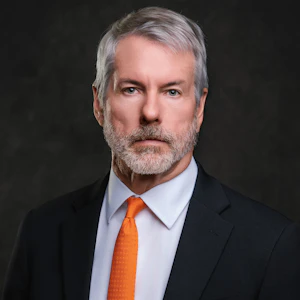
Michael Saylor
Michael Saylor
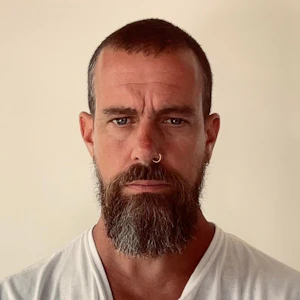
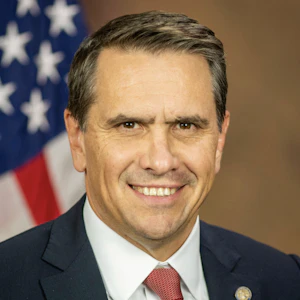
Todd Blanche
Todd Blanche
Biography of Deputy Attorney General Todd Blanche
The Honorable Todd Blanche is the 40th Deputy Attorney General of the United States, overseeing the work of the 115,000 dedicated employees who fulfill the Department of Justice’s mission at Main Justice, the FBI, DEA, U.S. Marshals, ATF, and 93 U.S. Attorney’s Offices.
Todd began his career at the Department where he served for over fifteen years in a variety of capacities, including as a contractor, a paralegal in the Criminal Division, and at the United States Attorney’s office for the Southern District of New York where he eventually became an AUSA and later a supervisor.
After leaving the Department, Todd worked as a criminal defense attorney that included representing President Donald Trump in three of the criminal cases brought against him in 2023 and 2024.
Following President Trump’s historic return to the White House, the President appointed Todd to work alongside Attorney General Pam Bondi to make America safe again. At the DOJ, Todd is working tirelessly to implement President Trump’s priorities that include confronting illegal protecting American businesses from fraud.
Todd has been married to his wonderful wife Kristine for nearly thirty years, is a father and grandfather.
Paul Atkins
Paul Atkins
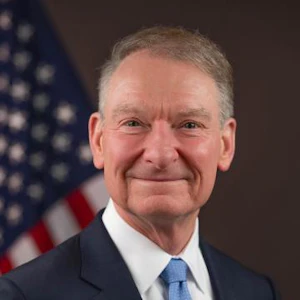
Prior to returning to the SEC, Chairman Atkins was most recently chief executive of Patomak Global Partners, a company he founded in 2009. Chairman Atkins helped lead efforts to develop best practices for the digital asset sector. He served as an independent director and non-executive chairman of the board of BATS Global Markets, Inc. from 2012 to 2015.
Chairman Atkins was appointed by President George W. Bush to serve as a Commissioner of the SEC from 2002 to 2008. During his tenure, he advocated for transparency, consistency, and the use of cost-benefit analysis at the agency. Chairman Atkins also represented the SEC at meetings of the President’s Working Group on Financial Markets and the U.S.-EU Transatlantic Economic Council. From 2009 to 2010, he was appointed a member of the Congressional Oversight Panel for the Troubled Asset Relief Program.
Before serving as an SEC Commissioner, Chairman Atkins was a consultant on securities and investment management industry matters, especially regarding issues of strategy, regulatory compliance, risk management, new product development, and organizational control.
From 1990 to 1994, Chairman Atkins served on the staff of two chairmen of the SEC, Richard C. Breeden and Arthur Levitt, ultimately as chief of staff and counselor, respectively. He received the SEC’s 1992 Law and Policy Award for work regarding corporate governance matters.
Chairman Atkins began his career as a lawyer in New York, focusing on a wide range of corporate transactions for U.S. and foreign clients, including public and private securities offerings and mergers and acquisitions. He was resident for 2½ years in his firm's Paris office and admitted as conseil juridique in France.
A member of the New York and Florida bars, Chairman Atkins received his J.D. from Vanderbilt University School of Law in 1983 and was Senior Student Writing Editor of the Vanderbilt Law Review. He received his A.B., Phi Beta Kappa, from Wofford College in 1980.
Originally from Lillington, North Carolina, Chairman Atkins grew up in Tampa, Florida. He and his wife Sarah have three sons.

Mike Selig
Mike Selig
Chairman Selig brings to the role deep public and private sector experience working with a wide range of stakeholders across agriculture, energy, financial, and digital asset industries, which rely upon and operate in CFTC-regulated markets.
Prior to his leadership at the CFTC, Chairman Selig most recently served as chief counsel of the Securities and Exchange Commission’s Crypto Task Force and senior advisor to SEC Chairman Paul S. Atkins. In this role, Chairman Selig helped to develop a clear regulatory framework for digital asset securities markets, harmonize the SEC and CFTC regulatory regimes, modernize the agency’s rules to reflect new and emerging technologies, and put an end to regulation by enforcement. He also participated in the President’s Working Group on Digital Asset Markets and contributed to its report on “Strengthening American Leadership in Digital Financial Technology.”
Prior to government service, Chairman Selig was a partner at an international law firm, focusing on derivatives and securities regulatory matters. During his years in private practice, he represented a broad range of clients subject to regulation by the CFTC, including commercial end users, futures commission merchants, commodity trading advisors, swap dealers, designated contract markets, derivatives clearing organizations, and digital asset firms. Chairman Selig advised clients on compliance with the Commodity Exchange Act and the CFTC’s rules and regulations thereunder, including in connection with registration applications and obligations, enforcement matters, and complex transactions.
Chairman Selig earned his law degree from The George Washington University Law School and was articles editor of The George Washington Law Review. He received his undergraduate degree from Florida State University.

David Bailey
David Bailey

Eric Trump
Eric Trump
Mr. Trump also serves as Executive Vice President of The Trump Organization, where he oversees the global management and operations of the Trump family’s extensive real estate portfolio. This includes Trump Hotels, Trump Golf, commercial and residential real estate, Trump Estates, and Trump Winery. Known for his hands-on leadership and strong market instincts, he has played a key role in expanding the company’s presence across major U.S. and international markets.
A globally recognized business leader and public figure, Mr. Trump is a prominent advocate for Bitcoin and decentralized finance. He is a co-founder of World Liberty Financial, a decentralized finance (DeFi) platform, and serves on the Board of Advisors of Metaplanet, Japan’s largest corporate holder of Bitcoin.
Beyond his business activities, Mr. Trump has helped raise more than $50 million for St. Jude Children’s Research Hospital in the fight against pediatric cancer, a philanthropic mission he began at age 21.
Mr. Trump earned a degree in Finance and Management from Georgetown University. He currently resides in Florida with his wife, Lara, and their two children. He is also the author of Under Siege, his memoir published in October 2025.

Jack Mallers
Jack Mallers
Cynthia Lummis
Cynthia Lummis
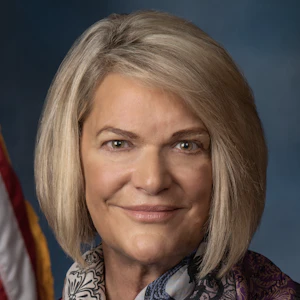
As the first-ever Chair of the Senate Banking Subcommittee on Digital Assets, Senator Lummis is the architect of the legislative framework shaping America's digital asset future. She introduced the landmark Lummis-Gillibrand Responsible Financial Innovation Act, the first comprehensive bipartisan crypto regulatory framework in Senate history. She co-authored the GENIUS Act — the first federal stablecoin law ever enacted — and introduced the BITCOIN Act, which would establish a U.S. strategic Bitcoin reserve of up to one million BTC. She is leading the Clarity Act, which will bring long-overdue regulatory certainty to the digital asset industry. She has also championed digital asset tax reform, including a de minimis exemption for small transactions and equal tax treatment for miners and stakers.
Known as Congress' "Crypto Queen," Senator Lummis represents Wyoming — a state she has helped build into one of the most digital asset-friendly regulatory environments in the nation. Before serving in the Senate, she served 14 years in the Wyoming Legislature, eight years as Wyoming State Treasurer, and eight years in the U.S. House. She is a three-time graduate of the University of Wyoming.
Her work represents a crucial bridge between traditional financial systems and the emerging digital economy, ensuring America leads the world in financial innovation while protecting the individual freedoms that define it.

Adam Back
Adam Back
Amy Oldenburg
Amy Oldenburg
David Marcus
David Marcus

Matt Schultz
Matt Schultz
Fred Thiel
Fred Thiel
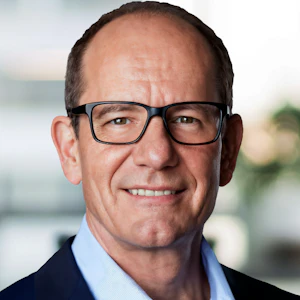
Throughout his career, Mr. Thiel has consistently driven rapid growth and created substantial shareholder value. Prior to MARA, Mr. Thiel served as the CEO of two other public companies, Local Corporation (NASDAQ: LOCM) and Lantronix, Inc (NASDAQ: LTRX). He has successfully raised billions in equity and debt through private and public offerings, led companies through IPOs, executed high-value exits to strategic and financial acquirers, and implemented effective M&A and roll-up strategies.
Mr. Thiel attended the Stockholm School of Economics and executive classes at Harvard Business School, and is fluent in English, Spanish, Swedish, and French. Mr. Thiel is the Chairman of the Board for Oden Technology, Inc. and is active in Young Presidents’ Organization where he has led initiatives in both the FinTech and Technology Networks.
A recognized voice in the industry, Fred frequently shares his insights on energy and technology with major media outlets like Bloomberg TV, CNBC, and FOX Business, contributing to vital discussions about the future of these sectors.
Tim Draper
Tim Draper
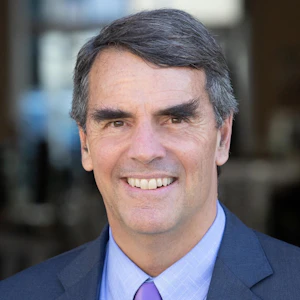
He is a supporter and global thought leader for entrepreneurs everywhere, and is a leading spokesperson for Bitcoin and decentralization, having won the Bitcoin US Marshall’s auction in 2014, invested in over 50 crypto companies, and led investments in Coinbase, Ledger, Tezos, and Bancor, among others.
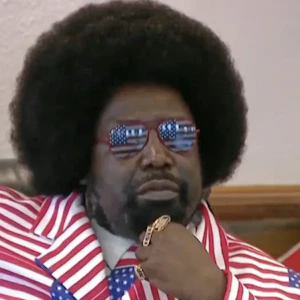
Afroman
Afroman