Protocol vs Platform: Nostr’s Utility Beyond Social Media
Speakers/Moderators

Derek Ross
Derek Ross

David Strayhorn
David Strayhorn

William Casarin
William Casarin

Jeff Gardner
Jeff Gardner
Session
Overview
This panel explored Nostr as an open protocol whose potential extends beyond decentralized social media. Derek Ross moderated a discussion with Jeff Gardner of White Noise, William Casarin of Damus, and David Strayhorn of NosFabrica on how Nostr can support applications that are interoperable, resilient, and less dependent on centralized platforms.
The conversation covered several emerging Nostr use cases, including AI coding workflows, decentralized open source collaboration, private messaging, Web of Trust systems, and new consumer apps like Divine. Speakers discussed how relays, cryptographic identity, and shared network effects can allow apps to work across different experiences while avoiding single points of failure.
A recurring theme was that Nostr should become invisible to users in the same way email protocols are invisible. The panelists argued that adoption depends less on selling ideology and more on building products that work, solve practical problems, and offer experiences people want to use.
All of Nostr is here with us right now. I love it. Good morning, Nostr Las Vegas. It's time to talk about protocols versus platforms.
Just in case there are some new nostriches out here who don't know everybody on the panel with me, let's get down the line and start with Jeff. Give us a quick introduction. Tell us who you are, where you come from, and what you're working on.
Sure. My name is Jeff. I've been working in Nostr a little over three years at this point, I think. I've worked on a lot of different projects, but over the last two years I've been entirely focused on doing secure private messaging over Nostr, which, as a completely public network, is a little bit of a tricky problem. So it's taking a while.
Will?
I'm Will. I made the first Nostr mobile client called Damus, and I also worked on a lot of different things on the Nostr protocol, such as zaps, reactions, reposts, and all that fun stuff that makes Nostr the fun protocol that it is today. These days I'm working on new other stuff on Nostr.
Perfect. We'll talk about it.
Yeah, we're going to talk about the other stuff of Nostr.
David, what have you been up to?
My name is David. I'm one of the co-founders of NosFabrica, and we are working on a suite of products called Brainstorm. Our goal is to bring Web of Trust to Nostr so that your community can identify who is the most trustworthy to help you curate information.
Over the last three years, I'm sure many of you have heard me say, as well as my other panelists here, that the most interesting stuff on Nostr wasn't its current use. We all have Twitter clones, Twitter alternatives such as Damus, that we use every day. But that might not be Nostr's best, most exciting, most interesting use case. A lot of that is the other stuff of Nostr.
So we're going to try to talk about some of this other stuff that exists on Nostr and why it's important. I want to start with Will, because I want to pick on Will for a second. Since Will did build the first Twitter alternative called Damus, I'm sure everyone here is familiar with Damus. But Will has been doing some really exciting stuff with AI over Nostr. I think that's completely unique, and Nostr can be part of the agentic future, part of that conversation and ecosystem. Can you tell us a little bit about how you're leveraging Nostr with AI?
Even before I get into that, since we're on the open source stage, something that's actually very relevant right now is that GitHub keeps going down. GitHub has notoriously bad uptime. People say it's down every day, and it's interrupting a lot of work, a lot of open source work. Even yesterday, I went to open up and look at some PRs on some of my repos, and they weren't even loading.
This idea of moving more of the data that would typically be on GitHub, like issues and pull requests, would be really useful if we had it on a decentralized network that can't really go down. That's something that's really nice about the Twitter clones that we built. When Twitter goes down, people just go to Nostr to complain that Twitter's down. Because when you distribute the notes across multiple servers, Nostr does not go down.
We know who you are, too, right? When you show up only to tell us that Twitter's down right now, once every three or four months or six months, we know who you are. We don't see you posting unless Twitter is down.
That's a beautiful thing about protocols. Once you have enough relays, it can't really go down unless you take down half the internet or something.
Will one time nuked his entire relay and didn't tell anybody for maybe a day or so, and Nostr just kept working. He was like, oh yeah, by the way, guys, I deleted the entire relay. They were like, what?
That was cool, because if that actually had an effect on people's experience, then it means it's not censorship resistant. It means I could just delete everything and people would lose their stuff. But that's not how the protocol works.
Anyway, I wanted to mention that to start, this idea of moving more of our open source work into Nostr. It could actually be really good to get around these issues we're having with GitHub right now.
Sure. Let's get back to the AI portion of that. There is decentralized git that exists on Nostr. Are you using any of the AI tools with Nostr decentralized git?
Yes. That's the reason I mentioned the issues thing, because if we have these agents that are working with our GitHub issues and they can't do their work because they can't fetch them, the first thing that came to mind was, why don't we move a lot of the issues into Nostr so that the agents can just pull the issues from Nostr and continue working on them? It can't really go down because you could actually be running a local relay on your computer that has all the issues synced down, and then you'll have zero issues with reliability.
That's just one example. I'm building something called Damus Agentium. It was really just my attempt to explore agentic coding. This is kind of hot and popular right now. Obviously, there's Claude Code, there's Codex. But one issue I immediately ran into is that I wanted to be able to start a Claude Code session on my computer, and not just one, but lots of them, like 10 of them. I wanted to be able to step away from my computer, go on my Damus device on Android, and continue working from my Android.
I thought, Nostr is kind of perfect for this. What if we replicate the Claude Code messages over Nostr, encrypted, so that I can just remote control it? I know Claude Code has Claude Code remote control now, but doing this stuff over Nostr adds that level of reliability and you don't rely on centralized platforms.
So we have a working prototype, and that's actually how I build most of the Damus tools these days. It's syncing Claude Code sessions over Nostr. It works really well because it's a real-time protocol. That's just one example. People think of social media, but there are so many potential use cases. If you're just broadcasting data and receiving it on multiple devices, that's such a general idea.
Absolutely. Who here uses WhatsApp or Telegram or Signal? So you gave KYC phone numbers and all sorts of information to some centralized company just so you could message your friends and family. It's crazy. We've all done it. There probably is a better way. There should be a better way. There should be a more private way.
Jeff is building that right now with the Marmot protocol, and their reference application is White Noise. Can you tell us why you decided to take on this massive, insanely hard engineering task?
Had I known how hard it was from the beginning, I don't know that I would have waded into this. But it was a problem we all knew in Nostr needed to be solved. We did not have a good way of doing private messages.
There were a few specs about how to do encrypted messages, but the very first one was very naively conceived and leaked all the metadata about who was talking to who and when. The second version of it was definitely a big step up in that it hides the metadata. It has a couple of other little tricks and flaws to it. The most important one is that there is no forward secrecy or post-compromise security. So if your Nostr key leaks, the attacker then has all the communications that you ever had with everybody you ever talked to.
I started out looking into this going, okay, someone else should be doing this, but no one is, so let me just start to have a look. I first started by looking at what came before: the Off-the-Record protocol, the Signal protocol. The original concept of what we were going to do with messaging was going to be based on the Signal protocol.
In the end, there are also some drawbacks about Signal. Signal was created almost 13 years ago, something like that, so it's actually a fairly old protocol. It's not very efficient when you get to large group sizes, and there are a few other things that make it not very well suited to a very distributed environment like Nostr.
So I ended up using a protocol called MLS, Message Layer Security, which is now an Internet Engineering Task Force standard. It's a very big document, but it gives us a really interesting platform to work off of, because MLS is all about the cryptographic state of a group. But they don't care about who the identity provider is or how you deliver the messages.
That's exactly what Nostr is really good at. It gives us identity based on cryptographic keys and signatures, and then it gives us this relay network that we can deliver messages across.
That's where we started, and it's been a journey over the last two years trying to get to the point where we've got a messenger that's as reliable as Signal. You can use it to send messages, images, and videos. Those are encrypted as well. There's still a ton of stuff to build and a ton of stuff to add to it. But the goal is effectively to build an unstoppable messenger. It's private, it's encrypted, but also it can't go down, like Will was saying. There's no central server to fall over in the middle. There's also no central entity that's controlling that server, so if they went out of business or ran out of money, the whole service would not just disappear.
What does success for White Noise look like to you?
It would be amazing if everybody would stop using Telegram first, because Telegram is fully just plain text. Everybody's like, oh, it's encrypted. No. Telegram is not encrypted at all unless you jump through about five flaming hoops, and no one does that. So stop using Telegram, first off.
Honestly, I love Signal. I think it's a great product. But winning for White Noise would look like lots and lots of people moving away from things like Signal, and obviously Telegram and WhatsApp, and moving on to White Noise and Nostr.
In a decentralized protocol, whenever you tell friends and family members about Nostr, because we've all tried to purple pill our friends and family, they say, what do we do about moderation and content we don't want to see, and impersonation, and all these other things? For the longest time, I don't think we had a really good answer to that. But personally, I'm a big fan of what we call Web of Trust, and David's company, NosFabrica, is working on that.
Can you tell us a little bit about what you're building, why you're building it, and why this cannot be done on a centralized platform?
The Web of Trust is a hard concept to wrap your head around. When I tell people, they first say, well, I don't like social credit scores. Exactly. And it's not that. This is the opposite. If we are unable to create a decentralized Web of Trust, then social credit scores are exactly what we're going to end up with.
It's like the difference between fiat and Bitcoin. Some people will say money is evil, but our view is that centralized money is evil. Decentralized money is better. It's the same thing with credit scores. The whole dystopian Black Mirror thing is bad because there is a centralized entity that's in control. We don't know how their algorithms work, and we can't run our own.
We have to be able to curate information. It's not like we can just not have algorithms. I go on Nostr, I don't want to see a bunch of spam. With agents, I'm going to want to know which accounts are worthy of my attention.
Algorithms don't have to be bad, right? They can be good and they can be bad. If users have a choice to choose, build, and create their own algorithm, I think that fits the ethos of Nostr.
Exactly. There have to be algorithms, but the solution is for the algorithms to serve not big tech companies or who knows who, but to serve us as individuals. For that to happen, we have to ultimately be in control of the algorithms.
Following that thought process, then it's like, oh, that's really hard. Nobody wants to have to build an algorithm, obviously. So how do we put you in control, but also make it easy? The way I envision that is that for tough decisions, I can farm them out to people who I trust. Maybe Will made a great algorithm to sort through content, and I'll just delegate that decision to Will. Then if at some point I want to take over, I can look under the hood and change it if I want.
For lots of hard decisions, I want my community, my trusted community, to help me with big decisions, little decisions, and everywhere in between.
So it's essentially giving communities tools to moderate themselves.
Yes. It's putting you in control of your life, which includes the ability for you to delegate control to people you trust, and the ability to take that back if you want.
Will, I'd like to think of you as a Nostr maximalist, where you are a big, huge bull when it comes to decentralization and local-first. What are your thoughts on Web of Trust? What would make you want to implement something like that? Or do you not like that because you feel there's some type of centralization there?
I don't even think we really defined what Web of Trust is. There are lots of ways you can do it. When I think of Web of Trust, you can think of your contact list as the simplest form of Web of Trust. Everyone's familiar with their contacts app on their iPhone or something. These are all the people that you know and are associated with, and you probably want to see their posts. If you load up a social network, maybe the first thing you would do is look through your contact list and find all the posts from those people. That's the simplest possible algorithm. It's kind of already a contact list.
If we're talking about leveraging that list to do moderation on your behalf, I feel like everyone should have that option if they want to do it. We had this experience really early on in the network where some women were getting attacked, and they said, I don't want to see anything that's not in my friend network, because I'm really just posting here with my friends and girlfriends. I just want to chat with them and see their posts. I don't want some random, unhinged Bitcoin maximalist saying how I'm stupid because I'm not using Bitcoin or something. They just want to chat with their friends.
This is a good example where there should be an option where you can click a button and say, I only want to see posts from my network. We actually do have an option in Damus in the top right in notifications where you can click that button.
That's essentially the most basic version of Web of Trust, right?
Yeah. Obviously, you can get more advanced. Instead of just your one hop, you can say, I want my friends and their friends included in my Web of Trust. That'll expand the amount of notes you see. I think it's kind of too early in Nostr right now. I shouldn't even say that, but the network is so small that if you turn that on, you basically can't see anything for new people. It's hard to build network effect if you have this on by default. But I think it's nice to have if a lot of spam is coming in. You have a button, you turn on Web of Trust.
This is really the only way to do it on a decentralized network. You can't rely on centralized moderators to say what is right and what is wrong. It just doesn't really make sense.
I think the interesting thing about Web of Trust is that it much more mimics how humans operate in the world, and how we've evolved to operate with each other. Too many people come along and say, we're going to make a really complicated system where you can build your own algorithm and label all the posts, with all this complicated stuff. People don't want that. They're never going to do that. Using your own social graph as a way of softly filtering or helping people navigate these things works because it's the way we're built.
Humans do this, though, right? What matters to me in the real world is my Web of Trust with you. Maybe I think you're the expert on development. I think you're super smart, you're very intelligent, and I will listen to you talk about development. But I think you're an idiot when it comes to music or food. I know that Will is the expert when it comes to food. Will will rank higher, so I would go to Will and talk to Will about food, but maybe I would go and talk to you about NIPs or something.
That's the point you're making. That's hard to model. That's a really hard thing to model unless you're going to spend hours and hours ranking all of your friends on every topic.
I think you can do that with Brainstorm. You delegate as much of that as you want to people who you trust. I agree with everything both of you said. It is a hard problem. If I had to state what Web of Trust is, the purpose of it is to identify who is the most trustworthy, in any given context, to help you curate your content and information.
Part of the challenge is, how do you find them if they're not only one or two hops away? We want to be able to find people who are any number of hops away. We know that can be done because of the fact that Google exists. Google uses social proof, and Web of Trust is just social proof on Nostr, using people instead of social proof for websites.
It can be unreasonably effective, just like PageRank. I'm thinking about when I first got on Google in the late 1990s. It was like magic. How does this work? I had no idea. I just knew you could find anything, anywhere in the world, and almost all the spam was gone.
So Google for Nostr, but with Nostr cues.
Yeah. Google has one global view of objectively what's the best result. But we're talking about something called personalized PageRank, where it depends on your social graph of who you trust. This is why, when you're talking about it not being a social credit score, it's a personalized credit score for who you think is trustworthy. That's the biggest difference.
Let's get back to some of the other stuff. Breaking news as of a few hours ago: an app that I'm really excited for just officially launched publicly on the Nostr ecosystem. Divine. It's a reboot of Vine built on Nostr. I think that's a very unique use case, where one of our friends, one of our co-developers here in the ecosystem, decided he was just going to do something, and he just did it.
Does anyone have any thoughts on why this is unique and why it could only happen in Nostr? Could Rabble have done this elsewhere?
I don't think so. It's really cool that Rabble was able to find all these old Vine videos. If anybody was going to be able to do that, Rabble was.
Let's rewind here real quick. I think he was able to find half a million Vine videos from the Internet Archive, the depths and back servers of the internet, and restore these to Nostr. All the viral videos that people watched a decade ago are back. You can watch them all, and this app uses Nostr.
I think it's cool as well that people immediately started sending him the Vines that they had downloaded off of Vine when it was shutting down, to re-upload. They're like, here's the zip file, can you just re-upload all these for me? People are really into it.
I think it focuses on nostalgia and doing things unique. Most of what Nostr has been over the past couple of years has been trying to reinvent the wheel, but saying, hey, this wheel exists on Nostr. I don't know if that's going to work. I think we need unique use cases, and maybe this new, fun, whimsical nostalgia angle is how we get new users.
There are a ton of people who are using Divine who have no idea what Nostr is. No clue. He set it up in a way where you don't sign in directly with a key. You just sign in and it's kind of an OAuth-style flow. So there's a key in the background, and people can obviously take the key and go if they want. But so many of the new users on Divine right now have no clue they're using Nostr. They just love the fact that it's easy sharing.
That's it. I personally feel that Nostr should fade into the background. I don't send somebody an email and ask if they're using IMAP or POP3 or SMTP. I don't talk about protocols. I just say, hey, what's your email address?
Exactly. I've always said this in the sense that Nostr is the best fighting chance against the siloed legacy corporate social media, because basically every one of these new use cases adds to this mass. We have the existing users with the pubkeys and things like that. We have a chance to build the network effect just from the protocol. How else do you beat that? If you just built a standalone website that had its own user accounts, you wouldn't have access to the network effects from Nostr. As long as we keep adding these app use cases, and it's all compatible, I can't think of a better way to fight corporate social media.
What is our largest hurdle, because we are a protocol, that we need to overcome?
Key management, I guess. Key management is hard. But honestly, I think the biggest hurdle is that we're still talking about it like it's the thing. We're doing Nostr. Let's build another Nostr app.
We need polish.
Maybe. But there are products out there with really great UX. Damus is super slick. Primal is amazingly built. I don't think it's so much that. We need to build experiences that are unique and fun, that people want to come and use, or that they get some utilitarian value out of, but not push the Nostr angle on it. It just is like, this is a new thing. You hear about it from your friend the way you hear about anything else from your friend, and you're going to use it because of that. Then slowly they see that compounding of, oh, I just use the same thing over here in this other app, and everybody is already here. That's cool.
The technology should fade into the background. People should talk about the fun, new, exciting things that they're using, not the nerdy technical stuff that they're using. Most people don't care about that. We do, but most people don't.
One of the mistakes that I think a lot of people make in the freedom technology space, which is Nostr but also Bitcoin, is trying to sell an ideology. Nobody is going to use your product because you're a great cheerleader for an ideology. A lot of that is a mindset. When we talk about our products, it shouldn't be rah-rah freedom tech. When I used Google, it wasn't because free and open internet, rah-rah freedom tech. It was because it worked.
We need to build products that simply work. We should have in our minds people who disagree with our ideology and ask ourselves, why would they use what we're building?
Absolutely. Thank you guys for coming. We're out of time. Thank you all for coming. We appreciate it.
Similar
Sessions
Vibe Coding on Bitcoin

Michael Tidwell
Michael Tidwell
TAB Conference, (TABConf). Technical Bitcoin conference started in 2018.
Blocktime podcast, Bitcoin podcast started in 2018.
Started as one of the first employees at ZBD in 2020. Enabled users to earn bitcoin via lightning by playing video games. First company I know of to scale lightning for custodial usecases.


Lee Salminen
Lee Salminen
Derek Ross
Derek Ross
Vibe Coding on Bitcoin
Speakers/Moderators
Michael Tidwell
Michael Tidwell
TAB Conference, (TABConf). Technical Bitcoin conference started in 2018.
Blocktime podcast, Bitcoin podcast started in 2018.
Started as one of the first employees at ZBD in 2020. Enabled users to earn bitcoin via lightning by playing video games. First company I know of to scale lightning for custodial usecases.
Lee Salminen
Lee Salminen
Derek Ross
Derek Ross
Private Communication in a Digital World
Jeff Gardner
Jeff Gardner
Private Communication in a Digital World
Speakers/Moderators
Jeff Gardner
Jeff Gardner
AI and the Future of Bitcoin

Jesse Posner
Jesse Posner
Derek Ross
Derek Ross


Ryan Gentry
Ryan Gentry
AI and the Future of Bitcoin
Speakers/Moderators
Jesse Posner
Jesse Posner
Derek Ross
Derek Ross
Ryan Gentry
Ryan Gentry
Protocol vs Platform: Nostr’s Utility Beyond Social Media
Derek Ross
Derek Ross
David Strayhorn
David Strayhorn
William Casarin
William Casarin
Jeff Gardner
Jeff Gardner
Protocol vs Platform: Nostr’s Utility Beyond Social Media
Speakers/Moderators
Derek Ross
Derek Ross
David Strayhorn
David Strayhorn
William Casarin
William Casarin
Jeff Gardner
Jeff Gardner
Protecting Free Speech with Nostr
Derek Ross
Derek Ross
William Casarin
William Casarin

Protecting Free Speech with Nostr
Speakers/Moderators
Derek Ross
Derek Ross
William Casarin
William Casarin
AI + Bitcoin + Nostr = Freedom Tech Stack

Justin Moon
Justin Moon
Mark Suman
Mark Suman
Jesse Posner
Jesse Posner
Derek Ross
Derek Ross
AI + Bitcoin + Nostr = Freedom Tech Stack
Speakers/Moderators
Justin Moon
Justin Moon
Mark Suman
Mark Suman
Jesse Posner
Jesse Posner
Derek Ross
Derek Ross
Other
Speakers
Michael Saylor
Michael Saylor
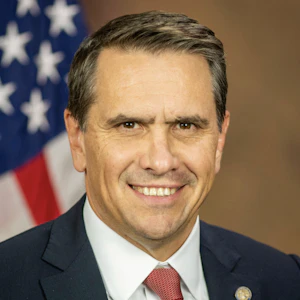
Todd Blanche
Todd Blanche
Biography of Deputy Attorney General Todd Blanche
The Honorable Todd Blanche is the 40th Deputy Attorney General of the United States, overseeing the work of the 115,000 dedicated employees who fulfill the Department of Justice’s mission at Main Justice, the FBI, DEA, U.S. Marshals, ATF, and 93 U.S. Attorney’s Offices.
Todd began his career at the Department where he served for over fifteen years in a variety of capacities, including as a contractor, a paralegal in the Criminal Division, and at the United States Attorney’s office for the Southern District of New York where he eventually became an AUSA and later a supervisor.
After leaving the Department, Todd worked as a criminal defense attorney that included representing President Donald Trump in three of the criminal cases brought against him in 2023 and 2024.
Following President Trump’s historic return to the White House, the President appointed Todd to work alongside Attorney General Pam Bondi to make America safe again. At the DOJ, Todd is working tirelessly to implement President Trump’s priorities that include confronting illegal protecting American businesses from fraud.
Todd has been married to his wonderful wife Kristine for nearly thirty years, is a father and grandfather.

Paul Atkins
Paul Atkins
Prior to returning to the SEC, Chairman Atkins was most recently chief executive of Patomak Global Partners, a company he founded in 2009. Chairman Atkins helped lead efforts to develop best practices for the digital asset sector. He served as an independent director and non-executive chairman of the board of BATS Global Markets, Inc. from 2012 to 2015.
Chairman Atkins was appointed by President George W. Bush to serve as a Commissioner of the SEC from 2002 to 2008. During his tenure, he advocated for transparency, consistency, and the use of cost-benefit analysis at the agency. Chairman Atkins also represented the SEC at meetings of the President’s Working Group on Financial Markets and the U.S.-EU Transatlantic Economic Council. From 2009 to 2010, he was appointed a member of the Congressional Oversight Panel for the Troubled Asset Relief Program.
Before serving as an SEC Commissioner, Chairman Atkins was a consultant on securities and investment management industry matters, especially regarding issues of strategy, regulatory compliance, risk management, new product development, and organizational control.
From 1990 to 1994, Chairman Atkins served on the staff of two chairmen of the SEC, Richard C. Breeden and Arthur Levitt, ultimately as chief of staff and counselor, respectively. He received the SEC’s 1992 Law and Policy Award for work regarding corporate governance matters.
Chairman Atkins began his career as a lawyer in New York, focusing on a wide range of corporate transactions for U.S. and foreign clients, including public and private securities offerings and mergers and acquisitions. He was resident for 2½ years in his firm's Paris office and admitted as conseil juridique in France.
A member of the New York and Florida bars, Chairman Atkins received his J.D. from Vanderbilt University School of Law in 1983 and was Senior Student Writing Editor of the Vanderbilt Law Review. He received his A.B., Phi Beta Kappa, from Wofford College in 1980.
Originally from Lillington, North Carolina, Chairman Atkins grew up in Tampa, Florida. He and his wife Sarah have three sons.

Mike Selig
Mike Selig
Chairman Selig brings to the role deep public and private sector experience working with a wide range of stakeholders across agriculture, energy, financial, and digital asset industries, which rely upon and operate in CFTC-regulated markets.
Prior to his leadership at the CFTC, Chairman Selig most recently served as chief counsel of the Securities and Exchange Commission’s Crypto Task Force and senior advisor to SEC Chairman Paul S. Atkins. In this role, Chairman Selig helped to develop a clear regulatory framework for digital asset securities markets, harmonize the SEC and CFTC regulatory regimes, modernize the agency’s rules to reflect new and emerging technologies, and put an end to regulation by enforcement. He also participated in the President’s Working Group on Digital Asset Markets and contributed to its report on “Strengthening American Leadership in Digital Financial Technology.”
Prior to government service, Chairman Selig was a partner at an international law firm, focusing on derivatives and securities regulatory matters. During his years in private practice, he represented a broad range of clients subject to regulation by the CFTC, including commercial end users, futures commission merchants, commodity trading advisors, swap dealers, designated contract markets, derivatives clearing organizations, and digital asset firms. Chairman Selig advised clients on compliance with the Commodity Exchange Act and the CFTC’s rules and regulations thereunder, including in connection with registration applications and obligations, enforcement matters, and complex transactions.
Chairman Selig earned his law degree from The George Washington University Law School and was articles editor of The George Washington Law Review. He received his undergraduate degree from Florida State University.

David Bailey
David Bailey

Eric Trump
Eric Trump
Mr. Trump also serves as Executive Vice President of The Trump Organization, where he oversees the global management and operations of the Trump family’s extensive real estate portfolio. This includes Trump Hotels, Trump Golf, commercial and residential real estate, Trump Estates, and Trump Winery. Known for his hands-on leadership and strong market instincts, he has played a key role in expanding the company’s presence across major U.S. and international markets.
A globally recognized business leader and public figure, Mr. Trump is a prominent advocate for Bitcoin and decentralized finance. He is a co-founder of World Liberty Financial, a decentralized finance (DeFi) platform, and serves on the Board of Advisors of Metaplanet, Japan’s largest corporate holder of Bitcoin.
Beyond his business activities, Mr. Trump has helped raise more than $50 million for St. Jude Children’s Research Hospital in the fight against pediatric cancer, a philanthropic mission he began at age 21.
Mr. Trump earned a degree in Finance and Management from Georgetown University. He currently resides in Florida with his wife, Lara, and their two children. He is also the author of Under Siege, his memoir published in October 2025.
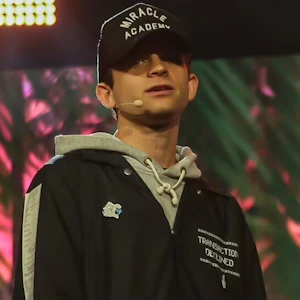
Jack Mallers
Jack Mallers
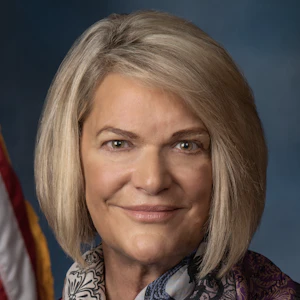
Cynthia Lummis
Cynthia Lummis
As the first-ever Chair of the Senate Banking Subcommittee on Digital Assets, Senator Lummis is the architect of the legislative framework shaping America's digital asset future. She introduced the landmark Lummis-Gillibrand Responsible Financial Innovation Act, the first comprehensive bipartisan crypto regulatory framework in Senate history. She co-authored the GENIUS Act — the first federal stablecoin law ever enacted — and introduced the BITCOIN Act, which would establish a U.S. strategic Bitcoin reserve of up to one million BTC. She is leading the Clarity Act, which will bring long-overdue regulatory certainty to the digital asset industry. She has also championed digital asset tax reform, including a de minimis exemption for small transactions and equal tax treatment for miners and stakers.
Known as Congress' "Crypto Queen," Senator Lummis represents Wyoming — a state she has helped build into one of the most digital asset-friendly regulatory environments in the nation. Before serving in the Senate, she served 14 years in the Wyoming Legislature, eight years as Wyoming State Treasurer, and eight years in the U.S. House. She is a three-time graduate of the University of Wyoming.
Her work represents a crucial bridge between traditional financial systems and the emerging digital economy, ensuring America leads the world in financial innovation while protecting the individual freedoms that define it.
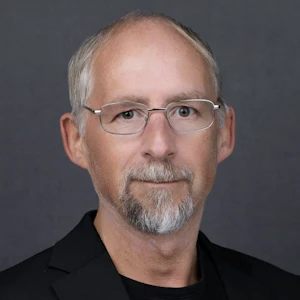
Adam Back
Adam Back
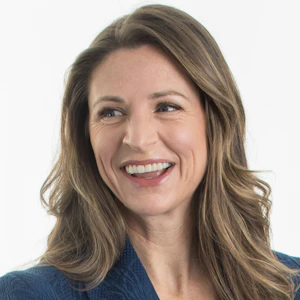
Amy Oldenburg
Amy Oldenburg
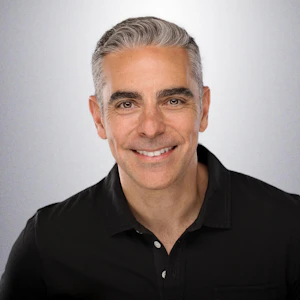
David Marcus
David Marcus

Matt Schultz
Matt Schultz
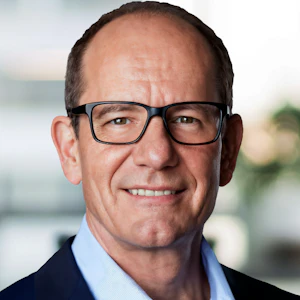
Fred Thiel
Fred Thiel
Throughout his career, Mr. Thiel has consistently driven rapid growth and created substantial shareholder value. Prior to MARA, Mr. Thiel served as the CEO of two other public companies, Local Corporation (NASDAQ: LOCM) and Lantronix, Inc (NASDAQ: LTRX). He has successfully raised billions in equity and debt through private and public offerings, led companies through IPOs, executed high-value exits to strategic and financial acquirers, and implemented effective M&A and roll-up strategies.
Mr. Thiel attended the Stockholm School of Economics and executive classes at Harvard Business School, and is fluent in English, Spanish, Swedish, and French. Mr. Thiel is the Chairman of the Board for Oden Technology, Inc. and is active in Young Presidents’ Organization where he has led initiatives in both the FinTech and Technology Networks.
A recognized voice in the industry, Fred frequently shares his insights on energy and technology with major media outlets like Bloomberg TV, CNBC, and FOX Business, contributing to vital discussions about the future of these sectors.
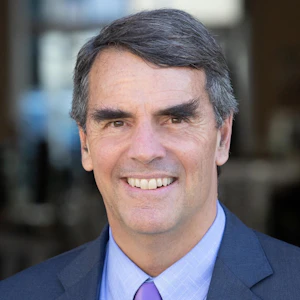
Tim Draper
Tim Draper
He is a supporter and global thought leader for entrepreneurs everywhere, and is a leading spokesperson for Bitcoin and decentralization, having won the Bitcoin US Marshall’s auction in 2014, invested in over 50 crypto companies, and led investments in Coinbase, Ledger, Tezos, and Bancor, among others.

Afroman
Afroman