We're Not Fixing Money to Build More Casinos
Speakers/Moderators
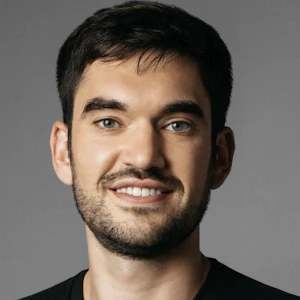
Alex Leishman
Alex Leishman
Session
Overview
Alex Leishman of River argues that younger people face increasing financial pressure from unaffordable housing, weak savings options, and uncertainty about long-term wealth building. He connects that pressure to the rise of sports betting, prediction markets, and finance apps that blur the line between investing and gambling.
The talk contrasts traditional banks, speculative fintech products, and what Leishman calls Bitcoin banks. He presents Bitcoin banking as a third path: financial institutions that can operate 24/7, offer Bitcoin access, support proof of reserves, pay interest on cash, and provide customer service and security closer to traditional banking.
Leishman also discusses broader Bitcoin adoption, including banks building Bitcoin products, public companies and investment advisors increasing exposure, and countries adopting more favorable regulatory positions. The central theme is that Bitcoin financial products should help people build long-term wealth rather than normalize gambling inside everyday financial apps.
So the other day, I was talking to a longtime River client, and he told me that he has never been more bullish on Bitcoin, but he has also never been more worried about the people who do not have any. He told me that he gave his nephew some money to start investing. What he found out was that instead of buying Bitcoin or some long-term investment, his nephew started playing around with prediction markets and lost a lot of it.
I do not think the story is unique. It is happening more and more these days. I was thinking about why this is happening, and I think what we are seeing is that the American dream is getting harder and harder to reach for the average young person. There are a record number of obstacles to having the financial future that young people want, the one that their parents were usually able to achieve.
Housing affordability is terrible. The number of 30-year-olds who are married and own a home continues to fall off a cliff.
Banks used to be a place where you could build your wealth. Our parents were told, put a fraction of your paycheck in the bank every two weeks and your wealth will compound. You will earn compounding interest. That is just not the case anymore. You cannot save in a bank and build wealth. The interest rates are not there. Inflation eats it all up.
So with all of this financial uncertainty, with all of these obstacles, more and more young people are coming to the conclusion that they have to gamble or speculate to get anywhere close to the financial future that they want.
Historically, banking or investing and gambling were two very different things.
A bank was a place that kept your money safe. You could make long-term investments in a brokerage account, and you went to a casino to gamble. It was entertainment. You walked into Caesars Palace. You walked into the Venetian. You played roulette, played poker, and had some fun. Two very different things. But more and more recently, we are starting to see this unholy marriage of banking, finance, and gambling.
The reason this is happening is because companies are starting to prey on the desperation of young people. We can see it in the numbers. Sports betting continues to skyrocket in popularity. Very recently, prediction markets have unlocked something new. They have unlocked the ability for financial institutions to offer sports betting natively in their apps. Financial institutions whose missions were to democratize finance or bring economic freedom to the world are now pushing betting on the Super Bowl or betting on March Madness.
Now, we are in a casino right now. I am not saying gambling should be illegal. I like to play a game of roulette when I visit Vegas, or bet on my favorite boxer every few years. But I think we also need to be honest about what is happening. The fintech industry, the crypto industry as a whole, should not lie to themselves about what is happening here.
Gambling, the proliferation of gambling, and the normalization of it as a daily habit in the apps that we trust with our money to build our wealth just is not good for society. In every jurisdiction where gambling proliferates, personal bankruptcy goes up. Calls to the National Gambling Helpline have skyrocketed in the last few years, and people are gambling younger and younger. You used to have to walk into a casino to gamble. Now all you need is a phone app and your parents' debit card, and you are off to the races.
I think what is happening here is that people leading a lot of these newer financial institutions are starting to offer financial products that they would actually never want their kids to use. They would never want their family to use them, but they are pushing them on their users. That is what I think needs to change.
So we have at our feet two somewhat dystopian futures: this very boring future where we use old, stodgy banks that get your paycheck and do not give you anything in return, and these fintech apps that are telling you they are democratizing finance, but really are just pushing sports betting down your throat. So how do we fix this? What is the positive vision here?
We have to be realistic. We need financial institutions to be able to make money, but they should also provide products that benefit their clients. They should be secure. They should be transparent. They should be available. People need access to their money 24/7 in the modern era.
Traditional banking has historically been pretty strong at some things. Banks have actually had pretty good service and a pretty good track record of security. They have been reliable places to keep your money, but they have not been win-win. Well, they might have been win-win, but the bank wins both times.
Bitcoin exchanges have also had major benefits for people. They have helped people build a lot of wealth, they have had great business models, and they also provide access to this 24/7 payments network.
So what I think is that the future of the financial institutions that will drive our society forward toward a positive future are going to start looking like Bitcoin banks. They are going to have the best of banking and the best of Bitcoin exchanges.
Bitcoin banks are uniquely positioned. They allow wealth generation without gambling. They allow their clients to succeed while having a viable business model. Because they typically have a business model of Bitcoin brokerage, they can afford to pay you the interest you deserve on your cash.
They can also operate 24/7 because Bitcoin does not sleep, and Bitcoin gives you access to a global payments network, which is a huge upgrade from the fiat network we have today. They can be far more transparent than banks. Bitcoin allows proof of reserves, whereas banks can publish their financial statements, but you do not really know what is happening behind the scenes.
I think what we are going to see is this slow acceleration toward a trend of all financial institutions slowly starting to look more and more like Bitcoin banks. We are already seeing this get started. Sixteen of the top 25 largest banks in the country are already building Bitcoin products. Now, I do not think that tomorrow Citibank is going to offer buy Bitcoin on the home screen of its app. It is going to take a while, but these are promising signs.
Our industry is also moving more toward banking, but we have a long way to go. We have built some great products in our industry, but we are not known for security in the Bitcoin space, or in the crypto space more broadly. Especially, our industry is also not known for its customer service. Banks have a leg up there, so we have a long way to go.
At River, we are building toward this. You can already get paid to your River account and auto-convert your direct deposit to Bitcoin. You can earn a high-yield interest rate on your cash, and that interest is paid in Bitcoin. You can replace your checking account. You can pay all of your bills from your River account.
Our clients are investing for the long term, and they are building wealth for the long term. Unlike these sort of speculative gambling apps, 70% of our clients have never sold their Bitcoin.
I think Bitcoin banking gives us a third path forward from two other dystopian futures.
There is so much left to build, and there is so much room to grow. Bitcoin has such a small percentage of global wealth today. It has tremendous growth as an asset. The number of public companies with Bitcoin holdings is still quite small but continues to grow exponentially. Bitcoin held by registered investment advisors is growing reliably every single quarter. The most powerful financial institutions in the world continue to grow their Bitcoin exposure.
Lastly, the biggest institutions of all, the nation states of the world, are continually growing their Bitcoin holdings. Now, I know some of you are thinking some of this is from confiscating other people's Bitcoin. Yes, that is true, unfortunately. But nonetheless, years ago they would have just sold it. More importantly, we are seeing that the growth in positive regulatory postures toward Bitcoin is accelerating.
Fifty countries in the last five years have increased their regulatory friendliness to Bitcoin. I will end with this. This is an animation showing our planet with a gold dot for every business that accepts Bitcoin. I feel very confident that next year this globe is going to shine even brighter, and I feel very honored to stand alongside all of the great companies here helping make that happen.
Thank you.
Similar
Sessions
We're Not Fixing Money to Build More Casinos
Alex Leishman
Alex Leishman
We're Not Fixing Money to Build More Casinos
Speakers/Moderators
Alex Leishman
Alex Leishman
The Subtle Art of Buying the Top

Ryan Long
Ryan Long
Ryan has made some of the most viral sketches on the internet involving the crypto world
https://www.youtube.com/watch?v=uag9TSN7qUY
https://www.youtube.com/watch?v=dRuXOtD3CwE&t=7s
https://www.youtube.com/watch?v=g_aacBuhODE
https://www.youtube.com/watch?v=N50lwEB4LJs&t=20s
Based in New York City, Ryan is a regular at The Comedy Cellar, New York Comedy Club, and The Stand, and tours internationally performing his unique brand of sharp, satirical stand-up.
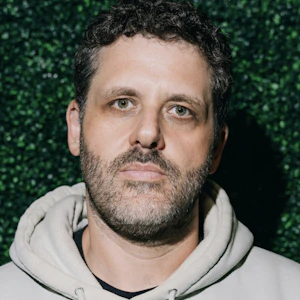
Danny Polishchuk
Danny Polishchuk

Chris Seedor
Chris Seedor
Alex Leishman
Alex Leishman

The Subtle Art of Buying the Top
Speakers/Moderators
Ryan Long
Ryan Long
Ryan has made some of the most viral sketches on the internet involving the crypto world
https://www.youtube.com/watch?v=uag9TSN7qUY
https://www.youtube.com/watch?v=dRuXOtD3CwE&t=7s
https://www.youtube.com/watch?v=g_aacBuhODE
https://www.youtube.com/watch?v=N50lwEB4LJs&t=20s
Based in New York City, Ryan is a regular at The Comedy Cellar, New York Comedy Club, and The Stand, and tours internationally performing his unique brand of sharp, satirical stand-up.
Danny Polishchuk
Danny Polishchuk
Chris Seedor
Chris Seedor
Alex Leishman
Alex Leishman
Outplaying the House: Beating the Banks at Their Own Game

Anthony Magliacca
Anthony Magliacca
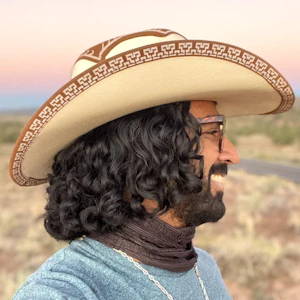
Harsha Goli
Harsha Goli
Alex Leishman
Alex Leishman
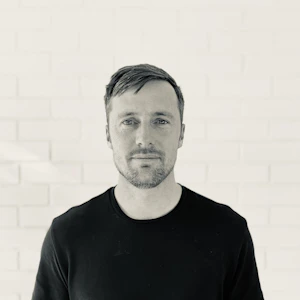
Will Reeves
Will Reeves
Since founding Fold in 2019, Will has grown the company into a national Bitcoin platform serving households and enterprise partners, distributing tens of millions in bitcoin rewards and building one of the largest Bitcoin treasuries among public operating companies.
His work focuses on integrating Bitcoin into the core of financial life by designing products, capital structures, and corporate strategies that treat Bitcoin as long term financial infrastructure.
Outplaying the House: Beating the Banks at Their Own Game
Speakers/Moderators
Anthony Magliacca
Anthony Magliacca
Harsha Goli
Harsha Goli
Alex Leishman
Alex Leishman
Will Reeves
Will Reeves
Since founding Fold in 2019, Will has grown the company into a national Bitcoin platform serving households and enterprise partners, distributing tens of millions in bitcoin rewards and building one of the largest Bitcoin treasuries among public operating companies.
His work focuses on integrating Bitcoin into the core of financial life by designing products, capital structures, and corporate strategies that treat Bitcoin as long term financial infrastructure.
Other
Speakers
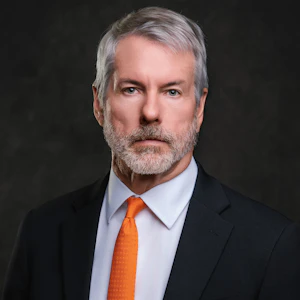
Michael Saylor
Michael Saylor
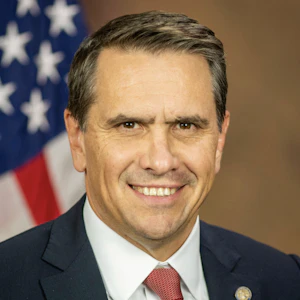
Todd Blanche
Todd Blanche
Biography of Deputy Attorney General Todd Blanche
The Honorable Todd Blanche is the 40th Deputy Attorney General of the United States, overseeing the work of the 115,000 dedicated employees who fulfill the Department of Justice’s mission at Main Justice, the FBI, DEA, U.S. Marshals, ATF, and 93 U.S. Attorney’s Offices.
Todd began his career at the Department where he served for over fifteen years in a variety of capacities, including as a contractor, a paralegal in the Criminal Division, and at the United States Attorney’s office for the Southern District of New York where he eventually became an AUSA and later a supervisor.
After leaving the Department, Todd worked as a criminal defense attorney that included representing President Donald Trump in three of the criminal cases brought against him in 2023 and 2024.
Following President Trump’s historic return to the White House, the President appointed Todd to work alongside Attorney General Pam Bondi to make America safe again. At the DOJ, Todd is working tirelessly to implement President Trump’s priorities that include confronting illegal protecting American businesses from fraud.
Todd has been married to his wonderful wife Kristine for nearly thirty years, is a father and grandfather.
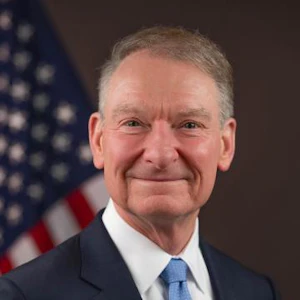
Paul Atkins
Paul Atkins
Prior to returning to the SEC, Chairman Atkins was most recently chief executive of Patomak Global Partners, a company he founded in 2009. Chairman Atkins helped lead efforts to develop best practices for the digital asset sector. He served as an independent director and non-executive chairman of the board of BATS Global Markets, Inc. from 2012 to 2015.
Chairman Atkins was appointed by President George W. Bush to serve as a Commissioner of the SEC from 2002 to 2008. During his tenure, he advocated for transparency, consistency, and the use of cost-benefit analysis at the agency. Chairman Atkins also represented the SEC at meetings of the President’s Working Group on Financial Markets and the U.S.-EU Transatlantic Economic Council. From 2009 to 2010, he was appointed a member of the Congressional Oversight Panel for the Troubled Asset Relief Program.
Before serving as an SEC Commissioner, Chairman Atkins was a consultant on securities and investment management industry matters, especially regarding issues of strategy, regulatory compliance, risk management, new product development, and organizational control.
From 1990 to 1994, Chairman Atkins served on the staff of two chairmen of the SEC, Richard C. Breeden and Arthur Levitt, ultimately as chief of staff and counselor, respectively. He received the SEC’s 1992 Law and Policy Award for work regarding corporate governance matters.
Chairman Atkins began his career as a lawyer in New York, focusing on a wide range of corporate transactions for U.S. and foreign clients, including public and private securities offerings and mergers and acquisitions. He was resident for 2½ years in his firm's Paris office and admitted as conseil juridique in France.
A member of the New York and Florida bars, Chairman Atkins received his J.D. from Vanderbilt University School of Law in 1983 and was Senior Student Writing Editor of the Vanderbilt Law Review. He received his A.B., Phi Beta Kappa, from Wofford College in 1980.
Originally from Lillington, North Carolina, Chairman Atkins grew up in Tampa, Florida. He and his wife Sarah have three sons.

Mike Selig
Mike Selig
Chairman Selig brings to the role deep public and private sector experience working with a wide range of stakeholders across agriculture, energy, financial, and digital asset industries, which rely upon and operate in CFTC-regulated markets.
Prior to his leadership at the CFTC, Chairman Selig most recently served as chief counsel of the Securities and Exchange Commission’s Crypto Task Force and senior advisor to SEC Chairman Paul S. Atkins. In this role, Chairman Selig helped to develop a clear regulatory framework for digital asset securities markets, harmonize the SEC and CFTC regulatory regimes, modernize the agency’s rules to reflect new and emerging technologies, and put an end to regulation by enforcement. He also participated in the President’s Working Group on Digital Asset Markets and contributed to its report on “Strengthening American Leadership in Digital Financial Technology.”
Prior to government service, Chairman Selig was a partner at an international law firm, focusing on derivatives and securities regulatory matters. During his years in private practice, he represented a broad range of clients subject to regulation by the CFTC, including commercial end users, futures commission merchants, commodity trading advisors, swap dealers, designated contract markets, derivatives clearing organizations, and digital asset firms. Chairman Selig advised clients on compliance with the Commodity Exchange Act and the CFTC’s rules and regulations thereunder, including in connection with registration applications and obligations, enforcement matters, and complex transactions.
Chairman Selig earned his law degree from The George Washington University Law School and was articles editor of The George Washington Law Review. He received his undergraduate degree from Florida State University.

David Bailey
David Bailey

Eric Trump
Eric Trump
Mr. Trump also serves as Executive Vice President of The Trump Organization, where he oversees the global management and operations of the Trump family’s extensive real estate portfolio. This includes Trump Hotels, Trump Golf, commercial and residential real estate, Trump Estates, and Trump Winery. Known for his hands-on leadership and strong market instincts, he has played a key role in expanding the company’s presence across major U.S. and international markets.
A globally recognized business leader and public figure, Mr. Trump is a prominent advocate for Bitcoin and decentralized finance. He is a co-founder of World Liberty Financial, a decentralized finance (DeFi) platform, and serves on the Board of Advisors of Metaplanet, Japan’s largest corporate holder of Bitcoin.
Beyond his business activities, Mr. Trump has helped raise more than $50 million for St. Jude Children’s Research Hospital in the fight against pediatric cancer, a philanthropic mission he began at age 21.
Mr. Trump earned a degree in Finance and Management from Georgetown University. He currently resides in Florida with his wife, Lara, and their two children. He is also the author of Under Siege, his memoir published in October 2025.

Jack Mallers
Jack Mallers
Cynthia Lummis
Cynthia Lummis
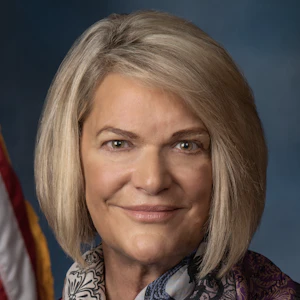
As the first-ever Chair of the Senate Banking Subcommittee on Digital Assets, Senator Lummis is the architect of the legislative framework shaping America's digital asset future. She introduced the landmark Lummis-Gillibrand Responsible Financial Innovation Act, the first comprehensive bipartisan crypto regulatory framework in Senate history. She co-authored the GENIUS Act — the first federal stablecoin law ever enacted — and introduced the BITCOIN Act, which would establish a U.S. strategic Bitcoin reserve of up to one million BTC. She is leading the Clarity Act, which will bring long-overdue regulatory certainty to the digital asset industry. She has also championed digital asset tax reform, including a de minimis exemption for small transactions and equal tax treatment for miners and stakers.
Known as Congress' "Crypto Queen," Senator Lummis represents Wyoming — a state she has helped build into one of the most digital asset-friendly regulatory environments in the nation. Before serving in the Senate, she served 14 years in the Wyoming Legislature, eight years as Wyoming State Treasurer, and eight years in the U.S. House. She is a three-time graduate of the University of Wyoming.
Her work represents a crucial bridge between traditional financial systems and the emerging digital economy, ensuring America leads the world in financial innovation while protecting the individual freedoms that define it.
Adam Back
Adam Back
Amy Oldenburg
Amy Oldenburg
David Marcus
David Marcus

Matt Schultz
Matt Schultz
Fred Thiel
Fred Thiel
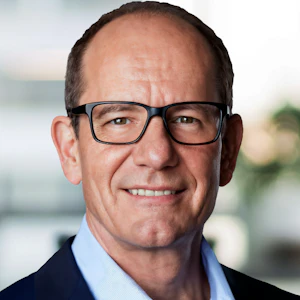
Throughout his career, Mr. Thiel has consistently driven rapid growth and created substantial shareholder value. Prior to MARA, Mr. Thiel served as the CEO of two other public companies, Local Corporation (NASDAQ: LOCM) and Lantronix, Inc (NASDAQ: LTRX). He has successfully raised billions in equity and debt through private and public offerings, led companies through IPOs, executed high-value exits to strategic and financial acquirers, and implemented effective M&A and roll-up strategies.
Mr. Thiel attended the Stockholm School of Economics and executive classes at Harvard Business School, and is fluent in English, Spanish, Swedish, and French. Mr. Thiel is the Chairman of the Board for Oden Technology, Inc. and is active in Young Presidents’ Organization where he has led initiatives in both the FinTech and Technology Networks.
A recognized voice in the industry, Fred frequently shares his insights on energy and technology with major media outlets like Bloomberg TV, CNBC, and FOX Business, contributing to vital discussions about the future of these sectors.
Tim Draper
Tim Draper
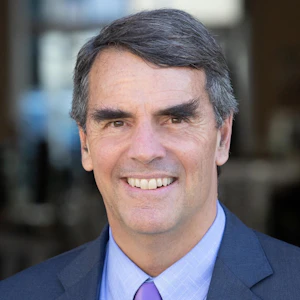
He is a supporter and global thought leader for entrepreneurs everywhere, and is a leading spokesperson for Bitcoin and decentralization, having won the Bitcoin US Marshall’s auction in 2014, invested in over 50 crypto companies, and led investments in Coinbase, Ledger, Tezos, and Bancor, among others.

Afroman
Afroman