Keynote: Michael Saylor
Speakers/Moderators

Michael Saylor
Michael Saylor
Session
Overview
Michael Saylor’s keynote focused on Strategy’s thesis that Bitcoin-backed digital credit can become a major application of digital capital. He described Bitcoin as engineered capital and argued that preferred equity instruments such as STRC can transform Bitcoin’s long-term capital appreciation into lower-volatility credit products with recurring yield.
The talk covered the structure of STRC, including overcollateralization, return-of-capital tax treatment, shelf registrations, liquidity, retail adoption, and institutional use through credit funds and ETFs. Saylor contrasted digital credit with private credit, money markets, bonds, equities, and real estate, emphasizing transparency, liquidity, and yield as the core differentiators.
Saylor also outlined a broader vision for digital money and digital yield products built on top of Bitcoin-backed credit. He argued that banks, exchanges, funds, stablecoin issuers, and corporate treasuries could use these instruments to create new savings accounts, tokenized products, and yield-bearing financial tools powered by Bitcoin.
I am delighted to be with you today. The topic of my presentation is the latest developments in digital credit, digital yield, digital money, and the digital transformation of the capital markets. I think the last 12 months have been extraordinary, not least because the digital credit industry has been born in the last 12 months. I want to talk first about digital credit and why it is even possible.
Digital credit is the killer application of digital capital. Bitcoin represents ideal capital. It represents engineered capital. It represents digital capital. It was created, as you know, by putting together a set of technologies: proof of work, public key cryptography, peer-to-peer networking, and distributed timestamping. By putting together a set of components that had been around, Satoshi was able to create an ideal capital asset: a non-sovereign store-of-value bearer instrument without counterparty risk.
Digital credit, in a similar way, is engineered credit. It is ideal credit. It is digital credit. How do we build it? We start with some off-the-shelf techniques. Listed public companies have been around for 100 years. A capital asset on the balance sheet: we chose Bitcoin. Perpetual preferred equity: preferred equities have been around for hundreds of years. We used a monthly variable dividend. It has been available and possible, but no one ever thought to put it into a credit instrument like STRC.
We use a standard tax treatment called return of capital. It has been around for more than 100 years. Then we combined all those things with a shelf registration and an ATM program. Those had been around a long time. No one had ever thought to put them together with a credit instrument. By combining all of these things, we were able to create digital credit.
What is credit? What is capital? The world is built on capital. The world runs on credit. Capital is for someone who wants to make a long-term investment without cash flows. They are going to bear all the currency risk, all the duration risk, all the volatility, and all the uncertainty for a long period of time because they have a low time preference. There are certain people and certain investors that want that capital investment.
Credit is for people who have a much shorter time preference. They do not want the risk. They do not want the wait. They want steady cash flows. They do not want the volatility. They do not want the anxiety. They have immediate bills to pay, and they want that cash flow now.
Our company, Strategy, converts capital into credit. We take the BTC commodity and convert it into a currency like the U.S. dollar or the euro, which STRC does in USD. We take the risk that is one-for-one, and then we overcollateralize to strip it away. If you collateralize something five-to-one, that means the collateral can fall 80% and you are still fully collateralized. The capital investor has lost 80% of their collateral, but the credit investor is still protected. So you are stripping risk.
When you do that, you damp volatility. The volatility of Bitcoin has been around 40. We strip that volatility away when we strip the risk away by targeting a stable value. From that, you distill or extract a yield, a cash flow, while compressing duration. Instead of waiting a decade to get a capital gain, you get a yield within a month.
The world is built on capital. The world runs on credit. We designed a lot of credit instruments, but after many tries, we finally discovered STRC. STRC is built to provide the benefits equity investors like, such as double-digit returns and tax efficiency, with the benefits credit investors get, such as low volatility and capital preservation. If you can combine all of those together, you have the best of the credit world and the best of the equity world in a single instrument.
Digital credit appeals to people who might like private credit. Private credit is the reach for yield. People who do not like money markets, investment-grade bonds, or junk bonds buy private credit. There is $3.5 trillion or more in private credit. But private credit is illiquid, opaque, heterogeneous, and made up of a portfolio of a thousand private loans. It is restricted to qualified investors, and there is a high fee associated with it. We just saw in the past month that private credit markets have been melting down. They got hit with a rash of redemptions, and they could not meet their redemptions. Yet it is $3.5 trillion of money that wants to invest in these instruments.
Digital credit is liquid, transparent, homogeneous, scalable, accessible to everybody, and there is no fee. If digital credit transformed just 10% of the private credit market, that would be $350 billion in today’s dollars.
Digital credit is meant to appeal to lots of different investors. It is meant for retail investors. It is meant for digital-native or crypto investors. It appeals to hedge funds and hybrid investors. It appeals to institutional credit investors. It also appeals to corporate treasurers and CFOs who want to hold some high-performance monetary asset on their balance sheet.
A lot of people were surprised when we used preferred stock to do this, but it turns out that digital credit is just the reemergence of preferred capital after 100 years. If you go back to the 19th century and think about the last major capital development effort, which was railroads, most railroads and a lot of the early industries during the Industrial Revolution were financed by preferred stocks. They used to be 20% to 40% of the capital structure of corporations. In the 20th century, preferred stocks fell out of favor. It is almost like they were forgotten. Now, in the 21st century, we have reintroduced the idea of preferred credit, or preferred stocks, back into the capital markets.
How do you create it? People always wonder: how do you create an 11% yielding credit instrument? You start with the performance of asset classes. If you look at the performance of Bitcoin over the last five years, it is up 38% a year, which is much better than gold or the S&P. Real estate is up 6% a year. Money markets are up 3% a year.
You cannot create a credit instrument that pays a dividend higher than the capital return of the asset in which the credit is being invested. The theoretical highest yield you could ever pay on gold-backed credit would be 16%. The theoretical highest yield you could pay on real estate credit is 6%. With Bitcoin, the theoretical yield is 38%.
If you think about the theory of asset-backed credit, or the theory of digital credit, what you do is take the capital gain you expect in the capital asset and pay a portion of it to the credit investor. If you expect 30% in Bitcoin, you could pay 11% to the credit investor. The excess yield, in this case the 19% yield spread between 30% and 11%, goes to the equity. The common equity investor gets the actual carry or the yield boost. The credit investor gets that first 11% strip of return with risk management and principal protection.
You could do what we have done, in theory, with gold, real estate, or the S&P index, but you would not be able to pay as high a dividend because those asset classes do not perform as well.
Here is another way to look at it. Bitcoin is something for people who want to hold for 10 years. It is a roller coaster. It has a 30% annual rate of return. It has 30 or 40 volatility. You are going to have years when you are up and years when you are down. You are going to have no cash flow for a decade. Digital credit simply strips the first 11%, returns it to the credit investor, and gives them a more comfortable ride.
We are just doing signal processing on a financial signal. Where does the excess volatility go? Where does the excess return go? It goes to the equity. We created digital credit off of digital capital, and then that creates digital equity. As it turns out, all three of these assets are created with digital intelligence. We could not create digital credit without digital intelligence. If you are looking for a killer application of AI, it is taking digital intelligence and working on digital assets or digital capital to create digital equity and digital credit. You can see it at work here. In fact, we have done it with our own securities.
If your time horizon is less than four years, if you need the money in a month, a quarter, or a year, you probably want to hold the credit because you do not want volatility in the principal. If you do not need the money for a decade and you do not want counterparty risk, if you want complete self-sovereignty, you should buy Bitcoin, the commodity. If, on the other hand, you have a long time horizon but want to bet on the future of digital capital and digital credit in an amplified way, you buy the equity, the digital equity instrument.
Lots of people have different views, and you have to see Bitcoin as one pole and credit as the other. People who want to be completely without counterparty risk and self-sovereign want the commodity. But in your life, you buy things all the time from corporations where you rely on the company to perform. When you get on an airplane, you trust the pilot to land the plane. When you buy an iPhone, you trust Apple not to turn off your iPhone. When you go to a dentist, you trust the dentist not to stop halfway through the operation. When you watch a Netflix series, you trust Netflix to let you finish the show. When you buy electricity, you trust the power company to keep pumping the electricity.
There are a lot of people who want unlimited free electricity. They do not want to install a nuclear reactor in their backyard. What has happened here is that we have created a crypto reactor, and we are using it to create credit in order to serve a group of people who do not want to do this work themselves. They do not want to wait a decade before they monetize their investment. They want to consistently monetize the investment every month for 120 months in a row.
Who would do that? A retiree, an older investor, a conservative institution, a company with lots of consistent bills, or a company that gets shut down if it cannot make payroll in two months. There are plenty of institutions, individuals, and investors that cannot take a long-duration capital investment. For them, they need the credit.
One serendipitous result we found while we were engaged in this was that if you finance the dividends from a credit instrument by monetizing an unrealized capital gain, you have created a return of capital dividend, and that is tax deferred.
To the people backstage, the timer in front of me is not working. I may very well go on forever if you do not turn the timer back on. Maybe they are being polite.
That return of capital dividend has been around for more than 100 years, but it turns out that we were the company that figured out how to scale it by combining the credit instrument with digital capital.
How is it doing? STRC has grown from nothing to $8.5 billion in about nine months. It currently has almost $400 million of daily liquidity. Its volatility has fallen to 2.9%. The Sharpe ratio is in the high twos. It is four-times overcollateralized.
This is hypergrowth. How do you know that a product is working? It is growing 350% a year. That is how fast it is growing. It is 100% month-over-month growth. I do not know how long this will be in hypergrowth, but right now this is the fastest-growing credit instrument in the world, maybe in the decade or the century.
Why is it growing so fast? It is growing fast because it is ideal credit. It was engineered to provide everything a credit investor would want if you look at it from the point of view of the investor, not from the point of view of the issuer. Most credit issuers want to create an instrument that is good for them and bad for the investor. We started with a blank sheet of paper using digital capital, then we used digital intelligence, and then we designed a credit instrument that is good for the investor. That is the ideal credit instrument.
The instrument grew to be the largest preferred stock in the world within eight months. It is now $8.9 billion. The 10 largest preferred stocks include STRC, a simple thing to remember. The other stocks have tickers that are hard to search for. If you searched for some of them, you would barely find them. They are actually institutional products. Some of the ones that trade OTC are not available to many public investors. They were not built for the public investor. They were built for an institutional world that traded credit in the 20th century. What is the result? Nobody trades them.
STRC is not just the biggest preferred. It is the most liquid preferred in the world, and it is not even 12 months old. Look who it is competing against: Wells Fargo, Bank of America, Fannie Mae, Citi, and JPMorgan. It is 25 times more liquid than the next best one, and it is not a year old. It is like Superman as a toddler beating everybody. And it is because it is Bitcoin-powered.
If you dive a little deeper, you will see that it trades 4.5% of its AUM every day. It is not just more liquid and bigger. It is actually faster, higher-powered money, and it is higher powered by an order of magnitude. You can see the superior engineering design.
What else is highly liquid? Bitcoin. The reason digital credit is highly liquid is because digital capital is highly liquid, and digital equity is highly liquid. It is not an accident. They are all correlated to each other. If you want high-energy credit, you have to build it on a high-energy capital asset.
What else do you want from credit? You want it to be stable. In the middle of the crypto bear market, in the crypto winter, Bitcoin peaked on October 6 at $125,000 a coin. It is down 38%. STRC is down 0%. It has exactly held par. You can see that the credit instrument is something where you can manage the principal value. You need an issuer to do that. That is where the company comes in.
The capital instrument has no issuer, no counterparty, and no one managing it. If you are a long-term investor, I will tell you every day: buy Bitcoin, do not buy the credit. But the truth is, most people are not long-term investors able to take that volatility. They simply want to put their money in a bank account, collect 10% or 11%, and not worry about it. They want to let somebody else worry about it. STRC is built for them.
You can see it seasoning. It started off with a rocky start, and it gradually fell into the zone. In January, it traded in its target trading range 90% of the time. February was a very difficult month. It traded there 80% of the time. Then in March and April, it locked into place. It was in the trading zone 100% of the time in March and April. You can see it is hitting its target range now.
Liquidity is everything. There is no point in telling you this is a good product if you can only buy or sell $100,000 a day. You are not going to get someone to invest a billion dollars in something if it would take them 10 years to get out of it. The liquidity has grown by a factor of eight in five months. Again, hypergrowth, right off the charts. There has never been a credit instrument that grew in liquidity like this. This is going viral.
If you look at preferreds by return versus daily liquidity, you can see STRC is in a class by itself. It is the supernova of credit, and everything else is on the sidewall. Everything else is illiquid and mediocre. The velocity of this thing is exploding.
The demand for STRC was about a $500 million business per month in January, about $6 billion a year. In February, we got punched in the face. It was a really difficult month, with a massive Bitcoin drawdown, and demand fell to $80 million. In March, it jumped to $1.5 billion. It became an $18 billion-a-year product. Imagine going from zero to $18 billion a year in the first year. Then in April, it went to $3.5 billion. Multiply $3.5 billion by 12, and all of a sudden it is a $38 billion-a-year run rate, and it is not a year old.
Clearly, we are in hypergrowth right now. May will be interesting. June will be interesting. July will be interesting. But you might go Google and ask how many products in the world went from zero to $20 billion a year in the first year. There are not many. It is very difficult to do.
If you come back to the innovation of shelf registrations, before we started selling digital credit, the largest shelf registration on a credit instrument in the world, ever in the history of the market, was $500 million. Then Strategy created a $2 billion registration for STRK, a $2 billion one for STRF, a $4 billion one for STRD, and then a $21 billion shelf registration for STRC. That innovation, the idea of a shelf registration on a credit instrument, was not materially used by anybody in the world in the capital markets.
The U.S. is the leader in shelf registrations. When I say in the world, I mean they are not doing it in Japan, they are not doing it in Europe. The U.S. is the leader, and in the U.S. we just did something that is 40 times bigger than the next biggest thing that has ever been tried by anybody. Again, we are not even one year old.
Why is there so much demand? Private credit yields 8.5%. You could characterize the entire credit market as return-free risk. You are getting 80 basis points of yield over the risk-free rate if you buy investment bonds or corporate bonds. You are getting 200 basis points for junk bonds. You are getting 300 or 400 basis points for private credit that is illiquid. It is all taxable. We can come up with something that pays 11.5%, is tax deferred, liquid, and transparent. If you are a taxpayer in Miami Beach, that is the equivalent of a bank account that pays you 18%.
We have created the short end of the yield curve, like the one-month Bitcoin bond, the risk-free rate in the crypto ecosystem. What is the free-market rate of capital, or the free-market cost of capital? It is 11.5% right now. You can see what the risk-free rate is in every other currency: three, two, one, zero. Now, if you are an investor, you can start to imagine a world where you borrow euros at 2% and buy STRC at 11%, and keep the difference. Or borrow yen at 70 basis points and invest at 11%, and keep the difference. There is a massive arbitrage here.
What if you live in New York City? STRC is like a bank that pays you 24% interest in New York City. What if you live in San Francisco? It is a 23.11% tax-equivalent yield. Your money market pays you 3.6%. Bank deposits pay you almost nothing. Why would you not buy it?
Volatility. It is too volatile. You can see we have actually taken the volatility from 13 down to 2.3 through the end of April. Our goal is to get it into the ones. We had it in the one range a few weeks ago. The only instruments in the entire credit industry to have a one volatility are money markets.
It is worthwhile to talk about some financial theory here. The Sharpe ratio is defined as the return of the instrument minus the risk-free rate, divided by the volatility. It tells you how much you are getting paid for the volatility you are incurring, or the risk you are taking. What is the risk-adjusted return? When the Sharpe ratio is above one, you are getting paid more in return than the volatility you are incurring.
The Sharpe ratio of STRC is 2.7. The best Sharpe ratio of a credit instrument is 0.5. It is five times better than the next best credit instrument. It is 10 times better than most credit instruments. Money markets have a negative Sharpe ratio. The fee charged to you by the issuer or sponsor of the money market is so high, 20 or 30 basis points, that in essence there is no return. It is return-free risk, a negative Sharpe ratio.
Compare digital credit to equity. The best equity in the world is Nvidia, and Nvidia has a positive Sharpe ratio of 1.89 right now. Nobody else in the Magnificent Seven does. None of them return the risk that you are taking. Amazon’s volatility is five times the return. STRC is outperforming them all, and it is a credit instrument. Imagine doing that with credit.
Now look at assets. The S&P index does not return its volatility. It has a Sharpe ratio of less than one. Bitcoin has a return lower than its volatility right now. NASDAQ, same thing. Gold is 0.4. Real estate is awful. It has high volatility and low return. STRC has a higher Sharpe ratio than any of these instruments.
In fact, it is kind of like monetary fuel. That means it competes with $300 trillion of credit and $100 trillion of equity. It competes with real estate. Digital credit is going to cannibalize and replace real estate capital, equity capital markets, credit capital markets, and currency capital markets. Most of them have lackluster yields and all sorts of risks and opacity. Some of them are illiquid. None of them compare favorably to digital credit.
If you walked down the street and asked 100 people whether they want a 30-year bond, or something they have to hold for a decade to see if they get wealthy, or a bank account that pays them 10%, the answer is that everybody wants a bank account that pays them 10%. Some specialists might think they can do better than that with some of their money. But every corporation, every individual, and every institution has a lot of money they want to put in a bank, preserve the principal, and get paid three or four times the money market rate.
One of the serendipitous results of digital credit is that you can buy digital credit, collect the dividends tax deferred, reinvest them tax deferred, and compound your wealth on a tax-deferred basis. Normally, you cannot do that with a bond. You cannot do it with a preferred stock that pays a normal qualified dividend distribution.
There is a powerful compounding effect. As you compound those dividends, you are lowering the basis in the instrument. You collect dividends until the basis in the instrument is reduced to zero. If you then pass that instrument to your heir, if your daughter or your son inherits that instrument, they get a step-up basis. You got $100 of dividends tax free. They will get $100 of dividends tax free. Over 20 or 30 years, you can collect $200 of dividends tax free on a $100 investment in the instrument.
What does that convert to? You have $100. You invest it for 21 years in T-bills. You pay taxes on it. You reinvest the dividends after tax. After 20 years, you have $158, and you are getting $3.68 in after-tax cash flow. If you do the same thing with digital credit after the same time period, you have six times as much money. You have $965, and you are collecting $107 a year on an original investment of $100.
There is a massively powerful generational wealth transfer opportunity here for risk-averse investors, credit investors, and people who never want to stomach a major drawdown but do want to compound their wealth in a very tax-efficient way.
Let’s talk about adoption. Who is buying this? Eighty percent of STRC is held by retail accounts. It has been a retail explosive phenomenon. We counted 120,000 distinct retail accounts as of a few months ago. It is also being adopted by corporate treasuries in size. It is being adopted by institutional investors in credit indexes. It is being adopted crypto-natively. It is also being adopted by a group of financial innovators.
There are a lot of ways to buy it. You can get it on E*TRADE, Robinhood, Fidelity, or Charles Schwab. All of the standard retail rails are supporting this. You can buy it in 10 seconds. It is easy. It has spread very rapidly. It has been a very successful retail product, and we estimate three million households right now are benefiting from STRC.
What is our vision? Our vision is to power millions, then tens of millions, and then hundreds of millions of households with a high-yield savings account. It is straightforward. Everybody wants more money. Everybody would like a bank to pay them three times more than they are being paid right now. It is not even debatable. Create a digital yield account or a digital money account. A billion people want that. We have a good start, three million in eight months, but we are not going to stop there.
We are going to go to corporations too. If you are a company, you have probably got most of your money in T-bills, and T-bills are giving you 3.5% before tax, 2% after tax. STRC appeals to a lot of these corporations because the tax-equivalent yield is five times higher. Would you not like to get paid 16% instead of 3.6% if you are a corporate treasurer? Clearly, this has become very interesting to a lot of people.
If you allocate one third of your treasury capital to STRC, you double your cash flows. If you actually can put your treasury into STRC, you can generate nearly four times the cash flow. Imagine four times the cash flow on assets that you have to hold on your balance sheet. Every company has to hold this. They need to make payroll. They need to pay taxes. They need to have one, two, or three years of working capital. But they do not need to hold it in a low-performance money market if they can do better.
Who has done it? Energy companies, crypto companies, and Bitcoin companies. It is starting to spread pretty rapidly now.
I talked about institutional investors. BlackRock and VanEck run two of the more well-known, larger credit funds. STRC is the third-largest holding in each one of them. It is anywhere from 2% to 6% of their entire credit index. As money flows into those credit indexes, that money flows to STRC, and that flows to Bitcoin. Increasingly, I think we will see that we are indexed to credit.
There have also been a lot of ETFs. 21Shares embedded STRC in an ETF and took it public in Europe a few weeks ago. Strive is creating a digital yield fund, and they are going to bring that to market in the U.S. A number of other interesting public funds are being put together, and they will come to market in the coming months.
That is probably a good segue to talk about money and yield. The opportunity is for a thousand companies to create their own digital monetary instruments or digital yield instruments, all powered by digital credit, which is in turn powered by digital capital.
Look at what we have done here. We have taken digital capital, 35 volatility and 39 annual rate of return, and we split it into equity and credit. The credit is three volatility, 11% yield. The equity is 72 volatility, 58% annual rate of return. You can see what happens when you tranche the commodity into a credit and an equity instrument. The credit is layer two. We think of layer three as money and yield.
There are a lot of interesting layer-three applications that your company could implement, that any bank, any crypto exchange, any investment manager, and even an individual can implement. We define digital money as 0% volatility and daily liquidity. It is high-powered money. Zero volatility, I can get the money back every day, and I get streaming dividends. Digital yield would be maybe non-zero volatility, maybe not liquid every single day, but it is built on digital credit.
You can imagine you can take STRC. You can tokenize it. You can put it in a private fund. You can put it in a public fund, an ETF. You can put it into a bank account. You can deploy it via any platform, such as Binance, Coinbase, or Cash App. You can deploy it via Commonwealth Bank in Australia, Deutsche Bank, JPMorgan, or Morgan Stanley. You can take it public on NASDAQ, Euronext, or the New York Stock Exchange.
You can step up and down the volatility. You can step up and down the yield. If you want to crank the yield to 30%, you can do that. You can also step down the yield, and then modify or program the liquidity from continuous to daily, weekly, monthly, quarterly, or annual. We have seen people doing all these things.
Digital money can come as a coin, as a fund, or as an account. When you start thinking about it this way, you realize that if you step it down, you can create zero-volatility, 7.5% yield money, like a perfect stablecoin, Bitcoin-backed, that pays 7.5%. There are announcements about that coming out right now. There are companies that are going to do that in the crypto ecosystem.
You can also lever it up three-to-one. Maybe you collect $33 or $35 of dividends, pay $8 of interest, and keep $25 on a $100 investment. So you have a 25% yield. You just loop it three times. That is also possible with digital yield.
Here are some examples of companies doing it. Apex is doing it. Saturn is doing it. Hermetica is doing it. There is a big thirst in the crypto economy to generate Bitcoin-backed yield, and some companies are creating yield on Bitcoin with this. There are also a lot of people who want to create stablecoin-backed yield. How do I get yield off my stablecoins? That is very straightforward as well, and Apex and Saturn are doing that.
Of course, you can also innovate with mutual funds and private funds. You are seeing tokenization take place right now. How fast? The chart is out of date. It went from zero to $200 million in the last four weeks, and now it is about to go through $300 million. This has gone from nothing to hundreds of millions of dollars. I think we will probably go through a billion dollars of AUM over the next four to eight weeks. This is an explosive industry downstream of STRC.
We are committed to helping everybody who builds on top of STRC. We want to make it higher frequency, more liquid, and less volatile. One way we think we can do it is to double the frequency of the dividend, going from monthly to semi-monthly. You get paid every two weeks by your employers, so why should your assets not pay you every two weeks?
Instead of 12 cycles where you have a dividend cycle and a drawdown, it goes to 24 cycles. But 24 cycles with half the intensity, half the dividend, means that in theory we should be able to get the thing to vibrate in a much tighter range. That should decrease the volatility and increase the liquidity. That is what we would expect.
Whenever you double the frequency of something in the physical world, that is called taking it an octave higher. A note that is an octave higher has double the frequency. It is a higher-energy, higher-fidelity signal. That is what we are doing with STRC.
It will be the only preferred stock in the world that pays semi-monthly out of 921. It will be the only stock in the world that pays a semi-monthly dividend out of 24,000 common stocks. We are innovating in frequency, engineering, construction, and design. But at the end of the day, the great innovations will be the people who put the funds, coins, and tokens on top of it, because they can go to hourly streaming, hourly frequency, 24/7, 365. They can loop it, step it down, loop it up, or transform it into yen, euros, dollars, or whatever they want.
We are really excited to provide a stable platform for everyone else to build on top of it. This will go to a vote, and the polls will close in early June. If it is approved by the shareholders, then the first record date will be the end of June, and the first payment date will be July 15. Those polls are now open. If you are a STRC holder and would like to make your voice heard, you can go to our website and vote, or you can do it here.
I will end with this thought. Digital credit is a killer application of Bitcoin. We expect to sell tens of billions of digital credit until we sell hundreds of billions of digital credit. If we sell hundreds of billions of digital credit, we will then see if we can sell trillions of dollars of digital credit.
Every dollar that goes into digital credit will flow into digital capital. It will flow into the Bitcoin network. As it flows into the Bitcoin network, the price of Bitcoin should increase. We expect digital credit will drive the size of the Bitcoin network.
The endgame is not that complicated. Give a high-yield digital bank account yielding 8% to 10% a year to a billion people. Drive Bitcoin to $10 million a coin and make Bitcoin a $200 trillion network until it grows higher. Give everybody in the world an alternative to 20th-century credit instruments, zero-yielding bank accounts, lackluster junk bonds, private credit, risky equities, and challenging real estate investments that are difficult to manage, illiquid, and immobile.
Those things collectively represent the digital transformation of all the capital markets. As we like to say in the Bitcoin community: fix the money, fix the world. Digital credit is the next killer application to fix the money. It is going to spread Bitcoin everywhere in the world, and it is going to cause Bitcoin to back stablecoins, crypto tokens, and all sorts of other conventional credit instruments.
It will be a good day when the major banks and the major investors in the world all own some digital credit, or they offer digital bank accounts powered by Bitcoin. You all made it possible, and you inspire me every day. Thank you. I am appreciative to be on the journey with you all.
Similar
Sessions
How STRC Was Born: A Conversation with Michael Saylor and Barclays MD, Lee Counselman
Lee Counselman
Lee Counselman
Michael Saylor
Michael Saylor
How STRC Was Born: A Conversation with Michael Saylor and Barclays MD, Lee Counselman
Speakers/Moderators
Lee Counselman
Lee Counselman
Michael Saylor
Michael Saylor
Keynote: Michael Saylor
Michael Saylor
Michael Saylor
Keynote: Michael Saylor
Speakers/Moderators
Michael Saylor
Michael Saylor
Michael Saylor Q&A

Carly Benson
Carly Benson
Carly became a Bitcoin-only Bitcoiner in 2017 after living in Las Vegas and interacting with the professional poker and sports betting community. She learned about Bitcoin by seeing use-cases for it as the whales of the gambling world have been betting, settling and transacting in BTC for many years.
Before getting in to the Bitcoin space, Carly ran her own successful marketing consultancy for 18 years and was known as an alcohol-free SME, Course Creator and Yoga Instructor.
She has given talks around the world and her work and courses have helped thousands change their relationship with alcohol. She’s been featured in Women’s Health, SELF magazine, Extra TV, Travel Zoo and other notable outlets.
Michael Saylor
Michael Saylor
Michael Saylor Q&A
Speakers/Moderators
Carly Benson
Carly Benson
Carly became a Bitcoin-only Bitcoiner in 2017 after living in Las Vegas and interacting with the professional poker and sports betting community. She learned about Bitcoin by seeing use-cases for it as the whales of the gambling world have been betting, settling and transacting in BTC for many years.
Before getting in to the Bitcoin space, Carly ran her own successful marketing consultancy for 18 years and was known as an alcohol-free SME, Course Creator and Yoga Instructor.
She has given talks around the world and her work and courses have helped thousands change their relationship with alcohol. She’s been featured in Women’s Health, SELF magazine, Extra TV, Travel Zoo and other notable outlets.
Michael Saylor
Michael Saylor
Other
Speakers
Michael Saylor
Michael Saylor

Todd Blanche
Todd Blanche
Biography of Deputy Attorney General Todd Blanche
The Honorable Todd Blanche is the 40th Deputy Attorney General of the United States, overseeing the work of the 115,000 dedicated employees who fulfill the Department of Justice’s mission at Main Justice, the FBI, DEA, U.S. Marshals, ATF, and 93 U.S. Attorney’s Offices.
Todd began his career at the Department where he served for over fifteen years in a variety of capacities, including as a contractor, a paralegal in the Criminal Division, and at the United States Attorney’s office for the Southern District of New York where he eventually became an AUSA and later a supervisor.
After leaving the Department, Todd worked as a criminal defense attorney that included representing President Donald Trump in three of the criminal cases brought against him in 2023 and 2024.
Following President Trump’s historic return to the White House, the President appointed Todd to work alongside Attorney General Pam Bondi to make America safe again. At the DOJ, Todd is working tirelessly to implement President Trump’s priorities that include confronting illegal protecting American businesses from fraud.
Todd has been married to his wonderful wife Kristine for nearly thirty years, is a father and grandfather.

Paul Atkins
Paul Atkins
Prior to returning to the SEC, Chairman Atkins was most recently chief executive of Patomak Global Partners, a company he founded in 2009. Chairman Atkins helped lead efforts to develop best practices for the digital asset sector. He served as an independent director and non-executive chairman of the board of BATS Global Markets, Inc. from 2012 to 2015.
Chairman Atkins was appointed by President George W. Bush to serve as a Commissioner of the SEC from 2002 to 2008. During his tenure, he advocated for transparency, consistency, and the use of cost-benefit analysis at the agency. Chairman Atkins also represented the SEC at meetings of the President’s Working Group on Financial Markets and the U.S.-EU Transatlantic Economic Council. From 2009 to 2010, he was appointed a member of the Congressional Oversight Panel for the Troubled Asset Relief Program.
Before serving as an SEC Commissioner, Chairman Atkins was a consultant on securities and investment management industry matters, especially regarding issues of strategy, regulatory compliance, risk management, new product development, and organizational control.
From 1990 to 1994, Chairman Atkins served on the staff of two chairmen of the SEC, Richard C. Breeden and Arthur Levitt, ultimately as chief of staff and counselor, respectively. He received the SEC’s 1992 Law and Policy Award for work regarding corporate governance matters.
Chairman Atkins began his career as a lawyer in New York, focusing on a wide range of corporate transactions for U.S. and foreign clients, including public and private securities offerings and mergers and acquisitions. He was resident for 2½ years in his firm's Paris office and admitted as conseil juridique in France.
A member of the New York and Florida bars, Chairman Atkins received his J.D. from Vanderbilt University School of Law in 1983 and was Senior Student Writing Editor of the Vanderbilt Law Review. He received his A.B., Phi Beta Kappa, from Wofford College in 1980.
Originally from Lillington, North Carolina, Chairman Atkins grew up in Tampa, Florida. He and his wife Sarah have three sons.

Mike Selig
Mike Selig
Chairman Selig brings to the role deep public and private sector experience working with a wide range of stakeholders across agriculture, energy, financial, and digital asset industries, which rely upon and operate in CFTC-regulated markets.
Prior to his leadership at the CFTC, Chairman Selig most recently served as chief counsel of the Securities and Exchange Commission’s Crypto Task Force and senior advisor to SEC Chairman Paul S. Atkins. In this role, Chairman Selig helped to develop a clear regulatory framework for digital asset securities markets, harmonize the SEC and CFTC regulatory regimes, modernize the agency’s rules to reflect new and emerging technologies, and put an end to regulation by enforcement. He also participated in the President’s Working Group on Digital Asset Markets and contributed to its report on “Strengthening American Leadership in Digital Financial Technology.”
Prior to government service, Chairman Selig was a partner at an international law firm, focusing on derivatives and securities regulatory matters. During his years in private practice, he represented a broad range of clients subject to regulation by the CFTC, including commercial end users, futures commission merchants, commodity trading advisors, swap dealers, designated contract markets, derivatives clearing organizations, and digital asset firms. Chairman Selig advised clients on compliance with the Commodity Exchange Act and the CFTC’s rules and regulations thereunder, including in connection with registration applications and obligations, enforcement matters, and complex transactions.
Chairman Selig earned his law degree from The George Washington University Law School and was articles editor of The George Washington Law Review. He received his undergraduate degree from Florida State University.

David Bailey
David Bailey

Eric Trump
Eric Trump
Mr. Trump also serves as Executive Vice President of The Trump Organization, where he oversees the global management and operations of the Trump family’s extensive real estate portfolio. This includes Trump Hotels, Trump Golf, commercial and residential real estate, Trump Estates, and Trump Winery. Known for his hands-on leadership and strong market instincts, he has played a key role in expanding the company’s presence across major U.S. and international markets.
A globally recognized business leader and public figure, Mr. Trump is a prominent advocate for Bitcoin and decentralized finance. He is a co-founder of World Liberty Financial, a decentralized finance (DeFi) platform, and serves on the Board of Advisors of Metaplanet, Japan’s largest corporate holder of Bitcoin.
Beyond his business activities, Mr. Trump has helped raise more than $50 million for St. Jude Children’s Research Hospital in the fight against pediatric cancer, a philanthropic mission he began at age 21.
Mr. Trump earned a degree in Finance and Management from Georgetown University. He currently resides in Florida with his wife, Lara, and their two children. He is also the author of Under Siege, his memoir published in October 2025.

Jack Mallers
Jack Mallers
Cynthia Lummis
Cynthia Lummis
As the first-ever Chair of the Senate Banking Subcommittee on Digital Assets, Senator Lummis is the architect of the legislative framework shaping America's digital asset future. She introduced the landmark Lummis-Gillibrand Responsible Financial Innovation Act, the first comprehensive bipartisan crypto regulatory framework in Senate history. She co-authored the GENIUS Act — the first federal stablecoin law ever enacted — and introduced the BITCOIN Act, which would establish a U.S. strategic Bitcoin reserve of up to one million BTC. She is leading the Clarity Act, which will bring long-overdue regulatory certainty to the digital asset industry. She has also championed digital asset tax reform, including a de minimis exemption for small transactions and equal tax treatment for miners and stakers.
Known as Congress' "Crypto Queen," Senator Lummis represents Wyoming — a state she has helped build into one of the most digital asset-friendly regulatory environments in the nation. Before serving in the Senate, she served 14 years in the Wyoming Legislature, eight years as Wyoming State Treasurer, and eight years in the U.S. House. She is a three-time graduate of the University of Wyoming.
Her work represents a crucial bridge between traditional financial systems and the emerging digital economy, ensuring America leads the world in financial innovation while protecting the individual freedoms that define it.

Adam Back
Adam Back

Amy Oldenburg
Amy Oldenburg
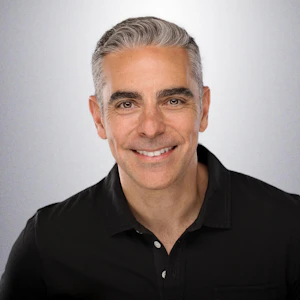
David Marcus
David Marcus

Matt Schultz
Matt Schultz
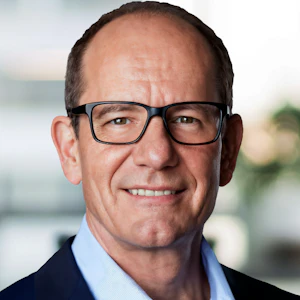
Fred Thiel
Fred Thiel
Throughout his career, Mr. Thiel has consistently driven rapid growth and created substantial shareholder value. Prior to MARA, Mr. Thiel served as the CEO of two other public companies, Local Corporation (NASDAQ: LOCM) and Lantronix, Inc (NASDAQ: LTRX). He has successfully raised billions in equity and debt through private and public offerings, led companies through IPOs, executed high-value exits to strategic and financial acquirers, and implemented effective M&A and roll-up strategies.
Mr. Thiel attended the Stockholm School of Economics and executive classes at Harvard Business School, and is fluent in English, Spanish, Swedish, and French. Mr. Thiel is the Chairman of the Board for Oden Technology, Inc. and is active in Young Presidents’ Organization where he has led initiatives in both the FinTech and Technology Networks.
A recognized voice in the industry, Fred frequently shares his insights on energy and technology with major media outlets like Bloomberg TV, CNBC, and FOX Business, contributing to vital discussions about the future of these sectors.
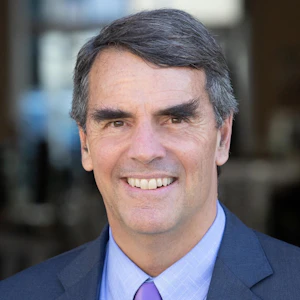
Tim Draper
Tim Draper
He is a supporter and global thought leader for entrepreneurs everywhere, and is a leading spokesperson for Bitcoin and decentralization, having won the Bitcoin US Marshall’s auction in 2014, invested in over 50 crypto companies, and led investments in Coinbase, Ledger, Tezos, and Bancor, among others.

Afroman
Afroman