Scaling Operations via Bitcoin-Backed Lending
Speakers/Moderators

Wyatt O'Rourke
Wyatt O'Rourke
My style is to blend financial savvy with a passion for Bitcoin and conservative values. I seek to offer my clients with a fresh, informed perspective on wealth management & investment product design. I am interested in the intersection of behavior, incentives, and markets. My values stem from my Christian faith. My hobbies, marriage, and involvement in communities keep me inspired.

Himanshu Sahay
Himanshu Sahay

Jason Twu
Jason Twu
The protocol provides a full suite of financial products, including fixed-rate Bitcoin borrowing, institutional-grade yield strategies, decentralized lending, AI-powered RWA yield vaults, and high-yield staking. By bridging traditional finance with decentralized infrastructure, Avalon Labs is building the financial center for Bitcoin—offering secure, scalable, and transparent solutions for the digital asset economy.

Hunter Albright
Hunter Albright
Session
Overview
Wyatt O’Rourke of Basilic Financial and PAX Partners moderated a discussion on Bitcoin-backed lending with Hunter Albright of SALT Lending, Jason Twu of Avalon Labs, and Himanshu Sahay of Arch Lending. The conversation focused on how debt markets built around Bitcoin can help price risk, create liquidity, and support companies that hold Bitcoin on their balance sheets.
The panel covered borrower risk management, including collateral wallets, stabilization tools, margin-call protection, liquidation hedging, and institutional collar loans. Speakers also discussed how structured products, longer-duration loans, and shared Bitcoin upside could better align incentives between borrowers and lenders.
A recurring theme was the maturation of Bitcoin credit markets through securitization, institutional reporting, qualified custody, compliance, and real-time transparency. The speakers emphasized that Bitcoin-backed lending remains small relative to traditional credit markets, but could deepen as more capital allocators understand the structure and risks.
The discussion also touched on stablecoins, on-chain liquidity, revolving credit facilities, and fixed-income products tied to Bitcoin strategies. For corporations and small businesses, the central value proposition was access to liquidity without becoming forced sellers of Bitcoin.
Thank you, Bitcoin for Corporations. These events are fantastic. I’m rocking my BFC pin because we’re about to do some serious work here. My name is Wyatt O’Rourke. I’m the founder of Basilic Financial, a Bitcoin-focused wealth management firm, and PAX Partners, a private credit fund investing in Bitcoin-collateralized loans.
I want to give these gentlemen the opportunity to briefly introduce themselves.
Thanks. My pleasure to be here. I’m Hunter Albright, chief revenue officer at SALT Lending.
Hi, my name is Jason, and I’m a business developer over at Avalon Labs.
Hey, my name is Himanshu Sahay. I’m the co-founder and CTO of Arch Lending.
We’re going to get into a lot of good stuff on this panel. To set the stage, it’s important for us to understand that debt markets are the financial system’s core infrastructure, the core plumbing. They move capital, price risk, and scale economic activity. When we’re talking about debt markets built around Bitcoin, the world’s most sound money, it gives us, as investors and capital allocators, the ability to actually price debt appropriately.
When we’re talking about Bitcoin-backed lending, we’re starting to see some very interesting things emerge, particularly around interest rates. We can start thinking of this as a new risk-free rate. It gives us a sense of the market’s perceived volatility of Bitcoin. It can help stabilize the price of Bitcoin. I’m really excited to dig into it.
I want to start with you guys because you’ve done something pretty novel, building products on top of lending. Now that we have this base layer of debt figured out, give the audience some insight into how you view developing insurance products, or however you refer to them, and what that really means for underwriters in the finance industry at large.
Borrowing against Bitcoin in the debt markets is really changing. There are a lot of innovations across multiple players, including all of the companies up here. Historically, all of the risk has been pushed onto the borrower. You have the volatility of the price. You have the risk around the liquidation point. And you have the mismatch between the loan being in dollars and the asset being in Bitcoin.
SALT has been around for a decade. We have experience lending against Bitcoin, and some of the things we’ve tried to do in the platform are about taking away and mitigating that risk. In the same way that Strategy is taking out some of the volatility on the fixed income side of digital credit, we’re looking to do the same thing on the liquidity side of digital credit.
There are three ways that we think about helping mitigate volatility for borrowers. One is we have a multi-currency collateral wallet, so you can add stablecoin with your Bitcoin to help take out some of the volatility. The second thing we do is a technology referred to as stabilization. It has a 91% trigger point, and then your asset gets swapped into stablecoin, again giving you an option for how you want to manage your loan. The third is a product called SALT Shield, which is a fee-based program where you can eliminate the need to meet margin calls for the duration of your loan. We’re continuing to innovate to provide flexibility around risk mitigation for borrowers.
That’s fantastic. What has the uptake of those products been like, and what has the educational process been like for retail buyers who want to add these add-ons to their loan?
We do a lot of education and really take pride in it. We’ve got a great team of Bitcoin experts. We talk about being Bitcoin owners who are building products for Bitcoin owners, and we think about how we educate people through that process, how to think about LTV, and how to think about the options so that everybody’s loan and liquidity situation is right for their risk profile.
That’s beautiful. I’m sure you guys over at Arch have done something similar for DATs or public companies, building products on top of the traditional Bitcoin-backed loan. I know you recently introduced collar loans. Why don’t you walk us through how those products work and what those institutional borrowers are looking for?
There has been a huge stratification of demand between retail and institutional, especially in the last few months. The big reason is that we have these treasury companies that have different needs than the usual borrowers out there. We decided to really serve that use case.
The initial tranche of treasury companies last year raised public equity, which is dilutive. Today, with rates in Bitcoin-backed lending pretty cheap, we’re almost as cheap as public credit. But we’re not there yet. It automatically becomes a better option to use this versus paying a 5% dividend and diluting a stock.
Some things you have to worry about are the risk of margin calls and liquidations. There are two ways to get around that. We have a similar product for liquidation hedging, which you can pay a fee for. What’s more interesting is a collar loan, where we place a put and a call strike at a certain price, let’s say 50% out of the money from the price now. As long as your collateral price stays in that range, there is no interest cost, and there are no margin calls or liquidations. All you pay is the fee to place the collar.
This becomes a very cheap offering for treasuries to access credit for a short- to medium-term duration, and there are no margin calls. They have a fiduciary duty to their investors to keep the Bitcoin safe, which they can.
How we keep it safe beyond that is we hold everything in qualified custody. We don’t rehypothecate. We share the collateral with the borrower. All the things that you expect from a first-class lender today. But going beyond that by adding structured products that really serve the use case is very important. We’ve taken a number of steps in that space.
The key component is cheap credit, which we have now. As the industry expands further with things like securitizations and more access to credit, I think we’ll see more lenders heading in this direction.
That’s really fascinating. Was this something you and your team identified as a need or opportunity in the marketplace, or were you approached by a DAT or public company that wanted to utilize this product?
It’s definitely a net new product. There are a couple of prime brokers that offer this, so we’re not the first ones by any means. But I think it’s definitely where the industry is headed. It’s really only useful for large borrowers and for institutions that are actively managing their loans and positions. I think it’s going to be more pervasive in the industry. It’s not really something you can offer as a retail lender, and we don’t offer it to our retail clients. It’s only for institutions.
That makes a ton of sense. Jason, one thing I’m really curious to get your opinion on is that Hunter and Himanshu talked about aligning incentives between borrowers and lenders. One of the things that we see in the marketplace today is generally short-duration loans. They certainly have their use cases. But when we’re scaling debt capital markets specifically centered around Bitcoin, with Bitcoin being low time preference to begin with, we see the need or desire to move out on the risk spectrum and offer mid- to long-term loans. How are you thinking about aligning incentives between borrowers and lenders for long-term loans, and how should CFOs think about that?
When it comes down to the general construct of Bitcoin equity, the way I see it is that lenders are always going to squeeze as much interest as possible and get as much income for the folks they serve. The borrower is going to get less and less cash flow from this. It becomes quite an adversarial relationship and quite extractive as well.
The thought process here is that the borrower has more stress to think about: how can I refinance this, how can I restructure this, how can I get better rates, while also thinking about debt coverage? What if there is a way we can reconstruct how appreciation of the Bitcoin upside can be shared between both borrowers and lenders?
If we can give both borrowers and lenders the upside of Bitcoin, having them stand alone for the long term, Bitcoin needs time because of adoption. It needs time because of this logarithmic expansion as well. The use cases of Bitcoin are huge.
If we can incentivize borrowers in a loan where, in the beginning, the appreciation and upside of the Bitcoin starts with the lenders, then the lenders get most of the upside of Bitcoin. Over time, it flows over to the borrower side. The lenders will have a lower LTV, which is good because the collateral and the asset will be in a safer position, and then the borrowers will be able to get more and more upside over time too.
If they have a traditional loan with real estate, they’ll get the real estate appreciation and the Bitcoin appreciation. This unified structured loan model is where it makes sense. Now both parties want to stay in because the lenders get paid to wait. The Bitcoin stays there. Even if the borrower pays off the loan early, the Bitcoin still stays there. There won’t be any prepayment penalty, no make-wholes, no lockout, and all that stuff that’s more from the traditional world.
From our perspective, let’s keep this as simple as possible. What else can we share between both parties so it makes sense? Maybe we can move away from short-term duration to more of a mid- to long-term voyage.
That’s really interesting. Hunter, something I’m particularly interested in your opinion on is the securitization of Bitcoin-backed loans and Bitcoin-backed loan books. Ledn and Jefferies got a BBB-minus-rated bond issued at the end of February. You spend a lot of time talking to capital allocators and educating capital allocators. What are your views on securitization? Do you think this is a long-term playbook that will really help deepen Bitcoin capital markets?
I say welcome to the party. It’s exciting to see more capital want to come into the space. I think it’s going to open up the innovative products we’ve all been talking about, extending out the duration. We have loans at one, three, and five-year terms today, and we’re looking forward to being able to push that out so we can better match both how people want to put dollars to work and how people want to borrow to get liquidity out of their assets.
The range of products is going to be exciting. It’s important to come back to why. What we’re talking about for Bitcoin for corporations, and the impact of lending and borrowing in general, really matters for small businesses. It is really hard for small businesses to manage their operational expenses and understand when to make capital investments. The worst thing for any Bitcoin owner is to be in a situation where you have to be a forced seller.
The more lending options, the more providers, and the more flexibility in the terms, the more it’s going to enable and continue the momentum around companies wanting to put Bitcoin on their balance sheet for very sound strategic reasons.
Totally. Himanshu, when I’m talking to clients about this, I frame it in the context of diversifying within Bitcoin. We can engineer different asset classes to include Bitcoin. If we need fixed income, we can have Bitcoin be the underlying asset and achieve fixed income.
You work with a lot of institutional borrowers. What kind of infrastructure needs do they have? What are they looking for out of these investment products? Something particularly interesting is folks wanting to build on top of Strategy. I’m curious how you’re looking around the corner as this capital market deepens and expands.
We’ve seen a big stratification of credit in the Bitcoin space. The first wave was very vanilla, overcollateralized Bitcoin-backed lending, and now we’re seeing so much more.
I’ll speak to the Strategy product first. If people here don’t know what it is, it’s a fixed income kind of stock from MicroStrategy, and it pays, I believe, 11.5% today. An interesting trade with that is the cash-and-carry trade, where you can borrow against Bitcoin, invest in that product, and then get dividends in dollars. Some people will also pay you in Bitcoin. There may be something from us coming down the pipe there very, very soon.
I think that’s exciting. It’s a good approach for a lot of people who want very predictable cash flows. A lot of our clients will invest in that product and live off the dividend. Every single month on the 15th is when you get paid. We also see institutions use that as a predictable cash flow mechanism.
But there’s a lot more when it comes to credit. We have the likes of institutional collar loans. We have our product called Perpetual Income, which is focused on retirees, where you have predictable cash flow as well, and a very different structure.
As we grow in the world of credit, we’re going to see products for capital allocators, for institutions, for retail, for retirees, for high-income earners, for people that want to grow their stack, people that want to protect their stack, and people with different risk parameters and time horizons. We’ll have different products for them.
We’re seeing the first wave already. This is going to be one of the biggest years in the stratification and diversification of credit in the Bitcoin space.
That is so important because those are obviously massive markets. That’s how we really make an impact on the larger finance ecosystem. Jason, something you guys are really focused on is on-chain liquidity. In the same vein, as we’re seeing new institutional markets come on board, we’re also seeing the proliferation of stablecoins in those ecosystems needing access to liquidity. What are you doing to build and provide for that new ecosystem?
I’m going to take a step back. In broader adoption, stablecoins have definitely been perhaps the leading winner of the last few years. Bitcoin and stablecoins today are the nucleus of the crypto economy inside of Ethereum and Solana.
You see a big impact on the biggest use case, which is collateralized dollars. But it’s more about where we subscribe into it on the on-chain side. Once we have it, what do we do with it? A lot of chains need this type of liquidity. It’s very hard for them to get it because the cost of liquidity is too high.
Through Bitcoin-backed loans, at least the rates are a lot more reasonable. They would love to chat with folks like us and figure out how we can bootstrap liquidity for a particular layer one or layer two.
Moving outside of that, the interesting part about stablecoins is the usage of neobanks and pay-for-it-later on chain. That’s been one of the hottest narratives lately. How can we bridge it? If I pledge my Bitcoin and borrow stablecoin-denominated assets, and then I put it into a particular cash or receivable-backed issuer, I can subscribe into unique vaults and earn products that are all stablecoin denominated, and get access into different types of real-world assets that are available, like Brazilian credit or things in emerging markets.
This type of plumbing being done on chain is amazing already. We see the stablecoin market growing a lot bigger. I think this year alone the stablecoin market is about $300 billion already, and double the size of last year. We hope that on the Bitcoin side, we can produce more unique products, maybe revolving Bitcoin-backed loans, credit facilities, and more structured products that come from Bitcoin-backed loans. There are a lot of ideas I would like to explore, and we’ll go from there.
It’s really exciting to see these credit markets grow. In our last couple minutes, I want to keep it open-ended. Understanding credit markets is massive. They’re also very old. We see a lot of these legacy gatekeepers, bureaucratic institutions like rating agencies. Ledn’s bond received a BBB-minus rating, and Strategy, I think, is at a B-minus.
As we continue to build out a Bitcoinized financial system, what kind of metrics do corporate risk departments, corporate finance departments, and rating agencies use? What information do they want to know to make an investment into this industry? And what is most important for us as the Bitcoin ecosystem to do to promote those and bring them into the fold?
One thing we should all remember is the Bitcoin credit market is a tiny, tiny fraction of the traditional credit markets. If we’re going to grow and get to real numbers, we have to tap into traditional credit markets. We have to start taking capital from banks and other issuers. The goal is to expand and combine with those credit markets, like with mortgages and such, versus staying in a little silo here.
To do that, we have to have very good compliance and reporting. We tokenized one of our credit facilities with Galaxy, which we announced earlier this year. We have real-time reporting of the entire book to all the investors in the facility. It will be securitized in the future as well.
The expectation with investors in those kinds of structures is very different from the expectation of back-to-back lenders in the Bitcoin markets. Doing that exercise was a big learning for us in terms of exactly what’s needed to expand into larger, long-term revolving credit facilities, which we have now.
As the industry grows, we’ll see a lot more lenders raising structured capital. We’ve seen Ledn do a small one there. I think SALT has done something there as well, and I’m sure we’ll see other lenders come and do that. But we’re still very much in the early stages.
We use software called Accountable, which provides real-time reporting from our custodian to all the investors. There are a few other companies out there that do this. Approaches like that, having really good risk teams, having really good compliance teams involved, and having audited financials are all small steps along the way to getting massive access to credit, which we all need in the industry.
Bitcoin-backed lending is still a tiny fraction of Bitcoin anyway. In traditional markets, those things are typically flipped. We have a long way to go.
Just to quickly sum it up, I’ll specifically talk about the custodian model. I feel like custodian risk is still a huge part that we haven’t really figured out just yet. We want auditors to be able to read into these legal tenors and see whether the collateral is really there.
In cases of margin calls and weekend gaps, how do you solve those problems? Let’s say you have a loan on Friday and something happens on the weekend, and on Monday it’s a fire sale. What happens? There is a lot of room to grow, and it is slowly working there. Since traditional finance institutionalization is already here, I’m sure we’ll work out the plumbing very soon.
To build on those points, there’s a lot of education still needed to open up more access to the capital markets. People need to understand how interest gets paid, how they can be guaranteed a yield, and how loans can be settled off with overcollateralized loans.
In the Bitcoin space, there are a lot of favorable structural elements that I think will attract people in. Once people understand the benefits of Bitcoin-backed loans, they may really question whether they should have capital deployed in other areas.
I love it. Something I would just like to see is new Bitcoin-native credit rating agencies. Not to put more on your plate, George, but maybe a nice idea for BK there. I’m super appreciative of your time. Let’s get a big round of applause for these guys.
Thank you.
Thank you.
Similar
Sessions
Scaling Operations via Bitcoin-Backed Lending
Wyatt O'Rourke
Wyatt O'Rourke
My style is to blend financial savvy with a passion for Bitcoin and conservative values. I seek to offer my clients with a fresh, informed perspective on wealth management & investment product design. I am interested in the intersection of behavior, incentives, and markets. My values stem from my Christian faith. My hobbies, marriage, and involvement in communities keep me inspired.
Himanshu Sahay
Himanshu Sahay
Jason Twu
Jason Twu
The protocol provides a full suite of financial products, including fixed-rate Bitcoin borrowing, institutional-grade yield strategies, decentralized lending, AI-powered RWA yield vaults, and high-yield staking. By bridging traditional finance with decentralized infrastructure, Avalon Labs is building the financial center for Bitcoin—offering secure, scalable, and transparent solutions for the digital asset economy.
Hunter Albright
Hunter Albright
Scaling Operations via Bitcoin-Backed Lending
Speakers/Moderators
Wyatt O'Rourke
Wyatt O'Rourke
My style is to blend financial savvy with a passion for Bitcoin and conservative values. I seek to offer my clients with a fresh, informed perspective on wealth management & investment product design. I am interested in the intersection of behavior, incentives, and markets. My values stem from my Christian faith. My hobbies, marriage, and involvement in communities keep me inspired.
Himanshu Sahay
Himanshu Sahay
Jason Twu
Jason Twu
The protocol provides a full suite of financial products, including fixed-rate Bitcoin borrowing, institutional-grade yield strategies, decentralized lending, AI-powered RWA yield vaults, and high-yield staking. By bridging traditional finance with decentralized infrastructure, Avalon Labs is building the financial center for Bitcoin—offering secure, scalable, and transparent solutions for the digital asset economy.
Hunter Albright
Hunter Albright
From HODL to Home: Bitcoin-Backed Loans Meet Mortgages

Leon Wankum
Leon Wankum
Today, Leon is active in real estate and venture capital. He specializes in developing Bitcoin strategies for real estate developers.
Hunter Albright
Hunter Albright

CJ Konstantinos
CJ Konstantinos
As the Founder of Peoples Reserve, he is leading the charge in Bitcoin Powered Finance, creating innovative and revolutionary tools that let Bitcoiners unlock the purchasing power of their savings technology without having to give up ownership.
Peoples Reserve's flagship products include their Bitcoin Powered Mortgage and Bitcoin Bond.
They're building a marketplace that empowers We The People — redefining how savers leverage Bitcoin for mortgages, insurances, and credit to Build Wealth Smarter.
From HODL to Home: Bitcoin-Backed Loans Meet Mortgages
Speakers/Moderators
Leon Wankum
Leon Wankum
Today, Leon is active in real estate and venture capital. He specializes in developing Bitcoin strategies for real estate developers.
Hunter Albright
Hunter Albright
CJ Konstantinos
CJ Konstantinos
As the Founder of Peoples Reserve, he is leading the charge in Bitcoin Powered Finance, creating innovative and revolutionary tools that let Bitcoiners unlock the purchasing power of their savings technology without having to give up ownership.
Peoples Reserve's flagship products include their Bitcoin Powered Mortgage and Bitcoin Bond.
They're building a marketplace that empowers We The People — redefining how savers leverage Bitcoin for mortgages, insurances, and credit to Build Wealth Smarter.
Other
Speakers

Michael Saylor
Michael Saylor
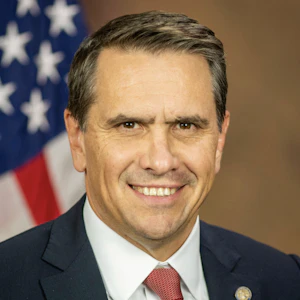
Todd Blanche
Todd Blanche
Biography of Deputy Attorney General Todd Blanche
The Honorable Todd Blanche is the 40th Deputy Attorney General of the United States, overseeing the work of the 115,000 dedicated employees who fulfill the Department of Justice’s mission at Main Justice, the FBI, DEA, U.S. Marshals, ATF, and 93 U.S. Attorney’s Offices.
Todd began his career at the Department where he served for over fifteen years in a variety of capacities, including as a contractor, a paralegal in the Criminal Division, and at the United States Attorney’s office for the Southern District of New York where he eventually became an AUSA and later a supervisor.
After leaving the Department, Todd worked as a criminal defense attorney that included representing President Donald Trump in three of the criminal cases brought against him in 2023 and 2024.
Following President Trump’s historic return to the White House, the President appointed Todd to work alongside Attorney General Pam Bondi to make America safe again. At the DOJ, Todd is working tirelessly to implement President Trump’s priorities that include confronting illegal protecting American businesses from fraud.
Todd has been married to his wonderful wife Kristine for nearly thirty years, is a father and grandfather.

Paul Atkins
Paul Atkins
Prior to returning to the SEC, Chairman Atkins was most recently chief executive of Patomak Global Partners, a company he founded in 2009. Chairman Atkins helped lead efforts to develop best practices for the digital asset sector. He served as an independent director and non-executive chairman of the board of BATS Global Markets, Inc. from 2012 to 2015.
Chairman Atkins was appointed by President George W. Bush to serve as a Commissioner of the SEC from 2002 to 2008. During his tenure, he advocated for transparency, consistency, and the use of cost-benefit analysis at the agency. Chairman Atkins also represented the SEC at meetings of the President’s Working Group on Financial Markets and the U.S.-EU Transatlantic Economic Council. From 2009 to 2010, he was appointed a member of the Congressional Oversight Panel for the Troubled Asset Relief Program.
Before serving as an SEC Commissioner, Chairman Atkins was a consultant on securities and investment management industry matters, especially regarding issues of strategy, regulatory compliance, risk management, new product development, and organizational control.
From 1990 to 1994, Chairman Atkins served on the staff of two chairmen of the SEC, Richard C. Breeden and Arthur Levitt, ultimately as chief of staff and counselor, respectively. He received the SEC’s 1992 Law and Policy Award for work regarding corporate governance matters.
Chairman Atkins began his career as a lawyer in New York, focusing on a wide range of corporate transactions for U.S. and foreign clients, including public and private securities offerings and mergers and acquisitions. He was resident for 2½ years in his firm's Paris office and admitted as conseil juridique in France.
A member of the New York and Florida bars, Chairman Atkins received his J.D. from Vanderbilt University School of Law in 1983 and was Senior Student Writing Editor of the Vanderbilt Law Review. He received his A.B., Phi Beta Kappa, from Wofford College in 1980.
Originally from Lillington, North Carolina, Chairman Atkins grew up in Tampa, Florida. He and his wife Sarah have three sons.

Mike Selig
Mike Selig
Chairman Selig brings to the role deep public and private sector experience working with a wide range of stakeholders across agriculture, energy, financial, and digital asset industries, which rely upon and operate in CFTC-regulated markets.
Prior to his leadership at the CFTC, Chairman Selig most recently served as chief counsel of the Securities and Exchange Commission’s Crypto Task Force and senior advisor to SEC Chairman Paul S. Atkins. In this role, Chairman Selig helped to develop a clear regulatory framework for digital asset securities markets, harmonize the SEC and CFTC regulatory regimes, modernize the agency’s rules to reflect new and emerging technologies, and put an end to regulation by enforcement. He also participated in the President’s Working Group on Digital Asset Markets and contributed to its report on “Strengthening American Leadership in Digital Financial Technology.”
Prior to government service, Chairman Selig was a partner at an international law firm, focusing on derivatives and securities regulatory matters. During his years in private practice, he represented a broad range of clients subject to regulation by the CFTC, including commercial end users, futures commission merchants, commodity trading advisors, swap dealers, designated contract markets, derivatives clearing organizations, and digital asset firms. Chairman Selig advised clients on compliance with the Commodity Exchange Act and the CFTC’s rules and regulations thereunder, including in connection with registration applications and obligations, enforcement matters, and complex transactions.
Chairman Selig earned his law degree from The George Washington University Law School and was articles editor of The George Washington Law Review. He received his undergraduate degree from Florida State University.

David Bailey
David Bailey

Eric Trump
Eric Trump
Mr. Trump also serves as Executive Vice President of The Trump Organization, where he oversees the global management and operations of the Trump family’s extensive real estate portfolio. This includes Trump Hotels, Trump Golf, commercial and residential real estate, Trump Estates, and Trump Winery. Known for his hands-on leadership and strong market instincts, he has played a key role in expanding the company’s presence across major U.S. and international markets.
A globally recognized business leader and public figure, Mr. Trump is a prominent advocate for Bitcoin and decentralized finance. He is a co-founder of World Liberty Financial, a decentralized finance (DeFi) platform, and serves on the Board of Advisors of Metaplanet, Japan’s largest corporate holder of Bitcoin.
Beyond his business activities, Mr. Trump has helped raise more than $50 million for St. Jude Children’s Research Hospital in the fight against pediatric cancer, a philanthropic mission he began at age 21.
Mr. Trump earned a degree in Finance and Management from Georgetown University. He currently resides in Florida with his wife, Lara, and their two children. He is also the author of Under Siege, his memoir published in October 2025.

Jack Mallers
Jack Mallers
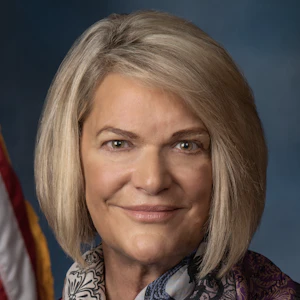
Cynthia Lummis
Cynthia Lummis
As the first-ever Chair of the Senate Banking Subcommittee on Digital Assets, Senator Lummis is the architect of the legislative framework shaping America's digital asset future. She introduced the landmark Lummis-Gillibrand Responsible Financial Innovation Act, the first comprehensive bipartisan crypto regulatory framework in Senate history. She co-authored the GENIUS Act — the first federal stablecoin law ever enacted — and introduced the BITCOIN Act, which would establish a U.S. strategic Bitcoin reserve of up to one million BTC. She is leading the Clarity Act, which will bring long-overdue regulatory certainty to the digital asset industry. She has also championed digital asset tax reform, including a de minimis exemption for small transactions and equal tax treatment for miners and stakers.
Known as Congress' "Crypto Queen," Senator Lummis represents Wyoming — a state she has helped build into one of the most digital asset-friendly regulatory environments in the nation. Before serving in the Senate, she served 14 years in the Wyoming Legislature, eight years as Wyoming State Treasurer, and eight years in the U.S. House. She is a three-time graduate of the University of Wyoming.
Her work represents a crucial bridge between traditional financial systems and the emerging digital economy, ensuring America leads the world in financial innovation while protecting the individual freedoms that define it.

Adam Back
Adam Back

Amy Oldenburg
Amy Oldenburg
David Marcus
David Marcus

Matt Schultz
Matt Schultz
Fred Thiel
Fred Thiel
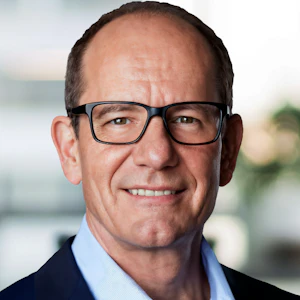
Throughout his career, Mr. Thiel has consistently driven rapid growth and created substantial shareholder value. Prior to MARA, Mr. Thiel served as the CEO of two other public companies, Local Corporation (NASDAQ: LOCM) and Lantronix, Inc (NASDAQ: LTRX). He has successfully raised billions in equity and debt through private and public offerings, led companies through IPOs, executed high-value exits to strategic and financial acquirers, and implemented effective M&A and roll-up strategies.
Mr. Thiel attended the Stockholm School of Economics and executive classes at Harvard Business School, and is fluent in English, Spanish, Swedish, and French. Mr. Thiel is the Chairman of the Board for Oden Technology, Inc. and is active in Young Presidents’ Organization where he has led initiatives in both the FinTech and Technology Networks.
A recognized voice in the industry, Fred frequently shares his insights on energy and technology with major media outlets like Bloomberg TV, CNBC, and FOX Business, contributing to vital discussions about the future of these sectors.
Tim Draper
Tim Draper
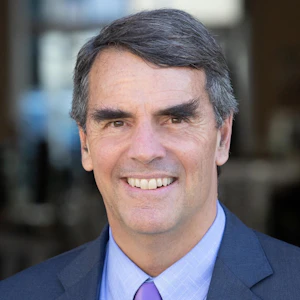
He is a supporter and global thought leader for entrepreneurs everywhere, and is a leading spokesperson for Bitcoin and decentralization, having won the Bitcoin US Marshall’s auction in 2014, invested in over 50 crypto companies, and led investments in Coinbase, Ledger, Tezos, and Bancor, among others.

Afroman
Afroman