Squeezing Profit from the Margins: Uncovering Stranded Sats in Mining Operations
Speakers/Moderators
Nico Smid
Nico Smid
Dan Koehler
Dan Koehler
With a solid foundation in information technology, he has led and overseen major infrastructure projects, from the design of scalable crypto farms in desert environments to the implementation of efficient, high-performance mining systems. Known for technical precision and forward-thinking strategies, Dan provides tailored equipment recommendations, optimizes mining performance, and delivers expert support to ensure every client gets the most from their investment.
His mission is simple: to empower miners, both new and experienced, by streamlining operations, solving technical challenges, and helping them thrive in the fast-paced world of cryptocurrency mining.
Whether it’s setting up a first miner or scaling a commercial operation, Dan is committed to helping clients succeed.

Bradley Peak
Bradley Peak
Bradley Peak is a blockchain and DeFi expert, award-winning journalist, and global sales leader with extensive experience at the intersection of crypto technology, media, cybersecurity, and global business development.
Over the course of his career, Bradley has published more than 2 million words on blockchain, cryptocurrency, and financial technology across leading industry platforms, including Cointelegraph and Cryptoprocessing.com. His work has helped shape public understanding of crypto markets, regulation, mining, and emerging technologies, making him a trusted voice within the global Web3 ecosystem.
In addition to his editorial career, Bradley has built a strong on-camera presence as the blockchain and cybersecurity host at Sumsub, where content featuring him has generated over 35 million views on YouTube. Through interviews, explainers, and expert discussions, he has translated complex technical and regulatory topics into accessible insights for a global audience.
Bradley has also served as an advisor to major blockchain events and projects, including TOKEN2049, Lumia, and Symbiosis, contributing strategic insight on industry positioning, narrative development, and market trends.
Currently, Bradley is the Global Head of Sales at VNISH, where he leads international growth initiatives, partnerships, and enterprise relationships within the Bitcoin mining and infrastructure space. His work focuses on advancing crypto adoption, mining efficiency, post-quantum cryptography readiness, and the convergence of blockchain with AI and next-generation security models.
Bradley is a University of Cambridge alumnus and regularly speaks on topics including Bitcoin mining, crypto adoption, consensus mechanisms, DeFi, CBDCs, post-quantum cryptography, and artificial intelligence.

Alexander Lozben
Alexander Lozben
Interhash is a compnay which provides a professional crypto mining service where innovation and expertise help achieve maximum efficiency and confidence in the future.
Website https://interhash.com/en
Session
Overview
This panel focused on practical ways Bitcoin mining operators can improve profitability when hashprice is low and margins are tight. Nico Smid of Digital Mining Solutions led a discussion with Dan Koehler of ASIC Plug/FARMGOD, Bradley Peak of VNISH, and Alexander Lozben of Interhash on finding small operational gains that add up across mining fleets.
Key themes included custom firmware, per-chip auto-tuning, uptime monitoring, repair-versus-retirement decisions, pool payout analysis, and the role of management software in curtailment and demand response. The speakers emphasized that miners should look beyond electricity rates alone and examine labor, maintenance, firmware, pool selection, cooling design, and automation.
The discussion also covered trade-offs between air cooling and hydro cooling, the impact of warranties when using custom firmware, and how some mining operators are exploring AI compute as an additional revenue opportunity. The central takeaway was that disciplined operations and better tooling can help uncover overlooked profit in existing mining infrastructure.
All right, good afternoon, everybody. Happy to see some faces here. I hope you have been enjoying the conference so far. There have been a lot of side events, so the third day is always a bit slow, but I am happy that you joined the session.
My name is Nico Smid. I am the founder of Digital Mining Solutions. We help capital allocators investing in digital infrastructure, and we also support operators in scaling the business from 5 or 10 megawatts to a full-fledged infrastructure platform.
Today we are going to talk about operational efficiency. The title is very fancy, but it is all about efficiency today. We are going to talk about efficiency because margins have been very, very tight. In 2026, we have been below $40 per petahash per day looking at hashprice, and that is tough.
In this tough environment, operational efficiency is not an option. It is a must. Many miners have been upgrading their fleets with the latest generation ASICs. Some miners have been moving their equipment to other places where power is cheaper. The bigger miners are pivoting to AI and HPC to get more out of their power and infrastructure. But we believe there is much more to do, especially when you look inward to the operation that you already have.
There are a lot of ways to optimize operations by using firmware, the right management software, and ensuring that you maximize uptime. Today we are joined by a group of experts. Welcome, guys. I wanted to do a short round of introductions before we go into the content.
I want to start with you, Dan. You are CEO of ASIC Plug and FARMGOD. With FARMGOD, you focus on real-time monitoring, stability, optimization, and operational intelligence. What do you think is the single biggest operational mistake you see miners making that eats into their margins?
Yeah, absolutely. The biggest mistake that we find out there in deployment is having the wrong tech stack and not having the technology aid the onsite personnel in the most efficient way possible. That results in additional personnel needed, more man-hours than required for the operation, and that is usually your biggest cost. Power and labor are your highest costs.
Well, it is good to hear that it is not AI taking over. We still need people.
Next up is Bradley Peak. You are the head of global sales at VNISH. I think most of us know VNISH, a legacy firmware provider. Bradley, what exactly does custom firmware do that stock settings cannot?
When you buy a Bitmain miner out of the box, it comes with stock firmware. Then you have the option: you can either keep the warranty or, after a few months, switch to custom firmware. VNISH is the leading one at that.
It really solves the problem because stock firmware is a one-size-fits-all solution. It needs to account for a wide variety of chip variants, climate differences, and power quality across regions. VNISH's main product is per-chip auto-tuning. This means that a client can target the highest hash rate, minimum watts per terahash, or the best balance for site and power.
VNISH allows that granular detail and attention, which is why you can get up to 20% or 25% efficiency gains when using custom firmware.
Thank you very much. Last, we have Alexander. Alexander is the founder and CEO of Interhash, a company that specializes in professional crypto mining and provides scalable, sustainable mining infrastructure. Alexander, from the perspective of a mining operator who is managing machines at scale, where do you think you find the most consistently overlooked source of lost revenue?
Hello, thank you. In my opinion, lost revenue is everywhere, and mostly it is lost in inefficient ways. A lot of people, when they build their farms, lose the small parts: how to organize all the scale, all the networks in the data center. It is also about employees. It is also about the software you use, pools, and firmware. Everywhere, it is small pieces of your lost earnings.
If you get discipline and work hard on each part, with very small pieces of the task, I think the efficiency of the farm can increase from 5% to 20%, in my opinion, or maybe even more. Mostly people look only at the electricity cost and the price of the kilowatt, but it is not the only reason to be successful.
We can also see that a lot of miners lose money in maintenance. Mining business is a lot of things that you have to do, and there are no unimportant things there.
That sounds promising, that there is opportunity everywhere, which is also challenging. Bradley, I want to move the discussion to firmware and hash rate optimization, and I think it is obvious that we start with you. Could you tell us a bit more about when you apply VNISH firmware, what is happening under the hood, and what kind of results are you getting?
Sure. I am not sure if everyone in the audience has heard of something called the silicon lottery. Essentially, when a chip is produced, it varies in quality. What the manufacturer usually does is put it on a board, test it, and see whether it fits within their desired range. If it is too far away from this desired range, they do something called chip binning. They will use those chips for cheaper machines, essentially.
Because of this silicon lottery, stock firmware does not really quite hit the mark, because it is offering this umbrella for all of these different chips. Because VNISH has per-chip auto-tuning, it means we can create profiles for every individual machine. Then we can overclock stronger chips or underclock those that need greater stability because they are weaker, even though they are in the same machine.
These are the granular details that we can control at VNISH, leading to better efficiency across the board. These profiles take anywhere between three to four hours to create, but once that is done, they automate this process and adapt pretty much automatically.
VNISH is also not just a firmware product. We have an entire ecosystem of products that not a lot of people know about. Of course, we are the largest firmware provider. We also have the Hashcore Toolkit. This is our farm management product. It helps with things like device setup, diagnosis, bulk configuration, and things like that.
Then we have Pulse. This is our monitoring product. It is cloud-based and gives greater visibility. We have also got the Hashcore Proxy. It is a Stratum proxy that sits between the pool and our firmware. This is really key because one single pool can be quite unreliable. If that pool goes offline, you need to have a backup. This is called failover, which is something we support at VNISH too.
We also have lots of partners. If you have heard of Braiins, you probably know that they will ask you to use their pool. We actually have over five authorized pool partners right now, which means you can get pool fees close to zero in some instances. We have a wide variety of partners.
Using the whole VNISH ecosystem is definitely worthwhile, and all of this together, including our firmware, gives much higher efficiency.
Thank you. I, for one, was not aware that it was such a broad ecosystem, so it is good that you shared that.
Dan, I want to go to you. Underclocking and low power mode have been options for many miners to survive these periods of low margins. How do you look at that trade-off between maximizing for hash rate and optimizing for power efficiency? To what extent does the rate of your electricity influence the decision?
Great question. The electricity rate is probably going to be the number one driving factor. However, the other aspect is what your PPA says as far as your required load. If you have a PPA that requires you to take off a minimum amount of power, and when you optimize and underclock everything you do not hit that, sometimes you are going to have to cross-balance.
You might overclock your more efficient machines while underclocking your older generation, so that you still hit your minimum load consumption. You can curtail back everything else to maintain your PPA, but squeeze the most hash rate out of the kilowatts you are getting.
We manage tens of thousands of miners with firmware, just like VNISH, and it is incredibly efficient to be able to say, I need to make this one tweak, and then see it go across the entire fleet. You can dial in exactly how you need it for that day, for your demand response, your curtailment, or the ebbs and flows of the energy market on the daily.
Thank you for that insight. Alex, this dynamic way of mining is becoming more and more popular. From an operational perspective, how do you plan a buildout when you have this variability in power draw and cooling requirements?
Dynamic mining is very important right now, especially in this bear market where we are right now. When we try to build data centers, we remember that we have to be flexible and we have to put this flexibility between high performance and when we do downvolting.
From time to time, we understand that the mining farm has to be fully efficient also when it is not at full load. This is why planning and flexibility help us.
Bradley, many of the latest ASICs that come out already have eco mode, normal mode, and turbo mode. If this becomes an industry standard, where do you see VNISH adding value?
This is a really interesting question. I think the broader question is whether stock firmware will eventually become so good that there is no added advantage from custom firmware. It is a good point, but a lot of people do not realize that we hold the IP for custom firmware. We have patents since 2021, with more pending.
Ultimately, the current turbo ecosystems are just preset channels, and they really do not change much. They enable you to, at one click, overclock your machines when you have low temperatures or power price might be low, and do vice versa. VNISH is per-chip auto-tuning, so it is much more granular and much more effective.
If anyone here is a miner and they are running stock firmware, definitely come and speak to me or one of my team after the panel, because there are so many ways we can improve firmware. The main point is that we have the IP and 10 years of developer experience behind us.
Alexander has a close relationship or partnership with ViaBTC. In your view, do miners put enough emphasis on testing actual pool payout performance when making that choice for pools, or is it mainly driven by headline fees?
In my opinion, a lot of miners, especially small ones, are focusing on the pool fee or brand recognition. That is true. But if you are running large-scale data centers and you are professional in mining, you have to look not just at the fees, but more at your earnings.
This is why in our company we try to compare the profit per terahash. How many sats will we get for one terahash? Also, to increase performance, it can be good to build a strong relationship with the pool. Sometimes the pool offers bundles with firmware, and it also works. In this case, you can increase your income, make lower fees, and make your mining more efficient and more successful.
Then I want to move over to operational efficiency. Dan, uptime is one of the most critical metrics in mining. How does site management software effectively track and optimize uptime at the facility level, and what do you think are the most common operational errors that impact uptime?
Absolutely. Our solution, FARMGOD, tracks all of the data from the miners themselves, aggregates it into a single pane of glass for management, and allows you to send commands and write rules to correct or circumvent problems that come up. It also tracks and logs into our ticketing system.
When you have a miner that reboots three, four, or five times a day, but it is not often enough that the technician onsite is really going to notice it himself, it will start saying, we are noticing a pattern. This is a problem. Let us create a ticket and look at it. Then they see in their ticketing system that it rebooted five times in 24 hours. That should not be happening. These were non-curtailment events, and that can help identify the issue.
As far as optimization and efficiency, we have technology that we have deployed to run AI analysis on miner logs when there is a cause for concern. Instead of a technician seeing that a miner in slot one, two, three, four, or five is down, then taking it, removing it from the bench, doing a test, and seeing what is going on, it will say that the miner at this slot is down and here is the AI analysis.
Instead of starting at step A, then B, then C, then D, it can say, start with step E. This is most likely your issue based on the log data. When you have that done automatically in microseconds, rather than your technician having to get into the IP of the device, read the manual logs, scroll through, and find out what is happening, it is a significant time savings on the human capital side.
Alex, there are a lot of hash rate or hashboard failures, fans that break, and PSUs that die. These repair costs can escalate quite quickly. How do you decide whether you repair or retire a machine? Does this decision differ depending on where we are in the market cycle, now being in a bear market?
Thank you for the question. It is true. When we make a decision about repair, we try to keep in mind a few things. The first one is the generation of the equipment. What is the potential to sell it? If we have a good opportunity in the future to sell it, we will fix it.
It also depends how much time it will take for the money to return from these repair services. If it will take, for example, six months, we have to think strongly about whether we will do it or not. In our opinion, we can invest more money in repair in a bullish market and less in a bear market.
Right now, if the generation of the ASIC is not so fresh, it may be better just to work with low power mode or retire it. It is a very interesting and difficult question, and a lot of data centers make mistakes with repair. The ideal strategy is something everyone has to choose on their own.
Bradley, I can imagine that VNISH has a lot of data on thermal stress and component longevity across different tuning profiles. Can you share some of those insights?
I was waiting for this question because something I get a lot is whether VNISH affects the lifetime of machines. No, it does not, if used correctly. If you download it on our site and then overclock all of your chips, manually overriding everything, including our developers' advice, then obviously you are going to affect the lifespan.
But if used in line with our developer recommendations, if you use the machine as you should, just like you should on stock firmware, it can actually outlive the expected lifespan of that equipment according to documents from Bitmain.
It is important to say that naturally, higher performance profiles put stress on a machine. Balanced and efficiency profiles put less stress on a machine. Everyone knows this. But with auto-tuning, you can look at which chips are weak and tune them down. You can take strong chips and tune them up. You can manage fan responses and overheating as well. This all increases the lifespan and reduces the issues with thermal stress and longevity.
I will repeat again: when you use it in accordance with our developer recommendations, the machines on VNISH will live the same lifetime as they would on stock Bitmain firmware.
You also have to think about our market share. According to Cambridge's most recent digital mining report, we are looking at about 26.4% market share when we consider stock firmware as well. We are the largest firmware provider in the market. If you compare us just with the custom firmware market, you are looking at around 85% market share. Since we have been working since 2017, it is impossible that using VNISH would damage the lifespan of these machines. It is a complete myth.
In line with this question, and maybe this is a question that you get often as well, if you apply custom firmware, you often lose the warranty on a machine. What do you advise miners? Apply custom firmware and ignore the warranty, or is it better to hold onto the one-year warranty and maybe have a machine operating a bit less efficiently?
You need to make capital decisions here, and economically valuable ones too. I can understand why you would want stock firmware and the warranty for the first couple of months, because of the silicon lottery I spoke about. You have chip variants no matter what. Your machine could break in the first month regardless of how new or efficient it is, because these things go wrong.
I can understand why you would want the manufacturer's warranty, maybe for the first few months. But it is still a long time for them to pick it up and drop it off. You are actually much better with an aftermarket warranty that covers VNISH too.
A better economic decision would be to move your product straight to VNISH and sign a contract with someone who is going to insure it under an aftermarket warranty, get the efficiency benefit, and earn more money. In this market, it is a real no-brainer. You have to have custom firmware to stay competitive. Warranty is not an argument when you have aftermarket warranty too.
I have met many people here offering great rates for aftermarket warranties. They pick it up much quicker than the stock firmware provider does. With VNISH, you are looking at an increase in hash rate when you overclock. This is a massive difference, and our fees are low. In some cases, we are offering 1.6% to larger firms, and that comes with next to no pool fees when using one of the authorized providers.
I see that time is flying, so we will move to the last section about cost control and margin discipline. Alexander, there is a view that immersion cooling and hydro cooling units operate more smoothly, suffer less from temperature swings, and therefore have fewer repairs. However, such a buildout is more expensive. Now that machines are cheap, many are still opting for air cooling, lower capex, and a quicker return on investment.
How do you look at this trade-off between investing a bit more on the front end and having a more stable running operation, versus optimizing for capex on the front end and maybe having to deal with some more issues down the line?
It is true. In my opinion, hydro cooling is more efficient and more stable than air cooling, but we try to choose depending on a few things. The first one is the region. For example, here in the U.S. market, hydro cooling is doing well, and there are a lot of companies that maintain it. Also, the planning horizon here is a little bit longer, so in the long or middle perspective, it can be better.
But when we are working in the emerging markets, for example Russia, Africa, or something like this, it can be much easier to operate with air cooling because it is easy to maintain, easy to sell, and there is not a lot of experience in how to operate with hydro cooling. In our opinion, it depends on the planning and on the market you are working in.
Dan, one of the most powerful optimization tools for miners now is to strategically curtail based on pricing signals and also to participate in demand response programs. How does management software fit in there, and what does it do to help miners participate in these strategic curtailment programs?
Absolutely. With our management software, FARMGOD, we can connect into the APIs from your power provider and custom configure your environment to react exactly how you need it. You can even do it in tiers.
If you are doing voluntary curtailment based on market power price, then you can have price tiers. If the price hits this tier, anything at 30 joules per terahash or worse is going to curtail. If the price drops to this tier, maybe 25 joules per terahash. You can custom configure your curtailment in tiers to be profitable where you need.
In the demand response space, where they say you need to relinquish now and bring everything down, our APIs can connect into your building management solutions, PDUs, or fans, and help reduce some of that parasitic load as well. When you are curtailed and power prices are high, you do not have to run all of your blinking lights. You do not need all of your miner fans and building fans on idle, which is still consuming power at that higher cost. We can configure that and develop the integration to drop those costs down as well.
I touched briefly already on Bitcoin miners moving to AI compute. I understand that Interhash has been deploying some GPUs for AI workloads. Alex, could you explain a bit more? What does it look like in practice, and how does that contribute to margin optimization?
Yes, it is true. Interhash launched its first AI project, and right now it is in beta. In our opinion, right now investors love AI. They do not love crypto anymore, unfortunately.
We also understand that our experience is enough to start AI. It is a little bit more complicated and it is another tier of data center, so it is more complicated and more expensive. However, this experience can give us a chance to make the first steps.
Right now, it is too early to get the results. But in my opinion, it is very promising, and it can be an additional way to increase income if this crypto winter is longer than we expect.
Thank you for that. I see that we are running out of time, so I wanted to conclude. We have been talking about a lot of options for how to optimize your operations. I think the main message here is that there is an opportunity to improve your efficiency, and it does not always need to be the most costly solution.
I would really recommend everybody who runs an operation to look very critically at what they are doing and where they can optimize. I want to thank the speakers. Thank you very much. You all have a stand further down the hall, so I would like to invite everybody who is sitting here and wants to continue the discussion with the panelists to head down to their stand and have a talk with them.
Thank you very much, and thank you for joining. Enjoy the rest of the conference.
Thank you.
Thanks, Nico.
Thank you.
Similar
Sessions
Squeezing Profit from the Margins: Uncovering Stranded Sats in Mining Operations
Nico Smid
Nico Smid
Dan Koehler
Dan Koehler
With a solid foundation in information technology, he has led and overseen major infrastructure projects, from the design of scalable crypto farms in desert environments to the implementation of efficient, high-performance mining systems. Known for technical precision and forward-thinking strategies, Dan provides tailored equipment recommendations, optimizes mining performance, and delivers expert support to ensure every client gets the most from their investment.
His mission is simple: to empower miners, both new and experienced, by streamlining operations, solving technical challenges, and helping them thrive in the fast-paced world of cryptocurrency mining.
Whether it’s setting up a first miner or scaling a commercial operation, Dan is committed to helping clients succeed.
Bradley Peak
Bradley Peak
Bradley Peak is a blockchain and DeFi expert, award-winning journalist, and global sales leader with extensive experience at the intersection of crypto technology, media, cybersecurity, and global business development.
Over the course of his career, Bradley has published more than 2 million words on blockchain, cryptocurrency, and financial technology across leading industry platforms, including Cointelegraph and Cryptoprocessing.com. His work has helped shape public understanding of crypto markets, regulation, mining, and emerging technologies, making him a trusted voice within the global Web3 ecosystem.
In addition to his editorial career, Bradley has built a strong on-camera presence as the blockchain and cybersecurity host at Sumsub, where content featuring him has generated over 35 million views on YouTube. Through interviews, explainers, and expert discussions, he has translated complex technical and regulatory topics into accessible insights for a global audience.
Bradley has also served as an advisor to major blockchain events and projects, including TOKEN2049, Lumia, and Symbiosis, contributing strategic insight on industry positioning, narrative development, and market trends.
Currently, Bradley is the Global Head of Sales at VNISH, where he leads international growth initiatives, partnerships, and enterprise relationships within the Bitcoin mining and infrastructure space. His work focuses on advancing crypto adoption, mining efficiency, post-quantum cryptography readiness, and the convergence of blockchain with AI and next-generation security models.
Bradley is a University of Cambridge alumnus and regularly speaks on topics including Bitcoin mining, crypto adoption, consensus mechanisms, DeFi, CBDCs, post-quantum cryptography, and artificial intelligence.
Alexander Lozben
Alexander Lozben
Interhash is a compnay which provides a professional crypto mining service where innovation and expertise help achieve maximum efficiency and confidence in the future.
Website https://interhash.com/en
Squeezing Profit from the Margins: Uncovering Stranded Sats in Mining Operations
Speakers/Moderators
Nico Smid
Nico Smid
Dan Koehler
Dan Koehler
With a solid foundation in information technology, he has led and overseen major infrastructure projects, from the design of scalable crypto farms in desert environments to the implementation of efficient, high-performance mining systems. Known for technical precision and forward-thinking strategies, Dan provides tailored equipment recommendations, optimizes mining performance, and delivers expert support to ensure every client gets the most from their investment.
His mission is simple: to empower miners, both new and experienced, by streamlining operations, solving technical challenges, and helping them thrive in the fast-paced world of cryptocurrency mining.
Whether it’s setting up a first miner or scaling a commercial operation, Dan is committed to helping clients succeed.
Bradley Peak
Bradley Peak
Bradley Peak is a blockchain and DeFi expert, award-winning journalist, and global sales leader with extensive experience at the intersection of crypto technology, media, cybersecurity, and global business development.
Over the course of his career, Bradley has published more than 2 million words on blockchain, cryptocurrency, and financial technology across leading industry platforms, including Cointelegraph and Cryptoprocessing.com. His work has helped shape public understanding of crypto markets, regulation, mining, and emerging technologies, making him a trusted voice within the global Web3 ecosystem.
In addition to his editorial career, Bradley has built a strong on-camera presence as the blockchain and cybersecurity host at Sumsub, where content featuring him has generated over 35 million views on YouTube. Through interviews, explainers, and expert discussions, he has translated complex technical and regulatory topics into accessible insights for a global audience.
Bradley has also served as an advisor to major blockchain events and projects, including TOKEN2049, Lumia, and Symbiosis, contributing strategic insight on industry positioning, narrative development, and market trends.
Currently, Bradley is the Global Head of Sales at VNISH, where he leads international growth initiatives, partnerships, and enterprise relationships within the Bitcoin mining and infrastructure space. His work focuses on advancing crypto adoption, mining efficiency, post-quantum cryptography readiness, and the convergence of blockchain with AI and next-generation security models.
Bradley is a University of Cambridge alumnus and regularly speaks on topics including Bitcoin mining, crypto adoption, consensus mechanisms, DeFi, CBDCs, post-quantum cryptography, and artificial intelligence.
Alexander Lozben
Alexander Lozben
Interhash is a compnay which provides a professional crypto mining service where innovation and expertise help achieve maximum efficiency and confidence in the future.
Website https://interhash.com/en
Other
Speakers
Michael Saylor
Michael Saylor
Todd Blanche
Todd Blanche
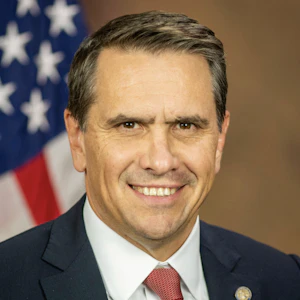
Biography of Deputy Attorney General Todd Blanche
The Honorable Todd Blanche is the 40th Deputy Attorney General of the United States, overseeing the work of the 115,000 dedicated employees who fulfill the Department of Justice’s mission at Main Justice, the FBI, DEA, U.S. Marshals, ATF, and 93 U.S. Attorney’s Offices.
Todd began his career at the Department where he served for over fifteen years in a variety of capacities, including as a contractor, a paralegal in the Criminal Division, and at the United States Attorney’s office for the Southern District of New York where he eventually became an AUSA and later a supervisor.
After leaving the Department, Todd worked as a criminal defense attorney that included representing President Donald Trump in three of the criminal cases brought against him in 2023 and 2024.
Following President Trump’s historic return to the White House, the President appointed Todd to work alongside Attorney General Pam Bondi to make America safe again. At the DOJ, Todd is working tirelessly to implement President Trump’s priorities that include confronting illegal protecting American businesses from fraud.
Todd has been married to his wonderful wife Kristine for nearly thirty years, is a father and grandfather.

Paul Atkins
Paul Atkins
Prior to returning to the SEC, Chairman Atkins was most recently chief executive of Patomak Global Partners, a company he founded in 2009. Chairman Atkins helped lead efforts to develop best practices for the digital asset sector. He served as an independent director and non-executive chairman of the board of BATS Global Markets, Inc. from 2012 to 2015.
Chairman Atkins was appointed by President George W. Bush to serve as a Commissioner of the SEC from 2002 to 2008. During his tenure, he advocated for transparency, consistency, and the use of cost-benefit analysis at the agency. Chairman Atkins also represented the SEC at meetings of the President’s Working Group on Financial Markets and the U.S.-EU Transatlantic Economic Council. From 2009 to 2010, he was appointed a member of the Congressional Oversight Panel for the Troubled Asset Relief Program.
Before serving as an SEC Commissioner, Chairman Atkins was a consultant on securities and investment management industry matters, especially regarding issues of strategy, regulatory compliance, risk management, new product development, and organizational control.
From 1990 to 1994, Chairman Atkins served on the staff of two chairmen of the SEC, Richard C. Breeden and Arthur Levitt, ultimately as chief of staff and counselor, respectively. He received the SEC’s 1992 Law and Policy Award for work regarding corporate governance matters.
Chairman Atkins began his career as a lawyer in New York, focusing on a wide range of corporate transactions for U.S. and foreign clients, including public and private securities offerings and mergers and acquisitions. He was resident for 2½ years in his firm's Paris office and admitted as conseil juridique in France.
A member of the New York and Florida bars, Chairman Atkins received his J.D. from Vanderbilt University School of Law in 1983 and was Senior Student Writing Editor of the Vanderbilt Law Review. He received his A.B., Phi Beta Kappa, from Wofford College in 1980.
Originally from Lillington, North Carolina, Chairman Atkins grew up in Tampa, Florida. He and his wife Sarah have three sons.

Mike Selig
Mike Selig
Chairman Selig brings to the role deep public and private sector experience working with a wide range of stakeholders across agriculture, energy, financial, and digital asset industries, which rely upon and operate in CFTC-regulated markets.
Prior to his leadership at the CFTC, Chairman Selig most recently served as chief counsel of the Securities and Exchange Commission’s Crypto Task Force and senior advisor to SEC Chairman Paul S. Atkins. In this role, Chairman Selig helped to develop a clear regulatory framework for digital asset securities markets, harmonize the SEC and CFTC regulatory regimes, modernize the agency’s rules to reflect new and emerging technologies, and put an end to regulation by enforcement. He also participated in the President’s Working Group on Digital Asset Markets and contributed to its report on “Strengthening American Leadership in Digital Financial Technology.”
Prior to government service, Chairman Selig was a partner at an international law firm, focusing on derivatives and securities regulatory matters. During his years in private practice, he represented a broad range of clients subject to regulation by the CFTC, including commercial end users, futures commission merchants, commodity trading advisors, swap dealers, designated contract markets, derivatives clearing organizations, and digital asset firms. Chairman Selig advised clients on compliance with the Commodity Exchange Act and the CFTC’s rules and regulations thereunder, including in connection with registration applications and obligations, enforcement matters, and complex transactions.
Chairman Selig earned his law degree from The George Washington University Law School and was articles editor of The George Washington Law Review. He received his undergraduate degree from Florida State University.

David Bailey
David Bailey

Eric Trump
Eric Trump
Mr. Trump also serves as Executive Vice President of The Trump Organization, where he oversees the global management and operations of the Trump family’s extensive real estate portfolio. This includes Trump Hotels, Trump Golf, commercial and residential real estate, Trump Estates, and Trump Winery. Known for his hands-on leadership and strong market instincts, he has played a key role in expanding the company’s presence across major U.S. and international markets.
A globally recognized business leader and public figure, Mr. Trump is a prominent advocate for Bitcoin and decentralized finance. He is a co-founder of World Liberty Financial, a decentralized finance (DeFi) platform, and serves on the Board of Advisors of Metaplanet, Japan’s largest corporate holder of Bitcoin.
Beyond his business activities, Mr. Trump has helped raise more than $50 million for St. Jude Children’s Research Hospital in the fight against pediatric cancer, a philanthropic mission he began at age 21.
Mr. Trump earned a degree in Finance and Management from Georgetown University. He currently resides in Florida with his wife, Lara, and their two children. He is also the author of Under Siege, his memoir published in October 2025.
Jack Mallers
Jack Mallers
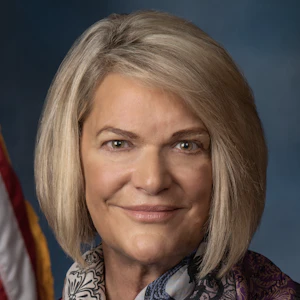
Cynthia Lummis
Cynthia Lummis
As the first-ever Chair of the Senate Banking Subcommittee on Digital Assets, Senator Lummis is the architect of the legislative framework shaping America's digital asset future. She introduced the landmark Lummis-Gillibrand Responsible Financial Innovation Act, the first comprehensive bipartisan crypto regulatory framework in Senate history. She co-authored the GENIUS Act — the first federal stablecoin law ever enacted — and introduced the BITCOIN Act, which would establish a U.S. strategic Bitcoin reserve of up to one million BTC. She is leading the Clarity Act, which will bring long-overdue regulatory certainty to the digital asset industry. She has also championed digital asset tax reform, including a de minimis exemption for small transactions and equal tax treatment for miners and stakers.
Known as Congress' "Crypto Queen," Senator Lummis represents Wyoming — a state she has helped build into one of the most digital asset-friendly regulatory environments in the nation. Before serving in the Senate, she served 14 years in the Wyoming Legislature, eight years as Wyoming State Treasurer, and eight years in the U.S. House. She is a three-time graduate of the University of Wyoming.
Her work represents a crucial bridge between traditional financial systems and the emerging digital economy, ensuring America leads the world in financial innovation while protecting the individual freedoms that define it.
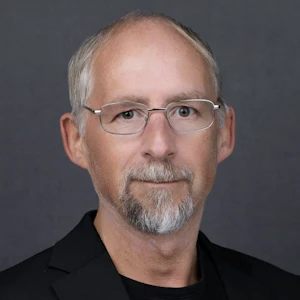
Adam Back
Adam Back
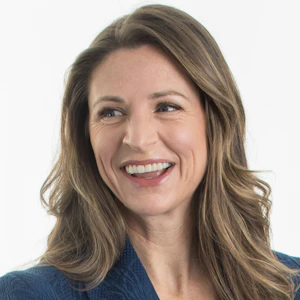
Amy Oldenburg
Amy Oldenburg
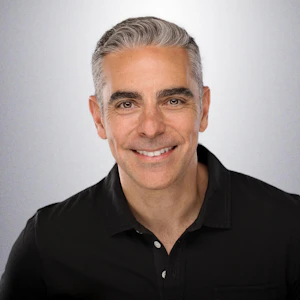
David Marcus
David Marcus

Matt Schultz
Matt Schultz
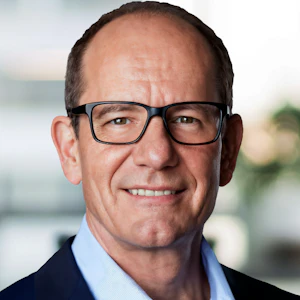
Fred Thiel
Fred Thiel
Throughout his career, Mr. Thiel has consistently driven rapid growth and created substantial shareholder value. Prior to MARA, Mr. Thiel served as the CEO of two other public companies, Local Corporation (NASDAQ: LOCM) and Lantronix, Inc (NASDAQ: LTRX). He has successfully raised billions in equity and debt through private and public offerings, led companies through IPOs, executed high-value exits to strategic and financial acquirers, and implemented effective M&A and roll-up strategies.
Mr. Thiel attended the Stockholm School of Economics and executive classes at Harvard Business School, and is fluent in English, Spanish, Swedish, and French. Mr. Thiel is the Chairman of the Board for Oden Technology, Inc. and is active in Young Presidents’ Organization where he has led initiatives in both the FinTech and Technology Networks.
A recognized voice in the industry, Fred frequently shares his insights on energy and technology with major media outlets like Bloomberg TV, CNBC, and FOX Business, contributing to vital discussions about the future of these sectors.
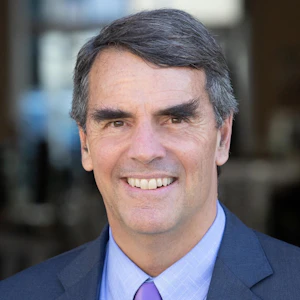
Tim Draper
Tim Draper
He is a supporter and global thought leader for entrepreneurs everywhere, and is a leading spokesperson for Bitcoin and decentralization, having won the Bitcoin US Marshall’s auction in 2014, invested in over 50 crypto companies, and led investments in Coinbase, Ledger, Tezos, and Bancor, among others.

Afroman
Afroman