Starting from Zero: How Do We Build Institutions from the Ground Up?
Speakers/Moderators

Robin Seyr
Robin Seyr

Joe Carlasare
Joe Carlasare
Joe has served as an adjunct professor at Chicago-Kent College of Law, teaching trial advocacy. He also coaches Chicago-Kent’s nationally ranked Trial Advocacy Team.


Beau Turner
Beau Turner
Today, having sold his entire real estate portfolio to go all-in on Bitcoin mining, Beau helps investors and business owners access the tax advantages and financial sovereignty of properly managed digital infrastructure. His expertise bridges traditional wealth building with Bitcoin's principles, allowing him to holistically guide people through the intersection of energy, technology, and sound money.
Session
Overview
This Genesis Stage discussion examined how Bitcoin changes the way financial, legal, academic, energy, and policy institutions evolve. Rather than treating the Bitcoin era as a reset from zero, the speakers emphasized that existing systems will be adapted, weakened, redirected, or challenged by Bitcoin’s protocol-based coordination model.
Joe Carlasare discussed how courts, contracts, collateral markets, and legislation are beginning to incorporate Bitcoin into legacy legal and financial structures. Craig Warmke framed Bitcoin itself as an institution and explored the role of education, policy, and future institutions in solving coordination problems that Bitcoin does not solve on its own. Beau Turner focused on mining, energy, and the way protocols can limit institutional mission creep.
The conversation also covered whether fiat currencies will disappear or persist, the risks of Bitcoin concentration among large holders, the role of centralized institutions in a Bitcoin ecosystem, and the ongoing tension between KYC, AML rules, privacy, and security. The panel closed with a call for builders to create new Bitcoin institutions while using the energy and infrastructure of older systems to move toward a more Bitcoin-enabled future.
What does building solid Bitcoin institutions in a Bitcoin world look like? How are we rebuilding things? What kind of things do we have to destroy? As a warm-up round, where are we currently? We are rebuilding things, but I don't think we have to restart from the start. If you look around, we have 20,000 or 30,000 people here, with so many companies here. We're already 16 years into this. So we're not starting from ground zero. Where are we? Where do we start? What were your first thoughts when you heard the title?
I'll start. I have a history dealing with some of the earliest orders that were ever entered in the court system involving Bitcoin and turnover of digital assets. The fun thing now is that when it was new and novel, and I first started having to make these arguments to judges and other litigators, it was seen as avant-garde, niche, a new product nobody was interested in.
It's becoming more commonplace. It's becoming more accepted. We've drafted contracts that are denominated in Bitcoin. We've had all sorts of securities that are collateralized by Bitcoin. It's becoming more of an everyday occurrence, and that's exciting for me. Once you break through that societal resistance, once you break through, “This is too weird, we can't put our trust in it,” then you start to get people increasingly and exponentially having more faith in it.
It's really exciting where we're at right now because over the next five to ten years, this is going to become woven into the fabric of every one of our institutions. There is a standing order in federal courts about how to deal with Bitcoin on certain conflicts and disputes. That's exciting. It's giving institutional clarity. We're getting major pieces of legislation passed by Congress. We're rewriting the rules of traditional legacy finance and the traditional legal system to deal with these things. Over the coming five years, you're going to see that at a much more exponential pace. That's what I'm excited about.
Bitcoin itself is an institution. I see all of us here as part of the institution. An institution is a group of people ordered by conventions toward a certain aim to solve coordination problems. That's us. As a result of the last 15 to 17 years, not only do we have the big institution of Bitcoin, but we have all these satellite institutions: new institutions that have been built from the ground up and are Bitcoin-centric, and also people working in older traditional institutions who are steering those institutions toward Bitcoin. I think it's great.
Beau Turner, CEO of Abundant Mines. I think the panel title, “Starting from Zero,” is kind of a misnomer because really we're starting with what we have. It would be easier if we were just injecting a new system into an open playing field, but we have to make use of systems, structures, and methods of coordinating that we've all been accustomed to over decades. In some cases, some of our institutions are hundreds of years old. So really, we're starting from what we have, not from zero.
In a sense, an institution is a primitive for a protocol. A protocol is a more ordered and rules-based institution with a more narrow mandate. I think Bitcoin is this first example of an institution showing itself as a protocol. What we see coming in the future will look much more like that. It will be much more well-defined, scoped, and in a way more narrow.
What are the institutions that stick? I don't think we have to rebuild a whole new world. I don't think we have to rebuild everything. Bitcoin is changing a lot, but what are the things that are working in our system that stay, whether we have a gold standard, a shell standard, a stone standard, a Bitcoin standard, or a fiat standard? What are the institutions that stick no matter what?
The way I look at it is that when you introduce something like Bitcoin into the traditional legacy system, whether financial, economic, or legal, what tends to happen is that the entrenched institutional players increasingly lose their leverage. What does that mean practically? In the legal system, there is a whole plethora of escrow services, middlemen, and extractors, and they're increasingly losing their leverage over the process of payments, credit, and collateral markets.
That loss of leverage is fascinating because it forces institutions to change and react. I'm not one of those people who thinks the institutions are suddenly going to collapse. I don't believe in the next five years we're going to see the Federal Reserve collapse. What it's going to do is respond to stablecoins. It's going to respond to evolution, to Bitcoin being used as collateral, to bigger players using Bitcoin on their balance sheets in a Strategy-style way. That is a reaction they will be forced to undertake at the institutional level because of the technological promise of the innovation.
I'm an academic, and I often get frustrated with the slow-moving nature of academic institutions. But one thing you see, and that I hope you see more of, is Bitcoin being integrated as a topic into the curriculum. One thing that will drive this is newer academic institutions, like the University of Austin in Austin, Texas, that are building Bitcoin into classes in economics and public policy. I think this will drive competition in the older institutions.
Like Joe, I'm not someone who thinks universities are done. Even with the onward march of AI, I think some academic institutions in particular will be done because of the economic situation we find ourselves in. But universities themselves aren't going anywhere, and the ones that survive are going to build Bitcoin into the curriculum more and more as we move forward.
We have to be able to use the institutions that are already here, but adapt them to the way the world is changing. We still need a legal system, but that legal system might be enforcing regulation on more autonomous agents than it does people, and we're not really equipped for that.
Social media was a great example of a technology that institutions were not ready for and that moved much quicker than anybody could create guardrails around. The implications of that are still rippling through the way we interact with those platforms today. There never really was a way to get a handle on them. So we have structures that need to adapt much faster to new actors, new forms of intelligence, and new ways of working through these systems.
There's no blueprint for how you create an institution for an evolving future. We're figuring it out in real time. Fortunately or unfortunately, we're able to create way more nuanced and novel actions than we are able to create guardrails that appropriately contain those actions.
I want to try to figure out where we are on this panel, and maybe have a small debate here. I debated this yesterday at dinner with some people. There are Bitcoiners who believe the fiat system, the fiat institutions, foreign exchange, and central banks will all collapse in ten years, maybe 20 years, maybe 100 years, or a thousand years. Then there are some people who say this will always be there. There will always be some kind of government token, fiat currency, or institutional government token. Argentina is an interesting example because currencies fail, a new one gets built, people trust it again, and after ten years it fails again. Do you believe fiat will be around forever, or at least for our lifetimes, say 50 years? Or could it actually completely collapse?
I'll start. I think fiat will be around for the rest of our lifetimes. Will it be weakened? Will it perhaps be thought of as a secondary asset that is not as desirable as Bitcoin? I think that's absolutely within my framework.
The analogy I always use is the newspaper industry and general reporting. Newspapers have consistently lost their prominence relative to newer forms of media. That's where people are consuming and observing now. But newspapers are still there. If you look at the last 100 years for many institutions, you can go academic, you can go political, institutions have lost their leverage. They're becoming increasingly weakened and their power is more diffused.
I think that's going to happen increasingly with finance and legal systems, these gridiron systems that we thought had such power and prominence that they could impose their will. They are consistently weakening. Congress is a perfect example. Congress was a much more well-functioning, organized institution decades ago. Increasingly, it is becoming more gridlocked and mired in the inability to act. That process is evolving, and until you reform the institution, it is going to continue to weaken, in my view.
Why does that matter for Bitcoin? I think Bitcoin and many of these assets we're talking about, like stablecoins, are going to weaken the traditional leverage the major players had and make it more diffused. That's been true of technological innovation over the last several hundred years.
I actually agree with Joe, which is probably a minority position here. But globally, I think a lot of currencies will fail, so it's probably not a one-size-fits-all answer. What is fiat currency useful for? It's useful for monetary stability when you have inflation that's not greater than 2%, and a very small number of currencies actually fit that.
There's also a great paper by Josh Hendrickson called “The Treasury Standard.” He goes through the last 200 years of history and argues that states like to run their own currencies because it gives them flexibility for emergency financing, especially during wartime. I don't think that's going away. I don't think Bitcoin is going to make obsolete the desire for warring or adversarial nations to go to war with each other. As far as we want a low-inflation asset and medium of exchange, and nation-states want to retain the ability to hit that lever on the money printer, I think we're going to have fiat for a long time. It's just that a lot of them will fail because they don't do as good of a job as things like the dollar.
But it's like a zombie, right? It fails and it comes back to life.
Yes. They have already failed, and they're going to continue to fail, and then they'll be resurrected in some form or fashion because they always want to have that intervention.
As miners, we think in terms of energy by default. I would frame it as the old institutions stay, but they're gradually losing energy. That energy is being sucked into a new system. A great example would be that Treasuries have been the safest account for the world for a long time. Vehicles like Strategy are sort of a Treasury analog that's sucking the energy out of that system into a new vehicle that looks like what everybody is familiar with, but brings it into a completely parallel structure.
If you think about energy transition specifically, every time we've upgraded a system of channeling energy, going from biological fuels to wood, to coal, to fossil fuels, to renewables, every one of those transitions was on the back of an increase in energy coming from what was already used. Fossil fuels wouldn't have been enabled without an increase in coal usage to go and actually get those resources. Same with everything before it. You have to use the energy from the system before in order to fuel the next advance of civilization. It's not wipe it and go to the next thing. You have to use what people have invested in their systems of coordination to get you to the next stage.
Is there a danger that we rebuild the institutions that we didn't like, now with Bitcoin? When you think about Strategy owning a lot of Bitcoin, Coinbase having a lot of Bitcoin, BlackRock having a lot of Bitcoin, and three or four players having legal ownership of a lot of Bitcoin, could we go in a similar direction? Could Strategy maybe become a Bitcoin central bank of the future?
I don't really see a problem with individuals, entities, or actors in the private sector holding a lot of Bitcoin, and even the public sector. As long as at the code base level we're operating under the same rules, and those rules can't be compromised or changed without some sort of undue influence, I don't see this problem.
What is a problem right now is that you can push a few keystrokes at the Federal Reserve and print a bunch of money. That is the problem. That is the issue we're trying to solve with a decentralized, agreed-upon, permissionless ledger. I don't feel the concentration risk in any way compromising the original idea behind Bitcoin. If you want to buy a bunch of Bitcoin, you can do that.
More generally, Bitcoin does solve some cooperation and coordination problems with transacting money and with the money supply over time, in a way that doesn't require central authorities. But there are some coordination and cooperation problems that Bitcoin does not resolve, and we need new, and probably oftentimes centralized, institutions to help solve those coordination problems.
One challenge for Bitcoin going forward is not necessarily with MicroStrategy per se, but in the Bitcoin ethos and ecosystem, there is an allergic reaction to centralized authorities. For good reason, because sometimes those authorities abuse their influence and power. So we have to keep in mind that some of the very institutions we need to solve current coordination problems in Bitcoin might end up having an effect on Bitcoin in the long term. We'll have to engage in something like creative destruction. We might have these kinds of ethereal, ephemeral institutions to solve temporary problems.
Most institutions start out very well-intentioned with noble causes. What tends to happen is mission creep or scope creep in what they feel they can exert power over. What is beautiful about Bitcoin as a protocol is that it bounds them to guidelines and frameworks that you can't really deviate from.
If you think of institutions as a primitive for protocols, we're really bounding these things into something that is far more limited. When you have a protocol that is so outside any institution or system that has previously exerted power, that's a forcing function to rein in the ability to have mission creep into all the areas of our lives.
If you think about the reason the Federal Reserve was started originally, it didn't sound like such a bad idea. It's only over time that it becomes this heavily egregious thing. The founding of that particular institution is a whole other story, but it is that ability to keep expanding your scope and go beyond the bounds of your initial protocol that causes so many of these problems. That is what is so beautiful about this. It's not an institution. It's a protocol, and it's enforcing these bounds on institutions.
I want to stay with Beau for a minute and talk about one of the biggest institutions already in Bitcoin, which is Bitcoin mining: the energy infrastructure, a huge part of Bitcoin. How do you see mining playing a role in the future of Bitcoin, with energy producers potentially coming in, combining the tension between Bitcoin mining and AI hosting, and a lot of Bitcoin miners now doing AI and other things? How do you look at the Bitcoin mining side of things for institutional infrastructure?
There's a nice tension between Bitcoin mining and our established institutions because in many ways Bitcoin mining is the purest on-ramp. If you have electricity, you can participate in the protocol in a totally non-KYC way. Banks hate this. They absolutely don't like that. They will be very quick to debank you in many cases.
There is this natural tension that exists. What is so cool about Bitcoin, specifically in mining, is that we're always finding a way to exploit the gaps. One example is bonus depreciation, which came back last year. Bonus depreciation is meant to encourage business and investment, and the expansion of investment in infrastructure. It is unintentionally a very natural incentive to have people invest more money in mining infrastructure, which strengthens the Bitcoin network. That's this slight roundabout way of taking the incentives of the old system, using them to your advantage, and putting that capital into Bitcoin mining.
When it comes to the way miners interact with energy companies and utilities, this is one of the most fundamental tensions we're facing. Whether you're talking about mining or AI, you have two of the fastest-moving trends and industries that have ever graced the world coming up against some of the slowest-moving, most highly regulated actors in our economy: public utilities.
You're seeing that tension play out in real time. In order for the advancement of humanity to occur, at least in terms of intelligence and data center development, we are pushing up against these institutions and organizations that previously had no reason to evolve or change very quickly. Just as you see elsewhere in the Bitcoin space, it's this pushing up against the institution that either forces it to change or forces something new to take its place.
How do you look at privacy? I think privacy is an interesting topic in Bitcoin, and Bitcoin mining is actually fun for that because you can put your own mine to work and get the freshest, newest Bitcoin, which nobody has touched before. Even if you buy peer-to-peer, there is some sort of KYC element there. How do you look at the legal structure? In Europe maybe it's a bigger topic than in America, but we now have several rules. We have to KYC everything. If I send someone sats, the exchange asks me, who do you send it to? Do you send it to yourself, someone else, a business? I have to put a name in there. It's super annoying. How do you look at KYC and the legal implications of Bitcoin being implemented, this more freedom-oriented technology being implemented into the system?
That's a great example of mission creep. KYC is this mission creep from the information age, where information is very readily accessible and they want your information. That's not in their original mandate of gathering information for intelligence and banking. The ability to circumvent that with freedom tools like mining and other ways to get non-KYC Bitcoin is a natural resistance to people feeling, “This isn't why you're here. This isn't why financial institutions are here. This isn't why intelligence institutions are here. They're not here to surveil us so they can control our actions.”
It's very natural that we would get this vehicle to circumvent it and that people would want to participate in that, because privacy is a human right. At least I believe that, and many other people believe the same thing. The fact that we have tools is the beautiful thing about this. You have options to navigate a world where there is this creep on all of your rights.
Looking to the future, I think we'll have a path-dependent thing. It depends on what kinds of new institutions we can build and what kind of pressure we can put on politicians and regulators to pull back some of the KYC and AML legislation and regulatory frameworks that we see. I can see one future where we just let it go, and that looks to me like a more dystopian future. In another future, we have people willing to build, put themselves at risk, and fight against the kind of mission creep that you mentioned with regulatory frameworks that eat away at our financial privacy and our freedom overall.
I think there's always going to be a tension between privacy and security. You're always going to see people make the argument that we need more information for national security purposes to prevent bad actors from doing bad things. That will never leave us.
The question in my mind at this particular evolution in Bitcoin is whether there is a sufficient outcry among the populace for these privacy tools. I don't think there is, because I still think we're in the build-out of the store-of-value phase of Bitcoin. We're still trying to get Bitcoin in the hands of tens of millions or hundreds of millions of people, and still establish it as a known, trusted reserve.
Once it transitions and has accomplished that as something reliable that you want to store value in for the long term, I think more people are going to transition to the idea that perhaps we want to have privacy tools for medium-of-exchange purposes. That's an evolution, and in my view, it's a decades-long evolution. It's not going to happen overnight, not in the next five or ten years. But over time, once more of the market share for Bitcoin is in need of payment solutions, it's going to drive privacy solutions.
I can tell you from personal experience that I think KYC and non-KYC is all a myth in some ways. I've had people who sold Bitcoin peer-to-peer at Bitcoin meetups, and we tracked them down with subpoenas, put them under oath, and made them tell us where the coins went. This idea that just because there is legislatively imposed KYC on exchanges, or maybe there isn't depending on your jurisdiction, you can't use forensics and do investigative research, I don't think that's true. You can always get to the bottom of it if you devote enough time and resources.
The question in my mind is, how easy do we want to make it for people to track and surveil you? To me, that's the bigger issue. We want to make it harder, not easier. We don't want people using this technology to be, in many ways, more identifiable than people using cash or other mediums of exchange in society right now. That tension will always exist. The question is when we as a society will be strong enough to realize we want safeguards in place to make it harder to surveil and track people, which frankly should be something that every American and every person in the world views as a fundamental right.
Luckily, Joe, you cannot subpoena the Bitcoin network itself.
I can subpoena known node operators, right? All of them.
We have about one minute and 40 seconds left, and we have three speakers. I want to turn a little bit to the individual. There is an audience here, and we are building that future. We have the Bitcoin conference. We are all really early adopters of this, no matter what role we're playing in the Bitcoin ecosystem. From each of you, what is your message to people who listen to this, who are building the space, observing the space, and participating in this space?
I'll start. My message is that I think it's strange, and mostly driven by some of the lackluster price action, that there isn't more energy and excitement. I think it's so weird because I look at all the headlines, I look at the development, I look at the growth, and I'm so excited about Bitcoin. I think it's more exciting now to be in Bitcoin than perhaps any other time in history.
For a lot of reasons, for economic reasons and macroeconomic factors well beyond the control of Bitcoin, and because of the lackluster price action we've had over the last year, somehow it seems like there's not as much energy. That's unfortunate. But the good news for the builders and the people here is that we are still grinding away. There's opportunity everywhere. I think it's going to be only more exciting over the next five or ten years.
We've seen a lot of progress in the last several years with people building new institutions like the Bitcoin Policy Institute, new companies, wallet providers, and mining companies. These are all institutions. Troy Cross has a project that solves a problem with education. What we need is more people doing these things, being courageous, and being willing to put up the risk.
We've talked about the tension between old institutions and the new ones coming in, and the resistance between those. Your book is called Resistance Money, so it's very appropriate. I like to frame it as not, how are you resisting the old institutions, but where is the energy you can take from something old and transform into something new?
As miners, we're taking energy that is out in the natural world and literally engaging in alchemy to turn it into the hardest money in the world. Where do you have the opportunity in your personal life, and where you engage in business or policy, to find that sort of energy that's just waiting to be turned into another form? That is the way forward.
Thank you, Joe. Thank you, Craig. Thank you, Beau, for this amazing panel. It flew by. The 30 minutes was way too short. Thank you so much for listening and joining us.
Similar
Sessions
Starting from Zero: How Do We Build Institutions from the Ground Up?
Robin Seyr
Robin Seyr
Joe Carlasare
Joe Carlasare
Joe has served as an adjunct professor at Chicago-Kent College of Law, teaching trial advocacy. He also coaches Chicago-Kent’s nationally ranked Trial Advocacy Team.
Beau Turner
Beau Turner
Today, having sold his entire real estate portfolio to go all-in on Bitcoin mining, Beau helps investors and business owners access the tax advantages and financial sovereignty of properly managed digital infrastructure. His expertise bridges traditional wealth building with Bitcoin's principles, allowing him to holistically guide people through the intersection of energy, technology, and sound money.
Starting from Zero: How Do We Build Institutions from the Ground Up?
Speakers/Moderators
Robin Seyr
Robin Seyr
Joe Carlasare
Joe Carlasare
Joe has served as an adjunct professor at Chicago-Kent College of Law, teaching trial advocacy. He also coaches Chicago-Kent’s nationally ranked Trial Advocacy Team.
Beau Turner
Beau Turner
Today, having sold his entire real estate portfolio to go all-in on Bitcoin mining, Beau helps investors and business owners access the tax advantages and financial sovereignty of properly managed digital infrastructure. His expertise bridges traditional wealth building with Bitcoin's principles, allowing him to holistically guide people through the intersection of energy, technology, and sound money.
The Satoshi Papers
Avik Roy
Avik Roy
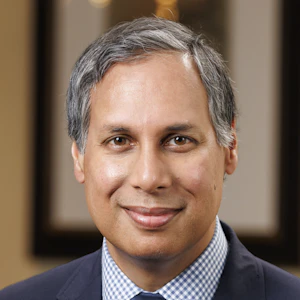
In 2021, he authored the widely-cited essay “Bitcoin and the U.S. Fiscal Reckoning,” published in National Affairs, in which he first proposed establishing a U.S. federal bitcoin reserve. Avik also serves on the Boards of Directors of Strive Inc. and the Texas Bitcoin Foundation, and is the Senior Advisor to the Bitcoin Policy Institute.
Avik has advised several presidential candidates on policy, including Mitt Romney and Marco Rubio. In one of those roles, as Senior Advisor to Texas Gov. Rick Perry in 2015, Perry became the first presidential candidate in the U.S. to support Bitcoin, arguing that the protocol offers “the possibility of reducing the cost and improving the quality of financial transactions in much the way that the conventional internet has done for consumer goods and services.”
Avik is well known for his public policy work outside of bitcoin, especially in fiscal and health care policy. National Review has called him one of the nation’s “sharpest policy minds,” while the New York Times’ Paul Krugman concedes, “Roy is about as good as you get in this stuff…he actually knows something.”
Along with Forbes, where Roy served as the Opinion and Policy Editor for a decade, Roy’s writing has appeared in The Wall Street Journal, The New York Times, The Washington Post, USA Today, and The Atlantic, among other publications, and he has appeared on numerous national television programs including Meet the Press, Face the Nation, PBS NewsHour, and Real Time with Bill Maher.
Avik previously worked as a hedge fund manager at J.P. Morgan, Bain Capital, and other firms. He was educated at MIT and the Yale School of Medicine.


The Satoshi Papers
Speakers/Moderators
Avik Roy
Avik Roy
In 2021, he authored the widely-cited essay “Bitcoin and the U.S. Fiscal Reckoning,” published in National Affairs, in which he first proposed establishing a U.S. federal bitcoin reserve. Avik also serves on the Boards of Directors of Strive Inc. and the Texas Bitcoin Foundation, and is the Senior Advisor to the Bitcoin Policy Institute.
Avik has advised several presidential candidates on policy, including Mitt Romney and Marco Rubio. In one of those roles, as Senior Advisor to Texas Gov. Rick Perry in 2015, Perry became the first presidential candidate in the U.S. to support Bitcoin, arguing that the protocol offers “the possibility of reducing the cost and improving the quality of financial transactions in much the way that the conventional internet has done for consumer goods and services.”
Avik is well known for his public policy work outside of bitcoin, especially in fiscal and health care policy. National Review has called him one of the nation’s “sharpest policy minds,” while the New York Times’ Paul Krugman concedes, “Roy is about as good as you get in this stuff…he actually knows something.”
Along with Forbes, where Roy served as the Opinion and Policy Editor for a decade, Roy’s writing has appeared in The Wall Street Journal, The New York Times, The Washington Post, USA Today, and The Atlantic, among other publications, and he has appeared on numerous national television programs including Meet the Press, Face the Nation, PBS NewsHour, and Real Time with Bill Maher.
Avik previously worked as a hedge fund manager at J.P. Morgan, Bain Capital, and other firms. He was educated at MIT and the Yale School of Medicine.
Why You Need to Start a Podcast

Dan Webb
Dan Webb
Staci Costopoulos
Staci Costopoulos
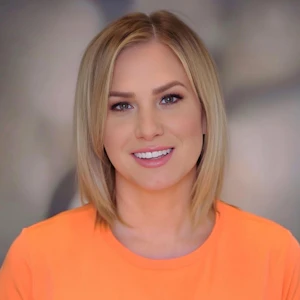
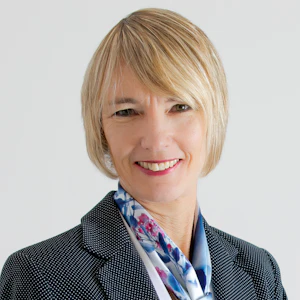
She is the creator and host of The Bitcoin Nova Podcast, where she uses curiosity, warmth, and real life dialogue to turn confusion into understanding. Through podcasting, Staci has experienced how starting her own journey inspired others to use their voice and create ripple effects that reach far beyond a single audience.
Staci also co creates and co hosts Hive Minded, a panel style show that blends Bitcoin education with humor, banter, and real friendship. Hive Minded highlights how conversation, collaboration, and different personalities make Bitcoin more approachable, especially for people who may never click on a traditional Bitcoin show.
Her journey shows that you do not need to be technical or have all the answers to make an impact. By simply starting a podcast and showing up authentically, she has connected with people across the Bitcoin ecosystem and helped others realize they can do the same, inspiring new creators to reach new audiences and carry the signal forward.
Through her podcast, Staci discovered the Illinois Bitcoin Council, whose mission is to help paint Illinois orange through education, advocacy, and collaboration.
Why You Need to Start a Podcast
Speakers/Moderators
Dan Webb
Dan Webb
Staci Costopoulos
Staci Costopoulos
She is the creator and host of The Bitcoin Nova Podcast, where she uses curiosity, warmth, and real life dialogue to turn confusion into understanding. Through podcasting, Staci has experienced how starting her own journey inspired others to use their voice and create ripple effects that reach far beyond a single audience.
Staci also co creates and co hosts Hive Minded, a panel style show that blends Bitcoin education with humor, banter, and real friendship. Hive Minded highlights how conversation, collaboration, and different personalities make Bitcoin more approachable, especially for people who may never click on a traditional Bitcoin show.
Her journey shows that you do not need to be technical or have all the answers to make an impact. By simply starting a podcast and showing up authentically, she has connected with people across the Bitcoin ecosystem and helped others realize they can do the same, inspiring new creators to reach new audiences and carry the signal forward.
Through her podcast, Staci discovered the Illinois Bitcoin Council, whose mission is to help paint Illinois orange through education, advocacy, and collaboration.
Other
Speakers

Michael Saylor
Michael Saylor

Todd Blanche
Todd Blanche
Biography of Deputy Attorney General Todd Blanche
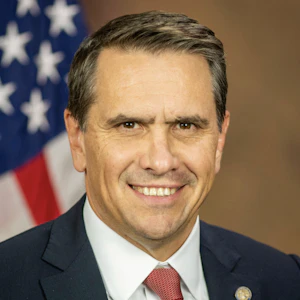
The Honorable Todd Blanche is the 40th Deputy Attorney General of the United States, overseeing the work of the 115,000 dedicated employees who fulfill the Department of Justice’s mission at Main Justice, the FBI, DEA, U.S. Marshals, ATF, and 93 U.S. Attorney’s Offices.
Todd began his career at the Department where he served for over fifteen years in a variety of capacities, including as a contractor, a paralegal in the Criminal Division, and at the United States Attorney’s office for the Southern District of New York where he eventually became an AUSA and later a supervisor.
After leaving the Department, Todd worked as a criminal defense attorney that included representing President Donald Trump in three of the criminal cases brought against him in 2023 and 2024.
Following President Trump’s historic return to the White House, the President appointed Todd to work alongside Attorney General Pam Bondi to make America safe again. At the DOJ, Todd is working tirelessly to implement President Trump’s priorities that include confronting illegal protecting American businesses from fraud.
Todd has been married to his wonderful wife Kristine for nearly thirty years, is a father and grandfather.

Paul Atkins
Paul Atkins
Prior to returning to the SEC, Chairman Atkins was most recently chief executive of Patomak Global Partners, a company he founded in 2009. Chairman Atkins helped lead efforts to develop best practices for the digital asset sector. He served as an independent director and non-executive chairman of the board of BATS Global Markets, Inc. from 2012 to 2015.
Chairman Atkins was appointed by President George W. Bush to serve as a Commissioner of the SEC from 2002 to 2008. During his tenure, he advocated for transparency, consistency, and the use of cost-benefit analysis at the agency. Chairman Atkins also represented the SEC at meetings of the President’s Working Group on Financial Markets and the U.S.-EU Transatlantic Economic Council. From 2009 to 2010, he was appointed a member of the Congressional Oversight Panel for the Troubled Asset Relief Program.
Before serving as an SEC Commissioner, Chairman Atkins was a consultant on securities and investment management industry matters, especially regarding issues of strategy, regulatory compliance, risk management, new product development, and organizational control.
From 1990 to 1994, Chairman Atkins served on the staff of two chairmen of the SEC, Richard C. Breeden and Arthur Levitt, ultimately as chief of staff and counselor, respectively. He received the SEC’s 1992 Law and Policy Award for work regarding corporate governance matters.
Chairman Atkins began his career as a lawyer in New York, focusing on a wide range of corporate transactions for U.S. and foreign clients, including public and private securities offerings and mergers and acquisitions. He was resident for 2½ years in his firm's Paris office and admitted as conseil juridique in France.
A member of the New York and Florida bars, Chairman Atkins received his J.D. from Vanderbilt University School of Law in 1983 and was Senior Student Writing Editor of the Vanderbilt Law Review. He received his A.B., Phi Beta Kappa, from Wofford College in 1980.
Originally from Lillington, North Carolina, Chairman Atkins grew up in Tampa, Florida. He and his wife Sarah have three sons.

Mike Selig
Mike Selig
Chairman Selig brings to the role deep public and private sector experience working with a wide range of stakeholders across agriculture, energy, financial, and digital asset industries, which rely upon and operate in CFTC-regulated markets.
Prior to his leadership at the CFTC, Chairman Selig most recently served as chief counsel of the Securities and Exchange Commission’s Crypto Task Force and senior advisor to SEC Chairman Paul S. Atkins. In this role, Chairman Selig helped to develop a clear regulatory framework for digital asset securities markets, harmonize the SEC and CFTC regulatory regimes, modernize the agency’s rules to reflect new and emerging technologies, and put an end to regulation by enforcement. He also participated in the President’s Working Group on Digital Asset Markets and contributed to its report on “Strengthening American Leadership in Digital Financial Technology.”
Prior to government service, Chairman Selig was a partner at an international law firm, focusing on derivatives and securities regulatory matters. During his years in private practice, he represented a broad range of clients subject to regulation by the CFTC, including commercial end users, futures commission merchants, commodity trading advisors, swap dealers, designated contract markets, derivatives clearing organizations, and digital asset firms. Chairman Selig advised clients on compliance with the Commodity Exchange Act and the CFTC’s rules and regulations thereunder, including in connection with registration applications and obligations, enforcement matters, and complex transactions.
Chairman Selig earned his law degree from The George Washington University Law School and was articles editor of The George Washington Law Review. He received his undergraduate degree from Florida State University.

David Bailey
David Bailey

Eric Trump
Eric Trump
Mr. Trump also serves as Executive Vice President of The Trump Organization, where he oversees the global management and operations of the Trump family’s extensive real estate portfolio. This includes Trump Hotels, Trump Golf, commercial and residential real estate, Trump Estates, and Trump Winery. Known for his hands-on leadership and strong market instincts, he has played a key role in expanding the company’s presence across major U.S. and international markets.
A globally recognized business leader and public figure, Mr. Trump is a prominent advocate for Bitcoin and decentralized finance. He is a co-founder of World Liberty Financial, a decentralized finance (DeFi) platform, and serves on the Board of Advisors of Metaplanet, Japan’s largest corporate holder of Bitcoin.
Beyond his business activities, Mr. Trump has helped raise more than $50 million for St. Jude Children’s Research Hospital in the fight against pediatric cancer, a philanthropic mission he began at age 21.
Mr. Trump earned a degree in Finance and Management from Georgetown University. He currently resides in Florida with his wife, Lara, and their two children. He is also the author of Under Siege, his memoir published in October 2025.

Jack Mallers
Jack Mallers

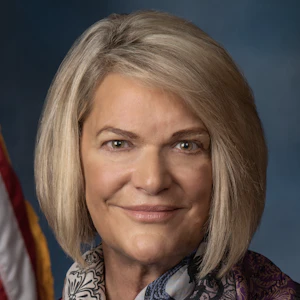
Cynthia Lummis
Cynthia Lummis
As the first-ever Chair of the Senate Banking Subcommittee on Digital Assets, Senator Lummis is the architect of the legislative framework shaping America's digital asset future. She introduced the landmark Lummis-Gillibrand Responsible Financial Innovation Act, the first comprehensive bipartisan crypto regulatory framework in Senate history. She co-authored the GENIUS Act — the first federal stablecoin law ever enacted — and introduced the BITCOIN Act, which would establish a U.S. strategic Bitcoin reserve of up to one million BTC. She is leading the Clarity Act, which will bring long-overdue regulatory certainty to the digital asset industry. She has also championed digital asset tax reform, including a de minimis exemption for small transactions and equal tax treatment for miners and stakers.
Known as Congress' "Crypto Queen," Senator Lummis represents Wyoming — a state she has helped build into one of the most digital asset-friendly regulatory environments in the nation. Before serving in the Senate, she served 14 years in the Wyoming Legislature, eight years as Wyoming State Treasurer, and eight years in the U.S. House. She is a three-time graduate of the University of Wyoming.
Her work represents a crucial bridge between traditional financial systems and the emerging digital economy, ensuring America leads the world in financial innovation while protecting the individual freedoms that define it.

Adam Back
Adam Back

Amy Oldenburg
Amy Oldenburg
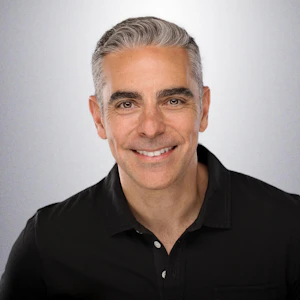
David Marcus
David Marcus

Matt Schultz
Matt Schultz
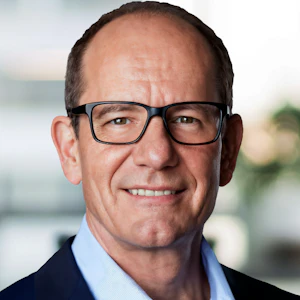
Fred Thiel
Fred Thiel
Throughout his career, Mr. Thiel has consistently driven rapid growth and created substantial shareholder value. Prior to MARA, Mr. Thiel served as the CEO of two other public companies, Local Corporation (NASDAQ: LOCM) and Lantronix, Inc (NASDAQ: LTRX). He has successfully raised billions in equity and debt through private and public offerings, led companies through IPOs, executed high-value exits to strategic and financial acquirers, and implemented effective M&A and roll-up strategies.
Mr. Thiel attended the Stockholm School of Economics and executive classes at Harvard Business School, and is fluent in English, Spanish, Swedish, and French. Mr. Thiel is the Chairman of the Board for Oden Technology, Inc. and is active in Young Presidents’ Organization where he has led initiatives in both the FinTech and Technology Networks.
A recognized voice in the industry, Fred frequently shares his insights on energy and technology with major media outlets like Bloomberg TV, CNBC, and FOX Business, contributing to vital discussions about the future of these sectors.
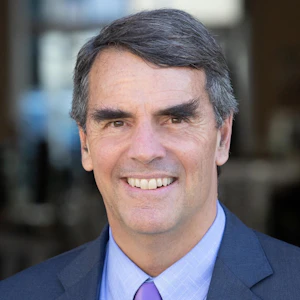
Tim Draper
Tim Draper
He is a supporter and global thought leader for entrepreneurs everywhere, and is a leading spokesperson for Bitcoin and decentralization, having won the Bitcoin US Marshall’s auction in 2014, invested in over 50 crypto companies, and led investments in Coinbase, Ledger, Tezos, and Bancor, among others.

Afroman
Afroman