Opening Up Consensus: Bitcoin Kernel
Speakers/Moderators

stickies-v
stickies-v
Session
Overview
Stefan “stickies-v” from Brink introduces Bitcoin Kernel, a project that exposes Bitcoin Core’s consensus engine as a stateful library. The talk explains why Bitcoin Core has remained the dominant full node implementation and how consensus failure, chain splits, and first mover advantage make alternative implementations difficult to run safely.
The session frames Bitcoin Kernel as a way to separate consensus logic from the rest of Bitcoin Core, allowing other full node implementations and applications to use the same battle-tested validation code. Key design goals include broad language support through a C interface, strong performance, and an API that reduces the risk of accidental consensus failures.
A practical Python example shows how Kernel could be used to build a simple full node that receives blocks, validates them with Bitcoin Core consensus logic, reacts to reorgs, and inspects transactions. The talk positions Bitcoin Kernel as an experimental but usable step toward more competition and flexibility in Bitcoin full node software.
Does anyone have an idea what we're seeing on the chart over there? Just have a think. You don't have to answer. Nodes. Exactly. This is public data from Bitnodes going back to 2015. The striking thing here is that since basically the beginning of the timeline, all of the Bitcoin full node implementations that you see are Bitcoin Core or some very closely related variant of it. During the block size wars, we had Bitcoin Unlimited and ABC and a bunch of others. And obviously now in recent years we have the Knots faction taking increasing market share as well. But really, under the hood, all of this is Bitcoin Core.
In this talk I want to talk about one approach that might help improve the situation a bit. I'm Stefan, stickies-v. I'm funded by Brink to work on Bitcoin Core, and specifically I've been focusing on the Bitcoin Kernel project. Besides my developer work, I also host the London Socratic and I host Bitcoin Core Review Club.
Bitcoin is an emergent network, and that means it exists if and when people agree on the exact set of consensus rules that defines whether or not a block is valid. There is no central authority that determines what those rules are. It's not Satoshi. It's not a white paper. It's not Bitcoin Core developers. It's not a community. There is no voting. Consensus is whatever people actually end up running on their machine to validate those blocks.
One of the most crucial properties about consensus is that you want to avoid consensus failure. Consensus failure is essentially when, unintentionally, people who used to agree on consensus rules start disagreeing, which would typically lead to a chain split, which is extremely hard to recover from.
Because chain splits are so catastrophic, we end up with this interesting first mover advantage. Essentially, because Bitcoin Core has been around for so long and has gained massive market share in the full node market, running anything that is not Bitcoin Core puts you at quite a strong disadvantage. In case of consensus failure, in case of a chain split, it really does not matter who is right in an academic sense. It doesn't matter who better follows Satoshi's vision or who didn't have the bug. The only thing that matters, especially for you as a person running the node, is: am I going to be on the chain that survives? Am I going to be on the chain that is the most economically valuable? Because essentially Bitcoin is money, so that's what you want to maximize for.
Unless you have really significant reasons to run something that is not the majority node implementation, for example because you need certain features for your business or for your operations, or because you don't think the majority implementation is good software, you're probably just going to stick with whatever is majority if it works well enough for you.
I think the two main reasons that Bitcoin Core has been such a predominant implementation are, one, it has a very good track record of being a high quality software project. It is very well tested, it is very well reviewed, and it's got a very solid track record. All of that speaks to its strengths. But also, it does have the first mover advantage. It's been around for the longest. It has the majority, and so deviating from that is incredibly difficult.
I think that status quo makes sense. I think that's reasonable given where we are, given that Satoshi started Bitcoin without a formal specification. But I also think we should think about doing better for two main reasons.
One is, does anyone in this room think that free markets or competition are a bad idea? I see one hand. I can't see who that is, but I think I have an idea. I thought it was Shinobi. So I guess everyone else agrees. We want to have competition. It's better for end users if we can have different full node implementations that cater to different audiences, different use cases, different priorities, different philosophies. Ultimately, if we can do that in a safe way, that is going to benefit end users.
The second reason why I think this is important to think about is that it takes the pressure off of Bitcoin Core. The more that we can decouple the Bitcoin protocol and consensus rules from Bitcoin Core, the more the Bitcoin Core project has the freedom to make decisions and changes that it thinks are best for its users without causing some of the controversies and pushback that we have seen in recent times.
The project I'm working on with another group of people within the project is Bitcoin Kernel. What is Bitcoin Kernel? It is a stateful library that wraps all of the consensus logic within Bitcoin Core. I will walk you through that in a bit more detail.
Before Bitcoin Kernel, imagine this box is the Bitcoin Core codebase. We have some consensus logic indicated with the gear icon. I'll be calling this the consensus engine. And we also have non-consensus code, which is the other icon. Before Kernel, it was all tangled up a bit. There was no clear separation between which logic is consensus and which logic is not consensus.
The first thing we did is stage one: we're going to separate that. On the right you have the gear icon for consensus logic, and on the left you have everything that is not consensus code. This is purely internal, so everything is still within Core. That stage is mostly finished.
Now we've entered stage two, where we have the same diagram, but on the right we have the engine, which is Kernel. Because we're adding a public interface on top of this library, we can start to see competition among full node implementations that all use the same consensus engine. One of them could be Core, but the others could be any full node in any language, any stack, and with any priorities that you want to see.
Ideally we would go even further and move toward something based on a formal specification, so that multiple consensus engines can be built and formally verified against that specification. But it's out of scope for this talk, and it's also much less clear how feasible that is. Whereas Kernel is actually here.
The purpose of Kernel is that we want to have this library that is usable, useful, and the best choice for anyone who wants to use or build on Bitcoin consensus. That imposes quite a few requirements or design goals for the library.
The first one is that it should be usable in any tech stack. Whether you're developing in Rust, C, or JavaScript, if you want to use consensus, you should be able to use it. That's also why we chose to publish a C interface for the Kernel library. C has existed for a long time, and architecturally it works well to be used in multiple languages through its FFI interface. Pretty much any language supports using a C library. As a matter of fact, we currently have language bindings for Kernel in Rust, C++, Python, Go, C, Java, and I'm probably forgetting a few more. So that is actually working.
The second requirement to make this usable for everyone is that it must be performant. Bitcoin Core has already optimized performance quite a bit, and we want to make sure that we keep that property. Things get bad whenever people have to reimplement consensus logic for their own application because Kernel is too slow. Whatever we do, we cannot sacrifice on performance too much, and we try to squeeze as much as we can out of that little juice box.
A third property is that it absolutely needs to be secure and robust. To come back to the previous slides, the whole point of Kernel is to try to prevent consensus failures when people reimplement their own full node or any other business use case. In building this interface, we do everything that we can to remove foot guns from the interface. We try to make it as hard as we can to accidentally mess up and accidentally cause consensus failures.
That's the high-level theoretical overview of what Bitcoin Kernel is. So is it ready yet? It is usable, but it is not finished. It is currently in an experimental phase. That means the interface is not versioned. We can and will introduce backwards-incompatible changes at any time while we're trying to make as much progress as we can without being held back by versioning. But the underlying logic, the actual consensus logic, is the exact same code that is used within Bitcoin Core. Of course, it has a long track record. It is well tested. It is usable.
It is usable, but it is not finished and it is not stable yet. I just want to quickly walk you through an example here. This is a Python code snippet that you see on the screen using the Python language bindings, and I want to highlight some of the ways that Kernel works.
In this snippet, I want to show you how you can build a very simple full node. Imagine you're on an island with a couple of hundred other citizens. You have no internet, but you have access to a satellite that can stream you blocks. So you just get bytes from the satellite, and you also have a mesh network on the island. It's pretty low bandwidth, so you can't stream all the blocks and you can't run a full node on it. But you have enough bandwidth, for example, to stream transactions to your fellow citizens. You're the Python guy. You're the Bitcoin guy. So you're building this node so that the whole island can live in a Bitcoin economy.
The first thing we're going to do is instantiate a chainstate manager, which is the entry point into Kernel. It holds the UTXO set and the chainstate. It does disk operations and database operations. It really is the engine and the starting point for using Kernel. In this case, we're going to initiate this on mainnet, and we're also attaching some callbacks. In this case, we use one callback that fires whenever a block is disconnected from the tip, which usually represents a reorg, like removing one block from the tip.
In this case I implemented a very simple function, on reorg, that just shoots an alert to our fellow citizens to inform them that we've had a reorg, be careful, because there might be double spends happening, so double check what's happening.
Then, once we have the chainstate manager, we can start to actually do something with it. For example, in this case we start by getting blocks from our satellite. This is just a byte stream. We use Kernel to deserialize those bytes into a block object. Then we're going to use this same consensus logic that we use within Core to make sure that the satellite is not cheating us, that the data we're getting is actually a valid block, and that it adheres to all of the consensus rules that we want to stick to.
We do kind of trust the satellite, so we expect it not to send us bogus data. But just in case something is wrong, if it actually ends up being an invalid block, again, we can shoot an alert message to our fellow citizens that something seems to be wrong, so make sure you inspect that data.
After we've processed a block, we've now updated the chainstate, our UTXO set is updated, the chain is updated, and all the kind of magic stuff that is necessary when you're doing validation has happened. Now we can implement some other logic specific to our use case.
This highlights that you can also use Kernel to inspect the blockchain. You can iterate over blocks, transactions, and outputs. You can use that for data analysis or build any kind of data engineering pipelines that you want. It's much faster than using the RPC interface that previously you probably would have used.
In this case, we're just going to iterate over the transactions in the block and then over all the outputs. We're going to compare the outputs to a list of scripts that we have saved. Because we don't care about privacy, we're just reusing scripts. We're a remote island. We have to make some concessions. As soon as we see that there's a match between output scripts that our citizens have and ones that we find in a block, then we know these blocks might be sending transactions to our citizens. So you use the mesh network to forward all of these to the rest of the island, and that's it.
That's a full node. You just used Kernel to build your own node that does something that you want to do, and you can reuse all of this logic that Bitcoin Core has.
To recap, Kernel is a stateful library. It wraps the Bitcoin Core consensus engine. You can use it to build anything on consensus. I think it's a cool first step to help increase competition on full nodes across the ecosystem. We would love for anyone in this room to use it and give us feedback on how it works for you, or if you want to change anything.
On that note, I am hosting a workshop right on the corner right after this talk. If you want to actually build something, bring your laptop. We're using Python and it'll be interactive. You'll walk away having built your own full node in less than 45 minutes.
Thank you for showing up. If you're interested in Kernel, I hope to see you there.
Similar
Sessions
Opening Up Consensus: Bitcoin Kernel
stickies-v
stickies-v
Opening Up Consensus: Bitcoin Kernel
Speakers/Moderators
stickies-v
stickies-v
Build Your Own Node with Bitcoin Kernel
stickies-v
stickies-v
Build Your Own Node with Bitcoin Kernel
Speakers/Moderators
stickies-v
stickies-v
Other
Speakers

Michael Saylor
Michael Saylor

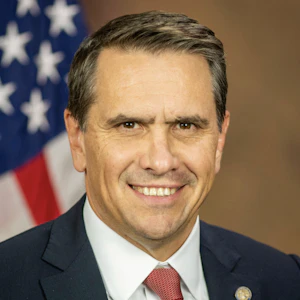
Todd Blanche
Todd Blanche
Biography of Deputy Attorney General Todd Blanche
The Honorable Todd Blanche is the 40th Deputy Attorney General of the United States, overseeing the work of the 115,000 dedicated employees who fulfill the Department of Justice’s mission at Main Justice, the FBI, DEA, U.S. Marshals, ATF, and 93 U.S. Attorney’s Offices.
Todd began his career at the Department where he served for over fifteen years in a variety of capacities, including as a contractor, a paralegal in the Criminal Division, and at the United States Attorney’s office for the Southern District of New York where he eventually became an AUSA and later a supervisor.
After leaving the Department, Todd worked as a criminal defense attorney that included representing President Donald Trump in three of the criminal cases brought against him in 2023 and 2024.
Following President Trump’s historic return to the White House, the President appointed Todd to work alongside Attorney General Pam Bondi to make America safe again. At the DOJ, Todd is working tirelessly to implement President Trump’s priorities that include confronting illegal protecting American businesses from fraud.
Todd has been married to his wonderful wife Kristine for nearly thirty years, is a father and grandfather.

Paul Atkins
Paul Atkins
Prior to returning to the SEC, Chairman Atkins was most recently chief executive of Patomak Global Partners, a company he founded in 2009. Chairman Atkins helped lead efforts to develop best practices for the digital asset sector. He served as an independent director and non-executive chairman of the board of BATS Global Markets, Inc. from 2012 to 2015.
Chairman Atkins was appointed by President George W. Bush to serve as a Commissioner of the SEC from 2002 to 2008. During his tenure, he advocated for transparency, consistency, and the use of cost-benefit analysis at the agency. Chairman Atkins also represented the SEC at meetings of the President’s Working Group on Financial Markets and the U.S.-EU Transatlantic Economic Council. From 2009 to 2010, he was appointed a member of the Congressional Oversight Panel for the Troubled Asset Relief Program.
Before serving as an SEC Commissioner, Chairman Atkins was a consultant on securities and investment management industry matters, especially regarding issues of strategy, regulatory compliance, risk management, new product development, and organizational control.
From 1990 to 1994, Chairman Atkins served on the staff of two chairmen of the SEC, Richard C. Breeden and Arthur Levitt, ultimately as chief of staff and counselor, respectively. He received the SEC’s 1992 Law and Policy Award for work regarding corporate governance matters.
Chairman Atkins began his career as a lawyer in New York, focusing on a wide range of corporate transactions for U.S. and foreign clients, including public and private securities offerings and mergers and acquisitions. He was resident for 2½ years in his firm's Paris office and admitted as conseil juridique in France.
A member of the New York and Florida bars, Chairman Atkins received his J.D. from Vanderbilt University School of Law in 1983 and was Senior Student Writing Editor of the Vanderbilt Law Review. He received his A.B., Phi Beta Kappa, from Wofford College in 1980.
Originally from Lillington, North Carolina, Chairman Atkins grew up in Tampa, Florida. He and his wife Sarah have three sons.

Mike Selig
Mike Selig
Chairman Selig brings to the role deep public and private sector experience working with a wide range of stakeholders across agriculture, energy, financial, and digital asset industries, which rely upon and operate in CFTC-regulated markets.
Prior to his leadership at the CFTC, Chairman Selig most recently served as chief counsel of the Securities and Exchange Commission’s Crypto Task Force and senior advisor to SEC Chairman Paul S. Atkins. In this role, Chairman Selig helped to develop a clear regulatory framework for digital asset securities markets, harmonize the SEC and CFTC regulatory regimes, modernize the agency’s rules to reflect new and emerging technologies, and put an end to regulation by enforcement. He also participated in the President’s Working Group on Digital Asset Markets and contributed to its report on “Strengthening American Leadership in Digital Financial Technology.”
Prior to government service, Chairman Selig was a partner at an international law firm, focusing on derivatives and securities regulatory matters. During his years in private practice, he represented a broad range of clients subject to regulation by the CFTC, including commercial end users, futures commission merchants, commodity trading advisors, swap dealers, designated contract markets, derivatives clearing organizations, and digital asset firms. Chairman Selig advised clients on compliance with the Commodity Exchange Act and the CFTC’s rules and regulations thereunder, including in connection with registration applications and obligations, enforcement matters, and complex transactions.
Chairman Selig earned his law degree from The George Washington University Law School and was articles editor of The George Washington Law Review. He received his undergraduate degree from Florida State University.

David Bailey
David Bailey

Eric Trump
Eric Trump
Mr. Trump also serves as Executive Vice President of The Trump Organization, where he oversees the global management and operations of the Trump family’s extensive real estate portfolio. This includes Trump Hotels, Trump Golf, commercial and residential real estate, Trump Estates, and Trump Winery. Known for his hands-on leadership and strong market instincts, he has played a key role in expanding the company’s presence across major U.S. and international markets.
A globally recognized business leader and public figure, Mr. Trump is a prominent advocate for Bitcoin and decentralized finance. He is a co-founder of World Liberty Financial, a decentralized finance (DeFi) platform, and serves on the Board of Advisors of Metaplanet, Japan’s largest corporate holder of Bitcoin.
Beyond his business activities, Mr. Trump has helped raise more than $50 million for St. Jude Children’s Research Hospital in the fight against pediatric cancer, a philanthropic mission he began at age 21.
Mr. Trump earned a degree in Finance and Management from Georgetown University. He currently resides in Florida with his wife, Lara, and their two children. He is also the author of Under Siege, his memoir published in October 2025.

Jack Mallers
Jack Mallers

Cynthia Lummis
Cynthia Lummis
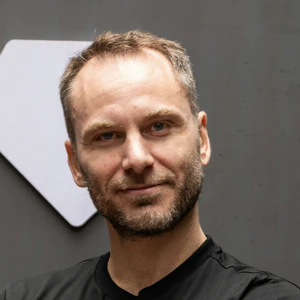
As the first-ever Chair of the Senate Banking Subcommittee on Digital Assets, Senator Lummis is the architect of the legislative framework shaping America's digital asset future. She introduced the landmark Lummis-Gillibrand Responsible Financial Innovation Act, the first comprehensive bipartisan crypto regulatory framework in Senate history. She co-authored the GENIUS Act — the first federal stablecoin law ever enacted — and introduced the BITCOIN Act, which would establish a U.S. strategic Bitcoin reserve of up to one million BTC. She is leading the Clarity Act, which will bring long-overdue regulatory certainty to the digital asset industry. She has also championed digital asset tax reform, including a de minimis exemption for small transactions and equal tax treatment for miners and stakers.
Known as Congress' "Crypto Queen," Senator Lummis represents Wyoming — a state she has helped build into one of the most digital asset-friendly regulatory environments in the nation. Before serving in the Senate, she served 14 years in the Wyoming Legislature, eight years as Wyoming State Treasurer, and eight years in the U.S. House. She is a three-time graduate of the University of Wyoming.
Her work represents a crucial bridge between traditional financial systems and the emerging digital economy, ensuring America leads the world in financial innovation while protecting the individual freedoms that define it.

Adam Back
Adam Back

Amy Oldenburg
Amy Oldenburg

David Marcus
David Marcus

Matt Schultz
Matt Schultz

Fred Thiel
Fred Thiel
Throughout his career, Mr. Thiel has consistently driven rapid growth and created substantial shareholder value. Prior to MARA, Mr. Thiel served as the CEO of two other public companies, Local Corporation (NASDAQ: LOCM) and Lantronix, Inc (NASDAQ: LTRX). He has successfully raised billions in equity and debt through private and public offerings, led companies through IPOs, executed high-value exits to strategic and financial acquirers, and implemented effective M&A and roll-up strategies.
Mr. Thiel attended the Stockholm School of Economics and executive classes at Harvard Business School, and is fluent in English, Spanish, Swedish, and French. Mr. Thiel is the Chairman of the Board for Oden Technology, Inc. and is active in Young Presidents’ Organization where he has led initiatives in both the FinTech and Technology Networks.
A recognized voice in the industry, Fred frequently shares his insights on energy and technology with major media outlets like Bloomberg TV, CNBC, and FOX Business, contributing to vital discussions about the future of these sectors.

Tim Draper
Tim Draper
He is a supporter and global thought leader for entrepreneurs everywhere, and is a leading spokesperson for Bitcoin and decentralization, having won the Bitcoin US Marshall’s auction in 2014, invested in over 50 crypto companies, and led investments in Coinbase, Ledger, Tezos, and Bancor, among others.

Afroman
Afroman