Heating Entrepreneurs: Productizing Waste Heat
Speakers/Moderators

Tyler Stevens
Tyler Stevens
Jason Goodman
Jason Goodman

Colin Sullivan
Colin Sullivan

Session
Overview
This Energy Stage panel examined how Bitcoin mining heat can be designed into real products rather than treated as waste. Tyler Stevens hosted Jason Goodman of Bathhouse, Colin Sullivan of MintGreen, and Joseph Ma of Superheat for a discussion on using miners as heat-producing appliances in commercial bathhouses, district energy systems, and residential water heaters.
The speakers focused on practical engineering problems: matching miner output to baseload and peak heat demand, controlling outlet temperatures, avoiding unnecessary heat dumping, and making systems installable by plumbers, engineers, and contractors. They also discussed how the economics differ when heat is the primary product and Bitcoin earnings function as a rebate or upside rather than the main revenue source.
A recurring theme was that heat reuse products need better controls, higher-temperature mining hardware, open source firmware, clearer building-code pathways, and more understanding from financiers and customers. The panel framed hash-rate heating as an energy systems problem with implications for Bitcoin mining resilience, distributed infrastructure, and commercially viable heat reuse.
Thank you very much.
Yeah. Closing out the conference with a good topic: productizing waste heat. I think last year we made a little bit of fun of the title. They still did not get it right this year. We do not really view the heat as waste. I think it is pretty much the core part of each of our businesses. We should touch on that at some point. But why do we not start with Jason introducing himself, then work our way down the line: who you are and how Bitcoin mining is part of your business.
Sounds good. Thanks, Tyler.
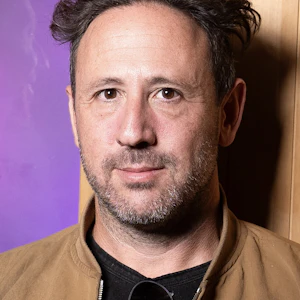
I am Jason. I am one of a couple of co-founders from Bathhouse, which is exactly what it sounds like. It is a bathhouse. We build, own, and operate large-scale facilities for sauna, cold plunge, that kind of thing. We do on-site mining, recapture the heat, and use that heat to heat our pools and some of our marble hammams.
We used to have electric heaters and electric boilers. We are energy neutral, so we are using the same amount of energy we always did. As we grew, we kept scaling that out. And just real quick before I pass the mic, how many sauna fans are in the audience? Okay, my people are here. See me after. I have a limited edition sauna hat for you guys.
I am Colin Sullivan. I am a Bitcoiner first. I am an inventor, I am an MBA, and I am the co-founder and CEO of MintGreen. MintGreen is a tech company focused on getting basically the highest temperature from Bitcoin miners in our proprietary products. We do largely commercial and industrial deployments, from 23,000 square feet to, for our digital boiler, upwards of three quarters of a million square feet.
Hey everybody, I am Joseph Ma. I am the co-founder of Superheat. What we do is create systems where we turn silicon chips into interesting infrastructure and appliances. Right now we are making a residential water heater called the Super One that uses a Bitcoin miner as its heat core.
It is fitting that this year the stage has been renamed from the Mining Stage to the Energy Stage. The big guys did it because they are all AI companies now, but for us it is actually fitting because all of our businesses are not mining operations in the sense that we control our systems to optimize for hash rate. They are energy systems, be it heat, demand response, load balancing, et cetera.
Colin, I want to jump right to you because I know you have been thinking a lot about this from an energy perspective, not just offloading the heat, but how these can be used in energy systems, specifically at the larger scale where you are plugging in. We were talking backstage about hotels and district energy. How are you thinking about this as an energy system? What does your product solve?
Starting at the beginning here, as far as the energy market and the energy industry, it waited 200 years for Bitcoin to be invented to become efficient. We were talking about stranded energy in the last panel, et cetera. But now it comes to heating. Heating is something like 55% of all energy use in the world. Burning an electron in a baseboard heater or a standard electric boiler has way less utility than being able to use it for something like protecting the Bitcoin network.
We find that we are able to create energy markets that would be impossible to mine in otherwise. We are dealing with customers potentially in Europe where their energy price is not competitive for normal mining. However, the gas price is also very high, and therefore there can be a savings. It makes sense even though it is not technically profitable. There are a whole bunch of markets you can get into otherwise, and it is very sticky. It is very good for Bitcoin’s resiliency, because if people get cold when you are not running miners, that is a big problem. If you can put them all over the world, including Europe, in a decentralized way, that really makes Bitcoin technology much more resilient.
Jason, energy, electric heat: when did it click for you and your team that a Bitcoin miner is just an electric boiler for a bathhouse that also makes money? Who did you have to convince along the way? Are you still having to convince people? Are there still people banging on the door in New York City saying, “Boogeyman, boogeyman, stop using all this mining?”
No. We actually got visited by Homeland Security out of the blue one day. My facility guys called me: “Jason, Homeland Security is here. You need to come downstairs.” I was in a panic. I was like, “Hey, I am Jason. What is going on, guys?” They said, “Oh, we want to see your Bitcoin miners. This is cool. How does this work?”
So we do not have to convince anybody. People are very curious. We get a lot of questions. There is a lot of interest in it. It is something that I am passionate about, and at the founder level we are passionate about it. We are both Bitcoiners and we care. But as a business, it is a very small part of what we do. It is an appliance for us. We have a huge tech stack for all these facilities, and this is a component.
I was nodding along with Colin because he was saying there are certain areas where energy is very expensive. Basically, we are that place. New York City is outrageously expensive. We must buy energy, obviously pretty large amounts of it. We are forced buyers from a monopoly, so we are going to buy energy at any price. You would never mine there otherwise.
As I went on a journey learning more about Bitcoin and going down that Bitcoin rabbit hole, I started looking at the mining industry, why it is so important to Bitcoin first, and then second, going, “Oh my God, they are dumping heat. Look at them dump all that heat.” They are trying to figure out how they can dump heat more efficiently. I said, “Well, I need heat.”
So we started off like, okay, let us test it on a really small scale. Let us drop one S19 into a small tank. Can we make hot water efficiently? Yes, we can.
And so you guys were doing the prototyping yourself, testing this out?
Oh yeah. Then we went into, okay, let us heat a couple pools with it. Can we do that? Wow, we are actually using slightly less energy than we were with electric pool heaters, because electric pool heaters are kind of pigs. They are only on or off, full on or full off.
When you are doing immersion, you are actually building up a reservoir of heat. There is almost a thermal battery component. We found we used slightly less energy than we did just using regular heaters. So it is great, and we are earning some Bitcoin, a little bit of sats streaming every day. It is like a rebate on our power. Then we kept scaling it up. What else can we heat with it? Are there better versions? We have been iterating on it.
Joseph, tell the audience a little bit more about your product and why you tackled, for your first product of many potentially from Superheat, the 50-gallon domestic hot water heater that you find in your utility closet at a residential home.
It all started when I built something out of my gaming PC because it was cold as hell when I first moved to New York City. I just put the radiator right in front of my hands, and that is how I started this idea. Then I talked to my co-founders, who have been in the mining space, and we thought about where people need heat most. It turns out it is the water heater, because no matter where you are, no matter what time it is, you are going to need showers.
Eventually we chose the residential model. We chose to go in a really distributed way because transporting electricity is easy, but transporting heat is hard. There is a lot of loss in transporting heat. We went in the distributed way so we can have the compute be where the heat demand is, and that is why we decided to do the residential water heater.
You are trying something different, Colin, with district energy and district heating, correct? What challenges arise when you try to tackle that problem versus putting a box that makes heat and Bitcoin in every individual home?
There are a few challenges. The impetus for the development of our technology was district energy. That is why we are really pushing the highest temperatures possible. Presently our top-end temperature is 185 degrees Fahrenheit, 85 degrees Celsius. We are also looking at developing our own boards to push that even further. They do not want us to have to step up or polish our heat. They want the heat to come out of the system and satisfy the needs they have.
And district heating just happens to have high temperature thresholds.
These are low-temperature systems. They are not steam systems. You could also pair them with a steam system and maybe preheat the heat depending on how much they are able to recover on condensate. But for low-temperature systems, they can go anywhere from about 65 C to about 105 C. I know I am a disappointing Canadian with the metric system. That is quite hot, above microbial temperatures, to slightly higher than boiling.
For our technology, the holy grail is actually to be able to create some level of steam or boil water. Every degree we can go higher with stability opens up new technology pairings and new industries.
For you, Jason, the temperature is already warm enough, right? These are saunas. What kind of challenges did you have to solve, temperature perhaps not being one of them? Maybe it was. But what else went wrong?
One of the big things with this is you have baseloads and peak loads. There are times where you need a lot more heat than other times, and there is usually some kind of minimum baseload. So what are you doing? Are you mining to your baseload and then using another source for peak? Are you mining to peak and then you have extra heat? How are you doing that, and how are you thinking about that?
We addressed it two different ways. The first thing we did is we said we want to do all the heat for the pools with Bitcoin mining, and the pools are fairly stable, so it is kind of an easy target. But there are times where we need to dump and refill a pool. Then you need a lot more heat. We scaled it to be able to dump all the pools, refill them in four hours, and go back to temperature.
Then, as a heat sink, we tied it into our domestic hot water heater. So I am nodding along with Colin. We can dump to it as a pre-warmer for all the domestic hot water. It is the last stop on the train as the loop is coming back to the miners.
The third thing we did that was very easy, compared with looking at batteries and that kind of stuff, is we said, okay, we need some basic firmware where the hash rate can react to the temperature in the return. If it is 150, I want these five miners to go to half speed, which lowers the heat if it is hotter. If it is low, we want all of you to overclock. In that way, we do not need to store. We do not need to look for storage solutions. We do not need to over-mine and dump extra heat just to deal with peak. We can scale into any kind of peak demand.
You are telling a bigger story here too, which is really interesting. As you said, your pain point is energy price, and you are helping that. He is not going to have dry coolers. In fact, when the energy price is high, the use rate of the energy is going to be near 100%. We have customers where they can mine profitably anyway, so they are like, “We will build a little bigger. We will blow off some of the heat.” But it is actually more sustainable in more expensive environments.
Your scenario is interesting, Jason, because you have a large business that uses a lot of heat. You have some resolution with multiple miners. Joseph’s system perhaps does not have that. You do not have ten miners inside a 50-gallon tank. But you bring up an interesting technical challenge, which is you do not want the dry cooler because you do not want to mine when you do not need the heat. This whole operation is a sunk cost anyway. It is not a profitable business endeavor by itself. I am turning on the machines as an energy system when I want heat. They happen to give me a rebate in some Bitcoin when I do that.
You are not just going to dump excess heat. Dumping heat is really like a cop-out to not be able to control the miners. There are a couple of products around, and I have seen them at my office, where they are digital boilers but come with a dry cooler. They sell it to you as a feature, when really it exists because the control is not there to dial the throttle back on the machine to the exact heat output I want.
It has been challenging in some sense to communicate that I am not running a mining operation; I am running an energy system. I am not controlling for a certain hash rate. I am controlling for a certain wattage, perhaps, or a certain outlet temperature.
How are you solving this, Joseph? Do you want to touch on some of the challenges you have had to face when you are dealing with only one or perhaps two miners in a smaller system overall?
The problem is just as you described. I am also going to use Celsius because Fahrenheit is confusing. For example, we set the target temperature of our water heaters to 60, and we have it start again at 40, because we cannot do gradual control of the power of the miners. It is either on or off. We have been tweaking this: when do we restart so that we can balance the mining output and the temperature of the water? But it is still kind of hard.
What we decided to do was basically have the user decide when they want the miner to start again. Based on how hot they need the water to be, they can decide on the restart temperature.
You looked like you had some thoughts, Colin. Did you want to chime in on this?
On what Joseph said, not particularly. That makes sense.
On the controllability. Has this been a problem for you with MintGreen as well?
You certainly need control. Our system has a lot of stuff going on. If you look at the miners themselves, they have discrete temperature sensors for each core. They have discrete temperature board. We need to add them for each level of our system within each segment of the tank. Then we are looking at the return temperature for the heat exchanger, the supply temperature for the heat exchanger, and the flow rate.
We are trying to create a specific temperature for our customers, which is largely driven by thermodynamics and fluid dynamics. You are basically throttling a pump, sizing it correctly, and sizing the piping correctly to get them the same amount of energy at a desired temperature.
I see. But it is still full bore with the miner when they are on, and it is more of a mechanical problem to solve for the outlet temperature you are targeting.
You want to size it on the front end generally. Again, it is up to the customer. If they are in a situation where they want to do more than, say, a baseload of 30%, then you have to look at alternatives to get rid of that heat. Otherwise we need to have the ability to remove some of that heat, or again, we can throttle the system as well.
I am really glad the baseload versus peak load was brought up, Jason, because effectively what I realized quickly when trying to heat homes and businesses with Bitcoin miners is that heating systems are sized for peak load: the coldest day. It is like cover my ass, right? I do not want to not be warm when it is minus 20 at 2 a.m. on December 25th or whatever it is.
But if you size your system for your business or your home that way with Bitcoin miners, you buy 20 Bitcoin miners and 19 of them only run one day a year. It is a complete waste of money. Do you believe the future is these hybrid setups, or are we just targeting baseload, and then there is another piece of equipment for peak load? If you were to design another bathhouse from scratch, how would you set it up?
For a residential unit, I think you would design for baseload and then have some last-mile secondary energy thing to get you to the coldest day. That is mostly also a CapEx issue. For residential, to your point, it is a CapEx thing. It is not that it is more complicated to design for peak, but why would you spend, if you are a homeowner, an extra $15,000 on mining equipment just to have it for that cold day?
For us, being a commercial operator, we are really concerned with stability. These pools need to be hot when we open them. We open in the morning at 8 a.m., and the customers are coming in and they want hot pools. My job is to make sure that happens, and I care a lot about that.
We over-engineer all the time, and we want to have robust equipment. We have a slightly different use case than a home user. We design for peak, but we do not run it at peak because we do not want to create waste. But we have that horsepower there, and we do not mind making that CapEx investment to have that power.
If it were my house, though, I would probably get most of the way there, maybe have a little storage like a hot water storage tank, and then have some inexpensive last-mile boost for extreme uses or something like that.
For your customers, Colin, how are you sizing these systems?
It depends on a few things. We kind of run two business models. If we can get a reasonable net price, basically we would have an offtake agreement where we would be selling the heat back to them. We are generally going to be sizing for baseload, depending on the energy cost. But the net energy cost is what we negotiate in the deal. It depends on the local energy costs, and it depends on their amount of usage.
On the other side, if the customer is going to own it and we are going to manage it, it is entirely up to them how much they are going to utilize, if they are going to get above baseload or even to peak load.
We have been in conversations with the mayor of Vancouver, Ken Sim, who is a big supporter of what we are doing here and Bitcoin in general. There is an outdoor pool that takes a ton of heat, but the discussion is actually around peak load for this. They want to maintain the pool. They have it run almost the entire year in Canada. Vancouver is not cold for Canada, but it is still cold.
How it works is there is a district energy system very near it. In the shoulder season, we could tie into them and supply the city the heat, in which case it is actually more profitable for the end user than even heating their own pool, because there is a value to low-carbon heating in district energy systems. In my jurisdiction, it is upwards of 12 cents a kilowatt-hour for the heat itself. They are reselling your heat, and there is going to be some margin on that.
That is also why “productizing waste heat” is kind of a pain point for us, because it is not wasted. Waste heat is a massive data center that just happens to be somewhere, and they are trying to scrape some heat off of it. It is very low value. If you are designing specifically for a system, it is high value, so it is important to defend that price, we feel.
Well said. I am glad you said that, because all of us are building businesses specifically integrating Bitcoin mining into their operations.
Joseph, I am curious to talk about sizing for a water heater. You can already tell I am getting confused thinking about it, because a water heater in my mind must be challenging. It is a closed system. It is a 50-gallon tank. Eventually you have to shut it off because it cannot take any more heat. Does the miner start to struggle? What kind of challenges are you facing there? Also, how do you size for that? If you have an insulated box and you are trying to heat it up, you could heat it up with a small heater or a big heater, and it might just change how quickly it heats up. This notion of recovery time for a domestic hot water heater, could you talk about that?
First of all, we chose the 50 gallon because it is pretty much the most common size for a residential unit. There are definitely challenges on how to manage the heat and how to make sure it keeps up at a normal rate. I think the biggest challenge was that when there is a lot of demand, like we have discussed here, when there is peak demand, the miner only outputs so much heat. We want users to have heat on demand.
What we did, which is not good from a purity point of view, is we have an electric coil in there that can assist, which is optional for you to turn on.
I think that ties into what we were just talking about, which is baseload and peak load. Perhaps for CapEx for a residential system, that is the best way to do it. I think Heatbit did something similar with the Heatbit Trio.
I want to transition now from technical challenges to people challenges. Let us start back with you, Joseph. What I found is that people do not buy their own hot water heater and plug it in themselves. There is an expert that they call. He needs to be familiar and aware of your system. How have you guys tried to tackle that?
One of the design philosophies we have is to make a water heater first, not a miner first. One of the challenges is, like you said, people do not shop for their own water heaters. I have talked to people who do not really know where their water heater is in their house.
We have been working with a lot of plumbers. We have been talking to a lot of MEP contractors to make sure that our unit installs like a regular water heater. When plumbers get our unit, they look at a very simple manual and know how to install it. There is no need to massively change your plumbing or massively change your electrics.
That is the first thing: make it very easy to install. The other is maintenance. It is very easy for a regular water heater to change out the heating coil or something, but we need to change out a miner if something goes wrong. We have also made that very simple. You can see a picture on our website where there are four thumbscrews. You take off two quick disconnects, take out the miner, and put in a new one. That is what we designed, and I think that is very important for maintenance and installation.
Any challenges you are facing in that domain, Colin, with your systems?
I would say that challenge is equal to the technical challenges we face, to be honest. It took us a few years to get the technology to a level where it was rugged enough and high enough temperature to suit our customers. But then we need the sales tools that make sense, and you are dealing with disparate industries.
We have had pharma come up to us. Obviously we are talking about heating pools and district energy, but each of these areas has a very specific set of concerns. Specifically, I think the mining industry in general is not very good at projecting earnings.
We have created a tool, and we have found it quite effective to reduce it down to a single number that gives you a percentile of the health of the mining market. If you will indulge me, basically take a 200-week average of hash price and scale it to how much the ASICs are improving over that time, and you get a health score. Right now we are at the 67th percentile. It is not great.
So we say to our customers, you can expect some regression to this amount. This is what we see, and maybe up here to make up for that in the future. We have to give them an agnostic feel of where they are. Because if you go plus 50%, minus 50%, if you are a boat in a harbor that is three feet from shore and you are modeling for being in the street, it does not really make sense.
Showing them that in a way that makes sense, as well as understanding their discrete businesses and having partners in other businesses that are able to help you and sell your product to other groups, is important. The pool industry has specific concerns, and they have their own networks of selling heaters. We have to work with those groups.
So this is an internal metric you guys coined to help call the score? It is through the sales process, something to help them understand how it compares to an alternative, or something to monitor along the way as they are part and user of your system?
It is to, in a fair and agnostic way, predict how they may do relative to how the market has looked over a period of time. It is disingenuous for me to show a bad amount of money they are going to be making, just as much as if we are in a bull market and I am saying, “Okay, you are going to make gobs of cash.” That is not realistic either. We give them a thermometer on that: here are our expectations. We have found it has been quite effective. We will put that on our website and let everyone use it. I think it is very helpful in smoothing those curves out and helping people understand.
This is actually a very interesting topic, and I want to tie Joseph in here because I am curious. When people ask, “How much money does this water heater make?” I want to hear you chime in on that. Then I am going to move back to Jason about the people challenges with your system and solving it yourself.
Joseph, how do you describe the economics? How are you marketing this? I saw you guys had an awesome launch. There was a CES award, if I am correct. What kind of questions do you keep having to answer?
Two questions mainly. The first one is: how much can I earn? What is the return on investment? To answer that, we created a little calculator on our website where it models the current network hash rate and our device hash rate, and basically does a rough calculation based on their location and electricity price. They can even put in their own electricity price and the Bitcoin price they want to use, or we use the default current Bitcoin price. They get a rough understanding of how much they will earn per unit per year.
The other question I get a lot is: what happens when Bitcoin drops? Does this affect my earnings? That question is harder because you are facing a lot of non-Bitcoin people. The answer is that we treat heat as the product, so the Bitcoin just becomes what I call a happy byproduct. It is a net plus. It is an upside. Even when Bitcoin goes to zero, that just means you get zero upside, but you are still using the same electricity to produce the same amount of heat. Volatility does not really matter to us that much.
As a tangent, what we are effectively describing is that we solved the security budget for Bitcoin mining, because I will mine at zero-dollar hash price.
Jason, on the people challenges, I am sure you faced quite a lot. I am sure you became friends with your plumber, like you were telling me, and your maintenance guys. You have a full-time operation. It is a real business. You have guys on staff. What kind of challenges did you have to overcome, learn, and tackle together? And if you were to spin up another bathhouse heated by hash rate, what kind of stuff do you have to distill down and teach another facilities guy at a new place?
We use really great engineers, and for some reason this turns them into chimpanzees every time. I am like, “You do not need to curl up in the fetal position, guys. We can do this.” I am like, “It is a hot water heater. It has cold water in and hot water out, and it needs electricity going to it. We will do the rest.”
But they are like, “How many do we need?” They really have a hard time going from hash rate into heat output. It mystifies them and makes them want to pull the covers over their head and cry like little babies. My plumber, on the other hand, is like, “Yeah, let us look at this loop. We do not need this. Get that out of here. We are going to save 10%. Get this pump out of here.”
So I hold the engineers’ hands, and I love them. I do not mean to just criticize them, but they struggle with it a little bit. They want to pick an appliance.
It is analysis paralysis.
Yes. They want to get a cut sheet and say, “This is what we are doing.” They always have to translate hash power into the peak load of a pool. We have ways of thinking about this stuff. I am always telling people it is not complicated. It is a hot water heater. There is a delta T. We can do this. My plumber is like, “This is cool. Let us see if we can make it simpler. We will save ten grand if we take this elbow out.” Usually what I do is hold their hands, we get through it together, and then my plumber takes it, rips the plans apart, and we build.
Gentlemen, we only have a couple minutes left here. I want to close out by offering each of you a chance to describe, perhaps for some mining stack builders in the audience, or anyone curious, or any supplier, manufacturer, or anyone watching online: what would solve a big problem for your business in the realm of hash rate heating? What would be helpful to you? If you could do this one thing, if that were solved, if someone figured that out, let us start with Jason and then work our way down.
If there were one solve, auto-tuning hydros would be great. Anything we can do to plug and play the equipment is amazing. Also, anything that pushes delta T, like the highest safe temperature you could have on the outlet of the miners. With miners, maybe we can get to 170. We found that we start getting failure above 150. We want to push that. The farther we push that, the more efficient we are and the more you can run.
Those are the two big things. There might be solutions out there already that we are not aware of, or coming down the pipeline. There is a lot of new open source firmware coming out. Those are the two big things for me: auto-tuning, so temperature goes up, hash goes down, and that happens automatically.
You mean you do not drive your car by going full throttle, full brake?
That is basically what was happening.
You are in New York, right?
Yeah. In New York, yes. You have somebody jumping out all the time, so you just get used to it.
Colin, what about you?
On the technical side, we are trying to push very high temperatures. We are starting the process of developing our own boards and getting ASICs to do that, so that is a challenge we are working on. Although I would say there is a ton of fit for us at our current temperature.
Being truly a heating company that is using Bitcoin, it would be nice if credit facilities and banks would treat you as such. When we are trying to do these offtake agreements, it can be very challenging to get them financed, even though we have the numbers for them. Our bank would not even give us a credit card. So it usually has to be some kind of debt or something else, which can work because the models make sense, but you are squeezing your customer a bit on that.
Joseph, any quick last thoughts on what would help solve problems for your product?
First of all, open source firmware to help control the system better. Second, we can work with building codes and stuff like that to make sure that when people install these, they are not going to get insurance problems.
Being taken seriously. Gentlemen, I agree an open source mining stack is something I am hugely a part of. I have to give a quick shout out to the 256 Foundation, which actually just got $100,000 from the foundation 30 minutes ago. They are building an open source firmware pool, hash board reference design, and control board reference design that ultimately should make all of these products and business models much more successful and easier to manifest.
Thank you all very much. It has been an honor to be up here with these gentlemen. Find us backstage if you want to continue the conversation.
Thank you. Thanks, everybody.
Thank you guys. Thank you.
Similar
Sessions
Decentralizing Bitcoin: The Solo Mining Movement
Tyler Stevens
Tyler Stevens

WantClue
WantClue


Decentralizing Bitcoin: The Solo Mining Movement
Speakers/Moderators
Tyler Stevens
Tyler Stevens
WantClue
WantClue
Heating Entrepreneurs: Productizing Waste Heat
Tyler Stevens
Tyler Stevens
Jason Goodman
Jason Goodman
Colin Sullivan
Colin Sullivan
Heating Entrepreneurs: Productizing Waste Heat
Speakers/Moderators
Tyler Stevens
Tyler Stevens
Jason Goodman
Jason Goodman
Colin Sullivan
Colin Sullivan
Other
Speakers
Michael Saylor
Michael Saylor
Todd Blanche
Todd Blanche
Biography of Deputy Attorney General Todd Blanche
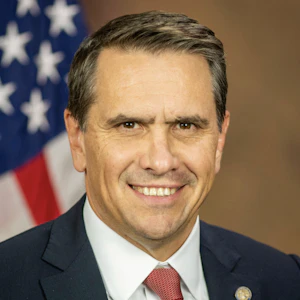
The Honorable Todd Blanche is the 40th Deputy Attorney General of the United States, overseeing the work of the 115,000 dedicated employees who fulfill the Department of Justice’s mission at Main Justice, the FBI, DEA, U.S. Marshals, ATF, and 93 U.S. Attorney’s Offices.
Todd began his career at the Department where he served for over fifteen years in a variety of capacities, including as a contractor, a paralegal in the Criminal Division, and at the United States Attorney’s office for the Southern District of New York where he eventually became an AUSA and later a supervisor.
After leaving the Department, Todd worked as a criminal defense attorney that included representing President Donald Trump in three of the criminal cases brought against him in 2023 and 2024.
Following President Trump’s historic return to the White House, the President appointed Todd to work alongside Attorney General Pam Bondi to make America safe again. At the DOJ, Todd is working tirelessly to implement President Trump’s priorities that include confronting illegal protecting American businesses from fraud.
Todd has been married to his wonderful wife Kristine for nearly thirty years, is a father and grandfather.

Paul Atkins
Paul Atkins
Prior to returning to the SEC, Chairman Atkins was most recently chief executive of Patomak Global Partners, a company he founded in 2009. Chairman Atkins helped lead efforts to develop best practices for the digital asset sector. He served as an independent director and non-executive chairman of the board of BATS Global Markets, Inc. from 2012 to 2015.
Chairman Atkins was appointed by President George W. Bush to serve as a Commissioner of the SEC from 2002 to 2008. During his tenure, he advocated for transparency, consistency, and the use of cost-benefit analysis at the agency. Chairman Atkins also represented the SEC at meetings of the President’s Working Group on Financial Markets and the U.S.-EU Transatlantic Economic Council. From 2009 to 2010, he was appointed a member of the Congressional Oversight Panel for the Troubled Asset Relief Program.
Before serving as an SEC Commissioner, Chairman Atkins was a consultant on securities and investment management industry matters, especially regarding issues of strategy, regulatory compliance, risk management, new product development, and organizational control.
From 1990 to 1994, Chairman Atkins served on the staff of two chairmen of the SEC, Richard C. Breeden and Arthur Levitt, ultimately as chief of staff and counselor, respectively. He received the SEC’s 1992 Law and Policy Award for work regarding corporate governance matters.
Chairman Atkins began his career as a lawyer in New York, focusing on a wide range of corporate transactions for U.S. and foreign clients, including public and private securities offerings and mergers and acquisitions. He was resident for 2½ years in his firm's Paris office and admitted as conseil juridique in France.
A member of the New York and Florida bars, Chairman Atkins received his J.D. from Vanderbilt University School of Law in 1983 and was Senior Student Writing Editor of the Vanderbilt Law Review. He received his A.B., Phi Beta Kappa, from Wofford College in 1980.
Originally from Lillington, North Carolina, Chairman Atkins grew up in Tampa, Florida. He and his wife Sarah have three sons.

Mike Selig
Mike Selig
Chairman Selig brings to the role deep public and private sector experience working with a wide range of stakeholders across agriculture, energy, financial, and digital asset industries, which rely upon and operate in CFTC-regulated markets.
Prior to his leadership at the CFTC, Chairman Selig most recently served as chief counsel of the Securities and Exchange Commission’s Crypto Task Force and senior advisor to SEC Chairman Paul S. Atkins. In this role, Chairman Selig helped to develop a clear regulatory framework for digital asset securities markets, harmonize the SEC and CFTC regulatory regimes, modernize the agency’s rules to reflect new and emerging technologies, and put an end to regulation by enforcement. He also participated in the President’s Working Group on Digital Asset Markets and contributed to its report on “Strengthening American Leadership in Digital Financial Technology.”
Prior to government service, Chairman Selig was a partner at an international law firm, focusing on derivatives and securities regulatory matters. During his years in private practice, he represented a broad range of clients subject to regulation by the CFTC, including commercial end users, futures commission merchants, commodity trading advisors, swap dealers, designated contract markets, derivatives clearing organizations, and digital asset firms. Chairman Selig advised clients on compliance with the Commodity Exchange Act and the CFTC’s rules and regulations thereunder, including in connection with registration applications and obligations, enforcement matters, and complex transactions.
Chairman Selig earned his law degree from The George Washington University Law School and was articles editor of The George Washington Law Review. He received his undergraduate degree from Florida State University.

David Bailey
David Bailey

Eric Trump
Eric Trump
Mr. Trump also serves as Executive Vice President of The Trump Organization, where he oversees the global management and operations of the Trump family’s extensive real estate portfolio. This includes Trump Hotels, Trump Golf, commercial and residential real estate, Trump Estates, and Trump Winery. Known for his hands-on leadership and strong market instincts, he has played a key role in expanding the company’s presence across major U.S. and international markets.
A globally recognized business leader and public figure, Mr. Trump is a prominent advocate for Bitcoin and decentralized finance. He is a co-founder of World Liberty Financial, a decentralized finance (DeFi) platform, and serves on the Board of Advisors of Metaplanet, Japan’s largest corporate holder of Bitcoin.
Beyond his business activities, Mr. Trump has helped raise more than $50 million for St. Jude Children’s Research Hospital in the fight against pediatric cancer, a philanthropic mission he began at age 21.
Mr. Trump earned a degree in Finance and Management from Georgetown University. He currently resides in Florida with his wife, Lara, and their two children. He is also the author of Under Siege, his memoir published in October 2025.

Jack Mallers
Jack Mallers

Cynthia Lummis
Cynthia Lummis
As the first-ever Chair of the Senate Banking Subcommittee on Digital Assets, Senator Lummis is the architect of the legislative framework shaping America's digital asset future. She introduced the landmark Lummis-Gillibrand Responsible Financial Innovation Act, the first comprehensive bipartisan crypto regulatory framework in Senate history. She co-authored the GENIUS Act — the first federal stablecoin law ever enacted — and introduced the BITCOIN Act, which would establish a U.S. strategic Bitcoin reserve of up to one million BTC. She is leading the Clarity Act, which will bring long-overdue regulatory certainty to the digital asset industry. She has also championed digital asset tax reform, including a de minimis exemption for small transactions and equal tax treatment for miners and stakers.
Known as Congress' "Crypto Queen," Senator Lummis represents Wyoming — a state she has helped build into one of the most digital asset-friendly regulatory environments in the nation. Before serving in the Senate, she served 14 years in the Wyoming Legislature, eight years as Wyoming State Treasurer, and eight years in the U.S. House. She is a three-time graduate of the University of Wyoming.
Her work represents a crucial bridge between traditional financial systems and the emerging digital economy, ensuring America leads the world in financial innovation while protecting the individual freedoms that define it.

Adam Back
Adam Back

Amy Oldenburg
Amy Oldenburg

David Marcus
David Marcus

Matt Schultz
Matt Schultz

Fred Thiel
Fred Thiel
Throughout his career, Mr. Thiel has consistently driven rapid growth and created substantial shareholder value. Prior to MARA, Mr. Thiel served as the CEO of two other public companies, Local Corporation (NASDAQ: LOCM) and Lantronix, Inc (NASDAQ: LTRX). He has successfully raised billions in equity and debt through private and public offerings, led companies through IPOs, executed high-value exits to strategic and financial acquirers, and implemented effective M&A and roll-up strategies.
Mr. Thiel attended the Stockholm School of Economics and executive classes at Harvard Business School, and is fluent in English, Spanish, Swedish, and French. Mr. Thiel is the Chairman of the Board for Oden Technology, Inc. and is active in Young Presidents’ Organization where he has led initiatives in both the FinTech and Technology Networks.
A recognized voice in the industry, Fred frequently shares his insights on energy and technology with major media outlets like Bloomberg TV, CNBC, and FOX Business, contributing to vital discussions about the future of these sectors.
Tim Draper
Tim Draper
He is a supporter and global thought leader for entrepreneurs everywhere, and is a leading spokesperson for Bitcoin and decentralization, having won the Bitcoin US Marshall’s auction in 2014, invested in over 50 crypto companies, and led investments in Coinbase, Ledger, Tezos, and Bancor, among others.

Afroman
Afroman