Taxes 1099-DA: What You Need to Know
Speakers/Moderators

Sasha Hodder
Sasha Hodder
Previously, Sasha served as Senior Counsel at Exodus, supporting legal strategy for a $75M tokenized Reg A+ public offering. She teaches Florida Bar CLE courses on crypto law, hosts the Sunset Circuit Podcast, and organizes the Bitcoin Race (Fastest Runner in Bitcoin).

Andrew Gordon
Andrew Gordon
Managing Attorney, Gordon Law Group
Founder, Main Street Crypto PAC
Andrew B. Gordon is the Managing Attorney of Gordon Law Group, a nationally recognized leader in cryptocurrency taxation, IRS controversy, and digital asset compliance. A rare dual-qualified Attorney and Certified Public Accountant, Andrew combines deep legal insight with financial acumen to help clients navigate the complex intersection of tax law, blockchain technology, and regulatory policy.
Andrew earned his B.A. and Master’s Degree in Accounting from the University of Illinois and his Juris Doctor from Chicago-Kent College of Law. During law school, he volunteered at the Low-Income Taxpayer Clinic, gaining firsthand experience advocating for taxpayers in disputes with the IRS. He later clerked for the IRS Office of Chief Counsel, where he assisted in litigation and even chaired an IRS fraud trial; an experience that gave him unique insight into how the IRS builds its cases.
Today, Andrew is widely regarded as one of the nation’s leading authorities on cryptocurrency taxation and policy. He advises individual investors, crypto funds, blockchain startups, and Fortune 500 companies on issues ranging from tax reporting and audits to regulatory compliance and strategic planning. Under his leadership, Gordon Law Group has become a trusted resource for high-stakes IRS defense and crypto-related legal matters nationwide.
Beyond his practice, Andrew is the founder of Main Street Crypto PAC, a nonpartisan organization dedicated to advancing pro-innovation, practical cryptocurrency regulation in Washington, D.C. He frequently meets with lawmakers and regulators to advocate for policies that balance consumer protection with technological progress.
Andrew’s commitment to his clients is unwavering. Known for his strategic, client-first approach, he has helped save taxpayers millions of dollars while providing clarity and peace of mind in an increasingly complex tax landscape.
He is an active member of the Chicago Bar Association, Illinois State Bar Association, and multiple professional and community organizations. Andrew also speaks regularly at industry conferences and has been featured in national media outlets for his thought leadership in crypto tax and regulatory matters.

Jordan Guess
Jordan Guess
Jordan operates at the intersection of Bitcoin, AI, and professional accounting as a practitioner who builds and ships the tools his own firm runs on daily. He speaks on Bitcoin tax and compliance, AI adoption for CPAs, and what it takes to build real infrastructure for a Bitcoin-native economy.

Vick Bathija
Vick Bathija
Recognized as an early leader in crypto accounting, Vick was featured in Forbes in 2018 for his work in digital asset taxation. He holds degrees in Accounting and Taxation from Hofstra University.
Session
Overview
Sasha Hodder moderated a discussion with Vick Bathija, Jordan Guess, and Andrew Gordon on Form 1099-DA and how new crypto tax reporting rules affect Bitcoin users, investors, businesses, and exchanges. The panel explained that the form is intended to bring broker-style reporting to digital assets, but early versions often report gross proceeds without reliable cost basis.
A central theme was the difficulty of reconciling Bitcoin and crypto activity across exchanges, wallets, cold storage, mining, business payments, and DeFi. The speakers emphasized that taxpayers still need to track transaction history, cost basis, transfers, and taxable events carefully, even when exchanges issue 1099-DA forms.
The conversation also covered IRS notices, audits, John Doe summonses, amended returns, corrected exchange forms, and the risk of mismatches between taxpayer records and IRS records. The panelists generally viewed 1099-DA as a long-term move toward clearer reporting, but one that is creating short-term compliance challenges for both taxpayers and professionals.
Hello everyone. My name is Sasha Hodder. I'm an attorney with Hodder Law Firm, and today we're here to talk about Form 1099-DA. Taxes got a lot more interesting and complicated this year with this form. Our panel of experts is going to discuss what the form is, who it applies to, and what it means for you and your business.
We'll start with some brief introductions. You can just go down the panel, please.
Hi everyone. My name is Vick. I'm the owner of Commerce CPA. We're based in New York City. I used to work at EY in the hedge fund tax department, and I started my own firm about ten years ago. We have a couple hundred clients in the space between crypto and traditional finance, and we find that crypto is a part of people's portfolios. We're able to manage both the crypto and non-crypto pieces and provide expertise in tax planning around those areas. We've seen several 1099-DAs, and I'm looking forward to helping you and answering any questions.
Good afternoon. My name is Jordan Guess. I run a CPA firm called Satoshi Pacioli. We're based out of Nashville and we have an office in Louisville, Kentucky as well. I also am a co-founder of a Bitcoin accounting and tax software called Bitment. I convinced my software engineer co-founder to build it for us because we were tired of using QuickBooks alongside CoinTracker. I'm excited to dig into the 1099-DA form reporting today.
Hello everyone. My name is Andrew Gordon. I'm an attorney and CPA, and our practice helps crypto investors report crypto on their taxes. On the law side, we also help people when things can go wrong, including audits and criminal investigations. In the last year or so, I've been in D.C. advocating for crypto tax changes because crypto taxes, quite frankly, are broken. They need to be fixed, and I'm fighting to do that.
Thank you. For the first question, let's just start with a very basic overview. What is the 1099-DA?
The 1099-DA is a 1099 issued usually by exchanges. It breaks down whether cost basis has been reported to the IRS or not. In my experience, clients are issued those, and sometimes they're accurate and sometimes they're not, because crypto exchanges don't always know the original cost basis from when the client bought it.
If they bought it on Coinbase and transferred it to Gemini and then have proceeds at Gemini, Gemini can give a 1099-DA for the gross proceeds, but they won't know the cost basis. Sometimes it creates a mess for the client because they'll have a large potential capital gain. We go in and reconcile the crypto between the different exchanges and wallets to give them an accurate cost basis.
So it's like a double-edged sword in a way. I know they're trying to make it more compliant, but it's also causing a lot of hiccups.
If I may add to that, let's talk about why we're actually here talking about 1099-DAs. Crypto taxes are unlike anything else in the modern financial world. When you trade stocks or have investments, the brokerage issues you a beautiful form called a 1099-B, and it has everything you need to report on your taxes. It has your cost basis, your sales price, gains, and losses. You take that form, give it to your accountant, plug it into TurboTax, and away you go. You don't have to sit there calculating the gains and losses on every transaction.
But with crypto, it's not that way. For the last decade plus, it's been on us as individual investors to report on our own. If we get it wrong, then we're facing audits or even worse. Finally, with the government's infinite wisdom, they decided we need to have some sort of form so there is more information on the actual trades and, hopefully over time, so it will be easier for people to report on their taxes.
Starting with tax year 2025, with the tax form issued in 2026, the IRS is starting to require exchanges and brokers to take some of that responsibility off all of us and generate these forms so that we can have an easier time preparing our taxes. But as we'll talk about, it's not that simple this year. As mentioned, they're just reporting sales proceeds. What the IRS is getting is a very limited picture of what's actually happening. They're seeing what you sold it for, but they don't know your gains or cost basis. This is going to cause a lot of problems, and it already is causing a lot of problems.
It's a good thing that we're moving toward a system where it's not on all of us to have to do these calculations, but in the meantime we're going to feel a little bit of pain because the form just isn't all that it needs to be yet.
The only thing I would add to both of those really good explanations is that the exchanges, over the course of the last year or so, have been going to all of their customers and saying, please give us your cost basis data. As anyone in this space knows, if you've been in it long enough, that is not the easiest thing to track down, especially if you started buying in one place, maybe you mined Bitcoin, or maybe you earned Bitcoin in your small business.
All of those cost basis events create a lot or a bunch of different lots. Then you might batch transfer a bunch of lots onto an exchange to sell it, buy a home, or cover business operating expenses. Then you're having to go through and actually assign those lots. To Andrew's point, generally Fidelity or Schwab would do this for you if you had Apple stock or Tesla stock. But now the IRS is looking at all of us and saying you need to become an expert in tracking transactions and making sure that you report that to us correctly.
The very last thing I would say is the cost basis method. I'm sure we'll get into that as well. You could give them cost basis data, but by default they are going to use FIFO. Sometimes that's not the most optimal tax strategy for reporting cost basis. So, yeah, interesting times.
Can you go over who is required to issue these 1099-DAs? I know there were several years of debate over who is going to be considered an actual broker. Where did that line fall, and whose responsibility is it to issue these?
In my experience, I think all that responsibility falls at the exchange level. If I were to guess, it's probably U.S.-based exchanges like Coinbase and Gemini. I might have seen a Kraken, but I'm not sure. I think it falls at the responsibility of the exchange for sure. Wallets aren't issuing them, even if wallets are doing DeFi. If you use a MetaMask, I think it's really at the U.S.-regulated exchange level.
A couple years ago, there was a law passed that required brokers to start issuing this form. At first there was a lot of ambiguity as to who is a broker. Is that just a U.S. centralized exchange like Coinbase or Kraken, or is it also things like DeFi, like Uniswap for instance?
At first, the definition of broker was quite expansive. It would have required even DeFi platforms to issue these forms as well. Fortunately, with the new administration, one of the first acts that occurred was a change to this law so that it only applied to U.S. brokers, U.S. crypto exchanges, again Coinbase, Kraken, Gemini, and the like.
That means the DeFi brokers are not reporting on the 1099-DA. But that doesn't mean we can just ignore those trades. This is just another gap in reporting. It's still on all of us to report all of those trades and reconcile them with the U.S. brokers as well. Fortunately, very fortunately, as of now at least, it doesn't apply to these DeFi-type exchanges.
But this is something that may change over time. We need to still be involved. We need to make sure that as this administration and future administrations legislate, it doesn't become overly broad and apply to DeFi. These decentralized exchanges don't have information on exactly who's using them. In order to issue these forms, they're going to start having to do KYC on all of us, and that's kind of the opposite of crypto. We certainly don't want that to happen.
Right now it's a limited view, but that very potentially could change in the future.
How realistic is this wallet-by-wallet accounting? The numbers that Coinbase reports wouldn't be the full picture if a person is buying on Coinbase, moving to their Ledger, maybe doing some activity on different exchanges. There's no way for one exchange to capture someone's entire crypto transaction history. How do you reconcile that for your clients?
What I've seen in practice so far is that it is just a mess. There's not really a better way to say it. If you hold Apple stock in a Fidelity account and you hold Apple stock in a Schwab account, those have their own assigned cost basis. They issue their own 1099s.
To your point, Coinbase is trying to find lots. They might very well be using lots that have actually already been used in previous tax years if it's not been tracked correctly, or they might be using lots from a different exchange. So you have doubling up of lots. The reconciliation piece here, especially for people who just wanted better money, or who just wanted to reduce the credit card fees for their business by accepting Bitcoin, is not sustainable. All of a sudden, they have to become experts in tax reporting and cost basis tracking.
For us, we use software to integrate with all the wallets and exchanges. We get all the trades, but it's not perfect because some of these wallets and exchanges don't provide data past a certain date. Some of them may only provide 30 days of data. Very often, if there's a really active trader, especially someone who's been trading for a while on many different obscure exchanges, there's no cost basis or inaccurate cost basis.
No one knows better than the client what they bought that asset at. If worst comes to worst, what we've done is ask the client really simply, this is showing zero cost basis, but clearly there is some sort of cost basis. Sometimes we use a 50% cost basis just to have some sort of reality check, because 0% or 100% cost basis may not be reality. We try to estimate between something like 25% to 75% of cost basis if that's what we end up having to do.
That's just the nature of the issue. When you're trading on Fidelity and E-Trade, the exchanges talk to each other, so the cost basis is reported when you're transferring assets from one exchange to another. In crypto, it's not regulated as much. Coinbase and Gemini don't talk to each other. It's on us as tax preparers and on the taxpayer to really get down to the nitty-gritty of what the accurate cost basis is to the most reasonable amount we can.
Obviously some of these tokens are either worthless or were bought years ago, so it gets a little difficult. Again, it's a two-way street with us and the client, and we just try to report it on a transaction-by-transaction basis so they're covered.
Do you ever get any subpoenas from the IRS? If they're able to collect the information from exchanges, they might also start wanting to know from the tax software so they can get a full picture. Has that started happening across the industry?
I haven't seen any subpoenas to the tax software specifically, but historically there have been what's referred to as John Doe summonses issued to crypto exchanges. Coinbase was one of the first, then Kraken, and then Poloniex. A non-U.S. exchange got acquired by a U.S. company, and then they were summonsed by the IRS.
What is a John Doe summons? It's basically a summons that requires the company to provide information on all taxpayers that fall under a certain threshold. They're not targeted summonses. The IRS is just saying, feed us all the information you have on anyone who traded, for example, over $10,000 a year.
We've seen this happen several times, and what this creates is a big issue where the IRS has all this information on what people are doing and what they're trading. Yet in some cases, the taxpayers themselves can't even get that information. Poloniex closed down and restricted U.S. users, so they can't even get that data. But the IRS has it.
Now, with that information, we've seen them sending out letters and notices. At best, it's just a warning. At worst, it's an audit. We've seen these audits happening time and time again. We talk about regulation by enforcement. It's a big term people use all the time with the SEC, but the one government body that's doing that more than anyone else is the IRS.
They're auditing taxpayers. They're auditing businesses using the information they've received, but at the same time not providing the rules of the road. They're not showing us what's taxable and what's not. For example, wrapping and unwrapping a token. You could ask the three of us up here and we may all have different responses on whether or not that's taxable.
So we've seen this large increase in the information the IRS is receiving. We've seen an increase in audits and unfortunately even some criminal investigations. But at the same time, we don't have those rules of the road, and that's something we desperately need.
Absolutely. Do you have any interesting client anecdotes about filling out Form 1099-DA, or in general about how people are handling crypto taxes?
Something we saw this tax season quite a bit is, one, we got a lot of 1099-DA forms that were blank in the cost basis column. Then we're having to go through and build that cost basis schedule. Then we can help them do a specific identification cost basis method and say, okay, let's use this lot and generate this smaller gain or this larger loss.
We've also seen it with some of the 1099-DA forms that did have cost basis data, but we elected to use the specific identification method and actually bring the liability down. We've already prepared the client to say, hey, almost certainly we're going to get a notice about this, and we are going to have to show our work to the IRS about how we came up with the cost basis data, because it's not going to match the form they got from the exchange you used.
That's the biggest thing. If you're diligent about using the correct cost basis method and you can show your work, you can actually save the client quite a bit of money and keep those lots that are lower cost basis from prior years saved. Let the client take loans against those over the course of their investing career and decrease the tax liability that way.
I've got an audit story I'd like to share. We had a client, and fortunately this audit ended recently. We even had to take it to Tax Court to get there. It's a demonstration of exactly how things can go wrong.
They were using a U.S. exchange, and that U.S. exchange reported to the IRS on a form called a 1099-B. This was during a period where there was a lot of uncertainty about whether exchanges had to use this form. This form showed their sales of stablecoins.
We're all Bitcoiners here, right? We only hold Bitcoin, but we know a little bit about stablecoins. With the little that we all know, we know that it's pegged dollar for dollar. However, when this form was issued, and these 1099-DAs are still being issued, they're only showing that the stablecoins are sold for a dollar, not the price they were bought at.
Our client didn't report about $100,000 of stablecoin sales on his tax return, figuring it's dollar for dollar, zero gain. Why do I need to take the time and effort to report stablecoins? So what did he get? He got a bill from the IRS showing that those stablecoins were a complete gain, zero cost basis, 100% gain.
Excuse my language, but that's bullshit. It's a waste of everyone's time, and it's not the way things should be. If the IRS had someone there who knows the basics of stablecoins, they would know that it's pegged to a dollar. You shouldn't spend time auditing or issuing a notice to someone who didn't report stablecoins on their taxes.
Again, we had to take this all the way to Tax Court in order for the IRS to concede and realize that, yeah, it's dollar for dollar. There are no gains. That's a lot of time, money paid to us, which I'm happy to take, but also time from the IRS that they could be spending on other things.
While this is a very simple example, stablecoins, this same thing is going to happen to taxpayers day after day who don't report all of their transactions from the 1099 forms on their taxes. That's because, again, the requirement is on us to report the cost basis. If we don't, even with simple things like stablecoins, the IRS can assume that it's a complete gain.
In my experience, we've seen notices that clients get similar to what Andrew and Jordan have said. They get these ridiculous 1099s or tax bills from the IRS saying, hey, you didn't report these gross proceeds. We'll do the reconciliation, respond to the notice, give them the detailed 8949. We might even amend the tax return and refile it, and it kind of just goes away.
Of course Andrew went to Tax Court, and that might be a different story. But I feel like the IRS knows they don't have it right. As soon as we respond, it kind of goes away, as opposed to other notices in different areas, like a traditional business, where they'll fight back with us. If there's an audit, there'll be some back and forth.
In crypto audits, I find that once we give them a proper reconciliation report, they kind of know they're in the wrong because they've given these ridiculous tax bills to people. Tax law 101, or any law 101, is that enforcement has to be reasonable. When a client is getting a ridiculous tax bill for something that's not accurate, it's not reasonable. We respond back with that kind of argument, and in my experience we've beaten audits with that type of approach.
Your clients must be grateful when that happens. It's so nerve-racking to get those letters.
Yeah, except for the processing time.
Who do you think the IRS is going to come down harder on with this new 1099-DA form for noncompliance, the exchanges or the individuals?
At the end of the day, I think we can all agree that the responsibility starts with the taxpayer to report reasonable capital gains and losses. The tax law has been around since 2014 for crypto, at least it's been mentioned. I don't think they can play the ignorance card anymore. They probably could for a little while, but nowadays it is mainstream enough to know that it has to be reported. The exchanges are doing their best, but I think at the end of the day it falls on the taxpayer.
I would add on to that. Everyone who gets into Bitcoin, for better or worse, does have to think through how you're going to track your transactions. There are a lot of Bitcoiners that I know who like to try out every wallet and send Bitcoin from here, there, and yonder. You have to track whether those hops are transfers or whether you are actually sending Bitcoin to someone to pay them for services. That's taxable. A transfer is not taxable.
I always tell someone if you're just starting out, try to keep it simple. Do your research on the different exchanges. In a best-case scenario, you use one exchange, send it to cold storage, and you don't have to end up having all this history of all these different exchanges and trying to track all that down. Easier said than done, of course, if you've been in Bitcoin for longer than five years.
Another good point to realize is that although this form is just being issued now for tax year 2025, that doesn't mean you can ignore all of the past and all of the other trades you've done. I talk to clients all the time who have years of reporting they haven't done, and now they're getting a 1099-DA and realizing they need to report on their taxes.
There was a recent report that said 49% of people don't know that crypto-to-crypto trades are taxable, and there's an even larger amount of people who haven't reported crypto in the past on their taxes. With this form, it's not just this year that we need to worry about, but even reporting prior years.
We work with a lot of clients to get the old years cleaned up, because right now the IRS is typically auditing a couple years back, and it's not going to be for a few years until they're even looking at 2025. Unfortunately, this isn't just something where we can view tax year 2025 in isolation. We've got to have it all cleaned up to have that cost basis that transfers year over year. We can't just start in this year because if we do, we'll have basically no cost basis or history. Unfortunately, it's usually a bit of a cleanup project to get everything organized for the prior years so we can report accurately this year.
How far back can the IRS go? If someone was an early Bitcoiner and is just now starting to clean up their taxes, how far is that window before they're in the clear for maybe the earlier years, or will they ever be?
The IRS generally has three years to audit from the date of your filing or the due date, but that can extend to six years if there's a gross understatement of tax of 25% or more. In the crypto world, especially if you're getting audited, for the IRS to prove, or try to argue, that it's over 25% is pretty easy.
Making it even worse, if you were part of any of these John Doe summonses, for example Poloniex, they took about three or four years to even respond. Now the IRS is saying if you traded on Poloniex, we don't just have three years to audit you; we have those three years plus an additional three or four years.
Unfortunately, it's a pretty long time period. At a minimum, we usually advise clients to go back at least three years, but in a lot of cases even six.
To Andrew's point, in my experience, if a client hasn't reported it at all, what we'll do is go back and do the reconciliation from inception. Then we'll see which tax year was significant enough to amend and which years can just be trued up. Sometimes we find that we can true it up in the current year as a mistake from prior years, unless there's one year that was really significant. Then we can just amend that one year.
Sometimes if they're at a loss, one may argue that they don't need to report it, but especially if they had a gain, they'd have to report it. Obviously, past three years you're not able to get a refund, but you might be able to get a credit for future years if you do report it.
Are there any tips you have for people to avoid getting audited, or how does the IRS choose who they're going to audit?
Whatever you put on your tax return, make sure that you have the work papers, or your CPA has the work papers, to justify what you put on there. Going back to Andrew's point about all the different years, you could have capital loss carryforwards. Maybe you had that in 2023, or 2022 would be a better example when there was a big crash, and you've got to pull those forward.
A lot of these notices going out are automated. I'm really hoping the IRS does not figure out AI and being able to use it, because all these transactions are on public blockchains. If they have your address, to your point about them having all this information about you, Chainalysis can go in and track that this person plugged in their driver's license and did KYC on this exchange. Then they can see that they sent it over here, and they use probabilistic math to say they're 95% sure all these different hops are still the same person. Then they're going to say you owe U.S. taxes on all this stuff, not just what happened on the exchange.
I would just try to get everyone to take this stuff seriously. Work with someone on the stage here so that you know you've got all your ducks in a row.
Sorry to be the bearer of bad news, but the IRS has started to use AI and they're only going to increase doing that.
How do you avoid an audit? Number one, make sure that if you get a tax form, a 1099-DA, 1099-B, whatever it may be, include it on your taxes. If you ignore it, you're basically asking for a notice. Number two, be thorough. Include all of your exchanges, all of your wallets. Everything needs to be reconciled, not just what's on those forms. Number three, get involved. We're hosting a happy hour at 6:00 today at Chica to talk about these issues, talk about policy, and how we need the IRS to stop enforcement without guidance. Come join, share your stories with us, and let's hopefully make some changes where the IRS isn't just going after crypto investors without having the actual resources to know what those gains actually are.
I agree with Jordan and Andrew. Reporting transaction by transaction is the key. To Andrew's point, even if you get a 1099-DA that's not accurate, in my opinion, with any 1099, and sometimes even a W-2 or whatever, still report it so the IRS records match your return. Then you don't get a mismatch notice a few months later.
We usually reconcile it and report the accurate number so your tax bill is still what it should be, but you're still matching the IRS record. At least you don't have to deal with the mismatch of a 1099. That's pretty key as well.
One last quick thing to add would be that sometimes we have seen, like this past tax season, a transfer out that was a big transfer marked as a taxable transaction. We had to go back to the exchange and request that they issue a corrected 1099-DA. That's another option as well, just so you're not asking for trouble because the IRS got this form and you potentially end up in Tax Court because of it.
Don't just trust the 1099-DAs either. We've seen quite a bit of mistakes. Not to name names, but Kraken has been issuing revised 1099s even after the tax deadline. How can we file our taxes on the deadline and then the exchange issues a corrected form?
Don't trust what's just on those forms. Make sure they're verified. Work with a professional to get it right, because whatever you're going to spend with us, you're going to spend infinitely more if the IRS comes to you and you've got to deal with an audit or even just a notice.
Very good. One last quick question. Do you think this form made things better or worse? Is it an improvement for everyone to have these forms and this information from the exchanges?
Overall, yeah. It's a step in the right direction, but it is causing a mess.
Long term it will be better, but we're going to have quite a bit of pain first.
All right. Thank you, gentlemen, and thank you everyone for coming.
Similar
Sessions
Taxes 1099-DA: What You Need to Know
Sasha Hodder
Sasha Hodder
Previously, Sasha served as Senior Counsel at Exodus, supporting legal strategy for a $75M tokenized Reg A+ public offering. She teaches Florida Bar CLE courses on crypto law, hosts the Sunset Circuit Podcast, and organizes the Bitcoin Race (Fastest Runner in Bitcoin).
Andrew Gordon
Andrew Gordon
Managing Attorney, Gordon Law Group
Founder, Main Street Crypto PAC
Andrew B. Gordon is the Managing Attorney of Gordon Law Group, a nationally recognized leader in cryptocurrency taxation, IRS controversy, and digital asset compliance. A rare dual-qualified Attorney and Certified Public Accountant, Andrew combines deep legal insight with financial acumen to help clients navigate the complex intersection of tax law, blockchain technology, and regulatory policy.
Andrew earned his B.A. and Master’s Degree in Accounting from the University of Illinois and his Juris Doctor from Chicago-Kent College of Law. During law school, he volunteered at the Low-Income Taxpayer Clinic, gaining firsthand experience advocating for taxpayers in disputes with the IRS. He later clerked for the IRS Office of Chief Counsel, where he assisted in litigation and even chaired an IRS fraud trial; an experience that gave him unique insight into how the IRS builds its cases.
Today, Andrew is widely regarded as one of the nation’s leading authorities on cryptocurrency taxation and policy. He advises individual investors, crypto funds, blockchain startups, and Fortune 500 companies on issues ranging from tax reporting and audits to regulatory compliance and strategic planning. Under his leadership, Gordon Law Group has become a trusted resource for high-stakes IRS defense and crypto-related legal matters nationwide.
Beyond his practice, Andrew is the founder of Main Street Crypto PAC, a nonpartisan organization dedicated to advancing pro-innovation, practical cryptocurrency regulation in Washington, D.C. He frequently meets with lawmakers and regulators to advocate for policies that balance consumer protection with technological progress.
Andrew’s commitment to his clients is unwavering. Known for his strategic, client-first approach, he has helped save taxpayers millions of dollars while providing clarity and peace of mind in an increasingly complex tax landscape.
He is an active member of the Chicago Bar Association, Illinois State Bar Association, and multiple professional and community organizations. Andrew also speaks regularly at industry conferences and has been featured in national media outlets for his thought leadership in crypto tax and regulatory matters.
Jordan Guess
Jordan Guess
Jordan operates at the intersection of Bitcoin, AI, and professional accounting as a practitioner who builds and ships the tools his own firm runs on daily. He speaks on Bitcoin tax and compliance, AI adoption for CPAs, and what it takes to build real infrastructure for a Bitcoin-native economy.
Vick Bathija
Vick Bathija
Recognized as an early leader in crypto accounting, Vick was featured in Forbes in 2018 for his work in digital asset taxation. He holds degrees in Accounting and Taxation from Hofstra University.
Taxes 1099-DA: What You Need to Know
Speakers/Moderators
Sasha Hodder
Sasha Hodder
Previously, Sasha served as Senior Counsel at Exodus, supporting legal strategy for a $75M tokenized Reg A+ public offering. She teaches Florida Bar CLE courses on crypto law, hosts the Sunset Circuit Podcast, and organizes the Bitcoin Race (Fastest Runner in Bitcoin).
Andrew Gordon
Andrew Gordon
Managing Attorney, Gordon Law Group
Founder, Main Street Crypto PAC
Andrew B. Gordon is the Managing Attorney of Gordon Law Group, a nationally recognized leader in cryptocurrency taxation, IRS controversy, and digital asset compliance. A rare dual-qualified Attorney and Certified Public Accountant, Andrew combines deep legal insight with financial acumen to help clients navigate the complex intersection of tax law, blockchain technology, and regulatory policy.
Andrew earned his B.A. and Master’s Degree in Accounting from the University of Illinois and his Juris Doctor from Chicago-Kent College of Law. During law school, he volunteered at the Low-Income Taxpayer Clinic, gaining firsthand experience advocating for taxpayers in disputes with the IRS. He later clerked for the IRS Office of Chief Counsel, where he assisted in litigation and even chaired an IRS fraud trial; an experience that gave him unique insight into how the IRS builds its cases.
Today, Andrew is widely regarded as one of the nation’s leading authorities on cryptocurrency taxation and policy. He advises individual investors, crypto funds, blockchain startups, and Fortune 500 companies on issues ranging from tax reporting and audits to regulatory compliance and strategic planning. Under his leadership, Gordon Law Group has become a trusted resource for high-stakes IRS defense and crypto-related legal matters nationwide.
Beyond his practice, Andrew is the founder of Main Street Crypto PAC, a nonpartisan organization dedicated to advancing pro-innovation, practical cryptocurrency regulation in Washington, D.C. He frequently meets with lawmakers and regulators to advocate for policies that balance consumer protection with technological progress.
Andrew’s commitment to his clients is unwavering. Known for his strategic, client-first approach, he has helped save taxpayers millions of dollars while providing clarity and peace of mind in an increasingly complex tax landscape.
He is an active member of the Chicago Bar Association, Illinois State Bar Association, and multiple professional and community organizations. Andrew also speaks regularly at industry conferences and has been featured in national media outlets for his thought leadership in crypto tax and regulatory matters.
Jordan Guess
Jordan Guess
Jordan operates at the intersection of Bitcoin, AI, and professional accounting as a practitioner who builds and ships the tools his own firm runs on daily. He speaks on Bitcoin tax and compliance, AI adoption for CPAs, and what it takes to build real infrastructure for a Bitcoin-native economy.
Vick Bathija
Vick Bathija
Recognized as an early leader in crypto accounting, Vick was featured in Forbes in 2018 for his work in digital asset taxation. He holds degrees in Accounting and Taxation from Hofstra University.
Other
Speakers

Michael Saylor
Michael Saylor

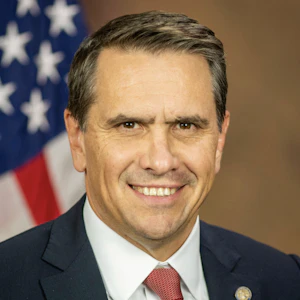
Todd Blanche
Todd Blanche
Biography of Deputy Attorney General Todd Blanche
The Honorable Todd Blanche is the 40th Deputy Attorney General of the United States, overseeing the work of the 115,000 dedicated employees who fulfill the Department of Justice’s mission at Main Justice, the FBI, DEA, U.S. Marshals, ATF, and 93 U.S. Attorney’s Offices.
Todd began his career at the Department where he served for over fifteen years in a variety of capacities, including as a contractor, a paralegal in the Criminal Division, and at the United States Attorney’s office for the Southern District of New York where he eventually became an AUSA and later a supervisor.
After leaving the Department, Todd worked as a criminal defense attorney that included representing President Donald Trump in three of the criminal cases brought against him in 2023 and 2024.
Following President Trump’s historic return to the White House, the President appointed Todd to work alongside Attorney General Pam Bondi to make America safe again. At the DOJ, Todd is working tirelessly to implement President Trump’s priorities that include confronting illegal protecting American businesses from fraud.
Todd has been married to his wonderful wife Kristine for nearly thirty years, is a father and grandfather.

Paul Atkins
Paul Atkins
Prior to returning to the SEC, Chairman Atkins was most recently chief executive of Patomak Global Partners, a company he founded in 2009. Chairman Atkins helped lead efforts to develop best practices for the digital asset sector. He served as an independent director and non-executive chairman of the board of BATS Global Markets, Inc. from 2012 to 2015.
Chairman Atkins was appointed by President George W. Bush to serve as a Commissioner of the SEC from 2002 to 2008. During his tenure, he advocated for transparency, consistency, and the use of cost-benefit analysis at the agency. Chairman Atkins also represented the SEC at meetings of the President’s Working Group on Financial Markets and the U.S.-EU Transatlantic Economic Council. From 2009 to 2010, he was appointed a member of the Congressional Oversight Panel for the Troubled Asset Relief Program.
Before serving as an SEC Commissioner, Chairman Atkins was a consultant on securities and investment management industry matters, especially regarding issues of strategy, regulatory compliance, risk management, new product development, and organizational control.
From 1990 to 1994, Chairman Atkins served on the staff of two chairmen of the SEC, Richard C. Breeden and Arthur Levitt, ultimately as chief of staff and counselor, respectively. He received the SEC’s 1992 Law and Policy Award for work regarding corporate governance matters.
Chairman Atkins began his career as a lawyer in New York, focusing on a wide range of corporate transactions for U.S. and foreign clients, including public and private securities offerings and mergers and acquisitions. He was resident for 2½ years in his firm's Paris office and admitted as conseil juridique in France.
A member of the New York and Florida bars, Chairman Atkins received his J.D. from Vanderbilt University School of Law in 1983 and was Senior Student Writing Editor of the Vanderbilt Law Review. He received his A.B., Phi Beta Kappa, from Wofford College in 1980.
Originally from Lillington, North Carolina, Chairman Atkins grew up in Tampa, Florida. He and his wife Sarah have three sons.

Mike Selig
Mike Selig
Chairman Selig brings to the role deep public and private sector experience working with a wide range of stakeholders across agriculture, energy, financial, and digital asset industries, which rely upon and operate in CFTC-regulated markets.
Prior to his leadership at the CFTC, Chairman Selig most recently served as chief counsel of the Securities and Exchange Commission’s Crypto Task Force and senior advisor to SEC Chairman Paul S. Atkins. In this role, Chairman Selig helped to develop a clear regulatory framework for digital asset securities markets, harmonize the SEC and CFTC regulatory regimes, modernize the agency’s rules to reflect new and emerging technologies, and put an end to regulation by enforcement. He also participated in the President’s Working Group on Digital Asset Markets and contributed to its report on “Strengthening American Leadership in Digital Financial Technology.”
Prior to government service, Chairman Selig was a partner at an international law firm, focusing on derivatives and securities regulatory matters. During his years in private practice, he represented a broad range of clients subject to regulation by the CFTC, including commercial end users, futures commission merchants, commodity trading advisors, swap dealers, designated contract markets, derivatives clearing organizations, and digital asset firms. Chairman Selig advised clients on compliance with the Commodity Exchange Act and the CFTC’s rules and regulations thereunder, including in connection with registration applications and obligations, enforcement matters, and complex transactions.
Chairman Selig earned his law degree from The George Washington University Law School and was articles editor of The George Washington Law Review. He received his undergraduate degree from Florida State University.

David Bailey
David Bailey

Eric Trump
Eric Trump
Mr. Trump also serves as Executive Vice President of The Trump Organization, where he oversees the global management and operations of the Trump family’s extensive real estate portfolio. This includes Trump Hotels, Trump Golf, commercial and residential real estate, Trump Estates, and Trump Winery. Known for his hands-on leadership and strong market instincts, he has played a key role in expanding the company’s presence across major U.S. and international markets.
A globally recognized business leader and public figure, Mr. Trump is a prominent advocate for Bitcoin and decentralized finance. He is a co-founder of World Liberty Financial, a decentralized finance (DeFi) platform, and serves on the Board of Advisors of Metaplanet, Japan’s largest corporate holder of Bitcoin.
Beyond his business activities, Mr. Trump has helped raise more than $50 million for St. Jude Children’s Research Hospital in the fight against pediatric cancer, a philanthropic mission he began at age 21.
Mr. Trump earned a degree in Finance and Management from Georgetown University. He currently resides in Florida with his wife, Lara, and their two children. He is also the author of Under Siege, his memoir published in October 2025.

Jack Mallers
Jack Mallers

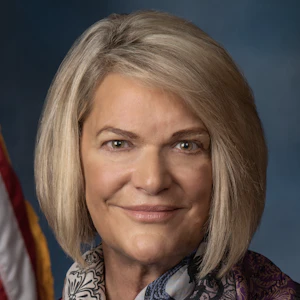
Cynthia Lummis
Cynthia Lummis
As the first-ever Chair of the Senate Banking Subcommittee on Digital Assets, Senator Lummis is the architect of the legislative framework shaping America's digital asset future. She introduced the landmark Lummis-Gillibrand Responsible Financial Innovation Act, the first comprehensive bipartisan crypto regulatory framework in Senate history. She co-authored the GENIUS Act — the first federal stablecoin law ever enacted — and introduced the BITCOIN Act, which would establish a U.S. strategic Bitcoin reserve of up to one million BTC. She is leading the Clarity Act, which will bring long-overdue regulatory certainty to the digital asset industry. She has also championed digital asset tax reform, including a de minimis exemption for small transactions and equal tax treatment for miners and stakers.
Known as Congress' "Crypto Queen," Senator Lummis represents Wyoming — a state she has helped build into one of the most digital asset-friendly regulatory environments in the nation. Before serving in the Senate, she served 14 years in the Wyoming Legislature, eight years as Wyoming State Treasurer, and eight years in the U.S. House. She is a three-time graduate of the University of Wyoming.
Her work represents a crucial bridge between traditional financial systems and the emerging digital economy, ensuring America leads the world in financial innovation while protecting the individual freedoms that define it.

Adam Back
Adam Back

Amy Oldenburg
Amy Oldenburg

David Marcus
David Marcus

Matt Schultz
Matt Schultz

Fred Thiel
Fred Thiel
Throughout his career, Mr. Thiel has consistently driven rapid growth and created substantial shareholder value. Prior to MARA, Mr. Thiel served as the CEO of two other public companies, Local Corporation (NASDAQ: LOCM) and Lantronix, Inc (NASDAQ: LTRX). He has successfully raised billions in equity and debt through private and public offerings, led companies through IPOs, executed high-value exits to strategic and financial acquirers, and implemented effective M&A and roll-up strategies.
Mr. Thiel attended the Stockholm School of Economics and executive classes at Harvard Business School, and is fluent in English, Spanish, Swedish, and French. Mr. Thiel is the Chairman of the Board for Oden Technology, Inc. and is active in Young Presidents’ Organization where he has led initiatives in both the FinTech and Technology Networks.
A recognized voice in the industry, Fred frequently shares his insights on energy and technology with major media outlets like Bloomberg TV, CNBC, and FOX Business, contributing to vital discussions about the future of these sectors.

Tim Draper
Tim Draper
He is a supporter and global thought leader for entrepreneurs everywhere, and is a leading spokesperson for Bitcoin and decentralization, having won the Bitcoin US Marshall’s auction in 2014, invested in over 50 crypto companies, and led investments in Coinbase, Ledger, Tezos, and Bancor, among others.

Afroman
Afroman