The Bitcoin Bloc: A New Force in American Politics
Speakers/Moderators
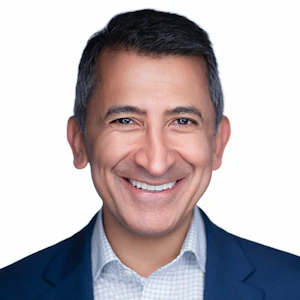
Faryar Shirzad
Faryar Shirzad
Shirzad has served as counsel to the highest levels of the U.S. government, including as deputy national security advisor for international economic affairs for President George W. Bush. In that role, he served as The President’s personal representative to the G-8 (the “G-8 Sherpa”). Prior to his time in the White House, Shirzad was assistant secretary for import administration at the U.S. Department of Commerce and international trade counsel to the U.S. Senate Committee on Finance. Earlier in his career, he practiced law in Washington, DC. Faryar earned a JD from the University of Virginia School of Law, a MPP from the John F. Kennedy School of Government at Harvard University, and a BS from the University of Maryland, College Park.
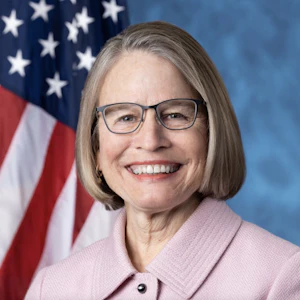
Mariannette Miller-Meeks
Mariannette Miller-Meeks
Driven by a commitment to national security, Representative Miller-Meeks views digital asset leadership as a strategic imperative to outcompete the Chinese Communist Party and secure U.S. dominance in the next era of financial technology. Her work bridges the gap between digital innovation and energy resilience, ensuring that our nation’s infrastructure is prepared to support a 21st-century economy. Through consistent engagement with industry stakeholders and her constituents in Iowa, she remains dedicated to fostering an environment where digital assets can thrive, decentralization is protected, and American economic leadership remains unrivaled.
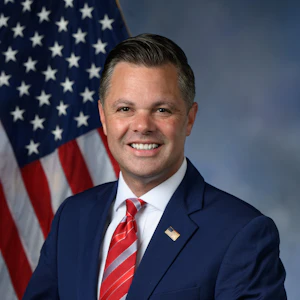
Zach Nunn
Zach Nunn
A strong advocate for responsible innovation, Rep. Nunn has advanced policies designed to keep Bitcoin development, mining, and capital formation anchored in the United States rather than driven offshore to adversarial regimes such as the Chinese Communist Party. His approach emphasizes regulatory clarity, technological competitiveness, and market-driven growth to strengthen America’s economic leadership in the digital age.
Leveraging his background in cybersecurity and national security, Rep. Nunn introduced and successfully passed the bipartisan Financial Technology Protection Act unanimously through the House. The legislation targets illicit finance while protecting decentralized technologies—reflecting his belief that Bitcoin’s transparency, resilience, and security can reinforce, not undermine, the global financial system.
Rep. Nunn focuses on advancing policies that promote innovation, safeguard national security, and position the United States as the world’s premier environment for Bitcoin infrastructure and digital asset entrepreneurship.
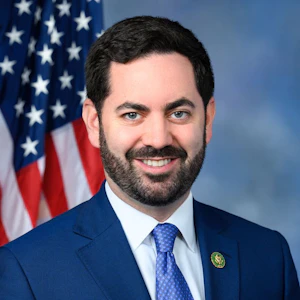
Mike Lawler
Mike Lawler
Congressman Lawler serves on the House Financial Services Committee, where he is Vice Chair of Communications, and the House Foreign Affairs Committee. He is one of Washington's most committed advocates for Bitcoin and digital assets — earning an "A" grade from Stand With Crypto. Congressman Lawler supports President Trump's Strategic Bitcoin Reserve and has been a driving force behind both the GENIUS Act and the Clarity Act, fighting to give American innovators the regulatory clarity they need to compete and win globally.
Session
Overview
Faryar Shirzad of Coinbase moderated a discussion with U.S. Representatives Mariannette Miller-Meeks, Zach Nunn, and Mike Lawler on how Bitcoin and digital asset policy is becoming a force in American politics. The conversation centered on regulatory clarity, stablecoin legislation, market structure, and the role of Congress in setting durable rules for crypto markets.
The panelists argued that Bitcoin, stablecoins, and digital assets raise issues beyond finance, including personal financial autonomy, consumer confidence, energy policy, tax treatment, and national security. They discussed the GENIUS Act, the CLARITY Act, SEC and CFTC oversight, and concerns that unclear rules or double taxation could push innovation outside the United States.
A recurring theme was the political importance of grassroots advocacy. The speakers described constituent engagement, industry education, and efforts such as Stand With Crypto as factors that helped move digital asset legislation forward, while also noting that elections and committee leadership can shape the future direction of Bitcoin and crypto policy in Washington.
It's so great to be here with you guys. For all of us who have worked in crypto policy for a long time, there's always a discussion about how you get regulatory clarity, how you fix the rules, and how you provide our community with the certainty it needs. I thought it would be particularly fun to sit on stage with the folks who make it happen.
All three of you have really been leaders on crypto and Bitcoin issues, and we're very grateful for it. In a funny way, at the moment, we're trying to get market structure legislation through the Senate. But the interesting thing is that the work we needed from the three of you, at least on market structure, is already done. Congresswoman, can you start off and talk about crypto generally, how you think about it as a congresswoman, and what you're hearing from your constituents?
I think the best way to describe how I feel about crypto, stablecoins, and digital assets is that it's financial democracy. On the 250th anniversary of our nation, what better way to epitomize what America is all about than embracing innovation, merit, work ethic, and going against the odds, which you all had to do to, number one, get legitimacy, and number two, get legislation that allows you to continue to innovate and not lose place to bad actors such as the Chinese Communist Party.
A lot of people don't know that the country that spends the most on blockchain innovation is China. They have a control system by the government. They've made Bitcoin illegal because they're trying to control this technology. So there's a huge national security dimension to that. Congressman Nunn, how do you think about Bitcoin?
I'm thrilled to be out here. I started mining Bitcoin about 20 years ago when I was working in the intelligence community. Somewhere in some dumpster, there is a fraction of a fraction of a fraction of Bitcoin that was mined. We threw it out. But here we are 20 years down the road, now all of us serving in Congress.
I've been privileged to serve both on Financial Services, which deals with the securities aspect of where Bitcoin and digital assets are, as well as the Ag Committee, where we serve on everything we're doing on the commodities piece. Guys from Iowa get this: soybeans, beef, corn. We know commodities well. Digital assets have a space here. That's where I think you've seen both in the Senate and the House the commodities markets really moving as first shooters in this space.
You also highlight the role that our competitors play here. I think of it not only as something that every American should have the opportunity to participate in, with one in five currently looking at digital assets or holding them, but also with other competitors who are not waiting in line for this. I serve on the China Select Committee and the China Commission. It's going directly after where Beijing is looking, not only at the compute process, but how it can have a market share that could really jeopardize the United States' standing in both Bitcoin and digital assets moving forward. So this is both a federation of use, but it's also a national security item that we're aggressively going after.
I couldn't agree more. I think we should talk a little bit more about that. Congressman Lawler, tell me how you think about Bitcoin and crypto.
Look, as a member of the Financial Services Committee, we have been heavily focused over the last two Congresses on getting these pieces of legislation across the finish line because we want America to lead. We want America to be the innovative force that it is in this space. But we know that we can't have 50 different regulatory frameworks across the country. We need a federal regulatory structure.
That's why it was so important to get the GENIUS Act passed last year and signed into law, and why we have worked diligently to get CLARITY across the finish line so that we do have market structure, that the rules of the road are there, and that innovation and American entrepreneurship can really flourish. We passed CLARITY last July through the House. The Senate has been working at Senate speed, which is glacial, but they are hopefully getting there in short order. I thought it was terrific that Secretary Bessent had an op-ed a few weeks ago really encouraging the Senate to get CLARITY across the finish line in a bipartisan way so that we can move this forward.
As you said, you sit on the Financial Services Committee, just like Congressman Nunn does, and you see a lot of the lobbying that occurs from entrenched interests who are nervous about what Bitcoin means for their existing business models or what stablecoins mean for their businesses. How do you navigate that as a policymaker? We're seeing in our work in Washington that the incumbents are fighting furiously against Bitcoin and crypto. How do you handle that when you get that kind of incoming?
Regardless of the issue, if it's somewhat contentious or something that is top of mind, there are going to be folks from all sides trying to lobby Congress. Most members are not experts on these issues, and we need the industries to weigh in and give us important information and feedback. Sometimes in legislation there are unintended consequences of the way something is written.
But I think there's no question, as we've worked through this, that some of the entrenched interests, as you framed it, certainly have been pushing back against competition in the marketplace. I think it is always striking that balance between what is existing and how we allow America to continue to lead and be that innovative force.
I think what you're seeing, even with the big banks, many of whom have pushed back on GENIUS and are pushing back on rewards, for instance, is that they are also simultaneously bringing people in-house to expand their digital assets departments because they understand this is the way of the future, and they understand that they have to be playing ball.
As with any policy changes, there's always a pull and push effect. I feel that if we could have passed GENIUS and passed CLARITY, we are putting America at the forefront of leading in the digital assets and crypto space. That is important as we move forward. There's always going to be tweaks along the way. There's always going to be new regulatory changes or adjustments that are made as you learn more as we go.
Congressman Nunn, you face it from two committees, the Ag Committee and the Financial Services Committee, so you're seeing the pushing and shoving from all directions. How do you think about this?
I want to give a lot of credit to the folks who have worked in digital assets and Bitcoin for doing a dramatic sea change from where we were just three years ago. Mike and I came in together. I remember my first act of Congress was sitting on a Zoom call as FTX collapsed and Silicon Valley Bank was hanging in the balance. We had members of the Treasury, members from industry, and members of Congress on there. I won't give any names away, but maybe Chuck Schumer comes to mind, trying to tell us all the future of digital assets. The challenge was he couldn't find the unmute button on Zoom.
These are the challenges of being able to educate a new generation of leaders in Congress to drive something forward. What we've worked on in Financial Services and the Ag Committee is rolling back what the SEC was doing, which was really a fine, fee, and punishment structure. If you were getting a call from Gary Gensler, it's because he was calling you in to fine you millions of dollars for something he didn't even fully understand. He did a great job auditioning for secretary of Treasury, but he did a horrible job showcasing that he could be a leader in this space.
Huge compliments to a lot of the people who came in and took what became the GENIUS Act, which passed the Senate 68 to 31. That's not a Republican or Democrat issue. That is now a national mandate. We were able to get the GENIUS Act through the House by nearly 300 to 100. Hardly anything passes in Congress by those margins anymore.
We want to move forward with what we've been able to do in the CLARITY Act. I was privileged to lead the Financial Technology Protection Act. It's the third run here, and it says, let's have our law enforcement and our intelligence agencies work with our partners here to add legitimacy to Bitcoin. That was something that came from industry. They wanted to make sure this was a good investment, not just for some of the suntanned bros from Miami to get involved in, but for some of the suntanned farmers from the arms down in Iowa to get involved in. I think that's a good piece of advocacy that we've been able to enshrine and move forward. Now we're executing.
Congresswoman, same question to you. Zach raises a really important point. This community has done the hard work to show up to Washington, meet with you and your colleagues, and talk about these issues. How are you seeing constituents talk to you, and how do the grassroots matter?
You don't get the same amount of pushback as you do on the Financial Services Committee. I sit on Veterans and Energy and Commerce. But I'll tell you, one of the most compelling reasons to support digital assets, Bitcoin, or cryptocurrency is personal. I left home at 16, the fourth of eight kids. My dad was career Air Force. My mom had a GED. We came from very humble circumstances. When I left home, I started working in community college to put myself through medical school.
At the time, it was very common in the 70s and 80s for couples to get together and not have a legal structure, and for them to combine assets. I never wanted my assets or my pay combined with anyone. To this day, I'm not giving anybody marital advice, but to this day we don't have a joint checking account.
Why was that important? It was important to me to be able to have the freedom to go where I wanted to go, and if things didn't work out, be able to leave. I had parents who had a bad marriage and in-laws who had a bad marriage. Meeting with women who underwent domestic violence and having had the wherewithal as young women to find Bitcoin or someplace where they had secure assets that couldn't be touched by either a violent partner or by a government, think about what happened to the truckers in Canada and what has happened with our financial institutions being pressured by our government to not loan money, commit loans, or allow banking if you're the wrong type of person or someone they don't agree with in a political sense.
From that standpoint, for me, there is a place in the financial landscape for all of these institutions. What we needed was a structure to allow consumers to have confidence. We need to allow the good actors in cryptocurrency, digital assets, and stablecoins to have a place and have regulation that protects them from the bad actors and from all the propaganda that you get from the Chinese Communist Party. I think those are very compelling reasons.
Lastly, farmers and senior citizens in our districts want to know if it's safe. Younger people are investing, their children or grandchildren may be investing. They want to know if it's safe for them. We know that through what we did in the GENIUS Act, having backing in Treasuries actually helps increase demand for Treasuries and helps stabilize the U.S. dollar as a reserve currency. So that's good for those individuals as well.
The last point I'll make is that I'm on the Energy and Commerce Committee. Where we have a lot of intersection with constituents is on energy policy, having a national energy strategy, having energy to meet demand, whether it is figuring out our grid system or bringing new assets online, whether it's wind, solar, hydro, nuclear, or biofuels that we have in Iowa. That's where I come in, to help navigate, educate, and reassure people that we can have data centers, Bitcoin mining, digital assets, and AI development, and their electricity prices aren't necessarily going to go up.
I'm really glad you said that because people think this is an abstraction, but it really matters for people who don't have the economic means or who are vulnerable in some ways to have an asset that they can control. All of you have seen it. We've seen it in societies where you've got political instability, financial instability, hyperinflation, and a government that steals wealth from the public. Bitcoin, crypto, stable-dollar stablecoins become a refuge from authoritarianism and a protection from dysfunction. It's really important that you say that. Sometimes you don't see it in a society like ours, where we're blessed with a lot of wealth and resources. I'd love to hear you talk a little bit more about how important it is to understand that personal use case.
I think exactly. It puts that personal touch on it. Again, it's very much in alignment with United States values, what we value in work ethic and freedom. China would want nothing more than to continue to lead in this area. So the innovation and what's happened with both CLARITY and the GENIUS Act, and anti-central bank digital currency, should, number one, reassure Americans, and number two, allow us to continue to do the things we do best in this country, which is innovate, progress, improvise, adapt, and strike toward the new frontier.
Congressman, you're a veteran as well, and you were talking about the national security case. In a way, China banning Bitcoin brought a lot of the miners into the United States, so you have a lot of the validation infrastructure of Bitcoin in the U.S. But right now we have huge adoption of stablecoins. Most of them have already been issued under U.S. rules, but with no U.S. oversight. Talk further about the national security case around crypto.
Let's recognize where we came from. Four years ago, we were driving all innovation, including in digital assets and particularly in Bitcoin, overseas. As a result, that was to the benefit of London and Singapore, but it was also to the benefit of Moscow, Tehran, and certainly Beijing. They wanted to compete in this space. By the fact that we've been able to move forward just over the last 18 months and provide not only a safe harbor, but an innovation cell right here in the United States for digital assets, we are going far above and beyond and making this the place where not only Bitcoin mining, but U.S. dollar-backed stablecoins, can find a future.
We want to continue to drive the U.S. dollar as the reserve currency of the world, but that means we have to move smartly into the digital asset space. Stablecoin gives us that. There are additional hurdles that I would say we should be working on. One of the pieces of legislation I'm leading is to make sure we end the double taxation on things like Bitcoin mining. We don't do it for any other kind of data harvesting. Why did this become in the crosshairs?
Going forward, making sure that Bitcoin can thrive, can mine, and not become an ingress route for Chinese-backed investors is important. Mariannette and I deal with this all the time on China trying to buy farmland. Now the Chinese are trying to get in and buy U.S.-based Bitcoin mining operations, or at least have a tangible asset. The moment they get a majority stake holding share in something as revolutionary as Bitcoin, the entire dynamics of the world start changing, and not for the better. It puts the United States on its back heels.
I've been spending my time trying to kick ass with these two in Washington, D.C., particularly holding the Chinese accountable on this line. We've got great allies in this area. I will offer this, though: what we don't want to see, and yes, you're talking to a group of Republicans here, is all the good work that's been done over the last 18 months undone if we lose the election coming up in November. The reality becomes that the president and a Democrat Congress are going to go to war with each other, but even more so, we're going to hold still on things like digital assets while the rest of the world moves forward. That doesn't just give London and Singapore an advantage. That gives the other bad actors I talked about the opportunity to pole vault over the final 24 months. Let's work smartly. Let's work with industry and partner leads, and let's work for our constituents to continue to deliver wins like we've done over the past year.
The tax issue is so important. Congressman Max Miller of Ohio, Congressman Steven Horsford of Vegas, the hometown congressman, and Chairman Jason Smith of the House Ways and Means Committee are playing a really important role to try to deal with these issues because there's a huge amount of uncertainty regarding the tax treatment of Bitcoin and crypto. You can have double taxation, as you said. You can mine the Bitcoin, get taxed on the mining event, and then get taxed again when you liquidate the asset. That can't be the right answer.
No. Ultimately, all it does is drive the innovation to another space. Here's the reality: right now you've got 50 states, four territories, 16 regulatory agencies, and some heavy hammers in the SEC. I would say some smarter hammers right now in the CFTC. What we don't want to do is make it harder for somebody to do business right here. The taxation piece, and I compliment Jason Smith, our Ways and Means chairman, we're moving in the right direction here. Let's keep the innovation here. But let's keep the policy up with where the innovation wants to go.
Mike, there's really important work that the SEC and the CFTC are doing to tokenize our capital markets and the derivative markets, and that's going to be the subject of a lot of scrutiny by the oversight agencies. Can you tell the audience what the Financial Services Committee does when an agency uses the power it already has to make big changes to allow tokenization and allow crypto infrastructure to be brought into the traditional financial system?
The Financial Services Committee has oversight over most of these agencies that deal with our financial markets and our banking system traditionally. From the regulatory standpoint, we saw under Gary Gensler what he was trying to do with the SEC. During our overlap with Joe Biden's administration, we brought them in, and we really came down on them hard over what they were doing at the SEC.
I know folks in the crypto and blockchain space were ecstatic when President Trump said that Gary Gensler would be fired. And he did, obviously. So we've seen a regulatory body with Chair Atkins at the SEC now, working with the administration and working with Congress to make sure, number one, we're passing the legislation that needs to be passed, and number two, that the regulations being put in place by the SEC are in line with what we are trying to do from an innovation standpoint and from the standpoint of making the United States the crypto and digital assets capital of the world.
As a New Yorker, New York City is the financial capital of the world. We want digital assets. We want crypto to continue to be based in New York. We want to see that grow. We want to see the industry grow. Mariannette talked about energy and data centers. That is key. A lot of the financial institutions' data centers are actually in my district because of the proximity to New York City, and we know how important that is in this space.
There's a lot ahead. I think the SEC is going to play a vital role. The CFTC plays a vital role. But we want them working with Congress. We want them working with the administration. We don't want them to overstep their role and their authority. Frankly, some of the changes that they do make, we want to codify into law because we don't want this going back and forth at the whim of the next administration or at the whims of people like Elizabeth Warren. We've seen what she has done with certain agencies, consumer protection agencies, and CFPB. We don't want them to interfere with the ability to innovate. That's why it is so important to get the legislation through so that it is codified and not up to the whims of the regulatory bodies.
Congresswoman Miller-Meeks, there's a lot of focus right now on the Financial Services Committee and the Ag Committee because of the work being done legislatively and the work of the CFTC and the SEC. There's a lot of focus on the tax committee, Ways and Means, because of the tax clarity we need. But the future of digital assets is ultimately going to be heavily in the jurisdiction of the Commerce Committee because we're going to be looking at tokenizing real-world assets, financial utility contracts, frequent flyer points, and any number of aspects of the economy that will show up on-chain. Can you talk about your thoughts on that?
Certainly the Energy and Commerce Committee is very vast. We have energy, environment, critical minerals. All of those things may be involved in the whole supply chain, if you will, of digital assets and blockchain. Then you also have the development of AI and national data privacy laws, which we're looking at. As we're going forward in that space, we're much better than we were last year, when the chair of Energy and Commerce was working very closely with Senate Democrats. What we're coming up with now, I think, is a much better policy.
We also know, and I think Zach has mentioned this, that you can't have 50 states and seven territories all having different laws. Making sure there is a regulatory structure in place that allows the innovation and allows us to continue down this pathway and not lose out to bad actors is one of the important things we're doing in the Energy and Commerce Committee. That is in addition to the energy component. This whole foundation doesn't exist if we don't have the energy to power it. China is vastly ahead of the United States in bringing power online, and they're not waiting for us. We also know that they want to undermine what we're doing here in this country. Some of the things we deal with with our constituents is information that's actually propagandized. We saw that during COVID, and we continue to see that now.
One of the things I've been very proud of, and we're very grateful for, is President Trump's extraordinary leadership on Bitcoin and crypto. The degree to which he understood that the future is in this direction, and wanted the U.S. not to fall behind for financial reasons, personal reasons for folks who have been disenfranchised by the existing system, but also the national security case, has been unbelievable.
I've been particularly proud that a number of Democrats have joined the Republicans in voting for crypto legislation. But elections have consequences. We've got a really tight election coming up in 2026. We're hopeful that one by one, we'll get more and more Democrats to understand the importance of this. A lot of them have stepped up, including Congressman Horsford, who has been outstanding on these issues. But talk about how this community can help build resilient political support for Bitcoin and crypto.
The way you phrased it is really great. This shouldn't be a partisan issue. We did see in both CLARITY and the GENIUS Act that there were a lot of Democrats on this issue with us. But culture starts at the top. What's the culture of your leadership in the political party? That then drives downward in who you appoint to committees, whether it's CFTC, whether it's SEC, or who is the chair of the Federal Reserve.
This should not be a political issue. It shouldn't be a partisan issue. Unfortunately, it does have the influence of political parties. President Trump has shown true leadership in this area. Part of it may be from his own personal experience in having federal government agencies weaponized against him. He has this personal experience, and I think he sees part of himself in what has happened to Bitcoin and how much they've had to struggle to get acknowledged in Washington, D.C. As they're trying to regulate themselves and keep bad actors out, they needed Washington's help. They're not going to endorse everything there, but they were turned away. A lot of that is not understanding what was going on, not understanding where the future was in this asset that was financial democracy and a little bit different than what everybody knew about. There's a lot of fear when people try to hold something back that they don't really understand.
It took a lot of perseverance on your part, and I think President Trump really sees part of himself in that. We know that right now Mike Lawler is in a swing district and a very tough seat. Kamala Harris won his district. Zach Nunn and I are in the two hardest districts in Iowa. Iowa is a purple state, and there's a lot of money going in. I think I've had $5 million spent against me already in the past year. Mike has had $5 million or $6 million, Zach $3 million or $4 million. We're already being attacked for our positions, and part of what's going on to undermine data centers and AI may, in fact, be driven by people who don't want us to be reelected in an area that we're very favorable and inclined to support.
It shouldn't be partisan, but I do think it is, unfortunately. It's those who value freedom and those who want centralized government control.
Congressman Nunn, when a constituent who cares about Bitcoin or crypto comes and talks to you at a town hall, sends you a letter, or calls your office, does it matter or does it not matter?
It's huge. We have hundreds of listening sessions every single year, in all 21 counties. But let me say this: it's bigger than any of us. It's bigger than Republican or Democrat. One in five Americans hold some kind of digital asset. This is important to them. When we look out and see $38 trillion in national debt, we can't cut ourselves out of that without saying we have to find new ways, one, to hold government accountable, but also to grow our economy.
What the digital asset space, particularly Bitcoin, represents is a $10 trillion opportunity for us to start moving out, not only for what we do here domestically, but what we do internationally as a leader. When I hear from a single mom who's saying, I just got the biggest tax cut in American history, I can go ahead and buy a new water heater for my kids or get my kid into speech therapy, but what do I do with the remaining $1,000 or so? I can put that in a 401(k), maybe, but I can diversify my portfolio for something that can help. Digital assets, stablecoins backed by U.S. dollars, as well as Bitcoin, all provide a real future opportunity for these individuals to get in.
The federation of digital assets down to real American voters is huge. That also comes with responsibility. Decisions and elections have consequences. If you like what we've been able to do over the past year and a half and you say, this is something that's really worked for me, and I think one out of five Americans would largely say yes, absolutely, then let's keep moving in that direction. But if you allow French Hill, the chairman of the Financial Services Committee, to be replaced by somebody like Maxine Waters, we're going to go in a very different direction. The same is true for Elizabeth Warren and what's happening with Tim Scott.
You may not like everything about a party, but I guarantee this: you like when you have a return that matters, and when the limited amount of investment that you're able to make actually helps your family and helps your future. Let's keep that going for the sake of all of us and our kids. We want to grow America's economy. This is a great place to make that investment. We collectively are leading in that direction. We're just asking for the opportunity. And this is why I would say to Iowans, let's invest in your future, both your pocketbook and in the ballot box.
The final word.
Stand With Crypto has really been a great mobilization effort by the industry to get folks engaged, not just in terms of growing awareness of digital assets and crypto, but really mobilizing to engage with their elected leaders and to show that we want innovation, we want legislation to move, and we want America to be a leading force. What you guys have been able to do over the last few years as an industry to mobilize people across the country, over 3 million people engaged on this issue from a grassroots advocacy standpoint, has made a difference.
The reason we have been able to get this legislation moving is precisely because of that advocacy. That's the best way to mobilize. It really does make an impact when the average American is reaching out and saying this issue matters. We want legislation to be passed, to get stablecoin legislation through, to get market structure through, so that we have the rules of the road and more security and stability in this great new marketplace. That's what we're really trying to do. I think it's been a great effort between the industry, the grassroots, and the elected officials in the Republican majorities to really drive this through and get the legislation across the finish line.
Fantastic. Mike Lawler of New York, Zach Nunn of Iowa, Mariannette Miller-Meeks of Iowa. You guys are amazing. We're all grateful for it. Thank you.
Thanks, man.
Thank you.
Similar
Sessions
The Bitcoin Bloc: A New Force in American Politics
Faryar Shirzad
Faryar Shirzad
Shirzad has served as counsel to the highest levels of the U.S. government, including as deputy national security advisor for international economic affairs for President George W. Bush. In that role, he served as The President’s personal representative to the G-8 (the “G-8 Sherpa”). Prior to his time in the White House, Shirzad was assistant secretary for import administration at the U.S. Department of Commerce and international trade counsel to the U.S. Senate Committee on Finance. Earlier in his career, he practiced law in Washington, DC. Faryar earned a JD from the University of Virginia School of Law, a MPP from the John F. Kennedy School of Government at Harvard University, and a BS from the University of Maryland, College Park.
Mariannette Miller-Meeks
Mariannette Miller-Meeks
Driven by a commitment to national security, Representative Miller-Meeks views digital asset leadership as a strategic imperative to outcompete the Chinese Communist Party and secure U.S. dominance in the next era of financial technology. Her work bridges the gap between digital innovation and energy resilience, ensuring that our nation’s infrastructure is prepared to support a 21st-century economy. Through consistent engagement with industry stakeholders and her constituents in Iowa, she remains dedicated to fostering an environment where digital assets can thrive, decentralization is protected, and American economic leadership remains unrivaled.
Zach Nunn
Zach Nunn
A strong advocate for responsible innovation, Rep. Nunn has advanced policies designed to keep Bitcoin development, mining, and capital formation anchored in the United States rather than driven offshore to adversarial regimes such as the Chinese Communist Party. His approach emphasizes regulatory clarity, technological competitiveness, and market-driven growth to strengthen America’s economic leadership in the digital age.
Leveraging his background in cybersecurity and national security, Rep. Nunn introduced and successfully passed the bipartisan Financial Technology Protection Act unanimously through the House. The legislation targets illicit finance while protecting decentralized technologies—reflecting his belief that Bitcoin’s transparency, resilience, and security can reinforce, not undermine, the global financial system.
Rep. Nunn focuses on advancing policies that promote innovation, safeguard national security, and position the United States as the world’s premier environment for Bitcoin infrastructure and digital asset entrepreneurship.
Mike Lawler
Mike Lawler
Congressman Lawler serves on the House Financial Services Committee, where he is Vice Chair of Communications, and the House Foreign Affairs Committee. He is one of Washington's most committed advocates for Bitcoin and digital assets — earning an "A" grade from Stand With Crypto. Congressman Lawler supports President Trump's Strategic Bitcoin Reserve and has been a driving force behind both the GENIUS Act and the Clarity Act, fighting to give American innovators the regulatory clarity they need to compete and win globally.
The Bitcoin Bloc: A New Force in American Politics
Speakers/Moderators
Faryar Shirzad
Faryar Shirzad
Shirzad has served as counsel to the highest levels of the U.S. government, including as deputy national security advisor for international economic affairs for President George W. Bush. In that role, he served as The President’s personal representative to the G-8 (the “G-8 Sherpa”). Prior to his time in the White House, Shirzad was assistant secretary for import administration at the U.S. Department of Commerce and international trade counsel to the U.S. Senate Committee on Finance. Earlier in his career, he practiced law in Washington, DC. Faryar earned a JD from the University of Virginia School of Law, a MPP from the John F. Kennedy School of Government at Harvard University, and a BS from the University of Maryland, College Park.
Mariannette Miller-Meeks
Mariannette Miller-Meeks
Driven by a commitment to national security, Representative Miller-Meeks views digital asset leadership as a strategic imperative to outcompete the Chinese Communist Party and secure U.S. dominance in the next era of financial technology. Her work bridges the gap between digital innovation and energy resilience, ensuring that our nation’s infrastructure is prepared to support a 21st-century economy. Through consistent engagement with industry stakeholders and her constituents in Iowa, she remains dedicated to fostering an environment where digital assets can thrive, decentralization is protected, and American economic leadership remains unrivaled.
Zach Nunn
Zach Nunn
A strong advocate for responsible innovation, Rep. Nunn has advanced policies designed to keep Bitcoin development, mining, and capital formation anchored in the United States rather than driven offshore to adversarial regimes such as the Chinese Communist Party. His approach emphasizes regulatory clarity, technological competitiveness, and market-driven growth to strengthen America’s economic leadership in the digital age.
Leveraging his background in cybersecurity and national security, Rep. Nunn introduced and successfully passed the bipartisan Financial Technology Protection Act unanimously through the House. The legislation targets illicit finance while protecting decentralized technologies—reflecting his belief that Bitcoin’s transparency, resilience, and security can reinforce, not undermine, the global financial system.
Rep. Nunn focuses on advancing policies that promote innovation, safeguard national security, and position the United States as the world’s premier environment for Bitcoin infrastructure and digital asset entrepreneurship.
Mike Lawler
Mike Lawler
Congressman Lawler serves on the House Financial Services Committee, where he is Vice Chair of Communications, and the House Foreign Affairs Committee. He is one of Washington's most committed advocates for Bitcoin and digital assets — earning an "A" grade from Stand With Crypto. Congressman Lawler supports President Trump's Strategic Bitcoin Reserve and has been a driving force behind both the GENIUS Act and the Clarity Act, fighting to give American innovators the regulatory clarity they need to compete and win globally.
Other
Speakers
Michael Saylor
Michael Saylor
Todd Blanche
Todd Blanche
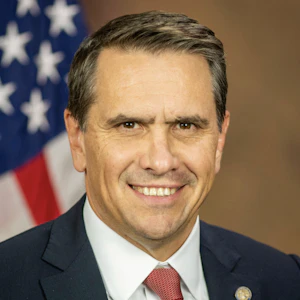
Biography of Deputy Attorney General Todd Blanche
The Honorable Todd Blanche is the 40th Deputy Attorney General of the United States, overseeing the work of the 115,000 dedicated employees who fulfill the Department of Justice’s mission at Main Justice, the FBI, DEA, U.S. Marshals, ATF, and 93 U.S. Attorney’s Offices.
Todd began his career at the Department where he served for over fifteen years in a variety of capacities, including as a contractor, a paralegal in the Criminal Division, and at the United States Attorney’s office for the Southern District of New York where he eventually became an AUSA and later a supervisor.
After leaving the Department, Todd worked as a criminal defense attorney that included representing President Donald Trump in three of the criminal cases brought against him in 2023 and 2024.
Following President Trump’s historic return to the White House, the President appointed Todd to work alongside Attorney General Pam Bondi to make America safe again. At the DOJ, Todd is working tirelessly to implement President Trump’s priorities that include confronting illegal protecting American businesses from fraud.
Todd has been married to his wonderful wife Kristine for nearly thirty years, is a father and grandfather.
Paul Atkins
Paul Atkins
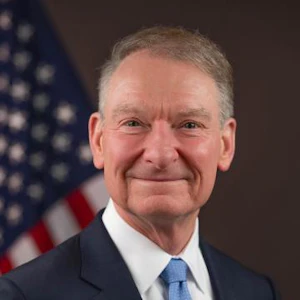
Prior to returning to the SEC, Chairman Atkins was most recently chief executive of Patomak Global Partners, a company he founded in 2009. Chairman Atkins helped lead efforts to develop best practices for the digital asset sector. He served as an independent director and non-executive chairman of the board of BATS Global Markets, Inc. from 2012 to 2015.
Chairman Atkins was appointed by President George W. Bush to serve as a Commissioner of the SEC from 2002 to 2008. During his tenure, he advocated for transparency, consistency, and the use of cost-benefit analysis at the agency. Chairman Atkins also represented the SEC at meetings of the President’s Working Group on Financial Markets and the U.S.-EU Transatlantic Economic Council. From 2009 to 2010, he was appointed a member of the Congressional Oversight Panel for the Troubled Asset Relief Program.
Before serving as an SEC Commissioner, Chairman Atkins was a consultant on securities and investment management industry matters, especially regarding issues of strategy, regulatory compliance, risk management, new product development, and organizational control.
From 1990 to 1994, Chairman Atkins served on the staff of two chairmen of the SEC, Richard C. Breeden and Arthur Levitt, ultimately as chief of staff and counselor, respectively. He received the SEC’s 1992 Law and Policy Award for work regarding corporate governance matters.
Chairman Atkins began his career as a lawyer in New York, focusing on a wide range of corporate transactions for U.S. and foreign clients, including public and private securities offerings and mergers and acquisitions. He was resident for 2½ years in his firm's Paris office and admitted as conseil juridique in France.
A member of the New York and Florida bars, Chairman Atkins received his J.D. from Vanderbilt University School of Law in 1983 and was Senior Student Writing Editor of the Vanderbilt Law Review. He received his A.B., Phi Beta Kappa, from Wofford College in 1980.
Originally from Lillington, North Carolina, Chairman Atkins grew up in Tampa, Florida. He and his wife Sarah have three sons.

Mike Selig
Mike Selig
Chairman Selig brings to the role deep public and private sector experience working with a wide range of stakeholders across agriculture, energy, financial, and digital asset industries, which rely upon and operate in CFTC-regulated markets.
Prior to his leadership at the CFTC, Chairman Selig most recently served as chief counsel of the Securities and Exchange Commission’s Crypto Task Force and senior advisor to SEC Chairman Paul S. Atkins. In this role, Chairman Selig helped to develop a clear regulatory framework for digital asset securities markets, harmonize the SEC and CFTC regulatory regimes, modernize the agency’s rules to reflect new and emerging technologies, and put an end to regulation by enforcement. He also participated in the President’s Working Group on Digital Asset Markets and contributed to its report on “Strengthening American Leadership in Digital Financial Technology.”
Prior to government service, Chairman Selig was a partner at an international law firm, focusing on derivatives and securities regulatory matters. During his years in private practice, he represented a broad range of clients subject to regulation by the CFTC, including commercial end users, futures commission merchants, commodity trading advisors, swap dealers, designated contract markets, derivatives clearing organizations, and digital asset firms. Chairman Selig advised clients on compliance with the Commodity Exchange Act and the CFTC’s rules and regulations thereunder, including in connection with registration applications and obligations, enforcement matters, and complex transactions.
Chairman Selig earned his law degree from The George Washington University Law School and was articles editor of The George Washington Law Review. He received his undergraduate degree from Florida State University.

David Bailey
David Bailey

Eric Trump
Eric Trump
Mr. Trump also serves as Executive Vice President of The Trump Organization, where he oversees the global management and operations of the Trump family’s extensive real estate portfolio. This includes Trump Hotels, Trump Golf, commercial and residential real estate, Trump Estates, and Trump Winery. Known for his hands-on leadership and strong market instincts, he has played a key role in expanding the company’s presence across major U.S. and international markets.
A globally recognized business leader and public figure, Mr. Trump is a prominent advocate for Bitcoin and decentralized finance. He is a co-founder of World Liberty Financial, a decentralized finance (DeFi) platform, and serves on the Board of Advisors of Metaplanet, Japan’s largest corporate holder of Bitcoin.
Beyond his business activities, Mr. Trump has helped raise more than $50 million for St. Jude Children’s Research Hospital in the fight against pediatric cancer, a philanthropic mission he began at age 21.
Mr. Trump earned a degree in Finance and Management from Georgetown University. He currently resides in Florida with his wife, Lara, and their two children. He is also the author of Under Siege, his memoir published in October 2025.

Jack Mallers
Jack Mallers

Cynthia Lummis
Cynthia Lummis
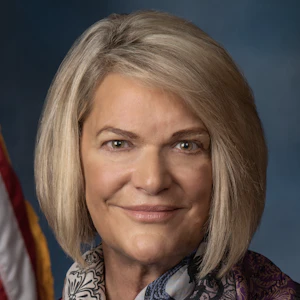
As the first-ever Chair of the Senate Banking Subcommittee on Digital Assets, Senator Lummis is the architect of the legislative framework shaping America's digital asset future. She introduced the landmark Lummis-Gillibrand Responsible Financial Innovation Act, the first comprehensive bipartisan crypto regulatory framework in Senate history. She co-authored the GENIUS Act — the first federal stablecoin law ever enacted — and introduced the BITCOIN Act, which would establish a U.S. strategic Bitcoin reserve of up to one million BTC. She is leading the Clarity Act, which will bring long-overdue regulatory certainty to the digital asset industry. She has also championed digital asset tax reform, including a de minimis exemption for small transactions and equal tax treatment for miners and stakers.
Known as Congress' "Crypto Queen," Senator Lummis represents Wyoming — a state she has helped build into one of the most digital asset-friendly regulatory environments in the nation. Before serving in the Senate, she served 14 years in the Wyoming Legislature, eight years as Wyoming State Treasurer, and eight years in the U.S. House. She is a three-time graduate of the University of Wyoming.
Her work represents a crucial bridge between traditional financial systems and the emerging digital economy, ensuring America leads the world in financial innovation while protecting the individual freedoms that define it.

Adam Back
Adam Back

Amy Oldenburg
Amy Oldenburg
David Marcus
David Marcus

Matt Schultz
Matt Schultz
Fred Thiel
Fred Thiel
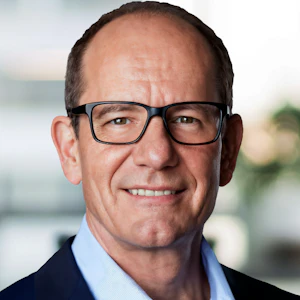
Throughout his career, Mr. Thiel has consistently driven rapid growth and created substantial shareholder value. Prior to MARA, Mr. Thiel served as the CEO of two other public companies, Local Corporation (NASDAQ: LOCM) and Lantronix, Inc (NASDAQ: LTRX). He has successfully raised billions in equity and debt through private and public offerings, led companies through IPOs, executed high-value exits to strategic and financial acquirers, and implemented effective M&A and roll-up strategies.
Mr. Thiel attended the Stockholm School of Economics and executive classes at Harvard Business School, and is fluent in English, Spanish, Swedish, and French. Mr. Thiel is the Chairman of the Board for Oden Technology, Inc. and is active in Young Presidents’ Organization where he has led initiatives in both the FinTech and Technology Networks.
A recognized voice in the industry, Fred frequently shares his insights on energy and technology with major media outlets like Bloomberg TV, CNBC, and FOX Business, contributing to vital discussions about the future of these sectors.
Tim Draper
Tim Draper
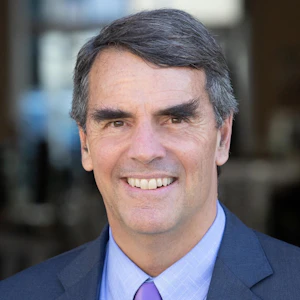
He is a supporter and global thought leader for entrepreneurs everywhere, and is a leading spokesperson for Bitcoin and decentralization, having won the Bitcoin US Marshall’s auction in 2014, invested in over 50 crypto companies, and led investments in Coinbase, Ledger, Tezos, and Bancor, among others.

Afroman
Afroman