The Convergence of AI and Bitcoin
Speakers/Moderators

Allen Helm
Allen Helm
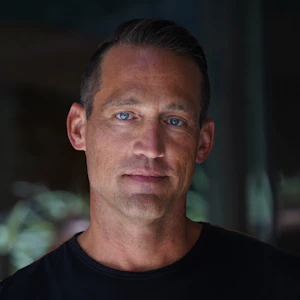
Mark Moss
Mark Moss

Kurtis Perdelwitz
Kurtis Perdelwitz
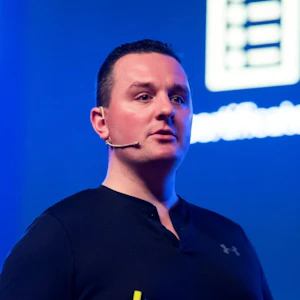
Session
Overview
The Convergence of AI and Bitcoin brought together Allen Helm with Mark Moss, Kurtis Perdelwitz of GIGA Inc., and Patrick Lowry of Samara Asset Group to discuss how artificial intelligence and Bitcoin are beginning to overlap in corporate strategy, treasury management, investing, and operations.
The panel explored AI as a productivity tool for businesses, especially entrepreneurs and smaller companies that can move faster than large incumbents. Kurtis described how GIGA uses AI across manufacturing, design, client support, and internal workflows while holding Bitcoin as a treasury asset. Patrick discussed how Samara evaluates managers and entrepreneurs based on how they use AI to improve efficiency and build useful applications around major AI models.
Mark Moss framed the topic through long-term technology cycles, arguing that AI-driven efficiency may increase corporate profits while also creating deflationary pressure in a debt-based monetary system. He connected that dynamic to Bitcoin treasury adoption and to the future use of Bitcoin by autonomous AI agents and machine-to-machine payments.
A key theme was that AI may change how companies gather data, manage financial decisions, and balance short-term liquidity with long-term purchasing power. The discussion positioned Bitcoin as a potential monetary layer for AI-enabled businesses, corporate treasuries, and future digital agents.
Take a look at this crowd. How's everybody doing today? Can I get some energy here?
Amazing. I'm Allen Helm, director of business development here at Bitcoin for Corporations. We are BTC Inc.'s advisory and advocacy platform, and we work with a lot of the corporate treasuries that have Bitcoin on the balance sheet. Today we're here to talk about a very interesting topic, two of my favorite topics, which is the convergence of AI and Bitcoin.
We have a great panel here today across the corporate side, the investor side, and a phenomenal thought leader down there at the end. Gentlemen, please introduce yourselves. Patrick, let me start with you.
Sure. My name is Patrick Lowry. I'm the CEO of Samara Asset Group. We are a proud sponsor of Bitcoin for Corporations. We're one of the founding members, I believe, of your group. We are a publicly listed company in Germany, largely a fund-to-fund investment group. But what we're probably most famous for is that we use Bitcoin as our primary treasury reserve asset.
My name is Kurtis Perdelwitz. I'm a sales and marketing director at a company called GIGA Inc. We are a tech-forward, AI-enabled manufacturing company. Our core business is disrupting a $115 billion-a-year industry, which is the manufacturing of fenestration products: windows, doors, unitized curtain wall, things for mid-rise and high-rise buildings. Where Bitcoin comes into play for us is that since 2021, we've been stacking Bitcoin as a treasury asset on our balance sheet.
I'm Mark Moss, and I've been working with Bitcoin educational content for about eight or nine years at this point. I've been in the Bitcoin venture capital space for about six or seven years. I'm a partner at the Bitcoin Opportunity Fund, so we're actively deploying capital, trying to build this future world that we want through Bitcoin companies, and working with a lot of private Bitcoin companies and Bitcoin treasury companies. We spend a lot of time thinking about how AI and Bitcoin are coming together to build that new breed of company.
Mark, let's start with you. I really want to set the stage here for the crowd. You mentioned that you've worked with companies like Matador and other treasury companies, but through your show, Market Disruptors, you've been talking about the 250-year market cycle thesis, Bitcoin, and now over the course of the last 12 months, I think you're one of the first voices to start talking about AI and the convergence there. Given the amount of time that we have, if you can give the quick five-minute TLDR of how this all integrates together, I think that'd be great for the crowd.
Yeah, we'll give it a super high-level view. I do talk a lot about cycles, and there's one cycle in specific that I like to look at and focus on, which is a 50-year technological revolution cycle. It might be called the K-wave cycle or Kondratiev wave cycle. Basically, every 50 years for the last 300 years, we have a technological revolution, which is a cluster of technologies that change the direction of the world, and it drives financial markets.
This is the sixth one that we've seen. I call this the decentralized technological revolution, and it's really Bitcoin and AI, the convergence of those technologies. You can look back at the last 50-year cycles and see that all the wealth of the last 50 years was created in chips, microchips, telecom, personal computers, and the internet. Before that, it was mass production, automobiles, GM, GE. We go back to oil and steel, and we can keep going back. Right now we're in this unprecedented space, this 50-year cycle where we're seeing this convergence of technology and the biggest wealth opportunity that we have in front of us.
Specifically, when we think about these two technologies, at some point they almost seem opposite, where Bitcoin is a decentralized technology and AI is sort of a more centralized technology based on who controls that LLM. But really what we're seeing, I call it more of a decentralized technology because now, as OpenAI's Sam Altman said, we might see this first single-person billion-dollar company. So it allows us to scale these businesses in a decentralized fashion.
To frame this conversation up, where I see this interesting convergence of the two technologies, specifically in the corporate space, is two main areas. Number one, we have maybe the CTO of the corporation and the CFO almost at odds. The CTO is pushing the technology to create ultimate efficiency and to bring the marginal cost down using AI. As we bring the marginal costs down, the corporation now has more profits, which swells the corporate treasury, which is great for the CFO.
But the problem is that as we bring the marginal cost down, that causes deflation, which is great for you and I as consumers. It's terrible for the debt-based monetary system that we run, and it's terrible for the central banks. So the central banks are now forced to inject more liquidity to compensate for that deflation that's being caused. The CTO is causing the deflation, the treasury swells, but now the Fed is forced to create more money, more debt stimulus, and that starts to debase the CFO's treasury stack. They're almost working at odds.
Now we're going to need to see AI and Bitcoin used together. What do I mean by that? The CFO is going to be forced to figure out a way to preserve long-term purchasing power, which, of course, Bitcoin is. We're here at Bitcoin for Corporations for that. But here's the irony, and this is where it really starts to get interesting. If the CFO starts adding Bitcoin to the treasury, what they're really doing is starting to build the building block for the next set of workers.
When we think about a business and we think about workers, we typically think about humans. But now we're onboarding agents, autonomous AI agents, and robotics to come work. I think maybe I was one of the first people talking about it. In 2024, I gave a keynote talking about how AI agents would be the ones to push the medium of exchange in Bitcoin. As we start to see these AI agents coming on, they're going to need to transact in Bitcoin. We can get into the research on why that is. But as the CFO is adding Bitcoin to the treasury, what they're really building is the base-layer currency that's needed for the new workforce that they're bringing on at the same time.
So there's this symbiotic convergence happening that's really interesting.
Thank you, Mark. Kurtis, I want to throw this over to you real quick. You guys are actually executing this at scale. You're not an endemic company. You have Bitcoin on the balance sheet. First, let's walk the crowd through what GIGA is, what you guys do, why you have Bitcoin on the balance sheet, and how you guys are leveraging AI.
One of the questions quickly is: why not have Bitcoin on the balance sheet? It's a fantastic product. I don't need to tell everybody that here. Obviously we're all in the room because we're like-minded. But as a company, that's exactly how we got it on our balance sheet, because we were like-minded. We made that decision in 2021 because we saw what the future would be and how that could help companies move forward, and we wanted to be one of those companies.
As I mentioned, we're disrupting a manufacturing space that is a very traditional construction and manufacturing-related product. Construction buildings have been built pretty similarly for hundreds of years now, and the industry that we are working in is still operating like it has been. That's where we see disruption, utilizing AI in every facet of our business.
I love everything that Mark said, because we're starting to find new areas where you're at odds and how you can get forward past that. I personally think that two of the most valuable resources we have are time and knowledge, and AI accelerates both of those. As a company, in every facet, we require it as well. It's part of our interviewing process. It's part of everything, all the way from the individual contributor position up through our CEO and everybody in between. We all embrace it and look for new ways we can utilize it internally.
Yes, on the manufacturing side, with physical product, how you can manufacture that more efficiently, how you can utilize robotics and automation in that process, but also how we can support our clients out in the field and give them speed in construction. You can imagine, even for those who are involved, you want to build a building fast. The longer you take building that building, the more money it costs you and the longer your delays are on return on investment. So how can we help service them? AI is a fantastic opportunity there. We utilize it in software that we've designed to help you design your building faster and increase those efficiencies.
Really, to what Mark was saying, the next step to that is light speed, which is with the agent side. That's where the Bitcoin side is. Everything Mark said, we're spot on with and in agreement. That's where you're going to start seeing those transactions increase speed even more, because those agents are going to need to transact with each other rather than still have to go back to a person.
To be very honest, one of my feelings is we've heard, "AI is not going to replace people, but people who use AI will." I think that's actually evolving to people who partner with AI. That's where the agents are going to accelerate that even more.
Kurtis, another quick question here for the operators in the room that may not have Bitcoin on the balance sheet or may not have started leveraging AI in their day-to-day operations. What hurdles and lessons can you pass back to them?
As it comes to AI, we've all heard about things like AI hallucination. That is real. It's getting better, and there is becoming less of that. What I would say is if you're just starting out with it, don't trust it blindly. You need to trust but verify, and you will find your niche. There are tons of different platforms out there. There are tons of different LLMs. There are different opportunities for vibe coding and agent creation. You need to be intentional because you will get out of it what you put into it and what you're asking to get out of it.
One of the things that we use is AI to help us prompt and program AI. AI is a great opportunity to ask it what you should be asking it. It's also a great coach and a great mentor in your business, no matter what industry you're in, no matter what you're doing. Even Saylor has talked about it before. He'll sit down with it and ask it a million and one questions. What would so-and-so think of this? Can you run this idea, this policy, or this procedure workflow? What would Elon Musk think of it? What would Warren Buffett think of it? You can get a mentor for free, essentially, without having to have that mentor sitting in front of you. I'd recommend using it wherever you can imagine it going.
Patrick, I want to shift this over to you, putting the capital allocator lens on. You guys have deployed capital into hundreds of different companies, and more recently, I know you guys have taken somewhat of an AI focus on top of Bitcoin. Does this portfolio day really line up with everything that Mark and Kurtis have been saying here on stage, and what other insights can you bring to the table?
I absolutely think it does. When we think about AI from the capital deployment side, more on the buy-side investor piece, we think about it in three different ways at Samara. The first is because our core business is really investing in funds. We have, I think, 22 or 23 limited partnership stakes on our balance sheet. We want to see how managers are leveraging AI to understand the macro environment and to understand where new investment theses can be developed. Not just necessarily investing in AI companies, but rather how do they leverage the data and the knowledge that AI can impart while they manage their own strategies for their own funds?
The second way that we think about it is how they are deploying to these types of companies. Through a couple of funds that we are invested in, we have direct exposure, or I guess technically we would say indirect exposure, to AI and Anthropic. Every major VC out there is actively looking for what will be the next developer of the next Claude or ChatGPT or Grok or whatever. That's all well and good, and there probably will be some platforms out there that create new agents or new agencies like this.
But I think of it a little bit differently, and this is where we approach it from a third perspective at Samara. We're not looking for an opportunity to invest in the next Grok. We're not looking for the opportunity to invest in the next Claude. What we're looking at is what types of entrepreneurs are doing two things.
Number one, leveraging AI within their business stack to become more efficient and be able to get to market quicker, and how they leverage AI to manage all the nonsense back-end operations that you have to if you run a legitimate company, that frankly no entrepreneur ever wants to do on their own. I know because I had to do it for years.
The second way that we look at it from an entrepreneur perspective is what type of wrapper they are building around these AIs. This is a difficult one, because a lot of people and a lot of VCs that we've spoken to, and even myself to a bit of an extent, become a little disheartened when we see that a new AI platform being developed is really just a wrapper around Claude, and it's just Claude on the back end.
But I don't think that's necessarily the right way to think about it, because if you look at Claude and Grok or any of these platforms and think of them not necessarily as a company themselves, but rather a protocol layer, similar to the way that a couple of decades ago we had a new internet protocol layer. How did we develop Facebook and all the social media and tech companies in the world? Those companies figured out how to best utilize the internet protocol to reach users.
I think what we're going to see is companies figure out ways that they can leverage the Claude or Grok protocol to offer nuanced and niche services to individuals in the space. You're going to see the next Facebook of AI not be a company that's actually building the AI itself, but building use cases of the AI.
You talked about what you look for. I want to know how Samara uses AI, and what advice you can give some fund managers.
Me personally, I'm honest to say, I'm not a very big user of AI. I don't think I'm smart enough to necessarily use AI. I hate when I get emails that are written by AI, but after a dinner I had with Michael Saylor last year, where he was kind of imparting to us how he just sits with his AI and talks to it for hours, I've started to get my feet wet in the water.
But if I'm being completely honest, AI as a construct does horrify me for what it could potentially mean long term to humanity. Not in the sense that I'm an AI boomer and we're going toward a Terminator-level event. I don't think that. But I am very worried about how governments will potentially weaponize AI against humans.
You're kind of getting ahead of me here. I was going to ask next what happens over the course of the next 12 months? We've got about five minutes left. Maybe throw on the other lens of how AI helps companies over the course of the next 12 months. Patrick, let's start with you, then Kurtis, and Mark, we'd love to finish off with you.
I don't think AI is going to help large corporates all that much, and I think that's because of an incentive problem that middle managers at Fortune 500 companies have implementing AI into their processes. If you're a middle manager at one of these large corporates, you're a white-collar worker. You're effectively building what will replace your job.
I think that's why, for instance, in recent consulting reports, we've seen all of these larger companies that are building AI into their large corporates, they're losing money, they're hemorrhaging cash, and they're really not extracting much value out of it. On the flip side, entrepreneurs have the unique opportunity to replace all of that back-end nonsense that you have at these large corporates to grow and scale their businesses better. That's where AI is really a tool more for entrepreneurs and growing their businesses than it ever will be for corporates.
I think what you said makes a lot of sense, Patrick. You're going to see a lot more larger corporations get bogged down and actually fall behind because of AI. You're going to see a lot of new players in every industry that are going to be flipping the tables. They're smaller, they're more nimble, they can pivot faster, they're going to embrace AI, and they're going to become more efficient and move much faster.
Over the next 12 months, in essentially every industry out there, we're going to see new players across the board that are going to be giving people what they want because they're able to move faster, understand the marketplace better, and make those pivots in a much more efficient way. It's almost like the Amazon approach. Amazon ruined shopping for everybody, both consumer and retailer, because everybody has an expectation, and I'm guilty of it. You order Amazon Prime, and now you can even get it same-day in some markets. People want something right away. They don't need it right away. Most of the stuff I buy, or my wife buys, we don't need, but we get upset if it's two-day instead of next-day or today.
We're starting to see that permeate through everywhere else. People want answers, people want assistance, they want product, they want everything right now. I see that effect happening in many more industries, and that's going to open the course for these newer, more nimble companies.
Mark, I want to slightly modify the question here for you because I know you're a long-term thinker, so maybe 12 months isn't the right time horizon. We've talked a lot about the practical applications, but not so much about machine-to-machine payments or AI agents. What is going to happen at the convergence of Bitcoin and AI over the next 12 months to a decade?
I think AI isn't going to be quite as disruptive and deflationary as most people think, especially in the short term. It's a tool. If we talk about it too broadly, it's like saying, "AI." It's like computers. "I'm really good with AI." You mean you know how to use a computer? A computer for what? It's the application of the tool.
The way I would think about it is, as I already said with corporate treasuries, if we make this somewhat practical, corporate treasuries now need to think about both short-term funding and long-term purchasing power. I need to think about how I balance the treasury.
What we're already seeing today is, for example, with Perplexity. Perplexity has all the tie-ins for SEC data, EDGAR data, etc. So now I have my own agentic process that can go through all the SEC filings and EDGAR finance, build all my financial reports, and monitor everything brought to me in real time.
At the end of the day, technology and tools are supposed to remove low-level tasks from us so we can ascend to higher-level tasks, which are thinking, reasoning, and comparing. If I can have it gather the data, bring it back to me in a framework that my brain already thinks in, and alleviate all that time and energy spent on decision criteria, I can just get the actionable data.
Just last night in my hotel room, I was building. Claude just launched where you can build dashboards off of there; Artifacts is what they call it. I have all these spreadsheets in my businesses, and I'm sure most of you do. I was just feeding the spreadsheets and Google Sheets into it one by one, and it was building the most beautiful dashboards so I can see my data quickly. It can bring me what the discernment and ideas are so I can take action.
I think that's going to continue. Where I see it really converging with Bitcoin and AI specifically is now we can tie it in, as I said, with SEC data and market data. We can tie in with TradingView data, and it can help us start to manage that treasury better. We're starting to see AI make decisions for some funds nowadays and help us understand market sentiment by action and things like that.
As AI starts helping us make more financial decisions from a CFO corporate standpoint, what's interesting is the Bitcoin Policy Institute put out an article, I think it was last month, where they ran 33 top LLMs and over 9,000 simulated monetary experiments to see what AI thought about monetary transactions. Seventy-nine percent of those AI reports came back favorable for Bitcoin for maintaining purchasing power over the long term. Fifty-six percent came back favorable for using stablecoins for the short term. It's almost like a gold-silver type of market that they're recommending we go back to.
When we start using AI to read market data and help us manage our treasuries short and long term, we can already see where this is going. They're going to start recommending short-term stablecoins and long-term Bitcoin. I think that may do more for corporate Bitcoin adoption than conferences talking to individual people as well.
I've got to get answers here. Kurtis, Patrick, do you guys agree with Mark on that?
Hands down, yeah. I think that is going to be one of the catapults forward.
Bitcoin is the most perfect money that our species has ever conceived. It just makes sense that digital consciousness adopts that digital money.
Amazing. Well, gentlemen, that is all the time we have for this panel. Please give them a round of applause.
Bitcoin and AI, it's inevitable. If you aren't integrating it into your daily business practices, please talk to one of the experts that is up here on stage or in this room. Again, thank you everybody. Have a wonderful afternoon.
Similar
Sessions
The Convergence of AI and Bitcoin
Allen Helm
Allen Helm
Mark Moss
Mark Moss
Kurtis Perdelwitz
Kurtis Perdelwitz
The Convergence of AI and Bitcoin
Speakers/Moderators
Allen Helm
Allen Helm
Mark Moss
Mark Moss
Kurtis Perdelwitz
Kurtis Perdelwitz
Building a Personal Treasury with a Perpetual Bitcoin Machine
Mark Moss
Mark Moss
Building a Personal Treasury with a Perpetual Bitcoin Machine
Speakers/Moderators
Mark Moss
Mark Moss
What Does Bitcoin Look Like in an Agentic World?

Marty Bent
Marty Bent
Mark Moss
Mark Moss

Erik Cason
Erik Cason

What Does Bitcoin Look Like in an Agentic World?
Speakers/Moderators
Marty Bent
Marty Bent
Mark Moss
Mark Moss
Erik Cason
Erik Cason
Other
Speakers

Michael Saylor
Michael Saylor
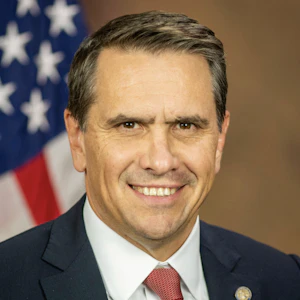
Todd Blanche
Todd Blanche
Biography of Deputy Attorney General Todd Blanche
The Honorable Todd Blanche is the 40th Deputy Attorney General of the United States, overseeing the work of the 115,000 dedicated employees who fulfill the Department of Justice’s mission at Main Justice, the FBI, DEA, U.S. Marshals, ATF, and 93 U.S. Attorney’s Offices.
Todd began his career at the Department where he served for over fifteen years in a variety of capacities, including as a contractor, a paralegal in the Criminal Division, and at the United States Attorney’s office for the Southern District of New York where he eventually became an AUSA and later a supervisor.
After leaving the Department, Todd worked as a criminal defense attorney that included representing President Donald Trump in three of the criminal cases brought against him in 2023 and 2024.
Following President Trump’s historic return to the White House, the President appointed Todd to work alongside Attorney General Pam Bondi to make America safe again. At the DOJ, Todd is working tirelessly to implement President Trump’s priorities that include confronting illegal protecting American businesses from fraud.
Todd has been married to his wonderful wife Kristine for nearly thirty years, is a father and grandfather.

Paul Atkins
Paul Atkins
Prior to returning to the SEC, Chairman Atkins was most recently chief executive of Patomak Global Partners, a company he founded in 2009. Chairman Atkins helped lead efforts to develop best practices for the digital asset sector. He served as an independent director and non-executive chairman of the board of BATS Global Markets, Inc. from 2012 to 2015.
Chairman Atkins was appointed by President George W. Bush to serve as a Commissioner of the SEC from 2002 to 2008. During his tenure, he advocated for transparency, consistency, and the use of cost-benefit analysis at the agency. Chairman Atkins also represented the SEC at meetings of the President’s Working Group on Financial Markets and the U.S.-EU Transatlantic Economic Council. From 2009 to 2010, he was appointed a member of the Congressional Oversight Panel for the Troubled Asset Relief Program.
Before serving as an SEC Commissioner, Chairman Atkins was a consultant on securities and investment management industry matters, especially regarding issues of strategy, regulatory compliance, risk management, new product development, and organizational control.
From 1990 to 1994, Chairman Atkins served on the staff of two chairmen of the SEC, Richard C. Breeden and Arthur Levitt, ultimately as chief of staff and counselor, respectively. He received the SEC’s 1992 Law and Policy Award for work regarding corporate governance matters.
Chairman Atkins began his career as a lawyer in New York, focusing on a wide range of corporate transactions for U.S. and foreign clients, including public and private securities offerings and mergers and acquisitions. He was resident for 2½ years in his firm's Paris office and admitted as conseil juridique in France.
A member of the New York and Florida bars, Chairman Atkins received his J.D. from Vanderbilt University School of Law in 1983 and was Senior Student Writing Editor of the Vanderbilt Law Review. He received his A.B., Phi Beta Kappa, from Wofford College in 1980.
Originally from Lillington, North Carolina, Chairman Atkins grew up in Tampa, Florida. He and his wife Sarah have three sons.

Mike Selig
Mike Selig
Chairman Selig brings to the role deep public and private sector experience working with a wide range of stakeholders across agriculture, energy, financial, and digital asset industries, which rely upon and operate in CFTC-regulated markets.
Prior to his leadership at the CFTC, Chairman Selig most recently served as chief counsel of the Securities and Exchange Commission’s Crypto Task Force and senior advisor to SEC Chairman Paul S. Atkins. In this role, Chairman Selig helped to develop a clear regulatory framework for digital asset securities markets, harmonize the SEC and CFTC regulatory regimes, modernize the agency’s rules to reflect new and emerging technologies, and put an end to regulation by enforcement. He also participated in the President’s Working Group on Digital Asset Markets and contributed to its report on “Strengthening American Leadership in Digital Financial Technology.”
Prior to government service, Chairman Selig was a partner at an international law firm, focusing on derivatives and securities regulatory matters. During his years in private practice, he represented a broad range of clients subject to regulation by the CFTC, including commercial end users, futures commission merchants, commodity trading advisors, swap dealers, designated contract markets, derivatives clearing organizations, and digital asset firms. Chairman Selig advised clients on compliance with the Commodity Exchange Act and the CFTC’s rules and regulations thereunder, including in connection with registration applications and obligations, enforcement matters, and complex transactions.
Chairman Selig earned his law degree from The George Washington University Law School and was articles editor of The George Washington Law Review. He received his undergraduate degree from Florida State University.

David Bailey
David Bailey

Eric Trump
Eric Trump
Mr. Trump also serves as Executive Vice President of The Trump Organization, where he oversees the global management and operations of the Trump family’s extensive real estate portfolio. This includes Trump Hotels, Trump Golf, commercial and residential real estate, Trump Estates, and Trump Winery. Known for his hands-on leadership and strong market instincts, he has played a key role in expanding the company’s presence across major U.S. and international markets.
A globally recognized business leader and public figure, Mr. Trump is a prominent advocate for Bitcoin and decentralized finance. He is a co-founder of World Liberty Financial, a decentralized finance (DeFi) platform, and serves on the Board of Advisors of Metaplanet, Japan’s largest corporate holder of Bitcoin.
Beyond his business activities, Mr. Trump has helped raise more than $50 million for St. Jude Children’s Research Hospital in the fight against pediatric cancer, a philanthropic mission he began at age 21.
Mr. Trump earned a degree in Finance and Management from Georgetown University. He currently resides in Florida with his wife, Lara, and their two children. He is also the author of Under Siege, his memoir published in October 2025.

Jack Mallers
Jack Mallers
Cynthia Lummis
Cynthia Lummis
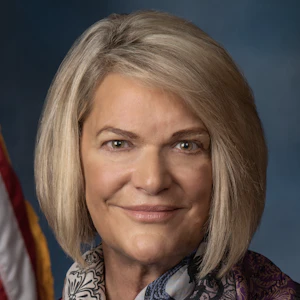
As the first-ever Chair of the Senate Banking Subcommittee on Digital Assets, Senator Lummis is the architect of the legislative framework shaping America's digital asset future. She introduced the landmark Lummis-Gillibrand Responsible Financial Innovation Act, the first comprehensive bipartisan crypto regulatory framework in Senate history. She co-authored the GENIUS Act — the first federal stablecoin law ever enacted — and introduced the BITCOIN Act, which would establish a U.S. strategic Bitcoin reserve of up to one million BTC. She is leading the Clarity Act, which will bring long-overdue regulatory certainty to the digital asset industry. She has also championed digital asset tax reform, including a de minimis exemption for small transactions and equal tax treatment for miners and stakers.
Known as Congress' "Crypto Queen," Senator Lummis represents Wyoming — a state she has helped build into one of the most digital asset-friendly regulatory environments in the nation. Before serving in the Senate, she served 14 years in the Wyoming Legislature, eight years as Wyoming State Treasurer, and eight years in the U.S. House. She is a three-time graduate of the University of Wyoming.
Her work represents a crucial bridge between traditional financial systems and the emerging digital economy, ensuring America leads the world in financial innovation while protecting the individual freedoms that define it.

Adam Back
Adam Back
Amy Oldenburg
Amy Oldenburg
David Marcus
David Marcus

Matt Schultz
Matt Schultz
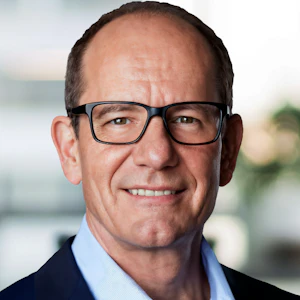
Fred Thiel
Fred Thiel
Throughout his career, Mr. Thiel has consistently driven rapid growth and created substantial shareholder value. Prior to MARA, Mr. Thiel served as the CEO of two other public companies, Local Corporation (NASDAQ: LOCM) and Lantronix, Inc (NASDAQ: LTRX). He has successfully raised billions in equity and debt through private and public offerings, led companies through IPOs, executed high-value exits to strategic and financial acquirers, and implemented effective M&A and roll-up strategies.
Mr. Thiel attended the Stockholm School of Economics and executive classes at Harvard Business School, and is fluent in English, Spanish, Swedish, and French. Mr. Thiel is the Chairman of the Board for Oden Technology, Inc. and is active in Young Presidents’ Organization where he has led initiatives in both the FinTech and Technology Networks.
A recognized voice in the industry, Fred frequently shares his insights on energy and technology with major media outlets like Bloomberg TV, CNBC, and FOX Business, contributing to vital discussions about the future of these sectors.
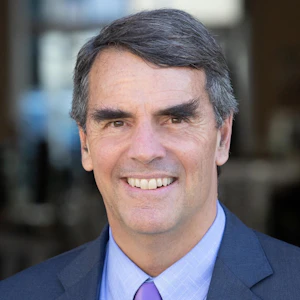
Tim Draper
Tim Draper
He is a supporter and global thought leader for entrepreneurs everywhere, and is a leading spokesperson for Bitcoin and decentralization, having won the Bitcoin US Marshall’s auction in 2014, invested in over 50 crypto companies, and led investments in Coinbase, Ledger, Tezos, and Bancor, among others.

Afroman
Afroman